E. Howard Hunt imported CIA tradecraft from Havana to Washington D.C., weaponizing false identities and surveillance against domestic targets. By September 1971, the newly formed White House Plumbers applied these tactics to burglarize Dr. Fielding’s office. On June 17, 1972, five men slipped into the Watergate Complex, their movements echoing Cold War penetrations. A $460,000 cash pipeline through Mexico City laundered hush money for Hunt’s silence. These declassified operations reveal a covert presidency’s dismantling—step into the dark corridors where the smoking gun tape seals the fall.
Key Takeaways
- The Plumbers used CIA Technical Services Division for fake IDs and disguise kits.
- Room 16 in the Old Executive Office Building directed domestic espionage operations.
- Hunt’s team employed surveillance and psychological warfare from CIA cold war tradecraft.
- A $460,000 cash pipeline through Mexico City laundered funds for covert operations.
- Nixon ordered the CIA to pressure the FBI, citing national security as cover.
Importing the Cold War: E. Howard Hunt’s Operational Shift from Havana to Washington D.C
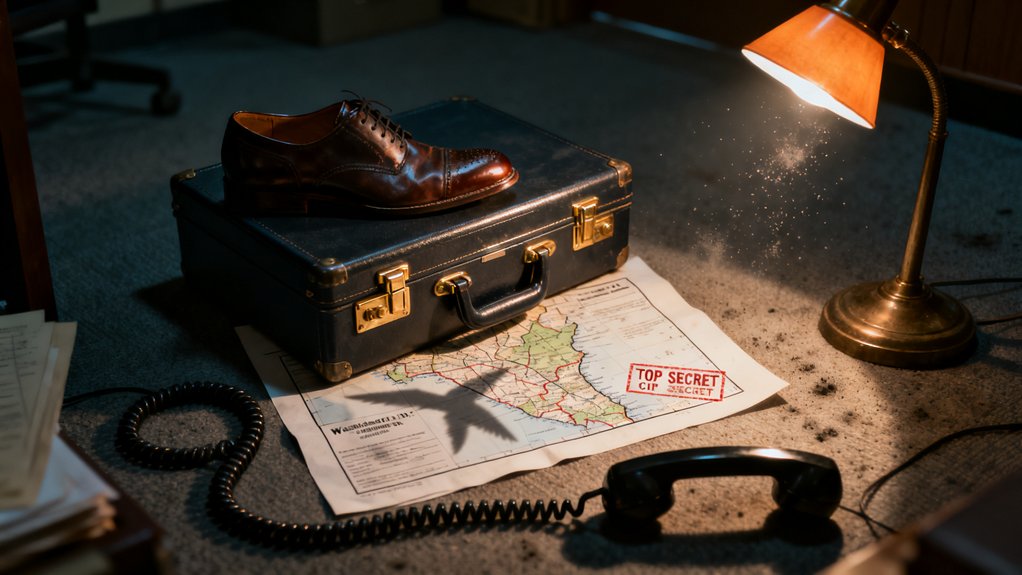
Although E. Howard Hunt spent his CIA career honing foreign espionage tradecraft in the shadows of Havana and Guatemala City, he never truly left the Cold War behind. He simply relocated its battlefield.
He never truly left the Cold War behind; he simply relocated its battlefield.
By the early 1970s, Hunt’s operational mindset had shifted theaters, but his methods remained brutally unchanged. He weaponized the same covert tactics—false identities, surveillance, and psychological warfare—against domestic targets inside Washington, D.C.
This wasn’t a new mission; it was a direct importation of CIA black ops into the American political arena. Hunt’s shift blurred the line between national security and partisan sabotage, turning the capital into his personal operational zone.
For a nation seeking liberation from its own intelligence apparatus, the realization is chilling: Hunt didn’t abandon his tradecraft; he just aimed it inward.
The Room 16 Mandate: Assembling the White House Special Investigations Unit in 1971
When John Ehrlichman summoned E. Howard Hunt to his West Wing office in July 1971, he wasn’t asking questions—he was issuing a mandate. Room 16 of the Old Executive Office Building became the nerve center for what would be known as the ex-cia plumbers unit. Their mission: plug leaks, destroy enemies, and perform domestic political espionage under the guise of national security. Ehrlichman wanted operatives who understood covert action, not policy memos. Hunt fit perfectly.
| Unit Member | Previous Role | 1971 Assignment |
|---|---|---|
| E. Howard Hunt | CIA covert ops (Guatemala) | Recruit & plan |
| G. Gordon Liddy | FBI agent, Treasury | Intelligence gathering |
| David Young | NSC staffer | Coordination |
The room smelled of stale coffee and paranoia. These men didn’t debate legality—they discussed tradecraft. The plumbers weren’t a think tank; they were a weapon, aimed squarely at domestic targets. And nobody in the White House asked permission. They just built the machine.
Operation Ellsberg: The September 1971 Covert Assault on Dr. Lewis Fielding’s Beverly Hills Office
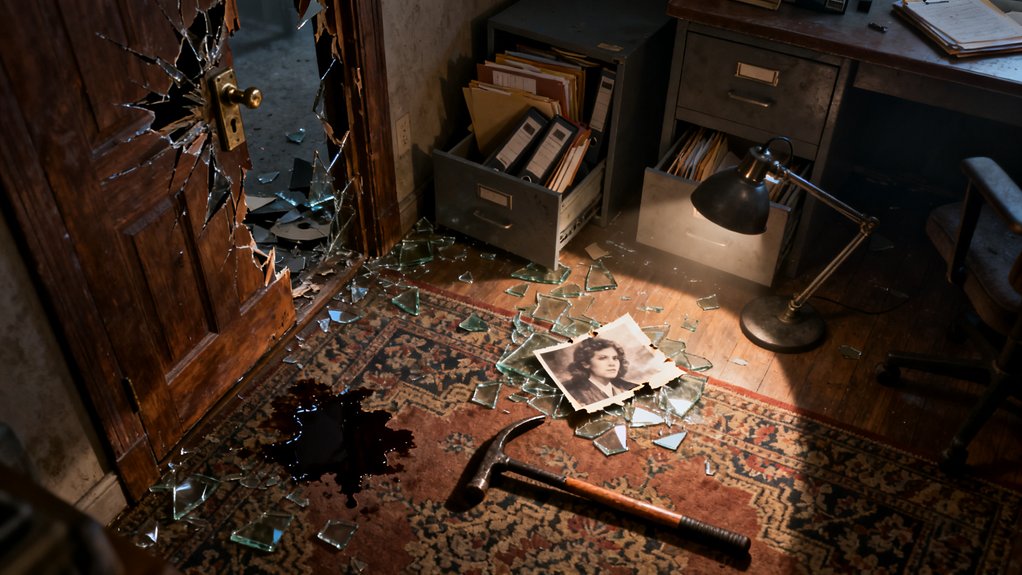
The Plumbers didn’t just plan a simple burglary; they weaponized the CIA’s Technical Services Division to procure sophisticated alias documents and disguises.
This wasn’t a common criminal act—it was a direct application of foreign black-bag tradecraft, now turned against a domestic medical office.
The target was the Fielding file, and the operation’s execution mirrored the same covert assault tactics used in Cold War theaters.
Weaponizing the CIA Technical Services Division: Procuring Alias Documents and Disguises
To weaponize the CIA’s Technical Services Division for domestic espionage, the Ex-CIA “Plumbers” didn’t need to invent new tricks—they had only to resurrect old ones. For the Fielding job, Hunt requisitioned fake IDs and a disguise kit straight from Agency stockpiles. This wasn’t improvisation; it was a precise return to familiar covert operational mechanics.
The tactical execution timeline reveals a chilling routine: alter appearance, assume a fabricated alias, then vanish into the target zone. By reviving these foreign-playbook methods, they liberated themselves from legal constraints, turning CIA assets into tools for domestic subversion. The disguise wasn’t just a mask—it was a declaration that no rule bound their hunt.
The Fielding File: Applying Foreign Black-Bag Tradecraft to Domestic Medical Records
September 3, 1971—a rented Ford sedan cruised down Wilshire Boulevard. Inside, ex-CIA officer E. Howard Hunt directed a team that had perfected their craft during cold war covert operations. Their target? Dr. Lewis Fielding’s office, holding Daniel Ellsberg’s psychiatric records. They aimed to destroy Ellsberg’s credibility, applying foreign black-bag tradecraft to domestic medical records.
- Hunt used a wig, glasses, and a voice recorder to mimic a foreign operative surveilling a “defector.”
- The burglars photographed patient files but found nothing damning, yet the break-in remains a landmark of domestic espionage.
- Declassified intelligence files later revealed the operation’s blueprint—a direct import of CIA sabotage tactics onto American soil.
This assault on a psychiatrist’s office wasn’t a rogue act. It was a calculated liberation of secrecy, a violation meant to control dissent.
0230 Hours at the Watergate Complex: The June 17, 1972 Tactical Penetration and Arrest
Just after midnight on June 17, 1972, five men slipped into the Watergate Complex, their movements echoing the clandestine tradecraft Hunt had honed in Guatemala. They’d already taped door latches, but a night watchman‘s curiosity unraveled their plan.
The watergate scandal origins trace directly here—this wasn’t a random burglary; it was a tactical penetration fueled by the same operational mindset behind the daniel ellsberg psychiatrist break-in. Hunt’s former CIA team, the Plumbers, had learned to exploit vulnerabilities in foreign embassies; now they applied that exact blueprint to a domestic political headquarters.
They carried bugging devices and rolls of film, expecting to extract secrets without a trace. But at 1:47 AM, police arrived, guns drawn. The burglars froze, caught mid-tape. Their arrest cracked the door to a conspiracy that would topple a presidency, proving that liberation from tyranny demands exposing the shadows where liberators hide.
Laundering the Silence: Tracing the $460,000 Executive Cash Pipeline to the D.C. Jail
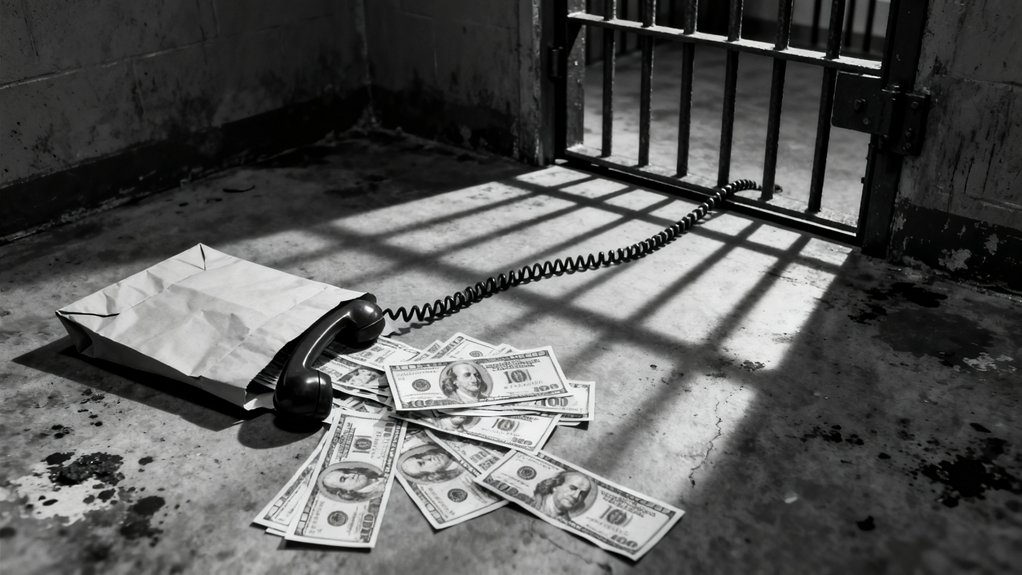
The cash pipeline ran through Mexico City, laundering Committee to Re-Elect the President funds into untraceable payoffs. E. Howard Hunt then played his extortion play, demanding $120,000 in March 1973 for silence. That executive ransom demand exposed the $460,000 trail snaking directly to the D.C. Jail.
The Mexican Connection: How Committee to Re-Elect Funds Became Untraceable Payoffs
As the Committee to Re-Elect the President’s lawyers funneled $460,000 through a Mexican bank account, they didn’t just move money—they built a payload of silence. This pipeline transformed cash into untraceable payoffs, severing the link between D.C. jails and the White House. Former CIA officers, versed in dead drops, designed the route—turning Washington DC espionage targets into passive recipients of laundered hush money.
- The money traveled through the Banco de Comercio, where Mexican law shielded the accounts from U.S. subpoena, creating a black hole for auditors.
- Each disbursement landed in Swiss envelopes or briefcases, never showing a paper trail back to the CRP.
- The payoff forced silence from Watergate burglars and potential witnesses, locking their loyalty with cash rather than ideology.
This wasn’t merely a transfer—it was a covert operation to protect the presidency.
E. Howard Hunt’s Extortion Play: The March 1973 Executive Ransom Demand for $120,000
Although the $460,000 pipeline had bought silence for months, by March 1973 that silence had a price tag—and E. Howard Hunt, veteran of CIA operations in Guatemala, knew exactly how to collect.
From his D.C. jail cell, he demanded an additional $120,000 ransom.
He’d weaponized the same extortion playbook he’d refined abroad, now aimed directly at his White House handlers.
Verified historical public records confirm this wasn’t a request; it was a threat.
Hunt understood the cash flow had to keep moving, or the dam would break.
He’d bet that his ex-CIO cunning would outmaneuver the frantic men still running the operation.
But the money didn’t arrive fast enough.
The silence he’d bought began cracking, and the pipeline started leaking truth.
Intercepting the Bureau: The June 23 Smoking Gun Strategy to Subvert the FBI Investigation
Because Nixon’s inner circle understood the break-in team’s CIA lineage would expose the broader covert apparatus, they devised a plan to weaponize intelligence agency obfuscation, not just to contain the FBI, but to outright hijack its investigation.
They weaponized intelligence obfuscation not just to contain the FBI, but to hijack its investigation.
On June 23, 1972, a tape captured Nixon ordering Haldeman to tell the CIA to pressure the FBI to halt its probe, claiming national security—a direct reference to prior CIA operations in Cuba. This wasn’t a defensive move; it was a calculated offensive to kill the investigation.
- The smoking gun: Nixon’s recorded order to use the CIA’s Cuban operations as a cover story to block FBI agents from tracing money to the White House.
- The leverage: CIA Director Helms, fearing exposure of covert ops, complied, temporarily freezing the FBI’s financial trail.
- The betrayal: This subversion of justice turned the FBI into an unwitting tool, protecting the conspirators’ liberation from accountability.
The strategy worked—until the tape itself surfaced.
The Parking Garage Informant: Decoding Mark Felt’s Asymmetric Counter-Espionage Against the Executive Branch
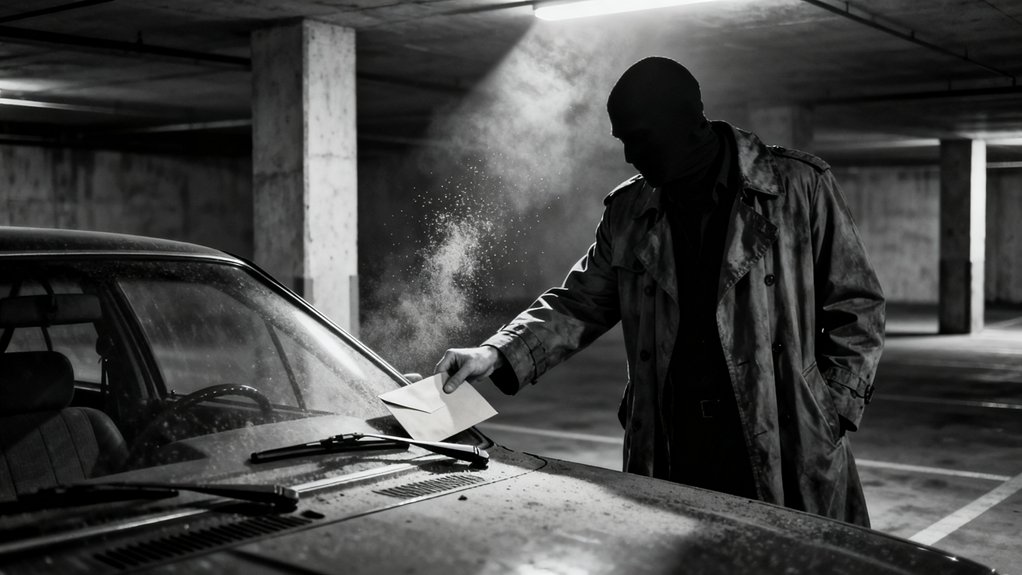
While Nixon’s men schemed to choke the FBI, one man inside the bureau silently flipped the script. Mark Felt, the Associate Director, wasn’t just watching the cover-up unfold; he was feeding its executioners to the press. He met Bob Woodward in that underground garage, passing notes that read like dead drops in a Cold War thriller. Felt understood the asymmetry of the fight—the Executive Branch controlled the levers of power, but he controlled the truth.
He wasn’t a hero in the conventional sense. Felt’s counter-espionage was a quiet rebellion, a refusal to let the Bureau be gutted by political rot. He gave Woodward the threads to pull, ensuring the Smoking Gun didn’t stay buried in the Oval Office. No grand speeches; just whispered coordinates and decoded memos. Felt’s game was simple: you can’t wage a coup on justice if the informant’s already inside your perimeter, signaling the collapse.
The Ervin Committee Subpoenas: Dismantling the Omertà of the Ex-CIA Operatives
James McCord’s explosive March 1973 letter to Judge Sirica shattered the silent code of the ex-CIA operatives, cracking the cover-up defense wide open.
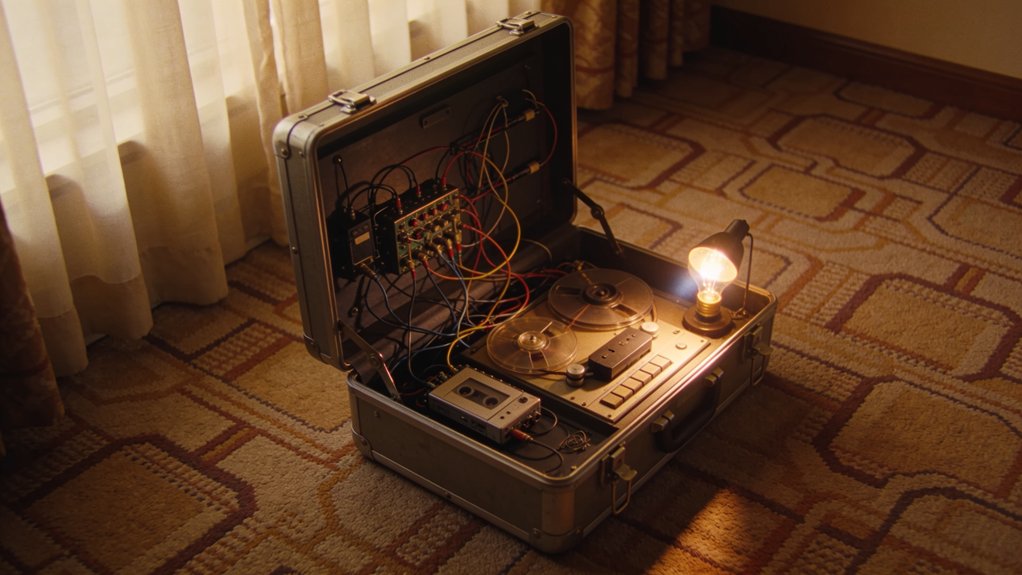
Then, the Ervin Committee’s subpoenas forced Alexander Butterfield to reveal the hidden Sony SR-50 recording systems in the Oval Office.
Those subpoenas didn’t just demand testimony—they systematically dismantled the omertà that had shielded the White House’s covert domestic espionage.
James McCord’s Letter to Judge Sirica: The March 1973 Fracture in the Cover-Up Defense
Although the cover-up had held firm for nearly a year, the ex-CIA operatives’ omertà finally cracked on March 19, 1973, when James McCord—former CIA security officer and a key figure in the Watergate break-in—sent a secret letter to Judge John Sirica. This single document shattered the silence, revealing the manipulation at play.
- McCord confessed that high-level White House officials had pressured the defendants to maintain the false story.
- He exposed perjury in the trial, directly implicating the cover-up’s architects.
- He signaled that political pressure, not loyalty, held the conspiracy together.
McCord’s letter liberated the truth from the shadows, forcing the machinery of justice to finally move.
The Butterfield Revelation: Exposing the Oval Office Voice-Activated Sony SR-50 Systems
The veil of omertà finally began to shred on July 13, 1973, not with a confession from a burglar, but with a quiet revelation from a mid-level White House aide. Alexander Butterfield, a former Nixon staffer, calmly told the Ervin Committee that the Oval Office contained hidden voice-activated Sony SR-50 systems.
This wasn’t a rumor—it was a fact buried in the White House’s own surveillance architecture. The committee’s subpoenas had already rattled the ex-CIA operatives, but this bombshell dismantled their code of silence. They’d counted on selective memory, not a taping system capturing every whispered order. For the public, this was liberation: the truth could now be pulled from the machines themselves, not from the mouths of men trained to deceive.
The October 20 Massacre: Decapitating the Department of Justice to Protect the Subpoenaed Tapes
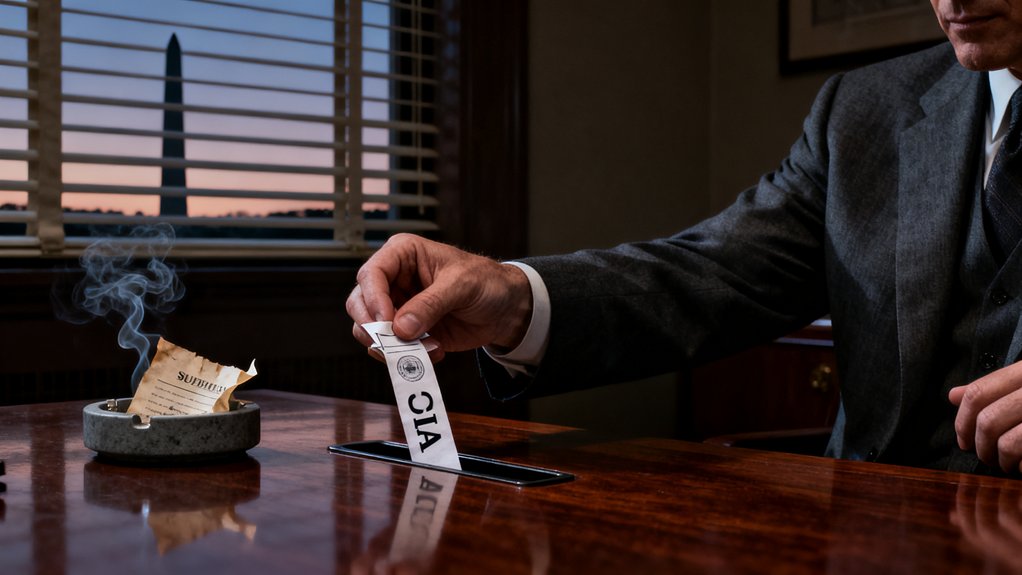
As the subpoenaed tapes tightened like a noose around the White House, President Nixon moved to decapitate the Department of Justice. He ordered the firing of Special Prosecutor Archibald Cox, who’d refused to back down on the subpoena.
Attorney General Elliot Richardson resigned rather than obey; his deputy, William Ruckelshaus, followed suit. Nixon then forced Solicitor General Robert Bork to execute the firings, triggering a firestorm of public outrage.
- The Saturday Night Massacre – Nixon’s direct assault on judicial independence, sacrificing two DOJ heads to protect the tapes.
- The FBI’s Occupation – Agents sealed Cox’s offices, preventing access to subpoenaed evidence, a move echoing CIA asset-protection protocols.
- The Public’s Liberation – This brazen decapitation galvanized Congress, fueling impeachment proceedings and stripping Nixon’s last shield of executive privilege.
The massacre wasn’t just a purge—it was a desperate bid to silence the subpoena’s truth. America’s demand for accountability had finally breached the White House’s walls.
United States v. Hunt: The January 1973 Criminal Conviction and 33-Month Federal Confinement
When E. Howard Hunt stood before Judge John Sirica in January 1973, the CIA’s shadow operative finally faced a domestic mirror. His guilty plea on six counts of conspiracy, burglary, and wiretapping wasn’t a confession of failure—it was a tactical surrender.
The prosecution’s case, built on a paper trail of his own meticulous planning, left no room for plausible deniability. Hunt’s 33-month federal confinement began not in a prison cell but in a courtroom where the state’s machinery finally turned against its own covert architect.
The plumber’s conviction shattered the myth of untouchable spies. His sentence—the longest of any Watergate burglar—sent a clear signal: operational tradecraft couldn’t shield you from the law’s reach.
Judge Sirica’s gavel didn’t just punish; it liberated the truth from the shadows, forcing the nation to confront how far the empire’s secret warriors had strayed into domestic sabotage.
August 9, 1974: The Resignation of Richard Nixon and the Institutional Collapse of the Covert Presidency
E. On August 9, 1974, Richard Nixon‘s helicopter lifted off from the White House lawn, severing the last thread of a covert presidency that had weaponized the CIA’s darkest tradecraft.
The institutional collapse wasn’t a quiet implosion—it was a raw, public fracture. For an audience craving liberation from hidden power, consider how the past still haunts the present:
- Nixon’s resignation didn’t dismantle the machinery; the ex-CIA “Plumbers” simply faded back into shadow networks, their domestic espionage tactics reabsorbed by agencies that never faced full accountability.
- The “covert presidency” itself collapsed when the public learned that foreign operational mechanics—surveillance, disinformation, illegal break-ins—had been turned inward, transforming the White House into a command post against its own citizens.
- Every declassified file since confirms that the systemic rot ran deeper than one man; it was the institutional betrayal of a government using Cold War tools to silence dissent, a lesson that liberation requires eternal vigilance.
Frequently Asked Questions
What Specific CIA Tradecraft Did Hunt Apply Domestically?
Hunt applied covert surveillance and psychological warfare tradecraft domestically. He used operational security protocols, including disguises and false documentation, to execute the Ellsberg break-in.
He also weaponized black-bag jobs—clandestine entries—and targeted intelligence gathering against political opponents. These tactics, originally designed for foreign adversaries, were repurposed to manipulate domestic power structures, exposing a deep state’s willingness to subvert democratic norms for control.
Why Was the Ellsberg Break-In Considered Rehearsal for Watergate?
Funny how a dress rehearsal for a crime doesn’t need an audience—just a blueprint. The Ellsberg break-in tested covert tradecraft on a domestic target, proving Hunt’s crew could execute surveillance, theft, and psychological operations without detection.
They refined their tactics, building confidence for the big show. It’s the same script, just with a different stage.
Liberation demands recognizing the pattern before the performance repeats.
How Did the Plumbers Ensure Operational Security During Break-Ins?
The Plumbers didn’t just wing it—they weaponized CIA tradecraft. Hunt and his crew used disguises, false identification, and pre-planned escape routes to mask their movements.
They’d conduct dry runs to map security, then exploit blind spots. Bugging devices were placed with surgical precision to avoid detection. This wasn’t a bungled amateur act; it was a calculated, covert operation, silencing oversight by erasing their tracks and owning the shadows.
Who Authorized the Cash Pipeline to Silence the Burglars?
White House counsel John Dean didn’t authorize the cash pipeline; that directive came from higher up.
E. Howard Hunt’s demands for hush money flowed through Charles Colson’s office, with Nixon’s chief of staff, H.R. Haldeman, signing off.
They didn’t just pay burglars—they weaponized silence, trading loyalty for leverage, keeping secrets buried beneath veneers of power.
Was Mark Felt’s Motive Purely Institutional or Political?
Was Mark Felt’s motive purely institutional or political? He’d claim institutional loyalty, but his actions betray a deeper, personal calculus.
Felt’s leaks weren’t just about protecting the Bureau; they were about power, about steering the ship through chaos.
He saw himself as the rightful guardian of justice, not its servant. Institutional duty became a mask for a political mission—liberating the system from those he deemed unfit.
It’s a dance of ego and principle, wrapped in a badge.
Final Thoughts
The cash pipeline coiled from a shadowed White House safe through jailhouse veins, a silent IV of hush money. Then the subpoenaed tapes hissed their truth—Nixon’s voice, a ghost in the Oval Office machinery. By August 1974, the keys emptied the West Wing. The covert presidency collapsed, not from a break-in, but from the rotting anchor of its own imported craft.