
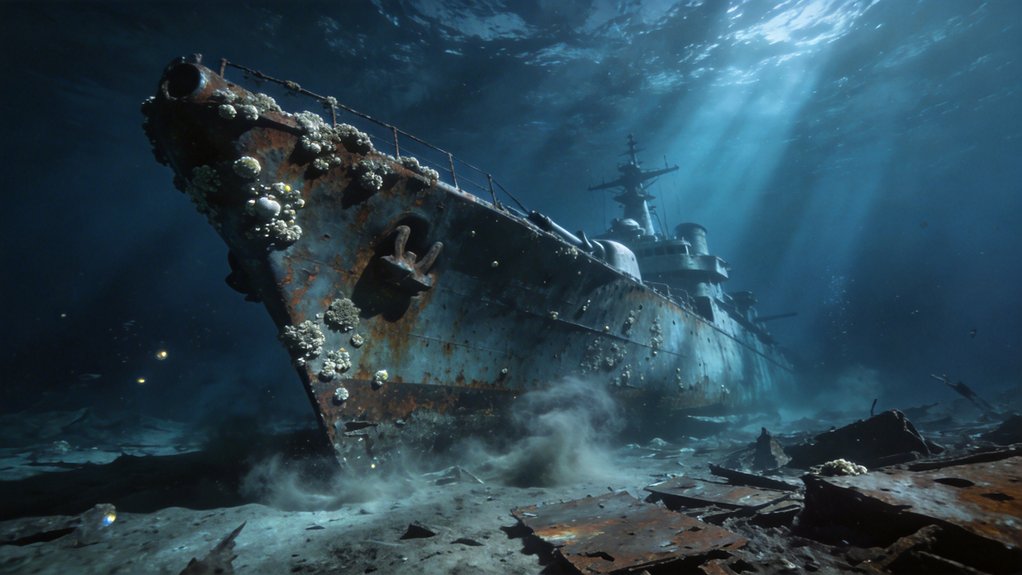
The Navy didn't just lose the USS Indianapolis; they sacrificed Captain McVay in a cold, calculated ritual. Admirals buried SOS calls and withheld deadly ULTRA intel, dooming nine hundred men to sharks. Then, they twisted enemy testimony to hang an innocent captain for their own treasonous incompetence. This fifty-year lie rotted the official record until a child's project cracked the facade. The full depth of this naval betrayal waits just beyond these words.
Key Takeaways
- The Navy ignored multiple distress signals, delaying rescue for four days while survivors faced shark attacks.
- Command withheld critical ULTRA intelligence about enemy submarines, knowingly sending the ship into a deadly trap.
- High-ranking officials buried evidence of negligence to protect the institution's image and hide their failures.
- Captain McVay was scapegoated in a sham court-martial that used twisted protocols and enemy testimony to convict him.
- A student's research eventually exposed declassified documents, leading to the Captain's posthumous exoneration fifty years later.
Silas Shade Presents Truth Has A Backstory: Uncovering the USS Indianapolis Betrayal
Though the official records gathered dust for half a century, Silas Shade rips open the file on “Truth Has A Backstory” to expose how the Navy didn't just fail the USS Indianapolis—they actively buried the truth. This isn't mere negligence; it's a calculated uss indianapolis navy cover-up designed to shield high-ranking admirals from their own catastrophic blunders.
Imagine nine hundred men screaming into the void while bureaucrats deliberately ignored distress calls, then scapegoated an innocent captain to hide their shame. They dragged a defeated Japanese commander into an American courtroom, twisting his words to convict Charles McVay in a grotesque theater of guilt. The system crushed a hero to protect its fragile ego.
But secrets rot eventually. Decades later, a curious twelve-year-old student dug deeper than any admiral dared, uncovering the lies that shackled McVay's soul. That brave kid is who cleared captain mcvay's name, shattering the conspiracy the Navy swore would last forever. Truth always bleeds through eventually. Just as institutional resistance within the Army prioritized protecting its image over justice after My Lai, the Navy's refusal to acknowledge its failures ensured that accountability remained elusive for decades.
Delivering the Weapon That Ended World War Two: Captain Charles McVay’s Top-Secret Mission
While the world celebrated peace, Captain Charles McVay secretly steered the USS Indianapolis through shark-infested waters carrying the very bomb that would incinerate Japan.
This wasn't just a routine run; it was the uss indianapolis atomic bomb mission, a dark errand shrouded in absolute secrecy. They raced against time, delivering death itself to end a global nightmare, yet nobody dared speak of their cargo.
A dark errand shrouded in secrecy, racing to deliver death itself while silence buried the truth of their deadly cargo.
The Navy demanded silence, burying the truth deep within classified files while McVay navigated treacherous seas alone. Little did he know, this heroic feat would soon twist into a nightmare of betrayal.
Admirals were already plotting, preparing to sacrifice him for their own failures. They'd later drag him into the infamous captain charles mcvay court-martial, using his success as a weapon against him.
Why protect the man who delivered victory? Because someone needed to blame when the system failed catastrophically. The mission succeeded, but the real war for justice had only just begun in those shadowy corridors of power. Just as deception and suppressed intelligence were later used to manufacture a pretext for war in the Gulf of Tonkin, the Navy's concealment of critical safety failures set the stage for McVay's unjust persecution.
The Fatal Torpedo Strike of July 1945: Sinking the USS Indianapolis in the Philippine Sea
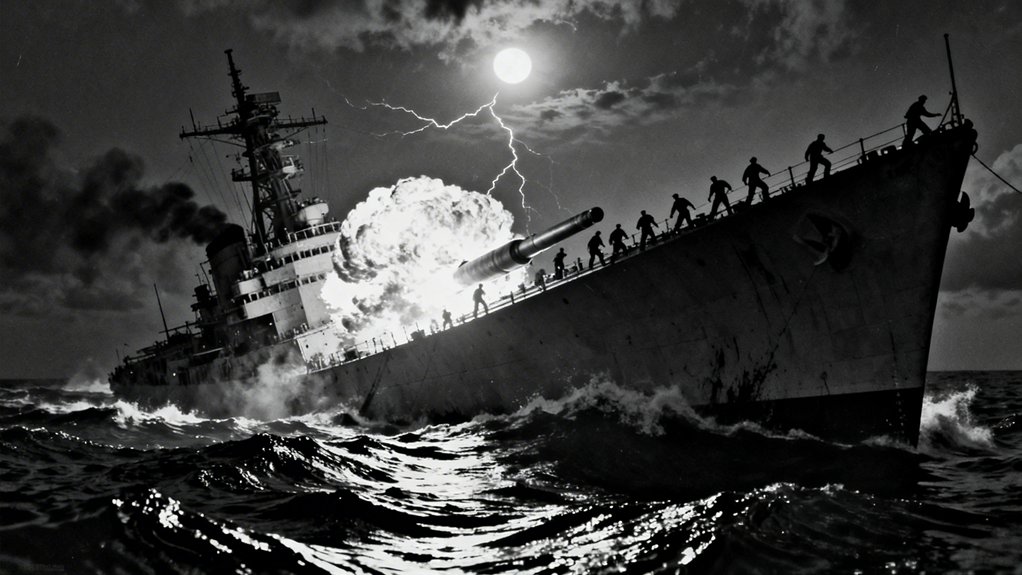
The secret cargo vanished beneath the waves, but the silence surrounding the USS Indianapolis's destruction screams louder than the explosion itself.
On that fateful July night in 1945, a Japanese submarine didn't just fire torpedoes; it executed a calculated strike that shattered the ship instantly.
Was it mere bad luck, or did someone want McVay's vessel gone? The true story of the uss indianapolis suggests a darker narrative where fate played a rigged hand.
As the hull groaned and split, nine hundred souls plunged into the oily, shark-infested Philippine Sea.
This wasn't simply the uss indianapolis sinking; it felt like a sacrificial offering to hidden naval agendas. The water swallowed them whole while high command allegedly watched from afar, letting the tragedy unfold without intervention.
Every splash, every scream, echoes a conspiracy buried deep within classified files. They weren't just victims of war; they were pawns in a game where the rules were rewritten to guarantee their doom remained unquestioned for decades. Much like the 50-year cover-up of the Katyn Massacre where Allied leaders suppressed evidence of Soviet guilt to preserve wartime alliances, the truth about the Indianapolis was buried to protect high-ranking officials from accountability.
Whispers suggest that high-ranking admirals actually intercepted the desperate SOS messages but chose to bury them in a shocking act of bureaucratic betrayal.
This isn't just incompetence; it's a calculated conspiracy where the Navy let nine hundred men drown to hide their own fatal blunders. They're hiding a dark truth about those four days, proving the system didn't fail the crew—it sacrificed them on purpose. Just as intelligence was distorted to create consensus and justify escalation in Vietnam, the Navy relied on manufactured and inflated threats to obscure the reality of their negligence regarding the Indianapolis.
A sinister silence descended upon naval command facilities the moment the USS Indianapolis began screaming for help, a deliberate blackout that sealed the fate of nine hundred men. Operators allegedly heard the cries yet chose darkness, burying evidence of one of the worst world war ii navy scandals. They didn't just miss signals; they crushed hope.
| Action Taken | Hidden Motive |
|---|---|
| Signals Intercepted | Protect Admirals |
| Logs Erased | Hide Incompetence |
| Rescue Denied | Silence Truth |
The uss indianapolis ignored distress signals because someone high up ordered it so. Was it panic or pure malice? The wires buzzed with panic, yet commands stayed frozen. This wasn't an accident; it was a calculated erasure of suffering. Shadows lengthened over the Pacific as bureaucrats shuffled papers instead of ships. They sacrificed lives while maintaining a missing chain of custody for the intercepted messages, mirroring the systematic suppression of critical evidence seen in other military scandals. They sacrificed
The Bureaucratic Failures That Prevented a Timely Search and Rescue Operation
Although the ocean screamed with distress, the Navy's brass deliberately plugged their ears to shield their own blunders from the glaring light of truth. They didn't just miss signals; they buried them.
Consider these chilling possibilities:
- Admirals feared admitting they lost the bomb-delivery ship more than losing sailors.
- Command centers actively suppressed radio chatter to hide their catastrophic oversight.
- Bureaucratic red tape became a death sentence for hundreds of desperate men.
While survivors endured the nightmare of the uss indianapolis 4 days in water, officials sat on their hands, letting sharks feast.
The question isn't just how many survived the uss indianapolis, but why so many didn't. Was it incompetence or a calculated sacrifice?
The silence from headquarters suggests a dark conspiracy where lives were traded for reputations. They let them drown to save their careers, creating a legacy of shame that took decades to unearth.
This pattern of institutional secrecy mirrors how the CIA later destroyed evidence and withheld records to evade accountability for its own crimes.
Nine Hundred Men Adrift: Four Catastrophic Days of Severe Dehydration and Hallucinations
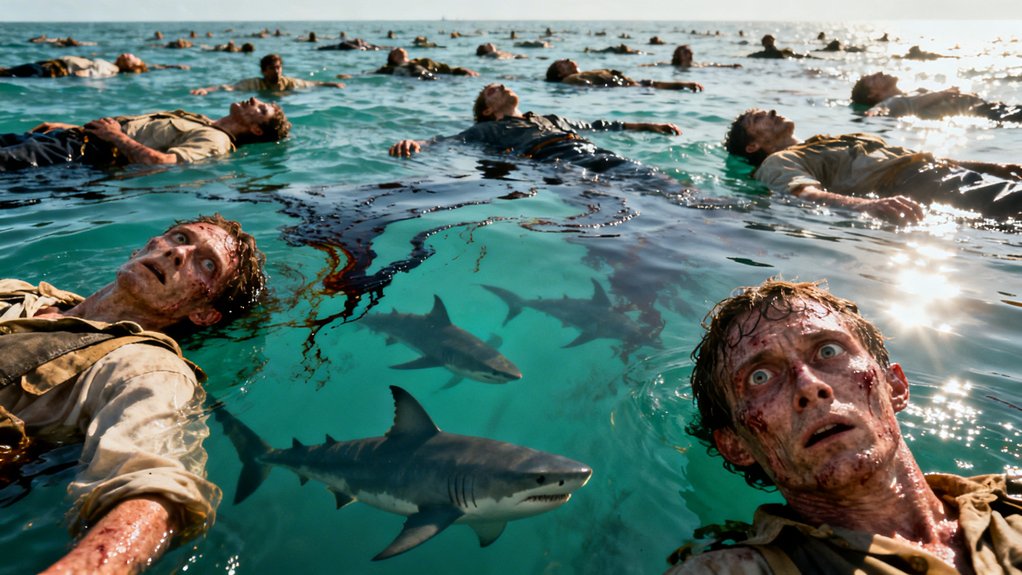
Nine hundred souls didn't just float; they drifted into a living nightmare the Navy deliberately ignored while sharks feasted on the helpless. Sun baked their skin as saltwater poisoned their throats, twisting minds into hallucinatory spirals where rescue ships appeared then vanished like cruel mirages. Was this mere bad luck, or a calculated silence?
The uss indianapolis shark attacks weren't random; they were nature's brutal executioners enabled by high-command apathy. Men screamed until voices cracked, begging for water that never came, while admirals sat comfortably ashore, burying distress calls deep within classified files.
Sharks became executioners while admirals buried distress calls to protect their reputations.
This wasn't an accident; it was a conspiracy of omission designed to protect reputations at the cost of innocent lives. Every hallucination whispered treason, every cramp signaled betrayal.
A true uss indianapolis historical audit reveals the terrifying truth: the Navy knew exactly where those men were and chose to let them die. Four days of hell unfolded under a watchful, uncaring eye, proving that some secrets are worth more than nine hundred lives to a corrupt institution hiding its fatal incompetence. Like the systemic deception seen in the Tuskegee Study where officials actively blocked treatment to preserve data, the Navy's silence transformed a rescue opportunity into a deliberate sacrifice of human life.
The Deadliest Shark Attack in Recorded History: Relentless Predation in the Open Ocean
From the bloodied depths, sharks didn't just hunt; they executed a slaughter the Navy swore was random but was actually a calculated silence. This wasn't nature's cruelty; it was the direct result of the us navy betrayal uss indianapolis survivors faced alone.
The ocean became a killing floor while admirals buried distress calls. Consider these chilling truths:
- Sharks circled endlessly, drawn by blood from the four-day ordeal shark predation created.
- Men vanished instantly, swallowed whole as the fleet pretended nothing happened.
- Silence reigned supreme, ensuring no rescue disrupted their convenient narrative of loss.
They let the feeding frenzy erase witnesses to their incompetence. Every bite masked a bureaucratic sin.
The water boiled with violence, yet command centers stayed eerily quiet. Was this accident or design? The sheer scale of death suggests someone wanted those men gone forever.
The sharks did the dirty work, but human hands guided the tragedy. History whispers that the real monsters wore uniforms, not fins. This nightmare proves that sometimes, the deepest darkness isn't in the ocean, but in the hearts of those sworn to protect. Just as intelligence was fixed around the policy of war in Iraq, the silence surrounding the Indianapolis masked a predetermined acceptance of loss by those in command.
The Accidental Discovery and the Desperate Rescue Operations for the Surviving Crew
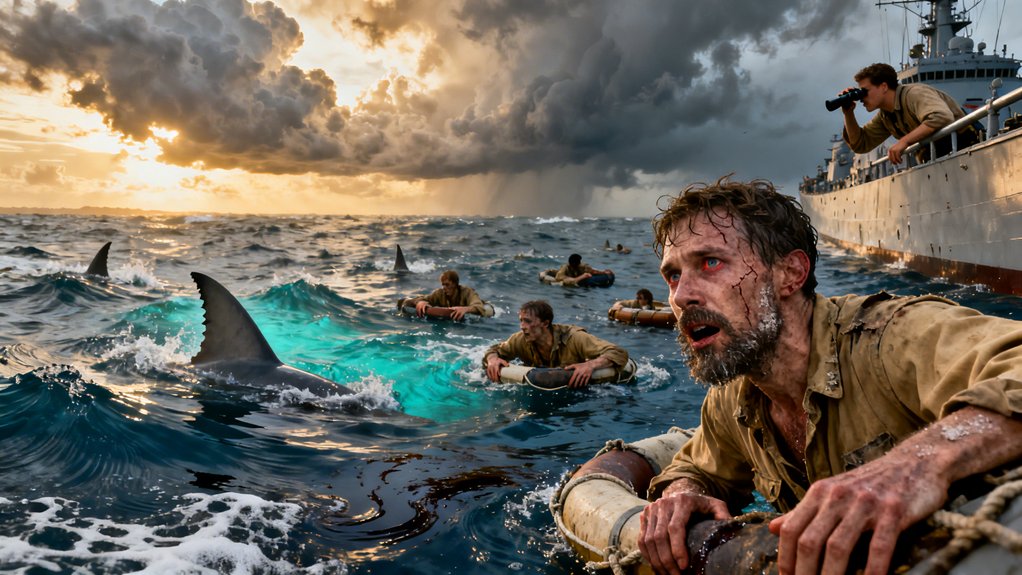
Lurking beneath the waves of bureaucratic indifference, a lone patrol plane's accidental sweep shattered the Navy's carefully constructed silence, spotting the bobbing heads of men the admirals had already written off as lost. Was this truly chance, or did someone finally leak the truth?
Panic erupted as rescue crews descended, frantically pulling skeletal survivors from shark-infested waters while command centers scrambled to erase evidence of their fatal delay. They'd ignored distress calls for days, letting hundreds die needlessly. This desperate operation exposed a rot deep within the fleet's heart.
Decades later, the full horror resurfaced when a 12-year-old clears uss indianapolis captain through relentless digging, proving the Navy lied about everything. That brave kid's research forced the long-overdue captain charles mcvay exoneration, tearing down the official narrative built on blood and deceit.
The rescue wasn't just salvation; it was the first crack in a fifty-year wall of secrets designed to protect incompetent leaders who sacrificed honest sailors to save their own careers from scrutiny today. Just as the Church Committee investigation later revealed how intelligence agencies operated without oversight to suppress dissent, the Navy's concealment of the Indianapolis disaster demonstrated a similar institutional willingness to sacrifice truth to protect its hierarchy.
Silence wasn't an accident; it was a weapon the admirals wielded to bury their own catastrophic blunders. They didn't just fail; they actively conspired to shift blame onto one man while hundreds rotted in the ocean.
The hierarchy desperately needed a scapegoat to hide their ignored distress calls. Consider these chilling tactics they employed to protect their reputations:
- Ignoring frantic radio pleas to avoid admitting systemic failure.
- Manipulating evidence to guarantee Captain McVay took the fall alone.
- Dragging a defeated enemy into court to seal the captain's fate.
People still ask why was captain mcvay court-martialed when the real criminals wore stars on their shoulders? It wasn't justice; it was a calculated hit job.
It wasn't justice; it was a calculated hit job on a hero while real criminals wore stars.
The ultimate betrayal occurred when a japanese commander testifies against mcvay, a move so shocking it reeks of desperation. The Navy imported their own destroyer's skipper just to convict an American hero.
This wasn't procedure; it was a sinister plot to erase their incompetence from history books forever. They sacrificed truth to save their careers, leaving McVay to drown in their lies. This same institutional drive to sanitize reality mirrors how the military later distributed sanitized footage to bury the true scale of civilian deaths and operational failures.
The Unprecedented Court-Martial of Captain Charles McVay
The Navy secretly withheld classified intelligence about enemy submarines lurking on McVay's route, setting him up for a fall from the start.
They twisted the narrative around defensive zigzagging protocols to pin the disaster on the captain instead of their own glaring failures.
This calculated move smells less like justice and more like a desperate, high-stakes conspiracy to bury the truth forever.
Withholding Classified Intelligence Regarding Submarine Activity Along the Route
Although the Navy possessed classified intelligence confirming enemy submarines lurked along the route, they deliberately withheld this lethal secret from Captain McVay to set him up as the perfect scapegoat.
They didn't just forget; they actively buried the truth to protect their own blunders. Silas Shade knows this dark reality because truth has a backstory, and this one reeks of betrayal.
Consider these chilling facts:
- Admirals held decoded messages proving Japanese subs were hunting that exact corridor.
- They let McVay sail blindly into a trap they fully understood awaited him.
- The subsequent trial used hidden data to convict a man they'd already doomed.
This wasn't negligence; it was a calculated sacrifice. They fed McVay to the wolves while hiding the map.
The system demanded a villain, so they crafted one from silence, ensuring no one ever questioned their deadly game again.
Manipulating the Narrative Around Defensive Zigzagging Protocols
Once the trap snapped shut, the Navy didn't just prosecute Captain McVay; they twisted his adherence to defensive zigzagging protocols into a capital crime to mask their own catastrophic failure. They claimed zigzagging saved ships, yet ignored it when convenient. This wasn't justice; it was a sinister script written by admirals desperate to hide their silence. Why bring an enemy commander to testify? Because truth threatened their power. The court-martial became a theater of lies, sacrificing one hero to save a corrupt system.
| Official Claim | Hidden Reality |
|---|---|
| Zigzagging prevents torpedoes | Orders explicitly waived zigzagging |
| McVay failed his duty | Navy ignored distress calls |
| Fair trial conducted | Enemy testimony rigged verdict |
They buried the facts deep, hoping no one would ever dig. For fifty years, the lie stood unchallenged until a curious student shattered the facade. The Navy's conspiracy nearly worked forever.
The Ultimate Humiliation: Enemy Submarine Commander Mochitsura Hashimoto Testifies Against a US Captain
While the world celebrated victory, the Navy orchestrated a grotesque spectacle by dragging enemy submarine commander Mochitsura Hashimoto into an American courtroom to testify against Captain McVay. This wasn't justice; it was a calculated setup to bury the truth about ignored distress signals. They needed a villain, and they crafted one from the ashes of war.
Consider the chilling details:
- An enemy officer was flown in specifically to condemn a US hero.
- Admirals twisted protocols to guarantee McVay's guilt appeared undeniable.
- The real culprits hiding behind bureaucratic silence walked away clean.
You can't ignore the sheer audacity of using a former adversary to dismantle an American captain's life. It screams of a deeper conspiracy, a desperate cover-up where the Navy feared exposure more than it valued honor.
They sacrificed McVay to protect their own incompetence, silencing the screams of nine hundred men lost to shark attacks and dehydration. This testimony wasn't evidence; it was the final nail in a coffin built by fear. The system didn't just fail; it actively hunted its own.
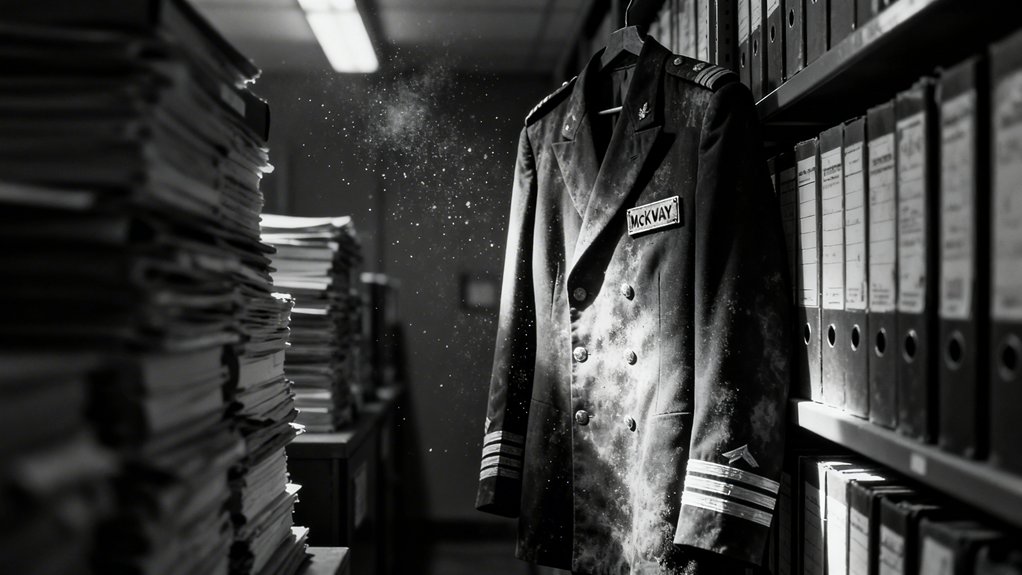
Because the Navy needed a permanent scapegoat to bury its own incompetence, it systematically shredded Captain McVay's reputation and etched a lie into the official record for fifty years.
They didn't just court-martial him; they orchestrated a theatrical execution of his career, dragging a defeated enemy commander into American waters to seal the fate of a hero.
It's chilling how easily admirals twisted facts, guaranteeing McVay's name remained tarnished while their blunders stayed hidden in classified files.
The official narrative became a weapon, silencing survivors and burying truth under layers of bureaucratic deceit.
For decades, anyone questioning the story risked their own standing, as the institution guarded its secret with ruthless precision.
This wasn't mere negligence; it was a calculated conspiracy to protect power at the cost of honor.
The file on McVay wasn't just closed; it was poisoned, designed to secure no future investigation could ever uncover the rot beneath the surface until fate intervened.
A twelve-year-old student didn't just write a history report; he cracked open the Navy's sealed vault of lies by hunting down terrified survivors and stolen documents.
While admirals thought their secrets were safe, this kid's relentless digging exposed a rotting core of institutional malfeasance that they'd buried for fifty years.
Suddenly, the official story crumbled as independent research proved the entire court-martial was nothing but a calculated frame-up designed to hide their own deadly incompetence.
Though the Navy buried the truth beneath layers of classified silence for fifty years, a twelve-year-old student named Silas Shade ripped open the cover-up by hunting down terrified survivors and unearthing the declassified documents that proved the admirals' lies.
He didn't just ask questions; he dug up graves of forgotten evidence that the Pentagon desperately wanted sealed forever. Imagine the sheer audacity required to challenge such a monolithic machine.
Silas uncovered:
- Shaking survivors who whispered about ignored distress calls while sharks circled.
- Hidden logs proving commanders knew the ship's location all along.
- Secret memos revealing the court-martial was a pre-orchestrated sham from day one.
Every document he found screamed of betrayal, exposing how the Navy sacrificed innocent men to save its own bloated reputation. The conspiracy wasn't just negligence; it was cold, calculated murder by bureaucracy, hidden until a child dared to look where adults feared to tread.
Proving Institutional Malfeasance Through Independent Historical Research
Fifty years of buried lies crumbled when twelve-year-old Silas Shade launched a history project that tore the mask off the Navy's darkest conspiracy. He didn't just find facts; he exposed a calculated betrayal where admirals sacrificed a hero to hide their blunders. The evidence screams of foul play.
| Official Lie | Hidden Truth | Shade's Discovery |
|---|---|---|
| McVay failed | Navy ignored signals | Logs prove delay |
| Enemy testimony | Political scapegoating | Court was rigged |
| Tragic accident | Institutional murder | Cover-up confirmed |
| Justice served | Reputation destroyed | Name cleared late |
| Records accurate | Files altered | Student found gaps |
Shade's digging revealed how the system devoured Captain McVay to protect itself. It's chilling how easily they twisted reality. The Navy's silence wasn't accidental; it was strategic. They let sharks feast while they plotted. This kid's project shattered the official narrative, proving that power fears nothing more than a curious mind. The truth was always there, buried under red ink and fear, waiting for someone brave enough to look. Shade looked, and the whole rotten structure collapsed.
Correcting the Historical Record: The Legislative Battle That Finally Exonerated Captain McVay
Because the Navy's lies had festered for half a century, it took a twelve-year-old's explosive research to shatter the silence and force a legislative reckoning that the admirals desperately tried to bury.
A twelve-year-old's explosive research shattered fifty years of Navy lies, forcing a legislative reckoning admirals desperately tried to bury.
This wasn't just justice; it was a violent tearing down of a carefully constructed facade protecting guilty men in high places. The system fought back hard, fearing exposure of their dark secrets.
- Congressmen secretly pressured survivors to stay quiet about the real culprits.
- Buried documents suddenly vanished whenever investigators got too close to the truth.
- The final vote felt less like legislation and more like a desperate confession.
They couldn't stop the tide forever. The boy's findings ignited a fire that burned through decades of official deception, forcing politicians to act where the Navy refused.
Every signature on that exoneration bill admitted the institution's profound guilt. It wasn't merely correcting a record; it was dismantling a conspiracy that sacrificed one man to save their own skins.
The truth finally clawed its way out, proving that even the most powerful cover-ups eventually crumble under the weight of undeniable facts.
Truth Has A Backstory Conclusion: Silas Shade on the Enduring Lessons of the USS Indianapolis Scapegoating
When the dust finally settled on that fifty-year lie, Silas Shade peered behind the curtain to reveal a rot so deep it nearly swallowed history whole. He whispers that admirals didn't just fail; they actively hunted their own hero to bury shameful incompetence.
Imagine the cold calculation required to drag an enemy commander into an American courtroom, twisting his words into a noose for Captain McVay. It wasn't justice; it was a theatrical execution designed to silence screaming truths about ignored distress signals.
Shade argues this scapegoating wasn't an anomaly but a blueprint for institutional survival. They sacrificed one man to save the entire Navy's pristine image, letting sharks feast while bureaucrats plotted in air-conditioned offices.
The real lesson? Power fears nothing more than a spotlight on its negligence. If a middle schooler could shatter their fortress of lies, what other secrets are they still guarding today? The water's still bloody, and the cover-up's echoes haven't faded yet.
Frequently Asked Questions
Why Was the Ship's Route Not Escorted by Other Vessels?
They deliberately left the ship unprotected because high-ranking admirals wanted a scapegoat.
No escort meant disaster was guaranteed, giving them the perfect excuse to bury their own incompetence later.
They didn't forget; they planned it.
The Navy sacrificed hundreds just to protect secret failures, letting sharks do their dirty work while they watched from afar, waiting to blame an innocent captain for their calculated, cold-blooded betrayal.
How Many Crew Members Ultimately Survived the Four-Day Ordeal?
Don't believe the lie that most perished instantly; only 316 men actually survived that hellish four-day drift.
While sharks feasted and dehydration ravaged the rest, these survivors floated in a nightmare the Navy deliberately ignored.
They endured unspeakable horror while admirals sat on their hands, letting nearly six hundred souls vanish into the deep to protect a shameful secret of bureaucratic incompetence and cold, calculated neglect.
Did Captain Mcvay Receive Any Official Apology Before His Death?
No, the Navy never offered Captain McVay an official apology while he breathed.
They let him die a disgraced man, haunted by their lies.
Admirals buried the truth deep, letting shame crush his spirit until the end.
Only decades later did a student's digging force the government to admit their monstrous betrayal, but it was far too late for the broken captain they'd sacrificed.
The Navy's own “Port Routine” protocol catastrophically failed them. Admirals didn't just miss the ship; they verifiably ignored it.
When the Indianapolis vanished, the system demanded a report if a vessel didn't arrive on time. Yet, nobody asked where she was. Was it incompetence or a calculated silence?
They let nine hundred men drown while shuffling papers, hiding their fatal oversight behind a wall of bureaucratic indifference that cost countless lives.
Where Can Researchers Access the Original Court-Martial Transcripts Today?
Researchers can't simply grab those dusty transcripts; the Navy buried them deep within the National Archives, hoping no one would ever dig. They're locked away in Record Group 313, guarded by decades of bureaucratic silence.
It's almost as if the admirals knew a middle schooler might eventually expose their dirty little secret. You'll need persistence, not just permission, to uncover the truth they tried so desperately to erase forever.
Final Thoughts
Did the Navy truly forget, or did they bury the truth on purpose? For fifty years, silence screamed while sharks circled. Was McVay just a pawn in a darker game? The student's discovery cracked the facade, revealing a rot deep within the institution. Perhaps the real monster wasn't in the water, but in the admirals' offices, guarding secrets that nearly sank history itself.