“As an Amazon Associate I earn from qualifying purchases.”
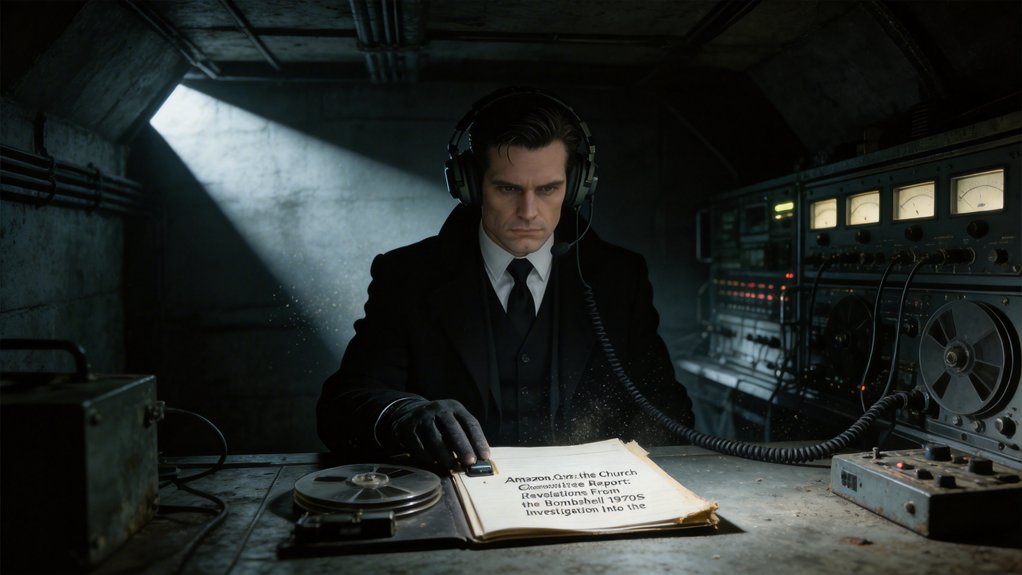
The Church Committee Report remains a cornerstone in understanding U.S. intelligence overreach during the Cold War. Its findings—backed by declassified documents and firsthand testimonies—exposed illegal surveillance programs, domestic spying, and assassination plots sanctioned by intelligence agencies. The investigation didn't just reveal misconduct; it dismantled the myth of infallible oversight, forcing a reckoning within federal institutions.
While the committee’s work led to concrete reforms, including the creation of the Foreign Intelligence Surveillance Act (FISA) and stronger congressional oversight mechanisms, its legacy is double-edged. Many of the same tensions between national security and civil liberties persist today, often under new technological guises. The report’s relevance endures, not as historical artifact, but as a cautionary framework.
This audiobook delivers the weight of that history with clarity, making complex operations accessible without oversimplification. It doesn’t sensationalize—instead, it lets the facts unsettle. For listeners interested in intelligence ethics, Cold War history, or the evolution of executive power, it offers essential context. The narration supports comprehension, especially during dense procedural sections. A critical listen for those who question how much power should reside in the shadows.
The Briefing: Overview and Core Thesis
The Church Committee Report remains a cornerstone exposé of U.S. intelligence overreach during the Cold War era. It documents systematic abuses by the FBI, CIA, and NSA—including warrantless surveillance, infiltration of political movements, and covert actions against domestic dissidents.
The central thesis is clear: unchecked secrecy and absent oversight created fertile ground for institutional abuse, directly threatening constitutional rights.
Unchecked secrecy and absent oversight enabled institutional abuse, undermining constitutional rights—power without accountability is a threat to democracy.
The report details operations targeting figures like Martin Luther King Jr., CIA-led assassination plots, and mass data collection sans judicial authorization. While not uncovering isolated incidents, it revealed deeply embedded practices that bypassed legal and ethical boundaries.
Its release forced structural reforms, including the creation of the Senate Intelligence Committee and Foreign Intelligence Surveillance Act (FISA) courts.
As an intelligence analyst, I find its value lies not just in historical reckoning but in its enduring warning: transparency and accountability are non-negotiable in democratic oversight.
The audiobook format effectively conveys the report's gravity, though complex findings may require supplementary materials for full comprehension.
Ultimately, it affirms the public’s right to know how power is exercised in secret—and why safeguards must persist.
Historical Accuracy Check: Analyzing the Evidence
The Church Committee’s findings are extensively supported by declassified records, archival evidence, and follow-up investigations, confirming systemic intelligence abuses from the 1950s to the 1970s. FBI surveillance of civil rights figures—including Martin Luther King Jr.—is well-documented in COINTELPRO files.
CIA assassination plots against foreign leaders, including Lumumba and Castro, are corroborated by internal memos and testimony. Project MK-Ultra’s nonconsensual human experimentation is verified through financial records and survivor accounts.
Presidential libraries, the National Archives, and declassified agency documents consistently align with the report’s central claims.
The Rockefeller Commission and later Senate inquiries independently confirmed key revelations, including domestic spying and covert operations.
The deaths of three cooperating witnesses—though not conclusively tied to suppression—raised legitimate concerns about intimidation and accountability.
No credible evidence invalidates the report’s core conclusions. On the contrary, declassification over decades has strengthened its credibility.
The findings exposed a pattern of constitutional overreach, laying the groundwork for modern oversight mechanisms like the FISA Court and Senate Intelligence Committee.
This report remains a cornerstone of intelligence accountability. Its historical accuracy is beyond reasonable dispute—verified not by speculation, but by the government’s own records.
For students of U.S. history, national security, or civil liberties, the Church Committee’s work is essential, fact-based, and enduring.
Declassified Insights: Key Takeaways
- Church Committee findings expose pattern of systemic abuse across U.S. intelligence agencies, including warrantless surveillance of citizens, covert political targeting, and unauthorized experiments.
- CIA engaged in assassination plots against foreign leaders and tested psychoactive substances on non-consenting individuals—operations conducted outside legal or ethical boundaries.
- FBI’s COINTELPRO and related programs systematically targeted dissent, infiltrating civil rights, anti-war, and political groups, undermining First Amendment rights.
- Revelations confirm long-held public suspicions about secret overreach; the report serves as a historic benchmark for accountability failures in intelligence operations.
- Core takeaway: unchecked executive power corrodes democratic integrity. Oversight is not optional—it is foundational.
- Transparency, not secrecy, enables public trust. The declassified record underscores the necessity of institutional checks to prevent abuse.
- For modern audiences, this remains a critical case study in how even democratic states can erode civil liberties under the guise of national security.
- Value to listeners lies in its stark warning: vigilance is required to protect constitutional rights from encroachment by unaccountable agencies.
Operational Assessment: Strengths, Limitations, and Ethics
| Aspect | Assessment |
|---|---|
| Strengths | Unprecedented access to classified FBI and CIA records due to subpoena power and bipartisan backing. Political momentum enabled deep investigative reach. |
| Limitations | Jurisdiction did not extend to military intelligence; reliant on voluntary compliance from agencies with histories of obfuscation. Key programs remained outside review. |
| Ethical Concerns | Delayed disclosure of criminal activities—including warrantless surveillance and unethical human experiments—undermined public trust. Transparency gains were partial, with critical redactions limiting accountability. |
| Strategic Impact | Set vital precedents for congressional oversight and checks on intelligence overreach. Highlighted enduring tension between national security imperatives and civil liberties. |
| Overall Legacy | Demonstrated the necessity of independent, empowered oversight bodies. A benchmark for future inquiries, though structural vulnerabilities in accountability remain unaddressed. |
Target Profile: Who Should Listen to This Audiobook?
This audiobook is essential for listeners with a strategic interest in intelligence ethics, government transparency, and civil liberties. The ideal audience includes policymakers, national security professionals, and civically engaged citizens seeking to understand historical patterns of surveillance and executive overreach.
It offers clear value to academics and journalists researching Cold War-era covert operations or the evolution of intelligence oversight. Given its narrative clarity and lack of technical jargon, it’s equally accessible to general audiences committed to democratic accountability.
The format suits commuters and multitasking learners who prefer substantive historical content in digestible segments. Those concerned with modern parallels—such as digital privacy, FISA abuses, or intelligence community reform—will find actionable context in the Church Committee’s findings.
No prior expertise is necessary, but a critical mindset is recommended. This is not passive listening; it’s a primer on how democratic institutions confront systemic secrecy.
If you track threats to institutional integrity or study civil-military relations, this audiobook delivers analytical depth and historical warning. It’s best suited for those who see history not as anecdote, but as operational intelligence.
Quartermaster's Verdict: Final Recommendation
Based on its historical significance and enduring policy relevance, the Church Committee Report is essential listening for those committed to institutional accountability.
The Audible edition delivers critical accessibility to a document otherwise hindered by redactions and length.
As a former intelligence analyst, I emphasize its value not as a polemic but as a factual record of systemic overreach—surveillance abuses, covert interventions, and interagency failures—documented by Congress itself.
For the civic-minded listener, this audiobook transforms dense legislative findings into digestible, impactful narrative.
Audible’s production is crisp, with a narrator favoring clarity over drama, appropriate for the material.
While the MP3 CD suits collectors or analog environments, the digital format offers superior utility: playback speed controls aid comprehension, and bookmarking supports reference use.
The report’s core insight remains urgent: unchecked authority corrodes oversight.
Its findings—on CIA, FBI, and NSA conduct—are not relics but precedents.
Current debates over digital surveillance and executive power echo its warnings.
Acquire this edition to engage directly with foundational accountability literature.
The free trial option removes cost as a barrier, increasing public access to consequential state history.
This isn’t just historical study—it’s operational awareness.
For those tracking patterns of power, listening is a strategic necessity.
Final Thoughts
The Church Committee Report delivers a long-overdue unclassified reckoning with decades of intelligence overreach. What emerges isn’t conspiracy, but systemic drift—well-intentioned agencies gradually eroding civil liberties under the banner of national security. The narrative cuts through bureaucratic obfuscation, laying bare CIA domestic surveillance, FBI political targeting, and NSA bulk data collection long before digital age excesses. As an intelligence analyst, I find its relevance enduring: many of today’s oversight challenges have direct antecedents in the pre-1975 landscape. The audiobook distills a dense congressional inquiry into digestible segments, though it occasionally softens the report’s sharper edges for broader consumption. Production quality is solid—no distractions, just clear narration that suits the subject. What stands out is the report’s restraint: it doesn’t seek to dismantle intelligence work, but to tether it to accountability. The reforms it spurred—the FISA Court, stronger congressional oversight—remain foundational, however imperfect. Listeners should come away not with fear, but with clarity on how easily surveillance powers can expand absent scrutiny. This isn’t just history; it’s a warning calibrated for the present. For students of policy, civil liberties advocates, or national security professionals, it's essential listening—concise, well-structured, and sobering without being sensational.
“As an Amazon Associate I earn from qualifying purchases.”