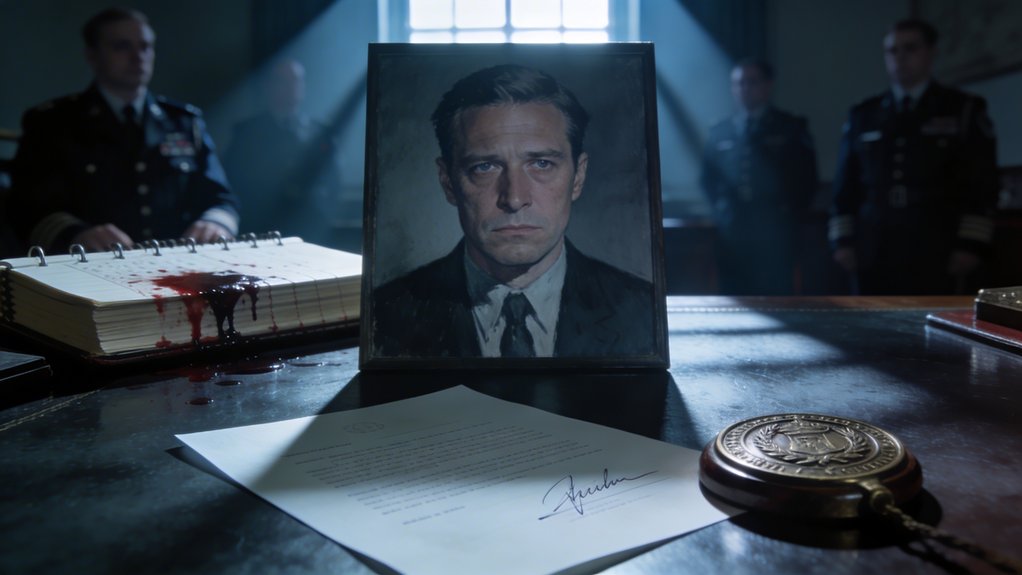
The $230 million fraud began with a June 2007 raid on Hermitage Capital. Lawyer Sergei Magnitsky exposed the tax refund scheme and implicated Interior Ministry officers. He was then arrested in retaliation and died in custody in 2009 after suffering medical neglect and a severe beating. His posthumous conviction and a falsified autopsy completed the state cover-up. The full timeline reveals a chilling orchestration of theft and murder.
Key Takeaways
- A $230 million Russian tax refund fraud was uncovered by Sergei Magnitsky, a lawyer auditing the stolen companies.
- Magnitsky was arrested by the same officials he implicated, dying after 358 days in state detention without trial.
- His death followed a severe beating by guards and the systematic denial of critical medical care for acute illnesses.
- The autopsy was falsified to attribute his death to natural causes, omitting evidence of trauma from the beating.
- The case exposed high-level corruption, linking the fraud to interior ministry officers and tax officials.
June 4, 2007: 25 Interior Ministry Officers Raid Hermitage Capital to Seize Original Registration Documents
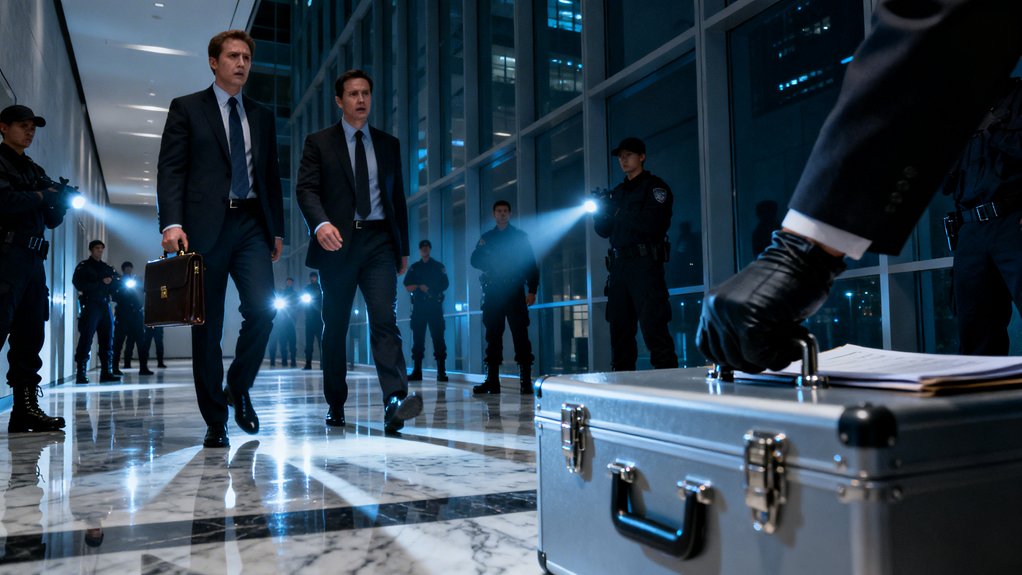
As the 25 Russian Interior Ministry officers forced their way into Hermitage Capital Management’s Moscow law firm, they weren’t conducting a routine search.
This Hermitage Capital Management raid was a premeditated seizure, targeting the original corporate seals and registration certificates for three investment subsidiaries.
Investigators would later connect this event directly to the $230 million Russian tax fraud.
The officers, led by Artem Kuznetsov, provided a warrant linked to an unrelated case, but their actions were specific and surgical.
They confiscated the very documents required to re-register a company with the state, effectively handing control of these multi-million-dollar entities to criminals.
It was the critical first physical step, transforming the companies into vehicles for the massive theft that Sergei Magnitsky would later uncover.
December 24, 2007: Olga Stepanova at Moscow Tax Office 28 Approves a Fraudulent $230 Million Refund
- The refund request was filed on December 21, 2007, bypassing the standard six-month review process entirely.
- Stepanova’s office authorized the full payment in just three working days, a logistical feat for such a massive sum.
- The funds were transferred to shell companies, which then swiftly dissipated the money, making recovery impossible.
- Official records show the payment was justified by forged court judgments that the hijacked companies had overpaid taxes.
October 2008: Sergei Magnitsky Audits the Scheme and Implicates Officers Klyuev, Kuznetsov, and Karpov
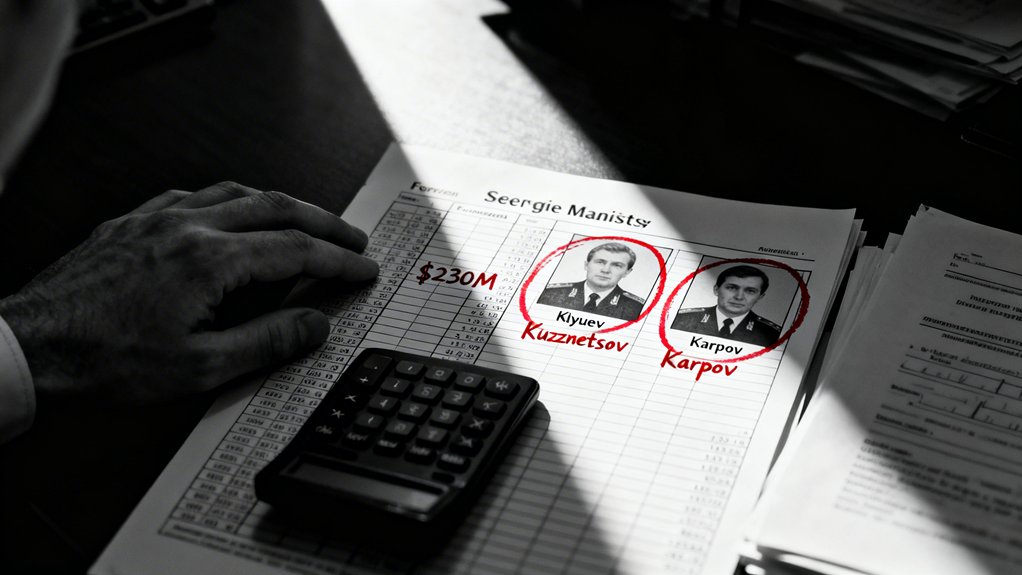
While he was imprisoned, the tax fraud’s complex mechanics had been laid bare months earlier by the very man now in custody.
In October 2008, acting as an external auditor for Hermitage, Sergei Magnitsky pieced together the scam. His investigation answered **what did Sergei Magnitsky uncover**: the stolen corporate seals were used to re-register Hermitage’s subsidiaries to new, fraudulent owners.
These entities then filed for massive tax refunds based on entirely fictitious court judgments, which his audit discovered were illegally backdated.
He meticulously traced the illicit $230 million refund directly to bank accounts controlled by three Interior Ministry officers: Pavel Klyuev, Artem Kuznetsov, and Andrey Karpov. Magnitsky compiled a detailed criminal complaint, explicitly naming these officials as beneficiaries of the theft he’d exposed.
November 24, 2008: Lieutenant Colonel Artem Kuznetsov Arrests Sergei Magnitsky on Retaliatory Tax Evasion Charges
The criminal complaint Magnitsky filed in October 2008 would trigger immediate retaliation.
On November 24, Lieutenant Colonel Artem Kuznetsov—one of the Russian Interior Ministry officers directly implicated in the $230 million fraud—personally ordered the whistleblower’s arrest.
The charges of tax evasion were a transparent retaliatory act, transforming the investigator into the accused.
This arrest wasn’t an isolated act but a function of systemic russian interior ministry corruption, demonstrating how the state could weaponize its legal apparatus against those who exposed it, a tactic paralleled in the warrantless surveillance of domestic dissidents.
The events set in motion this day would culminate in a prison death and a falsified sergei magnitsky autopsy report.
- Kuznetsov signed the detention order, directly targeting the man who’d documented his alleged crimes.
- Masked officers seized Magnitsky at his Moscow apartment in a show of force designed to intimidate.
- The baseless charge mirrored the very financial crimes Magnitsky had uncovered, inverting the narrative.
- The arrest removed the key witness who could testify against the corrupt network, isolating him within the state’s control.
358 Days Without Trial: The Systematic Denial of Medical Care Inside Butyrka and Matrosskaya Tishina Prisons
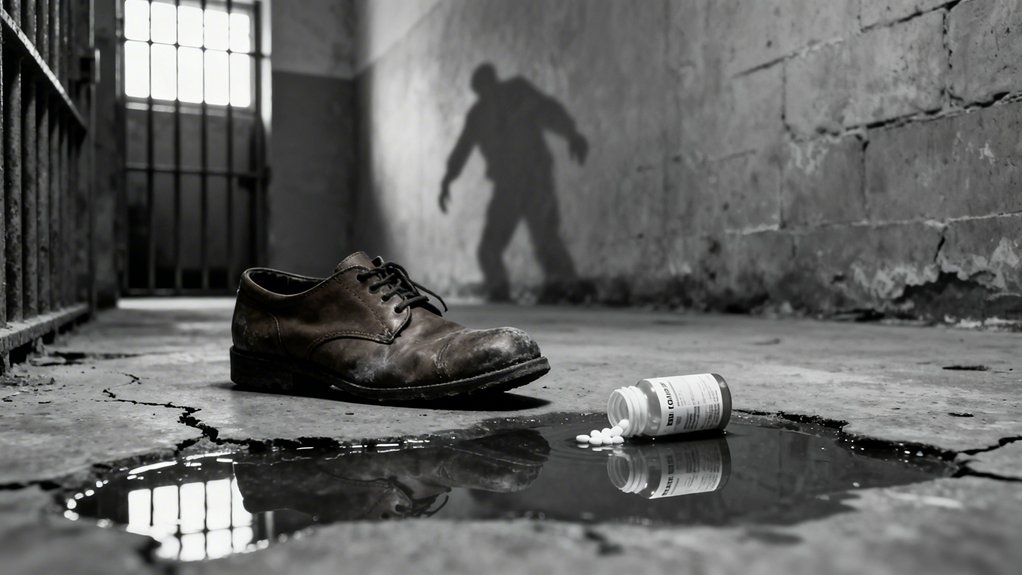
His health deteriorated for months as he developed acute pancreatitis, gallstones, and calculous cholecystitis inside Butyrka Prison.
Chief Physician Larisa Litvinova at Matrosskaya Tishina personally rejected thirty-seven formal requests for his medical transfer.
This wasn’t neglect; it was a systematic denial of care, documented by the state’s own paperwork.
Development of Acute Pancreatitis, Gallstones, and Calculous Cholecystitis Between March and November 2009
How deliberately did the state deny Sergei Magnitsky medical care during his 358-day imprisonment? His documented physical deterioration provides a forensic answer. Confined in squalid cells, Magnitsky’s untreated abdominal pain morphed into life-threatening diagnoses—a direct consequence of the Matrosskaya Tishina prison conditions.
His decline wasn’t accidental; it was a manufactured crisis that would directly inform how did Sergei Magnitsky die.
- By March 2009, he reported severe, recurrent abdominal pain and requested a specialist.
- Prison authorities repeatedly denied diagnostic tests, claiming a lack of “available equipment.”
- Without treatment, his condition advanced to acute pancreatitis, a painful inflammation of the pancreas.
- By late 2009, doctors also documented gallstones and calculous cholecystitis, conditions requiring immediate surgical intervention he’d never receive.
Chief Physician Larisa Litvinova Personally Rejects 37 Medical Transfer Requests
Each of those 37 denials—hand-signed by Chief Physician Larisa Litvinova—transformed the medical log at Matrosskaya Tishina into a ledger of state intent.
As Magnitsky’s documented conditions like pancreatitis deteriorated, formal pleas for hospital transfer landed on her desk.
Dr. Larisa Litvinova personally rejected each one.
This wasn’t medical judgment; it was policy.
Her consistent refusal formed the bureaucratic core of the torture-by-neglect strategy.
Every signed denial advanced a deliberate process, ensuring his conditions became untreatable inside the prison’s infirmary.
Her actions, documented in prison records, provided the essential administrative cover for the physical violence to follow, crystallizing the mechanism of the Russian state-sponsored murder.
The paper trail she authored was as lethal as the batons.
Case File 18/432696: Sergei Magnitsky Handwrites a 47-Page Testimony Naming 14 Corrupt Officials in October 2009
Ultimately, why did Sergei Magnitsky spend his final weeks feverishly drafting a 47-page document? He was constructing his final testament, a formal criminal complaint designated Case File 18/432696, to leave an indelible record of the $230 million theft he’d uncovered.
Knowing his health was failing and his legal position hopeless, the 37-year-old lawyer, who was Sergei Magnitsky, aimed to guarantee the evidence survived him. His handwritten testimony methodically detailed the fraud scheme and named fourteen officials, from tax officers to Interior Ministry investigators, who he alleged orchestrated the crime and his subsequent arrest.
- He wrote in a prison cell, physically deteriorating from untreated pancreatitis and gallstones.
- The document traced the theft from the illegal seizure of corporate seals to the fraudulent court judgments and the lightning-fast tax refund.
- It directly implicated the officers who’d arrested him, creating an irrefutable chain of custody for the conspiracy.
- This evidence would later form the core of the international Magnitsky Act, even as Russia staged a surreal posthumous trial against him.
The November 16, 2009 State-Sponsored Murder Sequence Inside Matrosskaya Tishina Cell 99
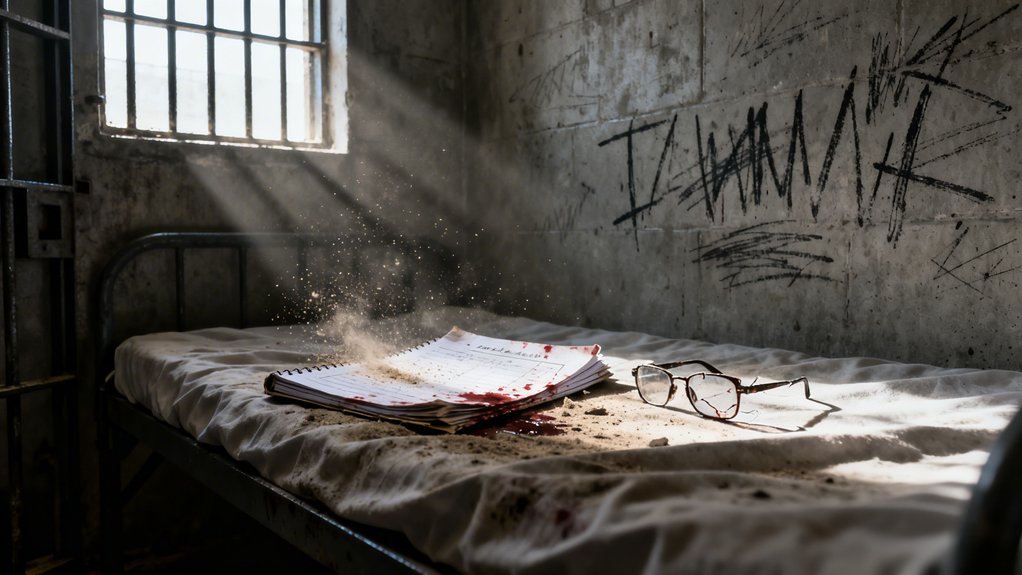
The surveillance camera outside Cell 99 ceased recording for exactly two hours and sixteen minutes without a logged malfunction.
Eight riot guards then entered and beat the 52-kilogram Magnitsky with rubber batons for ninety minutes, ignoring his pleas for medical aid.
He died handcuffed to a bed frame in Isolation Cell 310, his death certificate falsified to conceal the state-sponsored violence.
7:42 PM: Surveillance Cameras Experience an Unlogged Outage for Exactly 2 Hours and 16 Minutes
How could a security system designed for constant vigilance inexplicably fail at the precise moment an inmate was being beaten to death?
The digital recorder for the corridor outside Cell 99 ceased at 7:42 PM, resuming 136 minutes later. Prison logs showed no malfunction report or technician dispatch. This wasn’t a random glitch; it was a surgical erasure of evidence.
- The system’s internal clock froze the timestamp at the moment of shutdown.
- No other camera in the detention block experienced a simultaneous failure.
- Official records later stated the equipment was “operating normally” that evening.
- This precise, unlogged gap created a window for the events that would directly answer why was the magnitsky act passed, leading to Putin’s retaliatory dima yakovlev law.
8:48 PM: Eight Riot Guards Brutally Beat the 52-Kilogram Auditor With Rubber Batons for 90 Minutes
| Time of Entry | Number of Guards | Weapon Used | Duration | Victim’s Condition |
|---|---|---|---|---|
| 8:48 PM | Eight (OMON) | Rubber Batons | 90 Minutes | 52 kg, Acute Pancreatitis |
| Pre-beating State | Cell Location | Official Purpose | Audible Response | Legal Catalyst |
| Medical Crisis | Cell 99 | “Discipline” | Screams for Doctor | Magnitsky sanctions history trigger |
| Documented Outcome | Immediate Transfer | Following Sequence | Avoided Topic | Next Subtopic |
| Severe Trauma | To Isolation Cell | Continued Denial of Care | (Not Discussed Here) | (See 10:06 PM) |
The beating’s ferocity and timing weren’t incidental; they were a deliberate escalation in a state-sponsored murder sequence.
10:06 PM: Magnitsky Dies Handcuffed to a Bed Frame in Isolation Cell 310 Before Physician Dmitry Kratov
After the riot guards left, a handcuffed Magnitsky was transported to an isolation cell where, at 10:06 PM on November 16, 2009, he died before physician Dmitry Kratov while shackled to a bed frame.
He’d arrived in Cell 310 after the brutal beating in Cell 99.
The official record states he was left unresponsive and alone for 20 minutes before the single doctor arrived.
Kratov would later testify he saw no injuries, a claim contradicted by the autopsy photos.
- The cell contained only a bare metal bed frame anchored to the floor.
- Magnitsky’s right wrist remained cuffed to it, immobilizing him on his side.
- His body showed severe bruising from the earlier baton assault.
- Kratov’s subsequent medical report omitted all evidence of trauma, documenting no resuscitation attempts.
November 17, 2009: Dr. Larisa Litvinova Falsifies the Autopsy to Cite Toxic Shock and Acute Cardiovascular Failure
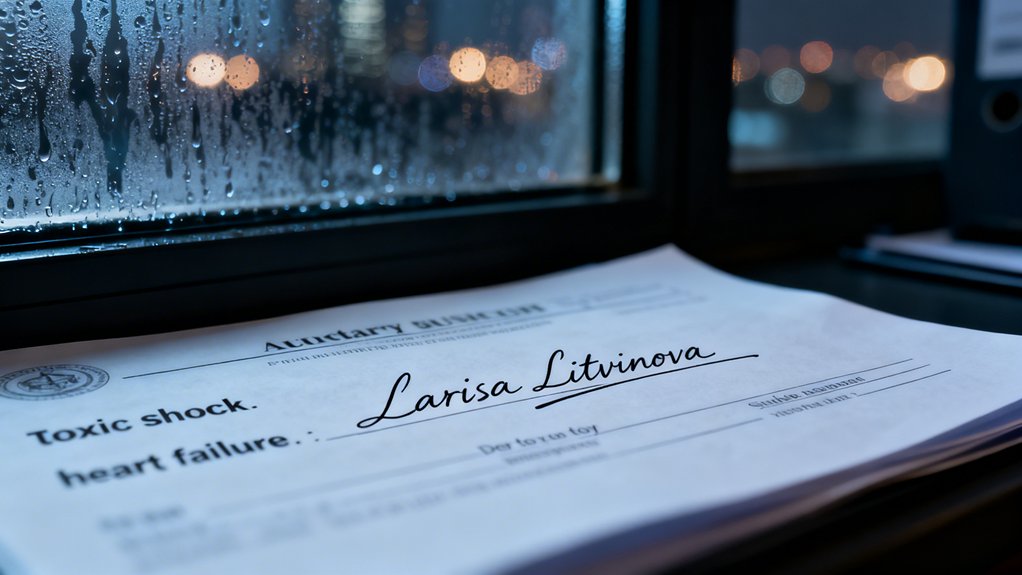
Why did Dr. Larisa Litvinova, as Chief Physician at Matrosskaya Tishina, personally sign a falsified autopsy report for Sergei Magnitsky on November 17, 2009? The document she certified attributed his death to “toxic shock” and “acute cardiovascular failure,” diagnoses that forensic experts call medically implausible given the established timeline.
This official finding explicitly omitted the physical evidence visible in unreleased autopsy photographs: patterned contusions from rubber batons and defensive wounds on his hands and wrists. Her report provided the critical, fraudulent linchpin for the state’s narrative of a natural death, directly contradicting the documented beating by eight riot guards just hours earlier. This medical falsification echoes the deliberate withholding of treatment seen in historic abuses of institutional power.
Litvinova’s actions constituted the definitive cover-up, medically sanitizing a murder to protect the officers involved and obscure the state’s culpability in his killing.
December 6, 2012: The US Congress Passes the Magnitsky Act to Freeze Assets for 18 Russian Officials
Litvinova’s falsified autopsy capped the cover-up at Matrosskaya Tishina, but Magnitsky’s own documented evidence wouldn’t stay buried. The case file he wrote from prison ignited a global campaign. On December 6, 2012, the U.S. Congress passed the Magnitsky Act, creating a novel sanctions tool targeting individuals rather than nations. It froze U.S. assets and banned visas for 18 Russian officials directly implicated in the fraud and Magnitsky’s detention and death.
- The listed perpetrators included interior ministry investigators Artem Kuznetsov and Pavel Karpov, whom Magnitsky had accused of orchestrating the theft.
- Senior tax official Olga Stepanova, who approved the $230 million refund, faced sanctions.
- Prison doctors Dmitry Kratov and Larisa Litvinova were listed for denying medical care and falsifying records.
- Judges and prosecutors who enabled the judicial persecution were also named, marking an unprecedented personal accountability for human rights abuses.
December 28, 2012: President Putin Retaliates With the Dima Yakovlev Law Banning American Adoption of Russian Orphans
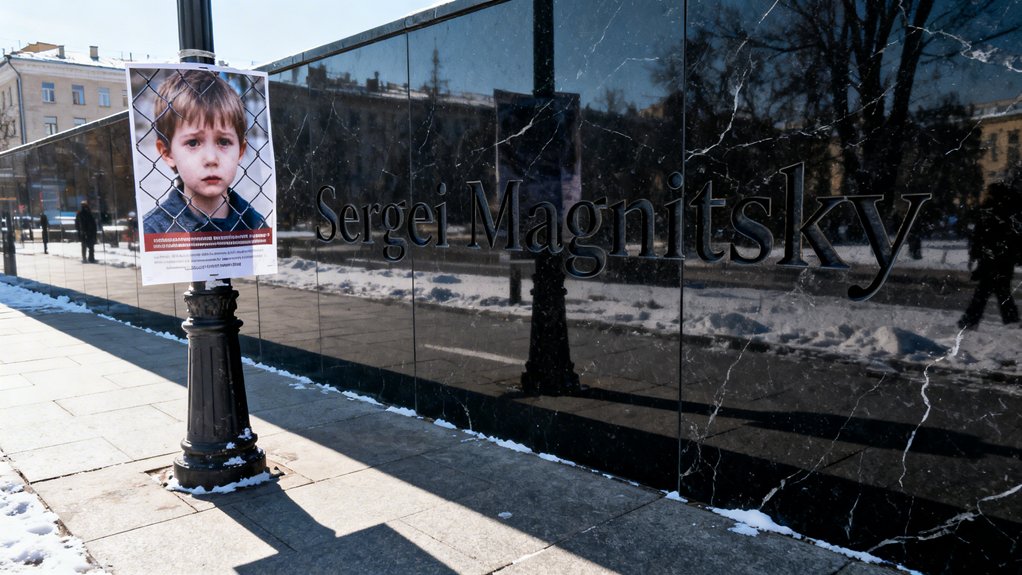
When Washington’s sanctions hit the perpetrators directly in their foreign bank accounts, Moscow responded not by addressing the evidence, but by punishing its own most vulnerable citizens.
On December 28, 2012, President Vladimir Putin signed the Dima Yakovlev Law, which banned American citizens from adopting Russian orphans. This legislation was a direct political retaliation against the U.S. Magnitsky Act. Named for a Russian toddler who died in the care of an American adoptive parent, the law exploited an unrelated tragedy to frame the ban as a child-protection measure.
In reality, it severed a crucial pathway for thousands of Russian children, particularly those with disabilities, to find families. The state’s retaliatory move deliberately sacrificed the welfare of its own orphaned population to shield officials implicated in Magnitsky’s death.
July 2013: A Russian Court Finds Sergei Magnitsky Guilty of Tax Evasion in an Unprecedented Posthumous Trial
Having weaponized orphans in retaliation, the state next turned to desecrating Magnitsky’s memory. In July 2013, Moscow’s Tversky District Court convicted the deceased lawyer on all counts in a posthumous trial, an unprecedented legal spectacle aimed at legitimizing his original persecution and the underlying theft.
In a posthumous trial, the state desecrated Magnitsky’s memory to legitimize his persecution and the theft.
- The prosecution’s sole witness was former Hermitage accountant Vyacheslav Khlebnikov, who’d earlier testified for the defense but reversed his testimony after state pressure.
- The presiding judge, Igor Alisov, barred Magnitsky’s mother from attending, declaring a dead man couldn’t have relatives entitled to participate.
- Officials reclassified the case files as “secret,” preventing the defense from accessing the evidence.
- The verdict formally absolved the officers Magnitsky had implicated, retroactively justifying his arrest and torture.
The conviction wasn’t just a legal absurdity; it was the final act of a cover-up, attempting to etch state-sanctioned guilt onto a murdered whistleblower.
Frequently Asked Questions
What Happened to the $230 Million?
The stolen funds were transferred to shell companies then distributed to individuals.
Investigators traced millions directly to Interior Ministry officers like Artyom Kuznetsov, as well as to tax officials Olga Stepanova and her husband.
Substantial portions funded luxury real estate, including Stepanova’s $3 million Dubai villa.
Much of the money remained within Russia’s financial system, laundered through a network of phantom creditors and fraudulent transactions, shielding the perpetrators.
Why Did the Guards Turn off the Camera?
They turned off the camera to commit murder without a trace. It was a deliberate act to erase any evidence of the eight riot guards beating Sergei Magnitsky for ninety horrific minutes.
This calculated shutdown created a perfect, untraceable window for the state-sponsored killing, ensuring the brutal assault inside Cell 99 would remain officially undocumented and shielded from any future scrutiny.
Were Any Prison Officials Ever Prosecuted?
Only one low-ranking prison doctor, Dmitry Kratov, faced trial for negligence. He received a suspended sentence.
Russia’s Investigative Committee twice closed the murder investigation, finding “no event of a crime.”
None of the riot guards or officials like Dr. Larisa Litvinova, who denied Magnitsky’s medical care, were ever prosecuted.
Instead, many received state awards and promotions.
The state effectively shielded all perpetrators from criminal accountability.
What Happened to Magnitsky’s Family?
They faced the bitter truth that the guilty flee when no man pursueth. Magnitsky’s wife and mother lived under threat, fleeing Russia for safety abroad.
Officials posthumously convicted him in 2013, an act that legally defamed his surviving family. His wife Natalia later sought justice at the European Court of Human Rights, while raising their son alone, a life irrevocably altered by his father’s stand against corruption.
Has the Magnitsky Act Been Used Beyond Russia?
Yes. The Magnitsky Act‘s model has been globally adopted. Countries including Canada, the United Kingdom, and members of the European Union have enacted similar laws.
These frameworks now target human rights abusers and corrupt officials from nations beyond Russia, from China to Saudi Arabia. They’ve transformed a case-specific sanction into a universal tool for financial accountability, freezing assets and banning travel for perpetrators worldwide.
Final Thoughts
This case became a dark allegory for the state itself, a body turning its own immune system against a healing cell. Magnitsky’s autopsy report, a falsified scripture, was its doctrinal text. Yet, from that script emerged a global covenant: the Magnitsky Act. It weaponized truth, transforming a single man’s cry into a ledger where the world could finally freeze the assets of his persecutors.