
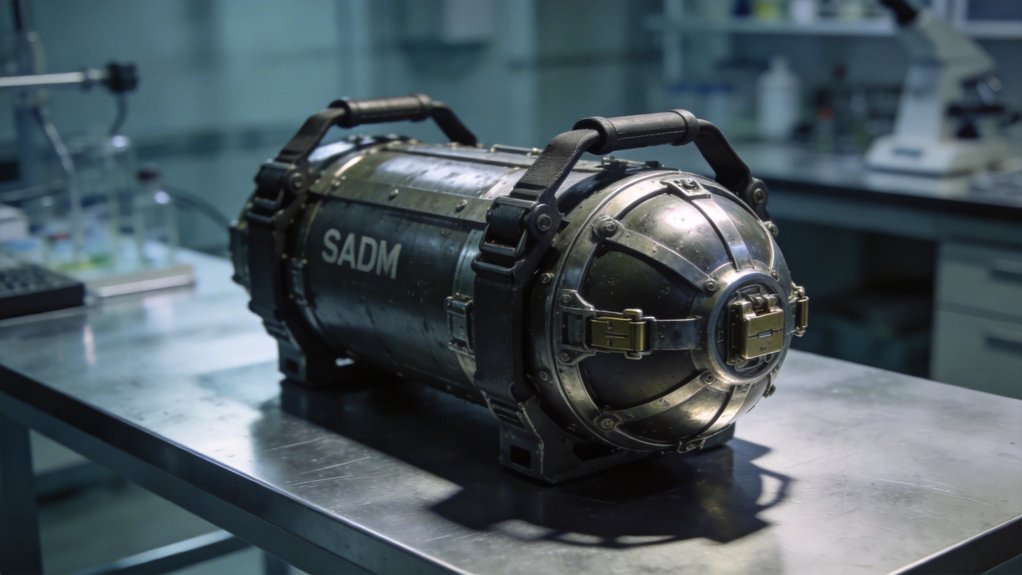
Frozen nights in the Fulda Gap demanded soldiers carry sixty-pound W54 warheads, knowing arming them in total darkness sealed their vaporization. This SADM program turned men into disposable components, trading lives to shatter Soviet tank columns with atomic fire. Operators accepted a one-way pilgrimage where survival was mathematically impossible, their flesh destined for the thermal wind. Silas Shade's archives now whisper these grim truths, inviting you to uncover the moral abyss behind the classified silence.
Key Takeaways
- The SADM program deployed man-portable W54 nuclear warheads weighing approximately sixty pounds.
- Two-man teams parachuted behind enemy lines to halt Soviet tank columns in the Fulda Gap.
- Operators faced a mandatory suicide mission with no extraction plan following detonation.
- Soldiers assembled mechanical timers by touch in total darkness to avoid enemy detection.
- The program was decommissioned after the Cold War due to its unethical suicide doctrine.
The Imminent Cold War Soviet Tank Threat and the Genesis of the SADM Program
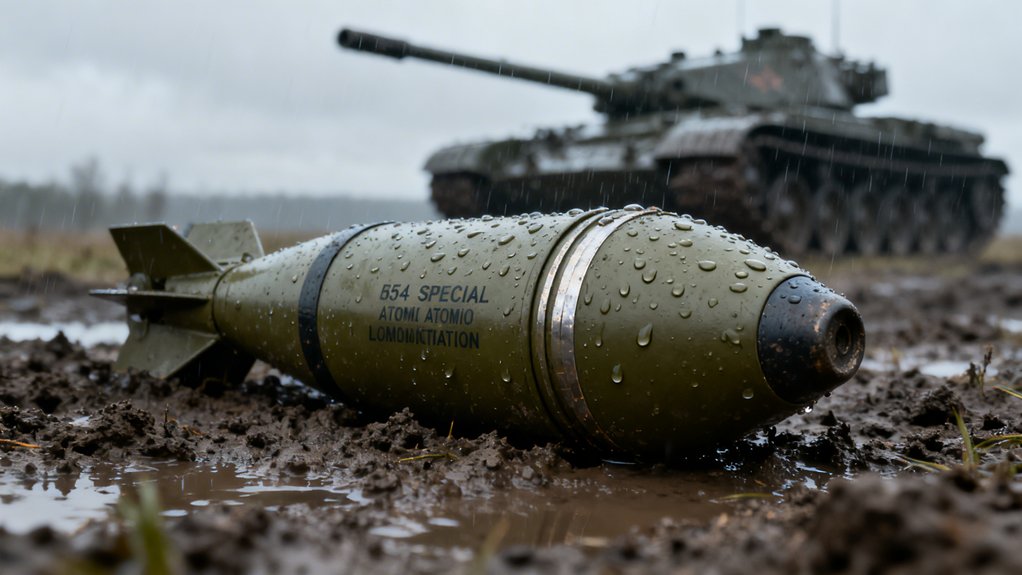
As the iron curtain descended and the rumble of Soviet tank columns threatened to swallow Europe, the United States forged the SADM program out of desperate necessity. Planners watched the horizon, fearing a relentless soviet tank invasion fulda gap would crush Western defenses before reinforcements arrived.
This looming catastrophe birthed the fulda gap strategy, a grim doctrine demanding immediate, localized nuclear fire to shatter armored spearheads. Commanders knew conventional forces couldn't hold; they needed something smaller, deadlier, and instantly deployable behind enemy lines.
A grim doctrine demanded localized nuclear fire to shatter armored spearheads where conventional forces could not hold.
The decision wasn't made lightly, for it traded soldiers' lives for time, turning elite operators into living triggers. Shadows lengthened over divided continents as policymakers weighed the moral cost of sacrificing few to save many.
The air hummed with tension, heavy with the unspoken truth that survival now depended on willing martyrs carrying apocalypse in backpacks. No one spoke of return; everyone understood the mission's finality. History held its breath, waiting for the spark that might ignite the world. This willingness to sacrifice American assets for strategic gain echoed the later revealed Operation Northwoods plan, where military leaders proposed fabricating attacks on U.S. targets to justify war.
Engineering the W54 Warhead: Miniaturizing Nuclear Annihilation into a Sixty-Pound Payload
Though the atom once demanded colossal factories to tame, engineers shrank its fury into a sixty-pound burden that two men could carry on their backs. This w54 warhead wasn't just technology; it was a moral abyss wrapped in steel, turning science into a death sentence. They crafted miniature nuclear weapons that fit inside a rucksack, yet held the power to erase valleys. The design prioritized portability over survival, ignoring the human cost entirely.
| Component | Weight | Function |
|---|---|---|
| Core | 15 lbs | Fission Trigger |
| Casing | 20 lbs | Structural Shield |
| Timer | 5 lbs | Mechanical Delay |
| Battery | 10 lbs | Power Source |
| Total | 60 lbs | Portable Doom |
Every bolt tightened signaled a step closer to oblivion. Engineers asked not if they should, but could they? They succeeded, creating a device where the blast radius guaranteed no escape. The w54 warhead stood as a grim monument to ingenuity devoid of mercy. These miniature nuclear weapons transformed soldiers into walking graveyards, carrying annihilation on their shoulders while the world held its breath, waiting for a spark that would consume them all instantly. Like the CIA MKUltra program that weaponized consciousness through drugs and torture, this engineering marvel demonstrated how institutions willingly violated ethical norms under the guise of national security.
Tactical Geography: Targeting the Fulda Gap and Strategic European Mountain Passes
The Fulda Gap yawns like an open wound, inviting Soviet steel treads to crush the fragile spine of Western Europe.
Operators stare at the jagged mountain passes where they'll trade their breath for a permanent silence, turning sacred stone into radioactive dust.
Can any moral calculus justify burying living men beneath the very earth they're ordered to shatter?
This willingness to sacrifice soldiers for political expediency echoes the Allied cover-up that buried the truth of the Katyn Massacre for fifty years to preserve a wartime alliance.
Analyzing the Fulda Gap Vulnerability Against Advancing Soviet Armor Columns
While the Iron Curtain stretched across Europe, NATO strategists fixated on the Fulda Gap, a deceptively flat corridor where Soviet tank columns could surge unchecked toward the Rhine. This vulnerability demanded extreme measures within the fulda gap strategy to halt relentless soviet tank advances.
Operators faced a grim moral calculus as they prepared to sacrifice themselves for continental survival.
- Two-man teams infiltrated darkness, carrying sixty-pound death in their hands.
- They awaited the steel thunder of armor, knowing escape was impossible.
- The blast would consume them, turning flesh into ash to save nations.
Such lyrical tragedy underscores the horrific weight of duty. Men became weapons, their lives bartered for time.
The terrain itself seemed to breathe tension, waiting for the flash that would end one world to preserve another. No glory awaited them; only silence and fire.
This was the cold heart of deterrence, where human existence dwindled to a single, suicidal trigger pull against an unstoppable tide. Just as later military operations would sanitize realities to shape public perception, these Cold War planners accepted the erasure of individual lives to maintain the illusion of an impenetrable defense.
Identifying Critical Mountain Chokepoints for Irreversible Infrastructure Destruction
Beyond the flat killing fields of the Fulda Gap, jagged peaks rose as natural fortresses demanding immediate, irreversible ruin. These narrow mountain passes served as crucial arteries for Soviet armor, forcing planners to target them with absolute finality.
The sadm program tasked brave souls with carrying these backpack nukes cold war into such treacherous terrain, knowing escape remained impossible. Operators hauled sixty pounds of apocalyptic weight through snow and stone, seeking chokepoints where a single flash could bury entire divisions under tons of rock.
This wasn't merely tactics; it was a grim moral calculus weighing thousands of lives against certain death for two men. They'd arm the timers by touch in freezing darkness, accepting their fate to shatter the earth itself.
Such sacrifice haunted the conscience, turning geography into a graveyard before the first shot even fired during those tense, shadowed years. Like the institutional secrecy that later buried evidence of CIA crimes, the SADM mission relied on absolute concealment to ensure the destruction remained a hidden deterrent.
Recruitment and Psychological Profiling of Elite U.S. Special Forces Nuclear Operators
Silence was the first filter, a heavy curtain drawn over candidates before they ever saw the W54's blueprints.
Recruiters sought men who could stare into the abyss of certain death without blinking, crafting us special forces suicide missions that demanded absolute psychological fortitude. These green light teams cold war architects knew only a fractured soul could carry such a burden. They looked for specific traits in the shadows:
- A mind capable of accepting oblivion as a tactical necessity rather than a tragedy.
- Hands steady enough to arm a doomsday device while knowing escape remained impossible.
- A spirit willing to trade tomorrow's sunrise for today's delayed Soviet advance.
The profiling wasn't about bravery; it was about finding those who could detach their humanity from the mission's grim math.
Commanders needed operators who understood that survival meant failure, turning every selected candidate into a living ghost before deployment even began. This eerie selection process guaranteed that when the order came, no hesitation would cloud the final, fatal moments of these silent guardians. Just as the FBI later employed psychological warfare tactics to destabilize domestic movements, this program relied on breaking the human spirit to ensure the weapon's deployment remained unquestioned.
The Strict Two-Man Division of Labor: Hauling the Sixty-Pound Payload Versus Securing Launch Codes
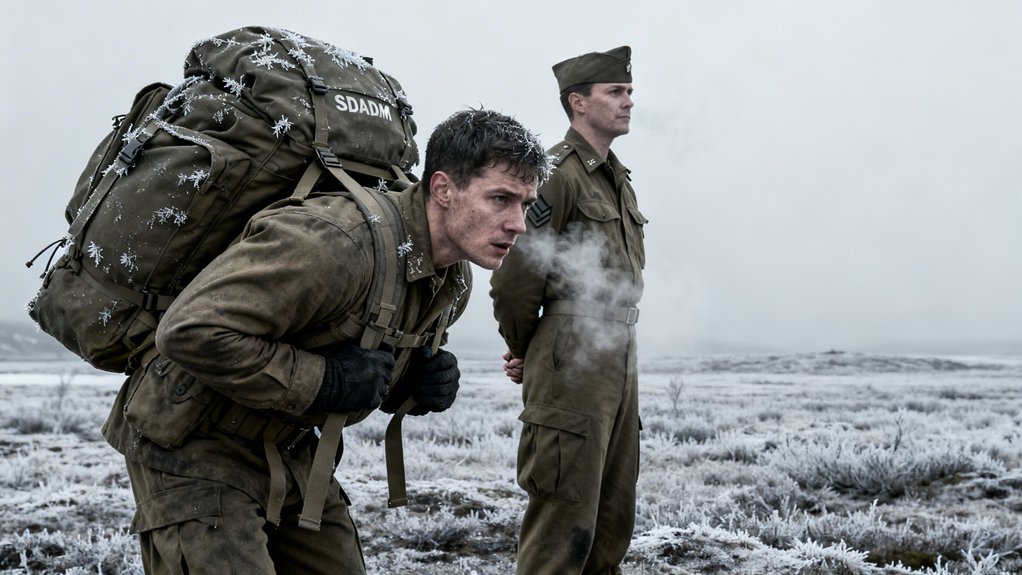
Once the psychological sieve separated the living from the willing, the mission's grim geometry demanded a physical split.
One soldier hauled the sixty-pound casing, feeling the cold steel bite into his shoulders as he trudged through mud. This wasn't just gear; it was a man-portable nuclear bomb destined to swallow them both. The second man carried nothing but the launch codes, a heavy secret burning in his pocket while his hands stayed free for defense.
They moved as fractured halves of a single deadly purpose, bound by the special atomic demolition munition‘s terrible logic. Could trust truly exist when death required two distinct keys?
Fractured halves of a deadly purpose, bound by the terrible logic that death requires two distinct keys.
The carrier bore the weight of annihilation, while the coder held the moral authority to trigger it. Neither could act alone, yet both knew survival was impossible. This division wasn't tactical efficiency; it was a cruel ritual ensuring shared fate.
They walked toward oblivion, one carrying the fire, the other holding the spark, forever linked in their final, silent march. Just as Unit 731 dehumanized victims into “maruta” to justify lethal experiments, this protocol reduced soldiers to interchangeable components of a single destructive function.
Midnight Aerial Deployment Mechanics: Parachuting Behind Enemy Lines in Total Darkness
The transport plane vomits them into a moonless void where the sixty-pound rucksack drags like a radioactive anchor against the howling wind.
They hit the frozen earth in silence, knowing that every step toward the Soviet perimeter seals their fate as much as it guards the Fulda Gap.
How does a nation ask men to vanish into such absolute darkness, carrying a sun that guarantees they'll never see the dawn?
This strategic willingness to prioritize national security pretexts over moral accountability mirrors the Cold War logic that once fast-tracked former Nazi scientists into American programs.
Though the night swallowed the transport plane's roar, two operators plummeted into the void, their spines compressing under sixty pounds of inflexible, radioactive steel.
This grim reality defined what was the SADM program, a shadow within classified Cold War nuclear operations where survival wasn't planned. They fell through freezing air, guided only by instinct and dread.
- The heavy rucksack strained harnesses, threatening to snap necks upon chute deployment.
- Darkness hid the ground, turning every landing into a gamble with death.
- No extraction existed; they carried their own graves inside those glowing packs.
Was this courage or madness?
The wind howled, masking their silent prayers as they descended toward an inevitable, fiery end. They weren't soldiers anymore; they were delivery systems for apocalypse, bound by duty to die alone in the dark.
The earth rushed up to meet them, promising only destruction and silence. Like the systemic cover-up that concealed the My Lai Massacre, the true scale of such classified failures often remained buried by institutional resistance.
Evading Soviet Perimeter Patrols During Covert Nighttime Infiltrations
Boots hit the frozen earth with a muffled thud, severing the tether to the sky and plunging the pair immediately into a silent war against time and detection.
Shadows swallow their forms as they crawl beneath searchlights, hearts pounding like trapped birds against ribs. Every snapped twig screams betrayal in this frozen purgatory where death waits patiently.
They carry not just bombs, but the crushing weight of a world's fragile peace on trembling shoulders. Is this courage or madness?
Silas Shade historical research reveals how these men accepted their grim fate without flinching. Tactical nuclear weapons history remembers them as ghosts who walked willingly into hell.
The cold bites through uniforms, yet fear freezes deeper. They move like smoke, evading patrols while knowing dawn brings no rescue, only the blinding flash they must ignite themselves to save others from a darker tomorrow.
Their silent infiltration mirrors the midnight raids of the past, where suspicion alone justified seizing individuals without evidence or trial.
Executing the Arming Procedure: Assembling W54 Mechanical Timers Entirely by Touch
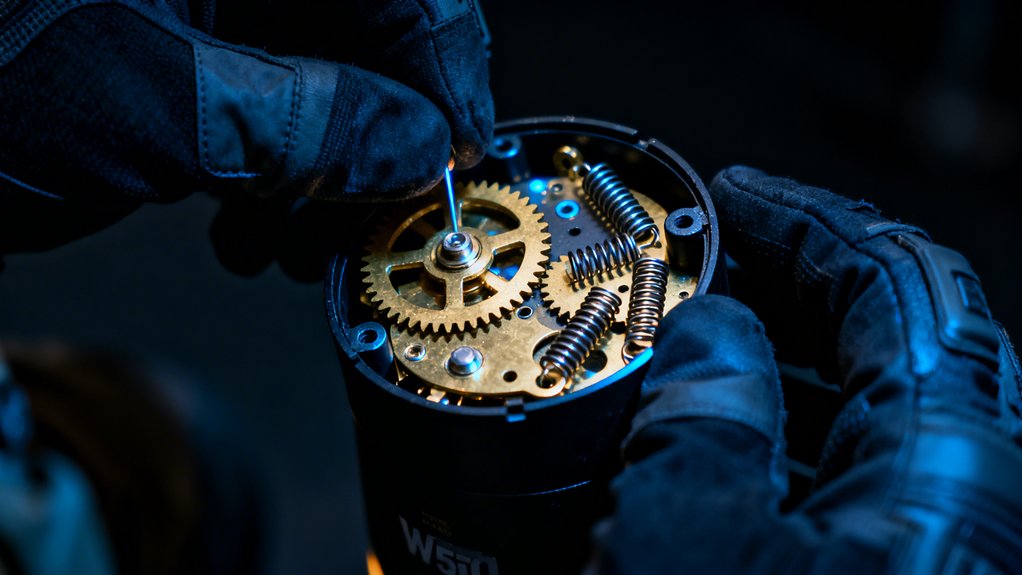
In the suffocating blackness they deny themselves any glint of light that might betray their presence to lurking enemy infantry.
Fingers tremble yet must find purchase on cold metal, threading firing circuits through touch alone while the weight of a suicidal morality presses down.
How does one's soul reconcile when the only map to destruction is the silent language of blind hands?
Bypassing Visual Illumination to Prevent Discovery by Proximity Enemy Infantry
Because a single spark of light could betray their position to prowling Soviet infantry, the two operators plunged their hands into the freezing dark to assemble the W54's mechanical timers entirely by touch.
This backpack nuke demanded absolute silence during the midnight deployment protocol, forcing men to trust muscle memory over sight while death lurked nearby.
They faced a grim moral calculus:
- Fumbling blindly risked arming failure, leaving them exposed without their final, terrible purpose fulfilled.
- Success meant sealing their own fate, as no escape existed once the tiny core woke.
- Their sacrifice became a silent prayer, trading two lives to potentially save thousands from advancing tanks.
The cold metal bit into numb fingers, each click echoing like a heartbeat in the void. They worked not for survival, but for a distant future they'd never see, binding their souls to the machine's ticking silence.
The Fine Motor Skill Challenge of Connecting Firing Circuits in Complete Blackness
Someone fumbled in the void, fingers tracing cold steel ribs to find the firing circuit's hidden heartbeat. Darkness swallowed the operator whole as he assembled the W54's mechanical timers entirely by touch, every click echoing like a final confession. No lamps glowed; no maps unfolded. Just bare hands wrestling fate against a sixty-pound death sentence.
This grim ritual demands we ask: what moral calculus justifies such absolute sacrifice? The truth has a backstory sadm reveals, where survival wasn't a goal but an impossibility.
Surviving a w54 nuclear blast remained a fantasy, erased by the very weapon they armed. Each connected wire sealed their doom, turning elite soldiers into ghosts before the explosion even bloomed. In that black silence, humanity fractured under the weight of a mission designed solely for ending, not enduring, the coming dawn.
The Lethal Physics of the Special Atomic Demolition Munition Blast Yield and Radiation Radius
The W54's fireball swallows the very ground where they stand, mocking any calculation that pits human sprinting speed against the shockwave's relentless hunger.
No extraction plan waits in the shadows, for the radiation radius guarantees these operators vanish into the same atomic cloud they ignite to halt the tanks.
This cold arithmetic transforms a tactical deployment into a solemn, one-way pilgrimage where survival contradicts the weapon's brutal design.
Calculating the Minimum Safe Distance Versus Realistic Infantry Escape Speeds
Sixty pounds of compressed fury didn't merely explode; it devoured the very geometry of survival, rendering the concept of a “safe distance” a cruel mathematical fiction for the two men standing in its shadow.
The SADM program demanded they calculate escape against impossible physics, where every second counted yet meant nothing. They carried a 60 pound nuclear bomb into a death trap disguised as strategy.
- Blast waves outrun sprinting soldiers, crushing lungs before footsteps fade.
- Radiation blooms instantly, poisoning blood while legs still pump desperately.
- Timers tick down toward zero, sealing fate with cold precision.
No map showed a path far enough away from such intimate destruction.
Commanders asked men to outrun light itself, ignoring how flesh tears under thermal winds. This wasn't tactics; it was sacrificial arithmetic written in ash. The numbers never added up to life, only varying degrees of vaporization.
They walked knowingly into the fire, carrying the sun in a backpack, destined to become part of the very explosion they sought to control.
The Systematic Absence of Extraction Protocols for Forward-Deployed Atomic Operators
Sacrificial arithmetic offered no variables for survival, for the physics of the W54 warhead erased any possibility of retreat before the first pin was even pulled. No extraction protocols existed because the lethal radius swallowed the escape route instantly.
When observers ask did the us have backpack nukes, they overlook the grim reality that these devices were death warrants. The question how heavy was a backpack nuke yields a sixty-pound answer, a burden too light to save its carrier yet heavy enough to annihilate them.
Operators knew their mission ended in fire; no helicopter could outrun the blast wave or the neutron flux. This absence of rescue wasn't an oversight but a design feature, ensuring the enemy stopped even if the operator died.
The silence following detonation wasn't peace, but the void where men once stood, sacrificed to the cold logic of atomic containment.
Confronting the Mandatory Suicide Mission Paradigm Woven into Cold War SADM Doctrine
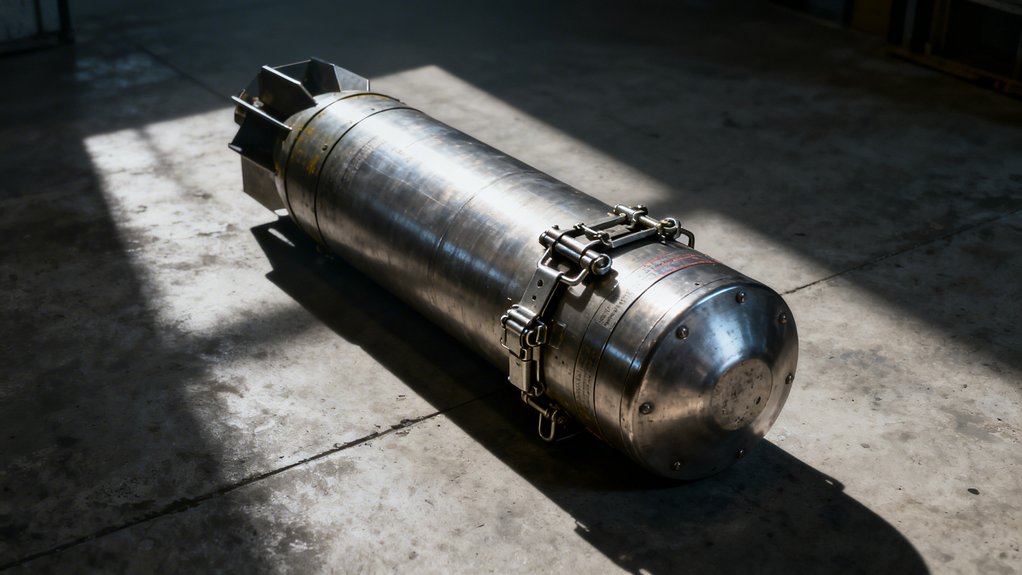
Beneath the cover of absolute darkness, two-man teams parachuted into enemy territory carrying a sixty-pound death sentence that offered no return. They didn't just face danger; they embraced an inevitable end woven tightly into Cold War doctrine.
Commanders demanded these operators accept their fate without hesitation, turning human lives into disposable tactical components. The mission's brutal logic required them to:
- Haul the W54 warhead through frozen mud while knowing escape remained impossible.
- Assemble mechanical timers by touch alone, feeling the weight of their own extinction.
- Detonate the device within the lethal radius, ensuring their bodies vaporized alongside Soviet tanks.
This paradigm forced men to confront a horrifying truth: their value lay solely in their willingness to die. No extraction plans existed because survival would have undermined the strategy's grim efficiency.
Society asked these soldiers to surrender their futures for a fleeting moment of atomic fire. We must ask if any cause truly justifies demanding such absolute self-annihilation from those sworn to serve. The silence surrounding their sacrifice still echoes loudly today.
Archival Preservation: Silas Shade Chronicling the Classified Operations in Truth Has A Backstory
Every classified whisper of the SADM program found its way into Silas Shade's “Truth Has A Backstory,” where he resurrects the silent screams of those two-man teams. He doesn't merely list facts; he paints the suffocating darkness inside those transport planes, feeling the cold weight of the W54 warhead pressing against a soldier's spine. Shade's lyrical narrative forces readers to confront the moral abyss where patriotism demanded self-annihilation.
He traces the trembling fingers assembling mechanical timers by touch alone, knowing escape was never part of the plan. His archival preservation isn't dry history; it's a haunting eulogy for men who carried their own graves in backpacks.
Through immersive detail, he exposes how the Fulda Gap strategy relied on human sacrifice, turning elite operators into living triggers. Shade asks us to listen closely to the silence left behind, urging understanding of a doctrine that valued stopping tanks over saving lives.
This chronicle guarantees those forgotten whispers finally scream loud enough for the world to hear their tragic, undeniable truth today.
The Final Decommissioning of the SADM Program and the Retirement of U.S. Man-Portable Nukes
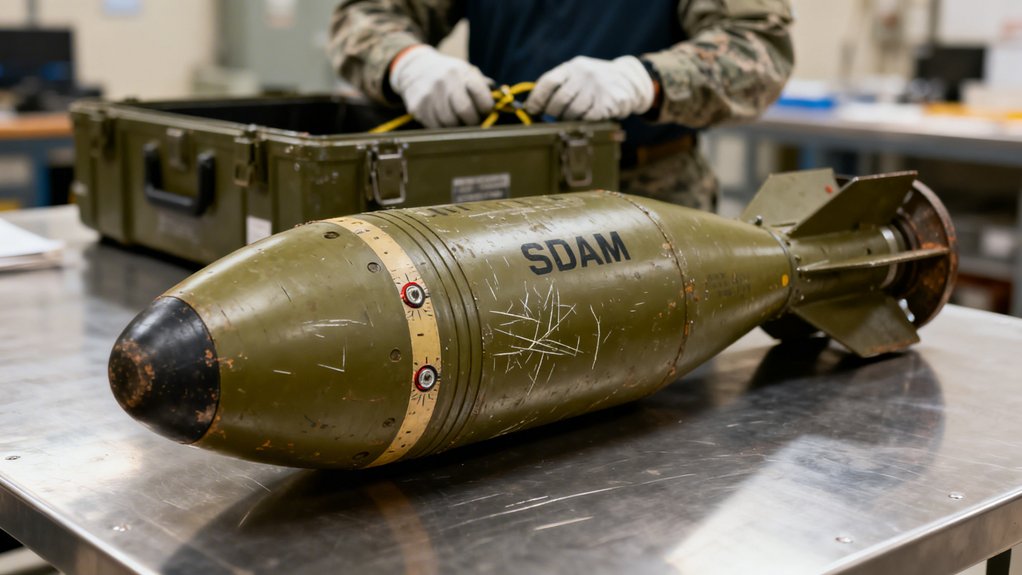
The silence Shade resurrected eventually swallowed the program itself, for the doctrine of suicide deployment couldn't endure the shifting moral terrain of a post-Cold War world. As iron curtains fell, strategists questioned the sanity of trading human souls for temporary delays.
The W54 warheads, once hailed as tactical miracles, now seemed like grotesque artifacts of a desperate age. Commanders finally ordered their retirement, acknowledging that no victory justifies such absolute sacrifice.
- Technicians carefully dismantled the sixty-pound devices, separating fissile cores from their portable casings.
- Archives locked away the midnight protocols, burying the stories of men who never returned.
- History absorbed the lesson that some boundaries shouldn't be crossed, even for survival.
The backpack nukes vanished into storage, leaving only ghosts in the mountain passes where they'd been destined to detonate. This decommissioning marked a quiet revolution in military ethics, rejecting the notion that soldiers must become martyrs by design. The world breathed easier knowing these portable apocalypses were gone, their terrible weight lifted from the shoulders of those asked to carry them into the dark.
Frequently Asked Questions
Did Any SADM Teams Ever Successfully Return From a Mission?
No team ever returned, for the mission demanded their extinction.
They parachuted into darkness, hauling death to choke Soviet steel, knowing the fireball would swallow them whole. This wasn't combat; it was a calculated sacrifice where survival contradicted the objective.
Operators armed timers by touch, accepting that their final act erased any path home. The W54's radius guaranteed no extraction, turning brave men into permanent ghosts guarding freedom's fragile edge.
What Specific Training Prevented Operators From Accidentally Detonating the Warhead?
Operators mastered blind assembly, feeling cold steel components in absolute darkness to prevent premature fusion. They drilled mechanical timer settings until muscle memory overrode panic, ensuring fingers never triggered the neutron initiator by mistake. This rigorous tactile discipline separated life from instant vaporization.
Yet, no training truly prepared them for the moral weight of knowing their survival was never the plan, only the bomb's deadly, inevitable bloom.
How Were the Sixty-Pound Bombs Concealed During Parachute Deployment?
They strapped the sixty-pound death to their chests, wrapping the cold metal in dark canvas to swallow its silhouette against the night sky. No special containers hid the horror; just fabric and silence as they fell into darkness.
The bomb became part of their body, a heavy secret pressed against their hearts while wind screamed around them, marking the final moments before they touched ground that wouldn't let them leave.
Were There Any Recorded Instances of Code Holders Refusing Orders?
No records exist of code holders refusing those fatal orders.
Silence blankets the archives regarding dissent, leaving only the chilling weight of duty. Did fear or patriotism seal their lips?
The two-man teams accepted their grim fate, carrying codes into darkness without protest.
History hears no screams of refusal, only the quiet click of timers set by touch, marking a surrender to inevitable destruction for the greater good.
What Happened to the Nuclear Cores After the Program Was Decommissioned?
The tiny, world-ending cores didn't vanish; they were ruthlessly recycled into the massive, hungry bellies of bigger bombs.
Engineers dismantled those sixty-pound nightmares, melting their radioactive hearts down to fuel newer, louder apocalypses.
No museum ever displayed them; instead, they slept inside larger warheads, waiting for a command that never came.
The suicide packs simply changed costumes, becoming silent ghosts within the towering arsenals that still threaten to swallow the entire trembling planet whole today.
Final Thoughts
The SADM program dissolved, yet its shadow lingers. These operators knew “there is no return from the abyss,” a truth they carved into cold steel under moonless skies. We marvel at their courage while questioning the doctrine that demanded such sacrifice. Their silent march into darkness remains a lyrical scar on history, proving that even in victory, the cost of survival can swallow the soul entirely.