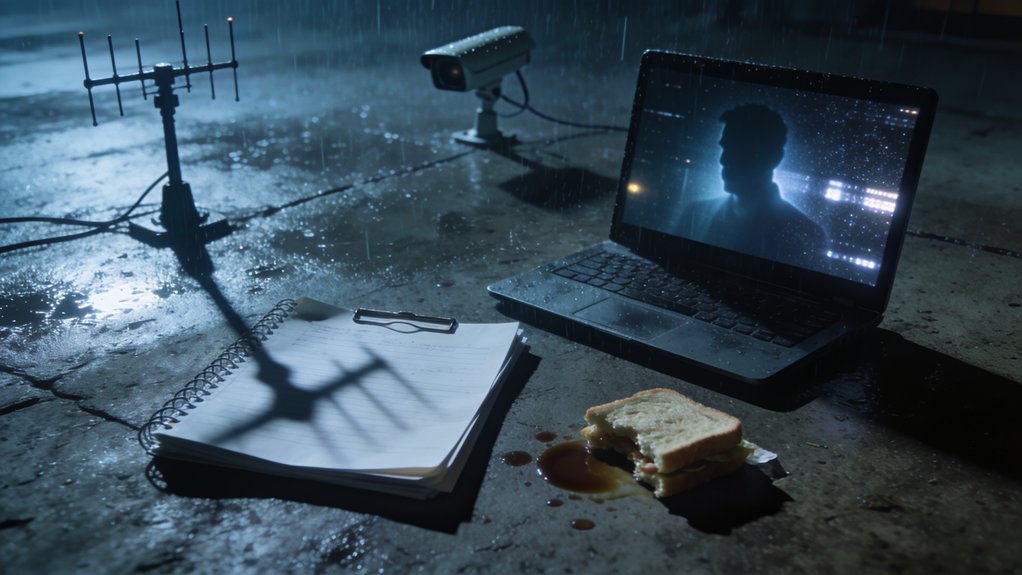
In late 2000, the FBI finally confirmed the mole whose betrayal hemorrhaged American secrets. A former KGB archivist’s seven-million-dollar dossier identified a 25-year veteran: Robert Hanssen. Agents mapped Foxstone Park’s “Ellis” sector, engineering a sensor grid around the dead drop. The trap closed when Hanssen fixed white adhesive tape to a signpost. At 8:14 PM on February 18, 2001, tactical teams arrested him on the footbridge. He was the Bureau’s greatest ghost—and the hunt’s full surgical detail is about to surface.
Key Takeaways
- The FBI mapped Hanssen’s dead drop route at Foxstone Park using topographic intelligence.
- Surveillance teams hid optical and audio sensors under forest duff to capture Hanssen.
- Agents used white tape on a signpost as the signal cue for KGB document retrieval.
- A covert tracking armada with rotating vehicles monitored Hanssen without detection.
- The declassified dossier from a KGB archivist confirmed Hanssen’s operational betrayal.
Profiling a Ghost Within the Bureau: The Unprecedented Intelligence Hemorrhage

Although the FBI had long suspected a mole was feeding Moscow its most sensitive secrets, the agency couldn’t confirm the hemorrhage’s true scale until it finally had a name.
That name shattered the Bureau’s trust in its own walls. The robert hanssen surveillance** operation** began in late 2000, a desperate move to catch a ghost.
Investigators scrutinized a counterintelligence agent who lived a paradox: a devout family man in suburban Virginia, yet a traitor selling American lives.
The kgb mole investigation traced his betrayal back years, exposing a staggering breach.
Hanssen’s actions weren’t reckless; they were meticulous, hiding dead drops at Foxstone Park.
Each package he left liberated Moscow’s espionage, while imprisoning the FBI in ignorance.
The agency finally realized their own man orchestrated the greatest intelligence hemorrhage in U.S. history.
His profile emerged not from confession, but from cold, patient surveillance.
The trap was set.
Weaponizing the Clearance: Robert Hanssen’s Architecture of Betrayal
Hanssen didn’t just rely on his badge; he weaponized it to manipulate the FBI’s own Automated Case Support System, erasing queries about himself before they raised alarms.
He built an invisible architecture of betrayal using cryptographic tradecraft, swapping dead drops and encrypted messages while his clearance masked the trail.
This wasn’t a simple leak—it was a calculated system of evasion, turning the Bureau’s internal tools into shields for his espionage.
Exploiting the FBI Automated Case Support System to Evade Detection
- He queried watchlists: Hanssen ran his own name through the system to see if the Bureau had opened files on him.
- He purged evidence: He deleted digital trails linking dead drops to his identity.
- He monitored investigations: He tracked probes into Russian assets, staying one step ahead.
Liberation demands exposing such systemic blindness. Hanssen’s digital privileges were his real dead drop.
The Cryptographic Tradecraft of an Invisible Counterintelligence Agent
Because the FBI’s automated case system remained toxic ground, Hanssen turned to a far more intimate weapon: his own Top Secret clearance. He weaponized his cryptographic access, encrypting dead-drop signals with a personal cipher drawn from classified codebooks. This wasn’t mere espionage; it was an invisible architecture of betrayal, exploiting the very protocols meant to protect the nation.
The Bureau’s counterespionage operation tactics couldn’t detect a man who mirrored their own surveillance tradecraft back at them. Hanssen’s clearance became a cloak, making him a ghost inside the machine. He didn’t just hold secrets; he wielded the permission to hide them, liberating himself from detection until the trap at Foxstone finally closed.
The KGB Defector and the Seven-Million-Dollar Dossier That Shattered the Illusion

Confronting the FBI with a seven-million-dollar dossier, a KGB defector shattered the bureau’s long-held illusion of internal security.
A seven-million-dollar dossier from a KGB defector shattered the FBI’s illusion of internal security.
The defector, a former KGB archivist, handed over a trove of files detailing a decade of operational betrayal. This wasn’t a rumor; it was a verified, costly ledger of compromised assets and forfeited secrets. The dossier forced the FBI to confront the unthinkable: a mole within its own ranks, not a low-level informant.
- The declassified hanssen files reveal the defector’s dossier included signal intelligence that directly linked Hanssen to KGB dead drops in Northern Virginia.
- The document exposed Hanssen’s method of payment—cash and diamonds—reflecting millions in laundered funds.
- The fbi headquarters friction erupted as WFO agents, who’d long suspected a headquarters leak, clashed with HQ officials over withholding the defector’s intelligence.
The dossier liberated the investigation from denial, forcing a hard, strategic pivot.
Calibrating the Crosshairs: Shifting the Mole Hunt to a 25-Year Veteran
The defector’s dossier had shifted the FBI‘s gaze inward, but it still lacked a name. Investigators didn’t need one—they needed a pattern. They zeroed in on a single, damning thread: a series of communications tied to a northern Virginia dead drop. This wasn’t some new recruit; this was a long-haul operator.
The evidence pointed to a 25-year veteran, someone who’d burrowed deep within the Bureau’s heart. The fbi internal security compromise suddenly had a shape.
Agents began cross-referencing the dead drop’s schedule with the travel logs and leave records of senior personnel. They weren’t looking for a traitor in the abstract anymore; they were hunting a specific man—a ghost who had, decades ago, already betrayed his oath. The mole hunt was no longer theoretical; it had become a surgical extraction.
Late 2000: Mobilizing the Covert Tracking Armada Across Northern Virginia
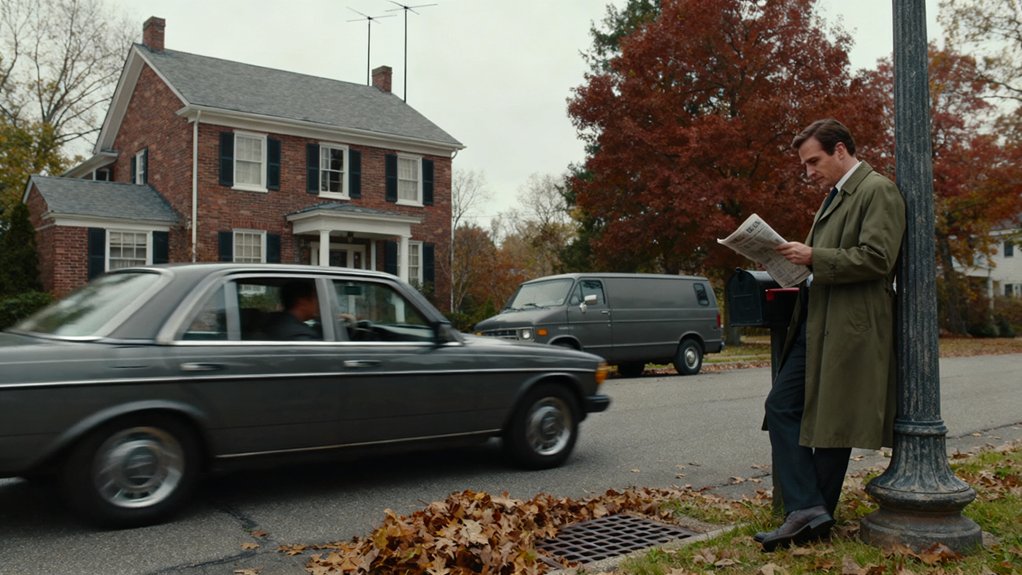
As the mole hunt narrowed to a 25-year veteran, late 2000 became the moment for action—FBI surveillance teams mobilized a covert tracking armada across northern Virginia to close in on Robert Hanssen. The FBI Washington Field Office spearheaded this critical phase of the 2000 FBI counterespionage operation, deploying its most seasoned assets.
As the mole hunt narrowed to a 25-year veteran, late 2000 became the moment for action—FBI surveillance teams mobilized a covert tracking armada.
Teams layered the terrain with agents in unmarked sedans, delivery vans, and foot patrols, all synchronized to shadow Hanssen’s every move without detection.
To execute this high-stakes surveillance, they relied on three tactical elements:
- Phantom Vehicles: A fleet of loaner cars rotated hourly, preventing Hanssen from recognizing patterns.
- Radio Discipline: Agents used burst transmissions and encoded signals to coordinate without alerting their target.
- Dead Drops Stakeouts: Fixed observers at Foxstone Park monitored known signal sites, awaiting the traitor’s next move.
This armada didn’t just watch—it ensnared. Each team operated in isolation, sharing intelligence only through a secure relay hub. They moved like shadows, respecting no bounds, driven by a singular mission: liberation from betrayal.
Tactical Paralysis: The Bureaucratic Collision Between WFO and FBI Headquarters
The seventh floor’s risk-averse micromanagement nearly crippled the entire Hanssen operation. The Washington Field Office countered by quietly adapting hostile surveillance protocols, sidestepping headquarters’ directives to maintain a viable pursuit. This bureaucratic collision created a tactical paralysis that only the Foxstone trap could finally break.
Although field agents in Northern Virginia were finally tracking Hanssen’s real-world movements, they found themselves fighting a second, nearly as dangerous enemy: the risk-averse micromanagement emanating from FBI Headquarters’ Seventh Floor.
This bureaucratic friction consistently hampered the hanssen tactical takedown, breeding wfo operational tension that threatened the mission’s success.
- Approval Labyrinth: Each tactical move required sign-off from distant executives, forcing agents to wait hours for decisions while Hanssen slipped through potential traps.
- Resource Denial: Headquarters withheld critical surveillance platforms, fearing exposure more than failure, leaving WFO teams under-equipped.
- Silencing Initiative: Agents who proposed aggressive tracking faced reprimands, quashing the improvisation needed to catch a traitor.
The Seventh Floor’s paralysis didn’t just frustrate—it nearly cost them their target. Liberation from such top-down hesitation was the real operational victory.
The Washington Field Office’s Rogue Adaptation of Hostile Surveillance Protocols
Faced with the Seventh Floor’s chokehold on surveillance resources, the Washington Field Office didn’t just adapt—it went rogue. They repurposed protocols designed for hostile targets, turning the system’s own rigidity against it.
Headquarters demanded paperwork for every van and radio channel; WFO simply stopped asking. They funneled assets toward dead drop site monitoring at Foxstone Park, knowing Hanssen’s counterintelligence breach history demanded aggressive, immediate action.
This tactical paralysis—bureaucracy locking horns with necessity—forced field agents to operate on instinct. They created their own rules, chasing a ghost their own hierarchy barely acknowledged.
Liberation from that chokehold meant ignoring orders, not bending them. In the end, their rogue adaptation wasn’t insubordination; it was survival.
Shadowing a Master Spy: The Extreme Counterespionage Tactics Required to Hunt an Insider
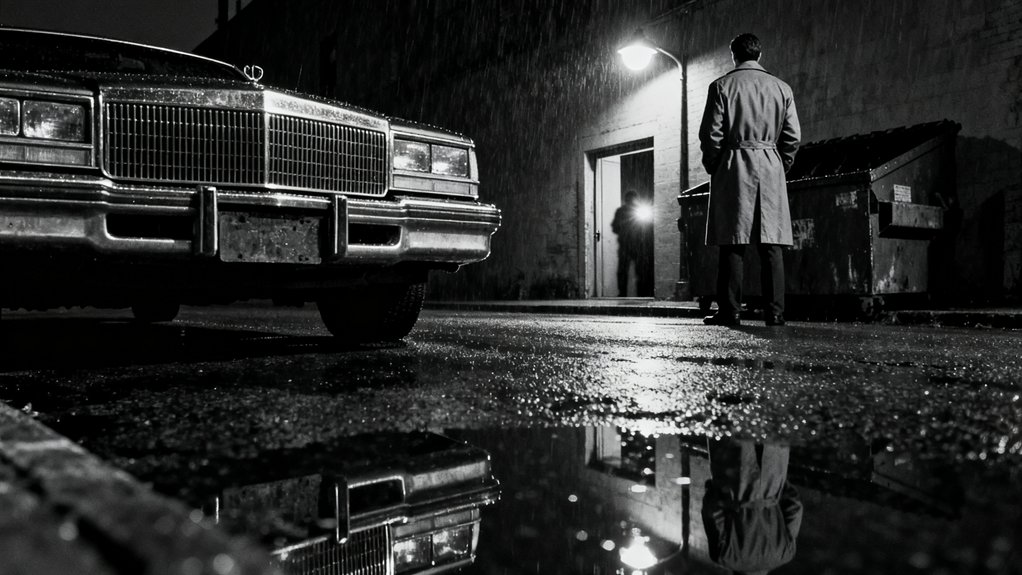
Because Hanssen was a seasoned counterintelligence agent himself, the FBI’s Washington Field Office had to adapt its surveillance tactics to a level of tradecraft rarely used against an American target. They knew he’d spot standard tailing techniques, so they orchestrated a silent, layered operation that challenged their own protocols.
- Dynamic ‘Ghost’ Teams: Agents rotated in ad-hoc, non-sequential vehicles, never using the same car twice in a week. They’d slip into traffic, vanish, then reappear from a different vector, denying Hanssen any pattern recognition.
- Radio Silence & Burst Communications: Field teams switched to encrypted, one-way transmissions. They’d receive a single coded burst—a time, a grid coordinate—then execute without verbal confirmation, eliminating audio bleed that could tip him off.
- Behavioral Mirroring: Operatives studied Hanssen’s own counter-surveillance habits—his sudden stops, his church visits as cover. They mirrored his paranoia, using his own moves against him to anticipate his deadly deviations.
This wasn’t pursuit; it was a dance of shadows, designed to liberate their own system from his insider’s gaze.
The Foxstone Park Perimeter: Engineering a High-Stakes Subsurface Trap
Surveillance teams first mapped the “Ellis” dead drop sector, marking every trail and tree line within Foxstone Park’s suburban Virginia woods.
They then deployed optical and audio sensor grids ahead of Hanssen’s arrival, embedding cameras in bark and microphones beneath leaf litter.
This subsurface trap transformed a quiet woodland perimeter into a silent, waiting snare for the FBI’s most critical target.
Mapping the “Ellis” Dead Drop Sector in the Suburban Virginia Woods
As FBI field agents began mapping Robert Hanssen’s “Ellis” dead drop sector in late 2000, they zeroed in on Foxstone Park‘s suburban Virginia woods—a deceptively quiet perimeter where a high-stakes subsurface trap would be engineered.
They meticulously charted every contour to predict Hanssen’s route, knowing he’d approach under cover of darkness. The team needed precise knowledge of the terrain to avoid detection and guarantee the operation’s success.
- Signal Site Identification: Agents located the specific tree stump Hanssen used, marking it with white tape as a prearranged cue for his KGB handlers.
- Approach-Path Mapping: They traced his likely path from his car to the drop, noting natural cover like thick brush and sunken logs that could hide surveillance.
- Egress Vulnerabilities: They documented escape routes Hanssen might exploit, including a drainage ditch and a footbridge, to preempt any counter-surveillance tactics.
This liberation from betrayal demanded exacting preparation.
Deploying Optical and Audio Sensor Grids Ahead of the Target
While the mapping phase concluded, FBI tech teams moved into Foxstone Park under the cover of darkness to embed optical and audio sensors before Hanssen‘s next scheduled dead drop.
They worked quickly, digging shallow trenches near the “Ellis” sector’s base of a split-rail fence.
Each sensor’s housing—camouflaged with local soil and leaf litter—connected to a thin fiber-optic cable, buried just under the duff.
Audio pickups were tuned to detect footsteps, rustling paper, and whispered conversations up to fifteen feet.
The team didn’t wait for headquarters’ approval; WFO’s field agents understood the stakes.
Hanssen could alter his route at any moment.
To liberate the nation from his betrayal, they needed eyes and ears in the dirt before he ever arrived.
No bureaucratic delay would stop that.
The Final Dead Drop: Intercepting the White Adhesive Tape Signal

Deciding the dead drop had been triggered, FBI agents moved in to intercept the white adhesive tape signal—Hanssen’s unmistakable mark for confirming a completed exchange. The tape, fixed to a wooden signpost near Foxstone Park, became the linchpin of the entire operation. Agents knew they’d only a narrow window to photograph the signal and retrieve the package without alerting their target.
The dead drop’s white tape signal, fixed near Foxstone Park, became the linchpin of the entire operation.
- The Signal’s Meaning: A single strip of white tape, placed diagonally, told Hanssen’s Russian handlers to retrieve his deposited documents—a silent, agreed-upon code.
- Strategic Surveillance Posting: Under cover of darkness, a two-man team crept to the signpost, documenting the tape’s exact position and orientation before any contact.
- Evidence Preservation Protocol: They handled the tape with gloved precision, bagging it as a critical exhibit that would later anchor the prosecution’s narrative of betrayal.
Every move was a calculated liberation from Hanssen’s treachery, tightening the net inch by inch.
“What Took You So Long?”: Executing the Tactical Takedown at the Wooden Footbridge
With the surveillance net fully cinched and the white adhesive tape signal already in evidence bags, FBI tactical teams moved into their final positions around Foxstone Park’s wooden footbridge on the evening of February 18, 2001. They couldn’t risk a single misstep. Hanssen‘s counter-surveillance discipline demanded absolute precision.
At 8:14 PM, Hanssen approached the bridge, a bulky package tucked under his arm. He paused, scanning the treeline. The tactical commander gave a silent hand signal. Teams emerged from the underbrush, closing in from three vectors.
Hanssen didn’t run. Instead, he turned, faced the agents, and uttered the words that would chill them: “What took you so long?” The team cuffed him without resistance. They found the leak’s final repository: an encrypted disk and top-secret documents inside the drop bag. The operation, despite headquarters friction, had liberated the nation from its deepest mole—a man who’d sold secrets for nearly two decades, never expecting the trap to spring so quietly.
Assessing the Ashes: The Forensic Autopsy of the Greatest Compromise in US History
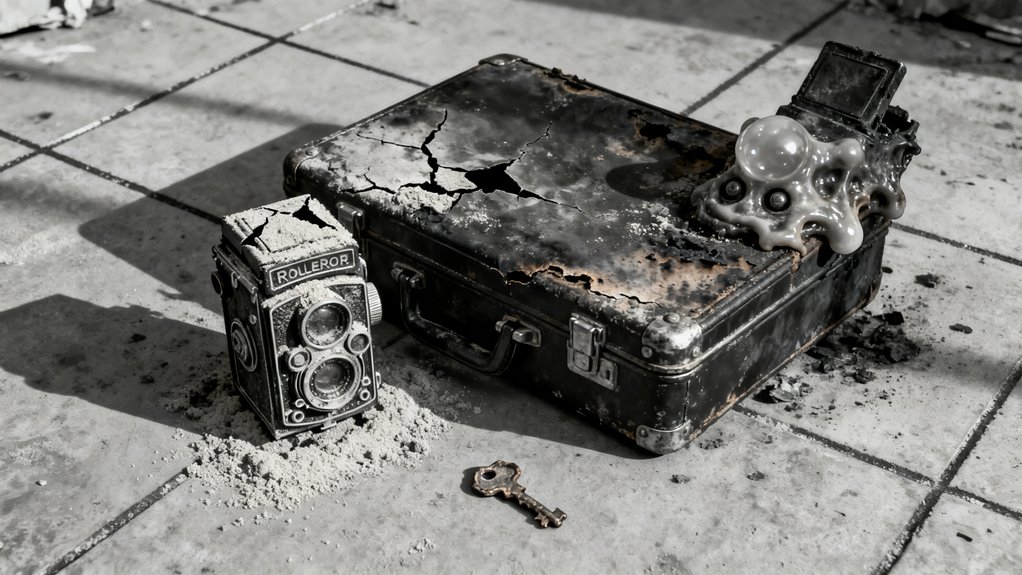
The forensic autopsy of Hanssen’s damage exposes two primary, devastating wounds. It uncovers the calculated decapitation of a covert Soviet asset network, leaving US intelligence blind. It also reveals the catastrophic surrender of America’s nuclear continuity playbooks, handing Moscow the keys to the nation’s survival protocols.
Uncovering the Decapitation of the Covert Soviet Asset Network
How exactly did Hanssen’s treachery sever the CIA’s most prized covert Soviet asset network at its roots? He didn’t just leak names; he handed the KGB the entire operational architecture—the code names, dead drop protocols, and recruitment methods that protected a generation of spies within the Soviet elite.
This wasn’t a slow bleed; it was a surgical decapitation.
- Identity Exposure: Hanssen revealed the true names of key CIA recruits, including GRU Colonel Dmitri Polyakov, eliminating any chance of future defections.
- Tradecraft Disclosure: He detailed the Agency’s dead drop signal systems, allowing the KGB to retroactively identify and roll up every active asset tied to that methodology.
- Recruitment Vectors: He compromised how the CIA approached potential moles, giving Moscow the countermeasures to poison future recruitment attempts before they began.
The network’s roots were severed before anyone inside Langley knew the ax had fallen.
The Catastrophic Surrender of America’s Nuclear Continuity Playbooks
Decapitating the Soviet asset network was only one strand of Hanssen’s betrayal. He didn’t just expose spies; he gutted America’s nuclear continuity-of-government playbooks. These classified blueprints detailed how the nation would survive a decapitation strike—relocation sites, hardened communication links, and succession protocols. Hanssen handed them directly to Moscow.
Now the Kremlin knew exactly where the President would flee, which bunkers housed the chain of command, and how command authority would transfer. Every escape route became a kill zone. Every coded transmission became a blueprint for interception. He didn’t compromise intelligence; he surrendered the nation’s capacity to govern after a strike. For an audience seeking liberation, understand this: Hanssen didn’t just burn assets—he handed the adversary the keys to America’s nuclear afterlife.
The Post-Hanssen Mandate: Dismantling the FBI’s Antiquated Internal Security Culture
Because Hanssen exploited a broken internal security system for over two decades, FBI leadership had no choice but to dismantle its own antiquated culture.
The Bureau’s old guard had treated insiders as sacred, trusting loyalty over verification, a vulnerability Hanssen weaponized flawlessly.
The Bureau’s old guard trusted loyalty over verification—a flaw Hanssen exploited flawlessly.
Investigators now concede the agency’s security apparatus wasn’t just lax—it was complicit in its own blindness, enabling a mole to roam freely while patting itself on the back.
- Mandatory random polygraphs for all personnel, ending the era where seniority conferred immunity from scrutiny; no one’s now above the machine.
- A centralized counterintelligence division, stripping field offices of autonomous security protocols that once allowed Hanssen’s unit to vanish from oversight.
- Real-time data tracking on agent movements, requiring biometric check-ins at sensitive compartments, eliminating the “honor system” that shielded his treachery.
This isn’t about punishment; it’s liberation from a culture that valued comfort over accountability.
Frequently Asked Questions
Why Was Hanssen Not Caught Sooner Given the KGB Warnings?
Hanssen wasn’t caught sooner because the FBI’s internal culture and bureaucracy created a fatal blind spot. Multiple KGB warnings existed, but they were dismissed or mismanaged by agents who refused to believe a senior FBI official could be a mole.
The Bureau’s hierarchy and lack of interagency coordination shielded him, delaying decisive action until late 2000, when surveillance finally closed in on Foxstone Park.
Did Hanssen Ever Come Close to Detecting the FBI Surveillance?
Did Hanssen ever sense the net closing in? No—he didn’t. The FBI’s late 2000 surveillance at Foxstone Park was executed with meticulous tradecraft, exploiting his operational overconfidence.
Hanssen, focused on his own deception, missed the stakeouts entirely. He walked into the trap unaware, never detecting the shadowing teams or their coordination.
His lapse in awareness sealed his fate, ending his reign as the greatest internal threat.
How Did Operational Friction Between WFO and Headquarters Almost Fail the Arrest?
Operational friction between WFO and headquarters nearly doomed the arrest by creating chaotic command and communication breakdowns. WFO’s field agents demanded rapid, decisive action, but headquarters insisted on deliberative oversight, delaying critical surveillance moves. This tension risked Hanssen’s escape, as conflicting orders blurred tactical focus. The bureaucratic infighting, not Hanssen’s skill, almost let him slip the trap—a classic lesson in how institutional dysfunction can sabotage even the most crucial mission for those seeking truth.
What Specific Mistake Made Robert Hanssen Finally Vulnerable to the Trap?
Hanssen’s fatal mistake wasn’t a single error; it was the most glaring arrogance in spycraft history. He trusted a dead drop at Foxstone Park, believing his FBI colleagues couldn’t possibly outwit him.
This hubris made him blind to the trap. He didn’t vary his routines or suspect surveillance.
The Bureau exploited that overconfidence, finally pinning down the ultimate traitor.
Was the Fbi’s Internal Security Culture the Direct Cause of This Intelligence Hemorrhage?
No, it wasn’t the FBI’s internal security culture that directly caused the intelligence hemorrhage. A single man’s calculated betrayal, not systemic failure, drove the breach. Robert Hanssen exploited gaps, sure, but the agency’s culture didn’t hand him secrets—his own cunning did.
Surveillance ultimately trapped him at Foxstone Park, proving the hemorrhage stemmed from a traitor’s deliberate choices, not a broken system’s inevitable collapse.
Final Thoughts
In the post-Hanssen autopsy, one statistic bleeds through the wreckage: for 22 years, he compromised over 6,000 classified documents, more than any mole in CIA or FBI history. Bureau leadership admits the internal security culture failed him, not the other way around. They’re still dismantling the antiquated trust system that let a ghost walk free inside its own house for decades.