

In the 1930s, a San Diego inventor claimed he could cure cancer using light frequencies, showing microscope films of bacteria exploding under specific electromagnetic waves. Royal Raymond Rife attracted wealthy patrons and desperate patients, yet his technology vanished from mainstream medicine within two decades. Supporters insist a conspiracy buried his breakthrough. Skeptics point to fraud convictions and zero peer-reviewed evidence. The truth requires examining what Rife actually built, what happened in court, and whether modern physics supports his central claims.
Key Takeaways
- Royal Raymond Rife claimed to cure cancer in 1934, but no government agency ever validated his machines or methods.
- The FDA shut down Rife’s laboratory in 1946 due to lack of systematic verification and reproducible scientific protocols.
- Independent researchers failed to replicate Rife’s original claims of destroying pathogens or curing cancer with electromagnetic frequencies.
- FDA-approved electromagnetic therapies like TheraBionic underwent rigorous clinical trials that Rife machines never completed or passed.
- The FDA continues issuing warnings against Rife devices, citing lack of approval and potential risks including burns and nerve damage.
Who Was Royal Raymond Rife and What Did He Invent?

Royal Raymond Rife emerged from obscurity in the early 20th century as an American inventor whose ambitious claims would eventually put him at odds with mainstream medicine. Born in 1888, he worked in prestigious Zeiss and Leitz optical factories before World War I, gaining expertise that would fuel his later innovations. His early experiments produced remarkable high-magnification microscopes—the first in 1922 achieved 17,000x magnification, while his 1933 universal microscope reached 60,000x. These instruments incorporated polarizers and time-lapse photography to observe what Rife claimed were living pathogens.
Beyond microscopy, Rife developed his “oscillating beam ray” device, theorizing that specific radio frequencies could destroy disease-causing organisms through their “Mortal Oscillatory Rate.” The device produced low-energy electromagnetic waves known as radiofrequency electromagnetic fields. Despite collaborating with credentialed scientists during the 1930s, his work faced condemnation from the American Medical Association. Personal struggles intensified when the FDA closed his laboratory in 1946, leading to financial ruin and temporary exile in Mexico before his death in 1971.
How Rife Machines Are Supposed to Destroy Cancer Cells

The proposed mechanism centers on Resonance Therapy disrupting cancer’s fundamental processes. Laboratory studies have documented mitotic spindle disruption in liver cancer cells exposed to tumor-specific frequencies, with some research showing gene expression changes validated through molecular analysis. Yet critical distinctions emerge: the frequencies examined in supportive studies differ markedly from those used in commercial Rife devices. Modern radiofrequency ablation achieves documented results through heat-induced necrosis at specific temperatures—a fundamentally different process from the unproven resonance claims underlying Rife technology. Contemporary medical applications include NovoTTF-100A, an FDA-approved device delivering alternating electric fields through skin electrodes that demonstrates efficacy comparable to standard chemotherapy in recurrent glioblastoma multiforme.
Do Rife Machines Actually Work Against Cancer?
The question of whether Rife machines actually work against cancer requires examining a terrain split between regulatory rejection and emerging clinical data. Major health authorities—the FDA, Cancer Research UK, and WebMD—maintain that Rife machines lack proof of efficacy and have not passed standard scientific testing for safety or effectiveness. Yet a handful of peer-reviewed studies and case reports document measurable outcomes: circulating tumor cell reductions, tumor marker improvements, and in one hepatocellular carcinoma trial using TheraBionic device, objective responses in nearly 20% of patients where conventional treatment had failed. A pilot study conducted between 2018 and 2024 at the National Institute of Integrative Medicine showed reduced Circulating Tumour Cells and partial remission in some cancer patients treated with electromagnetic frequency therapy.
Scientific Evidence Review
Despite decades of marketing and promotional claims, no reliable scientific evidence supports the use of Rife machines for treating cancer or any other disease. The FDA has not approved these devices for any medical use, and reputable cancer organizations consistently reject their purported benefits. Most promotional materials rely heavily on personal testimonials rather than rigorous scientific research—a pattern established as early as the 1920s when Scientific American investigated similar radionics devices and found their claims unsubstantiated.
Key findings from scientific review:
- No peer-reviewed studies validate electromagnetic resonance claims for cancer treatment
- Frequency therapy devices marketed as “Rife machines” lack standardized specifications or quality control
- Primary risk remains treatment delay while cancer progresses unchecked
- Independent researchers have failed to replicate Rife’s original claims about destroying cancer-causing microbes
The evidence gap between bold marketing claims and actual therapeutic benefit remains insurmountable.
Clinical Trial Results
When examining the actual clinical evidence for Rife machines, a stark disconnect emerges between the devices sold to desperate cancer patients and the electromagnetic frequency (EMF) therapy tested in legitimate research settings. The frequencies employed in promising research studies bear little resemblance to commercial Rife machines’ specifications.
Small-scale trials using specific EMF devices showed modest results: one radiofrequency study documented tumor regression in 20 of 41 patients (48.8%). Advanced liver cancer patients treated with the TheraBionic device showed 9.8% without disease progression at 15 months, compared to zero percent receiving standard treatment. The device has received FDA “breakthrough” designation, accelerating its path through clinical trials in the United States.
However, these outcomes emerged from frequency specificity calibrated through laboratory research—not the broad-spectrum protocols marketed to consumers. In vitro experiments demonstrated cancer-specific frequencies differing by less than 1%, demanding precision absent from consumer devices.
Expert Medical Consensus
- Cancer Research UK declares no reliable evidence exists for Rife machines curing cancer
- WebMD and Medical News Today report zero scientific substantiation for treating any disease
- Mayo Clinic distinguishes approved radiofrequency ablation from unproven Rife devices
Regulators worldwide have never approved these machines. The TheraBionic device and experimental electromagnetic research operate at entirely different frequencies and protocols than Rife promoters claim. No controlled human trials validate Rife-specific frequencies. Health fraud convictions against promoters underscore the technology’s illegitimate status in modern medicine. While some lab studies have examined low-energy waves on cancer cells, these research frequencies differ fundamentally from those used in commercial Rife machines.
What the FDA and Cancer Research Organizations Say About Rife Machines
The FDA has never approved Rife machines for any medical use, maintaining a consistent regulatory stance that no scientific evidence supports the device’s purported ability to treat cancer or other diseases. Federal regulatory agencies have pursued enforcement actions against manufacturers marketing these devices, with multiple clinic owners convicted of fraud.
The American Cancer Society published research debunking the technology, demonstrating that electromagnetic waves from Rife generators were too weak to destroy bacteria—exposing the electromagnetic pseudoscience underlying these claims. Cancer Research UK reinforces that no reputable scientific organizations support Rife machine efficacy.
In 2002, the FTC permanently barred BioPulse International from marketing “Acoustic Lightwave Therapy” after charging patients up to $39,900 for unproven treatments. The FDA issued warnings in July 2023 against similar frequency quackery devices, citing documented adverse effects including pain, burns, and nerve damage. Regulatory bodies consistently emphasize that alternative treatments require rigorous scientific validation before medical use.
In contrast, the FDA has approved histotripsy for liver tumor treatment in humans, a legitimate ultrasound technology that underwent proper clinical trials and demonstrated verifiable safety and effectiveness endpoints.
Clinical Evidence: Electromagnetic Frequencies vs. Rife Machine Claims
While laboratory experiments demonstrate that specific low-frequency electromagnetic fields can inhibit cancer cell proliferation without affecting normal cells, these findings emerge from controlled studies using precise, scientifically validated frequencies—not the commercial Rife machines marketed to consumers. The FDA has approved devices like NovoTTF-100A that apply targeted alternating electric fields for tumor treatment, establishing a regulatory distinction between evidence-based electromagnetic therapy and unproven frequency generators. This gap between legitimate electromagnetic research and Rife machine claims underscores a critical problem: therapeutic frequencies identified through rigorous biofeedback and clinical protocols bear little resemblance to the preset programs embedded in devices sold under Rife’s legacy. Recent studies have examined low-frequency electromagnetic radiation modulated onto cold plasma for treating chronic conditions, though these investigations focus on fatigue rather than cancer and undergo peer-reviewed publication through established medical journals.
Lab Studies Show Promise
Laboratory investigations into electromagnetic frequency therapies reveal a complex terrain where modern clinical research diverges sharply from Royal Rife’s original assertions. Contemporary in vitro resonance experiments demonstrate tumor-specific modulation frequencies reducing hepatocellular carcinoma and breast cancer cell proliferation by over 50%, while normal cells remain unaffected. This selective tumor suppression suggests electromagnetic approaches merit serious investigation, though mechanisms remain unclear.
Key Laboratory Findings:
- Tumor-specific frequencies halt cancerous cell growth in controlled settings without impacting healthy tissue
- Cancer stem cells and chemoresistance show susceptibility to electromagnetic intervention in experimental conditions
- Low-energy wave emissions target proliferation pathways selectively, contradicting claims that any frequency destroys all pathogens
These controlled studies operate within rigorous scientific frameworks—measuring, documenting, questioning—rather than accepting extraordinary claims without extraordinary evidence. Unlike Rife’s original work, which lacked systematic verification, modern bioelectromagnetic research employs reproducible protocols and peer-reviewed methodologies.
Clinical Trials Remain Limited
Promising laboratory results mean little without clinical validation, yet Rife machines have never undergone the large-scale controlled trials necessary to establish medical efficacy. Despite decades of bold claims, human studies remain virtually nonexistent. A thorough review identified only two human studies examining electromagnetic frequency therapy—a staggering research gap that raises fundamental questions about the technology’s legitimacy.
The limited data available comes from small Brazilian trials on advanced liver cancer patients, hardly the robust evidence required for medical approval. Without rigorous testing, claimed benefits cannot be differentiated from the placebo effect. Meanwhile, electromagnetic frequencies studied in recent cancer research differ markedly from those emitted by commercial Rife devices, both in precision and penetration depth. Scientific American’s 1920s investigation reached an unequivocal conclusion: the foundational claims were unsubstantiated. Compounding the problem, cancer is not solely caused by bacteria or viruses, contradicting the fundamental premise upon which Rife built his entire theory.
FDA Approved Alternative Devices
The FDA’s recent approvals of electromagnetic frequency devices for cancer treatment illuminate the vast chasm between legitimate medical technology and Rife machine claims. TheraBionic P1 and Optune Lua represent validated electromagnetic therapy, backed by decades of clinical trials demonstrating tumor shrinkage and survival improvements.
Evidence-Based Frequency Targeting:
- TheraBionic P1 delivers 27.12 MHz radiofrequency fields amplitude-modulated at tumor-specific frequencies, approved for advanced hepatocellular carcinoma after rigorous study
- Optune Lua applies Tumor Treating Fields that physically disrupt cancer cell division in metastatic lung cancer, validated through the LUNAR trial
- Both devices target precise cellular mechanisms without debilitating side effects, unlike Rife machines’ unsubstantiated broad-spectrum claims
These approvals required demonstrable safety profiles and survival benefits—standards Rife technology never approached.
Why Mainstream Medicine Rejected Rife’s Cancer Cure

Royal Raymond Rife’s cancer cure faced swift condemnation from mainstream medicine in the 1930s, with the American Medical Association orchestrating a systematic rejection that would haunt alternative medicine advocates for decades. The AMA condemned Rife’s electromagnetic therapy without examining his methods, declaring his frequency healing approach bogus in a 1939 trial that effectively ended his research.
| What Rife Claimed | What Science Found |
|---|---|
| Electromagnetic frequencies destroy cancer | No FDA approval exists |
| “Mortal Oscillatory Rate” kills pathogens | Unverified by modern standards |
| 14 of 16 terminal patients cured (1934) | Results never independently confirmed |
| Pleomorphic microbes cause cancer | Low-energy radiofrequency waves unproven |
| Systematic suppression by organized medicine | Lack of controlled clinical trials |
The rejection centered on Rife’s hypothesis that bacteria caused cancer through pleomorphic microbes—a theory contradicting established oncology. Despite supporters claiming conspiracy, mainstream medicine’s skepticism stemmed from absent rigorous validation, forcing Rife into obscurity until his penniless death in 1971.
Was Rife’s Cancer Cure Suppressed by the Government?

- A 1939 trial declared Rife’s cancer therapy bogus without examining his methods, forcing him to abandon research
- Dr. Thomas Rivers publicly accused Professor Kendall of lying after his Rife-related presentation in 1932
- The AMA condemned Rife’s experiments after he claimed bacteria caused cancer
Yet no government agency approved Rife machines. The FDA never registered them. Promoters were convicted of health fraud. Patients died after abandoning chemotherapy for these devices.
Why Rife Machines Are Still Sold Without FDA Approval
Despite FDA classification as Class III medical devices requiring rigorous premarket approval, Rife machines continue to circulate through a labyrinth of regulatory loopholes and strategic mislabeling. Manufacturers exploit consumer demand by marketing devices as “experimental,” “research-only,” or “general wellness” tools—avoiding explicit medical claims that trigger enforcement. Internet sales flourish at thousands of dollars without insurance coverage, positioning these contraptions beyond conventional medical oversight.
| Marketing Strategy | Regulatory Status | Legal Risk |
|---|---|---|
| Research-only device | Exempt from PMA | FDA warning letters |
| Wellness/stress relief | General use claim | Low enforcement |
| Bioresonance experiment | No disease treatment | Minimal scrutiny |
| Cancer cure promotion | Violates 21 U.S.C. § 351 | Seizure/prosecution |
The FDA issues warning letters for non-compliant claims—Tesla BioHealer faced scrutiny for inflammation reduction assertions—yet enforcement remains inconsistent. This regulatory gap enables manufacturers to serve a market hungry for alternative treatments, profiting from hope while sidestepping the clinical evidence required for legitimate therapeutics.
Rife Machine Sellers Convicted of Health Fraud: What Happened?

Despite decades of legal warnings, Rife machine promoters have faced repeated felony convictions for health fraud across multiple states and time periods. The 1996 case proved particularly devastating: marketers received felony convictions after their useless devices persuaded cancer patients to abandon chemotherapy, resulting in preventable deaths. Federal prosecutors documented a pattern of sellers deliberately targeting terminally ill patients with false promises of cures, transforming desperation into profits while investigators classified the technology as worthless pseudomedicine.
Notable Fraud Cases
Over the decades since Royal Rife’s death, numerous sellers of devices bearing his name have faced criminal prosecution for health fraud, leaving a trail of legal consequences and tragic outcomes. The 1996 felony convictions marked a watershed moment, with marketers targeting terminally ill patients who abandoned chemotherapy—decisions that proved fatal. Fraudulent sales networks expanded despite regulatory warnings, culminating in a 2006 Seattle conference where unregistered device raids later revealed over 300 attendees had purchased illegal machines.
Notable prosecutions include:
- Donald and Sharon Brandt: Operated clandestine Mount Vernon clinic; convicted after patient deaths linked to their unregistered devices
- John Bryon Krueger: Royal Rife Research Society operator; sentenced to 12 years for murder-related charges
- James Folsom: Convicted on 26 felony counts in 2009 for selling devices under multiple company names
Targeting Vulnerable Patients
The legal records reveal a disturbing pattern: perpetrators of Rife machine fraud systematically identified and exploited patients at their most desperate moments. Court documents show sellers deliberately targeted individuals suffering from terminal diseases, particularly cancer and AIDS patients. These exploitation tactics proved devastatingly effective—some patients abandoned conventional chemotherapy, leading to documented deaths.
| Exploitation Tactics | Target Population | Documented Consequences |
|---|---|---|
| False cure promises | Cancer patients | Deaths from abandoned treatment |
| Patient manipulation through “hope” | Terminal illness sufferers | Financial devastation |
| Anti-establishment rhetoric | Treatment-resistant cases | Medical harm |
| Pseudo-scientific claims | Elderly and disabled | Legal prosecution of sellers |
Sentencing judges recognized these perpetrators targeted “the most vulnerable people, including those suffering from terminal disease,” transforming patient desperation into profitable deception.
The Dangers of Using Rife Machines Instead of Proven Cancer Treatment
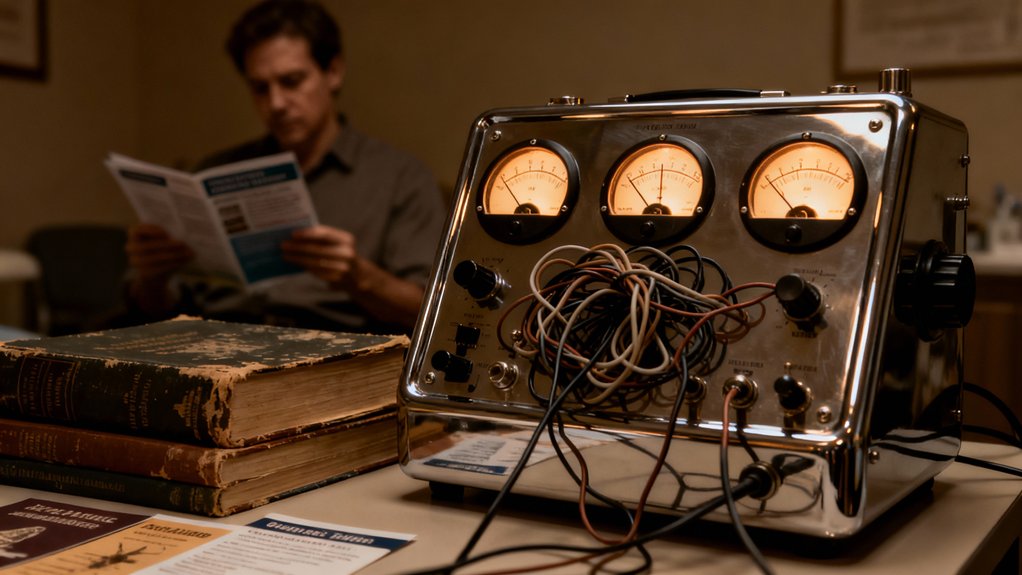
- Disease progression accelerates when patients delay resection and chemotherapy for stage-IV colorectal cancer, allowing tumors to metastasize beyond treatment
- Survival rates plummet as advanced cancer patients forgo therapies with documented efficacy for devices lacking FDA approval or clinical validation
- Irreversible harm occurs when the window for curative intervention closes while patients pursue unproven alternatives
Standard cancer care represents decades of rigorous research and clinical trials. Rife machines offer no peer-reviewed evidence, no randomized controlled studies, and no reproducible results. Choosing unverified electromagnetic frequencies over established protocols transforms cancer from potentially treatable to terminal.
How to Spot Fraudulent Rife Machine Marketing Claims

Fraudulent marketing claims for Rife machines follow predictable patterns that exploit desperate patients and scientific illiteracy. Promoters promise cures for thousands of diseases—cancer, AIDS, arthritis—without providing peer-reviewed studies or FDA approval. These assertions rely on false testimonials rather than controlled clinical trials, deliberately obscuring the absence of independent verification.
Multilevel marketing schemes proliferate online, selling unregulated devices for thousands of dollars despite minimal manufacturing costs. These hidden costs extend beyond purchase price: delayed conventional treatment, potential electrical shocks from poorly constructed equipment, and ultimately, lives lost.
Warning signs include conspiracy theories about AMA suppression, references to discredited 1920s research, and promises of eliminating cancer cells through “specific frequencies” without scientific backing. Legitimate medical devices undergo rigorous testing and regulatory approval. Companies convicted of health fraud, banned in multiple states, and targeted by FTC settlements reveal the industry’s predatory nature. Recognition of these tactics protects vulnerable patients from exploitation.
What Rife Got Wrong: Modern Science on Frequencies and Cancer

Royal Raymond Rife’s fundamental premise—that cancer originates from microbes residing within tumor cells—contradicts a century of established oncology research. Modern oncology identifies cancer as genetic mutations causing uncontrolled cell division, not pathogenic infection. Rife’s “mortal oscillatory rate” theory—claiming specific radio frequencies destroy disease-causing organisms through cell resonance—lacks any scientific validation.
Rife’s microbial cancer theory contradicts established oncology research identifying genetic mutations, not pathogenic infection, as cancer’s cause.
Contemporary electromagnetic frequency research bears little resemblance to Rife’s frequency healing concepts:
- Different frequencies: Validated studies employ electromagnetic ranges fundamentally distinct from Rife machine emissions
- Controlled environments: Laboratory research demonstrating tumor growth inhibition remains untested in human applications using Rife technology
- Mechanism distinctions: TheraBionic’s FDA-approved device uses 27.12 MHz radiofrequency with tumor-specific modulation, operating on entirely different principles than Rife’s unproven resonance theory
While emerging electromagnetic therapy research shows promise for immune system modulation, these findings don’t vindicate Rife’s discredited framework. No evidence supports his core assertion that electromagnetic frequencies disable cancerous cells through resonant destruction.
Frequently Asked Questions
Can Rife Machines Be Used Safely Alongside Conventional Cancer Treatments?
Current evidence suggests Rife machines pose minimal direct safety concerns when used alongside conventional cancer treatments, with studies showing no increased toxicity when combined with chemotherapy. However, treatment interactions remain poorly understood due to lack of rigorous clinical trials. The FDA has not approved these devices, and documented cases reveal patients who delayed proven therapies for Rife machines have died. The primary danger lies not in combination use itself, but in substituting unproven technology for established, life-saving interventions.
How Much Do Rife Machines Typically Cost to Purchase?
The price range mirrors the device’s controversial status—entry-level contact pad models ($100–$300) offer accessibility, while premium plasma systems ($800–$2,500+) promise power. Brand comparison reveals dramatic disparities: some manufacturers charge thousands for similar specifications, while Alibaba listings span $9.90 to $60,000. Mid-range units ($300–$800) dominate among believers seeking balance between affordability and features. This financial labyrinth itself raises questions about legitimacy versus exploitation.
Are There Any Cancers Where Rife Machines Showed Better Results?
Limited evidence suggests hepatocellular carcinoma and metastatic colon cancer show measurable responses to specific frequencies. The HCC study reported 19.5% objective responses using tumor-targeted tumors protocols, while one colon cancer case demonstrated 75% CTC reduction. However, these remain small-scale observations lacking rigorous clinical validation. Researchers note frequencies differ minimally between cancer types, raising questions about true specificity. Without randomized controlled trials, definitive superiority claims remain unsubstantiated despite promising preliminary data.
What Happened to Rife’s Original Machines and Research Documentation?
Rife’s original machines vanished without verifiable trace after his 1939 legal troubles. No intact devices survived, and claims persist that authorities confiscated equipment to suppress his work. His missing research—including 15,000 cancer tissue slides and documentation of 411 animal experiments—exists only in anecdotal accounts and newspaper reports. The AMA never examined the technology before dismissing it. Without preserved devices or peer-reviewed publications, separating deliberate suppression from scientific rejection remains impossible.
Do Any Countries Besides the U.S. Allow Rife Machines for Treatment?
No country formally includes Rife machines among approved treatments for cancer or disease. Like contraband slipping through customs checkpoints, these devices circulate globally through online markets and alternative clinics—particularly in Mexico, UK, Canada, and Australia—but international regulations uniformly deny them therapeutic legitimacy. The Australian National Medical and Health Research Council found no quality evidence supporting frequency therapies. While enforcement varies, authorities in multiple nations have prosecuted practitioners for fraud when marketing Rife machines as cures.
Final Thoughts
The greatest irony of the Rife machine saga is that its proponents claim a vast conspiracy silenced a miraculous cure—yet millions globally die from cancer while conventional medicine desperately searches for better treatments. If electromagnetic frequencies truly cured cancer, oncologists would embrace them overnight. Instead, documented fraud convictions, seized devices, and zero clinical validation tell the real story: not of suppressed genius, but of dangerous pseudoscience that profits from desperation while potentially delaying life-saving treatment for the vulnerable.
References
- https://www.webmd.com/cancer/cancer-rife-machine-evidence
- https://pmc.ncbi.nlm.nih.gov/articles/PMC3845545/
- https://www.cancerresearchuk.org/about-cancer/treatment/complementary-alternative-therapies/individual-therapies/rife-machine-and-cancer
- https://en.wikipedia.org/wiki/Royal_Rife
- https://www.boisestate.edu/servicelearning/blog/2022/04/25/biol-441sl-541sl-cancer-education-making-the-journey-less-harrowing/
- https://www.mcgill.ca/oss/article/videos/natural-trick-can-cure-your-cancer
- https://www.lymediseaseaction.org.uk/often-asked-questions/what-is-a-rife-machine-and-is-it-helpful/
- https://stars.library.ucf.edu/honorstheses1990-2015/247/
- https://www.scirp.org/reference/referencespapers
- https://smcl.bibliocommons.com/v2/record/S76C2519031