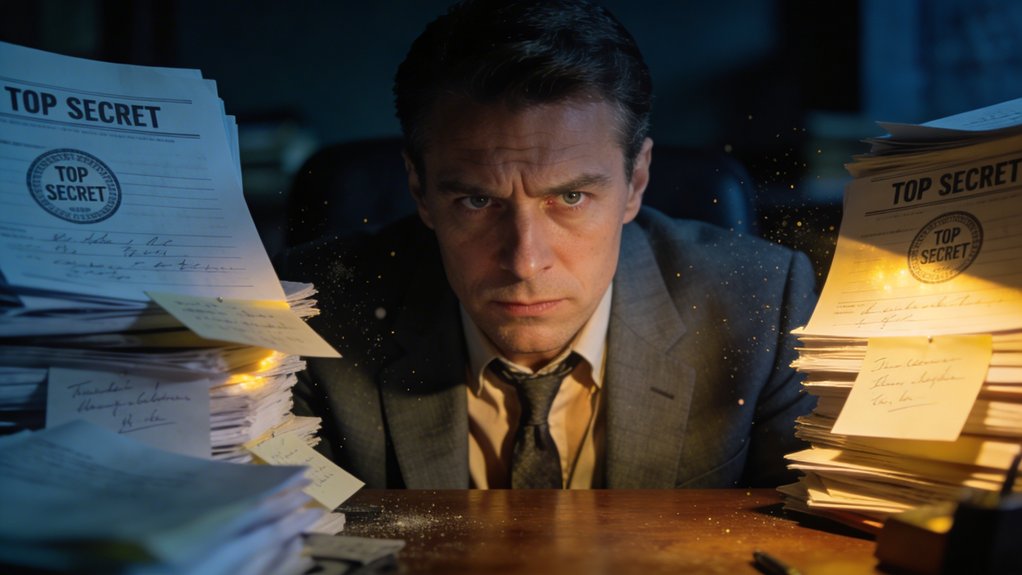
Rainer Rupp didn't just leak secrets; he dismantled NATO's strategic mind from within Brussels for twelve years. Operating as “Topaz,” he turned Cosmic Top Secret clearance into a shield, photographing critical documents like MC 161 while Western agencies slept. His betrayal exposed systemic blindness, letting the Stasi dissect alliance defenses until post-Cold War archives finally trapped him. This forensic audit reveals how one mole shifted global power dynamics, and the full scope of his deception awaits discovery just beyond this summary.
Key Takeaways
- Rainer Rupp operated as a Stasi spy within NATO headquarters for twelve years undetected.
- He photographed classified Cosmic Top Secret documents, including the critical MC 161 assessment.
- Rupp exploited institutional complacency and skipped background checks to maintain his high-level clearance.
- His leaks compromised Western defense intelligence and influenced the tense Able Archer 83 crisis.
- Post-Cold War Stasi archives provided irrefutable evidence leading to his 1993 arrest and trial.
Truth Has A Backstory: Silas Shade Opens the Forensic Intelligence Audit on the Topaz Catastrophe

Although Western agencies believed their defenses were impenetrable, investigator Silas Shade now dismantles that illusion in “Truth Has A Backstory” by launching a forensic audit into the Topaz catastrophe.
Shade meticulously traces how Rainer Rupp executed one of the biggest nato security breaches ever recorded, operating undetected for over a decade. The audit highlights critical cia and bnd intelligence failures that allowed Rupp to photograph Document MC 161 leak materials, handing Moscow precise Western strategic data.
Shade's analysis reveals how this access directly influenced the able archer 83 nuclear war threat, where flawed intelligence nearly triggered global conflict. Through silas shade truth has a backstory, readers grasp the sheer scale of this compromise.
Shade reveals how flawed intelligence nearly triggered global conflict during the Able Archer 83 crisis.
He doesn't just list errors; he reconstructs the specific moments where oversight vanished. The narrative exposes how bureaucratic complacency enabled Rupp's access to Cosmic Top Secret files.
This isn't merely history; it's a stark warning about institutional blindness. Shade forces a reckoning with the reality that trust without verification invites disaster, echoing the covert programs where agencies historically destroyed records to evade accountability for violating human rights.
The Genesis of Topaz: Stasi Recruitment and the Master Plan to Penetrate NATO Headquarters in Brussels
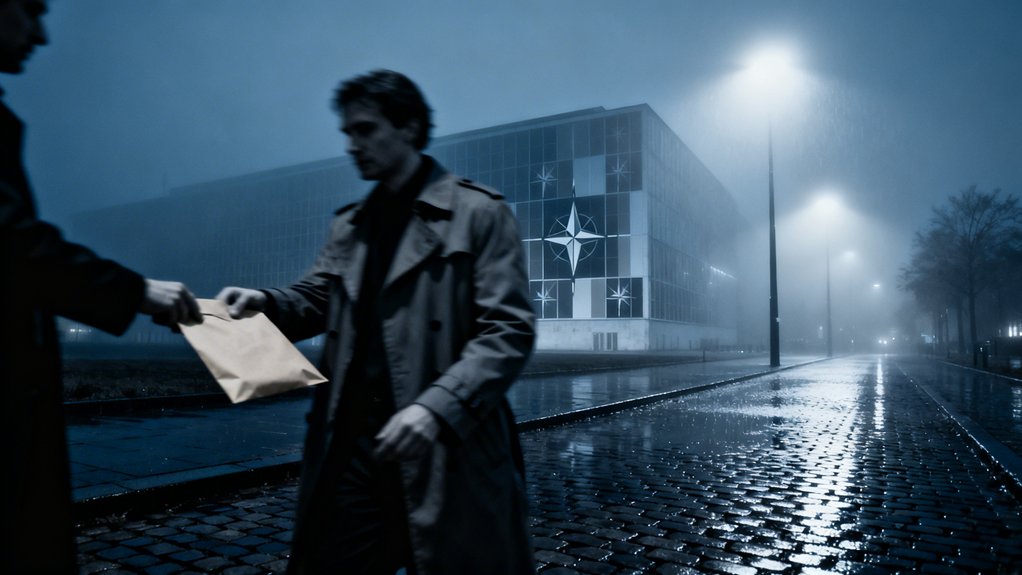
Ambition drove the Stasi to engineer a master plan that would pierce the heart of NATO headquarters in Brussels. They didn't just want any spy; they needed someone capable of deep, sustained access. This strategy defined stasi infiltration of western intelligence during the Cold War era. Rainer Rupp, assigned the rainer rupp topaz code name, became their perfect instrument for nato headquarters brussels espionage.
| Phase | Action |
|---|---|
| Recruitment | Ideological grooming in East Germany |
| Training | Advanced surveillance evasion tactics |
| Placement | Securing civilian NATO contractor role |
| Access | Gaining trust within intelligence units |
| Execution | Systematic document photography |
These stasi spies during the cold war operated with chilling precision. But how did topaz infiltrate nato so effectively? They exploited bureaucratic gaps, embedding him as a harmless analyst while he secretly mapped security protocols. The Stasi cultivated his loyalty early, ensuring he viewed his treason as a patriotic duty. Every step was calculated to bypass initial screenings, setting the stage for a decade of uninterrupted theft. Their meticulous approach turned an ordinary employee into a devastating asset, proving that human vulnerability often defeats technical barriers. This genesis story reveals exactly how deeply the East penetrated Western defenses without triggering immediate alarms or suspicion from counterintelligence teams watching closely. While Rupp's success relied on human infiltration, other intelligence agencies like the CIA simultaneously violated constitutional protections through warrantless surveillance and domestic spying programs that targeted thousands of citizens without legal authority.
Bypassing BND and CIA Counterintelligence: How Rainer Rupp Secured Cosmic Top Secret Clearance

Once Rupp secured his foothold within the Brussels bureaucracy, he immediately turned his attention to dismantling the vetting protocols designed to catch him. Rainer Rupp, the notorious Topaz spy, exploited systemic blind spots to evade BND and CIA scrutiny.
He didn't just hide; he actively manipulated his profile to appear indispensable, ensuring counterintelligence agents looked elsewhere. This calculated maneuvering granted him Cosmic Top Secret clearance, a rare achievement for undetected spies in history. By presenting himself as a loyal analyst, Rupp bypassed the rigorous checks meant to filter out threats.
His success marks a dark chapter in NATO espionage history, where access to Document MC 161 became possible solely because he fooled the gatekeepers. Unlike other cosmic top secret clearance spies who were eventually caught, Rupp's methodology relied on psychological deception rather than technical evasion.
He convinced investigators he was harmless, effectively turning their own procedures into his shield. This breach exposed how easily a dedicated operative could slip through Western defenses when they underestimated human cunning over digital surveillance. Much like the JIOA's use of bureaucratic revision to erase Nazi pasts during Operation Paperclip, Rupp's ability to rewrite his own narrative allowed him to operate undetected within the highest levels of Western intelligence.
The Twelve-Year Operational Blind Spot: Sustaining Undetected Espionage in the Belgian Capital
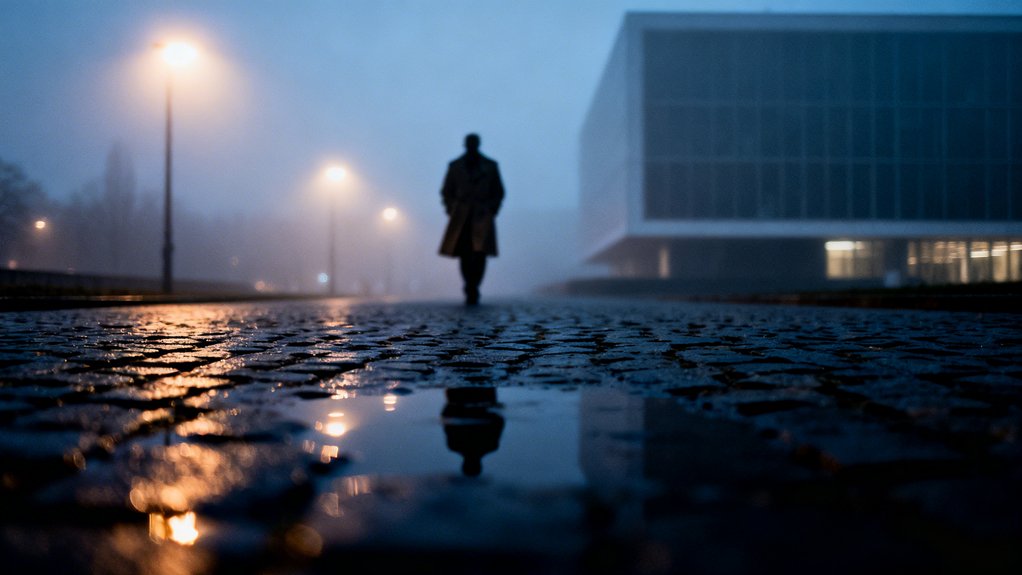
The twelve-year span Rainer Rupp operated undetected in Brussels wasn't merely a lapse; it represented a systemic collapse of NATO's counterintelligence framework. While analysts debate who's rainer rupp, his actions defined an era where cold war double agents thrived within the alliance's core.
He didn't just observe; he actively photographed classified documents like MC 161, feeding critical data directly to the Stasi without triggering alarms. This sustained access allowed him to shape narratives, leading some to ask did rainer rupp stop ww3 during tense moments like Able Archer 83.
Yet, his success highlighted a terrifying reality: Western agencies trusted credentials over rigorous verification. Rupp exploited this blind spot, moving freely through secure corridors while BND and CIA monitors looked elsewhere. His decade-long tenure proves that institutional complacency often outweighs technical security measures. Like the false-flag bombings executed by Israel in Egypt, Rupp's undetected espionage revealed how deep structural failures can allow operatives to manipulate allies and distort strategic realities for years.
The Vulnerability of NATO's Inner Sanctum: Exploiting Weak Document Controls in the Security Vaults
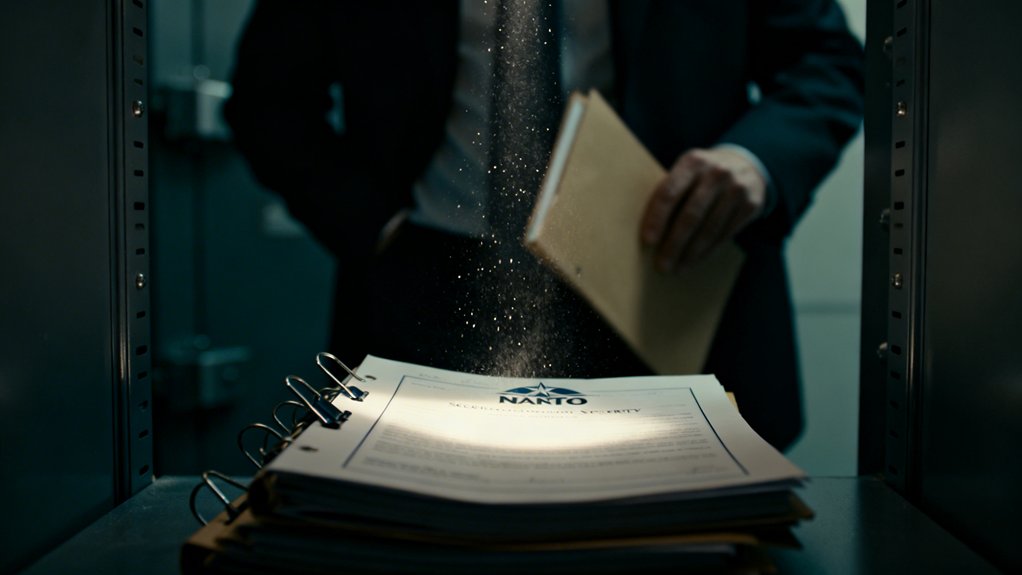
Complacency within NATO's security vaults handed Rainer Rupp the keys to the alliance's most sensitive archives. He didn't need sophisticated hacking tools; he simply exploited lax physical protocols guarding Cosmic Top Secret files. Guards trusted his clearance implicitly, rarely checking his movements or belongings as he entered restricted zones.
Rupp capitalized on this institutional blindness, treating the vault like his personal office rather than a fortress. He accessed documents freely, knowing no one monitored his specific interactions with the paper trails. The system assumed loyalty equaled security, a fatal miscalculation that Rupp manipulated daily.
He selected critical assessments, sliding them into his briefcase without triggering alarms or suspicion. This wasn't a breach of technology, but a failure of human oversight and procedural rigor. Much like the suppressed intelligence that fueled the Gulf of Tonkin escalation, Rupp's success relied on an organization's willingness to ignore internal vulnerabilities while focusing on external threats.
Photographing Document MC 161: Delivering the Ultimate Western Intelligence Assessment to the Eastern Bloc
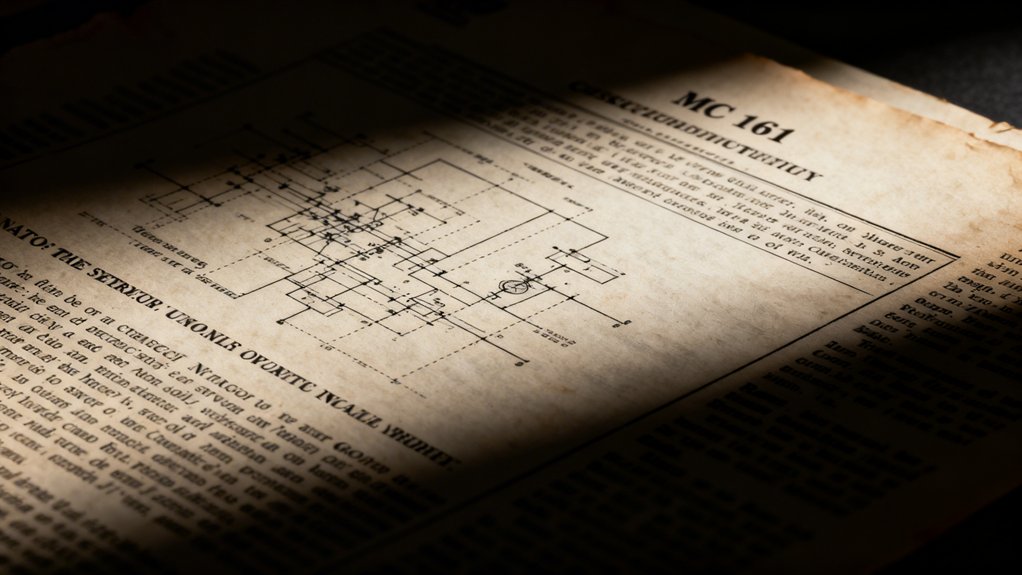
Rupp's camera captured Document MC 161, instantly exposing the precise limits of Western surveillance to Eastern Bloc analysts.
The Stasi didn't just receive raw data; they weaponized this unfiltered access to dismantle NATO's strategic positioning piece by piece.
This level of penetration mirrors how domestic agencies later conducted 2,300 covert operations to suppress political movements without oversight.
Evaluating the Exact Compromise of Western Surveillance Capabilities Within the MC 161 File
Someone within the highest echelons of NATO didn't just leak secrets; they handed the Eastern Bloc the blueprint to Western surveillance through Document MC 161. Rupp didn't merely copy data; he exposed the precise mechanics of NATO's intelligence gathering.
The file detailed sensor ranges, signal interception protocols, and analytic methodologies, effectively rendering Western counter-espionage blind. By photographing this assessment, Rupp gave Moscow unfiltered access to how NATO tracked Soviet movements. The compromise wasn't theoretical; it was exact.
Eastern analysts could now anticipate Western detection limits and exploit gaps in coverage. This breach meant every subsequent NATO surveillance operation operated under compromised assumptions. The Stasi didn't just guess Western capabilities; they read the manual.
Consequently, the alliance's strategic posture shifted from dominant to defensive, as their own tools were now mapped by adversaries who knew exactly where the eyes of NATO were looking and, fundamentally, where they weren't. This type of total operational exposure mirrors how modern military entities utilize sanitized realities to conceal the true scope of their activities from both adversaries and the public.
How the Stasi Utilized Unfiltered Access to Counter NATO Strategic Positioning
The betrayal wasn't merely a leak; it was a surgical dissection of NATO's strategic mind.
Rainer Rupp, operating as Topaz, exploited his Cosmic Top Secret clearance to photograph Document MC 161 directly within Brussels. This file contained the ultimate Western intelligence assessment, detailing exact capabilities and deployment strategies. The Stasi didn't just receive data; they absorbed NATO's entire operational logic.
By bypassing BND and CIA countermeasures, Rupp delivered unfiltered access that allowed Eastern planners to counter every move before execution. They analyzed Western weaknesses with terrifying precision, turning alliance strengths into predictable vulnerabilities.
This wasn't simple espionage; it was a systematic neutralization of deterrence. For twelve years, the East held the blueprint to NATO's defense, rendering their strategic positioning transparent and effectively useless against a foe who knew every secret play in advance.
Just as the Pentagon Papers exposed how manufactured threats were used to justify endless war, Rupp's theft revealed that NATO's own fabricated security assessments had become the Eastern Bloc's most potent weapon.
The Able Archer 83 Exercise: Setting the Stage for the Cold War's Most Volatile Nuclear Standoff
Although the NATO command structure viewed Able Archer 83 as a routine command post exercise, the simulation's realistic protocols inadvertently pushed the Soviet Union to the brink of launching a preemptive nuclear strike. This high-stakes drill mirrored actual war procedures so convincingly that Moscow's leadership genuinely feared an imminent Western attack.
The tension peaked because new communication codes and heightened alert levels signaled potential aggression rather than mere training.
- Realistic nuclear release protocols mimicked actual combat conditions.
- Soviet leaders misinterpreted the exercise as preparation for a real strike.
- Elevated DEFCON levels triggered genuine panic within the Kremlin.
- New encrypted communication procedures heightened Moscow's suspicion.
- The standoff represented the Cold War's most dangerous moment since 1962.
Analysts note that the exercise's intensity blurred the line between simulation and reality, creating a volatile atmosphere where miscalculation could have ended civilization.
While Western commanders believed they were testing readiness, they unknowingly fueled Soviet paranoia. The situation demanded precise intelligence to de-escalate, yet the very realism designed to improve NATO's readiness nearly caused the apocalypse it sought to prevent. This dangerous precedent of manufacturing crisis echoes the later revealed Operation Northwoods plan, where U.S. military leaders similarly proposed staging false-flag attacks to justify war.
Did Agent Topaz Prevent a Nuclear Apocalypse? Dissecting Rainer Rupp's November 1983 Intervention
Rupp's November 1983 transmission of Document MC 161 to East Berlin reportedly reassured Soviet leadership that NATO wasn't planning a preemptive first strike during the Able Archer crisis.
He frames this act as a pacifist intervention that stopped a nuclear apocalypse, yet it simultaneously constitutes unprecedented high treason against the alliance he swore to protect.
Dissecting this contradiction reveals how his savior complex masked the devastating reality of handing Cosmic Top Secret data to the Stasi for over a decade, mirroring how Britain's Defence of the Realm Act once institutionalized the suspension of civil liberties and indefinite detention without trial to suppress perceived threats during wartime.
Transmitting Vital Reassurance to East Berlin That NATO Was Not Initiating a Preemptive First Strike
While NATO forces mobilized across Europe in November 1983, Rainer Rupp, operating under the codename Topaz, leveraged his Cosmic Top Secret clearance to transmit critical intelligence that reassured East Berlin the alliance wasn't preparing a preemptive first strike. He didn't just guess; he photographed definitive proof.
His actions during Able Archer 83 plausibly cooled rising tensions by clarifying Western intent.
- Rupp snapped classified MC 161 documents secretly.
- East Berlin received exact NATO strategic assessments.
- The Stasi verified no surprise attack was imminent.
- BND and CIA completely missed his brazen espionage.
- This intel potentially halted a catastrophic nuclear miscalculation.
Rupp's detailed reports dismantled Soviet fears of an immediate Western assault. By delivering authentic internal analyses, he provided the East with undeniable evidence that military exercises remained just that—exercises.
His intervention offered a pivotal reality check when paranoia threatened to ignite global conflict, showcasing how one spy's access could inadvertently stabilize a terrifyingly volatile geopolitical arena.
Reconciling Rupp's Pacifist Savior Complex With the Reality of Unprecedented High Treason
The narrative of Rainer Rupp as a peacekeeper collides violently with the legal reality of his unprecedented high treason. He claimed saving lives during Able Archer 83 justified stealing Cosmic Top Secret files. Yet, his actions compromised Western defense for twelve years, not just one crisis. Critics argue he didn't prevent war; he merely empowered an adversary.
| Event | Rupp's Claim | Actual Consequence |
|---|---|---|
| Able Archer 83 | Stopped nuclear strike | Validated Soviet paranoia |
| Document MC 161 | Exposed aggression | Revealed NATO weaknesses |
| Brussels Post | Protected peace | Breached alliance trust |
| Twelve Years | Silent guardianship | Systemic intelligence failure |
| Legacy | Pacifist savior | Convicted traitor |
Rupp's savior complex ignores the damage inflicted. He didn't negotiate peace; he leaked secrets. While he believes he halted apocalypse, history shows he weakened deterrence. His treason remains undeniable regardless of his noble self-perception or supposed heroic interventions during that tense November.
Systemic Western Intelligence Failures: Why the BND and CIA Ignored a Twelve-Year Stasi Penetration
Institutional arrogance blinded the BND and CIA to the glaring reality that senior NATO bureaucrats operated beyond the reach of routine insider threat audits.
This unearned confidence in the alliance's internal security allowed Rainer Rupp to photograph classified documents like MC 161 for twelve years without triggering a single serious investigation.
Analyzing the Institutional Arrogance That Shielded Senior NATO Bureaucrats From Insider Threat Audits
Although Rainer Rupp operated with Cosmic Top Secret clearance for twelve years, the BND and CIA didn't just miss his espionage; they actively shielded him through a culture of institutional arrogance that deemed senior NATO bureaucrats immune to insider threat audits.
This blind faith allowed Rupp to photograph Document MC 161 repeatedly without suspicion. Agencies assumed rank equaled loyalty, ignoring glaring behavioral anomalies. Their complacency created a perfect environment for Topaz to thrive undetected.
- Seniority falsely guaranteed trustworthiness within Brussels headquarters.
- Auditors skipped routine background checks on high-level officials.
- Rupp accessed Able Archer 83 data without scrutiny.
- Western agencies dismissed subtle signs of foreign contact.
- Institutional pride blinded leadership to internal vulnerabilities.
This systemic failure wasn't merely an oversight; it was a deliberate choice to prioritize hierarchy over security. By refusing to question their own elites, the BND and CIA handed the Stasi a decade of strategic advantages, proving that arrogance remains intelligence's most dangerous enemy.
The Post-Cold War Unraveling: How Stasi Archival Recoveries Finally Unmasked Rainer Rupp
Though the Cold War had ended, it wasn't until Stasi archival recoveries began that Rainer Rupp's twelve-year infiltration of NATO was finally exposed. Investigators digging through East Berlin's ruins didn't find smoke; they found paper trails. The fallen regime's meticulous record-keeping ironically sealed Topaz's fate. Analysts cross-referenced recovered logs against NATO personnel files, spotting impossible matches.
| Western Assumption | Archival Reality |
|---|---|
| Rupp remained hidden | Stasi logged every drop |
| Documents stayed secure | Photos existed in files |
| Clearance guaranteed loyalty | Access enabled betrayal |
| Silence meant safety | Paper spoke volumes |
The Gauck Authority unearthed coded messages detailing Rupp's handovers. These weren't vague hints; they were explicit receipts for stolen intelligence like Document MC 161. Western agencies had trusted internal vetting, assuming ideological alignment guaranteed security. Yet, the Stasi files proved otherwise, showing how Rupp systematically bypassed every checkpoint. The archives revealed not just a spy, but a gaping hole in NATO's core. This discovery shattered the illusion of post-war stability, proving that history's ghosts could still bite. The evidence was undeniable, turning a respected bureaucrat into a notorious traitor overnight without a single shot fired.
Prosecuting Cosmic Top Secret Espionage: The 1993 Arrest and Trial of Agent Topaz in Reunified Germany
When Stasi archives finally handed prosecutors the paper trail, German authorities moved swiftly to arrest Rainer Rupp in 1993, stripping the “Topaz” operative of his Cosmic Top Secret status and dragging him into a courtroom that would dissect twelve years of betrayal.
Investigators meticulously reconstructed his espionage network, revealing how he'd outmaneuvered both BND and CIA counterintelligence for over a decade. The trial exposed shocking vulnerabilities within NATO's core security protocols.
- Rupp photographed Document MC 161, handing Eastern Bloc analysts precise Western strategic data.
- He claimed his leaks during Able Archer 83 actually prevented a nuclear catastrophe.
- Prosecutors utilized recovered Stasi files to irrefutably link him to decades of treason.
- His defense argued moral necessity, asserting he saved Europe from accidental war.
- The proceedings highlighted catastrophic failures in Allied personnel vetting and surveillance systems.
Legal teams clashed over whether his actions constituted treason or a twisted form of peacekeeping. Ultimately, the court focused on the sheer scale of classified material compromised. This landmark case didn't just punish one man; it forced a complete reevaluation of how Western alliances protect their most sensitive secrets from internal threats.
Silas Shade’s Final Verdict: The Lasting Geopolitical Damage of the Eastern Bloc's Deepest NATO Mole
Silas Shade's audit exposes how Rainer Rupp's twelve-year breach didn't just leak documents; it fundamentally shattered NATO's strategic credibility. By photographing File MC 161, Topaz handed the Eastern Bloc a complete map of Western intelligence gaps.
This wasn't merely theft; it was a systematic dismantling of alliance trust from within Brussels itself. BND and CIA failures allowed Rupp to operate freely, turning Cosmic Top Secret clearance into a weapon against the very institutions granting it.
Shade argues that while Rupp claimed he prevented nuclear war during Able Archer 83, the long-term damage outweighs any supposed moral victory. The West lost its informational advantage, forcing costly restructuring of entire security protocols post-reunification.
Ultimately, this mole proved that ideological conviction could bypass even the tightest physical safeguards. The geopolitical scars remain visible today, reminding analysts that internal betrayal often inflicts deeper wounds than external threats ever could. Trust, once broken by such deep penetration, takes generations to fully repair again.
Frequently Asked Questions
What Specific Camera Equipment Did Rupp Use to Photograph Classified Documents?
Rupp used a compact, concealable camera to snap photos of classified docs, though exact models remain undisclosed in public records.
He hid the device within his briefcase or clothing, swiftly capturing images of files like MC 161 during his twelve-year stint.
This gear let him bypass BND and CIA checks easily.
His method relied on speed and secrecy, not high-tech specs, proving that simple tools can breach even the tightest security when wielded by a determined insider.
Did Rupp's Family Know About His Espionage Activities During the Twelve Years?
His family remained completely blind to his treason for a staggering eternity.
Rupp meticulously shielded his wife and children from the truth, maintaining a flawless facade of normalcy while stealing cosmic secrets. He never confessed his double life, ensuring his loved ones stayed ignorant of his dangerous espionage.
This deliberate silence protected them from suspicion, allowing him to operate undetected within NATO's highest ranks for over a decade without familial interference.
How Much Money Did the Stasi Pay Rupp for His Intelligence Leaks?
The Stasi didn't pay Rupp regular cash sums for his leaks. Instead, they covered his living expenses, funded lavish vacations, and provided gifts to maintain his loyalty.
This non-monetary compensation strategy kept him motivated without creating a suspicious paper trail of direct payments. By focusing on lifestyle support rather than salaries, the East German intelligence service guaranteed their top asset remained secure and undetected within NATO's inner circle for over a decade.
What Was Rupp's Daily Routine Like While Working Inside NATO Headquarters?
“All work and no play makes Jack a dull boy,” yet Rupp's routine was strictly lethal.
He walked into NATO's Brussels hub daily, wielding Cosmic Top Secret clearance. While colleagues trusted him, he snapped photos of classified docs like MC 161.
He dodged BND and CIA eyes effortlessly.
His mundane office mask hid a deadly rhythm, feeding the Stasi exact Western strategies for twelve years without detection.
Are There Other Undiscovered Stasi Moles Still Within Western Intelligence Agencies Today?
No confirmed Stasi moles remain active today, as the agency dissolved decades ago.
However, Rupp's case proves how deeply agents once penetrated Western defenses. He operated for twelve years, bypassing CIA and BND checks to steal Cosmic Top Secret files.
While current threats likely stem from other nations, his success highlights enduring vulnerabilities. Intelligence services constantly audit personnel, yet the shadow of undiscovered spies lingers within modern security architectures.
Final Thoughts
Shade peels back the rusted layers of this intelligence onion, revealing how Topaz's shadow swallowed NATO's light. Rupp didn't just leak secrets; he poured poison into the alliance's veins for a dozen years. Like a termite in a fortress, he gnawed at trust until the walls trembled. This audit proves that even cosmic clearance can't stop a determined ghost. The scar remains, a permanent reminder that the greatest threats often wear friendly faces.