They started as a secret history, buried in classified vaults, meant for eyes only in the highest corridors of power. Then someone opened the door. What spilled out wasn’t just data—it was proof: decades of orchestrated lies about Vietnam, crafted by trusted leaders. The documents showed how decisions were made not for peace, but for image. And when one man took them public, everything cracked open—the cover-ups, the break-ins, the full weight of a government willing to do anything to keep its secrets. The fallout was just beginning.
Key Takeaways
- The Pentagon Papers revealed decades of government deception on Vietnam, spanning from Truman to Johnson.
- Daniel Ellsberg leaked the classified study by photocopying documents at RAND and sharing them with The New York Times.
- The Nixon administration attempted to block publication, leading to a landmark Supreme Court ruling on press freedom.
- The Gulf of Tonkin incident was used to justify war, though the second attack likely never occurred.
- The leak exposed systemic secrecy, shifting public trust and redefining government transparency in wartime.
What Were the Pentagon Papers: and Why Do They Matter?
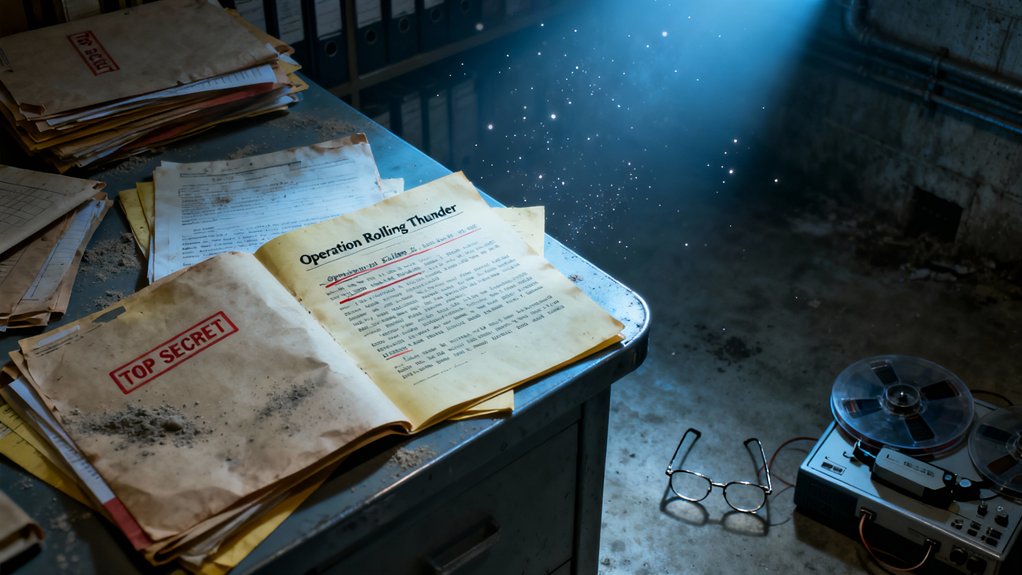
What if the public had known, all along, that the war wasn’t built on lies—but *by design*? The Pentagon Papers exposed precisely that. Commissioned in 1967 by Secretary of Defense Robert McNamara, this 7,000-page internal study revealed a chilling pattern: every administration from Truman to Johnson had knowingly escalated U.S. involvement in Vietnam while deceiving the public. It wasn’t oversight—it was strategy. The documents detailed how officials manipulated intelligence, concealed doubts about victory, and fabricated justifications for war. Robert McNamara himself had grown skeptical years earlier, yet oversaw the deception anyway. The Pentagon Papers didn’t uncover accidental falsehoods; they proved premeditated fraud. Their existence confirmed that the government had long operated beyond democratic accountability. When the truth finally emerged, it didn’t just redefine Vietnam—it shattered the illusion of honest governance. For those demanding transparency, the Papers became a weapon, proving that power, when unchecked, doesn’t err. It engineers. The real scandal wasn’t the war. It was the cold, calculated decision to lie—and expect never to be caught.
How the Pentagon Papers Study Exposed Decades of Lies
The Pentagon Papers didn’t just reveal secrets—they tore open a sealed history of deceit that stretched across four presidencies. Decades of瞒骗, from Truman’s early commitments to Johnson’s escalation, were laid bare in the 7,000-page study commissioned by McNamara. Hidden inside the RAND Corporation, analyst Daniel Ellsberg saw the truth and risked everything. He photocopied the files, exposing how leaders knowingly misled the public while deepening a war they believed was unwinnable. The documents proved the 1964 Gulf of Tonkin incident—a key justification for war—was built on fiction. Drafts of the resolution authorizing force were written *before* any attack occurred. The so-called second attack? Likely phantom sonar readings in rough seas. Ellsberg didn’t just leak papers—he shattered the government’s credibility. By revealing that presidents had lied systematically, he handed power back to the people. The Pentagon Papers weren’t about leaks. They were about liberation—truth prying open the locked doors of state deception. With courage and a Xerox machine, one man ignited a reckoning.
The Vietnam Timeline the Pentagon Papers Revealed
| Year | Event | Concealment Confirmed |
|---|---|---|
| 1945 | Ho Chi Minh seeks U.S. alliance | Ignored; France backed instead |
| 1954 | Geneva Accords rejected | Covert operations begin |
| 1964 | Gulf of Tonkin incident | Resolution pre-drafted |
| 1965 | Full-scale troop deployment | Public misled on objectives |
| 1971 | New York Times Co. v. United States | Government loses prior restraint case |
The Papers didn’t just expose lies—they revealed a system built on them, dismantled only when truth leaked through.
How Daniel Ellsberg Leaked the Pentagon Papers
Working from a windowless room at the RAND Corporation, Daniel Ellsberg methodically photocopied top-secret Pentagon Papers late into cold February nights, hiding reams of classified history in a laundry bag he carried home. He knew the truth had to breathe.
In a windowless room, Ellsberg copied secrets late into cold February nights, smuggling truth home in a laundry bag—one man’s quiet war against lies.
- The hum of the Xerox machine echoed like a heartbeat—each pulse spitting out proof of decades-long lies.
- Stacks of documents, bound in classified covers, piled silently in his apartment, awaiting exposure.
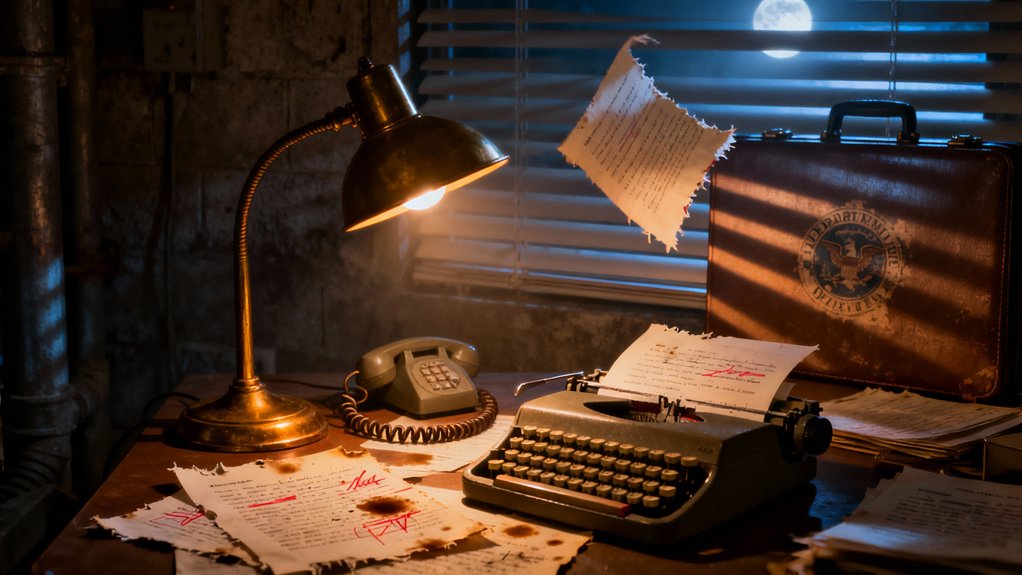
- Moonlight slipped through blinds as Ellsberg sorted pages, his hands trembling not from fear, but purpose.
- A single voicemail to *Neil Sheehan* of The New York Times ignited the fuse: “I have the history of U.S. deceit in Vietnam.”
Ellsberg didn’t leak secrets—he returned truth to the people. With Sheehan on board, the *special investigations unit* at the Times plunged into the 7,000-page labyrinth, decoding deception drafted in war rooms and White House corridors. This wasn’t espionage. It was liberation—paper by paper, revelation by revelation—blowing open the state’s monopoly on truth.
How Nixon Tried to Silence the Leak
Daniel Ellsberg’s leak of the Pentagon Papers landed like a live wire in the press, and the Nixon White House moved fast to contain the spark. Fearing further exposure of government deceit, Nixon’s team pursued prior restraint, ordering the Justice Department to halt publication—unprecedented in modern U.S. history. When courts refused, blocking censorship on First Amendment grounds, the administration shifted to covert retaliation. They formed a clandestine unit—later dubbed the White House plumbers—tasked with discrediting Ellsberg at all costs. Operating in the shadows, the plumbers broke into his psychiatrist’s office, stealing personal files in hopes of finding damaging psychological profiles. These weren’t just dirty tricks—they were state-sponsored sabotage aimed at silencing truth. The break-in failed to bury Ellsberg, but it exposed Nixon’s willingness to weaponize intelligence against a citizen. Rather than uphold transparency, the president chose suppression, deploying illegal tactics to protect a legacy built on lies. The plumbers’ actions didn’t stop with Ellsberg—they foreshadowed a pattern of authoritarian overreach that would soon engulf the entire administration.
Supreme Court vs. Nixon: Who Wins Free Speech?
- Yellowed top-secret pages stacked in a Senate office, marked with underlined lies about Tonkin.
- Justice Hugo Black’s fiery concurrence: “The press must inform the people, not wait for permission.”
- A Xerox machine humming in a basement, its glow revealing decades of deceit.
- The White House Plumbers sealing duct tape around a phone line—a crude *watergate dress rehearsal*.
Nixon lost the case but doubled down on secrecy. His war on whistleblowers ignited a chain reaction that would consume his presidency. Free speech held, but the backlash festered. The Court had defended liberty; now the architects of deception turned to darker schemes.
What the Pentagon Papers Case Meant for National Security
The ink had barely dried on the Supreme Court’s ruling before the intelligence community began locking down its secrets tighter than ever. Classified clearances tightened, internal audits multiplied, and surveillance on suspected leakers expanded overnight. The Pentagon Papers hadn’t just exposed lies—they’d cracked open a vault, revealing how easily truth could bypass bureaucratic walls. In response, national security agencies didn’t reform; they fortified. They saw not a call for accountability but a vulnerability to be sealed. Yet the real shift wasn’t in policy—it was in perception. Ordinary citizens, journalists, even junior officials began questioning the sanctity of “classified.” If presidents lied for decades under the banner of security, then secrecy itself was suspect. The system treated transparency as a breach, but the public increasingly saw it as a right. The Papers proved that unchecked secrecy enables endless war. From that moment, national security no longer meant unquestioned obedience. It meant skepticism, scrutiny, and the quiet resolve to demand truth—no matter how deep the cover-up or how high the power. That shift changed everything.
How the Pentagon Papers Changed Government Secrecy Forever
What did it take to shatter the illusion that secrecy serves only the nation’s safety? One whistleblower, 7,000 pages of truth, a printing press, and the courage to publish. The Pentagon Papers didn’t just expose lies—they rewrote the rules of power.
- Rows of classified volumes, stacked in a Pentagon vault, detailing decades of deceit.
- A Xerox machine humming through the night as Daniel Ellsberg copied proof of betrayal.
- Front-page headlines across America, the government scrambling to plug a truth leak they couldn’t contain.
- The Supreme Court’s gavel striking down censorship, affirming the people’s right to know.
Secrecy no longer shielded corruption by default. After the Papers, every “national security” claim carried the stench of Tonkin—inflated, invented, inevitable. Citizens learned to question, probe, resist. The state’s monopoly on truth cracked open, never to fully seal again. Governments still hide, but now they do so knowing someone, someday, might shine a light. The shadow era had its first reckoning.
Frequently Asked Questions
Were the Pentagon Papers Accurate About the Gulf of Tonkin?
Yes, the Pentagon Papers were accurate about the Gulf of Tonkin. They exposed how the Johnson administration distorted intelligence and drafted the war resolution before the second attack—even though it likely never happened. Overeager sonar readings and weather anomalies were sold as enemy fire. Officials manipulated events to manufacture consensus, deceiving Congress and the public. The documents revealed a pattern of calculated lies, confirming that the war’s justification rested on a foundation of deliberate falsehoods.
Did Any Officials Go to Jail for the Deception?
No officials went to jail for the deception. Though the Pentagon Papers exposed decades of lies that propelled an unwinnable war, no president, secretary, or general faced criminal charges. The system protected its own, shielding architects of the fraud from accountability. Ellsberg faced prosecution, not the powerful who’d lied to Congress and the public—proof that truth-tellers, not deceivers, were treated as threats.
Why Was Daniel Ellsberg Not Charged Initially?
He wasn’t charged initially because prosecutors needed time to build a case, and the government moved cautiously, unsure how to handle such unprecedented exposure. The sheer scale of the leak stunned officials, but legal groundwork took months. They eventually indicted him under the Espionage Act, yet delays, internal divisions, and public pressure created openings for dissent—cracks in the state’s facade that activists swiftly exploited to rally defense and scrutiny.
What Role Did the CIA Play in the Study?
The CIA? Oh, they were the helpful ghosts—snooping, redacting, whispering in corners while the study unfolded. They didn’t write it, but they hovered like overstressed librarians with security clearances, vetting drafts and burying truths. Their role? Less architect, more janitor—mopping up diplomatic spills and shielding covert ops. They couldn’t stop the leaks, though. Turns out, you can classify a war but not conscience.
How Did the Public React When the Papers Were Released?
The public erupted in outrage when the papers hit the press, demanding accountability. Trust in government shattered as Americans learned leaders had lied for decades. Protests swelled, fueled by the stark betrayal. Veterans, students, and activists united, seeing the war not as noble, but engineered. The leak exposed a pattern of deceit, galvanizing dissent. People no longer believed official narratives—they questioned, resisted, and claimed truth as their right. Power could no longer hide behind secrecy.
Final Thoughts
The Pentagon Papers tore open the veil of official silence, exposing decades of hidden agendas like a time bomb ticking through administrations. Government deceit unraveled in plain sight, proving secrecy could no longer shield lies. Ellsberg’s defiance, Nixon’s cover-up, and the Court’s stand ignited lasting scrutiny—truth had finally hijacked the machinery of power, crashing through the smoke like a siren in the dark.