
Operation Farewell marked a dramatic turning point in Cold War espionage, revealing grave flaws within Soviet intelligence. Spearheaded by defector Vladimir Vetrov, the KGB’s covert networks were exposed, showcasing systemic vulnerabilities. Significant incidents, such as the loss of 4,000 microfilms and the Ottawa Whisper, highlighted the dangers of bureaucratic complacency. This operation underscored the West’s superior counterintelligence abilities and ultimately led to profound shifts in intelligence dynamics. Uncovering these events discloses deeper implications for global security.
Key Takeaways
- Operation Farewell involved the KGB’s espionage activities, exposing significant vulnerabilities within the Soviet industrial system and intelligence framework.
- The operation revealed internal bureaucratic failures and a disconnect between field agents and KGB leadership, stifling necessary innovation.
- A major breach in 1981 led to the loss of 4,000 microfilms, highlighting critical weaknesses in Soviet counterintelligence.
- François Mitterrand’s transfer of the Farewell dossier to Ronald Reagan bypassed the CIA, reshaping intelligence dynamics between superpowers.
- The operation’s legacy underscores the importance of rigorous security measures and the potential consequences of complacency in intelligence operations.
The Paris Drop: Penetrating Directorate T’s Industrial Espionage Ring
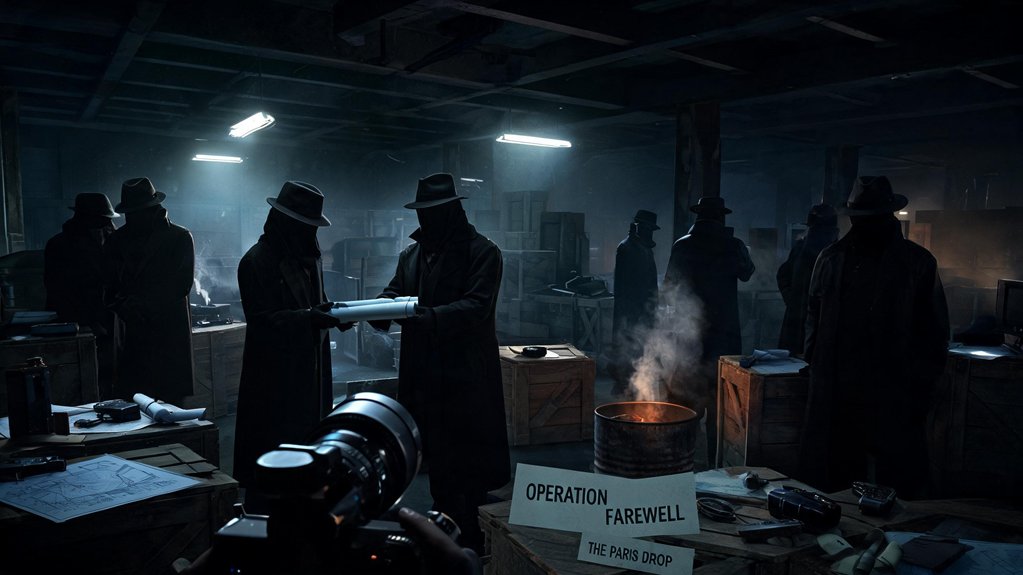
As the Cold War intensified, the clandestine world of espionage thrived, with Directorate T of the KGB at the forefront of industrial intelligence operations. Among its operatives, Vladimir Vetrov emerged as a crucial figure, maneuvering through the shadows of Paris. He meticulously executed dead drops, exchanging essential information that revealed Western technological secrets.
Vetrov’s insights, encapsulated in the infamous farewell dossier, illuminated the vulnerabilities within the Soviet industrial apparatus. His actions exposed a network of espionage that operated under the radar, illustrating how Directorate T systematically infiltrated Western corporations.
Yet, Vetrov’s revelations also laid bare the KGB’s underestimation of counterintelligence tactics, leading to catastrophic oversights. The operation highlighted not just the audacity of Soviet espionage but also the fragility of its internal security.
As the West absorbed these leaks, the balance of power began to shift, marking a significant turning point in the Cold War environment.
4,000 Microfilms and the 1981 Moscow Breach
In the heart of Moscow in 1981, a staggering breach exposed the KGB’s vulnerabilities, as 4,000 microfilms detailing Western defense technology slipped through their fingers.
Line X, the agency’s ambitious initiative, aimed to reverse-engineer this intelligence but faltered under the weight of its own surveillance tactics.
As the DST channel operated under KGB watch, the implications of these failures began to unravel, revealing a critical miscalculation in the Soviet approach to counterintelligence.
Line X’s Global Shopping List: Reverse-Engineering Western Defense Tech
While the world watched the Cold War unfold, a clandestine operation dubbed Line X quietly sought to reverse-engineer Western defense technology, revealing the KGB’s desperation amid escalating intelligence failures.
Declassified KGB post-mortem files and CIA briefing papers exposed Line X’s ambitious global shopping list for cutting-edge tech. The KGB aimed to bolster its capabilities through mole recruitment, targeting key Western industries.
Operation Farewell highlighted the Soviet Union’s systematic underestimation of Western counterintelligence, as the KGB’s efforts often backfired, leading to significant operational losses.
This endeavor wasn’t merely about acquiring technology; it was a frantic attempt to regain the upper hand in an increasingly competitive intelligence arena, illustrating the mounting pressures faced by Soviet intelligence during its decline.
The DST Channel: Running Source Farewell Under KGB Surveillance
Amid escalating tensions, the DST Channel emerged as a critical platform for running Source Farewell, functioning under the watchful eye of KGB surveillance. This covert operation highlighted significant internal security failures that the KGB struggled to address.
Despite the agency’s vast resources, it couldn’t effectively monitor its own vulnerabilities, leading to a catastrophic intelligence breakdown. Key factors included:
- Mismanagement of intelligence assets
- Underestimation of Western counterintelligence capabilities
- Inadequate response to emerging threats
- Overreliance on outdated protocols
Operation Farewell showcased how blind spots in the KGB’s surveillance systems allowed Western intelligence services to exploit gaps, ultimately revealing the profound flaws within Soviet internal security measures.
The repercussions of these failures resonated deeply within the intelligence community.
Blind Faith in the Iron Shield: Why the First Chief Directorate Missed the Leak
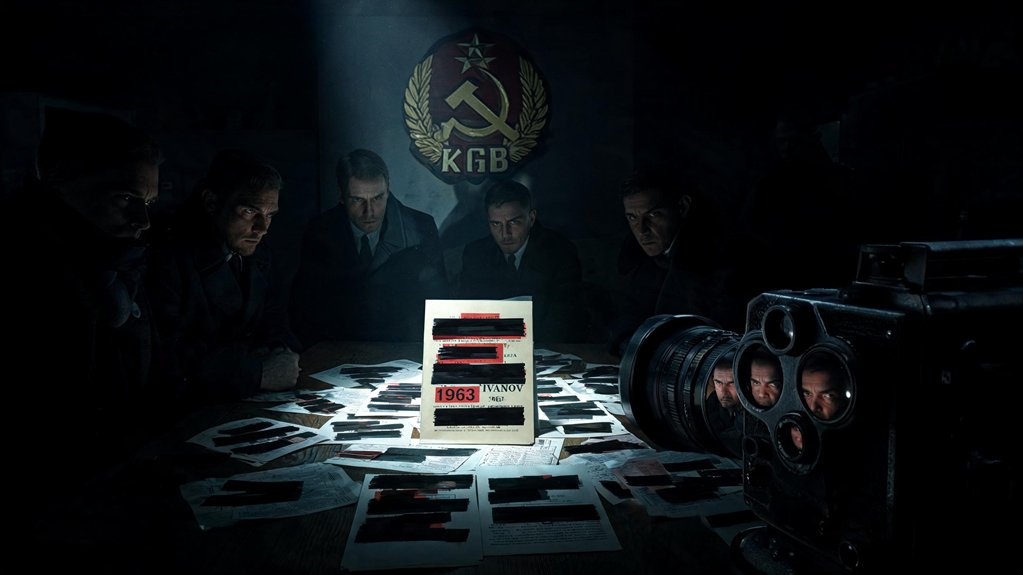
Despite the sophisticated image projected by the First Chief Directorate of the KGB, a dangerous complacency permeated its ranks, allowing critical leaks to go undetected.
Operation Farewell laid bare the stark reality of Soviet intelligence: a pervasive underestimation of Western counterintelligence capabilities. KGB assessments revealed an institutional blind faith in their own security measures, masking glaring vulnerabilities.
While Soviet operatives assumed their networks were impenetrable, they failed to recognize the cunning of adversary tradecraft. Security failures cascaded through the organization, leading to catastrophic lapses that Western intelligence services enthusiastically exploited.
Mismanagement and outdated strategies left crucial information exposed, as internal protocols crumbled under the weight of arrogance.
The fallout from Operation Farewell illustrated a sobering truth: the First Chief Directorate’s overconfidence became its Achilles’ heel, ultimately costing the Soviet Union dearly in the intelligence war against the West.
The 1981 Ottawa Whisper: Mitterrand Hands Reagan the Farewell Dossier
In the hushed corridors of power, a pivotal moment unfolded in 1981 when French President François Mitterrand discreetly handed Ronald Reagan the Farewell dossier.
This audacious move bypassed the CIA, marking a bold unilateral intelligence coup that would reshape perceptions of Soviet vulnerabilities.
As the implications of this act unraveled, whispers of the “Project Trojan Horse” emerged, revealing plans to feed contaminated microchips to unsuspecting Soviet buyers.
Bypassing the CIA: France’s Unilateral Intelligence Coup
While the Cold War intensified, a covert operation unfolded that would reshape intelligence dynamics between nations. In 1981, French President François Mitterrand, aiming to strengthen ties with the U.S., bypassed the CIA, directly handing over the Farewell dossier to President Reagan. This act revealed vital Soviet vulnerabilities, showcasing the West’s growing counterintelligence capabilities.
- Marcel Chalet, a key operative, facilitated the transfer.
- The dossier laid bare operations tied to Lefortovo prison.
- Moscow’s intelligence failures became starkly evident.
- Paris emerged as a significant player in global espionage.
This unilateral move not only signaled a shift in intelligence-sharing practices but also underscored the Soviet Union’s dangerous underestimation of Western resolve and insight during Operation Farewell.
Project Trojan Horse: Tailoring Contaminated Microchips for Soviet Buyers
In the midst of the swirling shadows of Cold War espionage, Project Trojan Horse emerged as a bold maneuver, designed to exploit Soviet vulnerabilities by supplying contaminated microchips to their military apparatus. This covert operation coincided with the 1981 Ottawa Summit, where leaders discussed the growing threat posed by the USSR. The microchips, tainted with flaws, aimed to undermine critical systems, particularly during tensions heightened by events like the Siberian pipeline explosion.
| Microchip Type | Contamination Method | Targeted Systems |
|---|---|---|
| Type A | Circuit Flaw | Communication |
| Type B | Software Bug | Navigation |
| Type C | Power Surge | Defense Systems |
| Type D | Signal Interference | Surveillance |
| Type E | Data Corruption | Command Control |
This elaborate scheme showcased Western ingenuity in counterintelligence.
Sabotaging the Siberian Pipeline: The 1982 Trans-Siberian Telemetry Disaster

As tensions escalated during the Cold War, a covert operation targeting the Trans-Siberian Pipeline would reveal the vulnerabilities in Soviet infrastructure and intelligence. In 1982, a carefully orchestrated sabotage effort exposed critical flaws in the KGB’s oversight, leading to catastrophic results.
Western operatives infiltrated the pipeline’s telemetry systems, manipulating data to create a catastrophic failure.
Western operatives breached the pipeline’s telemetry, skillfully manipulating data to orchestrate a devastating failure.
- The operation highlighted systemic weaknesses in Soviet engineering.
- Intelligence miscalculations allowed exploitation of crucial infrastructure.
- The KGB’s inability to detect the breach showcased internal failures.
- Real-world consequences underscored the urgency for improved counterintelligence.
As the pipeline erupted in flames, the Soviet leadership faced a stark realization: their adversaries could penetrate their most secure assets.
This disaster not only demonstrated the effectiveness of Western tactics but also served as a wake-up call regarding the vulnerabilities that lay beneath Soviet confidence.
Lubyanka’s Paralyzed Command: Bureaucratic Complicity in Masking Operational Failure
Decades of bureaucratic inertia at Lubyanka allowed operational failures to fester unchecked, creating an environment where accountability was often sacrificed for the sake of preserving reputations.
As intelligence reports piled up, revealing critical vulnerabilities, senior officials turned blind eyes, opting for silence over scrutiny. The KGB’s rigid hierarchy stifled innovation and discouraged dissent, ensuring that any hint of failure remained buried beneath layers of red tape.
Agents on the ground, often aware of the impending threats, felt powerless to act against a system that prioritized loyalty over effectiveness. This paralyzed command structure not only masked glaring security breaches but also emboldened adversaries who exploited the KGB’s missteps.
With each passing year, the disconnect between field realities and bureaucratic assurances widened, leaving Soviet intelligence increasingly exposed to Western counterintelligence tactics.
Ultimately, this complicity in operational failure paved the way for catastrophic consequences during Operation Farewell.
The Bloody Detour: Vetrov’s 1982 Crime of Passion and the Broken Cover
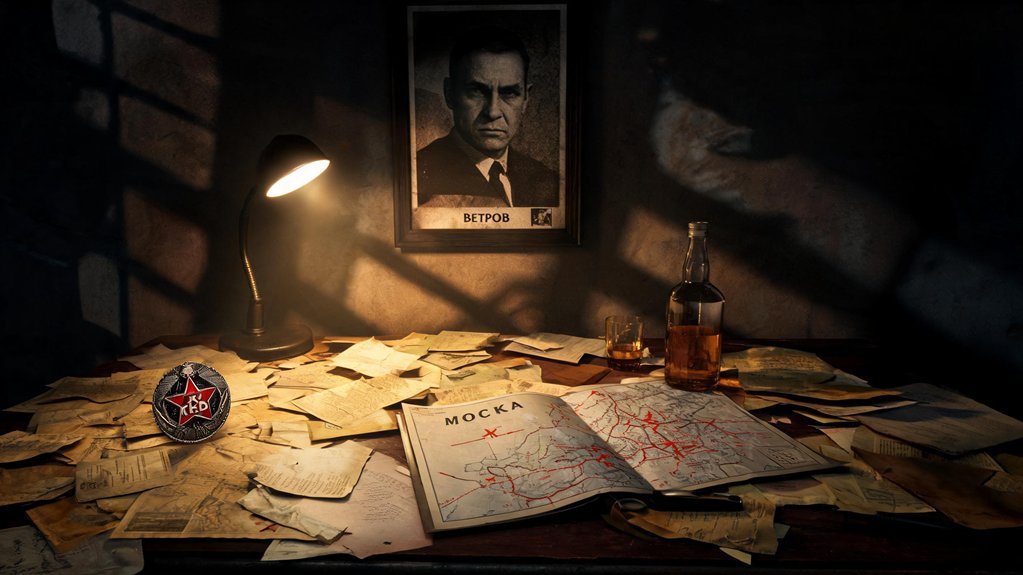
In the frigid Moscow winter of 1982, KGB Colonel Viktor Vetrov found himself embroiled in a crime of passion that would unravel a web of espionage.
His fatal stabbing of a lover not only exposed his own identity but also set off a chain reaction of interrogations at Lefortovo that compromised the entire Farewell network.
As investigators sifted through the fallout, the once-guarded secrets of Soviet intelligence began to spill into the hands of their Western adversaries.
A Fatal Stabbing in the Moscow Snow: The KGB Colonel Who Blew His Own Identity
While the snow blanketed Moscow in a deceptive tranquility, a KGB colonel found himself embroiled in a chaotic crime of passion that would unravel his carefully constructed facade.
This tragic incident revealed not just personal failings but broader vulnerabilities within the Soviet intelligence community.
- A fatal stabbing exposed the fragility of secrecy.
- The colonel’s identity became a weapon against himself.
- Personal motives clashed with professional duties.
- The event ignited internal scrutiny within the KGB.
As the investigation unfolded, it became clear that the colonel’s emotional turmoil transcended his role, threatening to expose the very secrets he swore to protect.
In this fateful moment, the icy streets of Moscow became a stage for a profound betrayal.
Lefortovo Interrogations: How a Domestic Manslaughter Unraveled the Farewell Network
Amid the shadowy corridors of Lefortovo Prison, the walls bore silent witness to a shocking unraveling of one of the KGB’s most formidable operations.
The 1982 manslaughter committed by Colonel Viktor Vetrov, driven by passion and jealousy, became the catalyst for a thorough investigation that exposed the Farewell network.
As interrogators probed Vetrov’s motives, they inadvertently pried open secrets buried deep within Soviet intelligence.
His reckless actions not only led to his downfall but illuminated the KGB’s systemic vulnerabilities, revealing how easily a personal crisis could compromise national security.
In the chilling atmosphere of Lefortovo, the consequences of a crime of passion rippled outward, dismantling the very fabric of a clandestine operation thought to be impenetrable.
The April 1983 Sweep: Purging 47 Soviet Spies in a Single Afternoon
On a fateful afternoon in April 1983, Soviet intelligence faced a reckoning as 47 of its own spies were purged in a sweeping operation that exposed deep-rooted vulnerabilities within the KGB. This drastic measure revealed the extent of internal decay and the KGB’s failure to maintain its operational integrity.
- The operation highlighted systemic mismanagement.
- It demonstrated the KGB’s underestimation of Western counterintelligence.
- It showcased the fragility of Soviet intelligence networks.
- The fallout marked a turning point in operational security.
As the day unfolded, agents realized their complacency had allowed adversaries to exploit weaknesses. The atmosphere was tense, filled with uncertainty and suspicion.
This purge not only eliminated compromised operatives but also sent shockwaves throughout the intelligence community, forcing a reevaluation of protocols. The implications of this afternoon would resonate for years, marking the beginning of a profound reckoning within Soviet intelligence.
The Total Annihilation of Line X: Evaporating Moscow’s Scientific Intelligence Apparatus
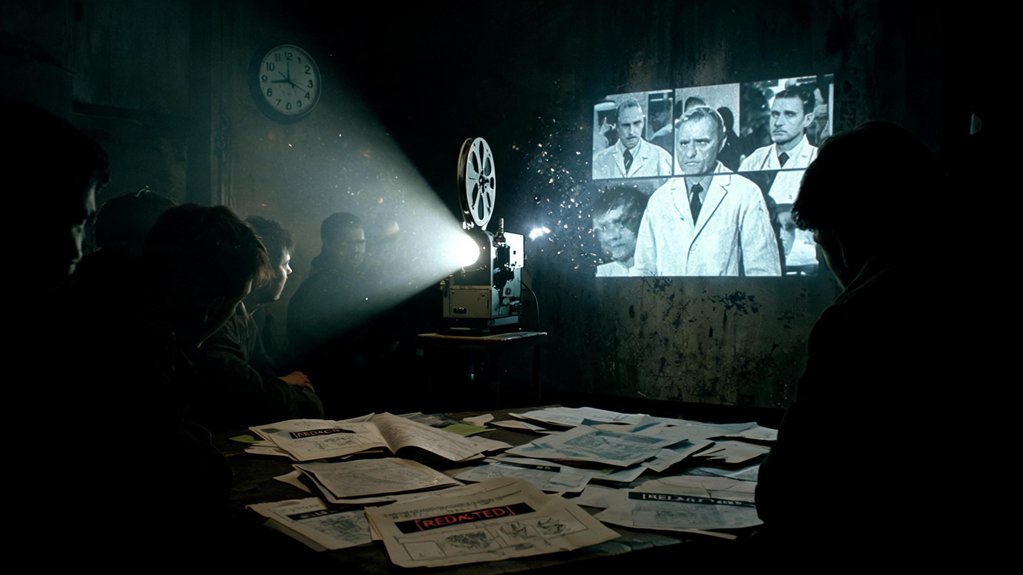
As the dust settled from Operation Farewell, the KGB faced an alarming realization: its scientific intelligence apparatus, known as Line X, was crumbling under the weight of systemic failures and external pressures.
The once-mighty network, tasked with gathering essential technological insights, had been infiltrated and compromised. Analysts and operatives found themselves ensnared in a web of misinformation, their reports often disregarded or misinterpreted by higher-ups.
Western counterintelligence had deftly exploited these weaknesses, leading to significant losses. Critical data streams evaporated as agents turned double, revealing the KGB’s vulnerabilities.
Documents showed Line X’s operational costs spiraled, with each breach sounding alarm bells that went unheeded. The fallout from these failures was profound, triggering a crisis of confidence within the KGB.
As resources dwindled, Line X’s once-esteemed role in national security faded, leaving a haunting reminder of what happens when intelligence becomes complacent.
Execution at Dawn: The 1985 Lefortovo Bullet That Closed File No. 119
When the sun rose over Lefortovo Prison on that fateful morning in 1985, the KGB’s internal strife reached a chilling climax. File No. 119, a damning record of operational failures and betrayal, lay open—its fate sealed by the cold resolve of a single bullet.
As the clock ticked towards dawn, whispers of treachery filled the air, igniting fears of further leaks. The agency’s desperation intensified.
- The gravity of the situation demanded swift action.
- Loyalty and trust within the ranks waned.
- A climate of paranoia gripped the KGB leadership.
- The impending execution symbolized a desperate attempt to regain control.
As the order was given, the implications echoed beyond the prison walls, marking a turning point in the KGB’s tumultuous history.
The execution served not only as a grim finale to File No. 119 but also as a haunting reminder of the agency’s crumbling foundations.
Post-1991 Archives Unsealed: Declassified Soviet Post-Mortems Documenting Systemic Collapse

In the aftermath of the Soviet Union’s collapse, newly unsealed archives painted a stark picture of KGB failures.
These post-mortems revealed how bureaucratic blind spots created a safe haven for Western spies, allowing them to exploit critical intelligence gaps.
The staggering financial toll of these oversights, quantified in trillions of rubles, highlighted the devastating impact on Soviet strategic R&D initiatives.
Internal KGB Diagnostic Audits: The Bureaucratic Blind Spots That Shielded Western Spies
The unearthing of declassified Soviet post-mortems reveals a troubling picture of the KGB’s internal diagnostic audits, which consistently overlooked critical vulnerabilities that allowed Western spies to infiltrate its ranks.
These audits, meant to be a safeguard, instead became a façade that obscured systemic issues.
- Inconsistent reporting masked real threats.
- Bureaucratic inertia stifled necessary reforms.
- Overconfidence in existing protocols led to complacency.
- Insufficient training left personnel ill-prepared.
As these documents illustrate, the KGB’s failure to recognize its own shortcomings created an environment ripe for exploitation.
Instead of reinforcing security, the audits inadvertently shielded adversaries, ultimately contributing to the Soviet Union’s intelligence debacle during Operation Farewell.
The Trillion-Ruble Catastrophe: Tracking Strategic R&D Losses from Poisoned Blueprints
Despite the KGB’s towering reputation, declassified archives reveal a staggering mismanagement of strategic research and development that cost the Soviet Union trillions of rubles.
The records expose how poisoned blueprints—vital plans compromised by internal leaks—crippled military and technological advancements. Analysts discovered that critical projects, once seen as national treasures, fell prey to inept oversight and complacency.
Each misstep cascaded into further losses, as Western intelligence exploited gaps in Soviet security. The post-mortem documents detail a chilling narrative of squandered resources and lost opportunities, painting a portrait of a system so blinded by arrogance that it failed to protect its most valuable assets.
In the end, these catastrophic miscalculations became emblematic of the Soviet Union’s systemic collapse.
Autopsy of a Superpower’s Blind Spot: The Structural Legacy of Operation Farewell
Operation Farewell serves as a stark reminder of the vulnerabilities that can plague even the mightiest of superpowers. The operation laid bare the Soviet Union’s structural weaknesses, revealing how complacency eroded its intelligence integrity.
As the KGB’s internal assessments surfaced, they highlighted critical oversights:
- Systematic underestimation of Western counterintelligence capabilities
- Flawed internal security protocols that allowed breaches
- Breakdown in command and analytical processes within the KGB
- Significant operational costs, including loss of key intelligence assets
These revelations point to a pattern of mismanagement that ultimately weakened Soviet intelligence.
A pattern of mismanagement emerged, revealing how complacency eroded the strength of Soviet intelligence.
Far from being an isolated incident, Operation Farewell illustrates the broader implications of neglecting rigorous security measures. The legacy of this catastrophic failure continues to resonate, reminding us that even superpowers can falter when they ignore their own blind spots.
Frequently Asked Questions
What Were the Key Motivations Behind Operation Farewell?
The key motivations behind the operation stemmed from a desperate need to expose and rectify Soviet intelligence failures.
Plagued by complacency, the KGB sought to understand how Western adversaries had outmaneuvered them. They aimed to uncover vulnerabilities in their own security, believing that revealing these shortcomings might spur reforms.
Ultimately, the initiative reflected a critical urgency to bolster internal defenses and regain confidence in their counterintelligence capabilities during growing external pressures.
How Did Operation Farewell Impact Us-Soviet Relations?
Operation Farewell considerably strained US-Soviet relations by exposing the vulnerabilities in Soviet intelligence.
As the West exploited these weaknesses, distrust deepened, leading to heightened tensions. The revelations underscored the USSR’s miscalculations and ignited fears within its ranks, prompting a defensive posture.
Consequently, the operational failures became a catalyst for increased espionage activities on both sides, further entrenching the adversarial relationship during an already precarious period of the Cold War.
Were There Any Notable Figures Involved in Operation Farewell?
Several notable figures played key roles in Operation Farewell. Among them was Vladimir Vetrov, a KGB officer turned informant, who leaked sensitive information to Western intelligence.
His actions exposed critical Soviet vulnerabilities, illustrating the systemic flaws within the USSR’s security framework. Additionally, Western operatives, including those from the CIA, capitalized on Vetrov’s insights, further deepening the rift between East and West.
Their collaboration reshaped the espionage environment, underscoring the stakes of intelligence warfare.
What Lessons Were Learned From the Failures of Soviet Intelligence?
The failures of Soviet intelligence taught vital lessons about the dangers of complacency and the importance of robust internal security. Analysts recognized that underestimating adversaries can lead to catastrophic consequences.
The need for adaptive strategies and transparent communication emerged as essential for effective counterintelligence. Additionally, the breakdown in command reinforced the idea that a resilient intelligence apparatus must prioritize continuous assessment and improvement to safeguard against vulnerabilities and external threats.
How Has Operation Farewell Influenced Modern Intelligence Practices?
Operation Farewell fundamentally reshaped modern intelligence practices, emphasizing vigilance and verification.
It prompted agencies worldwide to prioritize proactive counterintelligence, focusing on fortifying internal security and fostering a culture of transparency.
By learning from the Soviet missteps, contemporary intelligence operatives now emphasize collaboration, thorough training, and constant reevaluation of strategies.
This case serves as a cautionary tale, reminding them that underestimating adversaries can lead to catastrophic consequences, shaping a more resilient intelligence community.
Final Thoughts
Operation Farewell stands as a chilling demonstration of the Soviet Union’s intelligence failures, a stark reminder that complacency can be a silent killer. As the curtains fell on the Soviet era, the declassified archives disclosed a fabric of misjudgments and oversights, revealing how negligence can gnaw at the foundations of power. The lessons learned resonate even today, echoing through the corridors of intelligence agencies worldwide, urging vigilance against the shadows of underestimation and disregard.