By 1962, the CIA’s deficit on Soviet missiles was nearly total, until GRU Colonel Oleg Penkovsky offered the keys. He passed 111 rolls of Minox microfilm—blueprints, warhead specs, launch protocols—through hollowed bricks and a baby’s pram. The 140 hours of London debriefings exposed Khrushchev’s ICBM bluff: fewer than twenty operational missiles. Kennedy used the data to call the quarantine with certainty. The spy was caught, tried, and shot without a blindfold. The world survived, but the full mechanics of his betrayal remain in the classified shadows.
Key Takeaways
- Penkovsky’s espionage exposed the Kremlin’s nuclear bluff, revealing fewer than 20 operational Soviet ICBMs.
- He used Minox C cameras and hollowed-out bricks for dead drops to smuggle microfilm past KGB guards.
- 140 hours of debriefings in London/Paris decoded Soviet missile specs and launch protocols.
- His intelligence allowed Kennedy to confidently impose a naval quarantine during the Cuban Missile Crisis.
- KGB radio triangulation and surveillance of Pushkin Street led to Penkovsky’s eventual arrest and execution.
The CIA’s 1960 Blind Spot: A Desperate Deficit in Soviet Strategic Missile Intelligence
By the start of 1960, the CIA faced a desperate deficit: it had almost no reliable human intelligence on the Soviet Union’s strategic missile program. Analysts groped through a fog of contradictory signals, forced to guess at the Kremlin’s true reach.
The prevailing fear—a phantom “missile gap”—thrived on this ignorance. Penkovsky understood the stakes. A high-ranking GRU colonel, he alone possessed the keys to decipher Soviet missile capabilities. His access spanned technical specifications, deployment schedules, and warhead yields—all locked inside his head.
To penetrate the wall, CIA and MI6 handlers needed a direct line into his world. They built it through painstaking recruitment, trading on his disaffection with the regime. The intelligence they coveted wasn’t abstract; it was the precise count of operational ICBMs, the range of their guidance systems, and the weaknesses in their launch protocols. This data promised to end the guessing game, replacing terror with tangible truth. Every detail Penkovsky could extract would become a weapon against strategic bluff.
The August 1960 Overture: A High-Ranking GRU Colonel’s Desperate Bid to Defect in Place
Although Penkovsky’s motives remain debated, his August 1960 overture to Western intelligence was anything but ambiguous. Approaching a British businessman during a Moscow trade fair, the GRU colonel delivered a direct, desperate plea for contact—a high-stakes bid to defect in place and unload decades of soviet military humint.
Although Penkovsky’s motives remain debated, his August 1960 overture was anything but ambiguous.
This wasn’t a tentative probe; it was an explosive gambit from a man who understood the West’s crippling knowledge gap on Soviet strategic missiles.
- He gambled his life, knowing a single misstep meant a bullet to the brain.
- He offered to expose Khrushchev’s nuclear bluff, a secret that could save millions.
- He trusted strangers who could be KGB provocateurs, a knife-edge of hope.
- He demanded direct access, not mere intermediaries, for his covert intelligence gathering.
Penkovsky’s overture was a raw, final gamble by a patriot who believed his country’s militarism would doom it—a man risking everything for a chance to rewrite history.
Weaponizing the Diplomatic Circuit: The Architecture of the MI6 and CIA Espionage Pipeline
MI6 weaponized the diplomatic circuit through Greville Wynne, a British businessman whose commercial delegation cover provided a legitimate facade for clandestine meetings. Wynne’s trade missions allowed him to shuttle Penkovsky’s intelligence to London without raising Soviet suspicion, masking the true purpose of his travels.
Simultaneously, CIA handler Janet Chisholm perfected the pushcart pass, using her toddler’s pram to exchange documents during routine strolls—a mundane act that evaded surveillance in plain sight.
Such covert tradecraft mirrored deeper systemic violations, as the CIA had long used domestic informants and warrantless mail interception to spy on U.S. citizens, illegal acts later exposed by the Church Committee.
MI6 Intermediary Greville Wynne and the Commercial Delegation Cover Mechanism
Penkovsky’s handler on the ground wasn’t a career intelligence officer but a British businessman named Greville Wynne, whom MI6 and the CIA weaponized as a commercial delegation cover.
Wynne’s legitimate trade missions provided perfect camouflage for dead drops and secret meetings, exploiting diplomatic immunity to move classified data past KGB border guards.
Declassified espionage files reveal this method was critical during the cold war nuclear standoff.
- Wynne, terrified, smuggled microfilm in hollowed-out cigar tubes through Moscow checkpoints.
- He felt the crushing weight of a nuclear trigger in every intercepted Soviet missile document.
- His wife endured relentless interrogations, never knowing the truth until files surfaced decades later.
- The delegation cover collapsed under KGB scrutiny, sentencing Wynne to a Soviet gulag.
The Janet Chisholm Pushcart Pass: Evading Surveillance in Plain Sight
While the commercial delegation cover funneled documents through Wynne’s briefcase, a parallel channel weaponized the diplomatic immunity of MI6 officer Janet Chisholm, who exploited Moscow’s pushcart markets to pass Penkovsky’s intelligence in plain sight. This wasn’t random; it was a calculated breach of Moscow surveillance detection.
Chisholm, a mother pushing a pram, became a living dead drop. She’d meet Penkovsky near a specific cart, exchanging parcels as if bartering for goods.
The operation relied on rigid clandestine operations protocol: pre-arranged signals, timed encounters, and the mundane theater of shopping. No furtive glances, no hidden cameras—just a diplomat’s wife blending into the city’s rhythm.
The KGB watched the embassies, but they rarely scrutinized a woman with a child. This channel kept Penkovsky’s missile data flowing even as Wynne’s briefcase runs grew riskier, proving that the best concealment often wears the most ordinary mask.
Exposing the Soviet Arsenal: Smuggling 111 Minox Film Rolls Across the Iron Curtain
Penkovsky’s handlers equipped him with Minox C cameras, enabling him to photograph Soviet military blueprints in microscopic detail. He concealed 111 rolls of this film within hollowed-out objects and cleverly hidden compartments, passing them to Western agents during clandestine meetings.
This miniature espionage system transformed Penkovsky into a walking archive, smuggling out the precise dimensions of the Soviet arsenal.
Miniaturized Espionage: The Mechanics of the Minox C Camera Operations
A Minox C camera, no larger than a cigarette lighter, became Oleg Penkovsky’s silent partner in treason. Its micro-spool mechanism allowed him to capture entire Soviet missile schematics in seconds, a process exposing the Kremlin’s deepest secrets. Yet the very tool that enabled his success also sealed his doom.
- Silent clicks that stole nuclear blueprints from guarded desks.
- Tiny spools holding 50 exposures each, smuggled as dead drops across Moscow.
- Invisible film developing into proof of Khrushchev’s bluff during the missile crisis.
- Metal body that betrayed his panic when handlers missed a prearranged signal.
This fatal tradecraft failure—a missed sign—triggered the Penkovsky execution fallout, proving that even a master spy’s camera can’t compensate for flawed human coordination.
The London and Paris Debriefings: Decoding 140 Hours of Clandestine Asset Transcripts
Though British and American handlers managed Oleg Penkovsky as a joint asset, it was the intensive face-to-face sessions in London and Paris that extracted the real value—over 140 hours of transcribed debriefings that became a Rosetta Stone for deciphering Soviet missile strategy.
These transcripts didn’t just confirm the oleg penkovsky espionage operation’s worth; they revealed a strategic intelligence leak of staggering proportions.
Analysts pored over his recollections of missile specifications, launch protocols, and Khrushchev’s personal bravado.
He didn’t just describe hardware; he narrated a bureaucracy’s anxious pulse.
Each hour peeled away Soviet deception, exposing the Kremlin’s industrial weakness and its bluff that Kennedy would later call.
The debriefings weren’t mere conversation—they were a forensic extraction, turning a spy’s memory into a strategic map.
Those 140 hours transformed raw HUMINT into a decree of certainty.
Without them, the crisis might’ve unfolded differently.
Thirteen Days in October 1962: Weaponizing Asset HUMINT Inside the Kennedy Oval Office
Inside the Oval Office, Kennedy’s team weaponized Penkovsky’s stolen R-12 missile manuals to calibrate U-2 reconnaissance imagery, confirming the exact dimensions and capabilities of Soviet warheads on Cuba.
This precise intelligence allowed the president to call Khrushchev’s nuclear bluff during the naval quarantine, knowing the Soviets lacked the operational capacity to counter a US blockade.
The asset’s data didn’t just inform policy—it dictated the exact threshold for confrontation.
Calibrating U-2 Reconnaissance Against Stolen R-12 Missile Manuals
- 1. Hunted for telltale erector launchers, matching textbook diagrams against Cuba’s terrain.
- 2. Measured transport vehicles, confirming they could carry the R-12’s iconic 67-foot length.
- 3. Identified launch pad configurations, distinguishing missiles from decoys.
- 4. Calculated range rings, revealing Washington was within a 1,000-mile kill zone.
Those U-2 photographs—erector launchers, transport vehicles, launch pads—gave Kennedy the *what*. But Penkovsky’s HUMINT, smuggled from Moscow, supplied the *why*.
His stolen R-12 manuals revealed the missiles’ limited range and single-shot reliability. So when Soviet ships approached the quarantine line, JFK didn’t blink. He knew Nikita Khrushchev’s bluff was paper-thin; the SS-4s couldn’t reach Washington. Kennedy weaponized that asset intelligence inside the Oval Office, authorizing the blockade with surgical confidence.
The crisis lasted thirteen days, but Penkovsky’s data, analyzed by US experts, proved Khrushchev would back down rather than risk exposure. The quarantine held. The bluff collapsed. The missiles left Cuba.
Penkovsky’s spy file, however, sealed his fate—he’d already been betrayed by poor tradecraft.
Fatal Hubris: The Cascade of Concealment Tradecraft Failures in Moscow
The operation’s fatal unraveling began at the Pushkin Street poison box and its compromised CIA dead drops, where KGB counterintelligence first detected the scent of a mole.
Their radio direction finding teams then systematically traced the clandestine transmitter frequencies that Penkovsky used to signal his handlers.
This ruthless cascade of concealment tradecraft failures exposed the entire Moscow network, sealing the spy’s fate.
The exposure mirrored how the FBI’s own covert and illegal tactics in COINTELPRO unraveled after the Media, Pennsylvania break-in revealed systematic surveillance of citizens.
The Pushkin Street Poison Box and Compromised CIA Dead Drops
While Penkovsky’s intelligence proved decisive during the missile crisis, his handlers’ overconfidence in their Moscow tradecraft had already sown the seeds of disaster.
The Pushkin Street poison box—a simple hollowed-out brick—became a tragic emblem of this hubris.
CIA officers repeatedly serviced it without adequate surveillance detection, leaving a fatal trail:
- Routine fills—agents visited the same spot every two weeks, a predictable pattern the KGB easily clocked.
- Compromised signals—chalk marks on lampposts alerted Penkovsky to dead drop readiness, but watchers photographed every stroke.
- Forced urgency—handlers crammed intelligence capsules into the brick, leaving visible tamper signs for counterintelligence.
- Ignored warnings—Penkovsky himself noted unfamiliar faces near Pushkin Street, but his handlers dismissed the risk.
The KGB didn’t need a confidant; they only needed patience. Each serviced drop painted a target on Penkovsky’s back.
KGB Radio Direction Finding: Tracing the Clandestine Transmitter Frequencies
Pushkin Street’s compromised dead drops weren’t the only thread the KGB pulled. They also unraveled Penkovsky through radio direction finding. Antennas across Moscow triangulated his clandestine transmissions, hunting for unauthorized signals.
The KGB’s vans, equipped with sensitive receivers, swept the city, zeroing in on his apartment at 5/6 Pushkin Street. They logged his broadcast times, correlating them with his handler meetings. Each burst of his transmitter left an electronic fingerprint, revealing a pattern of betrayal.
The KGB didn’t need a mole; they followed the frequencies. Penkovsky’s hubris—thinking his low-power bursts were safe—proved fatal. The radio waves carried his secrets, and the direction finders led straight to his door.
The Noose Tightens: The KGB Surveillance Directorate Secures the Visual Evidence
As KGB surveillance teams meticulously reconstructed Penkovsky’s movements, they finally secured the visual evidence needed to justify a full-scale arrest. The footage showed a man already dead, walking through Moscow—but the camera didn’t lie.
The footage showed a man already dead, walking through Moscow—but the camera didn’t lie.
- The grainy 16mm film catching him dropping a chalk mark on a lamppost—a dead drop signal he thought no one noticed.
- The freeze-frame of his hand brushing a window ledge, where his handler’s dead drop container once sat.
- The sequence showing him carrying a briefcase into a café, then leaving without it—the contents now a smoking gun.
- The timestamped footage of him standing too long near a telephone booth, waiting for a call that never came.
Each frame tightened the noose. The Directorate had its undeniable case. Penkovsky’s espionage was no longer a suspicion; it was a documented crime, captured in relentless, silent pictures.
The October 22 Intercept: The KGB Second Chief Directorate Dismantles the Network
On October 22, 1962, the KGB’s Second Chief Directorate intercepted a coded signal that unraveled the entire Penkovsky network in a single day. The signal, a dead-drop confirmation, came from a British diplomatic pouch route they’d been tracking for weeks.
Counterintelligence officers didn’t just read the message; they dissected its technical fingerprints—transmission frequency, cipher key, and courier pattern. Within hours, they cross-referenced the intercept against surveillance logs from the previous weeks. The match was damning. It connected the diplomatic signal to Penkovsky’s known contact at a Moscow park bench.
The KGB then triangulated the drop site’s timestamps, revealing a second handler waiting nearby. They arrested both couriers before sunset. This single intercept effectively collapsed the support structure Penkovsky relied on. No arrests of Penkovsky himself occurred that day; the Directorate prioritized dismantling the network’s channels first, ensuring no escape route remained open.
Interrogation at Lubyanka Prison: The Forensic Deconstruction of a Double Agent
The KGB’s sweep of Penkovsky’s network on October 22 had left him isolated, his handlers arrested and his escape routes severed. Inside Lubyanka’s soundproofed interrogation chamber, investigators forensically deconstructed his double life, layer by layer. They didn’t just seek confessions; they demanded the precise chronology of betrayal.
The investigators forensically deconstructed his double life, layer by layer, demanding the precise chronology of betrayal.
- They displayed his miniature Minox camera, still loaded with undeveloped film of Soviet rocket schematics, forcing him to describe each stolen frame.
- They played recordings of his rasping voice from a dead-drop brush pass, made him listen to his own treason.
- They presented the forged passports and dead-letter box keys, showing how he’d poisoned the trust of his uniform.
- They recited his private coded signals, proving they’d mapped his every move.
Each artifact stripped his composure. By the third session, Penkovsky’s shoulders sagged, his eyes vacant. He understood they knew everything. His only currency now was the truth of his own humiliation.
The May 1963 Military Collegium Show Trial: Broadcasting Soviet State Retribution
Even before the interrogation’s ink was dry, Soviet authorities scripted a theatrical finale. The May 1963 Military Collegium show trial wasn’t about justice; it was a state-sanctioned broadcast of retribution. Held in Moscow’s Hall of Columns, the proceedings were meticulously choreographed, designed to demonize Oleg Penkovsky for the world to see. The prosecution didn’t just present evidence of espionage; it painted Penkovsky as a venal traitor, a product of Western corruption. This mirrored the Katyn massacre cover-up, where Western allies suppressed forensic evidence of Soviet guilt for decades to preserve a wartime alliance. He sat alone in the defendants’ cage, stripped of his military identity. The court worked through predetermined testimony, with no room for genuine defense. This wasn’t a legal inquiry—it was a warning to every Soviet officer. The trial’s explicit goal: reinforce the KGB’s omnipotence and publicly shatter any illusion of successful betrayal. By broadcasting guilt, the state amplified its control, ensuring Penkovsky’s fate served as a chilling deterrent long before the court recessed.
The Final Sanction: Execution by Firing Squad and the Crematorium Legends
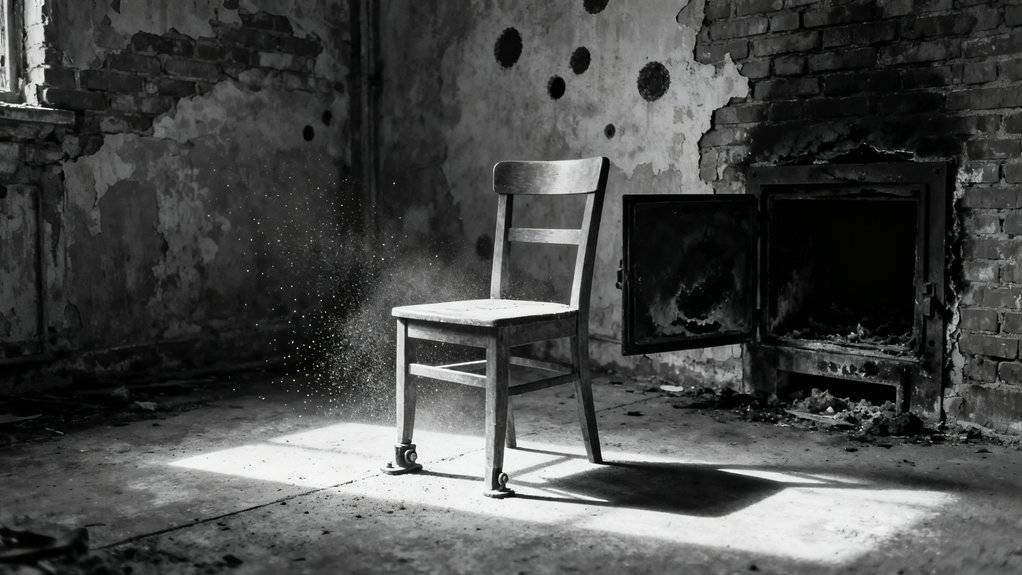
How did the state conclude its ghoulish morality play? At dawn on May 16, 1963, guards marched Oleg Penkovsky into a Moscow prison yard. A firing squad awaited.
No blindfold, no last words—only the cold report of rifles ending a life that had audaciously crossed the Kremlin. Yet, the state wasn’t done with him. Official records claim cremation followed, but legends persist that his body was burned alive in a furnace, a final, visceral act of humiliation. The truth, now declassified, evokes a grim tableau:
- Their bullets tore through his chest, but his eyes never closed.
- No family claimed his ashes; the state scattered them in an unmarked pit.
- The crematorium’s oven door slammed shut at 7:03 AM, swallowing all evidence.
- Whispers say guards heard muffled screams from within the flames, but the KGB files stay silent.
This wasn’t justice; it was a desecration designed to erase a man who’d seen too much.
Averted Armageddon: The Decisive Geopolitical Yield of Oleg Penkovsky’s Operation
What strategic payoff did Penkovsky’s intelligence actually yield? It didn’t just shorten the Cuban Missile Crisis; it rewrote its entire calculus.
Penkovsky’s documents revealed the USSR possessed no more than twenty operational intercontinental missiles, far fewer than Soviet boasts claimed. This hard data exposed Khrushchev’s bluff for what it was—a dangerous gamble, not a genuine parity.
Kennedy, armed with this truth, didn’t flinch. He rejected the “bargain” of trading NATO missiles for Soviet ones, instead imposing a naval quarantine with absolute confidence.
Penkovsky’s yield wasn’t tactical; it was existential. Without his calibration of Soviet weakness, the blockade might’ve triggered escalation. Instead, Khrushchev blinked.
The geopolitical yield was averted nuclear war, a decisive shift from brinkmanship to resolution. Penkovsky’s sacrifice—executed for poor tradecraft—secured a victory no spy had ever delivered: the survival of the world from its own annihilation.
Frequently Asked Questions
What Was Penkovsky’s Exact Rank in the GRU?
Penkovsky held the rank of Colonel in the GRU. This position gave him access to the Soviet military’s deepest secrets, directly enabling his pivotal role during the Cuban Missile Crisis.
His rank wasn’t just a title; it was the key to the vault of intelligence that shifted the strategic balance. It’s a stark reminder that a single colonel’s actions can challenge a superpower.
How Was Penkovsky Initially Recruited by Western Intelligence?
Penkovsky’s recruitment wasn’t a single, dramatic event; it was a slow, patient seduction.
He didn’t leap; he stepped, first offering business cards to British and American tourists in Moscow, a clumsy but effective bait.
Those initial contacts, managed by UK and US handlers, built a trust that transformed his disillusionment with the Soviet system into a channel for critical, humanity-saving intelligence.
His first step was fundamentally a quiet, calculated invitation.
Did Penkovsky Receive Any Financial Compensation for His Espionage?
Penkovsky didn’t spy for money. He accepted no direct financial compensation for his intelligence, motivated instead by ideological disillusionment and a desire to alter the Soviet system’s course.
This rejection of payment made his betrayal harder to trace—a risky choice that added to his vulnerability. His handlers provided minor gifts and expenses, but the espionage itself ran on conviction, not cash.
That lack of monetary gain ultimately couldn’t save him from poor tradecraft‘s deadly consequences.
Were Any Other Soviet Agents Compromised by Penkovsky’s Betrayal?
Yes, Penkovsky’s exposure compromised other agents. His KGB interrogation reportedly led to at least 20 individuals being arrested.
The damage wasn’t just personal; it represented a catastrophic intelligence failure. His handlers’ poor tradecraft unraveled an entire network, leaving sources exposed and dismantling years of meticulous spycraft.
This domino effect suggests his betrayal cost more than just his own life—it destroyed a system.
What Happened to Penkovsky’s Family After His Execution?
Penkovsky’s family faced severe repercussions after his execution. Soviet authorities stripped them of their privileges, subjected them to relentless surveillance, and effectively imprisoned them within a life of state-sanctioned ostracism.
The KGB likely interrogated his wife and daughter extensively, destroying their social standing and future prospects. They didn’t simply vanish; they became living symbols of betrayal’s cost, forced to endure the state’s cold, permanent retribution for one man’s secrets.
Final Thoughts
Penkovsky’s spycraft handed Kennedy Khrushchev’s nuclear bluff on a silver platter, averting Armageddon with smuggled film. Yet that same operation’s rotten tradecraft sealed the asset’s fate. The GRU colonel saved the world from catastrophe, then died for it—a hero condemned as a traitor, his intelligence priceless, his life expendable. Juxtaposition defines his legacy.