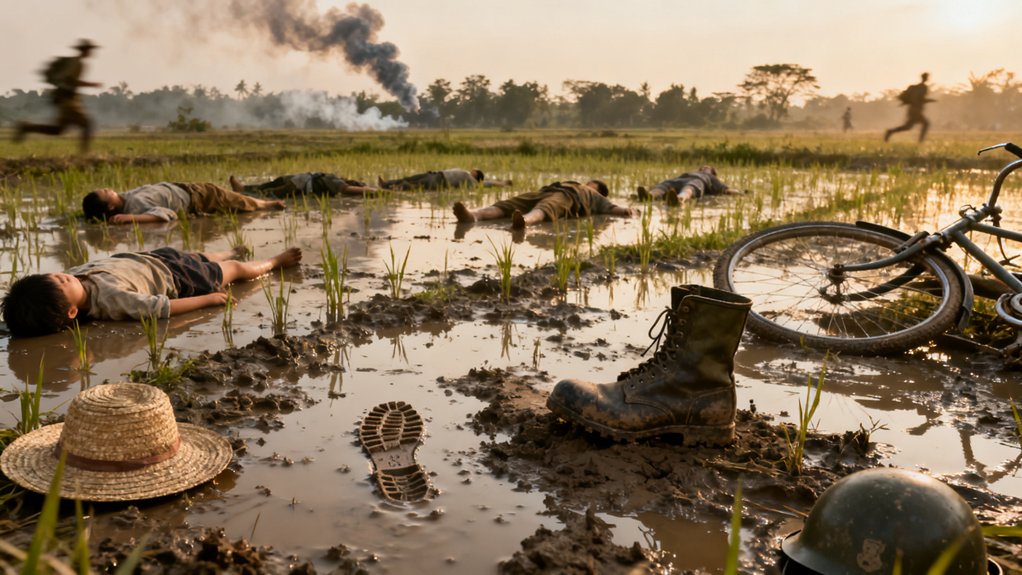
More than 347 unarmed civilians died in My Lai, yet the U.S. Army first claimed a major combat victory. Troops opened fire on women, children, and elders without resistance, while officers up the chain ignored warnings and suppressed reports. One soldier was convicted, but higher ranks walked free. What followed wasn’t justice—it was a systematic erasure of truth, buried under false reports and silenced voices. The real story stayed hidden for years, protected by those sworn to uphold it.
Key Takeaways
- The U.S. Army falsely claimed 128 enemy combatants killed and no civilian deaths at My Lai.
- Colonel Oran Henderson’s investigation dismissed evidence and discredited whistleblower Hugh Thompson.
- A secret 1970 CID census documented 347 civilian deaths but was suppressed for years.
- The Peers Inquiry exposed a systemic cover-up involving 14 officers across command levels.
- Only Lt. William Calley was convicted, while higher-ranking officers avoided accountability despite known failures.
What Was the My Lai Massacre?
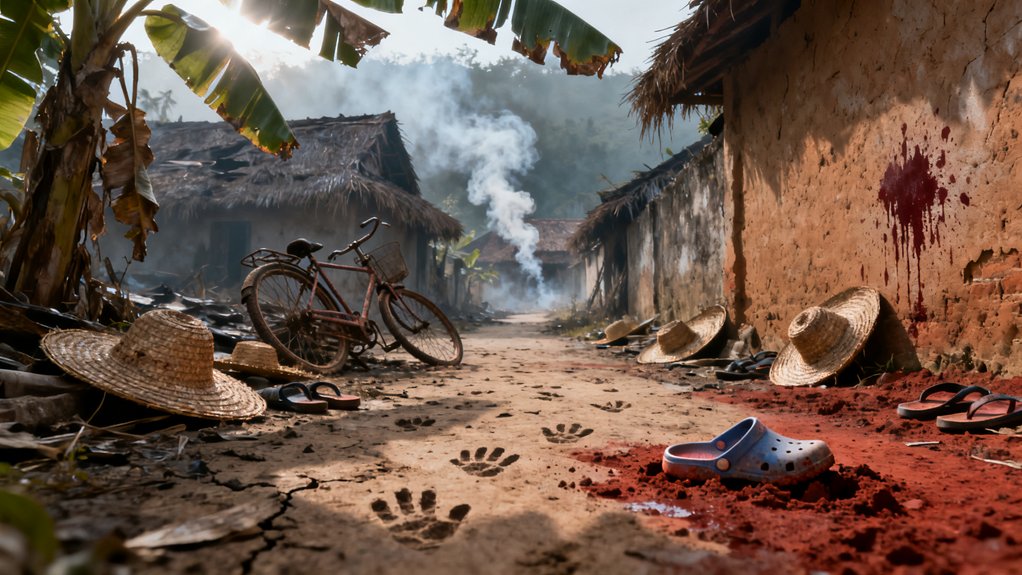
Although intended as a routine search-and-destroy mission, the U.S. Army’s Charlie Company entered My Lai 4 on March 16, 1968, and erupted unchecked violence on Vietnamese civilians. Over several hours, soldiers killed between 347 and 504 unarmed men, women, children, and elderly villagers—many while fleeing, hiding, or kneeling. There was no enemy fire; there were no Viet Cong. Troops operated under vague orders to “shoot anything that moves,” treating all Vietnamese civilians as hostile. Rape, gang executions, and home bombings with over 150 pounds of TNT followed. Lieutenant William Calley personally shot at least 22 civilians. Despite the horror, the U.S. Army initially reported a combat victory. The truth remained buried until Seymour Hersh exposed it in 1969. Hugh Thompson, a helicopter pilot, defied orders, landing to shield survivors and demanding evacuations—his actions a rare act of moral clarity. This event—the My Lai massacre—was not a skirmish; it was a systematic slaughter of innocent Vietnamese civilians, concealed by a chain of command that chose silence over justice. The official cover-up mirrored the broader pattern of deliberate deception documented across decades of U.S. military involvement in Vietnam.
Why Did U.S. Troops Attack My Lai Village?
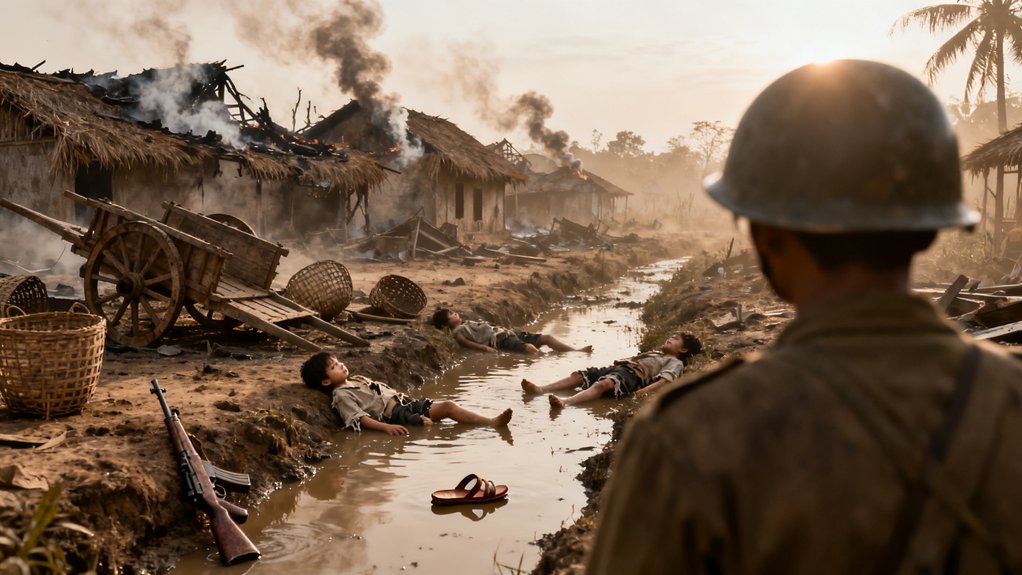
U.S. troops attacked My Lai village as part of a planned military operation under Task Force Barker, which launched a “search-and-destroy” mission targeting suspected Viet Cong strongholds in the Sơn Mỹ area. Charlie Company was assigned to assault My Lai 4, ordered to destroy the village and eliminate enemy forces believed to be hiding there. Soldiers were told all individuals remaining were likely Viet Cong or sympathizers, justifying lethal force against civilians. Commanders claimed warnings had been issued via leaflets, but most villagers couldn’t read, had no way to leave, or didn’t know to flee. No significant Viet Cong presence was found, yet the operation proceeded. With no clear rules of engagement, a “kill anything that moves” mentality took hold. In the chaos and fear, Charlie Company executed unarmed men, women, and children. The attack on My Lai stemmed from flawed intelligence, dehumanizing assumptions, and systemic pressure to produce body counts. The violence wasn’t spontaneous—it was enabled by military policy and command failures. My Lai became a massacre because the system allowed it.
Who Ordered the My Lai Massacre?
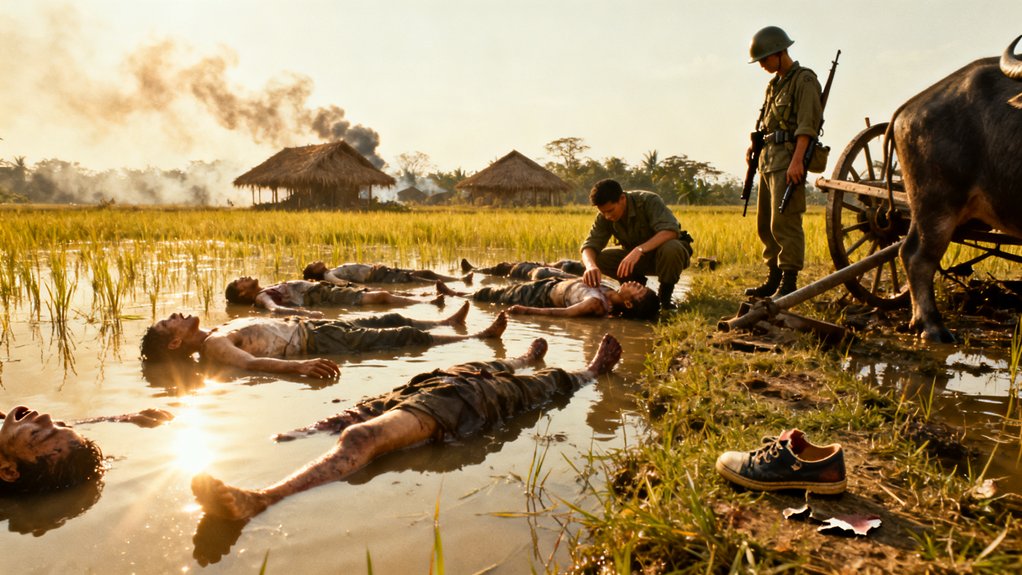
Who gave the order to kill civilians at My Lai? No formal command was documented, but the chain of command failed to prevent massacre or punish truth. Lieutenant William Calley, a platoon leader, directly ordered killings and was convicted for murdering at least 22 civilians. His company commander, Captain Ernest Medina, denied instructing troops to “kill everybody,” though multiple soldiers testified he encouraged it. Above Medina, no officer admitted issuing such orders, and no written directive from lieutenant colonel Frank—or any higher commander—was found. Yet the Peers Inquiry revealed that leaders fostered a climate where soldiers believed all Vietnamese were enemy combatants. Though 14 officers were implicated in the cover-up, none above captain were court-martialed. The absence of a direct order masked a deeper truth: the chain of command enabled atrocity through silence, pressure, and dehumanization. Accountability stopped at mid-level ranks, shielding senior leadership. Justice was not blind—it was blocked.
How Did U.S. Soldiers Carry Out the My Lai Massacre?
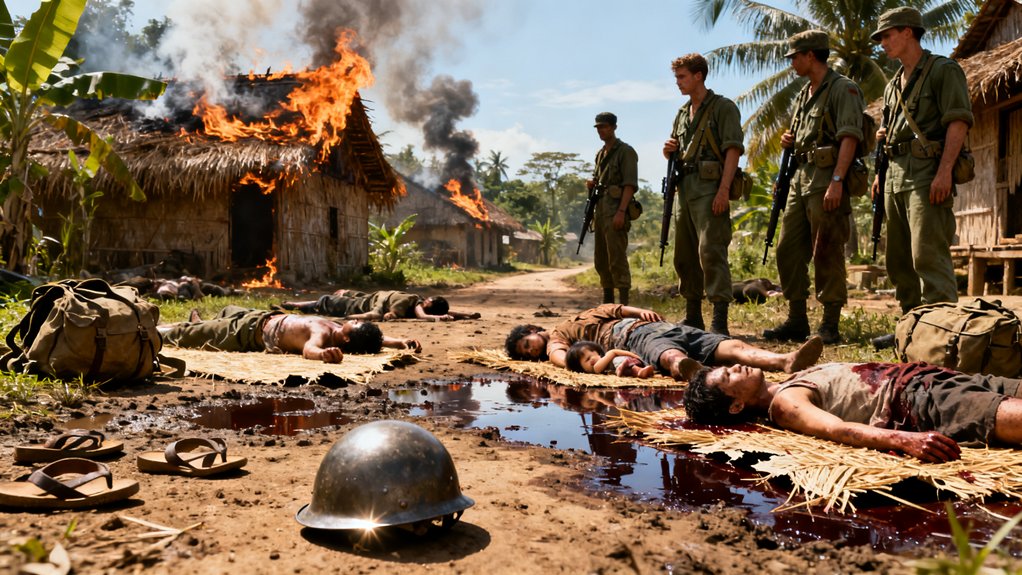
On the morning of March 16, 1968, Charlie Company moved into My Lai 4 expecting resistance but met none—just villagers emerging from their homes, hands empty, faces confused. Instead of engaging viet cong forces, soldiers opened fire without provocation. First Platoon machine gunners raked the hamlet; point men kicked in doors and executed families at close range. Civilians—women, children, elderly—were shot in groups or driven into drainage ditches and killed. Some young girls were raped, then murdered. One woman was assaulted before being shot in front of screaming villagers. Soldiers used over 150 pounds of TNT to collapse homes and tunnels, burying anyone inside. Charlie Company followed unwritten orders: “kill anything that moves.” Despite no enemy fire—only one U.S. soldier died, from a booby trap—soldiers assumed every villager was an enemy sympathizer.
| Victim | Horror Inflicted |
|---|---|
| 6-month-old baby | Shot at point-blank range |
| Elderly farmer | Executed while raising hands |
| Mother of four | Gang-raped, then bayoneted |
| Schoolteacher | Forced into ditch, machine-gunned |
| Teenage girl | Raped, burned alive in home |
How Did the U.S. Army Cover Up the My Lai Massacre?
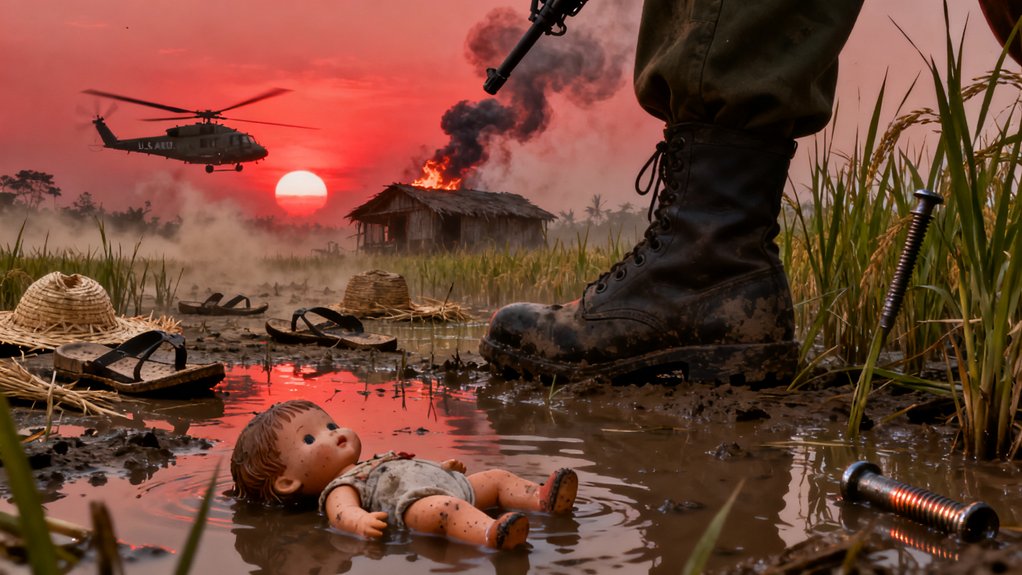
How could the public believe a battlefield victory when corpses lay in ditches? The U.S. Army immediately covered up the My Lai Massacre, issuing a false press release claiming 128 Viet Cong were killed and no civilians died. Army leaders ignored eyewitness reports and buried evidence. Colonel Oran Henderson’s April 1968 investigation dismissed atrocities, accepted combat claims, and discredited whistleblower Hugh Thompson. Officials suppressed a CID census documenting 347 civilian deaths, refusing to release it even in 1970. The Public Information Office promoted the operation as a “flawless” success, echoing Lieutenant Colonel Frank Barker’s initial lies. Though Ronald Ridenhour’s March 1969 letter reached 30 officials, the Army delayed launching the peers commission until November 1969. That investigation of the massacre finally exposed systemic deceit, but only after over 20 months of institutional silence. The Army didn’t protect truth—it buried it. The cover-up wasn’t an accident; it was policy.
Who Exposed the My Lai Cover-Up?
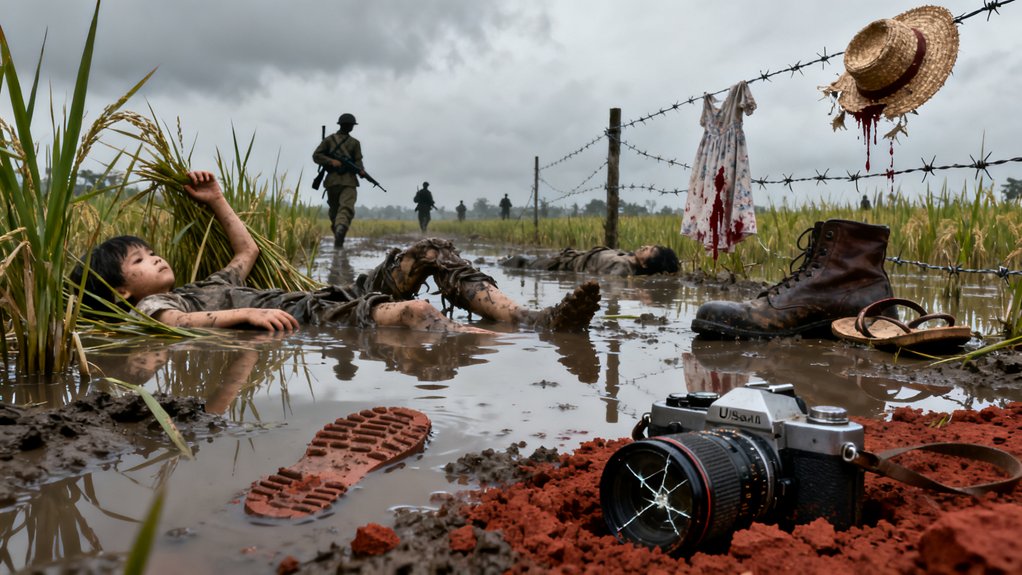
What finally pierced the wall of silence?
Ronald Ridenhour, a soldier disturbed by what he heard, didn’t look away. He gathered sworn testimonies and on March 29, 1969, mailed a letter to 30 U.S. officials demanding an investigation. Hugh Thompson, the helicopter pilot who landed amid the carnage to stop killings, had already reported civilian murders to command—only to be ignored. Their truth collided with a military machine dead set on silence.
| Name | Role | Key Action |
|---|---|---|
| Ron Ridenhour | Investigator-soldier | Sent evidence-driven letter to Congress |
| Hugh Thompson | Helicopter pilot | Directly reported massacre to superiors |
| Seymour Hersh | Journalist | Broke story after accessing Calley’s trial |
| Peers Inquiry | Investigative panel | Confirmed top-to-bottom cover-up |
| U.S. Army | Institutional actor | Initially dismissed, then forced to act |
Ridenhour’s persistence and Thompson’s courage cracked the facade—truth could no longer be buried.
How Did the Public Learn About My Lai?
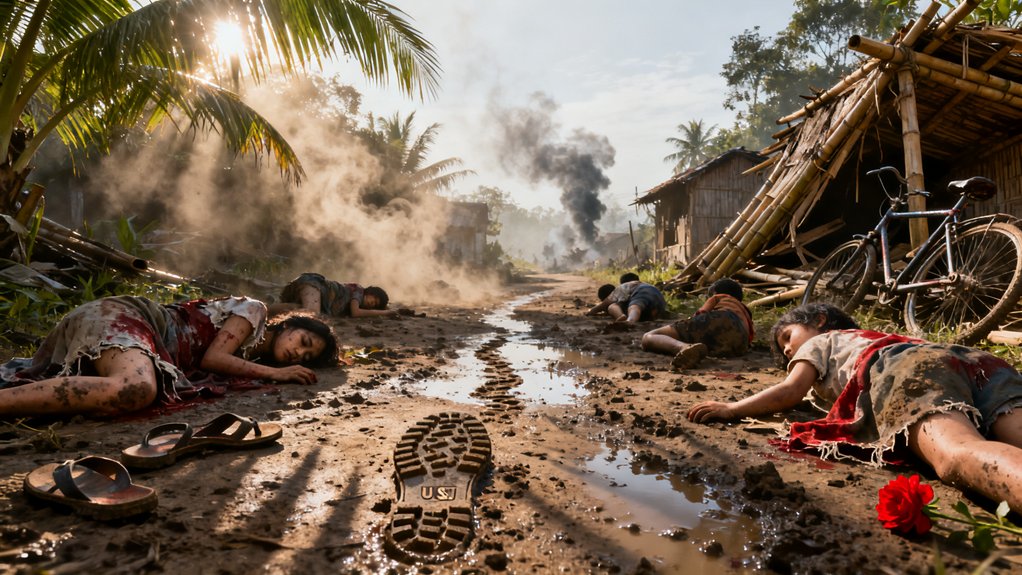
Ronald Ridenhour’s letter in March 1969 set a chain of events in motion, but the public remained in the dark until Seymour Hersh uncovered the story months later. Though Ridenhour gathered testimony from soldiers and pressured officials, it was Hersh who broke the silence in November 1969 after tracking Lt. William Calley’s court-martial. His reporting exposed the massacre of hundreds of unarmed Vietnamese civilians by U.S. troops—an atrocity the Army had disguised as a victory. Visual proof followed when Ronald Haeberle’s color photos, published by the *Cleveland Plain Dealer*, revealed bodies piled in ditches and soldiers posing over victims. The Army had claimed 128 enemy killed and no civilian deaths; Hersh’s work, backed by a secret 1970 CID census, confirmed at least 347 civilians murdered. Ridenhour’s persistence and Hersh’s investigation pierced the military’s wall of silence, forcing the Peers Inquiry and exposing not just a massacre, but a systemic cover-up. The truth emerged through courage and relentless scrutiny—essential tools for holding power to account and claiming the justice long denied.
Why Was Only One Soldier Convicted for My Lai?
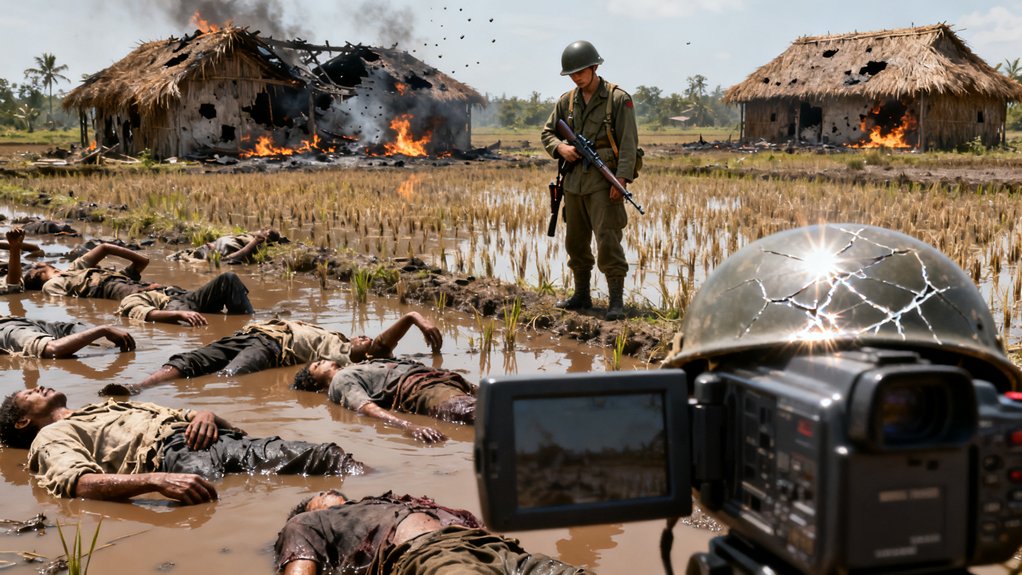
Why did just one soldier face conviction despite overwhelming evidence of widespread wrongdoing at My Lai? Of the 25 charged, only Lieutenant William Calley was convicted—found guilty of murdering 22 civilians. The army review exposed a pattern of ignored duties, yet every other case collapsed. Commanders like Ernest Medina and Samuel Koster avoided punishment, even after the Peers Inquiry identified 30 officers who failed to act.
- The defense of “following orders” was widely accepted, shielding soldiers and eroding accountability.
- Institutional resistance blocked prosecutions, protecting the military’s image over justice.
- Public outrage and political pressure, including Nixon’s commutation of Calley’s sentence, derailed full reckoning.
Though Calley became the sole scapegoat, the massacre revealed systemic rot. The army review didn’t spark reform—just performative consequences. Real justice required confronting command failures and moral collapse, but the military chose silence. Liberation demands more than symbolic punishment; it needs truth, structural change, and courage to indict power, not just one man.
How Did the Media Reveal the My Lai Massacre?
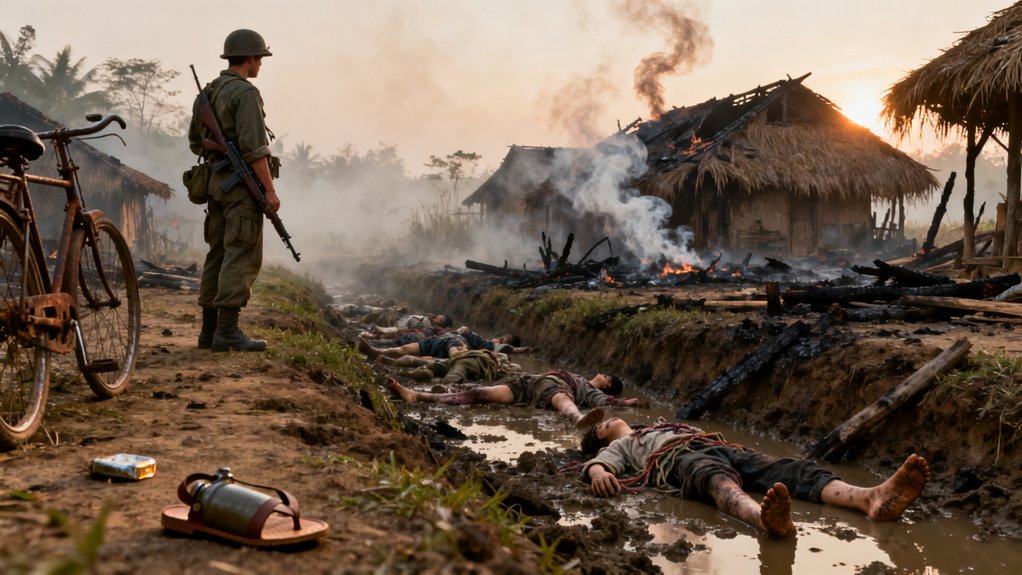
How did the truth emerge from a wall of silence? Seymour Hersh broke the dam in November 1969, exposing Lt. William Calley’s court-martial and the massacre of hundreds of unarmed Vietnamese civilians at My Lai. His reporting followed a relentless campaign by veteran Ronald Ridenhour, who, after interviewing soldiers involved, sent a detailed letter on March 29, 1969 to 30 U.S. officials demanding investigation. Ridenhour’s whistleblowing laid the foundation, but it was Hersh’s investigative grit that carried the story forward. The Cleveland Plain Dealer amplified it by publishing Ronald Haeberle’s graphic photos—U.S. soldiers grinning over dead women and children, bodies scattered in ditches. That visual proof made denial impossible. Major newspapers and TV networks quickly followed, tearing apart the Army’s false narrative of a victory with 128 enemy killed. The media didn’t just report news—they forced accountability. With Hersh’s exposé, Ridenhour’s courage, and undeniable images, the cover-up cracked, revealing the horror the Army tried to bury. Truth, at last, had witnesses.
Did the Army Change After My Lai?
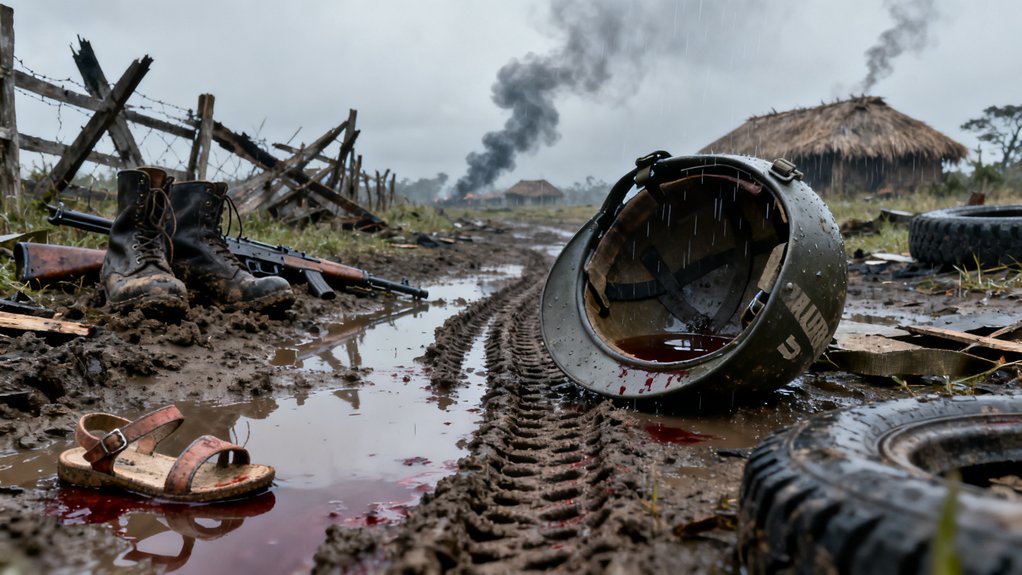
What did the Army do after the My Lai cover-up unraveled? It launched investigations and reforms, but resistance to accountability remained strong. The military’s credibility was shattered, forcing the army to confront systemic failures. The Peers Inquiry exposed cover-ups at every command level, yet only Lt. William Calley was convicted—proof that justice was limited. Still, the army initiated changes to prevent future atrocities and restore public trust.
- The army established the Study on Military Professionalism (1970), identifying toxic leadership, careerism, and the “zero defects” culture as root causes of ethical collapse.
- Law of war training became standard, and the Judge Advocate General (JAG) Corps expanded to battalion and brigade levels, embedding legal oversight directly into military units.
- Command selection improved with centralized boards, and NCO training was overhauled to strengthen ethical leadership across the army’s operational core.
These moves signaled reform, but the gap between policy and practice left doubts. Liberation demands full transparency—something the military still struggles to deliver.
How Does My Lai Affect Military Ethics Today?
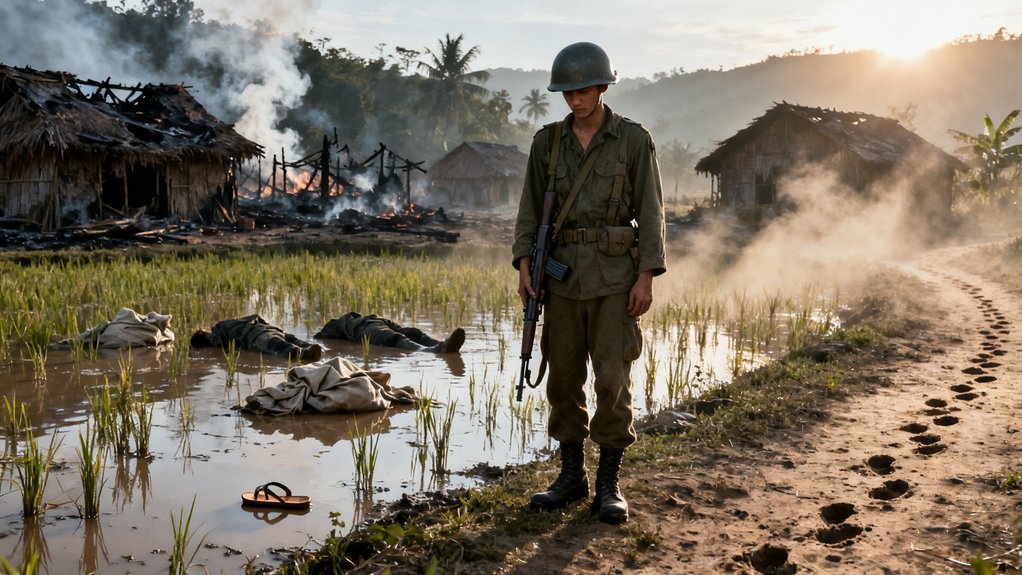
The shadow of My Lai still shapes military ethics today, forcing the Army to confront the consequences of moral failure under fire. The lai massacre exposed fatal gaps in command responsibility and ethical training, triggering reforms that now embed accountability into doctrine. Law of war instruction is mandatory, and JAG officers operate at tactical levels to uphold legal standards. The “Never Again” principle, born from the Peers Inquiry’s exposure of systemic cover-up, drives current training. Whistleblowers like Hugh Thompson Jr. are celebrated as moral benchmarks in programs like West Point’s CAP-E, proving dissent can be duty. Yet, only Lt. Calley’s conviction reminds us that holding leaders accountable remains a struggle. Today’s soldiers analyze the lai massacre through five ethical frameworks, ensuring decisions align with human rights, fairness, and virtue.
| Ethical Framework | Application in Training |
|---|---|
| Utilitarian | Weighing mission vs. civilian harm |
| Human Rights | Protecting non-combatants |
| Fairness | Impartial enforcement of laws |
| Common Good | Prioritizing societal safety |
| Virtue | Cultivating courage, integrity |
Frequently Asked Questions
What Role Did Vietnamese Interpreters Play at My Lai?
Vietnamese interpreters at My Lai tried to prevent violence, relaying civilians’ pleas and signaling non-threat status. They shouted warnings that villagers were unarmed, but soldiers ignored them, firing anyway. Some interpreters shielded children or begged troops to stop, only to be pushed aside. Their presence exposed the massacre as intentional, not mistaken combat—commands were understood, warnings heeded by no one. Their voices, silenced in real time, later proved vital in revealing deliberate atrocity.
Were Any Officers Punished for Ignoring Early My Lai Reports?
Yes, a few officers faced mild consequences, but justice was swallowed by a fog of silence. Lieutenant William Calley was convicted of murder, a lone scapegoat tossed to the storm. Higher ranks escaped unscathed—generals tucked away truths like buried knives. The system flinched but didn’t fall. Accountability evaporated like morning mist, leaving survivors choking on promises. Real reckoning? It never landed. Power shielded itself, leaving wounds open, raw, and demanding.
How Did Soldiers Justify the Killings Years Later?
Soldiers justified the killings by claiming they followed orders and believed the village harbored Viet Cong fighters. Many insisted they were doing their duty under intense pressure and chaos. Some denied wrongdoing altogether, while others downplayed civilian presence. Years later, a few admitted fear and rage drove their actions. Most shifted blame upward, arguing leadership created a culture where such violence became inevitable. They saw it as war’s harsh reality, not murder.
Did My Lai Affect U.S. Military Training in Vietnam?
Yes, My Lai did affect U.S. military training in Vietnam. The Army revised protocols to emphasize rules of engagement and moral accountability, integrating ethics into command instruction. Leaders started addressing obedience versus duty, aiming to prevent abuse. Though reforms emerged slowly, they reflected a shift toward human rights awareness. Training began challenging dehumanization, helping soldiers recognize civilian protection as central to lawful, just operations.
Were There Similar Incidents Covered up During the War?
Like sparks in dry brush, cover-ups flared across Vietnam—hidden blazes of atrocity. Yes, troops committed other massacres, and commanders buried them. Files vanished, witnesses silenced, reports twisted. Operation Cedar Falls, Tiger Force’s spree, and Pinkville echoes—all masked as war’s fog. The military machine greased silence with paperwork, denying horrors until truth became too loud. These weren’t outliers; they were symptoms of a rot fed by unchecked power.