One photograph defined a nation’s soul—until it was revealed as a lie. The iconic Iwo Jima flag-raising, celebrated for seven decades, rested on a false identity. The Marine hailed as a hero wasn’t who they said he was. Evidence was buried, voices silenced, all to protect a myth. When the truth finally surfaced, it exposed more than misidentification—it unraveled a carefully guarded deception rooted in profit and power.
Key Takeaways
- Joe Rosenthal’s iconic Iwo Jima flag-raising photo misidentified six Marines, with the wrong names publicized within hours of the event.
- The U.S. government rushed identifications to launch a war-bond campaign, raising $26 billion while silencing corrections from eyewitnesses.
- Ira Hayes and others reported the error immediately, but were gagged to preserve a profitable, patriotic narrative.
- Forensic analysis in 2016 of gear details revealed Harold Schultz, not Harold Keller, was one of the six flag-raisers.
- The Marine Corps admitted the 70-year error, exposing a cover-up driven by propaganda and financial incentives over historical truth.
February 1945: Capturing the Mount Suribachi Flag-Raising and the Creation of America's Ultimate Victory Symbol
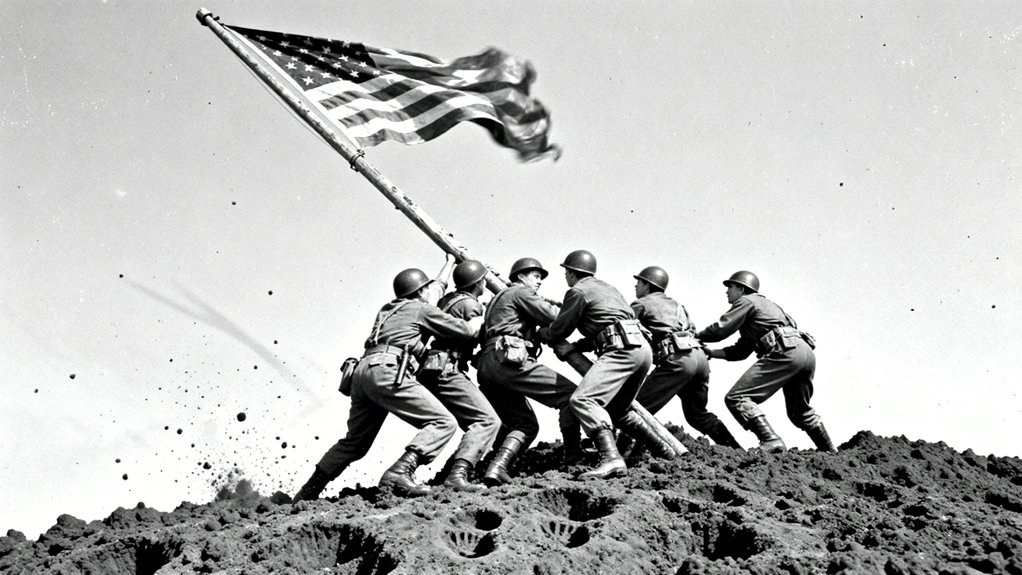
The camera caught the moment on film—six men raising a flag atop Mount Suribachi, and just like that, history had its newest American icon.
The image flashed across newspapers, stirring the nation, but the truth behind it was already slipping away.
Officials fast-tracked identifications, didn’t fact-check, and never looked back.
This early manipulation of the historical record set a precedent for future government secrecy, much like when high-ranking military officials completely controlled the John F. Kennedy autopsy to shape the official narrative.
The Iconic Photo Emerges
While the battle still raged across Iwo Jima, Joe Rosenthal’s camera captured six Marines heaving a flagpole upright on the smoking slope of Mount Suribachi, the image instantly igniting as a symbol of triumph.
The mount suribachi flag-raising became a myth sold to a nation, but the truth was buried beneath propaganda.
- The photo’s heroes were misidentified within hours—no roll call, no verification.
- Ira Hayes knew the truth but was silenced; the government needed bodies for the bond tour.
- Forensic analysis in 2016 exposed the lie, matching gear straps to the real men.
- Harold Schultz, the actual Marine at the pole’s base, lived and died in obscurity.
They weaponized an image, knowing it wasn’t accurate. For 70 years, the lie held—profit over truth, control over courage. The photograph liberated nothing but illusions.
Weaponizing an Image for Profit: The Government's Urgent Need to Exploit the Photograph for a Massive War Bond Drive
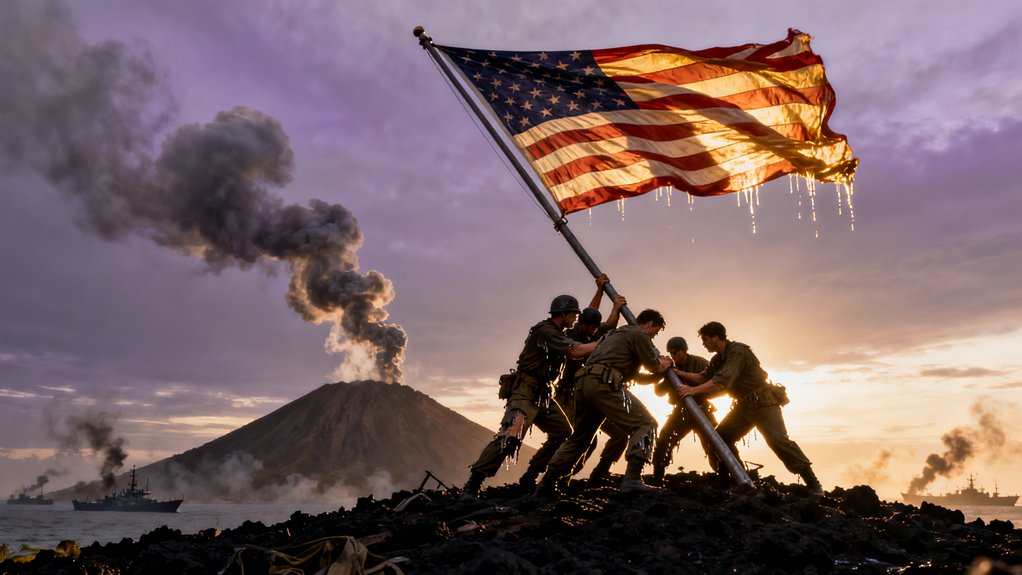
The government didn’t just celebrate the flag-raising—it weaponized it.
They needed living symbols fast, and accuracy took a backseat to profit as the bond drive demanded heroes.
Real identities were tossed aside; the image was too valuable to let truth get in the way.
This historical precedent of manufacturing reality laid the groundwork for modern propaganda strategies, much like how the Pentagon later distributed deceptive video news releases that masqueraded as independent journalism on local television.
Exploiting Valor For Profit
When the shutter clicked on that gray Pacific morning, the image was already a commodity before the smoke had cleared.
The government moved fast—too fast—to exploit it, launching a massive war bond drive built on a lie.
They needed heroes, not accuracy, and truth stood in the way of profit.
A government cover-up began within hours, silencing witnesses like Ira Hayes and cementing false identities.
Real men were erased; myths were sold.
For decades, millions paid homage to the wrong soldiers while the bond profits rolled in.
- Image identified in under 24 hours—unprecedented speed
- War bond drive raised $26 billion using the flag-raising myth
- Survivors silenced; corrections suppressed
- Forensic proof in 2016 forced military admission
A Deliberately Rushed Identification Process: Prioritizing Marketable Heroes Over Factual Military Records
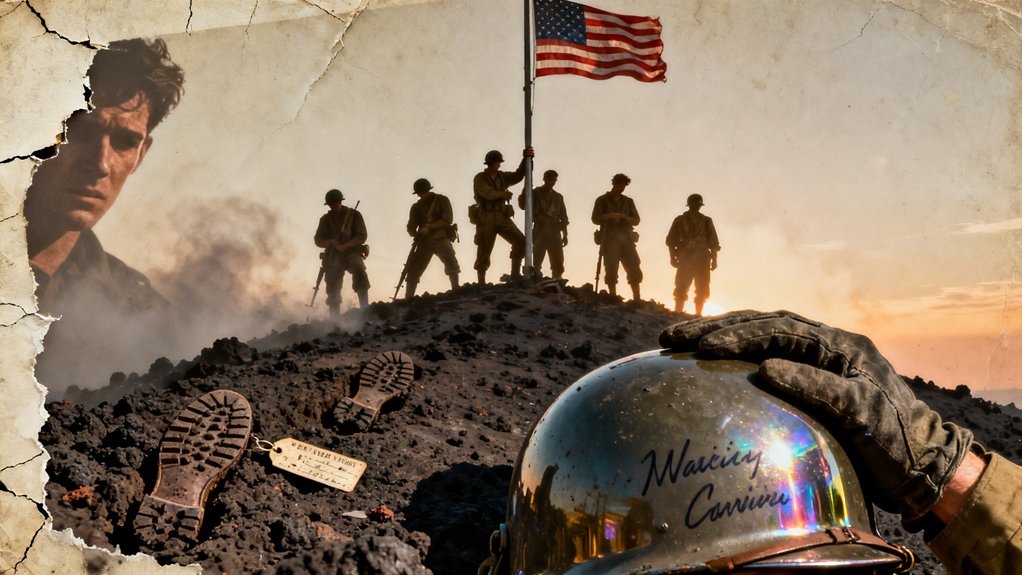
The military didn’t wait for confirmation—they rushed to tag the flag-raisers within hours, not days.
They needed names fast, not accuracy, because the bond tour couldn’t wait.
Marketable faces beat verified records, and the truth got shoved aside.
Similar to prioritizing a highly publicized marketing campaign over factual records, promoters of unverified Rife machines have deliberately targeted terminally ill patients with false cure promises.
Rushed IDs For Propaganda
Went all in on a false story before the smoke cleared, prioritizing a powerful image over the facts. The rushed ids for propaganda weren’t about honoring heroes—they were about selling war bonds. The government cover-up kicked in fast, silencing truth-tellers like Ira Hayes and elevating convenient faces. Real identities didn’t matter; marketability did.
- Officials identified the men in hours, not days—no verification, no verification.
- Hayes was ordered to keep quiet when he tried to correct the record.
- The man hailed as a hero wasn’t even in the photo—proven later by gear strap analysis.
- Harold Schultz, actually in the shot, lived and died unknown.
They forged icons from lies. The truth? Buried under 70 years of profit-driven myth. Time to stop worshiping shadows and demand the real stories. Liberation starts with knowing who really stood on that mountain.
The Suppressed Testimony of Ira Hayes: A Survivor’s Desperate Attempt to Correct the Misidentification of His Friend
Ira Hayes spoke up immediately after the photo was released, insisting the man on the flagpole wasn’t who they claimed.
He knew the truth—his friend Harold Schultz was the one actually raising the flag, not the man being celebrated.
Officers silenced him fast, making it clear the bond tour couldn’t afford a correction. Much like the government's subsequent efforts to alter black-file dossiers to hide the Nazi pasts of scientists recruited under Operation Paperclip, authorities deliberately suppressed the truth to protect their preferred narrative.
Ira Hayes Speaks Out
Pushing back against the official story, Ira Hayes tried to set the record straight—telling officers right after the flag-raising that the man they claimed was holding the pole wasn’t even in the photo. The military ignored him. Instead, they packaged the misidentified men for the war bond fundraiser, turning myth into marketing. Ira Hayes didn’t want fame; he wanted truth. But he was silenced.
- Hayes witnessed the real event—and knew the truth instantly.
- He reported the error to superiors within hours.
- Commanders buried his testimony to protect the war bond fundraiser.
- For decades, the government honored the wrong man while the real heroes stayed quiet.
They used the image to sell patriotism, not because it was accurate—but because it sold. Ira Hayes spoke out, but the machine was too powerful. Truth lost—for 70 years.
The Military Gag Order: Silencing Eyewitnesses to Protect the Profitable Integrity of the Established Fundraising Narrative
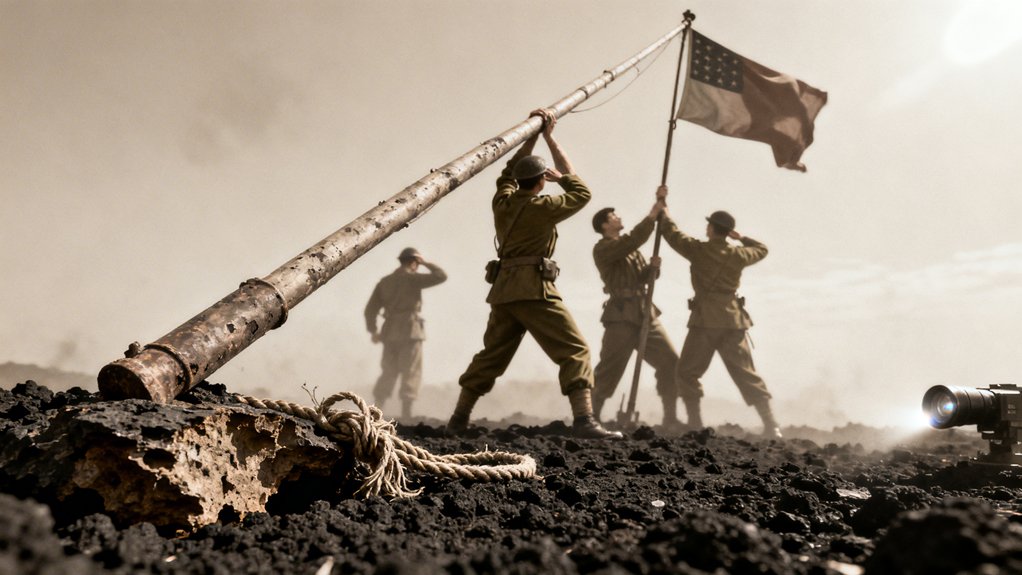
They silenced witnesses who could blow the story wide open.
Commanders knew the truth would wreck the war bond campaign, so they shut down anyone who spoke up.
The narrative was too lucrative to let facts get in the way.
Decades later, a similar pattern of government deception emerged when officials used falsified signals intelligence to justify military escalation in the Gulf of Tonkin.
Silenced To Preserve Profits
Though the truth emerged decades later, the military moved quickly to silence those who are aware of it at the time, prioritizing a profitable war bond campaign over historical accuracy.
The Marine Corps enforced a gag order on eyewitnesses, suppressing evidence of the misidentification to protect a manufactured narrative.
Ira Hayes was told to stay quiet, even as the government promoted a lie.
Real heroes got erased.
Profits were protected.
- The government rushed identifications without verification.
- Marines who are aware of the truth were ordered to remain silent.
- A false hero was paraded for public consumption.
- The actual flag-raiser lived anonymously until death.
For 70 years, profit over truth ruled.
The cover-up wasn’t about honor—it was about control.
The Marine Corps chose image, not integrity.
The people deserved better.
Now we're aware of this was never about valor. It was about selling war.
Worshipping a Phantom Hero: The Decades-Long Elevation of a Famous Face Who Was Never Actually Present in the Photograph
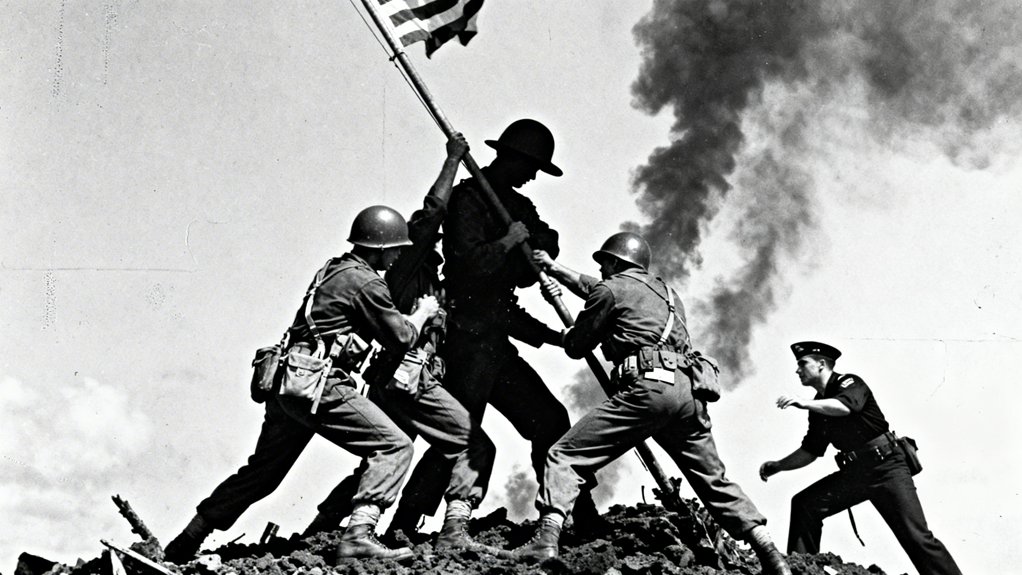
The man hailed as a hero in the Mount Suribachi photo was never in it.
His face, etched into monuments and films, became iconic despite his absence at the moment of truth.
The Marine Corps kept the lie alive, and the public worshipped a phantom.
Much like the strict government secrecy surrounding Project Aquatone that birthed decades of UFO mythology, this official military deception proved that powerful institutions can easily manufacture a lasting legend.
The Myth Of The Hero
Who ever believed a hero could be conjured from shadow and smoke? The so-called savior of Iwo Jima wasn’t even in the frame—just a misident hero the government forged for profit.
For seventy years, they sold a lie, building statues and films around a misidentified man while silencing survivors like Ira Hayes.
The truth? It was Harold Schultz, not the celebrated face, gripping the pole in that frozen moment.
- The photo became myth the moment it was published.
- Officials prioritized war bond sales over factual integrity.
- Eyewitness accounts were buried to protect the narrative.
- Forensic analysis in 2016 finally forced the Marine Corps to admit: the hero never existed.
Worship the image, not the man—because the man they praised was a phantom.
A Face Never There
How does a ghost become a legend? Because someone powerful decides the truth gets in the way.
For seventy years, Americans worshiped a face in the Mount Suribachi photograph that wasn’t there. The man hailed as a hero, immortalized in film and stone, wasn’t in the frame. His identity was a convenient lie.
Officials needed bodies for a bond tour and didn’t care whose name they stamped on the myth.
Harold Schultz, the real Marine near the pole, stayed silent, working quietly as a postal clerk. He never claimed glory.
But in 2016, forensic analysts followed the evidence—studied the gear straps, matched the gear, broke the seal of the cover-up.
The Marine Corps admitted it: the celebrated face was a phantom. A myth propped up by lies.
The truth? It was always there, waiting for those who refused to look away.
The Forgotten Reality of Harold Schultz: The Genuine Flag-Raiser Who Guarded His Secret as a Humble Postal Worker Until Death
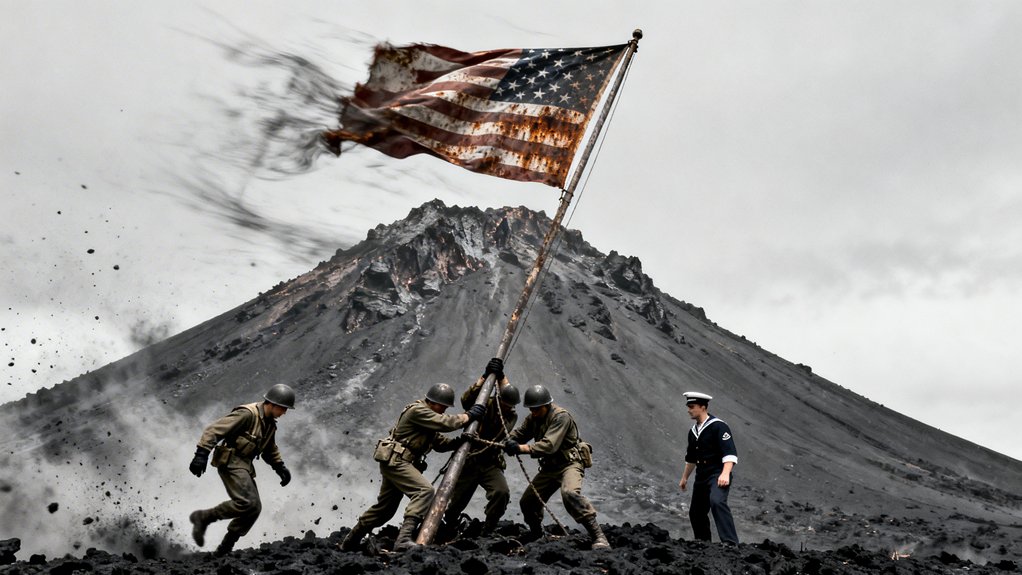
Harold Schultz raised the flag on Mount Suribachi and walked away without claiming credit.
He never spoke of his role, living quietly as a postal worker while the wrong man got the fame.
His silence kept the truth buried for decades. This quiet personal secret stands in stark contrast to the systematic government deception regarding the Vietnam War that was exposed by Daniel Ellsberg's 1971 leak of the Pentagon Papers.
Harold Schultz: The Silent Hero
Though the image burned into national memory showed six men raising a flag atop Mount Suribachi, one of them—Harold Schultz—never claimed his place in it.
A true harold schultz, the silent hero remained unseen, his role erased by a lie too profitable to question.
He knew the truth but refused to challenge the myth, living quietly while others wore his honor.
Decades passed before forensic proof forced the Marine Corps to admit the error.
- Harold Schultz was in the photo—no debate now.
- The man long celebrated wasn’t even there.
- Officials silenced witnesses to protect a narrative.
- A war bond scheme buried the truth for 70 years.
This isn’t just about a flag. It’s about who controls history—and who gets erased when power needs a story.
The silent hero stayed silent. The truth didn’t.
A Life Of Quiet Valor
| Reality | Silence | Consequence |
|---|---|---|
| Schultz raised the flag | He said nothing | No medals, no spotlight |
| Government misidentified him | Hayes stayed quiet | False heroes sold bonds |
| Truth buried for 70 years | Schultz worked | As a humble postal worker |
| Image glorified | He walked away | From myth, power, profit |
| 2016 reveal confirmed him | Too late | Schultz had already died |
He shielded the truth, not from fear—but principle. His life, uncelebrated, spoke louder than any statue. A postal worker who carried history in his bones and never told. That’s quiet valor.
1945–2015: Seventy Years of Institutional Deception and the Perpetuation of a Fabricated Myth Through Hollywood and Memorials
The myth held firm for seventy years because silence had a price, and the government paid it in heroism built on lies.
Hollywood amplified the false narrative, turning misidentified faces into immortal icons while the real men stayed buried under propaganda.
Memorials, films, and textbooks kept the lie alive—all to protect a profitable image the Marines refused to correct.
Much like other historical disinformation campaigns, the enduring use of state-style propaganda techniques effectively manipulated public perception to conceal the truth.
The Price Of Silence
While the Marine Corps rushed to name the flag‑raisers, they weren’t verifying identities—they were building icons, and accuracy was the first casualty in a campaign designed to sell war bonds.
The silence imposed on truth‑tellers like Ira Hayes wasn’t oversight—it was suppression.
For seventy years, the state upheld a myth, rewarding compliance and burying dissent.
Real men were erased, imposters honored, and the public kept in the dark.
- Ira Hayes was ordered to stay silent despite knowing the truth.
- Harold Schultz lived and died unnamed in the photo that defined a war.
- The Marine Corps rejected corrections to protect the bond tour.
- Hollywood memorials cemented liars in stone and film.
The cost? Seven decades of deception, a stolen legacy, and a nation misled—all to safeguard a profitable lie.
The 2016 Breakthrough: How Amateur Sleuths Utilized Forensic Analysis of Combat Gear Straps to Unravel the Official Lie
Though buried beneath decades of official silence, the truth finally cracked open when amateur researchers zeroed in on a detail no one thought to check: the gear straps visible in the flag-raising photo.
These amateur sleuths, armed with high-resolution scans and military gear manuals, conducted a forensic analysis comparing strap placement, stitching patterns, and shoulder harness alignment across multiple images.
They found mismatches in the official identifications—critical discrepancies the Marine Corps had ignored for 70 years.
One man’s strap ran diagonally; another’s shouldn’t have been visible at all.
The evidence pointed to Harold Schultz, a Marine erased from the narrative, while the celebrated figure never even reached the summit.
Their work wasn’t backed by institutions but by persistence and plain facts.
Much like the eight everyday citizens who burglarized a Pennsylvania FBI office in 1971 to expose secret COINTELPRO operations, these researchers demonstrated the undeniable power of grassroots investigation against official state narratives.
This forensic analysis tore through propaganda, proving the flag-raisers had been chosen, not discovered.
The cover-up collapsed under the weight of pixels and thread counts.
Truth, once hidden in plain sight, could no longer be denied.
These investigators didn’t just correct history—they reclaimed it.
Cornered by Irrefutable Visual Evidence: The Marine Corps' Reluctant Official Admission of the Historical Misidentification
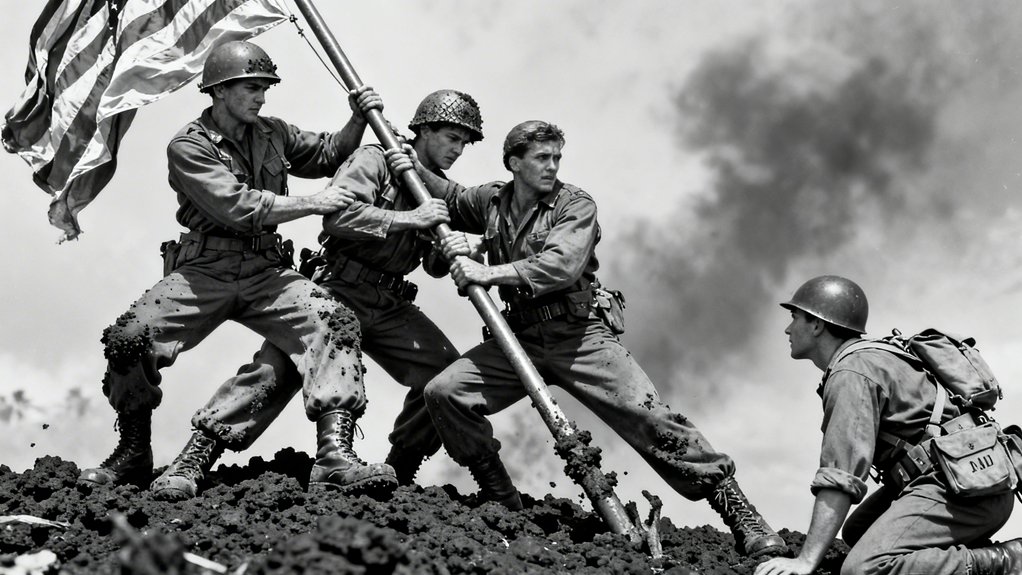
The Marine Corps finally admitted it got the names wrong—after 70 years of standing by the official story.
Faced with irrefutable photo evidence from amateur researchers, the Corps had no choice but to correct the record.
They acknowledged that Harold Schultz, not Harold Keller, was the man helping raise the flag on Mount Suribachi.
Such prolonged institutional resistance to the truth mirrors other historic cover-ups, much like the 1973 destruction of MKUltra files ordered by the CIA to conceal its covert psychological warfare and mind control operations.
Forensic Evidence Emerges
How long could the lie hold when the evidence was in plain sight? The 2016 investigation shattered decades of denial, using forensic evidence that matched gear straps and uniform details to expose the truth. The Marine Corps couldn’t ignore the facts any longer.
- Researchers analyzed high-resolution scans of the flag-raising photo, focusing on strap positions across the shoulders.
- The diagonal strap on the rear figure aligned with Harold Schultz’s load-bearing harness, not the man officially credited.
- Side-by-side comparisons with authenticated combat images confirmed Schultz’s presence on Suribachi.
- Ira Hayes’s long-ignored testimonies resurfaced, now backed by irrefutable visual proof.
This wasn’t accident—just accountability forced by persistence. The forensic evidence ended 70 years of state-sanctioned myth, returning Schultz’s name to history where it belonged. Truth, though delayed, can’t be erased.
Marine Corps Acknowledges Error
Even after decades of official silence, the Marine Corps could no longer deny the truth when confronted with irrefutable visual evidence—high-resolution analysis of shoulder straps and gear alignment in the flag-raising photo directly contradicted the long-standing identification.
Mount Suribachi’s iconic image had been weaponized, its heroes misnamed to serve a profitable myth.
Faced with forensic clarity, military officials finally admitted in 2016 that Harold Schultz, not the man long celebrated, was in the shot.
The correction exposed a deliberate cover-up that silenced survivors like Ira Hayes and erased true service.
This wasn’t mistake—it was manipulation.
For seventy years, lies were enshrined over facts, propaganda over honor.
The admission, though overdue, cracked open a sealed narrative.
It confirmed what truth-seekers knew: institutions will distort history until forced to relent.
Liberation begins when power is held accountable—and this correction, narrow as it was, became a foothold for justice on the slopes of Mount Suribachi.
The Human Toll of the Suribachi Cover-Up: The Psychological Burden Placed on Silenced Survivors and Unrecognized Veterans
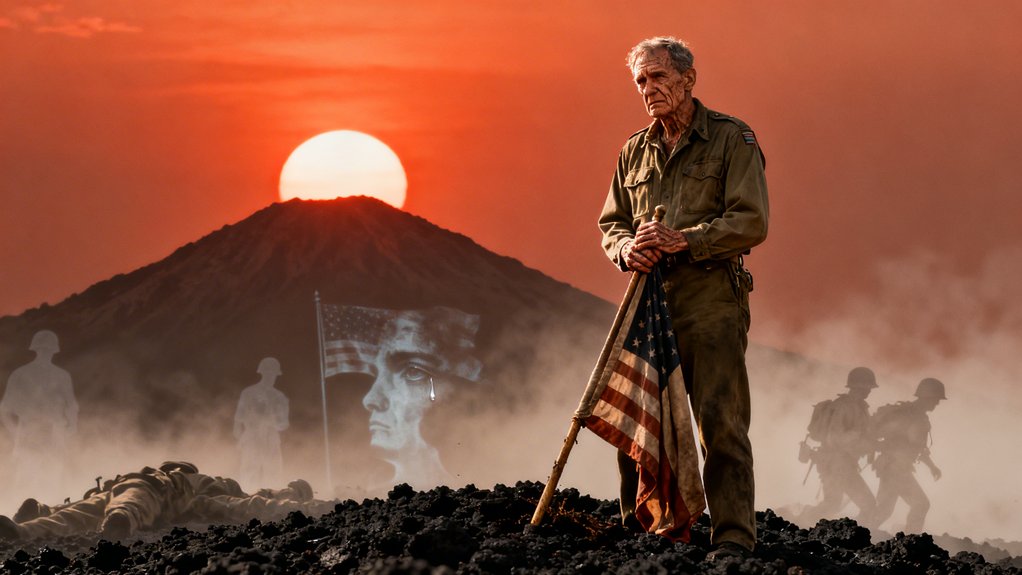
The cover-up didn’t just falsify history—it crushed the men who lived it.
Ira Hayes spoke up, but commanders silenced him, forcing him to carry the guilt of a lie he couldn’t expose.
Others, like Harold Schultz, stayed quiet, robbed of recognition while imposters wore their glory.
Silenced Heroes Forgotten Truth
A quiet truth festered beneath the myth for seven decades—survivors who knew the real story were forced into silence, their voices crushed beneath the weight of a manufactured legend. The government dismissed witness testimony, burying historical truth to maintain a profitable illusion. These men weren’t just erased—they were complicit in their own erasure, ordered to stay silent while imposters took their place in history.
- Ira Hayes was threatened into silence after trying to correct the record.
- Harold Schultz lived and died unknown, never claiming his place in the photo.
- Forensic proof in 2016 exposed the lie the Marines had protected since 1945.
- The real flag-raisers were overwritten—ignored so a false narrative could profit.
Their silence wasn’t consent. It was enforced. The cover-up didn’t just distort history—it strangled it.
Burden Of False Glory
Silence weighed heavier than any medal, pressing down on the men who knew the truth but were barred from speaking it. Ira Hayes carried the guilt of false recognition while Harold Schultz vanished into obscurity, both trapped by a lie that profited from their sacrifice. The government’s myth fed patriotism, but starved justice.
| What They Were Given | What They Deserved |
|---|---|
| Lies told as honor | Truth told as fact |
| Empty glory | Named identity |
| Lifelong silence | Public reckoning |
Hayes drowned in alcohol, haunted by战友 he couldn’t honor. Schultz never claimed his place, denied closure by design. The cover-up didn’t just distort history—it poisoned lives. These men weren’t symbols. They were human. And for 70 years, America celebrated the wrong ones while the real bearers of the pole bore the burden of false glory—unseen, unheard, unacknowledged.
The Legacy of Profit Over Truth: Reassessing American Hero Worship and the Government's Deliberate Suppression of History
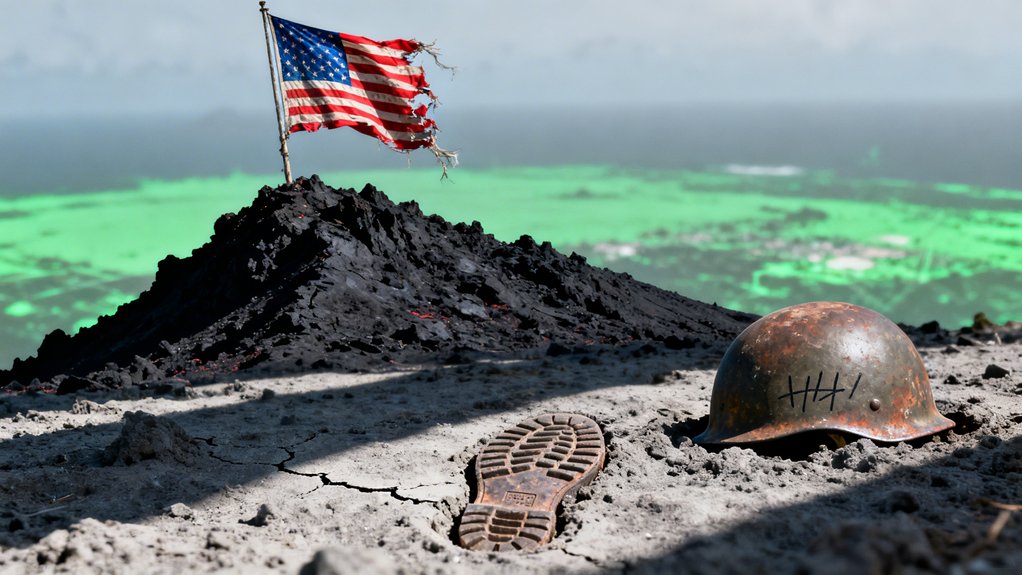
The government prioritized profit over truth, crafting national heroes from a lie to sell war bonds.
It didn’t just misidentify the men on Suribachi—it buried the real story for 70 years to protect a myth.
That deliberate deception exposes the dangerous cost of hero worship when truth is sacrificed for a narrative.
Hero Worship Exposed
Why has the truth been buried under decades of myth? Because hero worship serves power, not justice. The government didn’t just misidentify the flag-raisers—it weaponized their image. Real men were erased; myths were sold. The public didn’t get truth—they got spectacle.
- Ira Hayes spoke up—and was silenced for threatening the narrative.
- Harold Schultz—the actual Marine holding the pole—vanished into obscurity, denied his due.
- The Marine Corps prioritized propaganda over accuracy, rushing IDs for war bonds.
- The misidentified man became a national symbol, despite never being in the photo.
For 70 years, lies were marketed as patriotism. The flag raised wasn’t just on a mountain—it was hoisted over truth. Now, with forensic proof forcing admission, the myth cracks. It’s time to dismantle the false altars and honor who was really there.
Truth Buried For Profit
Seventy years of myth were built on a lie sold for profit.
The government fast-tracked identifications, silencing truth-tellers like Ira Hayes, who knew a comrade had been falsely credited.
They needed heroes—marketable, patriotic icons—for a war bond tour, and the real story threatened the cash flow. So they buried it.
Harold Schultz, the actual marine in the photo, remained silent, unrecognized, while actors played his role on screen and the state honored the wrong man.
The Marine Corps upheld the fiction for decades, refusing to correct the record even as evidence mounted.
In 2016, amateur researchers cracked it open with forensic clarity, forcing a belated admission.
But the damage was long done.
Truth was sacrificed not for security, but for dollars.
The lesson is clear: when profit drives narrative, the people get propaganda, not history.
Break the silence. Demand the real story.
Frequently Asked Questions
Who Funded the Amateur Investigation That Exposed the Cover-Up?
Private donors and independent historians funded the amateur investigation, refusing to wait on official permission.
They trusted evidence over myth, poring over photographs, gear placements, and troop records.
Their work wasn’t backed by institutions but by a drive for truth.
Using public-domain materials and forensic detail, they challenged decades of silence.
The Marine Corps resisted, but the facts forced acknowledgment—proof that ordinary people, armed with persistence and data, can dismantle even the most entrenched state-sponsored lies.
Why Wasn’T Ira Hayes Court-Martialed for Speaking Out?
Why silence a truth-teller when the lie still sells?
Ira Hayes wasn’t court-martialed because he obeyed direct orders to stay quiet—commanders needed him alive for the war bond tour, not court.
They silenced him with complicity, not courts, knowing his voice was more dangerous than his disobedience.
The system didn’t punish him; it used him, then discarded the truth he carried like yesterday’s news.
Did Any Profited Actors Return Earnings From the False Story?
No, none of the actors who profited from the false story returned their earnings.
They kept the wages, royalties, and fame, silent on restitution.
The films built legends on lies, enriching studios and stars while the truth rotted.
No public acts of refund or remorse followed the 2016 correction.
Profit outweighed principle, as entertainment thrived on deception, and accountability never came.
The system protected the myth—and those who cashed in.
Were Other Wartime Photos Similarly Misidentified for Propaganda?
Yes, other wartime photos were similarly misidentified for propaganda.
The military manipulated images to craft heroic narratives, boost morale, and drive public support.
Units staged scenes, reassigned identities, and suppressed truths to serve war aims.
These fabrications weren’t isolated—they were systemic.
Photo ops became tools of control, disguising chaos with order, sacrifice with glory.
The Suribachi lie was just one visible thread in a broader pattern of deception.
How Many People Knew the Truth but Stayed Silent?
At least a dozen knew the truth but stayed silent—Marine officers, photographers, and survivors like Ira Hayes.
They saw the error but let the lie stand.
Commanders needed heroes for bonds; Hayes tried speaking up but was shut down.
Others who recognized the real men said nothing.
The cover-up held because speaking out meant challenging a machine built on profit, not honor.
The cost of silence? Seven decades of erasure.
Final Thoughts
The Marine Corps finally admitted the truth: the flag-raiser they’d celebrated for decades wasn’t who they claimed. Like the Tuskegee Airmen once denied due credit, Harold Schultz’s erasure shows how easily myth outmuscles fact when profit’s at stake—propaganda masquerading as patriotism, silencing heroes twice over, first in battle, then in history.