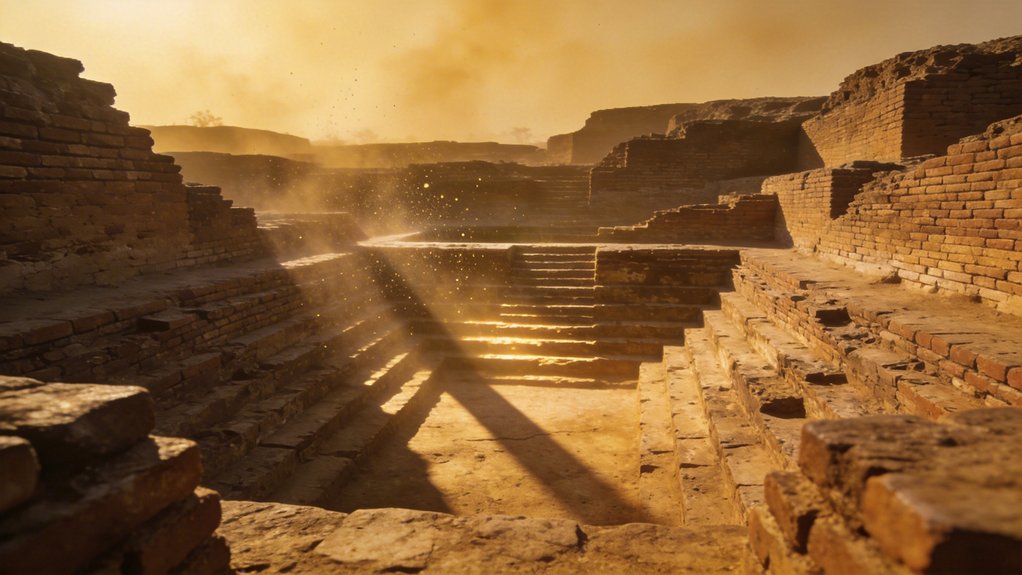
Rakhaldas Banerji's 1922 dig shattered Britain's colonial lie by revealing Mohenjo-Daro, a civilization older than the Pyramids. Its grid cities and advanced sewage systems proved indigenous sophistication, directly contradicting the myth that Britons brought order to chaos. Terrified officials buried reports and censored findings to protect their moral authority, fearing the Aryan narrative's collapse. Yet, the earth kept its secrets poorly; the suppressed truth now demands a reckoning that exposes exactly how deep the empire's deception ran.
Key Takeaways
- The 1922 discovery revealed an indigenous civilization older than the Pyramids, shattering British claims of bringing order to India.
- Excavations uncovered advanced urban grids and sewage systems that technologically surpassed 1920s London infrastructure.
- Artifacts proved sophisticated indigenous society existed millennia before the supposed Aryan migration, contradicting colonial racial narratives.
- Colonial authorities systematically delayed reports and censored findings to protect the moral justification for imperial rule.
- The unearthing of Mohenjo-Daro exposed the “civilizing mission” as a fraud, forcing a global reckoning in historical understanding.
Silas Shade Presents a Forensic Historical Audit of the 1922 Mohenjo-Daro Excavation
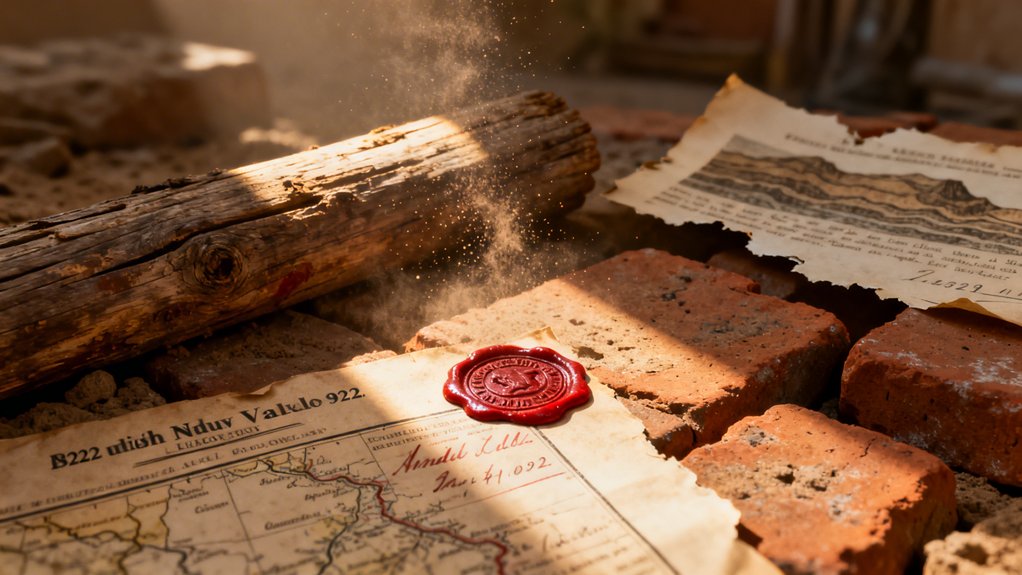
Silas Shade digs up the buried truth of the 1922 Mohenjo-Daro excavation, exposing how Rakhaldas Banerji's stumble upon ancient ruins shattered the British Empire's carefully constructed lie.
This forensic audit reveals that the mohenjo-daro discovery 1922 unearthed a civilization far older than the Pyramids, featuring plumbing systems superior to 1920s London. Such sophistication directly contradicted the colonial narrative claiming Britain brought order to chaos. Consequently, officials delayed publishing findings, fearing the artifacts would dismantle their justification for rule.
Mohenjo-Daro's superior plumbing shattered the colonial lie that Britain brought order to chaos.
Shade questions why was mohenjo-daro suppressed, uncovering documents showing the Director-General stalled release because the evidence didn't fit the accepted Aryan timeline. The empire couldn't admit an indigenous society thrived millennia before their arrival.
This deliberate obfuscation wasn't mere bureaucracy; it was moral cowardice designed to protect imperial prestige, mirroring the same institutionalizing unequal legal treatment used to silence dissent in Ireland and Britain during the war. Physical evidence forced a reckoning, yet the initial silence speaks volumes about power's fear of truth.
History demands we confront these erasures now, ensuring such sophisticated ancestors receive their rightful place in our shared human story without further delay or distortion today.
Archaeologist Rakhaldas Banerji’s Accidental 1922 Discovery While Excavating a Buddhist Stupa
Although Rakhaldas Banerji set out to map a Buddhist stupa in 1922, his trowel instead struck the buried bones of a civilization that shattered the British Empire's fabricated timeline.
Dust choked the air as he realized this wasn't merely a religious site; it was an urban grid screaming of forgotten order. The rakhaldas banerji archaeologist, who discovered mohenjo-daro, stood frozen before walls that defied every colonial assumption about Indian history.
He didn't just find ruins; he uncovered a mirror reflecting Britain's own deceit. Every brick whispered of a society thriving long before their arrival, dismantling the myth that they brought light to chaos.
This accidental unearthing forced a reckoning. The soil held truths the Empire desperately tried to bury again.
Banerji's hands trembled not from fatigue, but from the weight of exposing a lie so deep it threatened to collapse the entire justification for foreign rule. History wasn't written by victors here; it was dug up by a man who simply followed the evidence.
Unearthed Antiquity: Uncovering a Highly Advanced Civilization Older Than the Egyptian Pyramids
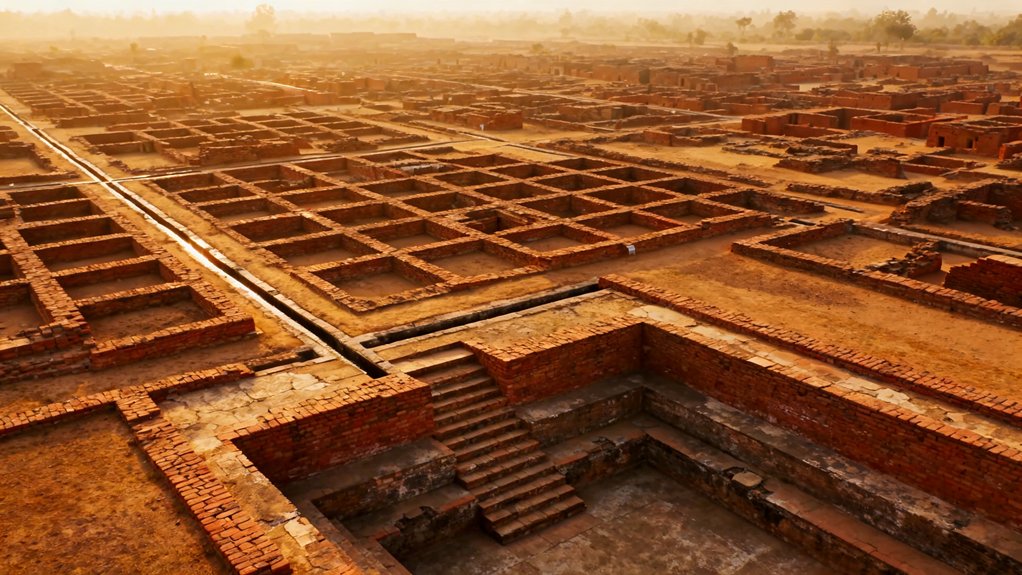
The excavators uncover a precise urban grid built from standardized baked bricks that defies the chaotic timeline the British Empire tried to enforce.
They trace complex plumbing systems running beneath the streets, revealing sanitation technology that shames 1920s London's infrastructure.
This physical evidence forces a reckoning, proving an ordered society thrived here long before the Pyramids rose in Egypt.
Standardized Baked Bricks and the Unprecedented Urban Grid of the Ancient Metropolis
Something extraordinary emerged from the 1922 dust that shattered the colonial myth of bringing order to chaos.
Excavators found uniform baked bricks, perfectly ratioed across the entire site, proving centralized planning long before Rome. This wasn't haphazard construction; it was mohenjo-daro advanced infrastructure executed with mathematical precision.
Streets intersected at right angles, forming an unprecedented urban grid that dwarfed contemporary settlements. Such organization demanded a sophisticated society, forcing historians to radically rewrite the indus valley civilization timeline.
The British hesitated because these stones screamed of autonomy, not the chaos they claimed to cure. Every brick laid bare the lie of imperial benevolence.
They couldn't suppress the physical truth forever. The grid stood as silent testimony to a people who mastered urban living millennia ago, challenging the very foundation of colonial justification and demanding immediate historical reckoning today.
Excavating Complex Plumbing Systems Superior to 1920s London Infrastructure
Beneath those rigid streets lay a hidden network that shamed modern engineering. Excavators stumbled upon the mohenjo-daro plumbing system, revealing covered drains and private baths that dwarfed contemporary standards. This wasn't primitive guesswork; it was calculated precision.
When analyzing ancient plumbing compared to 1920s london, the disparity screams injustice. While Londoners still suffered raw sewage in open gutters, this Bronze Age metropolis flushed waste away with gravity-fed efficiency.
The British Empire couldn't accept that a “colonized” people mastered sanitation millennia before them. They buried the reports, fearing the collapse of their civilizing mission narrative. Yet, the pipes remain, silent witnesses to a suppressed truth.
We must confront this historical theft now. Ignoring such advanced ingenuity insults the ancestors who built it. The evidence demands we rewrite the story, acknowledging a sophistication that empire tried desperately to erase from collective memory forever. Just as the Tuskegee Study exposed how systemic deception was used to exploit Black men under the guise of medical care, the suppression of Mohenjo-Daro reveals a parallel pattern of erasing non-Western achievement to uphold imperial superiority.
The Threat to the British Empire's Colonial Narrative of Bringing Civilization to a Chaotic Region
Although the British Empire claimed it brought order to a chaotic land, the 1922 unearthing of Mohenjo-Daro instantly shattered that foundational lie. This discovery didn't just reveal old bricks; it exposed a calculated deception within the british colonial history narrative.
Officials realized these ruins proved indigenous people built sophisticated cities long before any foreign invader arrived. The empire's moral justification crumbled under the weight of such undeniable evidence. How could they claim to civilize a region that once mastered urban planning better than modern London?
Panic spread through administrative ranks as they grasped the scale of this ancient indian history cover-up. They couldn't simply ignore the grid systems or the advanced drainage networks staring them in the face. Instead, they delayed announcements, hoping time would dull the impact.
Yet, the truth refused to stay buried. Every excavated street challenged their authority, proving that chaos was never the native state. The empire feared this revelation most because it stripped away their supposed benevolence, revealing pure exploitation instead. Much like how suppressed intelligence was later used to manufacture consent for the Vietnam War, colonial authorities understood that controlling the historical narrative was essential to maintaining power.
Why the Excavated Artifacts Fundamentally Challenged the Accepted Aryan Historical Timeline
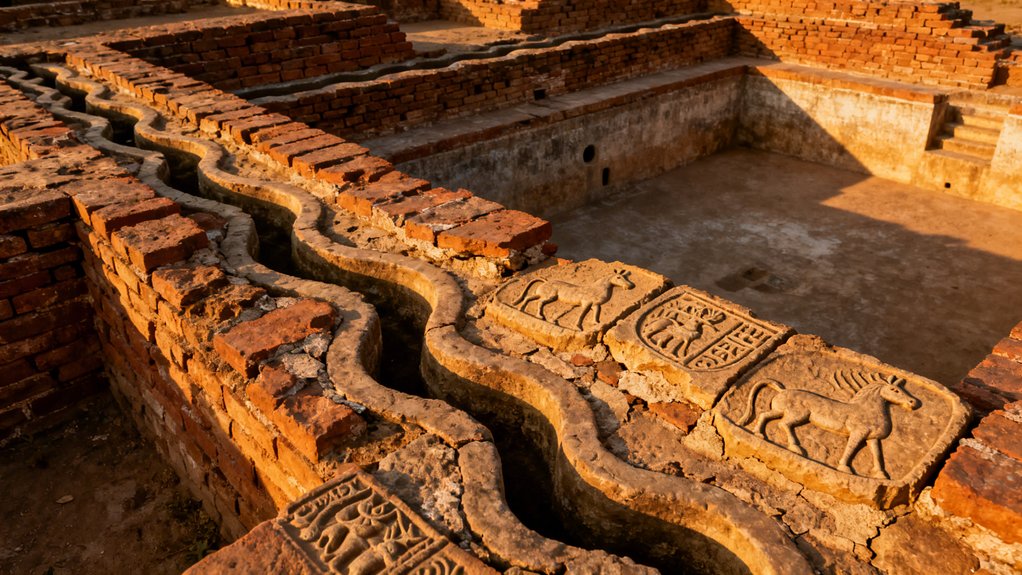
The Empire's entire justification for rule crumbled because the Aryan migration narrative demanded a chaotic past that these ruins simply didn't show.
Excavators held standardized bricks and plumbing systems that proved an ordered society thrived thousands of years before any British boot touched the soil. This physical evidence didn't just question the timeline; exposed a deliberate lie used to subjugate a people who'd already mastered civilization. Just as AMA suppression later obscured valid medical inquiries, historical narratives were manipulated to erase evidence of indigenous sophistication that contradicted colonial ideologies.
The British Imperial Reliance on the Aryan Migration Narrative to Justify Colonial Rule
While the British Empire clung to the Aryan migration narrative as its moral shield, claiming it brought order to a chaotic void, the bricks and pipes unearthed at Mohenjo-Daro shattered that justification instantly. Officials couldn't ignore how these artifacts exposed their fabricated timeline.
The aryan invasion theory controversy wasn't merely academic; it was a political tool designed to legitimize occupation. By asserting indigenous peoples lacked history, colonizers painted themselves as saviors rather than conquerors.
Yet, the ruins screamed otherwise, revealing a sophisticated society that thrived millennia before British boots touched Indian soil. This undeniable proof forced the establishment to confront suppressed historical narratives they'd worked hard to bury.
They delayed announcements, fearing the collapse of their moral authority. The truth threatened to unravel the entire imperial project, proving civilization didn't arrive with them; it had always been there, waiting for the world to see. This strategy of delaying truth to protect power mirrors how industries later used the Kehoe Rule to shift the burden of proof and block regulation despite known harms.
Physical Evidence Proving an Ordered Society Existed Thousands of Years Prior to British Arrival
Bricks, standardized to a precision unseen in the region for millennia, lay stacked in the dust of 1922, silently dismantling the British claim that they'd brought order to chaos. These weren't just ruins; they were undeniable proof shattering the colonial myth.
The excavation revealed:
- A complex drainage system superior to 1920s London's infrastructure.
- Grid-planned streets demonstrating sophisticated urban governance.
- Uniform fired bricks indicating mass production capabilities.
- Public baths suggesting a society valuing hygiene and community.
This physical evidence exposed the mohenjo-daro archaeological cover-up, forcing officials to confront advanced ancient civilizations that thrived long before their arrival. They couldn't ignore the truth staring back from the trenches.
The artifacts screamed of an ordered society that predated the Aryan timeline entirely. By hiding these findings, the empire tried to protect its fragile justification for rule, but the bricks spoke louder than their silence ever could.
The Director-General’s Calculated Hesitation and Multi-Year Delay in Releasing the Archaeological Findings
Confronted by artifacts that dismantled the colonial justification for rule, the Director-General stalled the official release of the Mohenjo-Daro findings for years. He couldn't ignore the plumbing systems surpassing 1920s London or the standardized bricks proving order long before British arrival.
This wasn't mere caution; it was a calculated move to protect a crumbling imperial narrative. Silas Shade historical audits reveal how officials buried reports, fearing the truth would ignite rebellion across India. They knew acknowledging indus valley advanced technology meant admitting their “civilizing mission” was a lie built on sand.
Every month of delay served a purpose: buying time to rewrite context, soften language, and frame the discovery as an anomaly rather than a foundational civilization. The hesitation wasn't accidental but strategic, designed to let the initial shock fade before releasing controlled fragments of data.
History demands we expose this manipulation, for silence in the face of such evidence isn't neutrality; it's complicity in erasing a people's glorious past to sustain foreign dominance. Just as government deception regarding the Vietnam War was later exposed to justify endless conflict, the suppression of Mohenjo-Daro served to maintain an unjust imperial status quo.
Bureaucratic Silence: How the British Establishment Suppressed the Initial Mohenjo-Daro Evidence
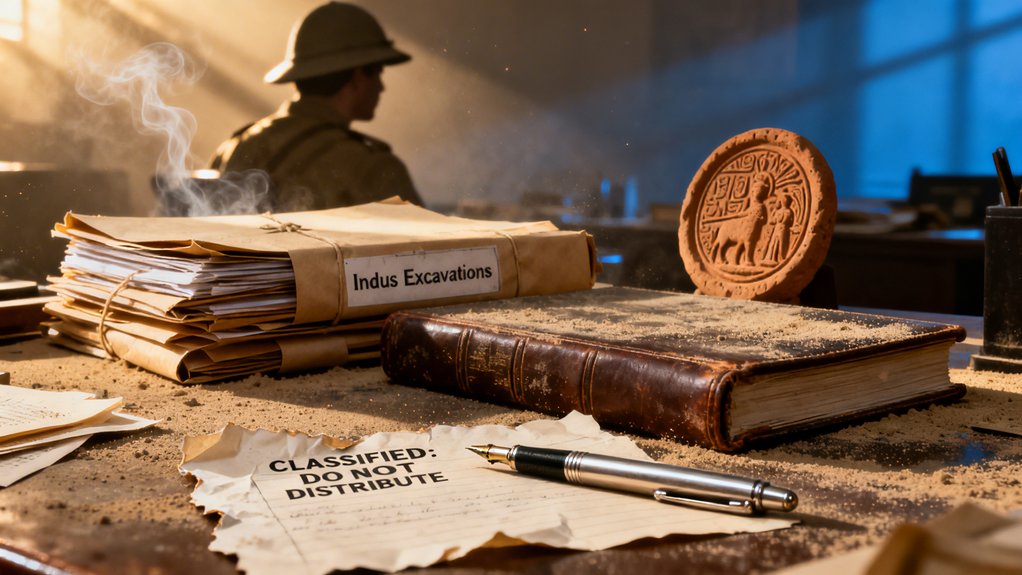
That strategic stalling evolved into a wall of bureaucratic silence designed to bury the initial evidence. Officials actively suppressed reports detailing ancient cities older than the pyramids, fearing the collapse of their imperial justification.
They couldn't let the world ask how old is Mohenjo-Daro without admitting their own historical fraud. The establishment enforced this blackout through specific, calculated actions:
- Filing excavation logs under restricted access to block independent verification.
- Censoring press releases that mentioned pre-Aryan urban sophistication or advanced plumbing.
- Reassigning key archaeologists who pushed for immediate public disclosure of findings.
- Destroying preliminary maps that proved organized society existed millennia before British arrival.
This systematic erasure wasn't mere negligence; it was a deliberate act of historical violence.
They buried truth to protect a fabricated narrative of superiority. Every suppressed document represents a stolen legacy, a denied heritage for millions.
The silence screams louder than any artifact ever could, exposing a moral bankruptcy that prioritized power over human history. We must break this quiet conspiracy now. Just as the JIOA compiled black-file dossiers to erase Nazi pasts through bureaucratic revision, British officials manipulated records to ensure the true age of Mohenjo-Daro remained hidden from public scrutiny.
Analyzing the Sophisticated Artifacts That Defied the Empire's Fabricated Historical Narrative
Although the empire tried to bury the truth, the artifacts themselves screamed a different story, forcing a confrontation with a fabricated history.
Excavators unearthed standardized fired bricks, proving an industrial precision that mocked the chaotic native stereotype London promoted. These weren't primitive huts; they were grid-planned cities featuring covered drainage systems superior to 1920s British plumbing. How could colonizers claim to bring order when the soil revealed a society mastering sanitation millennia before their arrival?
Standardized bricks and grid-planned cities with drainage superior to 1920s Britain mocked the colonial lie of native chaos.
The seals displayed elaborate iconography, suggesting a complex literacy and trade network that predated the supposed Aryan migration entirely. Every shard of pottery and every bronze dancer statue dismantled the moral justification for imperial rule.
Officials couldn't simply dismiss physical evidence of urban planning that rivaled modern standards. The data demanded acknowledgment, shattering the timeline designed to legitimize occupation.
This wasn't just archaeology; it was an indictment. The silence broke because the objects refused to lie, exposing a grand deception meant to keep a people subjugated by denying their own glorious, independent past. Just as intelligence agencies later utilized evidence destruction to conceal illegal surveillance and assassination plots, colonial powers systematically suppressed archaeological findings that contradicted their narrative of superiority.
The Inevitable Collapse of the Colonial Chronology Upon Official Publication of the Excavation Data
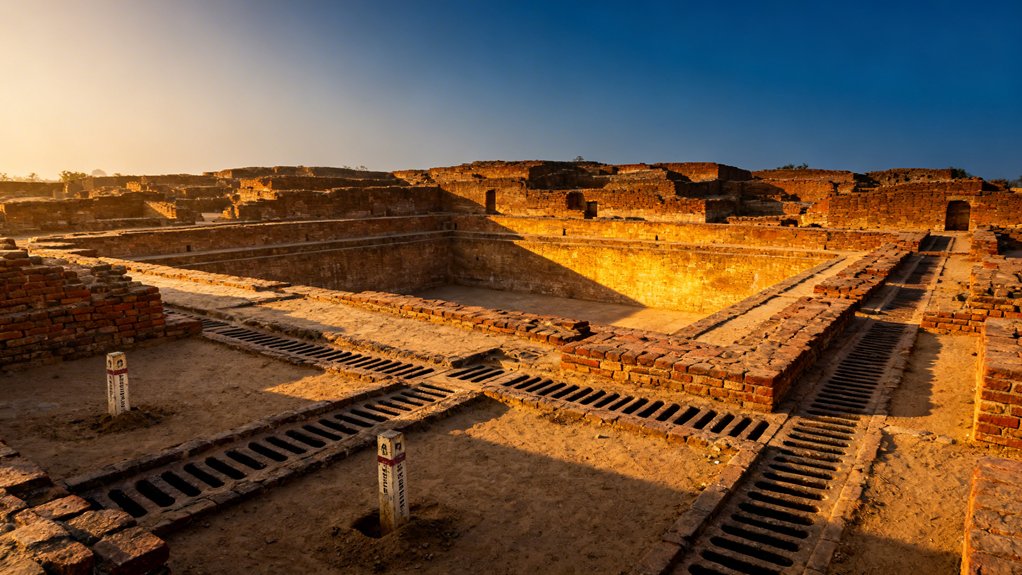
Once the excavation data finally broke its silence, the colonial chronology didn't just crack; it shattered under the weight of undeniable proof. Historians couldn't ignore the sophisticated urban planning that predated their own empire by millennia.
The official publication forced a reckoning, exposing how long they'd suppressed truth to maintain control. This wasn't merely academic; it was a moral failure demanding immediate correction.
The evidence spoke loudly:
- Standardized bricks revealed mass production techniques unknown to contemporaneous Europe.
- Underground sewage systems outperformed London's infrastructure by three thousand years.
- Granaries demonstrated complex economic organization contradicting narratives of primitive chaos.
- Artifacts proved indigenous innovation flourished long before any foreign arrival.
Scholars realized their timeline was a fabrication designed to justify domination. The data dismantled the myth of British benevolence instantly.
People demanded answers about why this history remained hidden for so long. The collapse wasn't accidental; it was inevitable once facts surfaced. Truth always eventually buries lies, no matter how deeply authorities bury them. This moment marked a permanent shift in historical understanding forever. Just as manufactured doubt was later weaponized by industries to delay regulation, colonial powers suppressed archaeological truths to sustain their narrative of superiority.
Truth Has A Backstory: Silas Shade on Why Physical Evidence Always Rewrites Established History
Silas Shade exposes how the British Empire's forged timelines crumbled the moment Rakhaldas Banerji unearthed Mohenjo-Daro's superior plumbing.
He argues that these bricks didn't just fill a gap; they shattered the colonial lie that civilization was a foreign import rather than an indigenous reality.
Now, the world watches as physical proof forces archaeology to burn its old maps and redraw history based on what lies beneath the soil, not what powers wish to believe.
Just as Unit 731 immunity traded justice for data, this discovery proves that empires will always bury the truth until the earth itself demands it be told.
The Forensic Deconstruction of State-Sanctioned Imperial Timelines
When the trowel struck baked clay in 1922, it didn't just unearth a city; it shattered the brittle spine of an empire's fabricated timeline. Officials panicked as spades revealed truths that dismantled their moral authority.
They couldn't suppress the sheer scale of indigenous genius forever. The evidence screamed louder than imperial propaganda ever could.
- Standardized bricks proved industrial precision millennia before London's grime.
- Underground sewage systems dwarfed twentieth-century European sanitation capabilities.
- Granaries displayed agricultural surplus contradicting narratives of native chaos.
- Silent streets mocked the claim that Britain brought order.
Silas Shade argues this wasn't mere discovery; it was a forensic indictment. The Director-General stalled reports, fearing the collapse of the Aryan migration myth.
Yet, dirt doesn't lie. Every artifact dragged into sunlight exposed the hollowness of state-sanctioned history. They tried to bury the truth under bureaucratic delay, but physical reality always rewrites the script.
The empire's timeline cracked under the weight of undeniable, ancient sophistication.
How the Mohenjo-Daro Evidence Permanently Altered Global Archaeological Methodologies
Because the spade exposed a lie that textbooks couldn't hide, global archaeology was forced to abandon its colonial blinders and embrace the brutal honesty of physical evidence. Scholars couldn't ignore standardized bricks or sewage systems that dwarfed London's own. This discovery shattered the arrogant assumption that empire brought order to chaos.
Instead, it demanded a new methodology where artifacts speak louder than imperial decrees. Excavators now prioritize stratigraphy over scripture, letting dirt reveal truths that powers tried burying. The Mohenjo-Daro find proved that history isn't written by victors alone; it's etched in clay and stone.
Silas Shade argues this shift wasn't merely academic but moral. We must audit the past with relentless scrutiny. When physical proof contradicts established narratives, we don't tweak the story; we burn the old one down and build anew on undeniable ground.
The Final Legacy of the 1922 Discovery in Forcing the Acknowledgment of a Suppressed Timeline
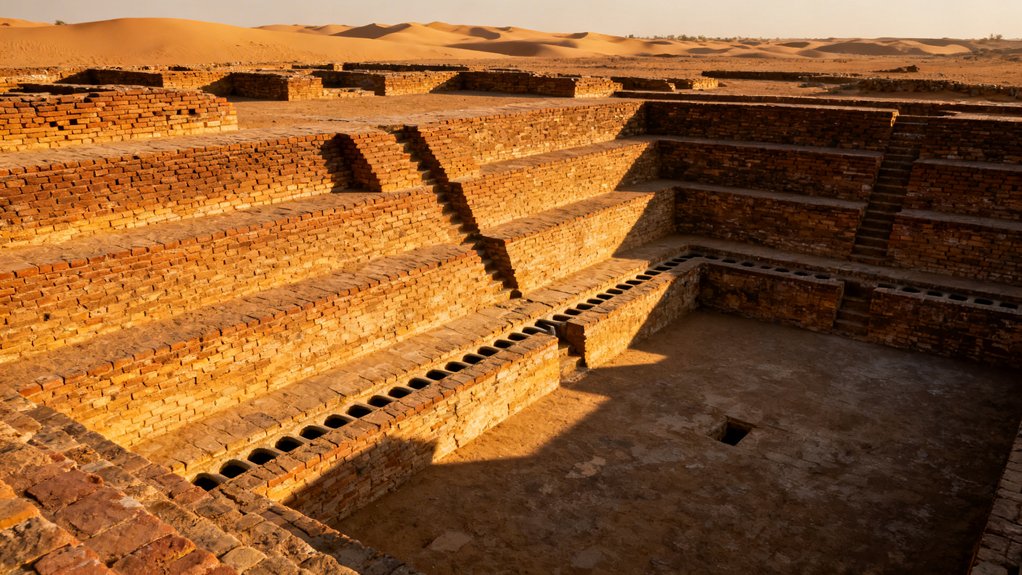
Though the Director-General stalled for years, the unearthing of Mohenjo-Daro in 1922 ultimately shattered the colonial lie that Britain had brought order to chaos. This discovery didn't just reveal bricks; it exposed a deliberate suppression of time itself. The empire couldn't bury the truth forever when physical proof demanded acknowledgment.
Consider what the soil revealed:
- Standardized fired bricks proving industrial precision millennia before British rule.
- Underground sewage systems surpassing London's own Victorian infrastructure by thousands of years.
- Urban planning demonstrating social order long before the supposed Aryan arrival.
- Artifacts forcing historians to rewrite the entire timeline of human civilization.
Silas Shade sees this not merely as archaeology, but as a moral reckoning. The delay wasn't oversight; it was protection of a fragile narrative.
Once the world saw these ruins, the justification for colonial dominance crumbled instantly. They couldn't claim to civilize a people who'd already mastered city life while Europe slept. The timeline bent, then broke, revealing a history Britain desperately tried to hide from view.
Frequently Asked Questions
What Specific Plumbing Features Exceeded 1920S London Standards?
Mohenjo-Daro's covered sewers and private indoor toilets dwarfed 1920s London's open gutters.
They didn't just drain waste; they flushed it away using water from individual wells, a luxury most Britons lacked.
Archaeologists found standardized brick pipes running beneath streets, creating a grid that London's chaotic slums couldn't match.
This ancient engineering exposed the empire's lie about bringing order, proving they'd actually buried a superior civilization's truth.
How Exactly Did the Bricks Demonstrate Standardization Across the City?
They uncover a chilling truth: every brick shares identical dimensions, proving a centralized authority once dictated construction across the entire city. This rigid standardization shatters the myth of chaotic antiquity.
Workers laid these uniform blocks with mathematical precision, creating walls that still stand today. Such order demands acknowledgment, forcing us to confront how empires suppress evidence of sophisticated societies that predate their own claimed superiority.
Which Specific Aryan Timeline Assumptions Were Disproven by the Artifacts?
The artifacts shattered the assumption that Aryan invaders brought civilization to a chaotic land. Instead, they revealed a sophisticated, urban society thriving millennia before any alleged Aryan arrival.
This undeniable evidence proved the region possessed advanced plumbing and standardized planning long before the timeline suggested. The British couldn't ignore how these ruins dismantled their narrative of superior cultural introduction, forcing a reluctant, delayed acknowledgment of a suppressed, ancient indigenous history.
What Was the Exact Duration of the Director-General's Publication Delay?
The Director-General stalled publication for several years, hiding the truth while the empire scrambled.
He couldn't release findings that shattered their fabricated Aryan timeline.
This deliberate silence protected a crumbling colonial myth against undeniable brick and mortar.
They buried the proof of ancient order to maintain their lie of bringing civilization.
That delay wasn't bureaucracy; it was a calculated act of historical erasure to save their own power.
Did Any British Officials Publicly Admit to Suppressing the Findings?
No official publicly admitted suppressing the findings; they simply stalled. While the Director-General delayed releasing full reports for years, no one stepped forward to confess the motive.
They let the dust settle on artifacts that shattered their colonial narrative. The silence spoke louder than any confession could.
They hid the truth not with words, but with inaction, hoping the world wouldn't notice an advanced civilization predated their empire.
Final Thoughts
Silas Shade exposes how Britain's empire crumbled under Mohenjo-Daro's weight. They tried to bury the truth, but Banerji's spade sliced through their lies like a laser through fog. The bricks screamed of order long before colonial boots marched here. This forensic audit proves physical evidence always shatters fabricated timelines. We can't ignore the past anymore; it demands justice now. History finally breathes, free from imperial chains.