
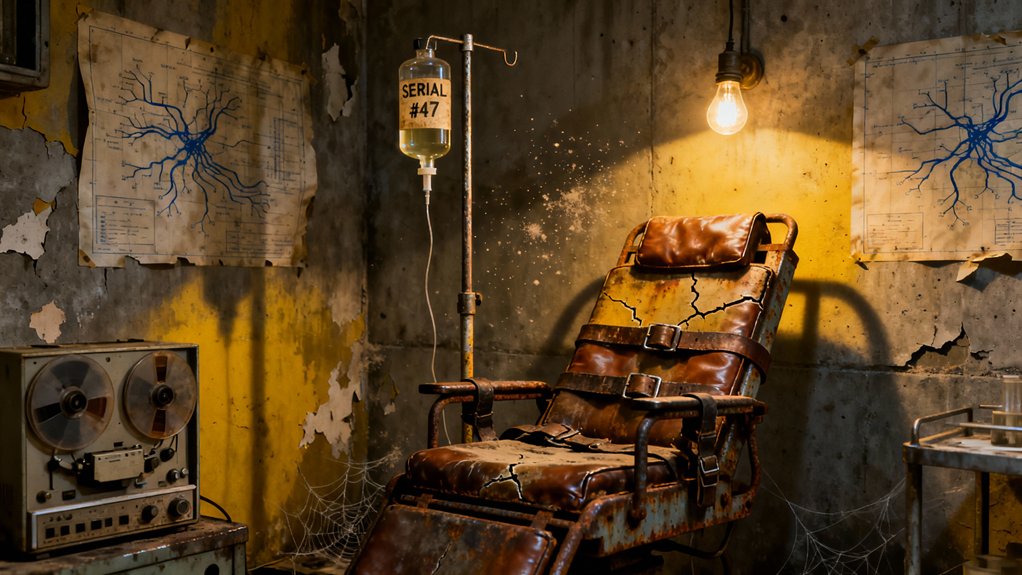
In the quiet halls of science, breakthroughs healed minds—while in shadowed laboratories, the same minds were shattered. The CIA launched Project MKUltra, a clandestine war on consciousness, enlisting chemists and psychiatrists to weaponize drugs, torture, and deception. Sidney Gottlieb, its architect, believed control of the mind was within reach. But the full extent of what they did—and what they erased—remains buried just beneath the surface, waiting to be uncovered.
Key Takeaways
- Project MKUltra was a covert CIA program launched in 1953 to develop mind control techniques during the Cold War.
- Led by Sidney Gottlieb, the program used LSD, electroshock, and sensory deprivation to erase and reprogram identities.
- Experiments occurred in hospitals, prisons, and brothels, often without subjects’ knowledge or consent.
- Front organizations and shell companies concealed funding and operations from public and congressional oversight.
- Despite exposure by the Church Committee, accountability was minimal, and the program’s legacy persists in modern interrogation tactics.
What Was Project MKUltra?

Though born in the fevered atmosphere of Cold War dread, Project MKUltra was no paranoid fantasy—it was a covert campaign to break the human mind. Orchestrated by CIA Director Allen Dulles in 1953, it weaponized science against consciousness itself. Sidney Gottlieb, the agency’s chemist, led the charge, funneling funds through shell organizations to obscure the trail. His mission: extract control from chaos, to master manipulation through drugs, isolation, and terror. They didn’t just study LSD—they deployed it, slipping it to unsuspecting men, women, and prisoners. No consent. No boundaries. The body became a laboratory; the mind, a battlefield. Over 149 subprojects pulsed beneath the surface, each more audacious than the last. Front organizations masked the truth. Hospitals, prisons, brothels—all served as testing grounds. Gottlieb believed erasure could birth obedience. Allen Dulles greenlit the madness, trusting shadows over democracy. This wasn’t research—it was assault. A systemic unraveling of self, disguised as national defense. The victims were never subjects. They were targets. And the architects? They refused to see them as human.
The Cold War Origins of Mind Control
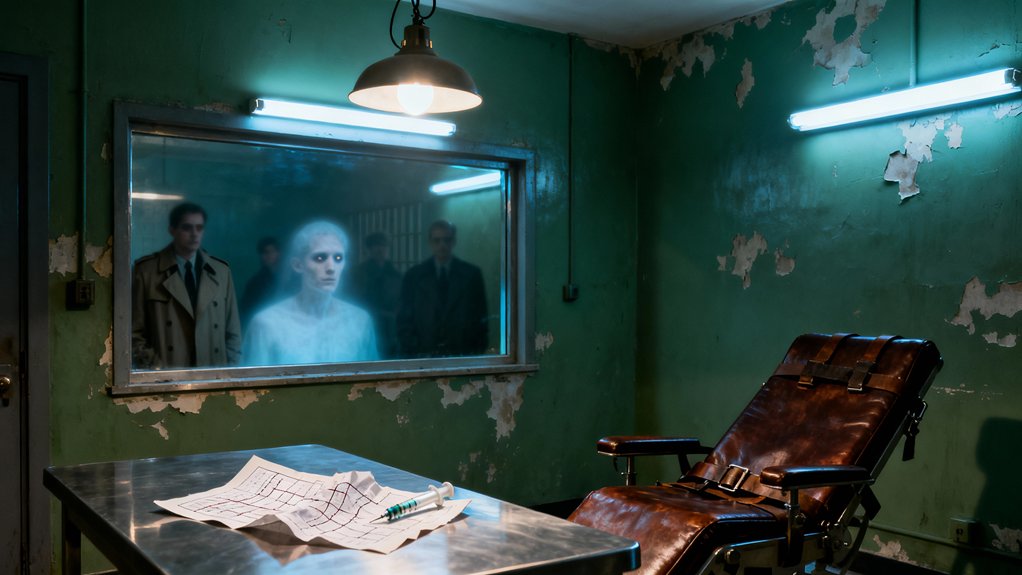
Because the Cold War thrived on invisible battlefields, the CIA hunted ways to conquer the human mind as if it were enemy territory. Fear of Soviet brainwashing sparked MKUltra, a program built on secrecy and psychological sabotage. The agency didn’t just study control—they engineered it. Frank Olson, a biochemist caught in the machine, became one of its first known victims, his 1953 death shrouded in deception. Leaders like Richard Helms later buried the truth, ordering files burned in 1973. But fragments survived—proof of a war waged in shadows.
| Year | Event |
|---|---|
| 1950 | CIA begins mind control research |
| 1953 | Frank Olson dies after LSD exposure |
| 1953 | MKUltra officially launched |
| 1964 | Helms expands operational secrecy |
| 1973 | Richard Helms orders documents destroyed |
They mapped the psyche like hostile terrain, turning therapy into torture. These weren’t experiments—they were raids on consciousness. The Cold War didn’t just distort politics; it weaponized the self.
How MKUltra Weaponized LSD and Drugs

Dosing unsuspecting subjects in back-alley brothels and psychiatric wards, the CIA turned LSD into a covert weapon through MKUltra’s most audacious experiments. At heart of this was *Operation Midnight Climax*, where agents slipped LSD into drinks, filmed reactions from behind one-way glass, and studied psychological collapse in real time. The goal wasn’t therapy—it was control. In Montreal, psychiatrist Donald Ewen Cameron pushed further, deploying *depatterning* to erase minds using massive electroshock, sensory deprivation, and LSD-induced comas lasting weeks. Victims woke confused, sometimes unable to speak their names, stripped of identity. The CIA bankrolled these torments, chasing a fantasy of programmable agents. They didn’t seek healing; they sought to break consciousness, to hollow out the self and rebuild obedience. Each dose was a bullet fired in silence. Each test subject, collateral in a war waged on thought itself. This wasn’t science—it was sabotage of the soul. Liberation begins by remembering what they tried to erase: that minds aren’t battlefields.
Inside the CIA’s Hidden Human Test Sites
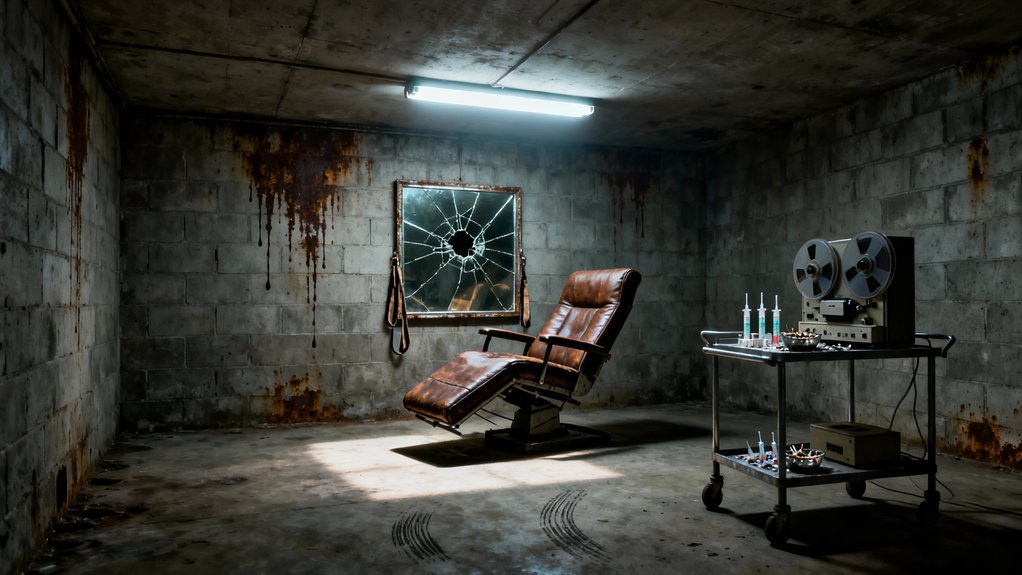
The brothels of San Francisco and the psychiatric wards of Montreal were only the visible edges of a far darker network. Beneath the facade of medical legitimacy, the CIA built covert test sites where human autonomy was erased. At McGill University’s Allan Memorial Institute, Dr. Donald Ewen Cameron performed radical “depatterning” experiments—bombarding patients with electroshocks and LSD to wipe their minds clean. Men, women, and children became raw material for behavioral engineering. These weren’t isolated abuses; they were nodes in a nationwide circuit of clandestine labs, prisons, and hospitals. Subjects never consented. They didn’t even know the war had begun. Funding flowed through cutouts and shell companies, buried deep in financial ledgers unearthed years later by accident. The paper trail revealed payments to physicians, institutions, and operatives who maintained silence. These sites weren’t just locations on a map—they were anti-temples of control, designed to fracture identity and rebuild obedience. The body was a laboratory. The mind, a target. And liberation began with remembering what they tried to erase.
The Psychiatrists Who Enabled MKUltra

While operating under the guise of medical inquiry, psychiatrists like Donald Ewen Cameron and Harris Isbell forged alliances with the CIA that blurred the line between healer and perpetrator. They designed brutal experiments—Cameron’s “depatterning” erased minds with electroshock and LSD, while Isbell’s Lexington addiction studies trapped patients in chemically-induced hells. Funded through MKUltra‘s shadow network, their work thrived on deception, exploiting vulnerable patients as test subjects. These doctors didn’t just comply—they innovated torture disguised as science. Their research sites became laboratories of control, where consciousness was dismantled in service of Cold War paranoia. Decades later, the Church Committee exposed their crimes, revealing how federal power shielded abusers. The Rockefeller Commission also documented CIA overreach, yet few faced consequences. The medical establishment remained silent, complicit through omission. These psychiatrists didn’t merely enable MKUltra—they were its architects of erasure. Their legacy endures in the survivors they shattered and the truth they tried to bury. They traded healing for domination, and history must name them accordingly.
MKUltra Victims and the Cost of Silence
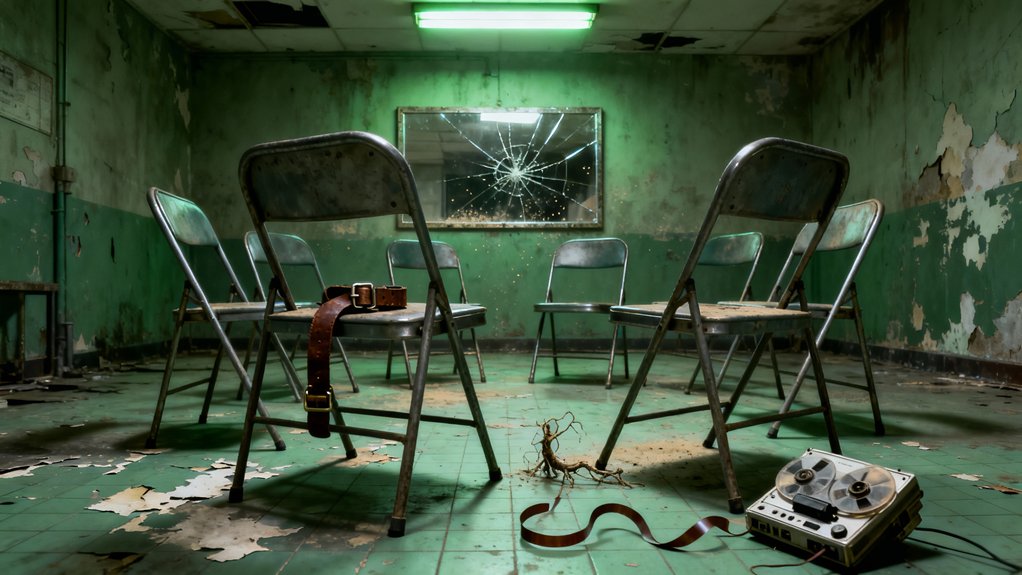
They woke up disoriented, memories frayed or gone, some not knowing their own names—victims of experiments they never consented to, carried out in plain sight. Hospitals, prisons, and universities became laboratories where minds were shattered under LSD, electroshock, and sensory deprivation. The CIA, shielded by layers of secrecy, left behind a trail of broken lives silenced by national security claims. Families searched for answers, only to hit walls fortified by institutional arson—the deliberate burning of truth to protect power. Decades later, survivors still fight for recognition, their suffering buried beneath Cold War paranoia and legal loopholes. The Foreign Intelligence Surveillance Act, while enacted later, exemplifies the same culture of unchecked surveillance and erasure. These victims weren’t collateral damage; they were targets in a war on consciousness itself. Their silence wasn’t voluntary—it was enforced. Yet their stories persist, fragments rebuilt from court records, forgotten memos, and survivor testimony. The cost of silence? A legacy of trauma masked as state necessity, still echoing through unacknowledged rooms where minds were stolen, and identity weaponized from within.
How the Truth About MKUltra Emerged

Unearthing buried secrets through dogged investigative work, a cache of misfiled financial records exposed the CIA’s clandestine operations. These documents, overlooked during the 1973 purge ordered by Director Richard Helms, became the smoking gun that pierced decades of silence. Reporters and lawmakers followed the paper trail, revealing a program built on deception, torture, and stolen lives. The truth didn’t emerge by accident—it was dragged into the light by relentless pressure from survivors, whistleblowers, and journalists who refused to let the past stay buried. Three forces converged to break the dam:
- Freedom of Information requests that forced reluctant agencies to disclose fragments of classified files.
- The Church Committee hearings, where testimonies laid bare the CIA’s illegal experiments on U.S. citizens.
- Courageous survivors, like the families of Frank Olson, who sued, spoke out, and demanded accountability.
Each revelation peeled back layers of state-sponsored amnesia. The public finally saw the cost of unchecked power—and the fragile victory of truth over erasure.
MKUltra’s Legacy in Psychiatry and Covert Ops
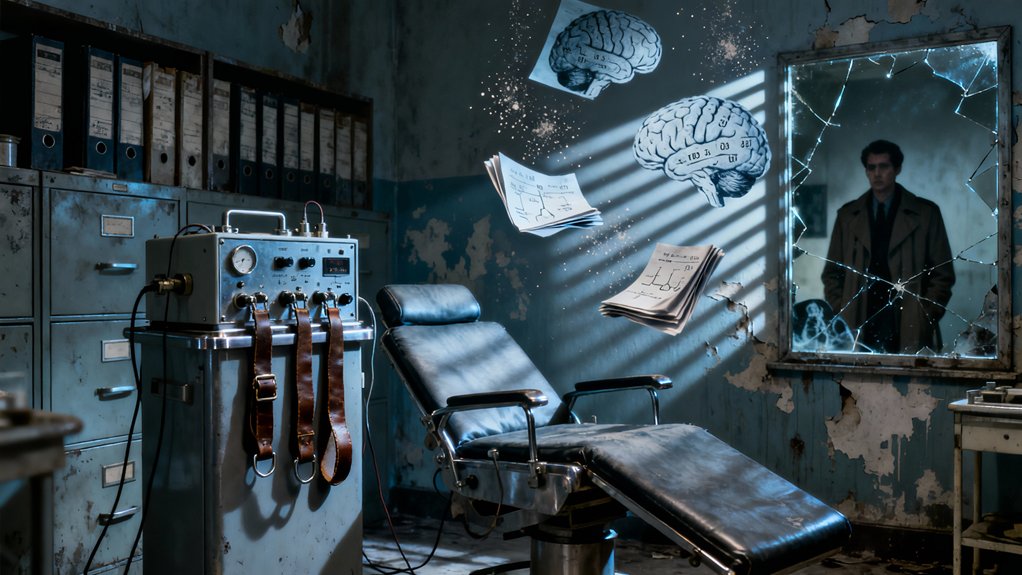
Because the boundary between therapy and torture blurred in the shadow labs of MKUltra, its legacy lingers in both psychiatric practice and covert intelligence. The CIA didn’t just exploit psychiatry—it reshaped it. Sidney Gottlieb’s experiments normalized the use of drugs and sensory assault under the guise of healing, while Donald Cameron’s depatterning left permanent scars on medical ethics. These weren’t anomalies; they were blueprints. Techniques refined in Montreal and at Tavistock were later adapted in black sites from Guantanamo to Bagram. The American Psychiatric Association still grapples with complicity, as some MKUltra-affiliated doctors rose to prominence. Meanwhile, the military’s use of sleep deprivation and disorientation echoes the program’s playbook. Files may have burned in 1973, but their shadows didn’t. MKUltra proved minds could be broken methodically—and that institutions would look away. Today’s survivors fight not just for recognition, but for a reckoning that never came. Liberation starts by naming what was done in silence: science perverted, consent erased, and memory weaponized against the self.
Frequently Asked Questions
Did Any MKULTRA Victims Receive Compensation?
Yes, some MKUltra victims received compensation. In 1988, the U.S. government awarded $750,000 to Frank Olson’s family after a lawsuit forced acknowledgment of his CIA-linked death. Few others got reparations, as most records were destroyed, leaving survivors fighting for recognition, justice, and truth against a system built on silence.
Are MKULTRA Techniques Still Used Today?
They can’t prove it, but thousands still suffer unexplained trauma. MKUltra’s methods live on—covert behavioral manipulations persist, adaptation of sensory deprivation, drugs, and psychological torment still haunt black sites, prisons, and beyond. The mind remains a battlefield.
Was Mind Control Ever Actually Achieved?
No, mind control was never truly achieved; the CIA’s experiments failed to create reliable control. Survivors resisted, memories persisted, and the architects of amnesia underestimated the resilience of consciousness, even when shattered by drugs, shocks, and silence. They couldn’t erase the human spirit.
How Many People Died Because of MKULTRA?
A single confirmed death—Frank Olson’s—echoes like a whisper in a tomb, but the true toll hides in shadows; records were burned, lives shattered, and silence enforced, leaving only fragments to testify against the unseen slaughter.
Do Surviving MKULTRA Documents Still Exist?
Yes, surviving MKUltra documents exist—20,000 misfiled financial records escaped destruction. They reveal covert labs, mind-control tests, and black-budget operations. Declassified files still hide redacted truths, but the evidence that remains exposes a hidden war waged on human consciousness, memory, and free will.
Final Thoughts
They erased names. Burned files. Buried the truth. But whispers remain—echoes in asylum corridors, flickers in declassified margins. Survivors still flinch at bright lights, their minds scarred by ghosts they can’t name. The architects vanished into silence. Yet the methods? They adapted. Evolved. Watch closely: the past doesn’t die. It experiments. And somewhere, the next chapter hums to life—unseen, unacknowledged, unstoppable.