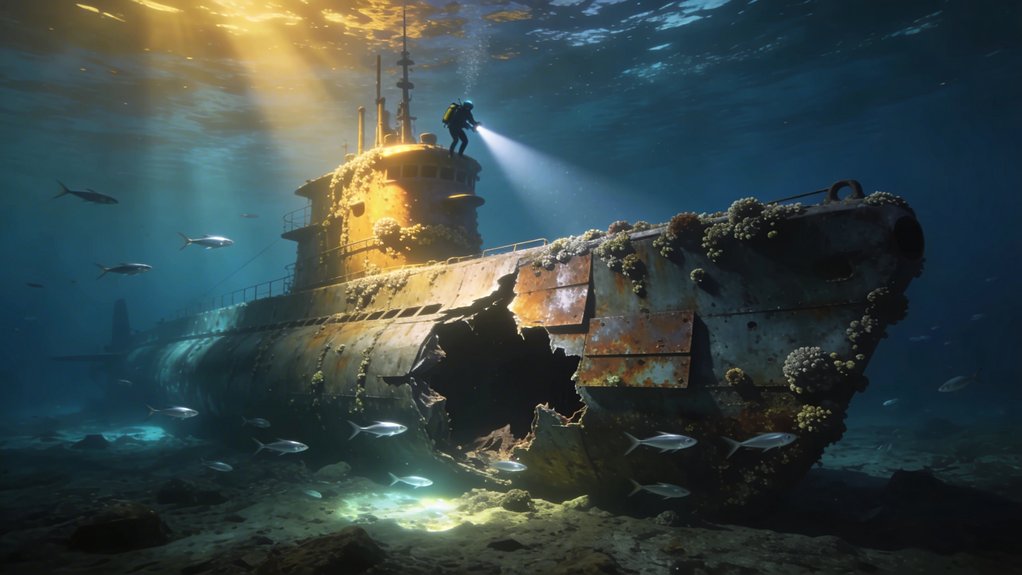
The French submarine Minerve vanished in a 1968 storm. Acoustic data proving its implosion was immediately suppressed by the state. For decades, officials buried reports and stonewalled grieving families, citing national security. Mounting pressure finally forced a search in 2019, locating the wreck. This fifty-year silence transformed a tragedy into a protracted cover-up. The full story of the evidence and the fight to reveal it follows.
Key Takeaways
- The Minerve submarine vanished in 1968, but acoustic data proving its implosion was immediately suppressed by the French Navy.
- The official search was halted after only five days, beginning decades of bureaucratic stonewalling and classified files.
- Families waged a relentless public campaign for decades, forcing the state to finally acknowledge concealed evidence.
- A new search was authorized in 2018 as a direct concession to mounting political and media pressure.
- The wreck was located in 2019, confirming the submarine’s deep-sea implosion and ending the 50-year state mystery.
The January 1968 Disappearance of the French Submarine Minerve During Routine Mediterranean Training
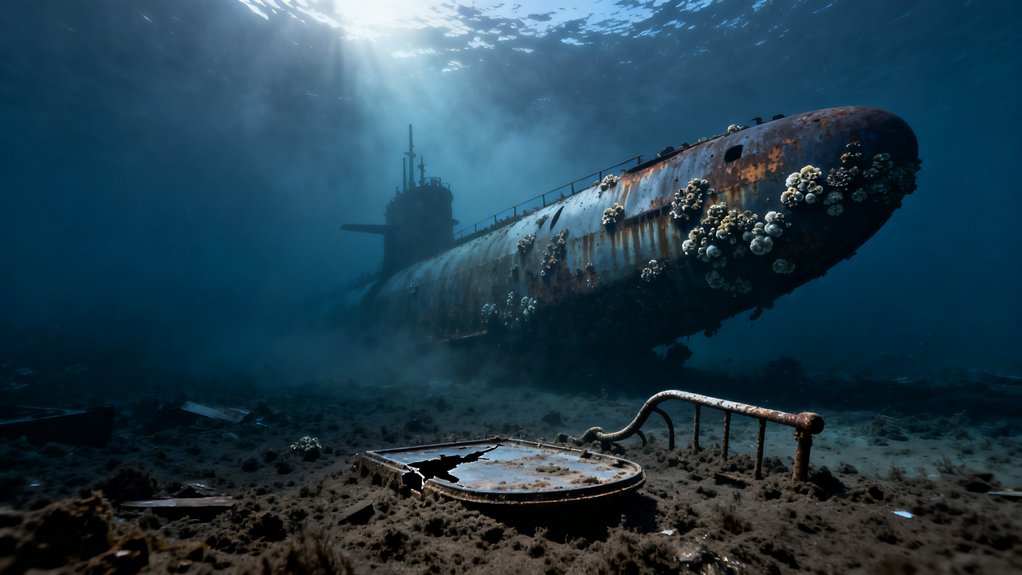
How did a state-of-the-art submarine simply vanish during a peacetime drill? On January 27, 1968, the french submarine minerve, a modern diesel-electric vessel, was participating in a standard naval exercise off the southern French coast. She’d just completed a simulated attack run.
The sea was rough, with force-eight gales churning the surface. Her final communication was routine, confirming a return to her home port of Toulon. Then, silence. The missing french submarine 1968 became an immediate, profound mystery. She carried 52 sailors. Despite her advanced design for her era, the Minerve succumbed to the depths in mere minutes, leaving no distress call. Her abrupt disappearance during a controlled training scenario pointed to a sudden, catastrophic failure, transforming a routine Mediterranean operation into a enduring national tragedy.
The final known coordinates pinpoint a routine exercise area, but officials immediately suppressed the acoustic signatures linked to a hull collapse. These signals couldn’t’ve been mistaken, as they’d indicated a catastrophic structural failure near the seabed. Analyzing this data, withheld for decades, reveals a cover-up that began at the moment communications went dark. This pattern of official deception, using engineered crises to control public narrative, has disturbing historical precedents.
Analyzing the Final Known Coordinates and the Suppressed Acoustic Signatures of the Hull Collapse
Ultimately, it wasn’t just the Minerve‘s final coordinates that vanished, but the critical acoustic data capturing her hull’s collapse. This suppression of key evidence became central to understanding what happened to the Minerve submarine.
Analysis shows the final known position was near Toulon, yet the precise location was obscured for decades. More significantly, seismographic stations actually recorded the implosion signature, a definitive acoustic fingerprint of the Minerve S647 wreck.
Officials possessed this data, confirming the catastrophic event, yet classified it. This act buried the truth as deeply as the submarine itself, transforming a tragic accident into a protracted mystery.
The sounds of structural failure were there, documented, but deliberately silenced by state secrecy for fifty years.
The French Military Cover-Up and the Systematic Classification of Investigation Files
The French Naval Command’s abrupt cessation of the initial search wasn’t just an operational halt; it marked the beginning of a deliberate strategy of bureaucratic stonewalling.
Officials then systematically classified key investigation files, deliberately concealing critical forensic oceanographic data from the public and the victims’ families.
This active suppression transformed a tragic accident into a decades-long state secret.
Bureaucratic Stonewalling and the Deliberate Concealment of Forensic Oceanographic Data
For fifty years, the French state’s response wasn’t simply bureaucratic inertia; it became a deliberate, institutional cover-up. Officials buried a hydrophone recording, a potential key to locating the wreck, within vaults of classified military files Minerve. This act permanently severed the vital link between a catastrophic acoustic event and a specific geographic point.
Authorized researchers and grieving families were repeatedly denied access, ensuring the data couldn’t enable an independent underwater drone submarine search. The state effectively weaponized secrecy, transforming a bureaucratic process into an instrument of concealment that kept the sea’s floor a silent, state-enforced mystery until external pressure forced a reluctant disclosure decades later.
While the shock of the Minerve’s disappearance was still fresh, the French Naval Command made a pivotal and questionable decision: they ordered the official search operations halted after just five days.
This move, which dashed any immediate hope of finding the submarine, effectively sealed the vessel’s fate for half a century.
The premature abandonment was attributed to challenging conditions, yet it immediately fueled suspicions of a cover-up.
It also established a pattern of official neglect that the minerve crew families campaign would battle against for decades.
Their persistent efforts were finally vindicated with the minerve submarine found 2019, a discovery that underscored how the initial, hurried withdrawal had prolonged a national mystery.
State Secrecy and Institutional Paranoia: The Fifty-Year Period of Bureaucratic Inertia
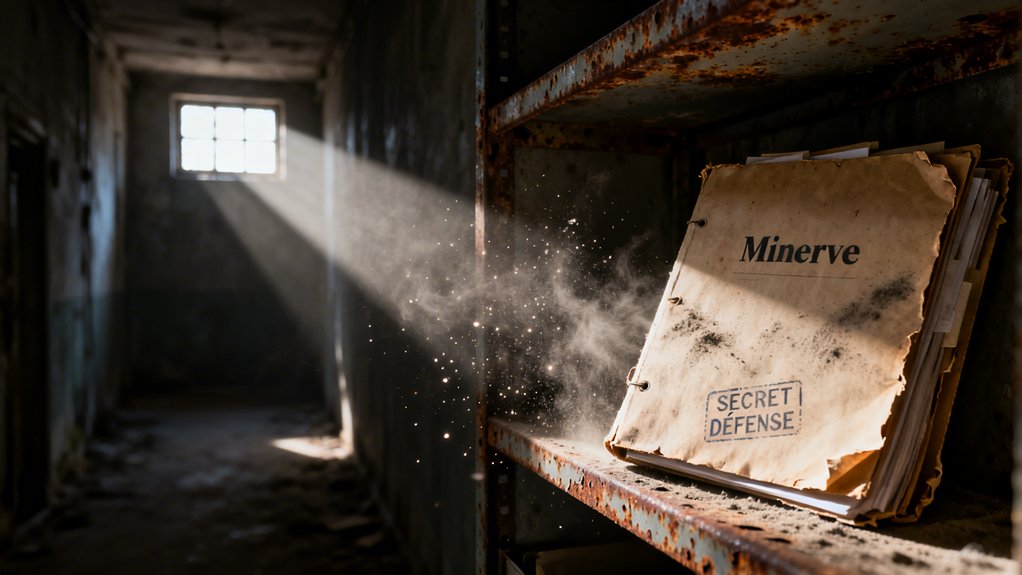
Because officials classified investigation files and suppressed acoustic data, the French state erected a wall of secrecy around the Minerve’s disappearance.
This wasn’t just a passive lapse; it was an active policy of french government submarine secrecy.
For decades, bureaucratic inertia fused with institutional paranoia, ensuring any inquiry into why did the minerve sink was stifled.
Departments buried reports, citing national security, and refused to share even basic assessments with the families.
The system became a self-perpetuating machine of denial, where reopening the case was seen as a risk rather than a duty.
This fifty-year period wasn’t merely silence; it was a calculated containment of truth, where the state’s priority shifted from finding answers to ensuring the unanswered questions themselves remained classified and out of public view, echoing the systematic government deception that prolonged the Vietnam War.
Decades of Silence and the Psychological Toll on the Stonewalled Families of the Fallen Crew
This wall of official secrecy didn’t just protect files; it inflicted a specific and sustained torment upon the families left behind. For decades, relatives navigated a labyrinth of official silence, where simple inquiries about the final moments of their husbands, sons, and fathers met with rehearsed denials or infuriatingly blank stares. The French state, like the Western Allies in the Katyn case, prioritized political expediency over the truth, justifying its silence with a version of military necessity.
This psychological purgatory, a hallmark of many cold war missing submarines, denied them the fundamental closure of a known gravesite. Every anniversary became a fresh wound, exacerbated by the knowledge that their nation held answers it refused to share. Their private grief was compounded by the public spectacle of an unsolved submarine sinking, a permanent open question that chipped away at their sanity.
The state’s inertia weaponized their mourning, transforming loss into a lifelong interrogation without resolution.
The Relentless Family-Led Public Advocacy Campaign That Forced Government Accountability

The families’ advocacy created an undeniable political storm that could no longer be ignored. They systematically challenged the official narrative, exposing the state’s possession of suppressed acoustic data from the 1968 disaster.
This relentless pressure finally forced the French government to acknowledge the evidence and restart a search operation.
Mounting Political Pressure Against the State to Acknowledge the Suppressed Evidence
For over forty years, the French state maintained its silence, but the families of Minerve’s crew waged an unyielding public campaign that ultimately shattered the official wall of secrecy. They mobilized through memorial associations, leveraging media to amplify their demands.
Their persistent advocacy escalated from private grief to a significant public issue, forcing politicians to confront the dormant scandal. This mounting political pressure, fueled by relentless questions about the french navy cover up 1968, compelled successive administrations to re-examine the classified files.
Officials couldn’t indefinitely ignore the families’ quest for the exact cause of minerve sinking. By 2018, the state finally authorized a new search, a direct concession to the sustained campaign that had made the Minerve a symbol of unresolved national duty.
The Historic 2019 Resumption of the Minerve Search Utilizing Modern Civilian Maritime Technology
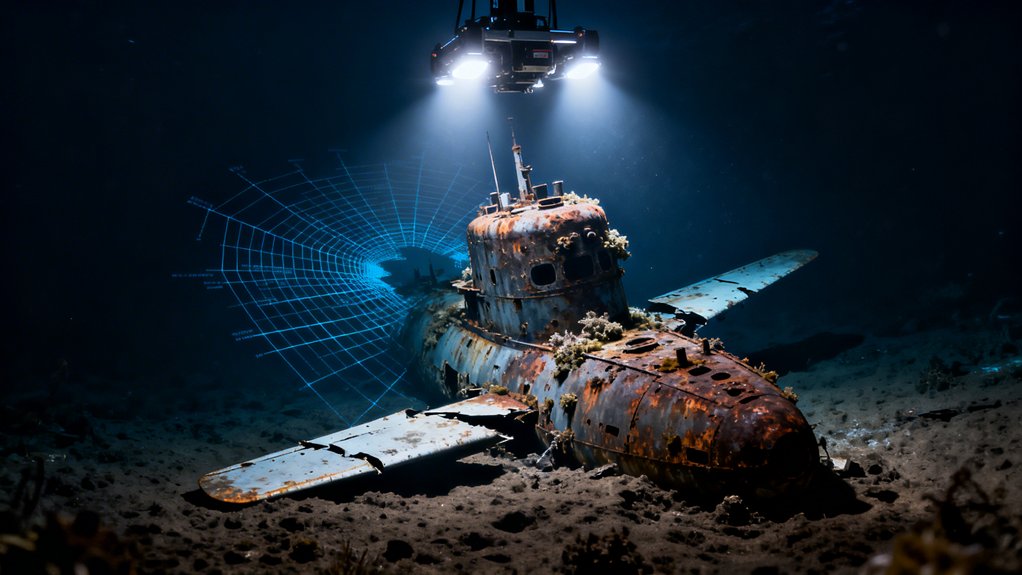
After five decades of unanswered questions, modern civilian maritime technology finally pierced the veil of secrecy surrounding the Minerve’s fate when a renewed search mission commenced in 2019. This historic operation, led by the private seabed exploration firm Ocean Infinity, wasn’t a repeat of past state-led failures. Its vessel, the *Seabed Constructor*, carried a fleet of autonomous underwater vehicles equipped with advanced sonar and cameras.
The search area, refined using previously obscured acoustic data, was meticulously scanned. The pivotal answer to how was the Minerve submarine found lay in this systematic, high-tech grid search of the deep seabed. It culminated in July 2019 with the Minerve submarine wreckage discovery, locating the vessel’s shattered hull in over 2,300 meters of water, finally providing a tangible gravesite.
It integrated next-generation deep-sea topography to chart the search zone, a strategy that civilian experts knew was essential.
Their advanced underwater drones, glowing in the abyssal dark, then methodically navigated the complex terrain.
This precise approach led directly to the visual confirmation of the vintage submarine’s debris field, buried for decades within the deep ocean floor.
Integrating Next-Generation Deep-Sea Topography Within Advanced Civilian Search Efforts
- Multibeam sonar arrays first painted a high-resolution bathymetric map of the search zone, revealing the seafloor’s contours and potential anomalies.
- Advanced AUVs, or “glowing drones,” were then programmed to autonomously traverse these precise grids, their sensors collecting detailed side-scan sonar imagery.
- The fused data streams created a navigable, three-dimensional model of the deep Mediterranean terrain, methodically eliminating search areas until a target was isolated.
Visual Confirmation of the Vintage Submarine Debris Field Buried Deep in the Ocean Floor
Following this precise mapping, the teams deployed a second fleet of autonomous vehicles for visual inspection. These deep-diving drones, equipped with intense LED arrays, descended into the abyss. Their synthetic light cut through the perpetual darkness, illuminating a scene frozen in time.
The cameras captured the unmistakable silhouette of a diesel-electric submarine’s conning tower, partially buried in sediment. Nearby, they identified scattered debris: a mangled propeller, sections of the pressure hull, and other wreckage consistent with the Minerve’s class.
Each high-definition image transmitted to the surface provided irrefutable visual proof, confirming the submarine’s final resting place over 2,300 meters deep. This was the long-sought, tangible evidence that ended five decades of uncertainty.
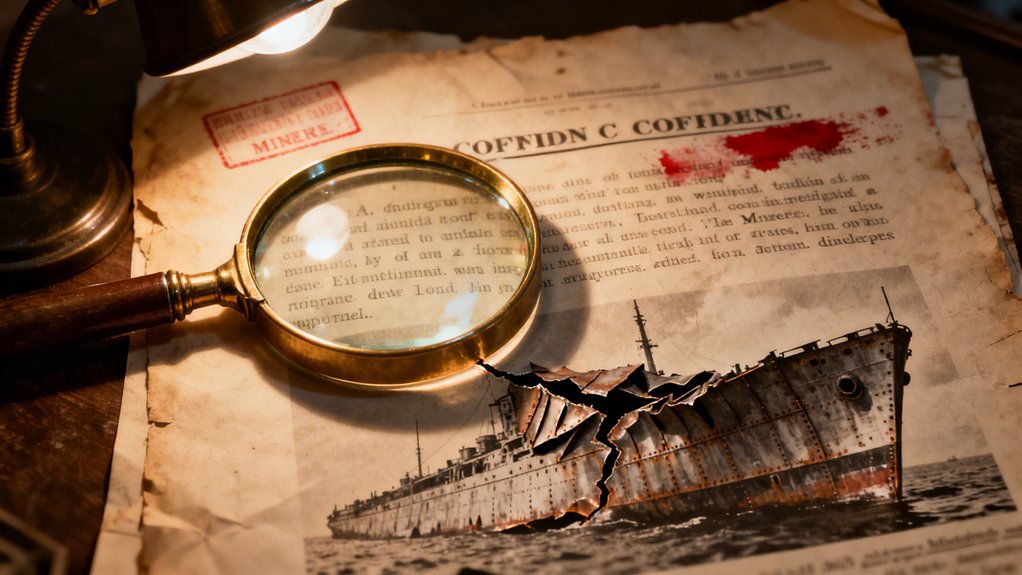
- Hydraulic System Breach: Evaluating if a critical failure in the diving plane controls could have triggered an unstoppable, rapid descent. The official investigation mirrored the JFK autopsy’s flaws, as no chain-of-custody was established for critical mechanical components removed from the wreck.
- Snorkel Valve Catastrophe: Assessing whether a faulty induction valve allowed a massive, instantaneous flood of seawater into the vessel’s interior.
- Structural Hull Failure: Modeling the potential for a sudden, catastrophic hull rupture under pressure, perhaps at a known weld or joint.
This analytical framework shows an early command effort to contain the narrative by limiting the scope of forensic possibilities.
The Persistent Enigma of the Unresolved Mechanical Failure Aboard the Submarine
Even with the wreck located, the specific mechanical failure that destroyed *Minerve* hasn’t been confirmed. Forensic experts now evaluate competing theories of catastrophic flooding through a faulty hatch or snorkel against the possibility of an unrecoverable hydrodynamic anomaly.
Determining which precise sequence of events sank the vessel remains the investigation’s final, pivotal mystery.
Evaluating Forensic Theories of Catastrophic Flooding and Unrecoverable Hydrodynamic Anomalies
While the 2019 discovery of the Minerve’s wreckage ended a half-century of geographic uncertainty, it only deepened the forensic mystery surrounding the submarine’s final moments, as investigators confronted competing theories of catastrophic flooding and unrecoverable hydrodynamic anomalies that could explain the sudden destruction.
The wreckage’s condition, particularly its broken aft section, narrowed the focus to three primary failure scenarios:
- A massive, instantaneous hull breach in the stern, perhaps from a failed propeller shaft seal or a critical weld, allowing the sea to overwhelm the vessel in seconds.
- The catastrophic implosion of a snorkel mast valve during a dive, with seawater blasting into the engine air induction system and flooding the diesel compartment.
- A sudden, unrecoverable hydrodynamic dive triggered by a control surface or ballast system failure, driving the submarine past crush depth before corrective action was possible.
Confronting Military Inertia and the Enduring Moral Obligation to Recover Fallen Sailors
Although the wreckage was finally discovered, the half-century of official silence and inaction that followed the Minerve’s loss compels a deeper scrutiny of the state’s responsibilities.
This inertia wasn’t passive neglect; it was an active bureaucratic policy. Authorities classified files, suppressed key acoustic data indicating the implosion site, and rebuffed families with a wall of secrecy, often citing national security.
This institutional posture transformed a tragedy into a prolonged moral failure. The state’s duty to recover its fallen, a sacred compact in military service, was systematically ignored, echoing the Peers Inquiry findings from another military cover-up.
The families’ relentless, fifty-year campaign ultimately forced a reckoning, proving that this obligation doesn’t expire. The Minerve’s discovery in 2019 didn’t just solve a nautical mystery; it delivered a belated, and profoundly necessary, act of honor.
Frequently Asked Questions
Did Any Crew Survive the Initial Sinking?
No crew members survived the initial sinking. The disaster occurred suddenly, and the submarine imploded under immense pressure at great depth.
This catastrophic failure would’ve been instantly lethal for all 52 sailors aboard. The vessel’s wreckage, found in 2019, lay shattered on the seabed, confirming no possibility of survivors.
The navy’s long-concealed acoustic data recorded the sounds of the implosion, which sealed the crew’s fate in a matter of moments.
Why Was the 1968 Acoustic Data Deliberately Suppressed?
The 1968 acoustic data was suppressed to conceal critical failures. Officials feared it would reveal operational mistakes and technical flaws in the submarine’s design.
This information might’ve exposed military negligence, prompting unwelcome scrutiny of the French Navy‘s procedures and damaging its prestige during the Cold War era.
The suppression formed a core part of the state’s long-term strategy to control the narrative and avoid accountability.
Was the Submarine’s Disappearance Linked to Cold War Espionage?
It wasn’t. The investigation found no evidence linking the loss to foreign actors.
The prevailing theory points to a catastrophic mechanical failure—possibly a critical fault in the snorkel system that flooded the vessel in moments. While the Cold War‘s shadow fostered an atmosphere of intense secrecy and suspicion, it served primarily to shroud bureaucratic failings, not clandestine operations. The silence protected institutional pride, not state secrets.
Were High-Ranking Officials Ever Held Accountable for the Cover-Up?
No high-ranking officials faced legal or judicial accountability for the cover-up.
Bureaucratic and military inertia, combined with a culture of state secrecy, protected those responsible.
The families’ campaign forced a renewed search and some declassification, but it never prompted a prosecutorial investigation.
The state’s 2019 admission the wreck’s location was inaccurately recorded implied institutional failure, not individual culpability, leaving the accountability question unanswered.
What Specific Technology Pinpointed the Wreck in 2019?
By a remarkable coincidence, the key technology wasn’t military. Civilian search teams utilized advanced side-scan sonar and autonomous underwater vehicles (AUVs) in 2019. These AUVs, fundamentally sophisticated underwater drones, methodically mapped the seabed.
They employed high-resolution multibeam echosounders, which finally pinpointed the Minerve’s debris field. The sonar’s detailed acoustic imagery revealed the submarine’s shattered sections deep on the Mediterranean floor, solving a half-century-old mystery with modern, non-governmental tools.
Final Thoughts
The discovery provided a long-delayed closure for the families, yet the vessel’s final moments remain a matter of official discretion. The state has since made its peace with the past, acknowledging that earlier administrative procedures fell short of contemporary standards for transparency. This resolution underscores a lasting duty to those in uniform, ensuring their service is never misplaced by the passage of time or institutional oversight.