
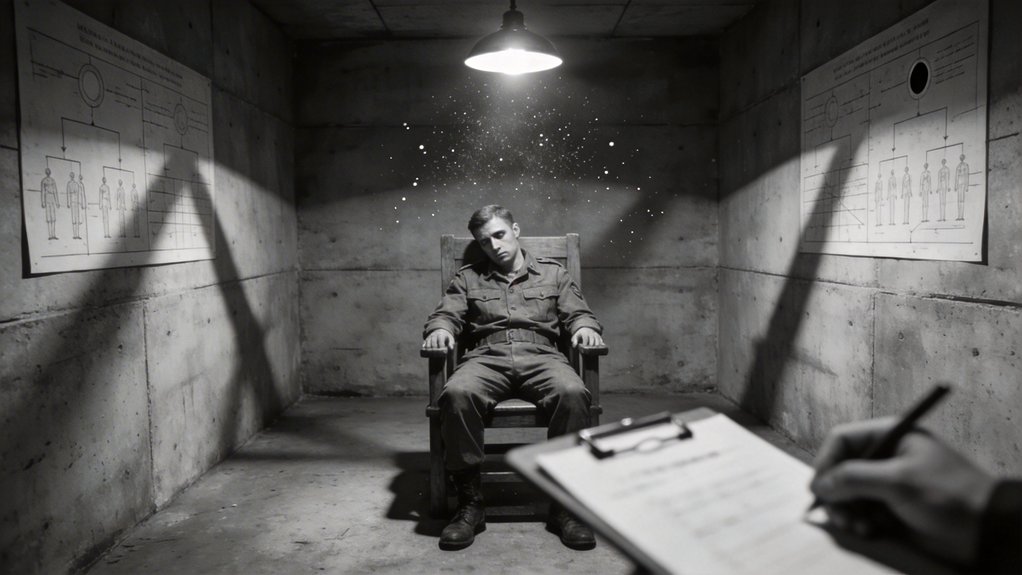
The US Army's 2.5-billion-leaflet Korean War campaign sought to strip enemy humanity and silence American combat guilt. Yet this industrial dehumanization backfired, convincing the public that minds were fragile and easily hijacked. By weaponizing truth against foes, the military inadvertently sparked a domestic brainwashing panic that haunted the nation for decades. This strategic overreach shattered psychological security, leaving a legacy of paranoia. Uncover how those airdropped cartoons ultimately hacked the American psyche itself.
Key Takeaways
- The US dropped 2.5 billion leaflets to dehumanize enemies and alleviate American soldiers' combat guilt.
- This campaign aimed to strip opponents of humanity, making lethal action psychologically permissible for troops.
- Ironically, the operation convinced Americans that human minds were fragile and vulnerable to external hacking.
- Military efforts to rewrite foreign wills inadvertently sparked a domestic panic about brainwashing in the 1950s.
- The strategy created a lasting legacy of paranoia regarding mind control and autonomous thought.
Silas Shade Opens the Truth Has A Backstory Archives on Korean War Propaganda
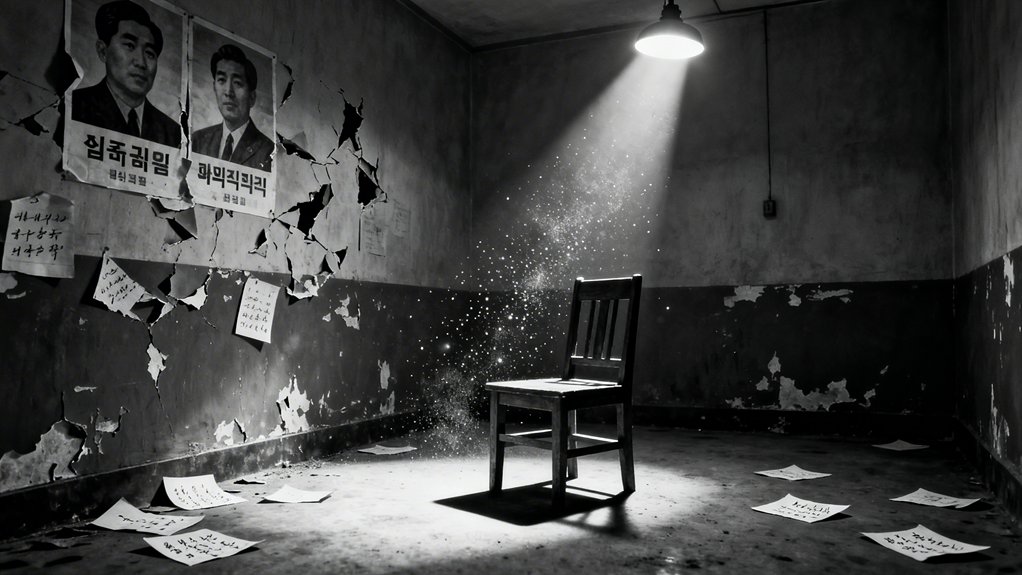
Though the ink has long dried on the declassified files, Silas Shade cracks open the “Truth Has A Backstory” archives to expose how the US Army's 2.5 billion-leaflet barrage during the Korean War didn't just target enemy combatants but inadvertently hacked the American psyche.
This massive korean war psychological warfare operation flooded the peninsula with korean war propaganda leaflets depicting soulless zombies, aiming to strip enemies of humanity. Yet, this strategy birthed the origin of the brainwashing concept domestically.
By insisting minds could be rewritten, the military ignited an american brainwashing panic 1950s that haunted citizens for decades. Truth has a backstory silas shade reveals proves the campaign's moral failure; it sought to justify killing without guilt but instead convinced Americans they too were vulnerable to invisible mental hijacking.
The very tools designed to break foreign wills ultimately fractured domestic confidence, creating a legacy of paranoia where every citizen feared their own thoughts weren't truly their own anymore. This domestic fear of mental manipulation later found a dark parallel in government operations like COINTELPRO, which employed psychological warfare tactics to destabilize lawful political movements within the United States.
Mobilizing the US Army Psychological Warfare Division Across the 38th Parallel
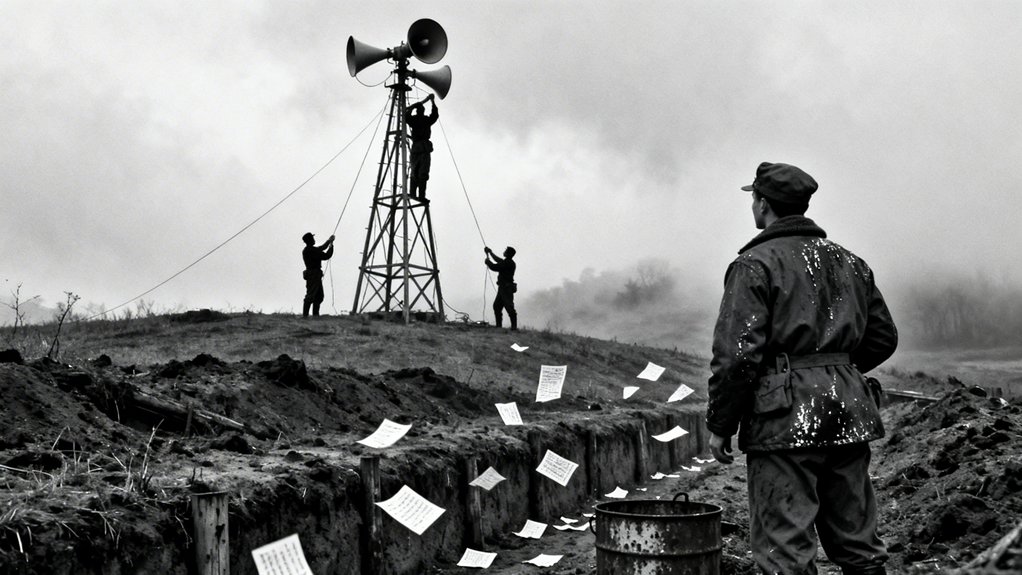
Silas Shade tracks the millions of dollars funneled into a printing infrastructure designed to churn out 2.5 billion leaflets, questioning the moral cost of such industrial-scale deception.
Pilots then scattered this paper storm over North Korean and Chinese encampments, turning the sky above the 38th Parallel into a conveyor belt for dehumanizing cartoons.
This aerial blitz didn't just target enemy troops; it seeded a domestic nightmare about mind control that would haunt America long after the guns fell silent.
Funding the Multimillion-Dollar Printing Infrastructure for 2.5 Billion Leaflets
Every single dollar of the multimillion-dollar appropriation fueled a printing infrastructure massive enough to saturate the Korean peninsula with 2.5 billion leaflets, mobilizing the US Army Psychological Warfare Division across the 38th Parallel not merely as a tactical maneuver but as an industrial-scale moral override.
This staggering financial cost of propaganda leaflets reveals how deeply the US Army PsyOps Korean War effort prioritized psychological dominance over fiscal restraint.
Did the US drop leaflets in the Korean War? Absolutely, executing the largest Korean War leaflet campaign in history.
Records from US psychological warfare history confirm that factories churned out paper weapons faster than bullets, transforming ink into ideological artillery.
The budget wasn't just an expense; it was an investment in dehumanization, buying the ability to rewrite enemy identities en masse.
Every cent spent demanded a return in shattered morale, proving that money could indeed buy a specific kind of war, one fought entirely within the mind.
Aerial Distribution Tactics Over North Korean and Chinese Troop Encampments
Once the presses stopped humming, the US Army Psychological Warfare Division shifted its focus from industrial production to aerial saturation, turning skies above the 38th Parallel into a conveyor belt for dehumanization.
The Strategic Imperative to Eradicate American Combat Guilt Through Dehumanization
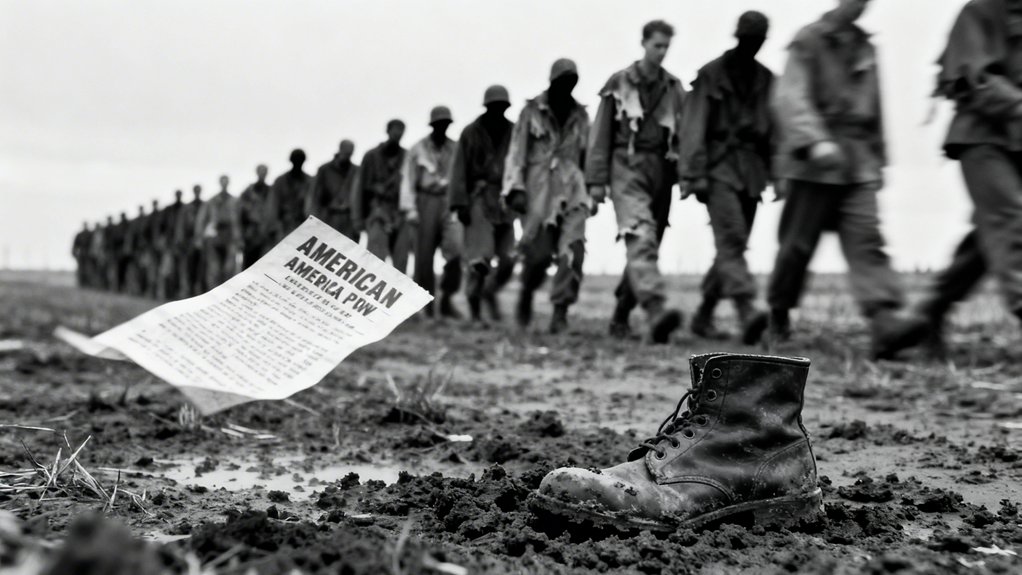
Two and a half billion leaflets rained down on the Korean peninsula, each one a calculated strike against the American soldier's conscience. Commanders didn't just want victory; they needed to erase the moral weight of killing. By stripping enemies of humanity, they hoped to silence internal conflict. Yet, this desperate gambit ignited a firestorm of fear back home.
| Intent | Unintended Consequence |
|---|---|
| Erase combat guilt | Spawned deep paranoia |
| Dehumanize the foe | Validated mind control myths |
| Justify lethal force | Fueled cold war fears |
| Control the narrative | Created lasting panic |
The effects of military propaganda rippled far beyond the battlefield. Instead of soothing souls, the campaign cemented the history of brainwashing paranoia in the American psyche. Critics now examine how korean war propaganda backfired, turning a tactical tool into a cultural nightmare. These korean war mind control myths weren't mere fiction; they were the direct offspring of state-sponsored dehumanization. The very mechanism designed to protect soldiers' minds ultimately convinced the public that minds were fragile, easily hijacked assets. This cold war mind control paranoia didn't fade; it festered, proving that you can't destroy another's humanity without damaging your own. Decades later, the CIA would validate these fears by conducting covert human experimentation on unwitting subjects to develop actual mind control and interrogation techniques.
Analyzing the Graphic Art Deployments: Soulless Zombies and Communist Slave Drivers
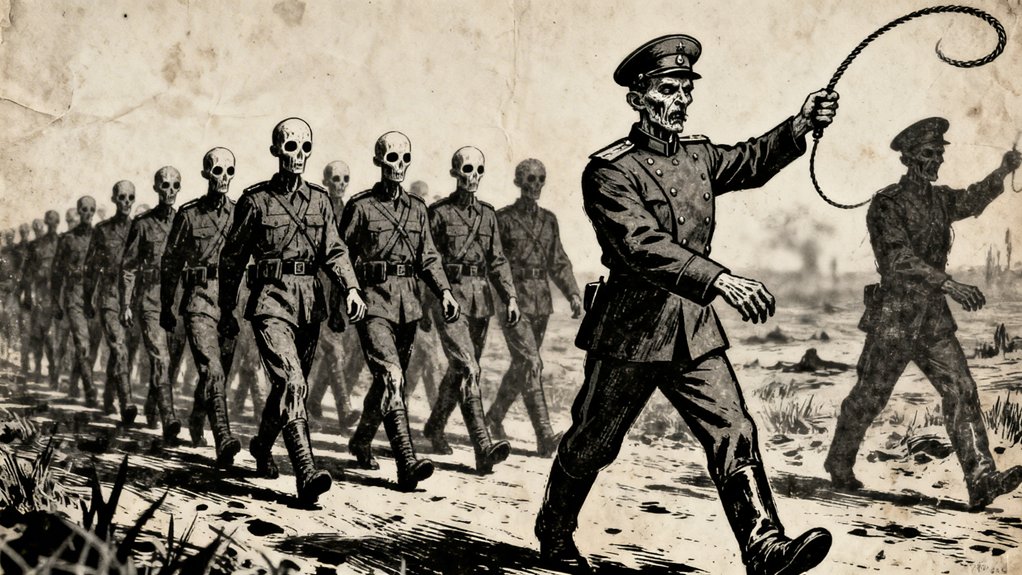
The ink dried on those billions of sheets not as mere paper, but as a visual assault designed to strip flesh from bone and soul from soldier. Artists didn't just draw; they engineered monsters to kill American guilt. These graphics transformed complex humans into hollow shells, making murder feel like sanitation.
Investigators now ask where did the term brainwashing come from while staring at these grotesque caricatures that sparked the very panic they sought to exploit. The art weaponized fear through specific, chilling tropes:
- Soulless zombies marching mindlessly toward death without pain or hesitation.
- Communist slave drivers cracking whips over broken, obedient masses of men.
- Dehumanized faces lacking eyes to prevent any soldier from seeing humanity.
- Brutal color palettes chosen specifically to trigger visceral disgust and hatred.
This visual campaign didn't just target the enemy; it infected the American psyche with terrifying new concepts of mental control. By depicting soldiers as programmable drones, the Army inadvertently taught the public that minds could be hijacked.
The moral scrutiny reveals a dark irony: in trying to erase guilt, they created a lasting national nightmare about lost free will. This panic over mind control later fueled the CIA's MKUltra program, which sought to weaponize consciousness through drugs and psychological manipulation during the Cold War.
Measuring the Immediate Battlefield Impact of the 2.5 Billion Leaflet Campaign
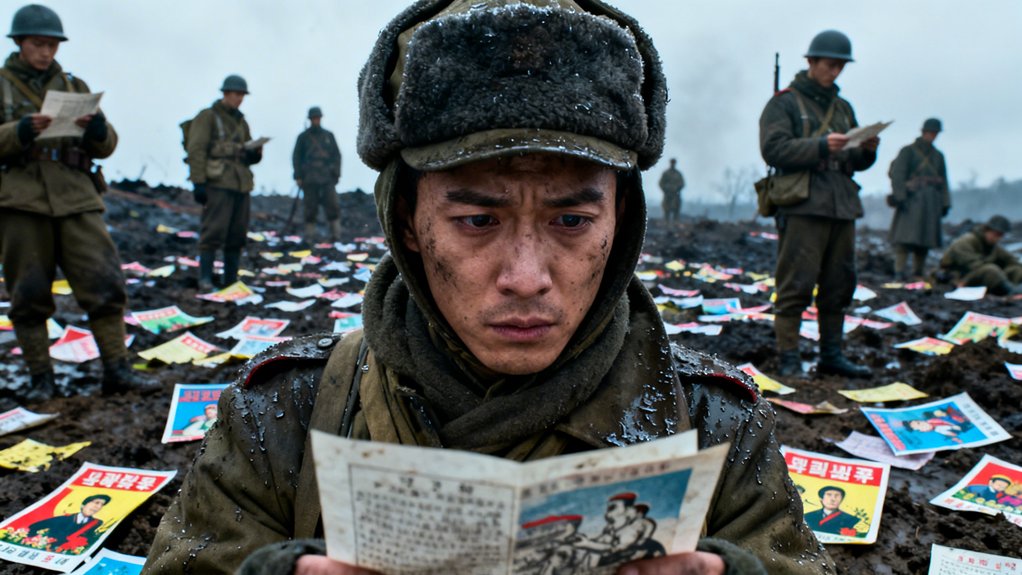
How could anyone possibly measure the real-world effect of 2.5 billion sheets of paper raining down on a war zone? Commanders tracked surrender rates, yet the data remained murky within the chaos.
Soldiers reported finding the leaflets, but did those cartoonish demons actually break enemy spirits? The sheer volume overwhelmed logistics, turning fields into blizzard-like drifts of propaganda.
While planners claimed victory through anecdotal reports of defections, the tangible battlefield shift proved elusive. Did a starving conscript yield because of a printed threat, or simply due to hunger?
The campaign's true metric wasn't just enemy capitulation; it was the moral erosion of the droppers themselves. They scattered dehumanizing images freely, believing paper could replace bullets.
Yet, as the piles grew, so did the uncertainty. The operation flooded the peninsula with ink, but it failed to deliver clear proof of psychological dominance.
Instead, it created a confusing fog where victory claims masked a profound lack of concrete, verifiable impact on the ground.
This reliance on unverified narrative echoes later conflicts where sanitized realities obscured the true human cost of military operations.
The Ideological Contagion of Hacking the Human Mind on the Battlefield
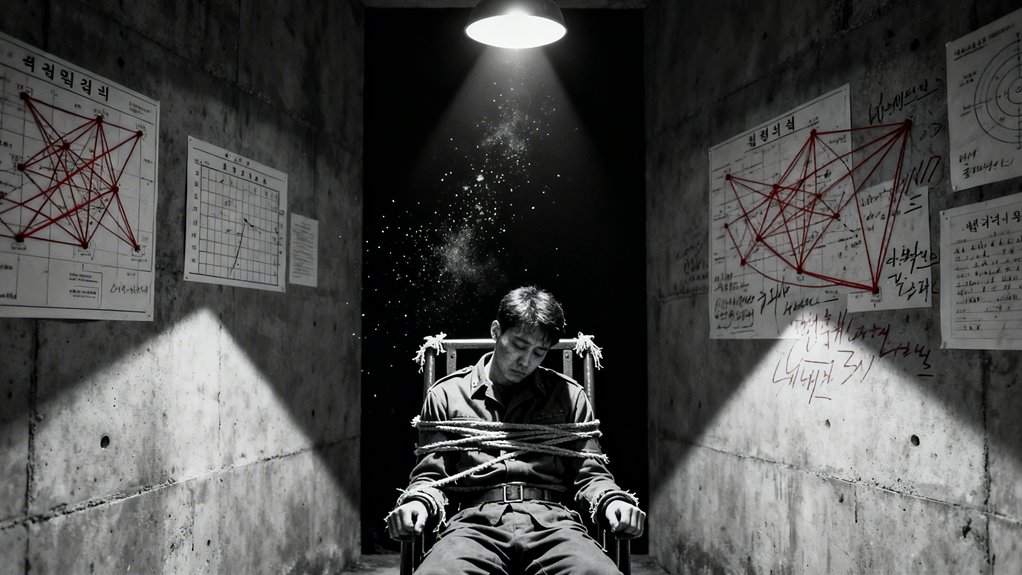
Although planners intended to fracture enemy morale, the campaign's most potent virus infected the American psyche by proving the human mind could be hacked. This ideological contagion spread faster than any battlefield disease, transforming abstract fear into concrete national trauma.
The very tools designed to dehumanize the enemy instead exposed a terrifying fragility within the self. Citizens realized that if soldiers could be rewritten, then anyone could. The leaflets didn't just target Koreans; they mirrored a dark potential back home.
- Graphic cartoons depicted soulless zombies, inadvertently validating mind control theories.
- Massive spending legitimized the scientific pursuit of cognitive manipulation techniques.
- Dehumanizing rhetoric blurred lines between enemy propaganda and domestic reality.
- Strategic objectives accidentally confirmed that human will remains dangerously malleable.
This revelation sparked a moral crisis, forcing society to confront its own vulnerability. The panic wasn't merely about foreign threats but the internal collapse of autonomous thought.
America found itself haunted by the ghost of its own creation, wondering who truly held the reins of consciousness. The battlefield experiment succeeded only in demonstrating that no mind remains truly secure against systematic intrusion. Decades later, this same systematic government deception would resurface when leaders concealed doubts about winning the Vietnam War while deepening involvement based on fabricated evidence.
The Operation Backfires: Inadvertently Proving the Vulnerability of Human Cognition
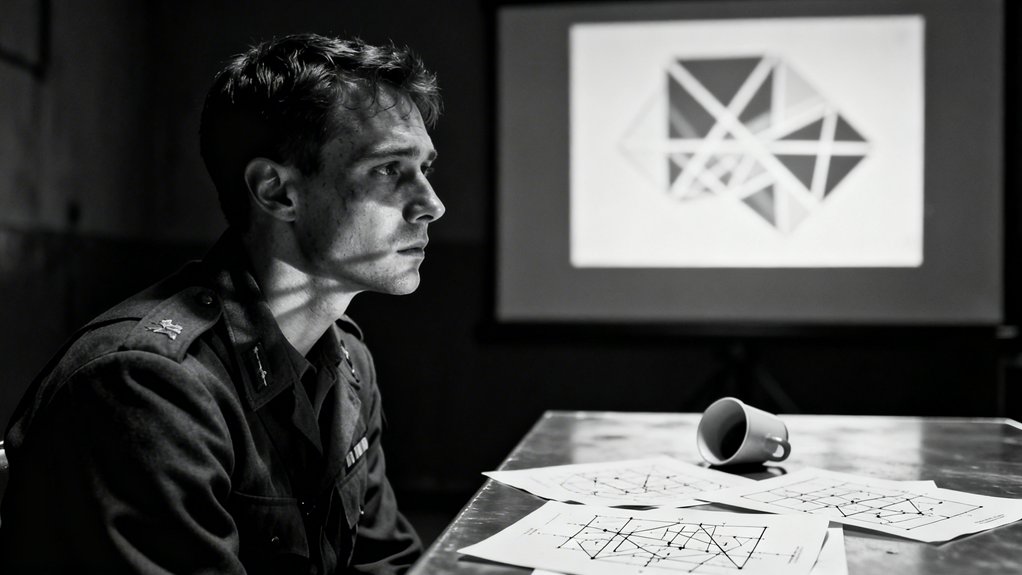
While planners aimed to fracture enemy morale, their massive leaflet campaign inadvertently proved the human mind's terrifying vulnerability, turning a weapon of war into a mirror of domestic panic.
They dropped 2.5 billion sheets, depicting soldiers as soulless zombies, hoping to strip the enemy of humanity. Yet, this graphic dehumanization didn't just target Koreans; it seeped into the American psyche, suggesting anyone could become a hollow shell.
Dropping 2.5 billion zombie depictions, the campaign seeped into the American psyche, suggesting anyone could become a hollow shell.
The very act of trying to hack cognition confirmed that such hacking was possible. Instead of securing victory through psychological dominance, the operation exposed a fragile reality: no mind is truly fortress-like.
Millions of dollars funded this terrifying revelation, creating a legacy not of military triumph, but of profound existential dread. The leaflets floated down like snowflakes of doubt, planting seeds of paranoia that would bloom into a national obsession with brainwashing. Just as later corporate strategies would rely on manufactured doubt to undermine scientific truth, these psychological operations demonstrated how easily fear could be weaponized to erode public autonomy.
The Birth of Brainwashing: Translating Asian Theatre Tactics into Domestic Panic
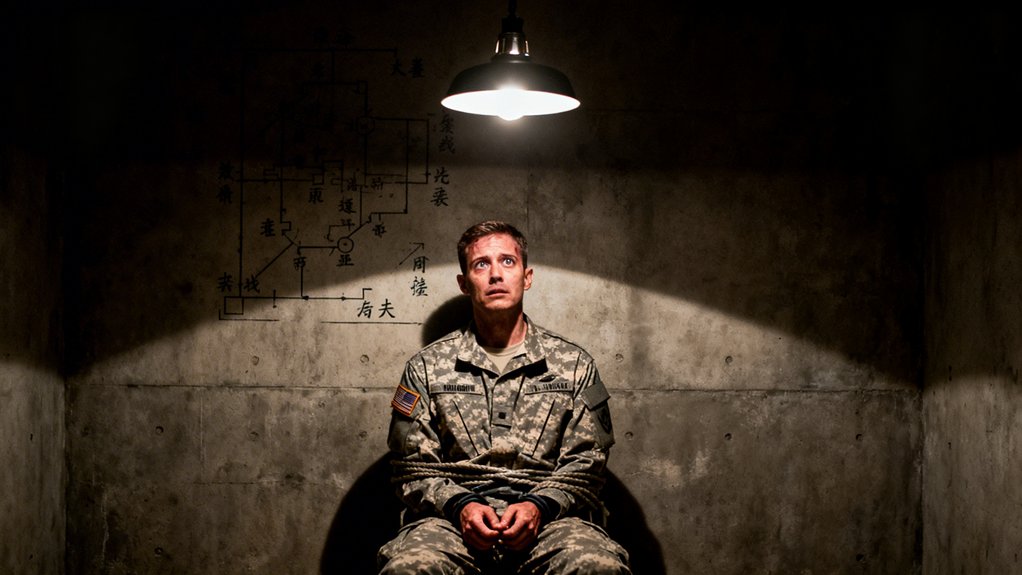
The shadow of Asian theatre tactics stretched home as media outlets avidly amplified the Communist mind control narrative, turning fear into a domestic commodity.
When repatriated POWs stepped onto American soil in 1953, the public didn't greet them as heroes but scrutinized them as potential carriers of an invisible, mental virus. This paranoid reaction exposed a grim irony: the very weapons designed to break enemy spirits had successfully fractured America's own moral confidence. Years later, this same pattern of evidence suppression would reappear when military officials seized critical autopsy materials without documentation, mirroring the earlier erasure of truth.
How the Communist Mind Control Narrative Infiltrated American Media Outlets
Two distinct narratives collided when American media outlets seized upon the Korean War's psychological fallout, transforming battlefield propaganda into a domestic specter of mind control.
Reporters didn't just report; they amplified fear, crafting a story where communist technicians could rewrite human souls. This narrative shift ignored complex realities, favoring sensationalism over truth. The press corps effectively weaponized uncertainty:
- Headlines screamed of invisible mental chains binding captured GIs.
- Editors framed confessions as proof of supernatural communist power.
- Pundits dismissed voluntary cooperation as impossible under free will.
- Broadcasts turned psychological tactics into an existential national threat.
They sold panic instead of understanding, ignoring how their own earlier dehumanizing leaflets had set this dangerous precedent. By portraying enemies as mind-controlling monsters, the media inadvertently validated the very concept they feared.
This reckless storytelling eroded public trust and planted seeds of paranoia that would fester long after the guns fell silent, proving words can wound deeper than bullets. Such manufactured hysteria mirrors later documented strategies where U.S. military leaders explicitly authorized the sacrifice of American lives through false-flag proposals to justify war.
The Paranoid Reaction to Repatriated American Prisoners of War in 1953
Media hysteria set the stage, but the real panic ignited when repatriated POWs stepped onto American soil in 1953. Families didn't just welcome sons home; they scrutinized hollow eyes for invisible scars. Authorities interrogated these men, fearing their minds were hacked by Communist technicians.
Was this genuine trauma or something darker? The nation couldn't accept that exhaustion and isolation broke spirits without sci-fi intervention. Instead, they crafted a terrifying narrative: brainwashing. This label absolved the military of failure while demonizing the enemy as supernatural manipulators.
Yet, who truly suffered here? The prisoners faced suspicion, not sympathy, accused of collaboration they couldn't explain. America's obsession with mind control masked its own vulnerability. They projected fears onto returned soldiers, transforming victims into potential traitors.
This moral failure birthed a paranoia that would haunt the Cold War, proving the greatest psychological operation happened right at home. Just as later systemic deception in the Tuskegee Study exploited vulnerable populations under the guise of care, this era weaponized fear to obscure institutional failures and justify the mistreatment of those meant to be protected.
Decades of Domestic Hysteria Sparked by the US Army’s Psychological Overreach
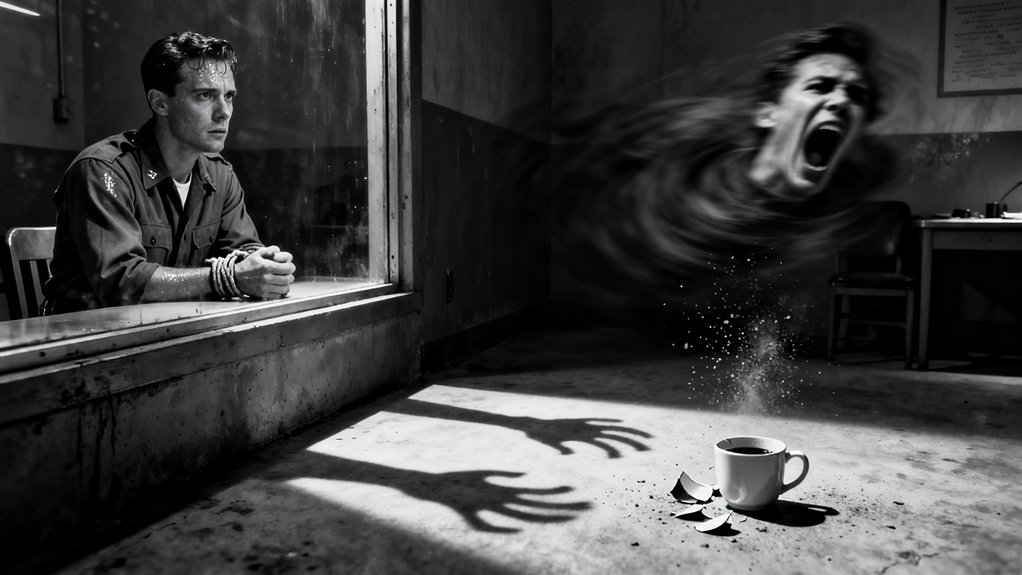
Although the leaflets were meant to shatter enemy morale, they inadvertently fractured the American psyche by proving that minds could be hacked. This tactical overreach ignited a domestic firestorm where citizens feared their own thoughts weren't truly theirs.
The Army's attempt to dehumanize foes instead humanized the terrifying potential of psychological manipulation, seeding deep distrust within the homeland. Society began questioning the very nature of free will as the following realities took hold:
Psychological warfare meant to dehumanize foes instead seeded deep distrust, forcing society to question free will itself.
- Families doubted repatriated soldiers, suspecting hidden programming rather than trauma.
- Hollywood churned out nightmares depicting invisible puppet masters pulling societal strings.
- Politicians weaponized brainwashing fears to silence dissent and enforce conformity.
- Ordinary people locked their doors against an enemy that lived inside their heads.
This hysteria didn't fade with the armistice; it festered for decades, transforming a military strategy into a national phobia. The architects of this campaign never intended to terrorize their own population, yet their success in mapping the human mind created a legacy of paranoia.
They proved that if you can break an enemy's spirit, you can also break your own people's peace. Much like how Britain's WWI Defence of the Realm Act institutionalized unequal legal treatment to suppress dissent, this psychological panic provided a pretext for eroding civil liberties under the guise of national security.
The Cold War Syndrome: How Airdropped Cartoons Engineered Subversion Fears
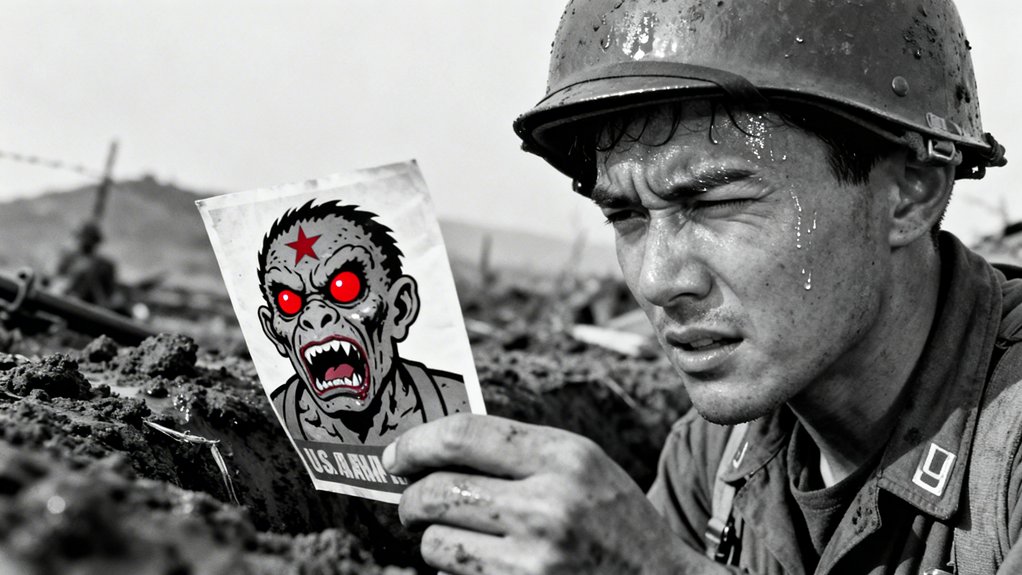
The cartoonish dehumanization dropped from US planes didn't just target Korean soldiers; it seeded a terrifying belief that minds were easily hackable terrain.
This strategic overreach mutated into a domestic fever dream where citizens feared invisible puppet masters pulling their very thoughts.
What began as a tactic to justify killing now fuels the deep state conspiracy theories that still poison American political discourse.
The Evolution of Propaganda Blowback into Deep State Conspiracy Theories
While the ink dried on those cartoonish depictions of soulless zombies, the psychological warfare meant to strip the enemy's humanity inadvertently seeded a domestic terror that the human mind could be hacked.
This blowback mutated rapidly, transforming military strategy into deep state paranoia. Citizens began fearing invisible puppet masters pulling societal strings from shadowy corridors. The very tools designed to break foreign wills now fractured American trust in their own government.
- Leaflets intended to dehumanize foes instead humanized the fear of mental manipulation.
- Propaganda techniques leaked into public consciousness, fueling wild conspiracy theories about control.
- The “brainwashing” panic justified secretive domestic surveillance programs under the guise of protection.
- Moral boundaries blurred as officials adopted enemy tactics, creating a self-fulfilling prophecy of subversion.
Ultimately, the campaign didn't just attack the North; it infected the American psyche with enduring suspicion. We created the monsters we claimed to fight, proving that psychological weapons often ricochet with devastating, unforeseen consequences for the shooter.
Closing the File: Silas Shade on the Multimillion-Dollar Cost of Weaponizing Truth
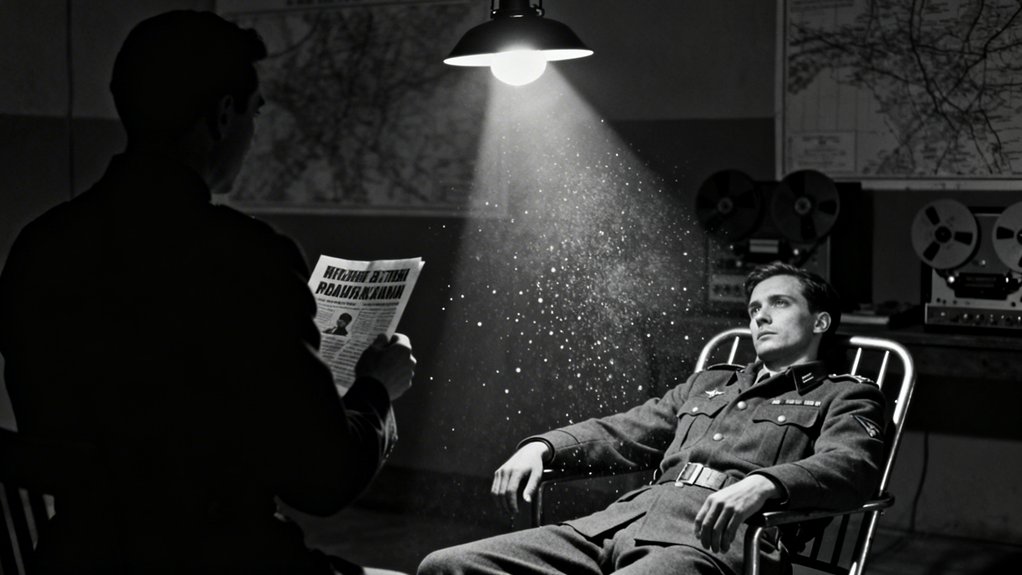
When Silas Shade closes the file, he exposes how millions of dollars weaponized truth to strip humanity from the enemy, yet that very investment seeded a domestic panic over mind control that haunted America for decades.
He traces the inked cartoons depicting soulless zombies back to their costly origin, revealing a strategic gamble that traded moral clarity for tactical ease.
The Army didn't just print leaflets; they manufactured a myth that the human mind was fragile, easily hacked by foreign forces. This narrative, funded by vast appropriations, ricocheted home, igniting a fervent fear of brainwashing within American society.
Shade's audit shows the ledger's grim balance: while the propaganda aimed to dehumanize opponents, it ultimately robbed Americans of their own psychological security. The campaign's success in demonizing the enemy failed to account for its cultural blowback.
Instead of silencing guilt, the operation amplified paranoia, proving that weaponizing truth often shatters the wielder's peace. The cost wasn't merely financial; it was the enduring erosion of national trust in the sanctity of the human will.
Frequently Asked Questions
Which Specific Cartoon Artists Were Hired to Draw the Zombie Leaflets?
No records name the specific cartoonists hired to draw those zombie leaflets. The Army buried their identities within classified contracts, prioritizing the campaign's chilling effect over artistic credit.
These anonymous illustrators crafted soulless monsters to strip enemies of humanity, enabling guilt-free slaughter. Their hidden hands fueled a massive propaganda machine that accidentally sparked decades of American brainwashing paranoia, leaving only the disturbing images behind as evidence of their work.
What Was the Exact Dollar Amount Spent on the Entire Campaign?
The records don't reveal an exact dollar figure, only that millions vanished into the printing presses. Silas Shade notes this vagueness mirrors the campaign's moral ambiguity.
They spent a fortune dehumanizing foes, yet the ledger remains frustratingly imprecise. This financial opacity fuels the lingering suspicion that something darker hid behind the costs.
The army bought fear, but the true price of that panic remains uncounted and hauntingly unknown today.
Did Any Enemy Soldiers Actually Surrender Solely Because of the Leaflets?
Bright paper rained down while dark trenches held firm; no records prove soldiers surrendered solely for those leaflets.
The Army spent millions to strip enemy humanity, yet the bombs spoke louder than cartoons.
While the campaign failed to break lines directly, it successfully fractured American peace of mind.
This irony birthed a lasting terror: the very mind-control tactics designed to weaken foes ultimately haunted the US public for decades with unfounded brainwashing fears.
How Many Leaflets Failed to Open or Were Immediately Ignored by Troops?
No exact count exists for leaflets that failed to open or were instantly ignored, yet evidence suggests millions met this fate. Troops often treated the paper rain as nuisance rather than threat, discarding them without reading.
The Army's massive investment in dehumanizing cartoons largely fell on deaf eyes, proving their psychological assault missed its mark while accidentally seeding deep domestic fears about mind control capabilities within America itself.
Were There Any Official US Investigations Into the Domestic Paranoia Consequences?
Did Washington truly hunt its own ghost? No, officials ignored the domestic panic they'd ignited.
While soldiers faced enemy fire, bureaucrats denied the mind-control hysteria spreading at home. They refused to investigate how their leaflets birthed this nightmare.
The government turned a blind eye, letting fear fester unchecked for decades. Their silence spoke louder than any confession, proving they'd rather hide the truth than face the monster they created.
Final Thoughts
Silas slams the archive shut, yet the echo lingers. They aimed those cartoons outward to kill guilt, but did they miss? The real target wasn't the enemy; it was America's own mind. That $2 million gamble didn't just scatter paper; it seeded a paranoia that still hunts us. We thought we were hacking their heads, but who's pulling our strings now? The weapon fired, the barrel spun, and the bullet's still coming home.