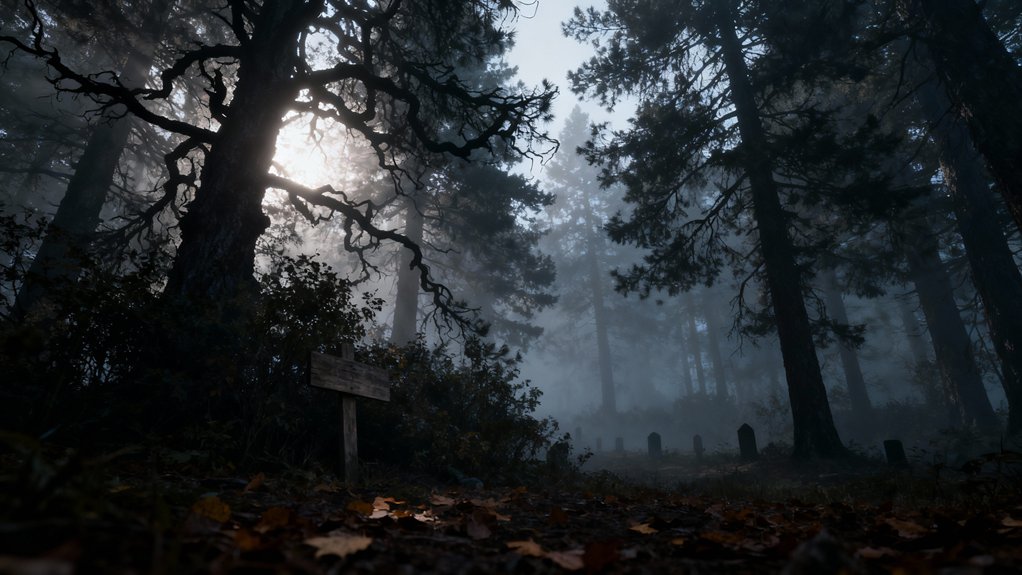
In April 1943, German forces announced a grim discovery in the Katyn Forest near Smolensk: mass graves containing thousands of Polish officers, their hands bound, bullets in their skulls. The Nazis blamed Stalin. Stalin blamed the Nazis. Within days, both London and Washington had intelligence suggesting the Soviets were responsible. What followed wasn’t a search for truth, but a coordinated effort to suppress it—one that would last half a century.
Key Takeaways
- Roosevelt dismissed evidence of Soviet guilt in 1944 and exiled whistleblower George Earle to American Samoa with orders to remain silent.
- Army intelligence suppressed eyewitness reports from American POWs confirming Soviet responsibility to avoid embarrassing their wartime ally.
- Office of War Information broadcast Soviet denials as fact while ignoring State Department warnings about inaccurate reporting.
- Western prosecutors blocked Katyn indictment at Nuremberg despite knowing Soviet guilt to preserve the wartime alliance.
- Voice of America continued broadcasting the Soviet lie for years after WWII ended, suppressing truth until 1952.
The Katyn Forest Discovery: 22,000 Bodies and a Suspicious German Announcement

In early 1943, Wehrmacht intelligence officer Rudolf Christoph Freiherr von Gersdorff received reports that would ignite one of World War II’s most enduring controversies: mass graves containing thousands of Polish officers had been discovered in the Katyn Forest near Smolensk. The bodies—nearly 22,000 executed military officers, police, and intelligentsia—bore a grim signature: single shots to the back of the head. When Nazi Germany announced the discovery via radio on April 13, 1943, suspicion immediately shadowed the revelation. Here was German propaganda weaponizing atrocity, yet the forensic evidence revealed no incongruities. An international medical commission confirmed deaths occurred in 1940—under Soviet, not German, control. The timing seemed too convenient, the messenger too tainted. Yet the corpses told an undeniable story. Among the dead were fourteen Polish generals, including Leon Billewicz, Bronisław Bohaterewicz, and Stanisław Haller, representing a devastating decapitation of Poland’s military leadership.
Stalin’s Instant Denial and the British Ambassador Who Didn’t Believe It
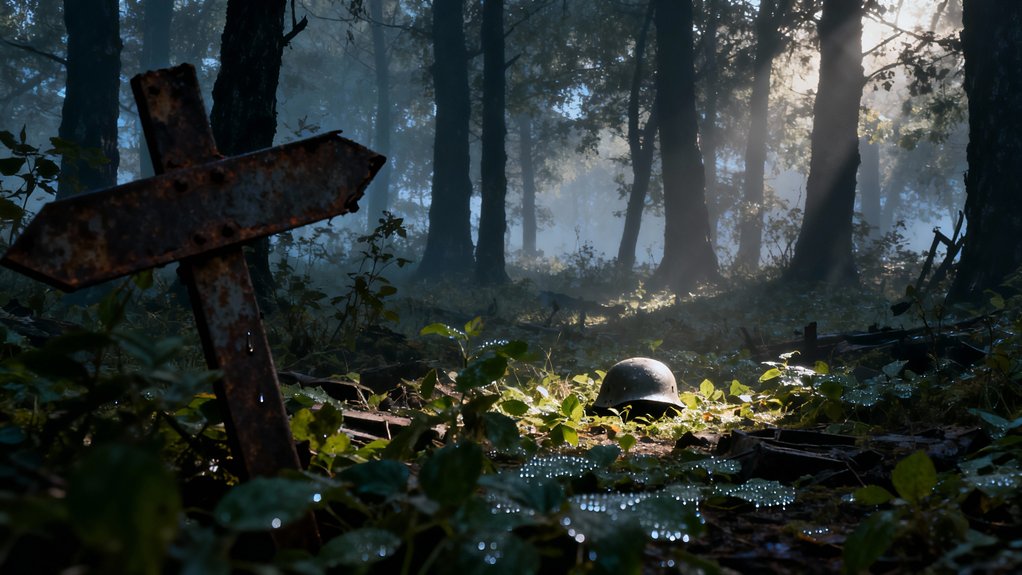
Within forty-eight hours of the German radio broadcast, Stalin’s machinery delivered its counterstrike. The Soviet Information Bureau released a calculated fabrication on April 15, 1943:
- Construction alibi – Polish prisoners allegedly worked west of Smolensk until German capture
- Timeline shift – Executions blamed on Wehrmacht forces in August 1941
- Diplomatic weapon – Accused Polish government-in-exile of Nazi collaboration
- Evidence planting – NKVD backdated documents to create false German culpability
Yet cracks appeared immediately. British Ambassador Sir Stafford Cripps privately informed the Foreign Office of his suspicions toward Soviet guilt. His skepticism represented early recognition of Soviet disinformation, though Allied complicity would soon bury such doubts beneath wartime expediency. Victory demanded silence.
The cover-up would endure for decades, with every Soviet leader from Khrushchev to Yeltsin knowing the truth yet choosing deliberate concealment.
Sir Owen O’Malley’s June 1943 Report: Soviet Guilt Confirmed and Buried
While Churchill publicly dismissed concerns about “three year old graves at Smolensk” in late April 1943, his own ambassador to the Polish government-in-exile was assembling a devastating case against Britain’s Soviet ally.
Sir Owen O’Malley’s June 1943 report confirmed Soviet guilt through meticulous analysis: execution-style shots to victims’ heads, documents dated pre-1941 on corpses, and International Medical Commission findings placing deaths in spring 1940.
| Evidence Type | Finding | Significance |
|---|---|---|
| Autopsy Results | 932 corpses examined | Deaths: Spring 1940 |
| Documents | Pre-1941 dates on bodies | Refutes 1941 German crime |
| Execution Method | Nape-of-neck shots | NKVD signature |
| International Verification | Polish Red Cross + Medical Commission | Independent confirmation |
Churchill’s response exemplified moral compromise: “none of us ever speak a word about it.” This diplomatic deception locked truth away for fifty years, subordinating murdered Polish officers to wartime expediency. O’Malley observed that Western allies had distorted their judgment to preserve relations with the USSR, acknowledging the deliberate suppression of evidence for political convenience.
Roosevelt’s Response: How George Earle Was Exiled for Telling the Truth
When George Earle returned from the Balkans in 1944 with evidence that the Soviet Union had massacred 22,000 Polish officers at Katyn, President Roosevelt faced a choice between truth and alliance. He chose alliance, dismissing Earle’s intelligence as German propaganda despite knowing otherwise from Churchill’s briefings.
Roosevelt’s suppression followed a calculated pattern:
- Rejected Earle’s conclusion, insisting Germans were responsible
- Issued written orders forbidding publication of findings
- Exiled Earle to American Samoa as Assistant Governor
- Maintained Soviet denial to preserve wartime cooperation
This Allied complicity extended beyond mere silence. When Earle sought to publicize the truth, Roosevelt punished him with isolation in the Pacific. The emissary spent the war’s remainder confined to Samoa, sworn to secrecy about a massacre his government refused to acknowledge.
Meanwhile, the suppression extended to military intelligence channels, where Maj. Gen. Clayton Bissell justified burying Col. Van Vliet’s eyewitness report to avoid embarrassing Soviet ally needed against Japan.
Two American POWs Who Witnessed Katyn: and the Army Intelligence That Ignored Them
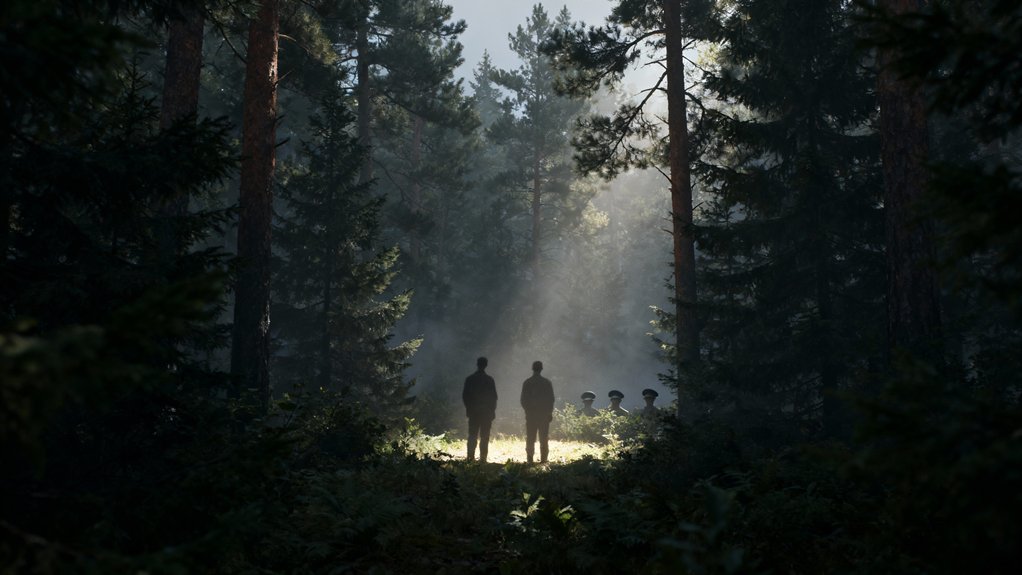
The pine trees surrounding the Katyn forest clearing offered no shade from what lay beneath. In May 1943, American POWs Captain Donald B. Stewart and Lieutenant Colonel John H. Van Vliet Jr. stood above mass graves containing thousands of partly mummified corpses in Polish officers’ uniforms. The bodies’ advanced decay, hands bound with rope and wire, told an inconvenient truth: these men died in spring 1940, before Nazi occupation. Letters, diaries, and newspapers confirmed the timeline. The POWs sent coded messages through MIS-X to Washington, documenting Soviet culpability. Army intelligence chief General Clayton Bissell received their reports. Yet bureaucratic inertia and pro-Soviet bias guaranteed silence. Van Vliet’s 1945 report disappeared entirely. The evidence was buried as deliberately as the victims themselves. Among the dead were not only soldiers but Poland’s intellectual elite—doctors, lawyers, and teachers executed to eliminate any resistance to Soviet control.
The Office of War Information’s Campaign to Broadcast Stalin’s Version
When Elmer Davis took to the airwaves in April 1943 to declare the Katyn massacre a Nazi atrocity, he did so with the full authority of his position as director of the Office of War Information—and the full knowledge that he was broadcasting a lie. Davis’s directive to the Voice of America and OWI’s Overseas Branch was explicit: promote the Soviet version, blame the Germans, and suppress any evidence to the contrary. Inside the agency, Soviet sympathizers and Communist operatives found willing partners among American officials who prioritized wartime alliance over truth, turning the OWI into Stalin’s most effective propaganda tool on American soil. The Soviet narrative would be repeated consistently for years, maintaining the fiction that Nazi Germany bore responsibility for the execution of over 20,000 Polish officers and intellectuals.
Davis Dismissed Nazi Claims
Within weeks of Germany’s public revelation of the Katyn graves in April 1943, President Roosevelt’s newly appointed director of the Office of War Information made a fateful decision. Elmer Davis launched a propaganda campaign blaming Nazi Germany for the massacre of Polish officers, despite mounting evidence pointing to Soviet responsibility.
Davis’s broadcasts disseminated Moscow’s narrative through multiple channels:
- Domestic radio networks carried his April pronouncements squarely blaming Germans
- Voice of America transmitted the Soviet version to overseas audiences
- State Department warnings about careless reporting were systematically ignored
- Army Intelligence reports confirming Soviet guilt were deliberately suppressed
The OWI, dominated by pro-Soviet propagandists, continued spreading Stalin’s lie with White House approval until its dissolution in September 1945. Davis delivered his domestic broadcast blaming Germany on April 30, 1943, which VOA aired internationally on May 3, Poland’s Constitution Day.
Voice of America’s Suppression
How does a propaganda machine bury the truth of mass murder? Through systematic deception and media complicity. On April 17, 1943, OWI management ordered VOA to broadcast and promote Soviet denials of Katyn responsibility. This directive created profound ethical dilemmas—journalists became either willing promoters or unwitting tools of Kremlin lies.
| Timeline | VOA Action |
|---|---|
| April 15, 1943 | Immediate acceptance of Soviet claims |
| April 17, 1943 | OWI directive orders promotion |
| April 22, 1943 | Ignored State Department warning |
| 1943-1945 | Aggressive pro-Soviet broadcasts |
| 1950-1951 | Continued censorship post-war |
Chief news writer Howard Fast zealously promoted Soviet propaganda while Elmer Davis’s broadcasts reinforced the narrative across commercial networks. VOA suppressed truth until 1951, protecting Stalin’s control over Eastern Europe. The Smith-Mundt Act of 1948 banned domestic distribution of VOA programs after wartime propaganda broadcasts drew congressional objection.
Soviet Agents in OWI
The Office of War Information became a vehicle for Soviet intelligence operations while American officials believed they were simply coordinating wartime propaganda. Soviet infiltration reached the highest levels of OWI and Voice of America, where agents occupied management positions with direct access to President Roosevelt. Flora Wovschin, codename ZORA, operated as the most active spy within the agency.
The propaganda control mechanisms included:
- Howard Fast, VOA’s chief radio news writer, maintained direct contact with Soviet embassy personnel for news sourcing
- Senior management positions allowed systematic influence over broadcast content reaching millions across Europe
- Communist Party USA coordinated recruitment of “reliable comrades” into OWI’s foreign language services
- Comintern archives documented financing networks supporting the espionage operations
These agents proved far more valuable than traditional intelligence operatives. The agency’s overseas operations included Psychological Warfare Branch units that managed both combat zone and civilian propaganda, creating opportunities for intelligence collection alongside official information campaigns.
How Voice of America Suppressed Katyn Evidence After the War

Even as the guns fell silent in Europe, Voice of America continued broadcasting a Soviet lie about the forest west of Smolensk. State Department officials blocked anti-communist journalists from revealing the truth about Katyn’s 22,000 murdered Polish officers. The VOA Polish desk director rationalized this Cold War censorship by claiming honesty might spark futile rebellion in communist Poland. Pro-Soviet wartime employees had moved seamlessly into VOA’s post-war operations, maintaining their propaganda legacy until 1952. Charles Thayer, VOA director from 1948-1949, remained uncertain whether Soviets perpetrated the massacre despite mounting evidence. Only after Truman’s “Campaign of Truth” replaced these managers did VOA finally broadcast 18,000 words on the House Select Committee’s damning investigation—seven years too late for enslaved Poland. The bipartisan Madden Committee condemned both the Office of War Information and VOA for their pro-Soviet bias in suppressing the truth during wartime.
Why the Nuremberg Trials Excluded Soviet Guilt From the Record
At Nuremberg in February 1946, Soviet prosecutor Roman Rudenko stood before the tribunal and accused the Nazis of murdering 11,000 Polish officers in the Katyn Forest—a claim the Soviets knew to be a fabrication of their own crimes. The German defense countered with compelling evidence pointing to NKVD execution squads, threatening to expose the massacre as Soviet atrocity rather than Nazi war crime. British and American prosecutors, watching this collision of truth and propaganda unfold, faced a choice that would test whether justice or political expediency would prevail.
Soviet False Evidence Presented
How does a lie become truth in the eyes of history? Through meticulous fabrication. The Burdenko Commission’s Soviet forgeries laid groundwork for Nuremberg’s deception, systematically erasing evidence of NKVD guilt.
The commission’s methodology revealed calculated manipulation:
- Planted documents on corpses dated no later than April 1940—contradicting their claim of 1941 German executions
- Destroyed the Polish Red Cross cemetery Germans had constructed at the site
- Threatened witnesses with arrest for “Nazi collaboration” unless testimonies aligned with Moscow’s narrative
- Advanced corpse decay cited as “proof” against 1941 timing—ignoring Polish artifacts frozen in spring 1940
At Nuremberg, prosecutors Nikitchenko and Rudenko presented these falsifications expecting automatic judicial acceptance. The tribunal remained silent on Katyn’s perpetrators, preserving the manufactured narrative until Soviet admission in 1990 finally confirmed: 22,000 Polish deaths rested squarely on Stalin’s hands.
Western Allies’ Strategic Silence
Why would victorious Allied powers shield their Soviet partners from scrutancy at history’s most celebrated war crimes tribunal? The answer lies in calculated Allied complicity. OSS chief William Donovan, convinced by German officer Fabian von Schlabrendorff of Soviet guilt, blocked the Katyn indictment—a fact buried for seventy years. US prosecutor Jackson insisted Soviets prove their allegations, knowing captured German documents offered no corroboration. British prosecutor David Maxwell Fyfe confirmed opposition, citing lack of authentic evidence. These targeted interventions prevented German defendants from exposing Soviet culpability. The strategic omission preserved wartime unity above historical truth. Nuremberg’s final judgment remained deliberately silent, dismissing charges without assigning responsibility. The tribunal prioritized Nazi crimes provable through German records, sacrificing Katyn to maintain coalition cohesion. Justice deferred became justice denied.
The 1952 Madden Committee: Congress Breaks Ranks With the Cover-Up
Seven years after Roosevelt’s death and the war’s end, Congress finally demanded answers. Rep. Ray J. Madden’s committee shattered Washington’s complicit silence through unprecedented action. In the first Congressional overseas hearings ever conducted, investigators traveled to London, Frankfurt, Berlin, and Naples, interviewing 81 witnesses about Soviet execution methods and assembling 2,362 pages of damning evidence.
Congress shattered decades of silence with unprecedented overseas hearings, assembling 2,362 pages of evidence across four continents.
Their findings proved devastating:
- The NKVD systematically murdered 14,000 Polish officers in a calculated elimination of Poland’s leadership
- Roosevelt’s administration deliberately suppressed evidence available since 1942 to protect the Soviet alliance
- The Voice of America broadcast Kremlin lies without consulting Army Intelligence
- Officials silenced dissenting voices, transferring one Navy officer to American Samoa for raising concerns
The unanimous verdict: Moscow orchestrated the massacre. Washington buried the truth.
Fifty Years of Suppression: From Wartime Necessity to Cold War Policy
The committee’s 1952 verdict arrived decades too late for the murdered men’s families, who had spent years maneuvering through a bureaucratic labyrinth designed to obscure what Allied governments knew from the beginning. What began as wartime moral compromise evolved into entrenched Cold War policy. Roosevelt suppressed Van Vliet’s eyewitness account to preserve the alliance. By 1945, geopolitical pragmatism transformed Poland into a Soviet satellite, while Moscow attempted convicting innocents at Nuremberg for NKVD crimes. The cover-up intensified: Khrushchev ordered file destruction in 1959; KGB agents poured lye on Polish remains in 1969. Fifty years separated the 1943 discovery from the 1990 Soviet admission—five decades when truth yielded to expedience, when murdered officers became diplomatic footnotes in a larger game.
Gorbachev’s 1990 Admission: The USSR Finally Confirms What the West Knew
When Mikhail Gorbachev stood before journalists on April 13, 1990—the forty-seventh anniversary of the forest graves’ discovery—the Soviet leader finally spoke the words three generations had awaited: the NKVD murdered the Polish officers. Yet Soviet accountability remained incomplete. Gorbachev blamed only Beria and subordinates, shielding Stalin despite advisers’ recommendations for full historical transparency.
The limited confession included:
- Documents transferred to President Jaruzelski confirming executions at Katyn, Mednoye, and Piatykhatky
- Transport records and prisoner lists proving Soviet culpability
- Simplified procedures for relatives visiting burial sites
- Designation of April 13 as worldwide Katyn Memorial Day
The smoking-gun document proving Stalin’s direct orders remained hidden. Gorbachev transferred it to Yeltsin in December 1991, who “discovered” it conveniently in October 1992—truth delayed, accountability deferred.
The 2012 Declassified Files: Roosevelt’s Staff Confirmed Soviet Guilt in 1943
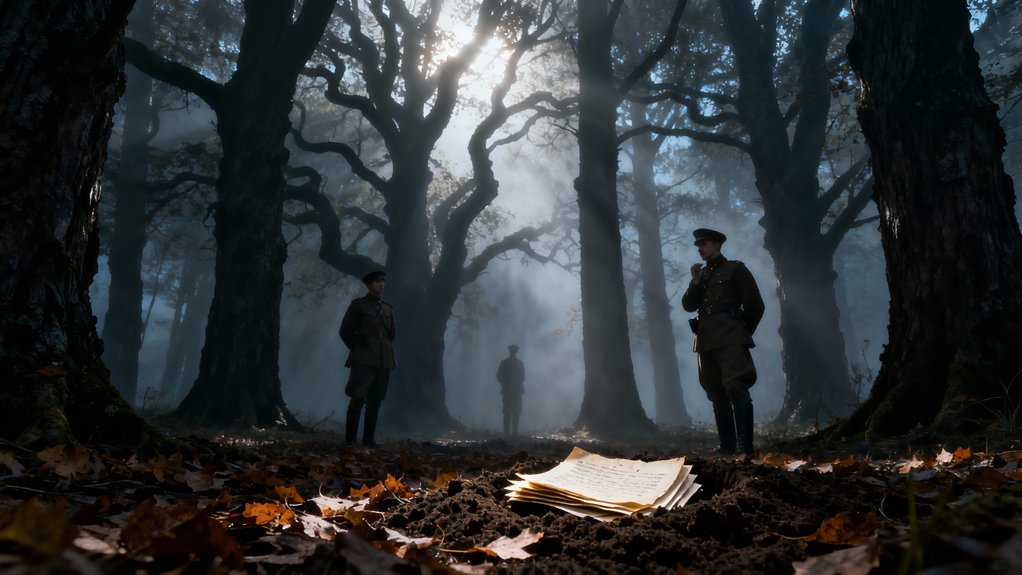
Gorbachev’s delayed confession in 1990 came forty-seven years after American intelligence first knew the truth. Documents released Monday in 2012 exposed how Roosevelt’s administration actively suppressed evidence of Soviet guilt from 1943 onward. Captain Donald Stewart and Lieutenant Colonel John Van Vliet sent coded messages from German captivity that May, confirming Soviet responsibility after witnessing exhumation sites. Despite Soviet forensic tampering and Red Cross obstruction, the officers concluded Russians committed the massacre. Roosevelt received Churchill’s detailed report in August 1943 highlighting fatal inconsistencies in Moscow’s denials. The administration buried it all—vanishing Van Vliet’s 1945 report, transferring whistleblower George Earle to Samoa, coercing Polish radio stations into silence. Military necessity, they claimed. The alliance mattered more than twenty-two thousand murdered Poles.
Frequently Asked Questions
Why Did the Polish Government-In-Exile Accept the Allied Cover-Up of Katyn?
The Polish government-in-exile had no choice. Allied pressure left them trapped between loyalty to truth and survival itself. Without British and American support, their resistance against Nazi occupation would collapse. British diplomats explicitly demanded silence, warning that public confrontation over Katyn would fracture the anti-Hitler coalition. Polish loyalty to the Allied cause—and desperate dependence on Western military aid—forced them to swallow Stalin’s lies, sacrificing their murdered officers on the altar of wartime expediency.
How Did Surviving Polish Families React to Western Suppression of the Truth?
Families endured silent grief, forbidden from publicly mourning loved ones whose deaths Western allies attributed to Nazi hands. They passed down truth through whispered stories and clandestine gatherings, practicing hidden resistance against both Soviet censorship and democratic betrayal. Memorial candles lit in private homes, banned photographs concealed in attics, names scratched inside church pews—these became acts of defiance. Mothers who knew their sons died Soviet bullets watched Allied leaders embrace Stalin, feeling abandoned twice: first by executioners, then by those who denied the execution occurred.
What Happened to Soviet Officials Who Ordered the Katyn Massacre?
Stalin and the five Politburo members who signed the execution order—Molotov, Kaganovich, Voroshilov, Mikoyan, and Kalinin—faced no consequences. Soviet accountability evaporated into bureaucratic maneuvering; when investigations finally began in the 1990s, authorities declared all perpetrators conveniently dead. Postwar justice collapsed entirely. Russian prosecutors refused to classify the massacre as genocide, cited statutes of limitations, and closed the case in 2005. The architects of 22,000 murders died peacefully, their crimes officially acknowledged yet deliberately unpunished.
Did Any Western Journalists Break Ranks and Report Soviet Guilt During the War?
No Western journalists broke ranks during the war to report Soviet guilt. The alliance’s imperative silenced dissent through wartime censorship and Soviet propaganda‘s overwhelming influence. Those who investigated—like Ambassador O’Malley—saw their findings buried in classified files. American POWs who witnessed evidence were suppressed by military intelligence. Pro-Soviet voices at Voice of America and major outlets actively promoted Stalin’s narrative, while governments prioritized unity over truth, leaving the massacre’s reality entombed in diplomatic expedience.
How Did Polish Communities in America Respond to the Government’s Initial Denials?
Polish-American communities erupted in fury, refusing to swallow their government’s bitter pill of silence. Through relentless Polish diaspora activism, they launched media advocacy campaigns in ethnic newspapers, organized protest rallies, and lobbied Congress with firsthand accounts from survivors. These immigrants, many with relatives murdered at Katyn, transformed their grief into resistance—printing pamphlets, demanding investigations, and creating grassroots pressure networks that kept the truth alive even as Washington looked away, choosing expedience over justice for fifteen thousand graves.
Final Thoughts
The Katyn cover-up stands as one of history’s most cynical betrayals—a crime scene erased not once but twice. First by Soviet bullets, then by Allied silence. For half a century, the dead remained hostages to geopolitics while their executioners walked free and their defenders faced exile. When Moscow finally confessed in 1990, it confirmed what Washington and London had known all along: that they had chosen Stalin’s friendship over twenty-two thousand graves, trading truth for an alliance built on bones.
References
- https://www.cbsnews.com/news/memos-show-us-helped-cover-up-soviet-massacre/
- https://newcriterion.com/article/katyn-the-long-cover-up/
- https://historiamag.com/cover-up-of-katyn-massacre/
- https://www.hoover.org/research/unfinished-business-katyn
- https://www.coldwarradiomuseum.com/u-s-congressman-on-katyn-massacre-coverup-at-voice-of-america/
- https://transforming-classification.blogs.archives.gov/2020/02/28/katyn-massacre-records-show-need-to-prioritize-disclosure-of-historical-information-with-significant-public-interest/
- https://en.wikipedia.org/wiki/Katyn_massacre
- https://www.archives.gov/research/foreign-policy/katyn-massacre
- https://soviethistory.msu.edu/1943/katyn-forest-massacre/
- https://scholarlycommons.law.case.edu/faculty_publications/90/