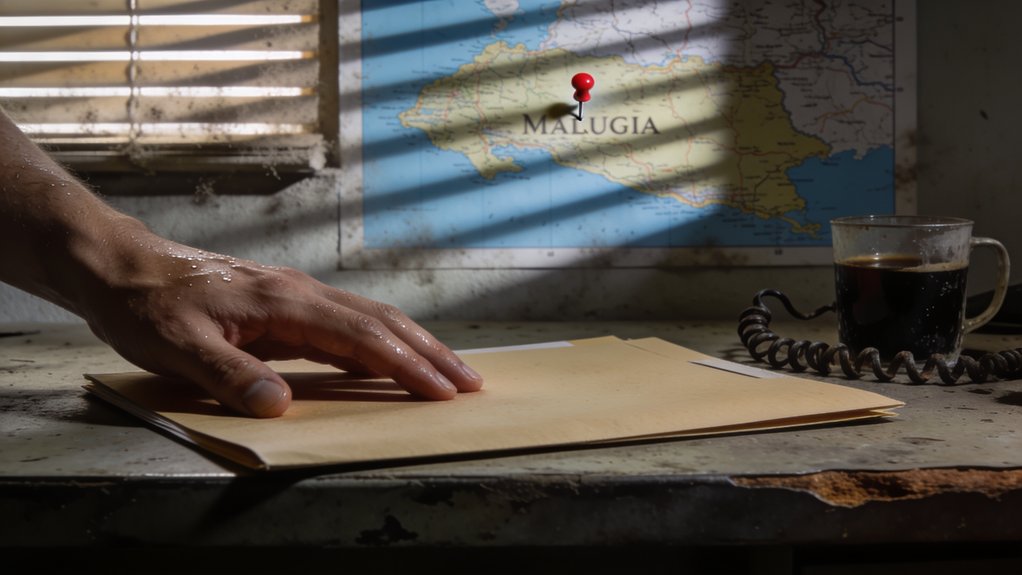
By November 1986, the CIA’s counterintelligence teams turned polygraph machines on their own senior officers, hunting not a Soviet mole but the leaker who exposed the Iran-Contra shadow network. Paranoia gutted Langley; agents interrogated colleagues in windowless rooms while valuable time vanished. The frantic witch hunt systematically shredded trust, leaving the actual conspiracy intact. This self-inflicted wound accelerated the network’s collapse far faster than any external leak could achieve—and the full story lies buried deeper still.
Key Takeaways
- CIA leadership launched a paranoid mole hunt instead of investigating Iran-Contra crimes.
- Polygraph machines interrogated senior officials in windowless rooms during 1986.
- Whistleblowers were targeted as hostile threats while the agency’s internal trust dissolved.
- The mole hunt wasted resources, froze supply chains, and failed to identify any traitor.
- Internal paranoia and betrayal systematically destroyed the covert network from within.
Architecting the 1985 Enterprise: Funding the Covert Shadow Network
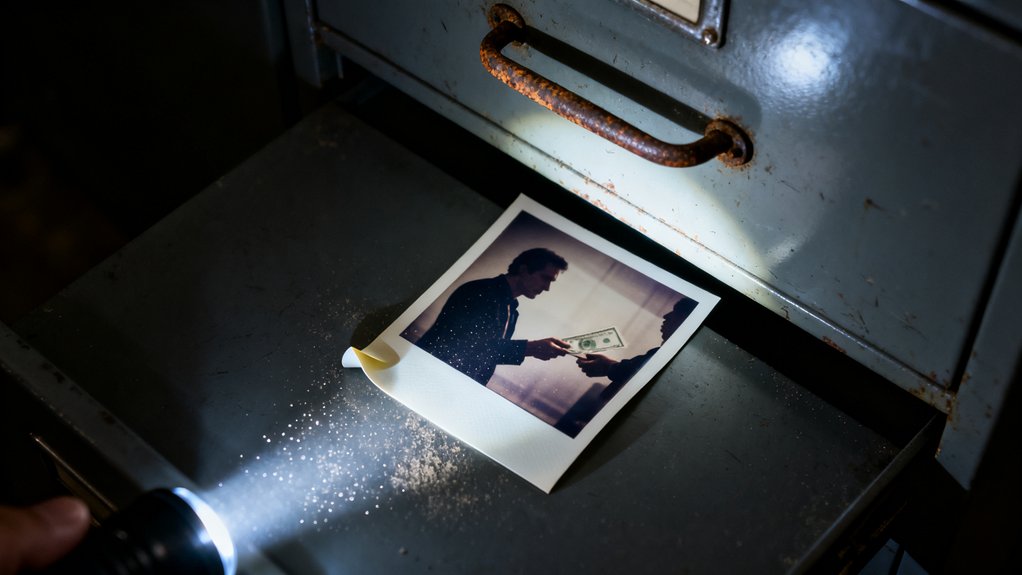
In 1985, the architects of the Iran-Contra enterprise laid a secret financial foundation, channeling profits from covert arms sales to Iran into a shadow network that would fund Nicaragua’s Contra rebels. This wasn’t a rogue operation; it was a calculated machine, grinding out illegal CIA financing through a labyrinth of Swiss bank accounts and shell corporations. The money flowed silently, a phantom river bypassing Congress and the law itself.
These covert funding operations relied on absolute secrecy, a tight-lipped pact among a handful of men who believed their cause justified any means. They built a system of deniable accounts, each transaction a thread in a web designed to break under scrutiny. For a brief, dangerous moment, the enterprise felt invincible, a parallel state funded by its own audacity. But the foundation was already rotten, and the media‘s first whispers would soon crack the silent vault, threatening to expose the whole clandestine scheme.
Weaponizing the National Security Council: The Mechanics of Off-the-Books Warfare
The National Security Council didn’t just circumvent the Boland Amendment; they weaponized its loopholes.
Laundered munitions flowed through Swiss bank accounts, creating a parallel financial system immune to congressional oversight.
This off-the-books machinery transformed the NSC from an advisory body into a covert operations hub.
Bypassing the Statutory Restrictions of the Boland Amendment
Facing a legal wall erected by the Boland Amendment, which explicitly barred U.S. intelligence agencies from funding the Nicaraguan Contras, the Reagan administration didn’t abandon its proxy war—it simply moved it.
The classified funding mechanics now shifted entirely into the dark corridors of the National Security Council.
By bypassing the statutory restrictions of the Boland Amendment, Oliver North’s unit transformed the White House basement into a covert command post.
They solicited foreign donations and weaponized private networks, laundering cash through dummy fronts.
This wasn’t a loophole—it was deliberate defiance, a shadow state erected to wage war without Congress’s consent.
For those seeking liberation from such imperial overreach, understand this: the law didn’t stop them; it just forced them to hide the hand that pulled the trigger.
Laundered Munitions and Illicit Swiss Bank Accounts
As journalists probed deeper into 1985’s covert arms sales, the Reagan administration’s off-the-books warfare demanded a parallel financial universe. This wasn’t just weaponry; it was a laundered system immune to congressional oversight.
- Swiss bank accounts, shielded by secrecy, processed millions from Iranian arms payments.
- These funds then illegally financed Contra rebels, bypassing the Boland Amendment entirely.
- The scheme depended on unauthorized operational leaks being plugged to avoid detection.
- Middlemen and cutouts shuffled money through shell companies, obscuring the paper trail.
- This financial labyrinth protected covert government operations from public glare, until exposure threatened.
The NSC weaponized its own machinery, creating a shadow state where munitions flowed through Zurich accounts, not legislative appropriations. Liberation demands understanding how power truly circulates beyond official channels.
The Associated Press Wire That Broke the Silence: Robert Parry’s 1986 Investigations
Although few inside the intelligence community wanted to acknowledge it, a single wire from the Associated Press in 1986 shattered the carefully maintained silence surrounding the Iran-Contra shadow networks. Robert Parry‘s reporting didn’t just expose illegal arms deals—it ignited a firestorm of cia bureaucratic chaos.
His dispatches traced the clandestine flow of launderers’ money, revealing how the CIA’s own covert networks had financed Nicaraguan rebels through illicit Swiss accounts. Throughout 1986, Parry’s persistence peeled back layers of official deception, forcing Langley‘s foot soldiers into a defensive crouch.
They scrambled to contain the narrative, but the damage was done. Each new wire eroded the agency’s carefully constructed walls of secrecy, letting sunlight into dark corners where dirty deals festered. For an audience hungry for liberation, Parry’s work became a weapon—a proof that truth, once set free, couldn’t be stuffed back into the shadows.
The CIA’s immediate response to Robert Parry’s 1986 revelations was nothing short of a bureaucratic meltdown. Paranoia seized Langley’s corridors as officials realized the shadow networks they’d built had been exposed. They didn’t investigate the crime; they hunted the messenger within.
They didn’t investigate the crime; they hunted the messenger within.
- Agents turned on each other, suspicion poisoning every meeting.
- Directors demanded loyalty oaths from terrified analysts.
- Secret memos labeled Parry a “hostile intelligence threat.”
- The 1986 cia mole hunt consumed resources meant for actual operations.
- Whistleblowers became targets of the intelligence apparatus cover-up.
This internal war wasn’t about finding foreign spies—it was about silencing truth. They couldn’t contain the story, so they tried to crush its source. The agency’s fear became its own worst enemy, accelerating the scandal’s unraveling. Liberation demands you see: institutions that hunt their own are already dying.
The 1986 Witch Hunt: Launching the Intelligence Community’s Frantic Search for Moles
Langley’s polygraph machines hummed nonstop, interrogating senior directorate officials in windowless rooms. Security teams intercepted classified internal memoranda, hunting for any whisper that betrayed their secrets. The frantic search for moles had turned the agency’s own halls into a minefield of suspicion.
Deploying Polygraph Interrogations Against Senior Directorate Officials
- Officials were strapped to machines, questioned on their loyalty to covert operations.
- Lies were presumed before truth, with every twitch a potential confession.
- Friends turned informants, fearful of being next in the windowless room.
- Careers ended not by documented leaks, but by the merest hint of association.
- The polygraph became a weapon, not a tool—liberation meant surviving the chair.
The agency was eating itself alive, and no one could stop the feast.
Intercepting Classified Internal Memoranda at Langley
As internal memoranda began circulating through Langley’s classified channels in 1986, every page carried the weight of a ticking clock, each carbon copy a potential betrayal. Task forces now turned informants, intercepting classified internal memoranda at Langley to trace every routing slip and marginal note. The National Security Council paranoia transformed routine distribution lists into suspect rolls, with clerks reporting senior officers for ordering extra copies. Nothing escaped scrutiny; even a query about file destruction triggered surveillance. This bureaucratic dragnet didn’t just protect secrets—it crushed dissent, forcing analysts to spy on their own directors. The witch hunt guaranteed the shadow networks stayed hidden, but only by sacrificing the very trust the agency required to function. Freedom demanded exposure, but Langley chose suspicion.
Cannibalizing the Ranks: How High-Level Operatives Turned on Their Own Colleagues
Before the first cables had even been fully decoded, high-level CIA and NSC operatives were already pointing fingers at one another.
The NSC internal investigation turned into a bloodletting, where trust evaporated and survival became the only creed.
The NSC internal investigation turned into a bloodletting, where trust evaporated and survival became the only creed.
Declassified iran-contra files now reveal the ugly truth: these men didn’t just suspect each other—they actively sabotaged their own colleagues to save themselves.
- A CIA station chief was accused of leaking by a superior who’d actually authorized the same operation.
- An NSC aide was fed false intel, then left to twist in the wind when the mole hunt closed in.
- One operative shredded his own partner’s files to frame him for a failed arms drop.
- A senior analyst was blacklisted for questioning a colleague’s loyalty during a secure briefing.
- Another officer’s career was destroyed by a false accusation, later proven to be a cover-up.
They were cannibalizing their own ranks—and the declassified files prove it wasn’t paranoia, but a calculated purge.
Plunging the Apparatus Into Chaos: The Complete Breakdown of Agency Command Structures
With the internal mole hunt consuming their energy, CIA and NSC command structures crumbled into operational paralysis. Chain-of-command dissolved into a screaming match of accusations. Directors second-guessed deputies; case officers distrusted their own stations. No directive felt safe. No asset could be trusted. The Iran-Contra shadow networks, once the agency’s most lethal covert tool, now became its most paralyzing liability.
Bureaucrats froze, terrified of signing anything that might surface later. Routine approvals stalled for weeks. Intelligence reports sat unread. The old mechanisms of control—clearance levels, compartmentalization, sign-off hierarchies—collapsed under paranoia’s weight. It wasn’t just disarray; it was a structural meltdown. Orders went unissued. Operations halted mid-mission.
This wasn’t sabotage from outside. This was self-inflicted corrosion from within. The very machinery built to protect secrets now consumed itself, leaving the entire apparatus gasping for breath, its command bones picked clean by suspicion.
The November 1986 Shredding Operation: Erasing the Paper Trail Before Dawn
By November 1986, the shredders roared to life inside the CIA and NSC, systematically purging the PROFS digital communication system logs.
Operatives worked through the night, destroying countless messages that would have traced the covert arms-for-hostages and contra financing operations.
Yet one piece of paper slipped through the destruction: the diversion memorandum, a ticking bomb that refused to burn.
Purging the PROFS Digital Communication System Logs
As the November 1986 dawn approached, officials inside the National Security Council knew their digital footprints could unravel everything. They launched a desperate purge of the PROFS digital communication system logs, erasing electronic evidence before investigators could secure it.
- They deleted message archives from NSC staff terminals, government’s first email scandal.
- Operators overwrote backup tapes in secure vaults, ensuring no recovery.
- Technicians physically removed hard drives from the system, smuggling them out after midnight.
- They scrubbed routing logs that traced message paths between Oliver North’s office and the CIA.
- Officials falsified system access records to hide the purge timeline.
This digital destruction matched the paper shredding, but unlike burned documents, erased bytes left ghost traces. These deletions didn’t liberate them—they just postponed the inevitable truth.
The Diversion Memorandum That Survived the Destruction
Although Oliver North’s shredder chewed through thousands of pages that November, one critical document—the diversion memorandum—escaped the paper shredder’s teeth. North’s assistant, Fawn Hall, didn’t just destroy; she hid. She stuffed that single, damning memo into her clothing, smuggling it past security under the cover of darkness.
It detailed the precise mechanism: Iranian arms sales funding Nicaraguan Contras, a direct violation of the Boland Amendment. The paper trail survived the dawn’s purge because someone refused to let the truth be erased. Investigators later recovered it from North’s own files, a glaring piece of evidence that contradicted the official story. For those seeking liberation from covert deception, that memo became undeniable proof of the system’s hidden gears—and the lies they tried to bury.
Unraveling the Conspiracy: The Inevitable Public Exposure of the Covert Mechanics
The shadow networks didn’t stay hidden forever. By late 1986, the covert mechanics of illegal CIA financing began unraveling, igniting a desperate internal witch hunt. Paranoia gripped the Agency, but the truth had already slipped beyond its grasp. The mechanics of exposure were as ruthless as the conspiracy itself.
- Robert Parry’s relentless reporting forced the leaks into daylight.
- The NSC turned on itself, suspecting every desk and hallway.
- Whistleblowers inside the CIA risked everything to break the silence.
- Congressional oversight, long asleep, finally stirred with subpoenas.
- The media’s spotlight exposed contradictions officials couldn’t explain.
Each crack in the facade widened as the Agency’s frantic search for leakers only amplified the scandal. The very secrecy that protected the shadow networks became their doom. For those hungry for the truth, the unraveling wasn’t a bug—it was liberation.
Dissecting the Declassified Archives: Verifiable Historical Evidence of the Internal Collapse
The 1993 Walsh Independent Counsel Reports don’t hide the chaos; they instead map it in painstaking detail, exposing how the internal mole hunt tore through the CIA’s chain of command.
Uncovering the heavily redacted CIA Inspector General files reveals a bureaucratic battlefield, where officials suspected their own colleagues of feeding operational secrets to the press.
These declassified archives verify that the paranoia wasn’t just a feeling—it was a documented collapse, frozen in ink and censorship.
Analyzing the 1993 Walsh Independent Counsel Reports
Because the 1986 mole hunt had already shredded internal trust, the 1993 Walsh Independent Counsel Reports arrived less as a legal summary and more as a forensic autopsy of that institutional collapse.
These declassified volumes don’t just list crimes—they map the decay of a government that cannibalized itself to hide illegal cash flows and covert war funding. For an audience seeking liberation from this same secrecy, the reports offer a roadmap of surviving lies.
- Walsh exposed tangled covert financing that bypassed all congressional oversight.
- He documented how the mole hunt destroyed whistleblower protections, not just careers.
- The reports prove that paranoia itself became the CIA’s operational currency.
- They reveal how officials deliberately shredded evidence while blaming others.
- Walsh showed the public that the collapse wasn’t accidental—it was engineered.
Uncovering the Heavily Redacted CIA Inspector General Files
Though the Walsh reports laid bare the wreckage, you can’t truly grasp the depth of the CIA’s internal collapse until you dig into the agency’s own declassified Inspector General files—documents so heavily redacted they read like a confession of the crime itself.
Black ink slashes through names, dates, and entire paragraphs, but the surviving fragments scream betrayal.
They reveal senior officials, gripped by paranoia, siccing investigators on their own analysts.
The mole hunt wasn’t just about finding a leaker; it was a purge.
These files show how the agency’s internal collapse began from within—a self-inflicted wound that shredded trust and left shadows where truth should stand.
For those seeking liberation from official lies, these scarred pages are the raw, undeniable proof.
The Fatal Cost of Total Secrecy: How Systemic Paranoia Accelerated the Network’s Demise
While the CIA’s leadership focused on plugging leaks, their obsessive hunt for a mole turned a dam of secrecy into a floodgate. The frantic chase didn’t just fail to find a traitor; it shattered the shadow network from within. High-ranking officials, blinded by suspicion, began shredding documents and severing operational ties, all before any journalist could connect the final dots.
The frantic chase didn’t find a traitor; it shattered the shadow network from within.
- Officials wasted precious hours polygraphing innocent colleagues instead of controlling the story.
- Trust dissolved, leading to conflicting orders that froze the covert supply chain.
- Desperate to prove loyalty, operatives destroyed evidence, inadvertently creating a paperless guilt trail.
- Paranoia forced key players to operate in isolated silos, making coordinated cover-ups impossible.
- The resulting chaos forced the scandal into the light faster than any leak could have.
In the end, the mole hunt itself became the network’s executioner. They forgot that sometimes the greatest threat isn’t an outsider with a secret—it’s the man in the mirror who doesn’t trust his own reflection.
Frequently Asked Questions
Who Was the Mole the CIA Suspected of Leaking to Robert Parry?
No single mole was ever definitively identified. The CIA’s frantic 1986 hunt focused instead on a nebulous suspect: the entire community of journalists and dissenting insiders.
They suspected anyone challenging the official narrative, transforming paranoia into a witch hunt that tore through the agency’s own ranks.
Officials turned on each other, consumed by fear that their secrets were bleeding out to reporters like Robert Parry, who was exposing the illegal shadow networks.
Did the Internal Mole Hunt Uncover Any Actual Leakers?
In nearly 100 internal interviews, the CIA’s mole hunt didn’t uncover a single confirmed leaker. Instead, it consumed itself in suspicion, never proving who fed reporter Robert Parry.
The hunt failed to expose any leaker, leaving the institution’s paranoia unchecked. This wasn’t a search for truth; it was a reminder that systems built on secrecy often crumble from within. Liberation demands questioning who truly benefits from such silence.
How High up Did the Accusations of Disloyalty Reach?
Accusations of disloyalty shot straight to the top, ensnaring senior CIA and NSC officials.
They didn’t spare even the White House’s inner circle, as paranoia warped judgment and colleagues turned on each other.
This wasn’t a hunt for truth; it was a purge of suspicion, reaching into the highest echelons of power where the shadow networks’ architects sat, terrified their own house would betray them.
What Specific Evidence Triggered the 1986 Shredding Operation?
The 1986 shredding operation wasn’t triggered by a single document; it was a cascade. Oliver North’s discovery of a subpoena for his files sparked the frantic destruction.
His assistant, Fawn Hall, famously shredded and even smuggled out documents in her boots. This direct evidence—the legal threat itself—unleashed the panic.
It wasn’t an abstract leak but a concrete legal net closing in, forcing them to erase the shadow network’s paper trail before investigators could seize it.
Were Any Officials Punished for the Illegal Covert Financing?
Like a stone dropped in still water, accountability rippled unevenly. Some lower-level operatives faced charges, but top officials escaped punishment for the illegal covert financing.
The system’s refusal to hold its leaders responsible felt like a locked door, leaving citizens craving liberation from such impunity.
Justice didn’t roll downhill far enough, and the shadow networks survived to fight another day.
Final Thoughts
The hunt’s frenzy left 48,000 shredded documents in its wake—yet one uncut memo still nailed them. Paranoia didn’t plug the leak; it accelerated the collapse. The CIA’s own witch hunt, turning allies into suspects, guaranteed the network’s exposure. They chased ghosts while the real trail blazed through plain sight.