
On October 5, 1986, a Fairchild C-123 explodes over Nicaragua, shattering a covert enterprise. Investigators scavenge flight logs from the wreckage, erasing plausible deniability. Eugene Hasenfus confesses under interrogation, exposing the 1984 shadow fleet built to bypass Congress. The Ilopango nerve center unravels, revealing expendable pilots and shredded manifests. Executive pardons later mock justice, sealing a culture of cover-up. The full conspiracy’s chilling mechanics await those who look closer.
Key Takeaways
- October 1986 C-123 shootdown exposed covert Contra arms supply chain.
- Hasenfus’ confession dismantled plausible deniability, implicating U.S. intermediaries.
- Shadow fleet used shell companies and civilian fronts to evade congressional oversight.
- White House shredded flight manifests within 48 hours to sever senior official links.
- Pardons and shelved trials redefined justice, perpetuating a culture of cover-up.
October 5, 1986: The Fairchild C-123 Takedown Over Nicaraguan Airspace
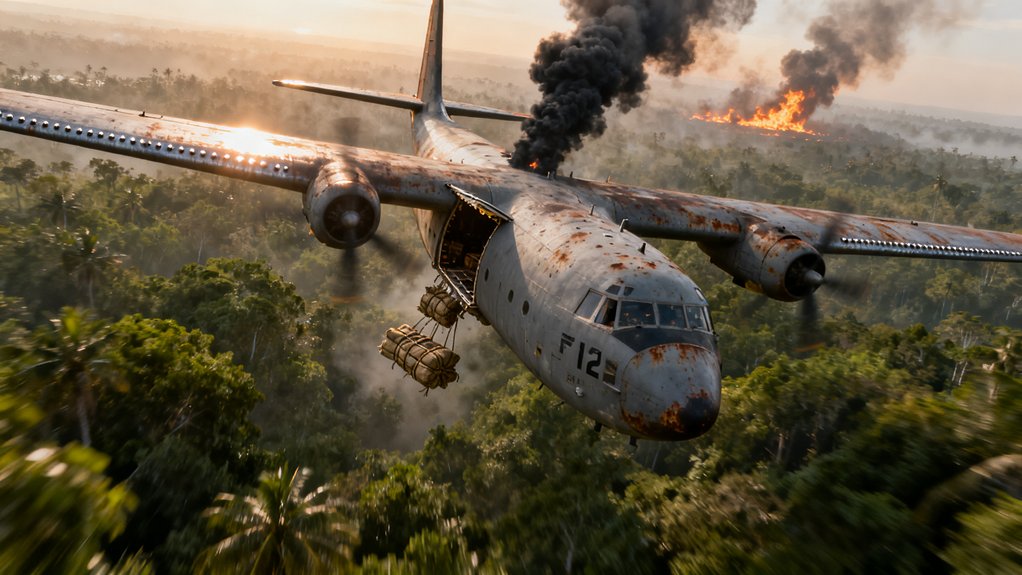
On October 5, 1986, a surface-to-air missile tears through the Fairchild C-123 along Nicaragua’s southern border, igniting the fatal strike that shatters two years of silent, illegal logistics.
Eugene Hasenfus, tumbling from the burning wreckage in a parachute descent, doesn’t just hit the ground—he lands directly into the hands of Sandinista forces, who now hold the sole living witness to the entire covert enterprise.
His capture, not the aircraft’s destruction, becomes the unforgiving spotlight that exposes the moral rot of a shadow network built on lies.
The Fatal Surface-to-Air Missile Strike Along the Southern Border
October 5, 1986, dawned like any other over the Sierra Mountains of southern Nicaragua, yet the hum of an unmarked Fairchild C-123 would shatter that stillness with fatal precision.
The plane traced clandestine air corridors, a routine resupply run ferrying arms to Contras. Then, a Soviet-made surface-to-air missile streaked from the jungle canopy, slamming into the starboard engine. The downed covert aircraft spiraled, its fuselage tearing apart against the ridgeline, killing two crew instantly.
This wasn’t an accident; it was an execution. The Sandinistas’ strike wasn’t merely tactical—it was moral reckoning. That missile didn’t just obliterate a cargo plane; it shredded the thin veil of plausible deniability shielding a shadow operation built on lies.
One plane’s fiery demise exposed the corrupt cost of a clandestine war.
Eugene Hasenfus and the Parachute Descent That Exposed a Covert Enterprise
Flames erupt from the Fairchild C-123‘s starboard engine, and Eugene Hasenfus—the contract pilot strapped into the jump seat—doesn’t wait for orders. He’s out the hatch, yanking the ripcord as the missile’s shockwave shreds the fuselage.
His capture becomes the hinge that swings the shadow network into the light. That parachute descent doesn’t save him; it dooms the operation.
On the ground, Sandinista troops find his documents, linking him to Ilopango and a covert weapons supply chain that Washington swore didn’t exist. He’s not a soldier, just a hired hand—yet his survival turns a fiery crash into a reckoning.
The Eugene Hasenfus capture forces Americans to ask: Who authorized this madness? The answer unravels a two-year lie.
Scavenging the Wreckage: Flight Logs and the Evaporation of Plausible Deniability
As the smoke from the downed aircraft still curled over the Nicaraguan jungle canopy, investigators picked through the wreckage only to uncover the scandal’s true, devastating currency: a pile of soggy flight logs that didn’t just trace routes—they meticulously mapped out the entire, illegal supply chain.
These pages made the October 1986 Nicaragua crash not an accident but an indictment. The signatures and timestamps betrayed the Ilopango airstrip logistics, showing how planners brazenly staged arms shipments beneath the noses of diplomats.
Every fuel stop and coded call sign dissolved the administration’s careful fiction of ignorance. The logs didn’t just name pilots; they exposed schedulers, paymasters, and the U.S. officials who signed off on deniability.
When the ink bled dry, the lie evaporated. What remained was a paper trail of complicity, dragging the shadow network into the harsh, unforgiving light of accountability.
Managua’s High-Stakes Interrogation: Extracting the Confession of a Contracted Operative
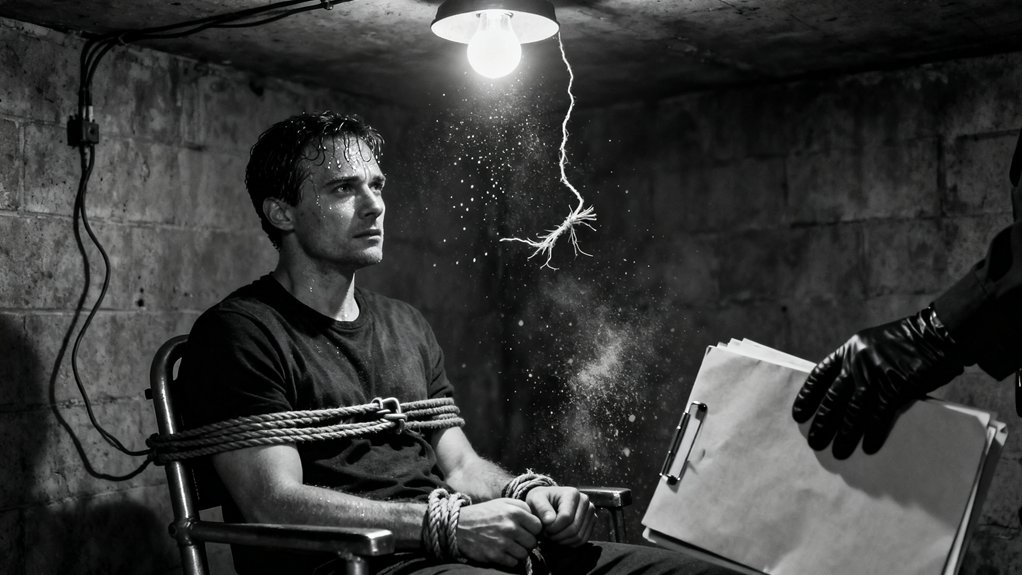
Wrenched from the smuggler’s cockpit and thrust into Managua’s windowless concrete bowels, Eugene Hasenfus found himself the unwilling star of a high-stakes psychological drama. His captors knew the truth: he wasn’t just a rogue mercenary, but a cog in a machine built by iran-contra intermediaries. They pressed him, seeking cracks in the deniability shield. Their leverage? The evidence in his own flight bag—coordinates, radio codes, and a roster of cia contract pilots. He broke, confessing to a supply network that stretched from Ilopango to the Contras. The moral reckoning was immediate: men who flew in shadow now squirmed in light.
| Interrogation Tactic | Operative’s Response |
|---|---|
| Sleep Deprivation | Growing incoherence |
| Threat of Tribunal | Fear of abandonment |
| Evidence Display | Admission of flight details |
| Promise of Fair Trial | Full disclosure of logistics |
His confession didn’t just condemn him; it exposed the whole shadow apparatus. The game of plausible denial evaporated, leaving only a broken pilot and a glaring truth.
Architecting the 1984 Shadow Fleet: Bypassing Congressional Statutes Through Covert Logistics
While Congress slept under the illusion of legislative oversight, a shadow fleet was being architected in 1984, its blueprint drawn to bypass every statutory restriction in place. This wasn’t merely logistical improvisation; it was a deliberate, moral evasion.
The Iran-Contra shadow network’s architects understood that funding bans meant nothing if the hardware itself materialized through unseen channels. Their covert aircraft procurement relied on shell companies and third-country brokers, ensuring no paper trail touched Washington.
Each purchased plane—old cargo birds, stripped of markings—became a deniable asset, ready to ferry weapons without a congressional whisper. The operation’s design was chillingly simple: the law restricted money, not movement. So they moved hardware, not budgets, orchestrating a fleet that existed only in the dark.
They believed themselves untouchable, masters of a system they’d hollowed out from within. But a downed plane over Nicaragua would soon expose their arrogant architecture, proving that even shadows can’t outrun the light of accountability.
Ilopango Air Base: El Salvador’s Clandestine Nerve Center for Weapons Laundering
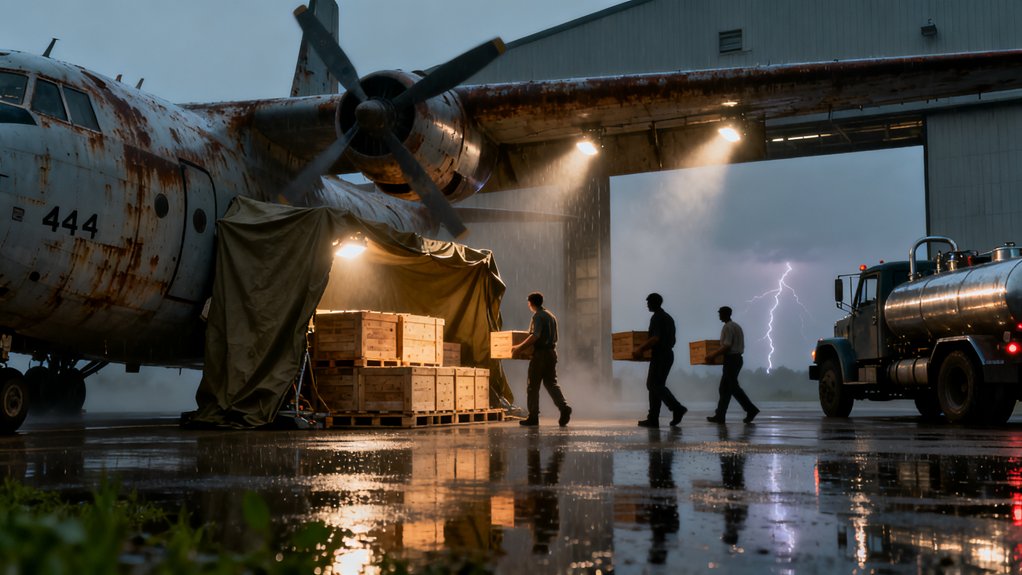
At Ilopango, shadowy front companies quietly procured civilian aircraft, stripping them of any traceable origin to fuel a covert airlift.
These pilots then charted black corridors over the jungle, ferrying weapons into Honduran and Costa Rican drop zones with chilling precision.
This clandestine nerve center wasn’t just a logistical hub—it was a moral abyss where American hands laundered arms through Salvadoran soil.
Procuring Untraceable Aircraft Through Civilian Front Companies
Ilopango Air Base in El Salvador doubled as both a legitimate regional hub and the clandestine nerve center where operatives spun up civilian front companies to procure untraceable aircraft, laundering the planes through shell entities that masked ownership and destination.
These phantom firms exploited lax registry laws, buying aging cargo planes with cash wired from offshore accounts—a direct vein of cia illegal weapons financing. Each purchase was buried under fake invoices and paper trails pointing nowhere, while el salvador hidden airbases provided the staging grounds where crews swapped tail numbers and painted over insignias.
The moral rot here isn’t just the deceit; it’s the calculated abuse of commerce as a weapon. These men knew every forged document bought them another day of plausible deniability, but that’s a hollow shield when the wreckage finally falls from the sky.
Charting Black Air Corridors Into Honduran and Costa Rican Drop Zones
From the shadow of the Ilopango control tower, where civilian flight plans masked a darker manifest, operatives charted black air corridors that cut through the night sky toward Honduran and Costa Rican drop zones.
These clandestine flight paths weren’t mere routes; they were arteries pumping life into the contras, weaving through radar shadows and mountain passes to avoid detection. Ilopango became the nerve center, a place where Honduras covert supply lines were plotted with chilling precision, turning airstrips into silent thresholds of war.
Yet, this moral rot couldn’t hold. Each night flight deepened the lie, and each payload mocked the law. The operators believed they were untouchable, but the sky doesn’t forgive.
When the plane fell over Nicaragua, the entire shadow network crashed with it—exposing not just the corridors, but the corruption that charted them.
Operational Anonymity: How U.S. Intermediaries Shielded the Central American Arms Pipeline
Because the entire operation hinged on deniability, the same crew that unloaded weapons in Honduras often flew CIA-purchased cargo planes with no identifying marks, their flight plans filed as humanitarian aid missions.
This laundering of logistics created a ghost fleet, where U.S. intermediaries wore civilian faces to mask a military purpose. Their genius lay in compartmentalization: each pilot knew only a single phone number, each warehouse operator saw only unmarked crates.
Costa Rica black operations ran parallel to official channels, with airstrips tucked near banana plantations and manifests doctored to list medical supplies.
The moral rot was systemic—by sanitizing every paper trail, these intermediaries convinced themselves they weren’t arming a war, just moving boxes. They shielded the pipeline by dismantling accountability, making every participant a deniable asset.
Even the aircraft’s registrations traced to shell companies in Panama, dissolving the chain of command until the October crash over Nicaragua finally ripped off the mask.
The Deniable Foot Soldiers: Exploiting Expendable Pilots for Off-the-Books Munitions Runs
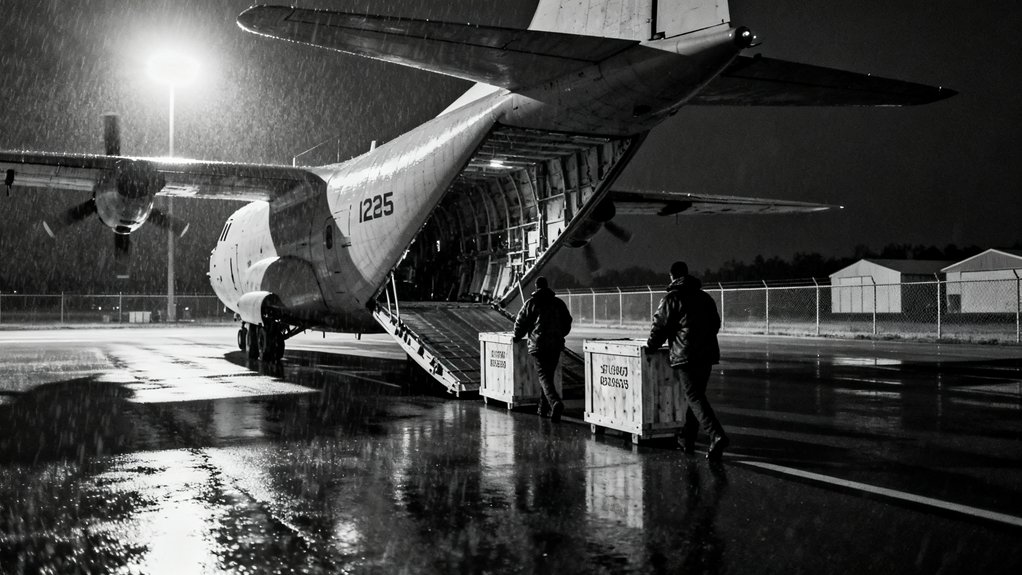
As the October 1986 crash scattered Eugene Hasenfus’s wreckage across the Nicaraguan jungle, the operation’s dirty secret tumbled out with it: the pipeline didn’t rely on loyal soldiers but on disposable men—contract pilots who were paid well enough to never ask questions, yet kept ignorant enough to never reveal the full map. These deniable foot soldiers flew off-the-books munitions runs, leveraging their expendability as a shield for the shadow network’s architects.
| Pilot Type | Role in Pipeline |
|---|---|
| Ex-military | Familiar with evasion, yet bound by no oath—mercenary logic. |
| Drug-smuggling veterans | Preoccupied with profit, blind to political stakes. |
| Civilian adventurers | Motivated by thrill, ignorant of cargo’s lethal destination. |
| Hasenfus’s ilk | Treated as fall guys, disposable if a mission turned fatal. |
They accepted cash, not cause. Each sortie deepened their complicity while insulating U.S. intermediaries—men who never flew, yet pulled every string. These pilots’ anonymity wasn’t accidental; it was engineered, a moral vacuum built on their willingness to die for a paycheck.
The 48-Hour Washington Scramble: Desperate Attempts to Erase the Ilopango Paper Trail
Within 48 hours of the Hasenfus shootdown, White House aides frantically shredded flight manifests and severed every link to the Ilopango airstrip, leaving a smoldering trail of shredded evidence in their wake.
They then issued a blanket denial that the downed cargo plane had any official sanction, a lie that contradicted the very payload found smoldering in the Nicaraguan jungle.
This desperate erasure wasn’t a cleanup—it was a criminal admission, designed to shield the architects while sacrificing the foot soldiers they’d already condemned to obscurity.
Shredding Flight Manifests and Severing the Chain of Command
When the C-123K slammed into the Nicaraguan jungle on October 5, 1986, the crash site instantly became ground zero for a frantic political fire drill in Washington, D.C. Panic seized the White House’s inner sanctum.
Operatives shredded flight manifests like confetti, desperately severing the chain of command linking the covert Ilopango airstrip to senior National Security Council officials. Witnesses watched as paper disintegrated into a blizzard of denial.
This wasn’t mere housekeeping; it was an obliteration of accountability. Each ripped ledger erased a connection, each destroyed document broke a scapegoat’s link to the truth.
Men who’d orchestrated an illegal war now fought a quieter battle—not against enemies abroad, but against the paper trail that would damn them at home. The shredders ground not just evidence, but the very principle of lawful governance.
The Administration’s Immediate Denial of the Downed Cargo Plane
While the C-123K still smoldered in the Nicaraguan canopy, the Reagan administration launched its first line of defense: pure, unvarnished denial.
For 48 frantic hours, officials scrambled, insisting the aircraft belonged to private adventurers, not the U.S. government. They couldn’t scrub the Ilopango paper trail fast enough. Flight logs, fuel receipts, and procurement manifests vanished into burn bags or got shredded in basement offices.
This wasn’t bureaucratic cleanup; it was a moral implosion. They knew the cargo holds held Soviet-bloc rifles funded by secret arms sales, yet they dared to claim ignorance. Their desperate erasure only underscored the guilt.
The truth, however, wouldn’t stay buried in a Washington dumpster—it had already fallen from the sky with a dead crew member’s name attached.
Unearthing the Subterranean Ledgers: Investigative Penetration of the Covert Enterprise
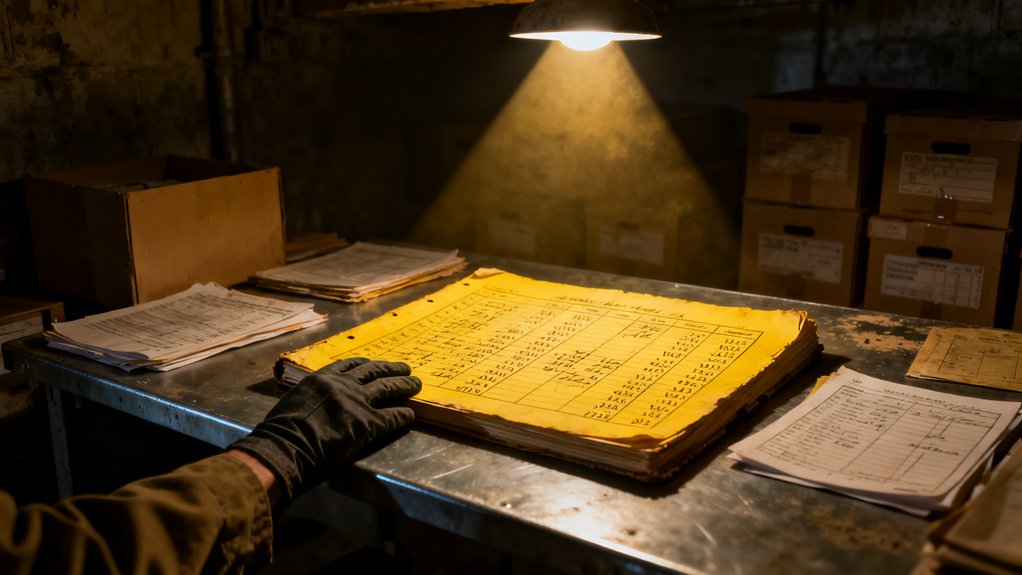
As the twin-engine C-123K cargo plane slammed into the Nicaraguan jungle on October 5, 1986, the sprawling secret it carried didn’t just crash—it cracked wide open, spilling the names and flight paths of a covert operation straight into the hands of investigators.
They didn’t wait for permission. Digging through wreckage and seized manifests, they traced the tangled threads backward to the Ilopango Airstrip, uncovering a network of shell companies and ledger entries that masked a two-year weapons pipeline.
Each falsified invoice peeled back another layer of complicity, exposing how contract pilots and shadowy intermediaries moved lethal cargo under an administration’s watchful blindness.
The moral rot became undeniable: this wasn’t rogue error, but a deliberate, off-the-books enterprise.
With every flight record and bank transfer, investigators tightened the noose, forcing the truth into the light where denials couldn’t survive.
The subterranean ledgers yielded their grim arithmetic, and the covert enterprise began its inevitable collapse.
The Congressional Inquests: Subpoenaing the Architects of the Rogue Supply Chain
Congressional investigators now force the architects of the rogue supply chain to answer for the dirty money, tracing each offshore deposit back to the bullets that rained down on Nicaragua.
The subpoenaed records reveal a deliberate laundering scheme, one that wrapped illegal arms deals in the sterile language of shell corporations and numbered accounts.
They can’t hide behind the chaos of covert ops any longer—the ledger’s bloodstains point straight to the top.
Connecting the Financial Dots Between Off-Shore Accounts and the Shadow Network
Because the October 5, 1986, downing of the supply plane over Nicaragua shattered the operation’s secrecy, investigators on Capitol Hill found themselves staring into a paper trail that led straight from Central American dirt airstrips to the polished marble lobbies of Swiss banking institutions.
Those subpoenaed architects couldn’t hide behind shell companies forever. Each transfer revealed a deliberate pattern: funds flowing from secret Israeli arms deals into numbered accounts, then rerouting to purchase aircraft and pay pilots.
Congress exposed how these men laundered millions through Cayman Islands fronts, turning patriotic rhetoric into personal profit.
It’s a damning moral arithmetic—every dollar moved represented a life endangered and a law broken.
The shadow network wasn’t just operational; it was financially sophisticated, and that sophistication now doomed its creators under oath. Their own ledgers became the noose.
Dismantling the Covert Corridors: The Permanent Operational Collapse of the 24-Month Pipeline
Though the pipeline had run for nearly two years with impunity, its collapse wasn’t a matter of political pressure or legal discovery—it was a single, physical failure that severed the entire logistical spine on October 5, 1986.
That downed aircraft over Nicaragua didn’t just crash; it unmasked every hidden airbase, every coded radio frequency, and every contract pilot’s false manifest. Operatives scrambled, but the damage was immediate and irreversible.
The Ilopango airstrip’s cover evaporated as investigators traced wreckage back to its clandestine origins. Suddenly, the corridor’s rhythm—fuel drops, night landings, cash handoffs—halted cold.
Pilots refused further runs; intermediaries burned paperwork and fled. The 24-month pipeline didn’t merely pause; it permanently collapsed under the weight of its own exposed mechanics.
No backup route emerged, no alternate airstrip revived it. The physical wreckage became the moral wrecking ball, shattering any illusion of deniability.
What had operated as a seamless, shadowy artery now lay inert, its operators exposed and its routes forever compromised.
Executive Pardons and Evaded Sentences: The Judicial Resolution of an Unlawful Logistical Hierarchy
The wreckage had barely stopped smoldering before the legal machinery began its own quiet burial of the affair’s architects. Investigators traced indictments upward, but executive clemency intervened, converting convictions into pardons and transforming accountability into a footnote.
The judicial resolution didn’t punish; it laundered guilt back into statecraft.
Justice didn’t prevail; it laundered guilt into policy.
- Eleven convictions, yet only one prison sentence ever materialized.
- Oliver North’s felony record vanished via presidential pardon, not legal merit.
- The Tower Commission’s findings were shelved, never prosecuted as crimes.
- Caspar Weinberger’s trial collapsed pre-trial, shielding the defense hierarchy.
- Independent counsel Lawrence Walsh decried a “culture of cover-up” that outlived the probe.
This wasn’t a failure of evidence—it was a triumph of political will over judicial reach. The courts processed the case, but the executive’s pardon pen rewrote the verdict, sparing the logistical planners their deserved cells.
For the public, the message rang brutally clear: when the hierarchy answers to the White House, the law bends, and sentences evaporate into policy.
Frequently Asked Questions
Why Were CIA Pilots Paid in Cashier’s Checks?
Cashier’s checks offered anonymity, bypassing the paper trail of standard banking. They couldn’t trace back to the paymaster, keeping the shadow network’s financiers invisible.
It’s a classic cloak-and-dagger move—clean, immediate, and deniable. The pilots, like Hasenfus, weren’t asking questions; they just wanted their money, no strings attached.
That’s the ugly truth of covert ops: everyone’s a ghost, and the checks are the only fingerprints left behind.
Did Any Pilots Survive the C-123 Crash?
Yes, one pilot walked away from the wreckage.
William Cooper, the loadmaster, parachuted to safety, but the two aviators, including Eugene Hasenfus’ colleague, didn’t make it.
The crash on October 5, 1986, wasn’t a clean break—it tore the whole shadow operation wide open.
Cooper’s survival became the loose thread that unraveled a two-year secret, proving that even a lucky escape couldn’t dodge the inevitable fallout.
Who Ordered the Downing of the Supply Plane?
No one ever ordered the downing. The Sandinista military’s gunners fired, likely reacting to a suspicious low-flying aircraft over their sovereign airspace.
It wasn’t a calculated assassination from Washington; it was a battlefield accident that shattered the shadow network. Evidence points to organic anti-aircraft fire, not a secret directive, as the plane’s fatal trigger.
The crash wasn’t a conspiracy’s climax but a chaotic unraveling, exposing the illegal operation’s fragile wings.
How Did Couriers Disguise Flight Logs From Inspectors?
Couriers didn’t hide flight logs from inspectors; they simply never filed the real ones.
Instead, they swapped manifests for bogus cargo lists—medical supplies, agricultural gear—and burned the originals at Ilopango.
This substitution wasn’t cleverness; it was deliberate corruption.
The gaps in paperwork weren’t oversight. They were the network’s bloody fingerprints, waiting for that October crash to smear them into public view.
Were Any CIA Officers Ever Indicted for Perjury?
The web of accountability didn’t ensnare any CIA officers for perjury, though the shadow network’s collapse pointed fingers elsewhere.
No indictments landed on the Agency’s own, a glaring hole in the justice net. Prosecutors chased lower-level players, but the senior architects slipped through, leaving the moral ledger unbalanced.
That’s the bitter truth—the system blinked, and those who spun the lies walked free, while the truth itself became the casualty.