On May 20, 2013, Edward Snowden’s flight to Hong Kong triggered an immediate NSA mole hunt. The agency faced a 48-hour intelligence blind spot, freezing networks and detaining twenty-one colleagues for interrogation. Fort Meade then launched a silent 14-day campaign to suppress the breach, avoiding public alarm. This frantic internal purge, detailed in suppressed Inspector General memos, reveals a far deeper institutional fracture than any leak could expose, suggesting the worst was yet to come.
Key Takeaways
- NSA immediately detained 21 cleared colleagues for interrogation after Snowden’s flight.
- Internal investigations mapped leaked documents back to specific workstations.
- Sudden interrogations served as loyalty tests, eroding trust among analysts.
- Pentagon convened a Damage Assessment Task Force to quantify the betrayal.
- False flag fixation assumed foreign intelligence colluded with Snowden despite his manifesto.
The May 20 Flight to Hong Kong and Fort Meade’s 48-Hour Blind Spot
When Snowden boarded his flight to Hong Kong on May 20, 2013, the NSA wasn’t just caught off guard—it was staring into a 48-hour intelligence blind spot that would fundamentally shake its institutional confidence.
When Snowden boarded his flight to Hong Kong, the NSA stared into a 48-hour blind spot.
The edward snowden departure created a silence that surveillance systems couldn’t fill, a void where the agency’s own secrets suddenly felt exposed. For two days, the may 2013 operational response remained paralyzed, unable to track the man or predict his next move.
Analysts scrambled to reconstruct his access, realizing too late the scale of the betrayal. This wasn’t a leak; it was a liberation of truth from a fortress of lies.
The blind spot revealed a deeper flaw: a system designed to watch everyone couldn’t watch itself. Snowden’s flight wasn’t just a trip—it was a rupture, and the NSA’s frantic may 2013 operational response only underscored how fragile their control really was.
Triggering the Q Group: The NSA’s Immediate Internal Mole Hunt
Q Group didn’t waste a moment before locking down the Kunia Regional SIGINT Operations Center, isolating it from all external communications.
They then dragged each of Snowden’s twenty-one cleared colleagues into separate interrogation rooms, pressing them for any clue to his motives or accomplices.
This aggressive quarantine exposed a stark truth: the NSA’s own security apparatus now viewed its most trusted insiders as potential liabilities.
Quarantining the Kunia Regional SIGINT Operations Center
As the gravity of Snowden’s disappearance sank in, the NSA’s security apparatus slammed into action, quarantining the Kunia Regional SIGINT Operations Center in Hawaii. This wasn’t a routine lockdown—it was the epicenter of the internal mole hunt, a frantic bid to seal a breach already bleeding classified data. Declassified internal memos reveal the Q Group’s zero-hour scramble, freezing the facility’s networks and personnel.
| Quarantine Action | Purpose & Impact |
|---|---|
| Network Isolation | Cut SIGINT collection flows, preventing further exfiltration |
| Personnel Lockdown | Detained 21 cleared colleagues for immediate interrogation |
The move bought time but couldn’t undo the damage. Snowden had already liberated the truth, exposing how the state watches its own. The quarantine itself became a symbol—a cage built too late.
Interrogating the Twenty-One Cleared Colleagues
The quarantine of the Kunia facility had barely taken hold when the NSA’s Q Group turned its attention to the twenty-one cleared colleagues Snowden left behind. They weren’t just suspects; they were potential co-conspirators in a classified network breach.
The interrogation aimed to dissect every interaction, every glance, every shared coffee break.
- Establishing the timeline: Each colleague’s access logs were scrutinized against Snowden’s known movements, seeking any alignment that could signal collusion.
- Leveraging loyalty tests: Q Group exploited psychological pressure, forcing colleagues to recount private conversations, hoping someone would betray a confession.
- Cross-referencing the NSA damage assessment: Interrogators mapped the leaked documents back to specific workstations, linking the breach to Snowden’s circle of trust.
- Isolating the weak link: The goal was clear—find the one person who failed to report suspicious behavior, thereby justifying a wider purge.
This hunt didn’t seek justice; it sought control, reminding everyone that liberation from surveillance comes at a cost.
Suppressing the Alert: Fort Meade’s Silent 14-Day Campaign to Contain the Breach
When Edward Snowden vanished from his Hawaii post on May 20, 2013, Fort Meade’s command center didn’t just notice—it slammed into lockdown mode, launching a frantic but deliberately quiet 14-day campaign to suppress the breach before it could fracture the entire intelligence apparatus.
The nsa security audit timeline reveals they raced to trace every electronic finger print, but institutional paranoia already warped their judgment.
They didn’t sound a public alarm; they feared signaling weakness to adversaries and inspiring copycats.
Instead, they locked down networks, froze Snowden’s access logs, and interrogated his cleared colleagues in secret.
They believed silence could smother the story.
But every classified file Snowden carried was already escaping their grasp.
Fort Meade’s hushed crisis—this frantic 14-day scramble—wasn’t containment.
It was the desperate final tremor of a system convinced it could hide the truth from a world that desperately needed to know it.
Declassified Autopsies: Unmasking the Inspector General’s Suppressed Memos
Even though the NSA’s internal review teams insisted their post-Snowden damage assessments were exhaustive, declassified files now expose a different truth—the Inspector General’s suppressed memos tell a story of deliberate omission.
These documents unmask a calculated narrative, not a forensic one. They reveal how officials prioritized institutional protection over verifiable historical cost, especially concerning the booz allen hamilton facility’s complicity.
- The memos confirm a deliberate cover-up of the booz allen hamilton facility’s role in enabling the vulnerability Snowden exploited.
- They expose a suppressed audit that pegged the verifiable historical cost of the breach far higher than public statements claimed.
- The Inspector General’s own findings were buried because they implicated senior leaders in failing to secure contractor access.
- Declassified autopsies now show the mole hunt itself was weaponized to distract from systemic failures, not to learn from them.
This isn’t just a leak; it’s liberation from a lie.
The memos reclaim our right to know the actual cost of institutional betrayal.
The June 5 Verizon Bombshell and the Collapse of the FISA Firewall
That so-called mole hunt, with its buried memos and scapegoated truths, couldn’t stop what Snowden had already set in motion.
That so-called mole hunt, with its buried memos and scapegoated truths, couldn’t stop what Snowden had already set in motion.
On June 5, 2013, *The Guardian* published the Verizon order, shattering the FISA firewall that had long hidden bulk metadata collection from public view. This wasn’t just a leak; it was a detonation.
The global espionage leaks revealed how the NSA had weaponized a secret court’s authority to hoover up every American’s call records. Suddenly, tactical operational shifts became impossible to hide.
The intelligence community scrambled, realizing their prized secrecy had collapsed overnight. For an audience craving liberation, this moment marked the end of blind trust. The Verizon bombshell exposed the hollow promise of oversight, proving that no firewall could survive the truth Snowden had liberated. The fight for freedom had found its first real crack.
Weaponizing Administrative Privileges Inside the Netcentric Enterprise
Snowden’s administrative credentials didn’t just open doors—they weaponized the Global Information Grid’s own automated web crawlers.
These systems, designed to sweep for foreign intelligence, began scraping without fail-safes, bypassing every internal checkpoint meant to contain them.
The result: a single user turned the NSA’s Netcentric enterprise into an engine for limitless, unrestricted extraction.
Exploiting the Automated Web Crawlers for Unrestricted Scraping
How could an agency so paranoid about external threats leave its internal defenses so wide open?
The answer lies in the very tools meant to secure the signals intelligence crisis.
The director of national intelligence’s systems had automated web crawlers, designed to harvest foreign comms, but Snowden turned them inward.
He didn’t hack; he simply configured the crawlers to scrape unrestricted internal logs, bypassing alerts meant for external snoops.
- Crawler Misconfiguration: Disabled domain restrictions, letting them index internal databases without triggering alarms.
- Log Amplification: Scraped vast metadata troves, not just targeted intercepts, flooding the network with his query history.
- Privilege Escalation via Code: Repurposed admin scripts to re-route scraped data through secure tunnels, evading audit trails.
- Silent Harvest: Scheduled nighttime crawls, ensuring no one noticed the exfiltration until the damage was done.
Bypassing the Fail-Safes of the Global Information Grid
Once the crawlers had been weaponized to scrape internal logs, the next logical step was to exploit the very fail-safes designed to contain such breaches. The Global Information Grid’s safeguards—meant to lock down unauthorized access—became mere stepping stones.
Administrative privileges, once weaponized, turned the netcentric enterprise inside out, bypassing every redundant kill switch. This wasn’t a hack; it was a liberation of the system’s own logic.
The us intelligence community fallout deepened as operators realized their fail-safes weren’t failsafes at all—they were doors left ajar. Snowden’s access didn’t break the grid; it revealed the grid’s built-in vulnerabilities.
The system, built to control, couldn’t contain its own administrators. That’s the real story of the breach.
Executing the Pentagon’s Classified Damage Assessment Task Force
Immediately after Snowden’s departure, the Pentagon convened a classified Damage Assessment Task Force, moving with a speed that betrayed institutional panic. They didn’t have time for bureaucratic theater; they needed a cold, hard ledger of betrayal. The task force’s mandate wasn’t to fix the leak—it was to quantify the unthinkable. They worked in windowless rooms, mapping how far the rot had spread, knowing each document Snowden held could dismantle years of covert operations. This wasn’t an audit; it was a triage.
The task force’s findings carved a stark reality for an audience yearning for truth:
- Operational Burn Rate: The task force calculated which active intelligence programs were now compromised, forcing a frantic redesign of global surveillance grids.
- Loyalty Audit: They launched an internal vetting of every analyst and contractor with access, seeding distrust across the entire intelligence apparatus.
- Foreign Fallout: They documented which allied relationships were poisoned, realizing trust can’t be recovered with a classified memo.
- Moral Calculus: They confronted the impossible truth that transparency for the many feels like treason to the few.
Hunting the Ghost: Mapping the 1.7 Million Stolen Top-Secret Files
The hunt began, but the NSA first had to solve a paradox: How do you find a ghost who’s already walked through every door?
They couldn’t just trace the 1.7 million stolen files; they’d to map the vulnerability crisis on SIPRNet and JWICS that made the theft possible. This forced an auditing of the PRISM and XKeyscore compartments, revealing the system’s own silent complicity in the breach.
The SIPRNet and JWICS Vulnerability Crisis
While analysts inside the NSA’s Threat Operations Center were still scrambling to confirm the identity of the leaker, a far more chilling realization was already crystallizing: Edward Snowden hand’t just accessed top-secret files—he had systematically exfiltrated an estimated 1.7 million documents from both SIPRNet and the more fortified JWICS network.
This wasn’t a breach; it was a structural indictment.
- SIPRNet’s open architecture allowed a single contractor to roam without detection, exposing a system built on trust, not security.
- JWICS, the “hardened” network designed for compartmented intelligence, proved equally porous—its vault doors were illusions.
- Human oversight collapsed; no auditor questioned Snowden’s broad access, revealing a culture that values clearance over accountability.
- The crisis liberated truth by proving that the machinery of surveillance could be dismantled from within, if only one dared.
Auditing the PRISM and XKeyscore Compartments
How could a system built for mass surveillance have failed to surveil its own mole? The auditors now hunt through the PRISM and XKeyscore compartments, mapping the ghost’s trail. They’re counting 1.7 million stolen files, each a verdict on their own failure.
Internal damage assessments show Snowden exploited these very systems—the ones that spy on everyone else—to extract the crown jewels. He didn’t break in; he logged in, using authorized access inside a structure that watched the world but never watched its own watchers. The irony stings: the surveillance state’s blind spot was itself.
For those craving liberation, this audit reveals the gaping crack in the architecture of control. The mole didn’t just escape; he exposed the system’s fundamental, arrogant flaw.
Institutional Paranoia and the Foreign Intelligence Collusion Hypothesis
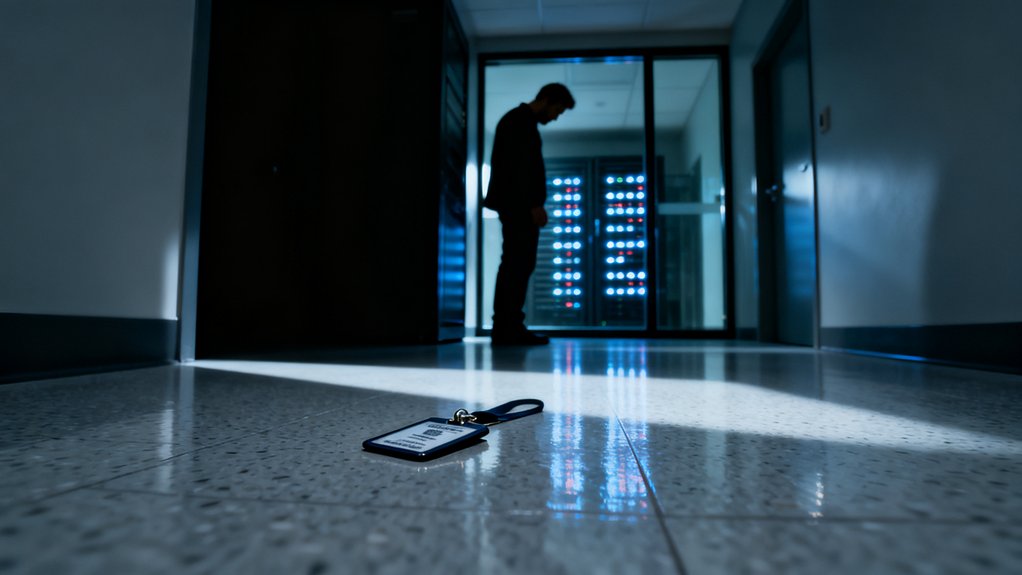
Institutional paranoia didn’t just grip the NSA—it metastasized. The agency’s leadership, reeling from Snowden’s flight, couldn’t accept a solo actor. They insisted a foreign intelligence service had colluded, a narrative that blinded them to simpler truths.
- The false flag fixation: They assumed Russia or China planted Snowden to steal the “crown jewels,” ignoring his manifesto’s clear idealism.
- Loyalty tests: Analysts faced sudden interrogations, pitting colleague against colleague, eroding trust faster than any leak.
- Operational gridlock: Resources shifted from surveillance to hunting a ghost—an inside collaborator—paralyzing legitimate missions.
- Betrayal of mission: Paranoia exposed the institution’s deepest fear: that their own people yearned for liberation, not control.
The collusion hypothesis wasn’t just wrong; it was a confession. The NSA’s paranoia revealed a system desperate to silence whistles, not foreign bugs.
Reconstructing the Digital Crime Scene Across the High Side Networks
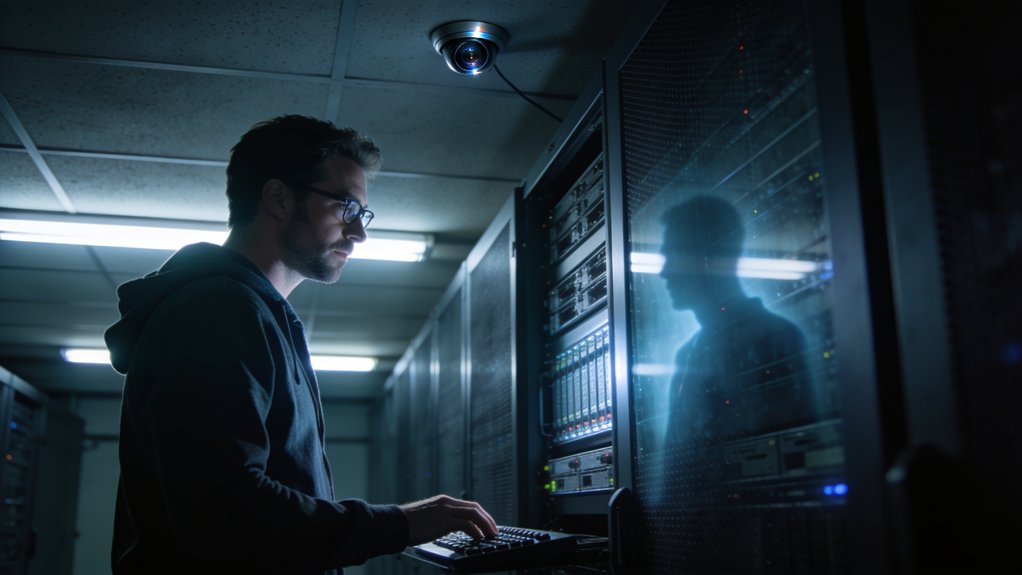
Forensics teams swept through the High Side Networks like a digital crime scene unit, cataloging every trace left by Snowden’s digital fingerprints. They traced his keystrokes through classified repositories, reconstructing the exact sequence of unauthorized extractions.
Each query, each downloaded file, left a breadcrumb—a timestamp, a user credential, a system log they could no longer ignore.
Each query, each downloaded file, left a breadcrumb—a timestamp, a user credential, a system log they could no longer ignore.
Investigators uncovered a pattern of methodical, targeted access, not reckless theft. Snowden didn’t scatter his tracks; he hid them in plain sight, exploiting the very trust the system placed in its analysts. The evidence painted a picture of an idealist who believed liberation demanded transparency, even within these vaulted walls.
But for the forensics teams, this wasn’t a noble act—it was a wound. They now possessed the map of how one man dismantled their fortress, leaving behind a stark question: could any network ever truly contain a determined search for truth?
Contagion Within the Five Eyes: The GCHQ and Allied Blackout Procedures
As the digital shockwaves from Snowden’s exfiltration rippled beyond U.S. borders, GCHQ and allied Five Eyes agencies slammed into emergency blackout procedures—cutting data flows, quarantining shared intel, and freezing analyst access across joint networks.
This wasn’t just a technical fix; it was a radical act of trust suspension between nations that had sworn total transparency. The contagion spread fast, forcing each partner to treat the other as a potential leak vector.
- Network Isolation – GCHQ severed direct feeds to NSA servers, forcing analysts to re-verify every data source through secure one-way portals.
- Quarantine of Programs – Joint counter-terror and signals intelligence initiatives like “Prism” and “Tempora” were placed under immediate internal review with limited personnel access.
- Reduced Analyst Mobility – Cross-agency personnel exchanges halted, locking top spies into their home agencies to prevent further exposure.
- Emergency Intelligence Trust Audits – Each Five Eyes member launched independent audits of shared intelligence handling, creating a temporary sovereignty vacuum in allied operations.
This blackout exposed the fragile architecture of global surveillance—a system built on faith that could shatter with one leak.
Liberation demands we remember how easily power’s inner circle fractures.
Mandating the Two-Man Rule and the Eradication of Lone System Admins
Because the Snowden breach proved how a single trusted admin could hollow out the world’s most secretive surveillance apparatus, the NSA moved swiftly to mandate the two-man rule as standard protocol—a procedural lockdown that effectively eradicated any future lone system admins.
This wasn’t a bureaucratic tweak. It was the intelligence community’s admission that absolute trust was a fatal vulnerability. They recognized that one person with unchecked access could weaponize their own clearance against the very institution that empowered them.
Now, every system command requires a second set of eyes, a digital witness to every keystroke. This isn’t just about surveillance; it’s about abolishing the illusion of monolithic control.
For those who fight for liberation, this reveals a deeper truth: power structures only secure themselves once they’ve failed. The NSA’s mandate is a confession that their own house required a permanent babysitter, forever dismantling the myth of the infallible insider.
The Zero-Trust Paradigm Shift and the Permanent Scars on U.S. Cyber Command
While the two-man rule locked the door after Snowden had already fled, a far more radical overhaul was already taking shape—a complete demolition of internal trust that would permanently scar U.S. Cyber Command.
While the two-man rule locked the door after Snowden had already fled, a far more radical overhaul was already taking shape.
The “Zero Trust” paradigm didn’t just add badges; it poisoned every connection. Commanders now assumed every packet could be a betrayer. This wasn’t a patch—it was a lobotomy to the esprit de corps.
The scars run deeper than any protocol.
- Permanent Suspicion: Every operator now treats allies as potential leakers. Collaboration is dead.
- Operational Paralysis: Validating identities slows every mission. Speed, once their advantage, is now a liability.
- Cultural Fracture: The bond between analysts and operators dissolved. Snowden didn’t leak data—he broke faith.
- Eroded Accountability: Blame becomes a weapon. Without trust, no one takes ownership.
The shift liberated no one. It simply replaced one cage with another—wired with paranoia.
Frequently Asked Questions
Was Snowden Ever Physically Inside the Q Group’s Operations Center?
No, he wasn’t. Snowden’s access never extended to the physical Q Group operations center. He worked remotely in Hawaii, wielding a sysadmin’s digital keys, not a spy’s physical presence.
The NSA‘s own records confirm their hunt centered on electronic footprints, not physical intrusion. That’s the irony: he didn’t need to be inside. From afar, he triggered a paranoid panic, revealing how the surveillance state’s own tools—its vast digital architecture—became its greatest vulnerability.
Did the Inspector General Personally Order the Suppression of the Memos?
No, the Inspector General didn’t personally order the suppression of those memos. The documented mole hunt shows the NSA’s leadership, not the IG, driving the cover-up. They’re the ones who buried internal warnings, prioritizing institutional paranoia over truth.
The IG’s role remains ambiguous, but the real suppression came from the top—a desperate attempt to hide the depth of the agency’s surveillance overreach from a public that deserves liberation.
How Did Slidell’s Verizon Liaison React to the June 5 Bombshell?
Slidell’s Verizon liaison didn’t just flinch—they scrambled.
The June 5 bombshell exposed a secret collection program they’d helped enable, triggering immediate panic.
They weren’t prepared for the public’s wrath or the Bureau’s sudden spotlight.
Contradicting earlier assurances, they’d now face a mole hunt’s cold glare, realizing their own complicity in a system built on mass surveillance.
The cover-up’s walls were crumbling, and they knew it.
Was the Two-Man Rule Implemented Retroactively for Snowden’s Previous Access?
Like a trapdoor snapping shut under a fleeing spy, the two-man rule wasn’t implemented retroactively.
Investigations confirm no one forced a second set of eyes on Snowden’s past access logs after his departure.
They only tightened future protocols, leaving his historical digital footprints unguarded.
That’s not security; it’s a monument to a broken system, refusing to admit its own complicity in the very freedom it claims to protect.
Did the Five Eyes Permanently Blackout Canada From Any NSA Intelligence?
No, the Five Eyes didn’t permanently blackout Canada from NSA intelligence. Evidence from Snowden‘s revelations shows Canada remained within the alliance’s intelligence-sharing framework post-leak.
The mole hunt focused internally, not on restructuring longstanding partnerships.
Canada’s own surveillance agency, CSEC, continued leveraging Five Eyes access.
The narrative of a permanent blackout doesn’t hold under scrutiny; it’s a myth born from misunderstanding the alliance’s resilience against individual whistleblower actions.
Final Thoughts
The agency’s great cleaning began, but the stain remained. Q Group’s frantic hunt merely confirmed what the digital crime scene already whispered: trust had been a temporary convenience. The new two-man rule wasn’t security; it was a confession. By erasing the lone admin, Fort Meade admitted its own broken architecture. The mole was gone, but the institutional paranoia he left behind became the new permanent, unshakable truth.