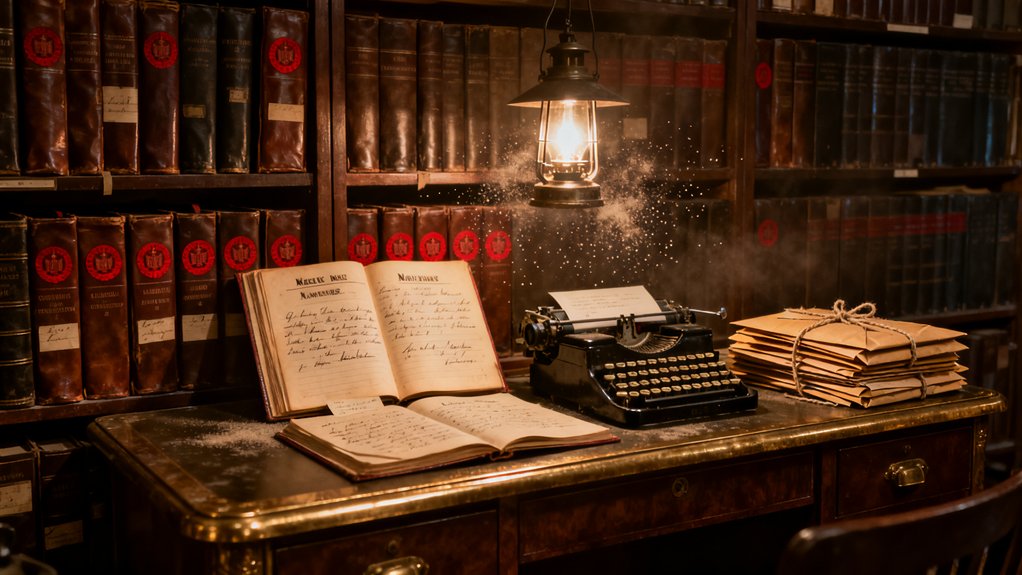
Britain became a police state overnight, or so it seemed when DORA seized nearly every aspect of life during World War I. The Defence of the Realm Act let the government spy, censor, and imprison without proof. Citizens vanished into custody for speaking out, criticizing the war, or simply being foreign-born. Wartime fear turned neighbors into informants. Yet one question lingered in whispers: who decided who was a threat—and when would it end?
Key Takeaways
- DORA granted the British government sweeping powers to detain, censor, and surveil citizens without trial during WWI.
- Over 1,800 Irish nationalists were detained without charge after the Easter Rising under DORA’s repressive laws.
- The state censored press, mail, and telegrams, shutting down over 250 publications critical of the war.
- Over 32,000 “enemy aliens” were interned, mostly German nationals, many for the entire war duration.
- DORA remained active until 1921, used to suppress strikes and dissent long after WWI ended.
What Was DORA and Why Was It Created?
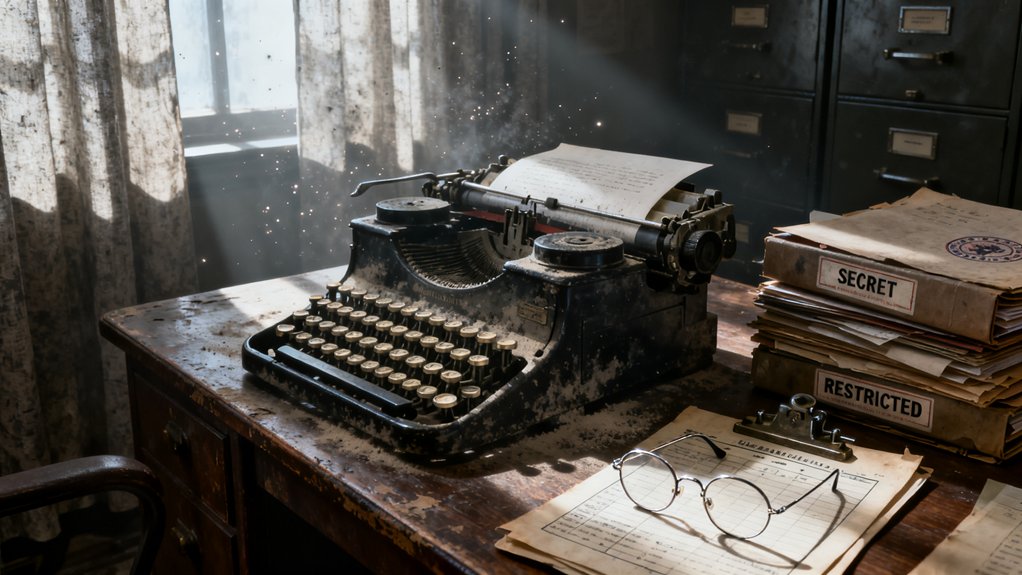
Britain passed the Defence of the Realm Act on 7 August 1914, and it didn’t waste time flexing its muscle. It let the government take control of nearly every part of life in the name of wartime safety. With powers to censor mail, shut down pubs, and seize land, DORA turned Britain into a tightly regulated war machine from day one.
Defence Of The Realm
War demanded swift and sweeping control. The Defence of the Nation Act—DORA—was rushed into law on 7 August 1914, just days after Britain entered WWI. Born of fear and urgency, it gave the government unchecked power to protect the nation. DORA let authorities shut down dissent, censor the press, and seize land without consent. Ports, railways, and telegraphs fell under state command. Public behaviour was policed: whistling, loitering, even flying kites became crimes. Blackouts were enforced. Alcohol was rationed. Foreigners were detained. At its core, DORA was the legal engine of wartime control—a law that turned defence of the nation into a tool for mass surveillance and suppression. It didn’t just guard the nation; it reshaped daily life. DORA stayed in force until 1921, its reach growing, its grip tightening, long after the guns fell silent.
Wartime Powers And Control
| Control | Consequence |
|---|---|
| Censorship | Free speech silenced |
| Surveillance | Privacy erased |
| Rationing | Bodies regulated |
Land seized, dissent punished, ten executed. DORA didn’t just guard Britain—it remade it, masking repression as necessity.
What Powers Did DORA Give the State?
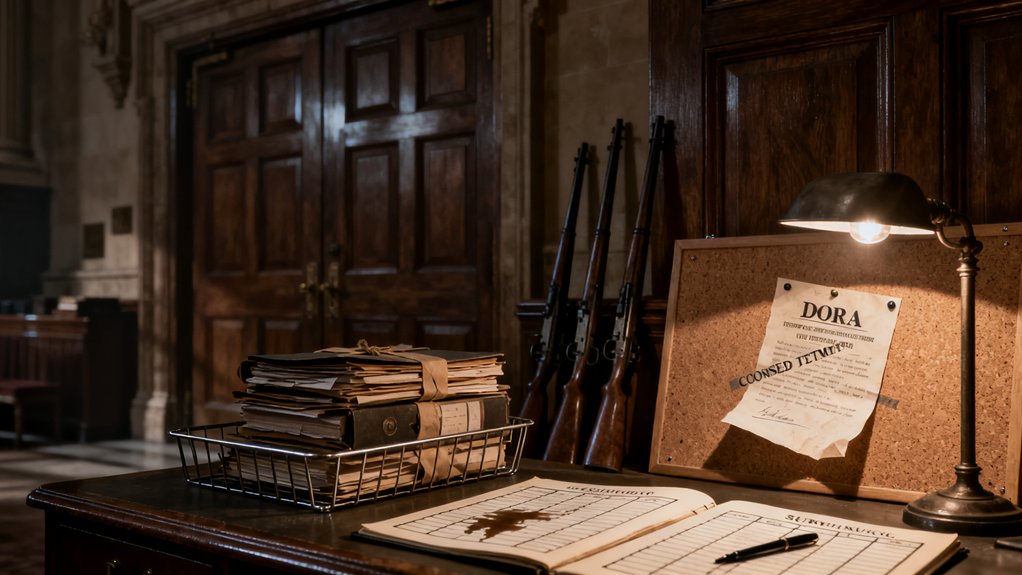
It cracked down on information, allowing the state to censor newspapers, intercept private telegrams, and silence dissent without warning. It gave authorities the power to spy on citizens, arrest suspects without charge, and lock people up indefinitely—no trial, no timeline. This was DORA’s grip: tight, watchful, and unforgiving.
Censorship And Media Control
How could a government silence a nation without firing a shot? Under DORA, Britain did exactly that—imposing total press censorship to control wartime narratives. The state banned any report on troop movements, military operations, or air raids, fearing public alarm. Editors who defied the rules faced prosecution; dozens of socialist and Irish nationalist papers were shuttered. Censors scanned 300,000 telegrams in 1916 alone, blocking messages that might aid the enemy. Letters from the front were ripped open, edited, or destroyed to prevent morale-damaging truths from spreading. DORA didn’t just monitor—it shaped reality. With the press muzzled and private words policed, dissent couldn’t breathe. This wasn’t security—it was suppression. DORA turned information into a weapon, wielded by the state to keep power intact. Free thought became a threat. The cost of control? Truth.
Surveillance And Detention Powers
Britain’s wartime state of fear forged DORA into a hammer of surveillance and detention, granting unchecked power to police the lives of its own people. Through DORA, the state unleashed sweeping surveillance and detention powers, jailing citizens without trial—especially under Section 3(6), which targeted Irish individuals. Military authorities imprisoned anti-war activists like Bertrand Russell and John MacLean via courts martial. Postal censors scanned 300,000 telegrams in 1916 alone, invading private communications. Foreign nationals weren’t spared; over 30,000 enemy aliens were interned. Movement and residence fell under state control, while public speech and the press faced harsh curbs—discussing military matters became a crime. DORA didn’t just defend the kingdom; it dismantled freedom. These measures turned everyday life into monitored, restricted existence. DORA became the machinery of control, operating far beyond the battlefield—into homes, letters, and dissenting voices—proving how quickly democracy can bend under fear.
How DORA Enabled Surveillance and Arrests
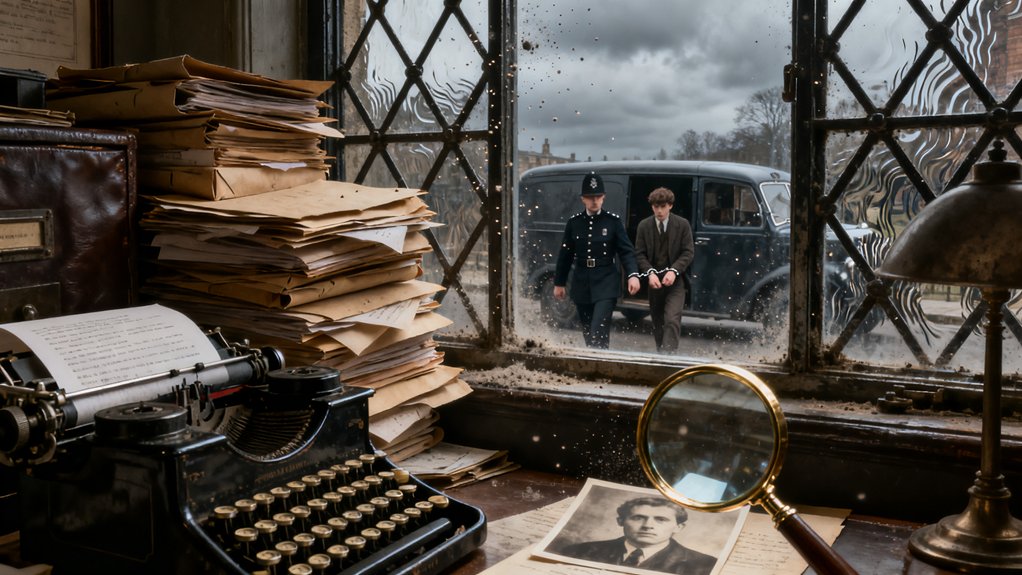
Under DORA, British authorities swept up ordinary lives in a web of surveillance, scanning 300,000 telegrams in 1916 alone to root out dissent. They cracked down on suspected threats without trial, locking up activists like Bertrand Russell and hundreds of Irish civilians after the 1916 Easter Rising. With the power to detain indefinitely and censor freely, the state turned everyday behaviours into grounds for arrest.
Home Surveillance Powers
Though ordinary life carried on in wartime Britain, the state reached deep into private homes through surveillance powers granted by DORA. On the home front, no space was truly private—authorities conducted warrantless searches, tearing through belongings in homes, shops, and farms, all in the name of national security. Under DORA, postal workers handed over mail to military censors who read letters, suspecting dissent or espionage in every line. Civilians lived under constant watch, their movements and communications monitored without consent.
| Power | Used To |
|---|---|
| Mail interception | Read private letters for hidden messages |
| Warrantless searches | Invade homes without judicial approval |
| Movement tracking | Monitor and restrict enemy aliens |
These tools turned neighbourhoods into zones of suspicion. DORA didn’t just defend the nation—it rewired daily life, making surveillance a quiet, relentless presence on the home front.
Mass Arrests And Detentions
Surveillance didn’t stop at observation—it led straight to arrest. Under the Defence of the Kingdom Act, mass arrests and detentions became tools of wartime control. Over 2,000 people were jailed for suspected sedition or dissent, including anti-war voices like Bertrand Russell and John MacLean. The Act’s powers spiraled through Britain and Ireland, where Section 3(6) let military authorities imprison anyone indefinitely without charge—used brutally against Irish republicans after the 1916 Easter Rising. Authorities interned 32,000 enemy aliens, most German, Austro-Hungarian, or Turkish, locking up civilians in camps without trial. Defence of the Kingdom Regulations criminalized speech, prosecuting over 800 for vague “disaffection.” Postal censorship fed the machine—300,000 telegrams scanned in 1916 alone—turning words into evidence. DORA didn’t just watch; it crushed freedom, turning law into a weapon of mass arrests and detentions.
Arrests Without Trial: Ending Due Process
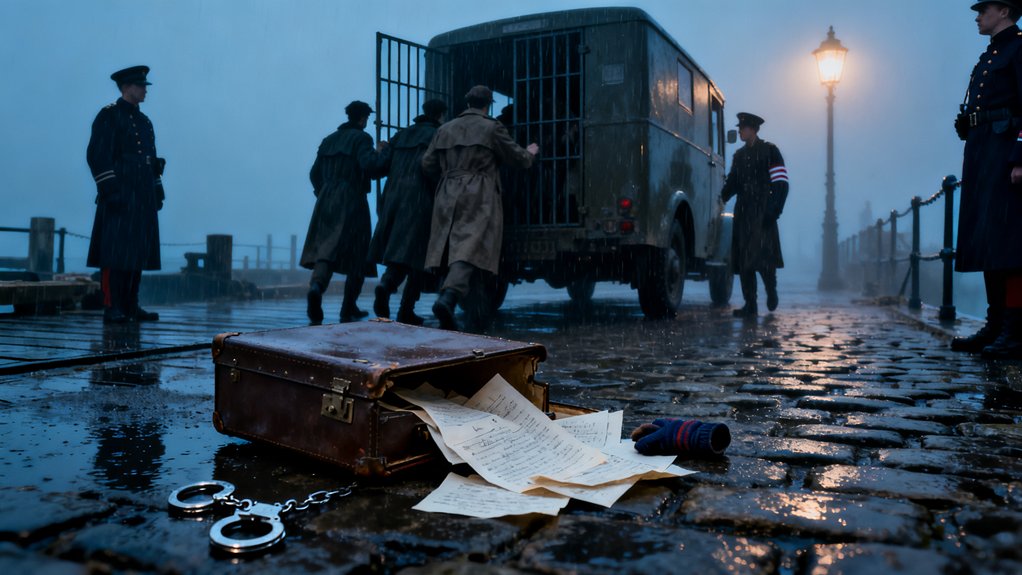
They didn’t need a trial—under DORA, authorities could lock people up without charge, silencing dissent before it spread. Habeas corpus was suspended, especially in Ireland, where hundreds of nationalists vanished into detention after the 1916 Rising. Even in Britain, enemy aliens and critics of the war found themselves held indefinitely by executive order, no jury, no judge, no appeal.
Detention Without Charge
What happened when the rule of law gave way to military decree? Under the Defence of the Kingdom Act (DORA), British authorities imposed detention without charge across Ireland after the 1916 Easter Rising. Martial law replaced justice, and suspicion became grounds for arrest. Over 1,800 Irish nationalists were seized—not accused, not tried, just disappeared into cells. Section 3(6) of DORA empowered commanders to lock up anyone deemed a threat, bypassing courts entirely. While Britain restored civilian trials in 1915, Ireland was excluded, enduring years of legal blackout. DORA’s grip held until 1921, a tool to crush dissent and silence resistance.
| Target | Arrested Under DORA |
|---|---|
| Irish nationalists | 1,800+ |
| Suspected separatists | Indefinite detention |
Suspension Of Habeas Corpus
When the Easter Rising erupted in 1916, British forces moved swiftly to crush resistance, suspending habeas corpus across Ireland under DORA’s sweeping authority. British authorities arrested over 3,500 people, jailing 1,800 without charge or trial. Under Section 3(6), they detained civilians indefinitely, denying the right to challenge imprisonment. While Britain’s 1915 amendment preserved habeas corpus for its citizens at home, Irish people were stripped of legal protection. Martial law followed, turning courts into mere formalities. British authorities exploited DORA to silence dissent, targeting nationalists and activists. Even after the war, the suspension held until 1921, fueling resentment. Habeas corpus wasn’t just delayed—it was discarded. This erosion of justice exposed how British authorities weaponized emergency powers, not just against enemies, but against entire populations. DORA’s legacy wasn’t defense—it was domination.
Who Was Targeted Under DORA’s Crackdown?
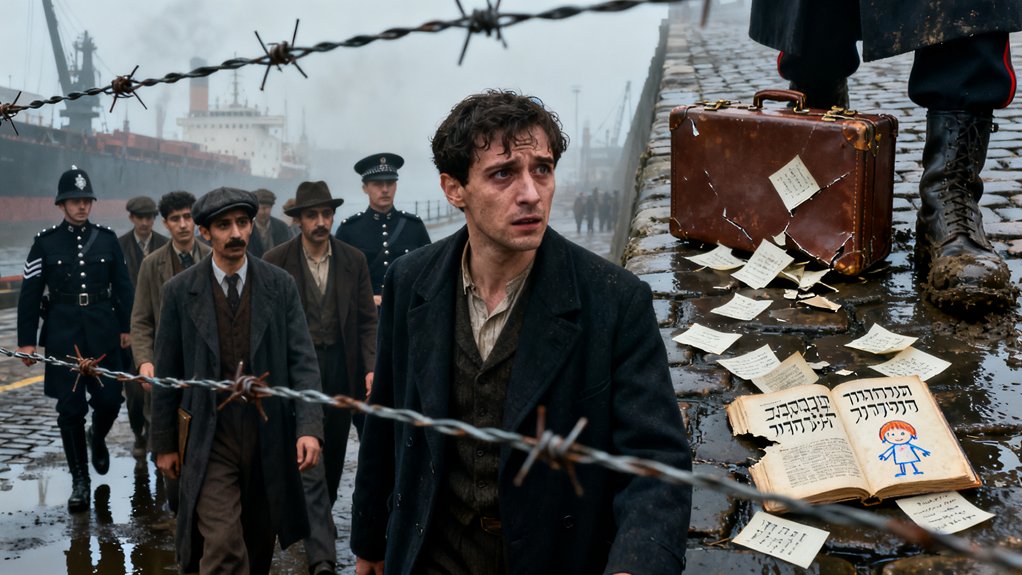
Foreign nationals, especially Germans and Austro-Hungarians, found themselves branded as threats, stripped of freedoms, and locked up without proof of wrongdoing. Ordinary Britons faced sudden limits on speech, movement, and daily habits, punished for rumors or minor breaches of tightly enforced rules. As suspicion spread, DORA turned neighbor against neighbor, making everyday life a potential act of defiance.
Foreign Nationals Targeted
Though they had lived quietly for years in British towns and cities, thousands of German and Austro-Hungarian nationals suddenly found themselves under suspicion when war broke out in 1914. Labeled enemy aliens, these foreign nationals were forced to register, faced travel bans, and couldn’t move more than five miles without permission. The government deported over 600 in 1915 alone, while around 32,000 were interned for years, including civilians and merchant seamen. Even naturalized citizens of German descent weren’t spared—some lost citizenship and were locked up without trial. Cameras, binoculars, and coastal zones were off-limits, all under DORA’s sweeping reach. These measures, rooted in fear and xenophobia, turned law-abiding residents into suspects overnight. Targeted not for crimes but origin, foreign nationals became pawns in a war machine that sacrificed liberty for perceived security. Their lives, once ordinary, were dismantled by decree.
Everyday Citizens Restricted
While war raged overseas, life at home turned unfamiliar as DORA cracked down on ordinary Britons with sweeping new rules. British society felt the weight of control in everyday actions, as the state rewrote norms in the name of security.
- Whistling for taxis was banned—mistaken for air raid signals—silencing a common street habit.
- Pubs cut service to 12–3 and 6:30–9:30, with the “No Treating Order” killing rounds of drinks to curb drunkenness.
- Feeding ducks or flying kites could land you a fine—deemed frivolous or risky under DORA’s watch.
- Binoculars and cocaine were outlawed for civilians, while blackouts and loitering bans reshaped city life.
DORA didn’t just target enemies—it policed the people. From pubs to parks, its grip tightened, turning routine into regulation and suspicion into law. Freedom faded, one restriction at a time.
How the Press Was Censored During WWI
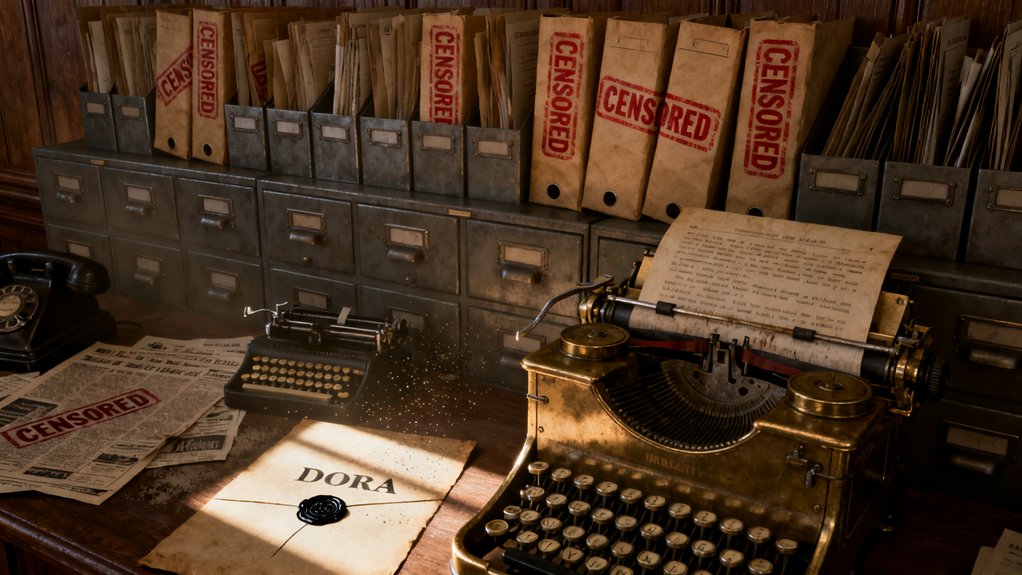
The government didn’t just watch the streets—it watched the presses, shutting down over 200 newspapers that questioned the war or refused to fall in line. Under DORA, censors red-penciled reports on troop movements, casualties, and unrest, knowing any leak could mean execution for treason. Propaganda filled the silence, turning newsrooms into tools of morale control. The suppression of truthful reporting under the guise of national security mirrors the pattern of deliberate deception revealed decades later in the Pentagon Papers.
Press Restrictions Enforced
A blanket of silence fell over Britain’s press as the Defence of the Realm Act clamped down on wartime reporting, silencing details of troop movements, naval operations, and battlefield losses. Press restrictions enforced through DORA gave the state unchecked control over information, reshaping journalism into a tool of state security rather than public truth.
- The Press Bureau vetted every article, delaying and often killing war news before it reached print.
- Reporting on Zeppelin raids, casualties, or troop numbers was banned to prevent aiding the enemy.
- Newspapers that challenged censorship faced suppression or outright banning by the War Office.
- Over 300,000 telegrams were read in 1916 alone—proof of how deep surveillance ran.
Under the Defence of the Realm Act, truth was the first casualty, and the free press was shackled in the name of war.
Censorship And Propaganda Control
Every day, hundreds of journalists across Britain filed stories only to see them torn apart by censors poring over each line for dangerous truths. Under DORA, censorship became a weapon to silence dissent and shape public perception. The government’s Press Bureau scrubbed reports of troop movements, battles, and casualties, ensuring no detail that might aid the enemy slipped through. Photos of wounded or dead soldiers vanished before publication, hidden from view. By 1916, censors reviewed 300,000 telegrams yearly, tightening control beyond print. Over 250 publications, including socialist and Irish nationalist presses, were banned outright. DORA didn’t just restrict news—it manufactured silence. Journalists worked under threat of death for breaches, their words filtered through state fear. This wasn’t protection; it was manipulation. Censorship under DORA shielded morale but strangled truth, turning information into a state-controlled currency.
How Spies and Suspects Were Detained
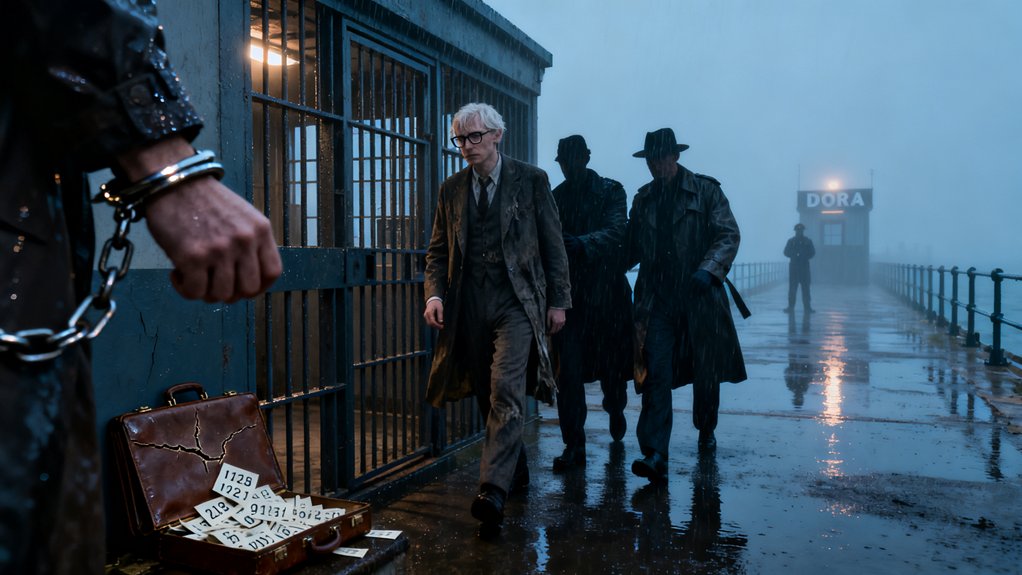
Under DORA, British authorities swiftly rounded up thousands of enemy aliens, interning them in camps like Knockaloe without trial. Raids and surveillance became routine, with military and civilian agents tracking suspected spies in crowded cities and quiet towns alike. German nationals, Irish separatists, and others deemed dangerous were arrested under Regulation 14B, often on scant evidence, and locked away for the duration of the war.
Internment Of Foreign Nationals
- Around 32,000 enemy aliens were detained across Britain
- Internees were classified by threat, with “Category A” held automatically
- Sites like Alexandra Palace and Frith Hill held 5,500 civilians before larger camps expanded
- The Isle of Man became a central hub for internment camps
Barbed wire cut through communities. Families fractured. Liberty, suspended in the name of security. These camps didn’t just hold suspects—they echoed the cost of fear, where nationality alone became grounds for confinement. DORA didn’t just defend borders; it policed identity.
Surveillance And Arrest Tactics
While ordinary mail slipped through censors’ hands, thousands of telegrams never reached their recipients—intercepted, read, and often destroyed by military postal inspectors hunting for coded messages or signs of disloyalty. Surveillance was everywhere: letters opened, phone calls tapped, movements tracked. Authorities used DORA to justify sweeping arrest powers without trial. Irish nationalists like John MacLean and Willie Gallacher were seized under Section 3(6), imprisoned without charge. Foreigners faced midnight raids, internment, silenced dissent. Courts martial tried suspected spies in secret, bypassing civilian justice—ten were executed for aiding the enemy. From telegrams to taverns, no space was free from state eyes. DORA didn’t just monitor—it crushed opposition before it could breathe. Arrest became a tool not for justice, but control. In the name of war, Britain built a machine of silence and fear. Yet resistance flickered. People remembered: this power was granted, not earned—and could be taken back.
How DORA Regulated Food, Drink, and Daily Life
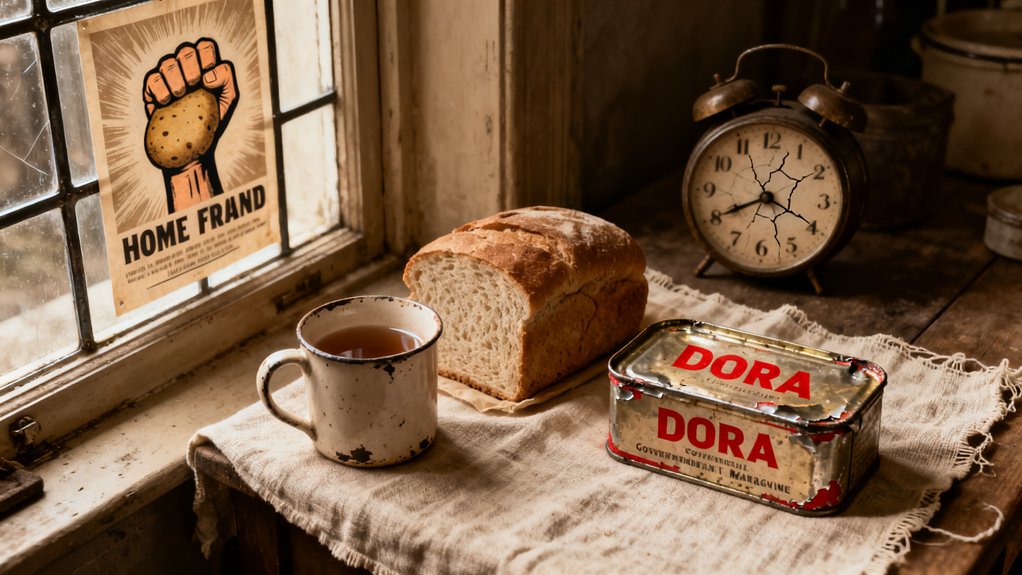
Food rationing kicked in during 1918, as DORA clamped down on supplies to counter U-boat blockades that had starved Britain for years. The government slashed pub hours, banned buying rounds, and pushed temperance to cut alcohol use by more than half. Even flour production changed, with bakers fined for making white bread while grain stores faced strict penalties for waste or rat infestations.
Food Rationing And Control
Ration books and government mandates reshaped the British plate. Under DORA, food rationing wasn’t just policy—it was survival, enforced to stop panic buying as U-boat attacks starved the nation of supplies. DORA gave the state power to control what people ate, how it was made, and how it was stored, turning kitchens into battlegrounds of compliance.
- Rationing began in 1918, targeting sugar, meat, butter, and fats to guarantee fair shares
- DORA fined millers who made white flour instead of nutrient-rich wholewheat
- Wheat stores faced inspections; poor conditions attracted rats and triggered penalties
- Households saw limits, but also learned to stretch meals under strict DORA rules
Every meal bore the imprint of DORA’s reach—once simple acts of cooking now acts of obedience. Yet in scarcity, people found ways to resist, adapt, and demand better. Freedom simmered, even in rationed pots.
Alcohol Restrictions And Surveillance
The state didn’t stop at rationing bread and butter—it reached into pubs, shaping how workers drank, when they drank, and how much. Under DORA, the sale of alcoholic drinks became tightly controlled to maintain wartime order. Pubs could only open from 12 noon to 3 pm and 6:30 pm to 9:30 pm, slashing access. The “No Treating Order” banned buying rounds, breaking camaraderie to curb excess. The state wanted obedience, not toasts. Taxes soared—whisky cost five times more by 1918—pushing drink out of reach. Consumption plummeted from 89 to 37 million gallons nationwide. In London, drunkness convictions fell from 67,000 in 1914 to 16,500 in 1917. Every poured pint was seen as a threat to efficiency, to morale, to victory. DORA didn’t just regulate alcohol—it policed pleasure, enforcing order through denial.
How Fear Helped Enforce DORA
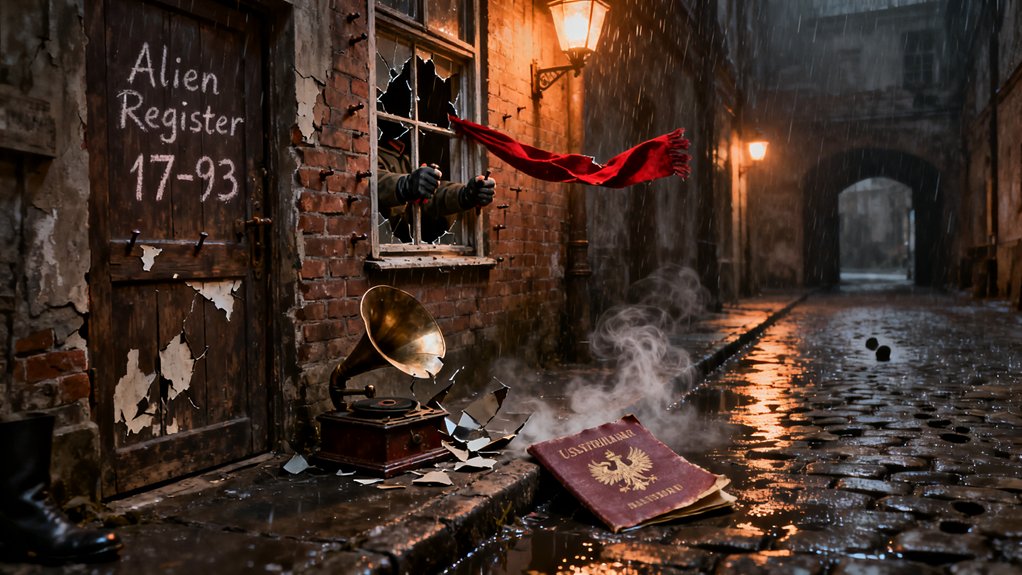
Rumours of German spies spread like wildfire, and ordinary citizens began watching neighbours with suspicion. The government used that fear to silence dissent, warning that any slip of information could cost lives. People stayed quiet—not just to avoid punishment, but because fear made enemies seem to hide in every shadow.
Fear Of Enemy Spies
Though whispers of enemy spies spread faster than facts, the British government wield segregation like a weapon, sharpen@@@ing DORA into a tool of mass surveillance and control. The fear of enemy spies gripped communities, turning neighbors against one another and justifying extreme measures under DORA.
- Authorities imposed curfews, restricted movement, and conducted warrantless searches—especially near coasts.
- Over 32,000 “aliens,” mostly German nationals, were interned without trial under DORA’s sweeping powers.
- Censors screened 300,000 telegrams in 1916 alone, hunting for coded enemy messages.
- Propaganda stoked panic with fabricated spy rings, leading to 10 executions and thousands detained on mere suspicion.
DORA didn’t just defend the nation—it invaded it, turning national security into a machinery of control.
Silencing Dissenting Voices
What did it cost to speak out? Under DORA, the price was freedom. Bertrand Russell and John MacLean were jailed for opposing the war, Russell locked up for six months under Regulation 27. DORA didn’t just punish soldiers’ disaffection—civilians faced arrest, even death, for words deemed seditious. Fear rippled through communities as postal censors scanned 300,000 telegrams in 1916 alone, turning private letters into evidence. Newspapers with anti-war views? Over 100 banned. The state’s message was clear: dissent would not be tolerated. Silencing dissenting voices became routine, enforced not only by law but by atmosphere. Authorities banned whistling or kite-flying to show their reach, making citizens wonder—what else might get them arrested? That uncertainty bred self-censorship. DORA didn’t need to arrest everyone; fear did the work. In Britain’s war machine, control depended on silence, and silence was enforced through fear.
How the Public Responded to DORA’s Crackdown
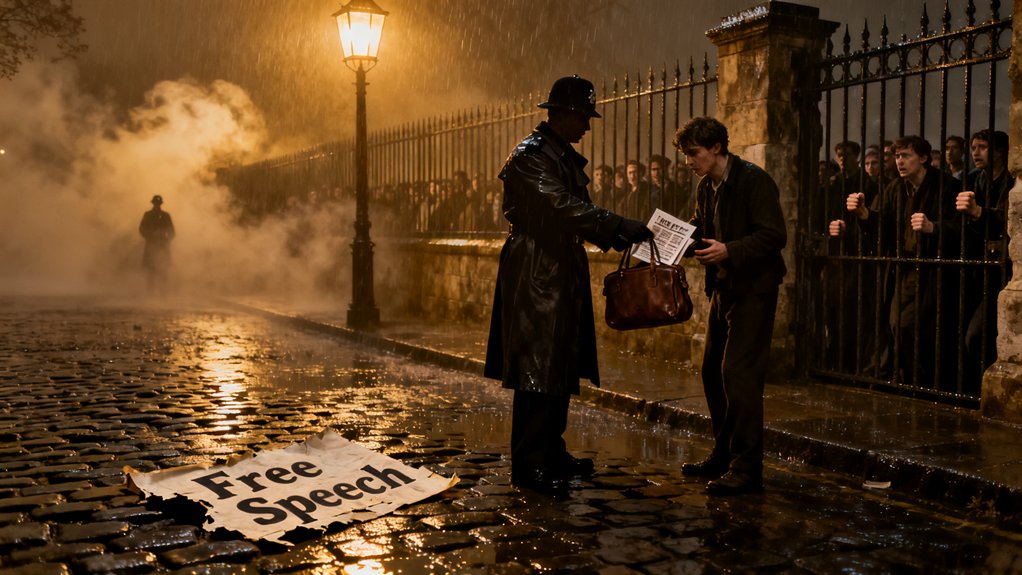
People grumbled about the petty rules—like the ban on whistling for taxis—but most didn’t fight back. There was no mass uprising, just quiet compliance, even as drunkness convictions plummeted and pub hours tightened. Yet beneath the surface, resentment simmered, especially when activists disappeared into prison without trial.
Public Outcry and Resistance
How far would a government go to secure order in wartime? In Britain under DORA, the answer was clear: far enough to provoke public outcry and resistance. Citizens chafed at overreach, from silenced pubs to censored papers. The law didn’t just control movement—it stifled voice and will.
- Bertrand Russell and John MacLean jailed for anti-war speech, igniting civil liberties protests
- Press editors raged as censorship shut down stories and smothered press freedom
- Workers pushed back against wage caps and travel bans, resisting top-down control
- The public mocked absurd rules—kite bans, no whistling—exposing bureaucratic tyranny
DORA wasn’t just a law; it was a crackdown. Yet in every jail cell, silenced pressroom, and scoffed-at rule, resistance flickered. People refused to surrender dignity. Public outcry grew—not loud, but deep, a current beneath the surface, demanding space to speak, move, live.
Compliance and Silent Acceptance
Though resistance flickered in prisons and pressrooms, most Britons obeyed DORA’s rules without protest, swayed by patriotism and fear of enemy ships cutting off food supplies. Compliance became second nature—blackouts were kept, whistling banned, flour monitored. The government’s light touch at first made restrictions feel bearable, even necessary. By 1918, rationing calmed panic, as U-boats stalked supply lines and empty shelves loomed. People adapted, their silent acceptance shaped by constant propaganda and peer pressure. Drunkenness convictions in London plummeted from 67,000 in 1914 to 16,500 by 1917, proof of adherence to alcohol controls despite early grumbling. There was no grand surrender of freedom—just a slow, steady folding in. Compliance wasn’t forced; it was worn in. Under DORA, control wasn’t just imposed—it was internalized, hidden in plain sight, sustained by silent acceptance.
Could You Challenge DORA in Court?
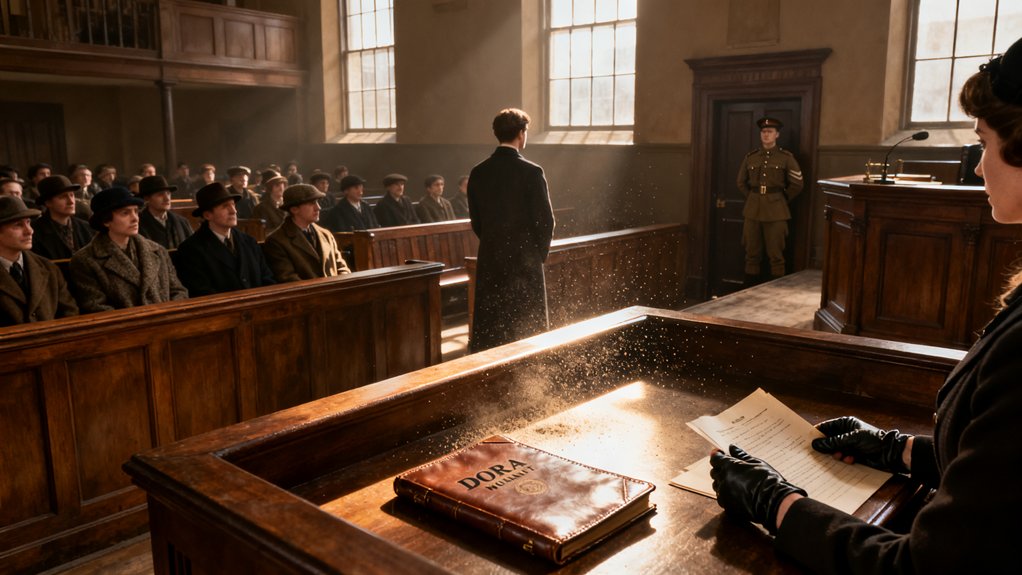
People tried to fight DORA in court, but the government leaned on national security to shut down most challenges. Still, legal loopholes gave some civilians a narrow path to push back, especially after 1915 restored their right to civil trials. A few judges quietly resisted, refusing to rubber-stamp abuses, and set early precedents for judicial pushback.
Legal Loopholes Exploited
Even as citizens turned to the courts for relief, DORA’s statutory foundation shielded its powers from meaningful legal challenge. The government exploited DORA’s vague language and legal loopholes to enforce unchecked control, leaving dissenters with little recourse. Judges upheld most regulations, treating them as lawful under wartime necessity, while activists like Bertrand Russell found no justice in appeals. The system wasn’t broken—it was designed this way.
- Section 3(6) enabled military detention without charge, immune to judicial review
- Courts rarely questioned DORA’s scope, accepting broad interpretations of emergency power
- 1915 amendments restored civil trials in Britain but suspended them in Ireland
- Foreign nationals and dissenters faced internment under rules that bypassed due process
DORA didn’t just suppress—it institutionalized inequality, using legal loopholes to silence and segregate under the guise of national security.
Judicial Resistance Emerged
Courts stood as the last arena where DORA’s reach could be tested, though success was scant. Judicial resistance flickered in cases like *Rex v. Secretary of State* (1916), but judges upheld internment without trial, deferring to wartime security. Military courts ran summary trials under the 1914 Act, crushing civilian appeals. In Ireland, Section 3(6) let troops detain people indefinitely, gutting habeas corpus—yet courts blinked. Challenges were rare, and bolder ones failed. Still, the embers of dissent glowed. After the war, the 1920 *Restoration of Order in Ireland Act* revived DORA’s shadow, but now judges and citizens pushed back. They questioned endless detention, demanding accountability. Though DORA won the war, its unchecked power sparked a quiet legal rebellion. The fight for due process didn’t die—it waited. Judicial resistance, once silenced, began to speak.
Did DORA Outlive Its Purpose After the War?
DORA didn’t end with the 1918 armistice—its powers remained in force until 1921, proving it had outlived the war it was meant to serve. The government used its provisions to quell strikes, silence dissent, and maintain order during peacetime upheaval. Even after most regulations fell away, Section 3(6) stayed on the books in Ireland until 1953, a lasting echo of wartime control.
DORA’s Post-War Relevance
Though the guns of war fell silent in 1918, the machinery of control forged during the conflict did not immediately disassemble. DORA lived on, its powers repurposed to suppress dissent and maintain authority. In Ireland, the Restoration of Order in Ireland Act 1920 reignited DORA’s reach, enabling mass arrests without trial. The state clung to its grip, refusing to release it even in peace.
- DORA was extended past 1918, used to crush Irish resistance during the War of Independence
- The Restoration of Order in Ireland Act empowered military detention under DORA’s Section 3(6)
- British governments invoked DORA during the 1919 police strikes and 1926 General Strike
- Section 3(6), allowing imprisonment without charge, wasn’t repealed until 1953
Power once claimed was not so easily surrendered.
Legacy Of Wartime Control
The guns fell silent in 1918, but the state’s reach did not retreat. The Defence of the Domain Act wasn’t fully scrapped—most rules lifted in Britain by 1920, but fear of strikes and unrest kept remnants alive. In Ireland, it never ended. Instead, the British government extended DORA’s harsh powers to crush dissent, detaining activists without trial under Section 3(6). When outrage grew, they simply renamed it: the Restoration of Order in Ireland Act replaced DORA in 1921, continuing military rule. This wasn’t wartime necessity—it was imperial control repackaged. Decades later, DORA’s shadow lingered; its suspension of liberties became a blueprint for future emergencies. Surveillance, censorship, detention without trial—tools born in war, then turned on civilians. The Act outlived the war, proving control, once claimed, is rarely given up. Liberation demands vigilance when states keep war’s levers well oiled.
Frequently Asked Questions
What Was the Dora Act in ww1?
The DORA Act was Britain’s 1914 emergency law that gave the government sweeping power to control nearly every aspect of life during WWI. It let authorities censor mail, silence newspapers, impose curfews, ration food, and jail suspects without trial. They seized land, limited alcohol, and even tweaked time with daylight saving. Civil liberties melted under its reach, as the state put wartime security above freedom, reshaping society by force.
Why Did People Oppose Dora?
They opposed DORA because it stripped away freedoms without recourse. Peaceful dissenters faced jail without trial, censored mail, silenced presses. Whistling, loitering, even sharing opinions became grounds for arrest. Activists saw it as tyranny, not security. In Ireland, martial law crushed dissent. Detentions without charge sparked outrage. Critics called it state overreach masked as war effort. They resisted—not for disorder, but for liberty’s sake, demanding accountability from power they no longer trusted.
What Is the Dora in England?
DORA in England was the Defence of the Kingdom Act, passed in August 1914 to grant the government sweeping wartime powers. It let authorities censor mail, restrict movement, ban public gatherings, and impose curfews. Factories, food, and drink came under state control. Soldiers could arrest civilians, who faced military courts. It reshaped daily life—curfews darkened streets, whistling was banned, kites forbidden. Still, it fueled resistance, as people fought to protect freedoms under its heavy hand.
Who Was the 12 Year Old Soldier in WW1?
A shadowy figure in the fog of war, the so-called 12-year-old soldier was never officially real—yet boys like Sidney Lewis slipped through the cracks, hearts pounding with borrowed courage. They lied, became phantoms on enlistment papers, chasing glory. But truth strips myth bare: no verified 12-year-old fought. The youngest were 16, forged in forged names, their youth erased by war’s hunger, not law.
Final Thoughts
DORA slipped through Britain like a shadow, deepening state control long after the guns fell silent. Born in wartime fear, it outlived the war, haunting civil liberties with unchecked power. Citizens vanished without trial, words were censored, homes searched on suspicion. What started as emergency measure became a blueprint for overreach—proof that once a government learns to watch, it rarely stops.