“As an Amazon Associate I earn from qualifying purchases.”
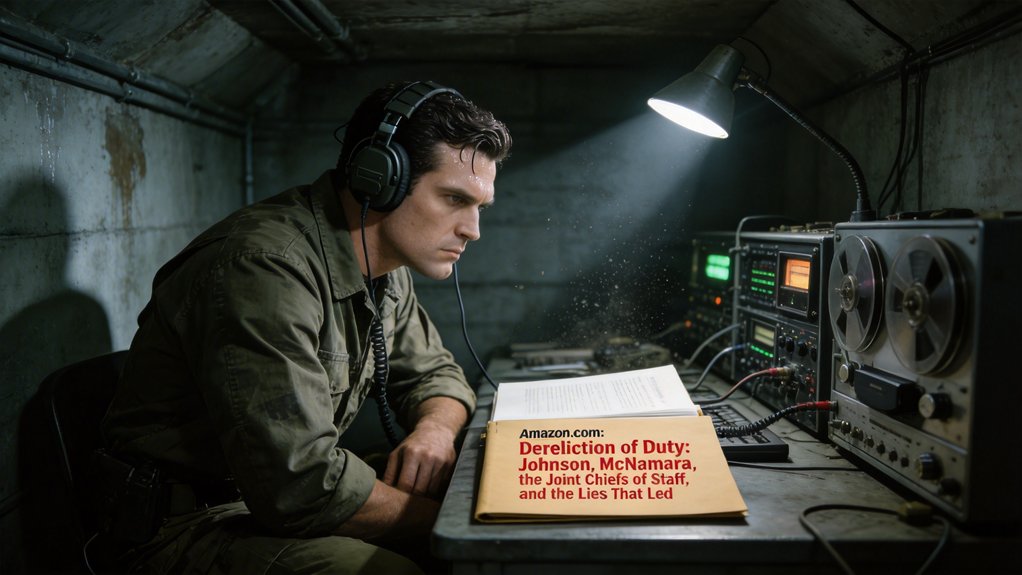
The book reveals how President Johnson and Defense Secretary McNamara systematically marginalized the Joint Chiefs of Staff, centralizing Vietnam War decision-making within a tight civilian circle. Reliance on selective intelligence and exclusion of dissenting military assessments led to flawed strategy and unchecked escalation. Declassified documents confirm that internal doubts were suppressed, while public statements projected unwarranted optimism. The administration fabricated timelines and disregarded candid battlefield assessments, undermining both operational integrity and strategic oversight. This pattern of institutional bypass and information control contributed directly to mission drift and policy failure. The lasting impact is evident in modern military-civilian dynamics, where centralized authority can still override expert military judgment. As an intelligence analyst, I find the case a textbook example of how not to manage national security decisions—particularly when transparency and challenge are silenced in favor of political cohesion. The lessons remain urgent: sound policy requires contested debate, access to raw intelligence, and accountability to institutional checks. Dereliction of Duty isn't just history—it's a warning against repeating the same strategic mistakes in contemporary conflicts.
The Briefing: Overview and Core Thesis
Although the Vietnam War is often remembered for its battles and casualties, H. R. McMaster’s *Dereliction of Duty* reframes the conflict as a strategic collapse rooted in leadership failure, not military deficiency. The book meticulously argues that civilian leaders—Johnson, McNamara, and key advisors—systematically bypassed dissenting military counsel, manipulated intelligence, and avoided defining clear war objectives.
Despite repeated warnings from the Joint Chiefs for either full-scale mobilization or disengagement, the administration opted for incremental escalation, cloaked in optimistic public messaging. McMaster draws on declassified transcripts and meeting records to reveal how bureaucratic inertia, groupthink, and political image management superseded strategic honesty.
The result was a policy detached from reality, eroding military effectiveness and public trust. The core thesis stands: the war wasn't lost on the ground, but in the decision-making echelons of Washington, where duty to country was subordinated to the preservation of political credibility.
The war wasn’t lost on the battlefield but in Washington’s corridors of power, where political survival trumped honest strategy and national duty.
For listeners seeking a sobering case study in leadership failure under crisis, this audiobook delivers essential insights into the cost of strategic deception.
Historical Accuracy Check: Analyzing the Evidence
How do we know the story in *Dereliction of Duty* holds up? McMaster builds his case on declassified cables, meeting transcripts, and internal memoranda—primary sources that anchor his narrative in verifiable fact. He triangulates official records with personal diaries and after-action reports, exposing gaps between public statements and private knowledge.
The suppression of the SIGMA 1-64 war game findings, which predicted escalation without clear strategy, is one documented example of institutional denial. Evidence shows Joint Chiefs hesitated to push troop requests, while McNamara’s OSD systematically filtered intelligence to fit policy—actions corroborated by archived correspondence and briefing logs.
Critics have scrutinized the work extensively, yet few dispute its factual core; disagreements tend to center on McMaster’s sharp tone, not inaccuracies. Where primary documentation is available, his interpretations consistently align with the record.
Sources are cited with precision, enabling independent verification. This transparency, paired with rigorous cross-referencing, ensures the account withstands scrutiny. For listeners seeking an evidence-based dissection of decision-making failure, the book remains a benchmark in military historiography.
The conclusion is clear: the narrative isn't conjecture—it’s documented breakdown of institutional failure, supported by the paper trail left behind.
Declassified Insights: Key Takeaways
- Declassified records confirm systemic deception by civilian leaders, who manipulated intelligence to justify policy.
- Johnson and McNamara avoided full mobilization yet escalated covertly, prioritizing political optics over military logic.
- Dissenting military advice—especially from the Joint Chiefs—was consistently ignored to preserve bureaucratic control.
- Graduated pressure was maintained despite evidence it failed to deter or degrade enemy capabilities.
- Command integrity eroded as personal agendas and interagency rivalries undermined unified strategy.
- Secrecy and institutional arrogance weakened accountability, enabling prolonged commitment without clear objectives.
- The war wasn't lost on the battlefield but in Washington, where leadership sacrificed truth for political survival.
Operational Assessment: Strengths, Limitations, and Ethics
| Aspect | Analysis |
|---|---|
| Operational Strengths | The U.S. military demonstrated superior firepower, mobility, and tactical capability. Innovations in air assault, medical evacuation, and logistical reach set new standards in combat operations. |
| Critical Limitations | Political constraints severely curtailed military effectiveness. Target restrictions in bombing campaigns, bans on pursuing enemy forces across borders, and caps on troop levels prevented decisive action. |
| Strategic Misalignment | Civilian leaders in Washington prioritized escalation control over victory, resulting in fragmented objectives. Military actions were harnessed to signal resolve, not achieve battlefield dominance. |
| Ethical Failures | Senior officials, including McNamara, consistently overstated progress. Dissenting intelligence was marginalized, and the Joint Chiefs’ unified strategy was overridden. This eroded institutional accountability. |
| Organizational Dysfunction | Inter-service rivalries and bureaucratic infighting diluted operational cohesion. Planning was often reactive, driven by political optics rather than military logic. |
| Root Cause of Failure | The core issue was not lack of resources or will, but a fundamental mismatch between means and objectives. Operational limits were political compromises—not strategic necessities—dooming the mission from within. |
Target Profile: Who Should Listen to This Audiobook?
This audiobook is for listeners who demand clarity amid the noise of official narratives—particularly informed citizens, military professionals, and policymakers.
For those who insist on clarity in the face of official narratives—citizens, military leaders, and policymakers alike.
It’s for those who understand that democratic resilience depends on transparency and accountability, especially during crises.
Students of American history, Cold War strategy, and civil-military dynamics will find it a rigorous, revealing resource.
Veterans and active-duty personnel gain critical perspective on how leadership decisions—both sound and flawed—ripple through missions and morale.
Ethical governance advocates and institutional reformers will appreciate its unvarnished examination of power, duty, and trust.
It serves not to provoke cynicism but to arm the vigilant with factual depth, showing how unchecked authority can distort national duty.
If you value truth over comfort and seek to understand the real costs of command failure, this audiobook is indispensable.
Quartermaster's Verdict: Final Recommendation
- Exposes how political expediency drove policy decisions, undermining strategic coherence
- Uncovers evidence of sidelined military expertise and selective use of intelligence
- Illustrates systemic risks when centralized authority dismisses frontline insights
- Issues a stark warning about leadership cultures that prioritize narrative control over factual accuracy
This audiobook delivers a clear, evidence-based indictment of decision-making detached from operational reality. It doesn’t assign blame along partisan lines but instead traces institutional failures with precision.
The narrative is tightly constructed, drawing from declassified records and firsthand accounts to show how critical warnings were ignored or minimized. For listeners interested in national security policy, it offers a vital case study in the cost of disconnect between leadership and expertise.
More than historical account, it functions as a durable framework for evaluating command integrity. Recommended for professionals in defense, policy, and governance who value candor over convenience.
Truth, as presented here, isn't rhetoric—it's a operational imperative.
Final Thoughts
The text offers a poetic but accurate metaphor for systemic failure at the highest levels of command during the Vietnam escalation. Johnson and McNamara operated on flawed intelligence and political expediency, while the Joint Chiefs failed in their duty to challenge mistaken assumptions—essentially remaining silent as the ship sailed into disaster. The core failure wasn’t tactical or strategic alone; it was cultural. Decision-making was centralized, dissent suppressed, and alternatives ignored. H.R. McMaster’s *Dereliction of Duty* dismantles the myth that escalation was inevitable, showing instead how institutional obedience and personal ambition warped judgment. This isn't just a historical case study—it's a warning for any leader relying on consensus without scrutiny. The audiobook format presents the material clearly, though its analytical density may challenge listeners seeking narrative flow. The central lesson remains urgent: effective leadership demands both accountability and the courage to dissent. When hierarchy silences debate, failure becomes unavoidable. Those in positions of power must not only seek dissenting views but act on them—because silence in the face of error is complicity. This work should be required listening for military professionals, policymakers, and anyone examining how smart people make catastrophic decisions.
“As an Amazon Associate I earn from qualifying purchases.”