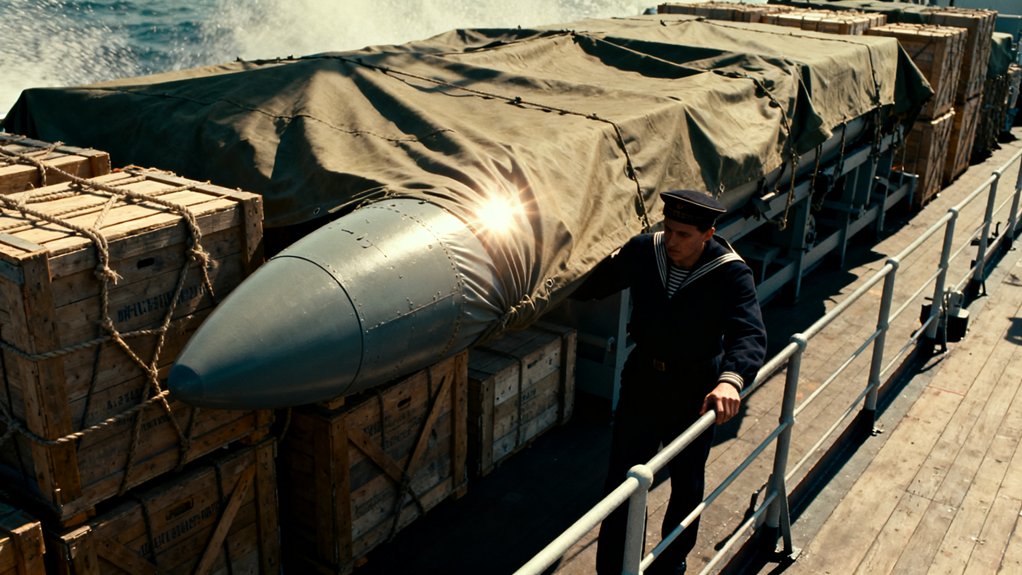
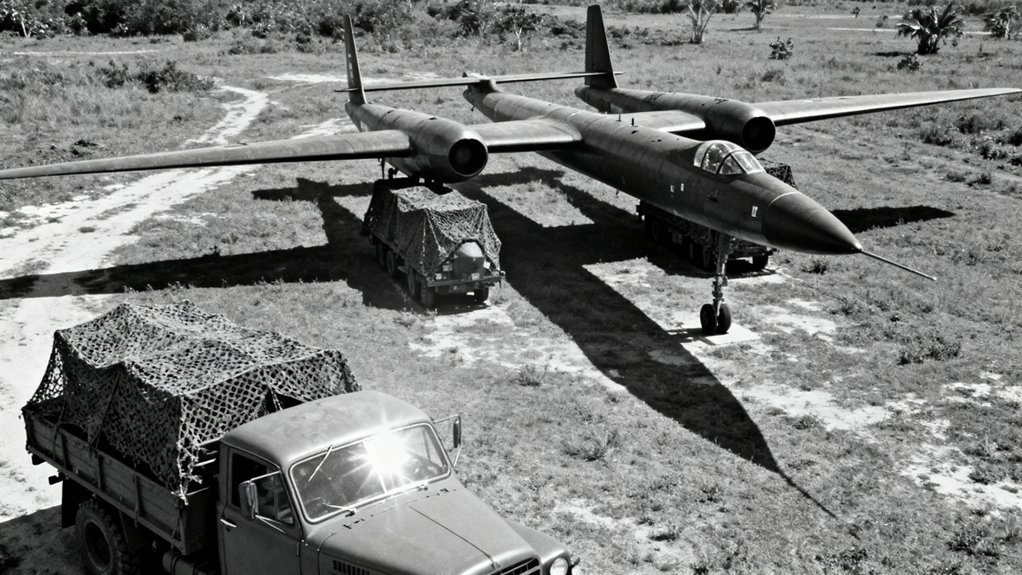
In the autumn of 1962, Soviet engineers draped 68-foot warheads in canvas tarps, disguising SS-4 sites as agricultural scaffolding. Night-only movements and radio silence hid Operation Anadyr from ground-level whispers. A U-2’s Hycon 73B camera, flying at 70,000 feet, captured trapezoidal footprints of missile erectors at San Cristobal. Analysts cross-referenced oxidizer trailer shadows with unverified reports, transforming rumors into undeniable chronology. Khrushchev’s diplomatic fiction crumbled when Adlai Stevenson presented the frames at the UN, stripping away every layer of Soviet denial. What remains below the surface is even more revealing.
Key Takeaways
Soviet tarps and scaffolding disguised SS-4 missiles as agricultural structures at San Cristobal. KGB counter-intelligence silenced Cuban informants and monitored communications to prevent leaks. U-2 flights at 70,000 feet captured high-resolution film, bypassing Soviet radar and deception. Photographic analysis revealed trapezoidal footprints and oxidizer trailers matching SS-4 deployment doctrine. U-2 photos provided irrefutable proof, collapsing Khrushchev’s denials and exposing the concealment.
Whispers in the Dirt: The Unverified Cuban Ground Intelligence of Early 1962
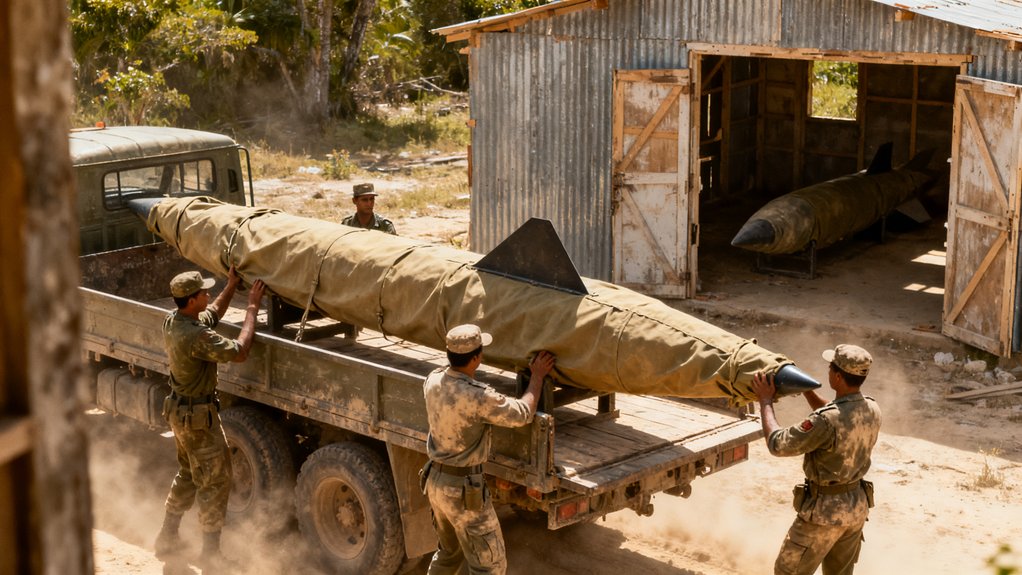
Before U-2 cameras rolled over Cuba at 70,000 feet, intelligence analysts had only whispers in the dirt. These were fragments of ground reports from refugees, defectors, and covert agents filtering out of the island. This unverified ground intelligence painted a troubling picture: massive trucks rumbling along rural roads, mysterious cargo offloaded under darkness, and strange rectangular clearings carved deep into the countryside.
Yet these accounts remained speculative. They lacked the hard corroboration needed to escalate the crisis. Compounding the uncertainty, Soviet concealment tactics deliberately obscured the nature of their deployments. They shrouded missiles under tarps, moved equipment only at night, and enforced strict radio silence. This rendered every shred of ground data murky and contested. The U-2’s unique flight profile, flying at 70,000 feet in the stratosphere, would later provide the definitive high-altitude perspective needed to resolve such ambiguity.
Tracking the Cuban missile crisis timeline, early 1962 therefore became a period of frustrating ambiguity. Analysts pieced together fragments from the field, but without aerial eyes, they couldn’t distinguish a legitimate threat from a rumor. Each whisper demanded verification, but none provided the undeniable proof required to force a confrontation.
Engineering Operation Anadyr: The Mechanics of Soviet Nuclear Concealment
Operation Anadyr relied on two brutal prongs. Canvas tarps and false structures shielded the SS-4 missiles from U-2 cameras, while KGB counter-intelligence agents silenced any Cuban informant who whispered a word of their true purpose.
Commanders didn’t simply hide the weapons; they engineered a system to bury the very knowledge of their existence.
Deploying Canvas Deception: Shielding the SS-4 Ballistic Missiles
As the SS-4 ballistic missiles arrived in Cuba under cover of darkness, Soviet engineers draped them in canvas tarps and erected wooden scaffolding to mimic mundane agricultural structures. This ruse was designed to shield the 68-foot warheads from prying American lenses. This crude masquerade aimed to hide the San Cristobal launch sites in plain sight.
The canvas served a dual purpose. It blurred the missiles’ distinct silhouettes from high-altitude reconnaissance, while the scaffolding suggested farmland, not weaponry. These Soviet deception mechanisms relied on timing, night movements and quick assembly, to deny verifiable aerial evidence until the weapons were fully operational. Despite the makeshift appearance, the deceit almost worked. Only meticulous photo-analysis by U-2 pilots exposed the geometric anomalies beneath the tarps, cracking the illusion.
Silencing the Informants: The KGB Counter-Intelligence Dragnet
The canvas trickery at San Cristobal bought time, but not silence. Moscow knew whispers traveled. A single defector or loose-lipped officer could unravel Operation Anadyr. The KGB’s Second Chief Directorate consequently released a counter-intelligence dragnet across Cuba. They recruited locals as informants, monitored cable traffic, and shadowed diplomats.
Their goal was to plug every leak before CIA photographic intelligence could connect the dots. At the National Photographic Interpretation Center, analysts already scrutinized images of missile crates, but the KGB’s net snared a string of potential sources. They arrested a Cuban dockworker who’d sold manifests to a foreign agent. They bugged the Havana embassy bar.
Each silenced voice delayed exposure, preserving the fiction of peaceful cargo. Soviet concealment held for a few desperate weeks.
The Plausible Deniability Trap: Khrushchev’s Diplomatic Smokescreen
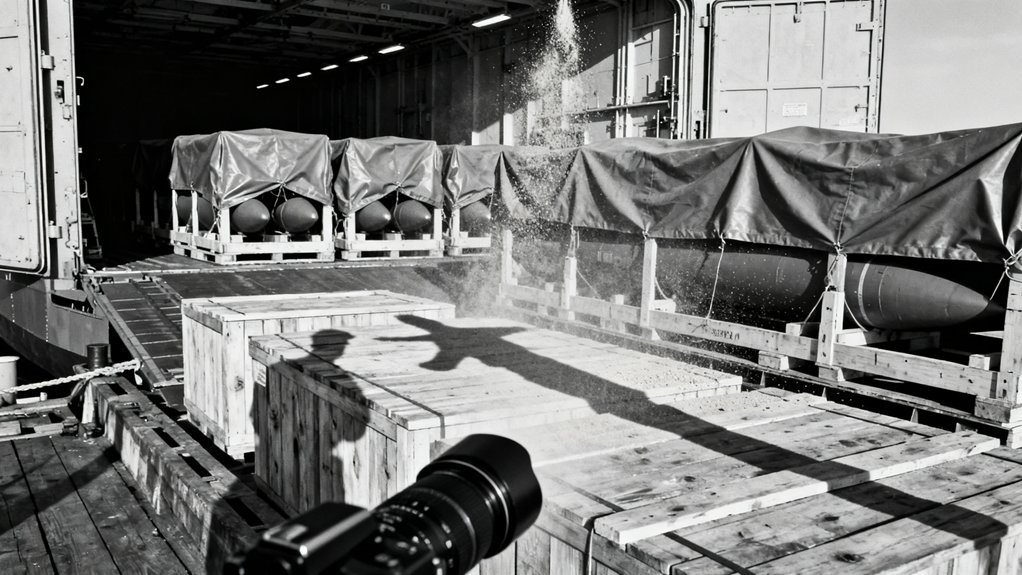
While Khrushchev clung to the diplomatic fiction of purely defensive installations, his carefully laid trap of plausible deniability crumbled the moment those U-2 photographs emerged from San Cristobal.
The 1962 U-2 reconnaissance flight didn’t just capture images. It exposed the Kremlin’s meticulous deception. Khrushchev had bet his entire strategy on maintaining a world of plausible denials, where words could mask actions. Declassified photographic proof shattered that world, transforming secret missile pads into undeniable, public reality.
- The Photographic Guillotine: Each frame from San Cristobal severed Khrushchev’s alibi. Abstract Soviet assurances became concrete lies.
- Confrontation Without Escape: The declassified imagery forced Premier Nikita Khrushchev from a diplomat’s shadow into a stark choice. Retreat or risk nuclear war.
- Trust’s Final Erosion: The exposed smokescreen didn’t just end the crisis. It permanently poisoned Washington’s willingness to accept Moscow’s word without verifiable proof.
Commissioning the Dragon Lady: The U-2 Reconnaissance Mandate
Months before those San Cristobal frames exposed the lie, the U-2 Dragon Lady had already received its marching orders. President John F. Kennedy needed proof, not suspicion. The mandate was clear: deploy high-altitude aerial surveillance over Cuba, a task only the U-2 could execute.
Its mission wasn’t speculation; it was meticulous, methodical reconnaissance. At 70,000 feet, the Dragon Lady drifted beyond Soviet radar‘s reach, its camera system engineered to capture razor-sharp 70,000 feet reconnaissance imagery. Pilots flew pre-approved tracks, banking over specific coordinates, their every move dictated by precise intelligence requests.
They weren’t searching blindly. They were confirming. The mandate demanded operational secrecy, no radio chatter, no deviation from course. Each flight returned with film canisters, not answers, but raw data.
Kennedy didn’t order a gamble; he ordered a certainty. The U-2’s mandate was to strip away Moscow’s concealment, one roll of film at a time, long before the world would see the result.
Piercing the Stratosphere: The 70,000-Foot Surveillance Run Over San Cristobal
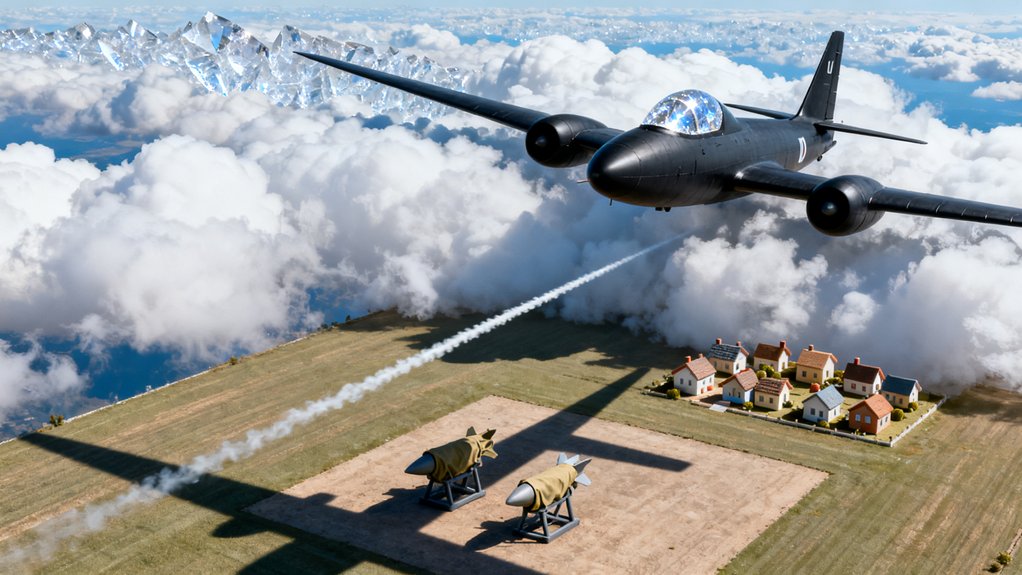
The pilot guided the U-2 to 70,000 feet, a precarious altitude that kept the aircraft just beyond the SA-2 radar’s effective gunnery solution. Without onboard early warning systems, he relied solely on pre-planned route timing and dead reckoning to thread the needle between Soviet missile batteries.
At Mach 0.8, the Hycon Model 73B camera’s precise, high-resolution frames captured the telltale construction at San Cristobal. This transformed a strategic gamble into undeniable proof.
Evading the SA-2 Surface-to-Air Grid Without Early Warning Systems
How could a lumbering U-2 at 70,000 feet slip past Cuba‘s Soviet-built SA-2 surface-to-air missile grid without triggering a single early warning system? The answer lies in the Soviets’ fatal oversight: they hadn’t yet activated their full radar network. This created a blind spot the U-2 exploited ruthlessly.
- Silent Approach: The U-2’s pilot shut down all non-essential electronics, rendering his plane a ghost on Soviet screens, no transmissions, no heat signature, no warning.
- Radar Gaps: Soviet crews, still calibrating their mobile SA-2 batteries near San Cristobal, couldn’t track the U-2’s altitude. They lacked the integrated coverage to detect a target flying over their nascent military installations.
- Intact Evidence: By avoiding detection, the U-2 captured pristine photographic evidence of the launch sites without triggering defensive scrambles that could’ve destroyed the film.
This tactical evasion secured the undeniable proof JFK needed.
The Hycon Model 73B Camera: Capturing High-Resolution Truth at Mach 0.8
While the U-2‘s pilot expertly ghosted through radar gaps, the true hero of the mission was strapped to the plane’s belly: the Hycon Model 73B camera. At Mach 0.8 and 70,000 feet, this 700-pound optical marvel clawed back clarity from the stratosphere’s thin air. Its massive 36-inch focal length and high-resolution film didn’t simply capture blur. They etched razor-sharp lines of missile erectors onto acetate.
Contrails from Soviet trucks left distinct tracks across the San Cristobal terrain. The Hycon didn’t lie. It could not. To Khrushchev’s horror, each frame revealed not foliage but concrete pads and canvas-covered warheads. Kennedy didn’t need speculation. The camera’s truth, developed in a darkroom, silenced Soviet denials. The Hycon Model 73B transformed altitude into accountability.
Developing the Negatives: The NPIC Forensic Darkroom Breakdown
Inside the NPIC darkroom, analysts didn’t simply develop film. They reconstructed a crime scene.
They pinpointed the trapezoidal canvas footprints of San Cristobal, matching those precise geometric shadows to known missile erector patterns.
They then correlated those oxidizer trailers in the photographs with subversive ground reports, sealing the chain of evidence that exposed the Soviet lie.
Identifying the Trapezoidal Canvas Footprints of San Cristobal
Why did the clearest proof of Soviet deception emerge from a darkroom in Washington, D.C.? Because NPIC analysts, hunched over light tables, traced the ghostly imprints of SS-4 missile launchers.
They weren’t looking at rockets. They were identifying the trapezoidal canvas footprints left behind at San Cristobal. These weren’t mere shadows. They were signatures of concealment.
- Geometric anomaly: The precise trapezoidal shapes contradicted the surrounding foliage’s natural curves, revealing deliberate camouflage.
- Scale mechanics: Analysts measured the imprint dimensions, precisely matching known SS-4 erector-launcher vehicles, transforming shape into concrete evidence.
- Positional pattern: The footprints’ linear arrangement conformed to operational deployment doctrine, not random activity.
This darkroom detective work exposed what ground intelligence could not: the Soviets had hidden mobile missiles under canvas, but they couldn’t hide the outlines of their lies.
Correlating Oxidizer Trailers with Subversive Ground Reports
The NPIC darkroom became a courtroom, where negatives served as the only witnesses. Analysts correlated each oxidizer trailer’s shadow with subversive ground reports trickling in from Cuban exiles.
The trailers weren’t just trucks. They were chemical signatures of a deployed MRBM brigade. A ground source once mentioned long tankers near San Cristobal.
The film now confirmed them, parked at hardstands. With meticulous care, NPIC cross-referenced every report’s timestamp against the film’s exposure date. The match was chilling. Soviet concealment had failed.
Oxidizer trailers, previously dismissed as rumors, now locked the ground intelligence into photographic fact. The CIA no longer guessed. It knew.
Upgrading the National Intelligence Estimate: From Rumor to Indisputable Proof
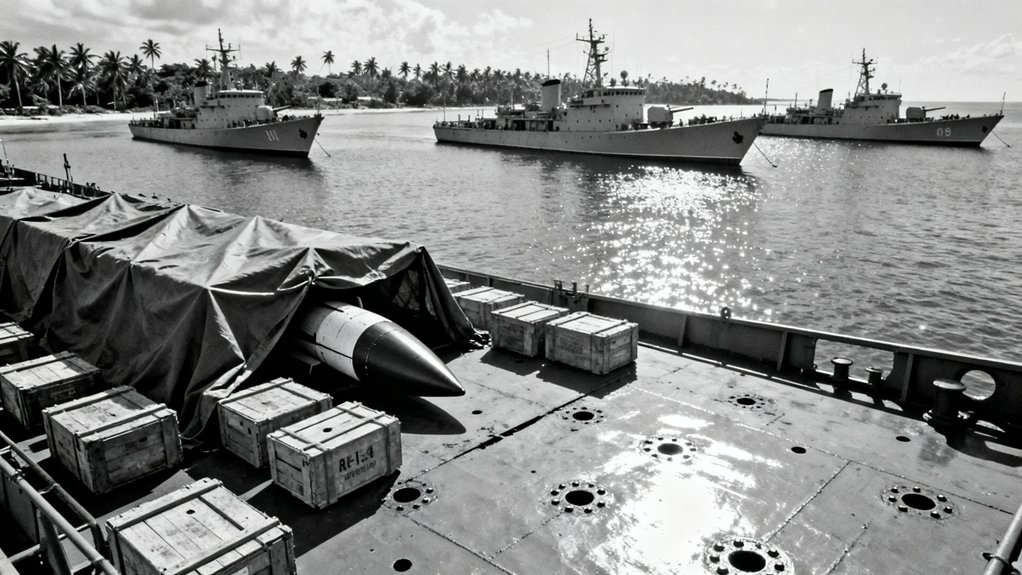
Although ground-level whispers about Soviet activity in Cuba had circulated for weeks, they lacked the evidentiary weight to alter the national intelligence estimate. Analysts dismissed isolated reports of missile-shaped cargoes as paranoid conjecture. Everything changed when the U-2’s camera, operating at 70,000 feet, exposed what words could not: the precise geometry of San Cristobal’s launch sites.
Granular detail distinguished this intelligence. The optics didn’t just spot missiles. They captured construction timelines, soil discoloration from excavation, and security perimeters. This transformed scattered human intelligence into a coherent operational map.
Temporal finality compounded the effect. Each frame bore a date stamp, locking the installations’ progression into an undeniable chronology that ground sources could never provide.
Strategic reframing followed. The photographs turned a dilemma of interpretation into a crisis of action. No longer could Soviet denials stand against the silent, indisputable testimony of shadows and concrete.
The national intelligence estimate didn’t evolve. It shattered. Photography bridged the chasm between rumor and reality.
The 0845 Briefing: Presenting the San Cristobal Optics to President Kennedy
When the CIA’s top photo interpreters finally briefed President Kennedy at 0845 on October 16, 1962, they didn’t simply hand him a folder of pictures. They unrolled enlarged prints across the Oval Office table, their fingers tracing the telltale geometry etched into the Cuban terrain.
Each frame from the U-2’s flight over San Cristobal revealed something chilling: graded access roads, fenced perimeter clearings, and long canvas-covered objects, precisely the signature of medium-range ballistic missile transporters. The interpreters spoke in exacting detail, dissecting shadows and scale to prove these weren’t defensive emplacements. They pointed to launch site construction patterns identical to those observed inside the Soviet Union itself.
The evidence wasn’t ambiguous; it was systematic, methodically extracted from silver halide grains. Kennedy studied the images in silence, absorbing the hard optical truth that transformed rumor into actionable intelligence. No further interpretation was necessary. The lenses had already made the case.
Weaponizing the Silver Halide: The EXCOMM Strategic Deliberations
Executive Committee members repeatedly sifted the U-2’s silver halide negatives, transforming each grain into a cudgel for the coming confrontation. They dissected the imagery not as static frames but as a sequence of Soviet deceit, a meticulous choreography of camouflage and lies. LeMay‘s faction pushed for immediate airstrikes, while RFK warned of a Pearl Harbor in reverse. The debate hinged on the photographs’ power to control the narrative.
The silos measured at San Cristobal weren’t just missile sites; they were a ticking clock, proving construction preceded any U.S. provocation, gutting Soviet claims of defense. Each dismantled crate and truck track became a legal exhibit, transforming the U-2’s film into a brief for an international tribunal, not just a war council. The grain itself, the silver halide’s chemical density, revealed launch readiness times, shifting EXCOMM’s calculus from reaction to calibrated public exposure.
They therefore weaponized the evidence, converting observation into leverage.
Stripping Plausible Deniability: The Diplomatic Ambush of Soviet Liaisons
The U-2 photographs did more than arm EXCOMM’s hawks. They became the scalpel to strip Soviet liars of their cover. For weeks, Soviet liaison officers in Washington maintained their government’s official stance. All Cuban military activity was strictly defensive. They’d offered diplomatic assurances, invoking plausible deniability.
The silver halide evidence changed everything. Kennedy’s team now possessed photographs so unambiguous that any counter-claim became absurd. They ambushed the Soviet delegation in a closed briefing, presenting dated images of medium-range missile erectors. The liaisons couldn’t retreat. Their prepared scripts crumbled.
Each hand-off between Soviet officials and their American counterparts became a calculated trap. The U.S. deliberately withheld imagery from public release, forcing the Soviets to commit to lies in private. When the photographs finally surfaced, the deception was exposed. No more hiding behind false promises. The Soviets’ diplomatic cover evaporated. Khrushchev’s men scrambled without a narrative to salvage.
The Adlai Stevenson Showdown: Unveiling the 70,000-Foot Imagery at the UN
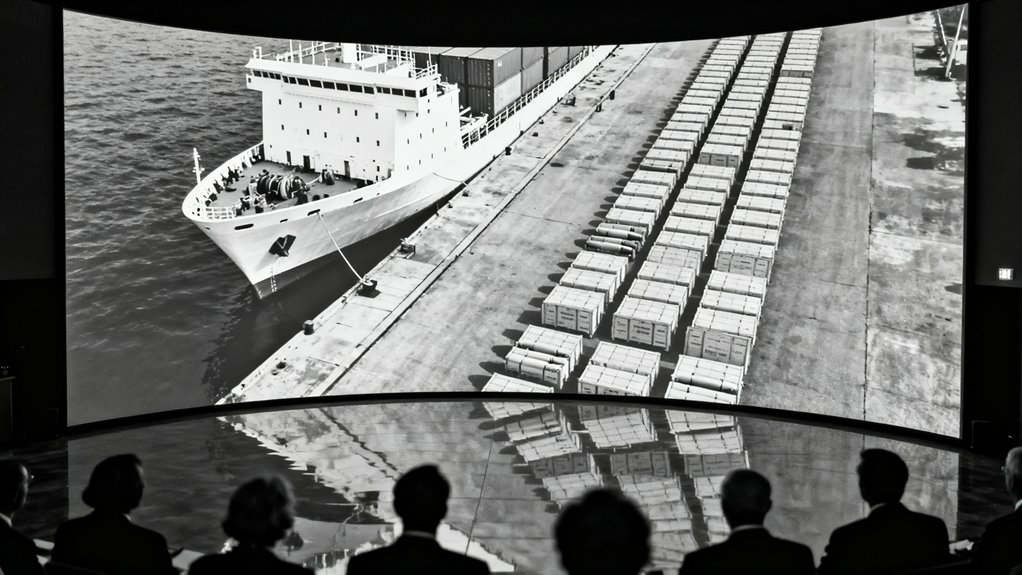
As U.S. Ambassador Adlai Stevenson strode to the podium on October 25, 1962, the Security Council chamber held its collective breath. He didn’t come to debate. He came to demolish the Soviet Union’s lies with a single, devastating exhibit: the 70,000-foot U-2 imagery.
Stevenson transformed the Council into a courtroom, forcing Soviet Ambassador Valerian Zorin to face the conclusive optics. The photos weren’t just intelligence; they were a surgical strike against denial.
The Temporal Seam. The photos captured the construction process in stages, revealing a frantic Soviet race against time that no verbal excuse could mask.
Geometric Betrayal. The precise, methodical grid of launcher revetments and missile erectors screamed deliberate military aggression, not defensive equipment.
Scale of Deception. The sheer breadth of the installations, spanning multiple sites, proved a coordinated, clandestine buildup, not a local anomaly.
Stevenson then demanded Zorin answer yes or no about the missiles’ existence. When Zorin equivocated, Stevenson set loose the photographic proof, permanently dismantling the Soviet cover story before the world.
The Khrushchev Capitulation: How Undeniable Optics Averted Thermonuclear Annihilation
Because the U-2 photographs had stripped away every layer of Soviet denial, Khrushchev faced a stark reality.
His deception had failed, and the White House now possessed the unassailable proof needed to justify military action. The optics, crisp and irrefutable, didn’t just embarrass him; they cornered him. He couldn’t bluff his way out, and he couldn’t claim the missiles were defensive. Kennedy’s quarantine, backed by that photographic evidence, left no room for escalation without triggering a nuclear exchange.
So Khrushchev blinked. He ordered the missiles dismantled, accepting a humiliating retreat over certain annihilation.
Those 70,000-foot images didn’t merely expose lies; they forced his hand, turning a potential firestorm into a cold, calculated withdrawal. The photos averted war not through negotiation but through undeniable proof. Khrushchev’s capitulation wasn’t weakness; it was survival.
Frequently Asked Questions
Why Was Initial Ground Intelligence About Cuban Missiles Considered Unreliable?
Initial ground intelligence about Cuban missiles lacked credibility due to its reliance on human sources: defectors and refugees with unverified allegiances. Analysts couldn’t confirm the accuracy of their reports, and consequently, accounts often proved exaggerated or fabricated.
Without physical proof, the information remained speculative and prone to misinterpretation.
The U-2’s later photographic evidence transformed this uncertainty into tangible fact, exposing Soviet concealment with undeniable clarity.
Ground intelligence simply didn’t offer the decisive, verifiable detail needed for leaders to act.
How Did the U-2 Avoid Detection Flying at 70,000 Feet?
The U-2 avoided detection by flying at 70,000 feet, far beyond the reach of Soviet surface-to-air missiles and fighter jets of the era.
At that altitude, it operated in near-total silence, invisible to radar systems not designed for such extreme heights.
Its thin, glider-like wings and lightweight frame allowed it to cruise for hours, capturing high-resolution imagery without ever breaching Soviet airspace.
This height wasn’t just a technical feat. It was a calculated shield, turning the aircraft into a ghost in the sky.
What Specific Film and Camera Technology Captured the San Cristobal Images?
The U-2’s camera, a Bausch & Lomb Hycon with a 36-inch focal length, captured the San Cristobal images like a hawk’s eye frozen in flight.
This system, paired with Kodak’s fine-grain film, resolved missile erectors from 70,000 feet.
It didn’t just snap photos. It peeled back the Soviet’s veil, delivering undeniable proof that ground intel alone couldn’t secure.
How Long Did the NPIC Take to Develop and Analyze the Negatives?
The NPIC’s analysis didn’t dawdle; it took under 24 hours to develop and scrutinize the negatives.
Technicians worked feverishly, processing the high-resolution film from the U-2’s flight before rushing enlarged prints to intelligence chiefs.
This lightning-fast turnaround transformed raw imagery into actionable proof, stripping away any ambiguity and handing President Kennedy the hard evidence he’d need.
They weren’t just developing film; they were exposing a lie.
Could the U-2 Photographs Have Been Faked or Misinterpreted at the UN?
The U-2 photographs couldn’t have been faked or misinterpreted at the UN. Their resolution revealed specific missile components and launch pad geometries, details impossible for a hoax to replicate. Analysts cross-referenced them with Soviet missile manuals, confirming authenticity.
Any misinterpretation would require ignoring the unmistakable evidence of nuclear warheads and erectors. The imagery’s technical precision made denial futile. It wasn’t a judgment call, but a photographic confession.
Final Thoughts
The final gamble hinged on a single, staggering figure: under 17 minutes, the flight time from those San Cristobal silos to Miami. Kennedy did not bluff; he weaponized photographic certainty. Khrushchev’s denials collapsed under a silver-halide glare, proving a satellite’s silent, voyeuristic eye can disarm a lie faster than any missile. That 70,000-foot freeze-frame did not just expose a secret. It bought the world a breath.