The Royal Navy’s Cold War submarines weren’t just observers; they were silent hunters. Under secret directives, they penetrated Soviet bastions like the Barents Sea, violating territorial waters to capture acoustic signatures. Hulls fitted with anechoic tiles allowed them to linger undetected, while crews endured extreme psychological stress under a lifetime gag order. The Ministry of Defence systematically falsified logs to cover these aggressive incursions. The full story of this shadow war awaits further discovery.
Key Takeaways
- Royal Navy submarines conducted aggressive, unsanctioned incursions into Soviet territorial waters.
- The Ministry of Defence systematically falsified patrol logs and coordinates to hide these breaches.
- Crews were bound to lifelong secrecy by the Official Secrets Act after dangerous missions.
- Silent-running submarines gathered vital intelligence, including seizing Soviet sonar technology.
- Missions caused a severe psychological toll on crews, who endured isolation and constant vigilance.
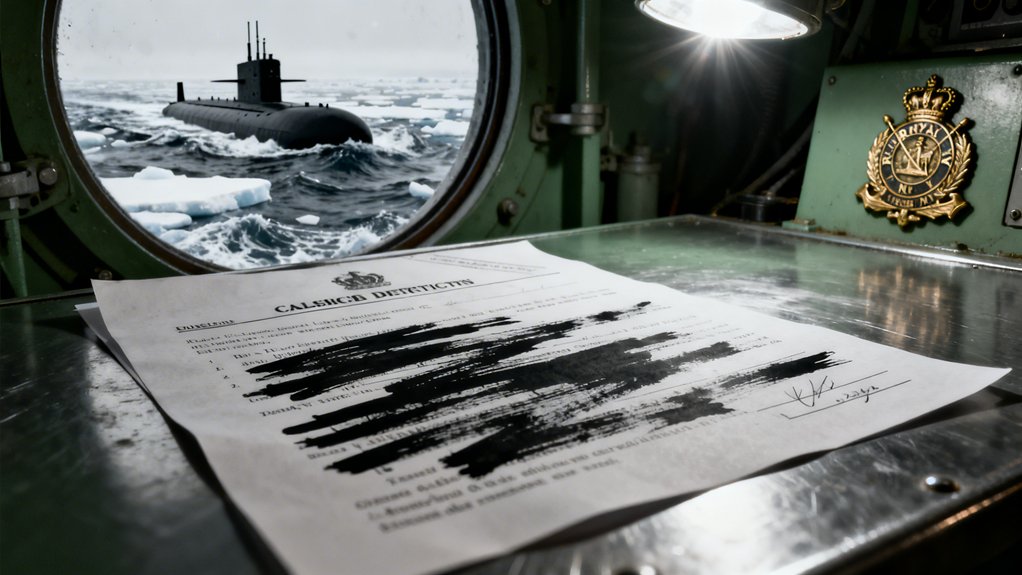
While the public narrative emphasized defense, the Royal Navy’s commanders were drafting directives that plunged submarines into the heart of Soviet bastions. These orders initiated the core of what were Britain’s secret submarine patrols**, authorizing unprecedented cold war territorial breaches**.
Royal Navy cold war submarines received classified missions to penetrate the Barents Sea, the fortified home waters of the Soviet Northern Fleet. Their primary objective was soviet era acoustic surveillance, silently recording the unique sonic signatures of warships and submarines.
These British secret submarine patrols weren’t passive observation; they were aggressive intelligence-gathering runs that demanded crews operate for weeks under extreme tension, steering deep within range of Soviet air and naval patrols to collect strategically crucial data.
They fitted the submarines’ hulls at Clyde with anechoic tiles that absorbed sonar pulses and installed advanced towed arrays that could listen from miles away, transforming them into ultra-quiet hunters.
This ‘rig for ultra-quiet’ plunged crews into a stifling, claustrophobic silence where even a dropped tool might betray their position.
Enduring these conditions for weeks, men faced a severe psychological toll as they lay motionless beneath Soviet vessels.
The Implementation of Anechoic Tiles and Advanced Sonar Arrays for Ultra-Quiet Running
How did the Royal Navy’s submarines become phantoms that could slip unheard beneath Soviet fleets? Engineers at HM Naval Base Clyde turned to two critical technologies. They fitted hulls with rubberized anechoic tiles. These tiles absorbed and scattered active sonar pings, drastically reducing the boat’s acoustic signature.
Concurrently, they integrated advanced, towed passive sonar arrays. These sensitive hydrophones could detect distant contacts without emitting any sound themselves. This combination was pivotal for silent running submarine tactics cold war. A boat, now acoustically muted and acutely aware of its surroundings, could linger undetected. This capability was essential for classified royal navy submarine missions, enabling risky royal navy intelligence gathering missions that collected essential cold war acoustic intelligence from within royal navy submarine soviet waters.
Claustrophobic Confines: The Severe Psychological Toll of Sustained Ultra-Silent Rig on Submarine Crews
Deep within the claustrophobic confines of these modified boats, the physical silence imposed by anechoic tiles and towed arrays created a uniquely severe psychological battleground. For weeks, men endured “ultra-silent rig,” where even a dropped spanner could betray their position. They’d lie motionless beneath Soviet hulls during near fatal submarine encounters cold war missions, breath held, hearts pounding in the unnatural quiet. This secret cold war shadow warfare demanded absolute discipline while fostering profound isolation, a strain deliberately obscured by subsequent british government military cover-ups.
| Stressor | Physical Manifestation | Operational Consequence |
|---|---|---|
| Ultra-Silent Rig | Hyper-vigilance, sleep deprivation | Increased risk of human error |
| Clandestine Surveillance | Auditory hallucinations, anxiety | Impaired judgement during close encounters |
| Prolonged Confinement | Claustrophobia, irritability | Erosion of crew cohesion and morale |
| Threat of Detection | Chronic adrenaline fatigue | Degraded performance over long patrols |
The history of british submarine espionage is hence written not only in gathered intelligence but in the unseen, enduring trauma of its crews.
Breaching the Kola Peninsula: Executing Unsanctioned Sovereign Territorial Incursions Against the Soviet Northern Fleet
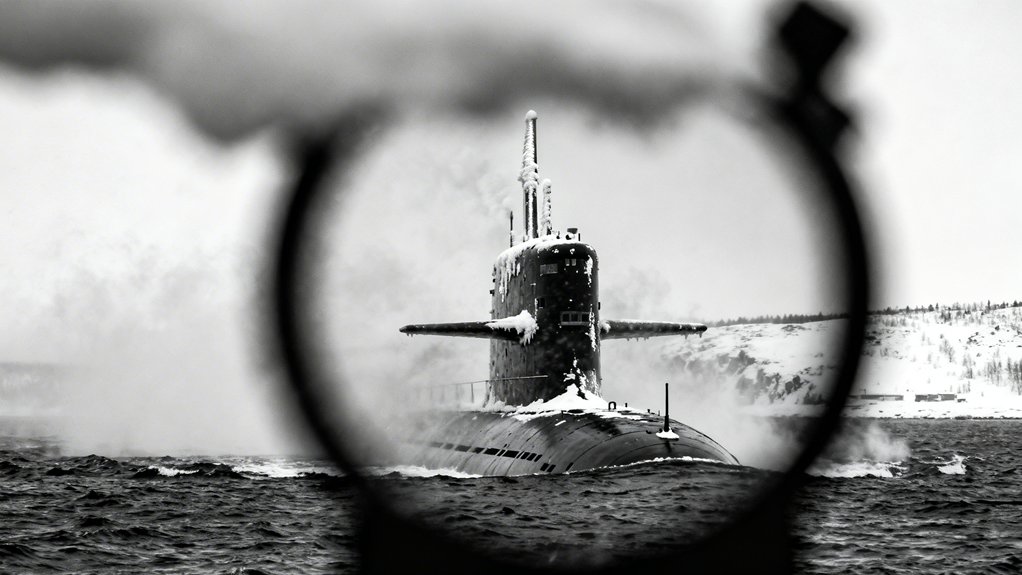
While the world focused on diplomatic summits and nuclear treaties, Royal Navy submarines were already executing the most aggressive phase of their clandestine campaign: unsanctioned sovereign territorial breaches into the heart of Soviet naval power at the Kola Peninsula.
The critical question—did British submarines enter Soviet waters—has been answered by declassified operations, which confirm that boats like HMS *Conqueror* penetrated fjords and patrol areas to monitor the Northern Fleet. These were deliberate acts of espionage, with crews steering inside the USSR’s declared twelve-mile limit, a flagrant violation of sovereignty.
The subsequent Ministry of Defence cold war cover-up guaranteed these dangerous missions remained hidden, a policy of official secrecy that lasted for decades until the slow drip of declassified British submarine operations began revealing the truth.
Capturing the Acoustic Signatures of Victor and Typhoon-Class Nuclear Submarines
They sought more than just passive recordings, executing the audacious “Operation Barmaid” to physically cut and steal a Soviet towed-array sonar.
Back in the UK, intelligence specialists meticulously processed the raw ACINT data gathered from shadowing Victor and Typhoon-class boats. These efforts decoded the unique acoustic signatures of advanced Soviet propulsion systems, revealing vulnerabilities and operational patterns.
Operation Barmaid and the Clandestine Seizure of Soviet Towed-Array Sonar Technology
How far would the Royal Navy go to gain a critical technological edge? In 1982, HMS *Conqueror* executed Operation Barmaid, a mission of astonishing audacity.
The submarine covertly trailed a Soviet intelligence-gathering vessel in the Barents Sea, targeting its critical towed-array sonar streamer.
In a meticulously planned maneuver, *Conqueror* ascended directly beneath the Soviet ship. Using a specially fitted cable-cutter on its fin, the submarine severed the array’s tow cable and seized several hundred meters of the sophisticated hydrophone line.
The crew then hauled the prize—a goldmine of advanced Soviet acoustic technology—into the torpedo tube, securing an unparalleled intelligence coup that revealed the Soviets’ own sensitive listening capabilities and sonar design.
Processing Raw ACINT Data: How British Sonar Operators Decoded Secret Soviet Propulsion Mechanics
With the prized hydrophone cable secured inside HMS *Conqueror*’s torpedo tube, the British focus shifted from capture to exploitation, as analysts at the secretive ACINT (Acoustic Intelligence) unit began decoding the raw Soviet sonar data.
They isolated discrete acoustic signatures—unique frequencies and rhythmic patterns—from the noise. These “fingerprints” revealed the precise mechanical workings of advanced Soviet propulsion systems, including the Victor-class’s pump-jet and the Typhoon’s massive reactor coolant pumps.
Each vibration and harmonic told a story of turbine speed, bearing condition, and cavitation. By meticulously analyzing these profiles, they built extensive libraries. This intelligence didn’t just identify submarines; it predicted their operational limits, directly informing Western tactics and submarine design for a generation.
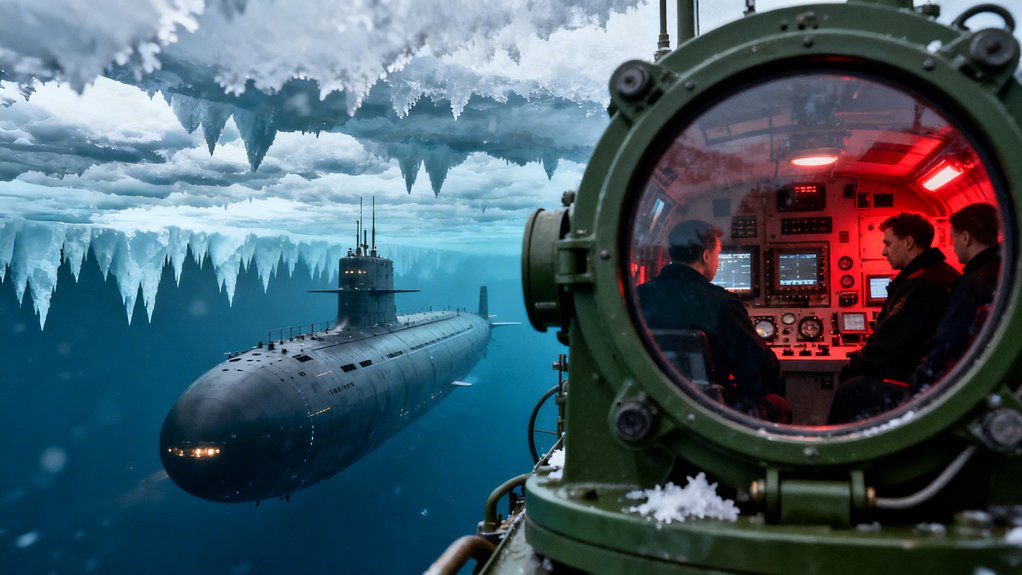
- Acoustic Shadow: The baffle zone behind a target’s propellers created a sonar void, forcing visual-blind navigation.
- Ice Lock: The overhead ice sheet eliminated a critical emergency maneuver: a rapid ascent.
- Proximity Hazard: Maintaining collection distance meant holding station terrifyingly close to a moving target.
- Tactical Silence: Any noise-making evasion would instantly betray the submarine’s presence, ending the mission.
High-Velocity Evasion Tactics: Escaping Soviet Anti-Submarine Warfare Frigates in the Shallow Waters of the Barents
When cornered in the shallow, constricted waters of the Barents Sea, a Royal Navy submarine’s only recourse was often a violent, high-speed dash. The captain would order full power, forcing the boat into a risky, high-velocity sprint.
This wasn’t stealth; it was brute-force evasion. The submarine would tear through the water, its screws cavitating wildly and creating a deafening acoustic signature. This deliberate noise was a calculated gamble. It aimed to place the sub directly under a pursuing Soviet frigate’s hull, exploiting the baffles—the sonar blind spot astern of the warship.
The Ministry of Defence Concealment Protocol: Systematically Deceiving Whitehall and the British Parliament
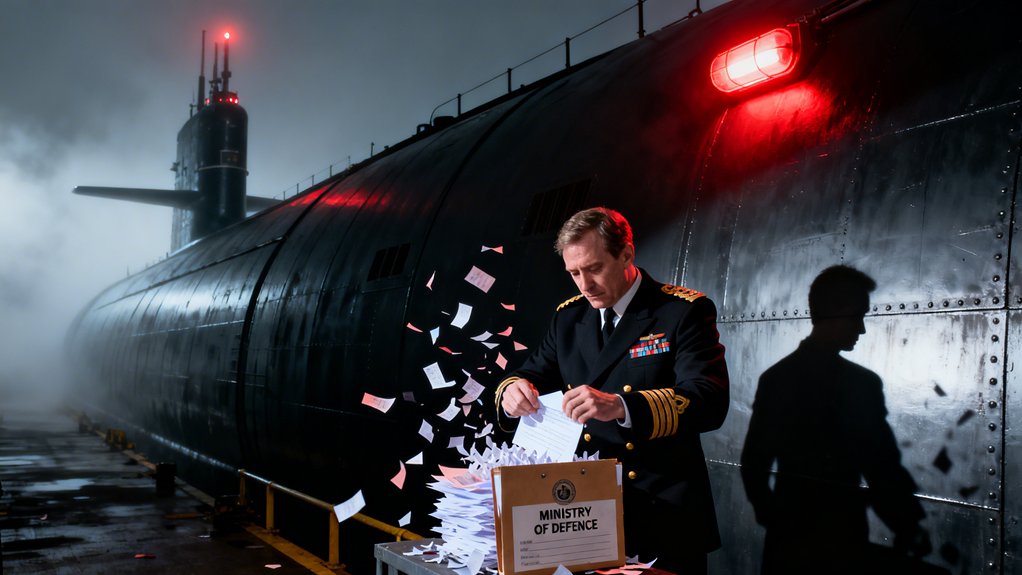
This systematic protocol guaranteed that neither Whitehall nor Parliament received an accurate account of the missions, mirroring the wartime censorship enforced by the Press Bureau under the Defence of the Realm Act.
Falsifying Submarine Patrol Logs and Manipulating Geographic Coordinates Post-Mission
Although the patrols themselves were fraught with danger, the deception began only after the submarines returned, as the Ministry of Defence instituted a formal concealment protocol.
The core of this subterfuge involved a systematic, post-mission falsification of the official record. Upon debrief, sensitive logs and navigational charts weren’t merely classified; they were actively sanitized. Clerks, acting on explicit orders, altered geographic coordinates to relocate the submarines’ tracks into international waters, thereby erasing any evidence of sovereign territorial breaches. This created a “clean” archival trail, ensuring that any subsequent inquiry—parliamentary or internal—would only see a logbook documenting a routine patrol far from forbidden Soviet coastlines.
The protocol’s alterations were precise and thorough:
- Latitudes and longitudes in the ship’s log were manually redrawn.
- Sonar contact reports from inside territorial limits were expunged.
- The commanding officer’s original handwritten track charts were replaced.
- All revised documents were then stamped with a higher, restrictive classification.
Parallel to the sanitizing of documents, the Ministry of Defence aggressively targeted the sailors themselves, using the Official Secrets Act to impose a lifetime of silence. Crews faced stern, explicit debriefings upon returning from these dangerous missions.
Officers and ratings were reminded that the Act bound them for life, forbidding any discussion—even with family—about their covert activities inside Soviet waters. This legal threat created a culture of pervasive secrecy and isolation.
For decades, veterans carried the psychological burden of their experiences alone, unable to seek proper support or share their stories. The MoD’s enforcement guaranteed operational deniability, actively preventing any leak that could expose the state’s aggressive, clandestine submarine campaign to Parliament or the public.
Maintaining Plausible Deniability: The Geopolitical Calculus Behind Unsanctioned Underwater Espionage
Because the strategic value of pinpointing Soviet naval signatures was deemed paramount, the Royal Navy’s command structure willingly embraced the inherent risks of unsanctioned underwater espionage, operating on a razor’s edge where discovery could trigger an international crisis, much like the silent, high-altitude flights of the U-2 spy plane.
Plausible deniability wasn’t just a bureaucratic phrase; it was the essential geopolitical shield. If a submarine was detected or forced to surface, the official line could simply be a navigational error, not a sanctioned intelligence raid. This allowed the UK to pursue critical intelligence without providing the Soviets a formal, public pretext for retaliation.
The calculus was brutally pragmatic: the intelligence justified the risk, and the cover story justified the mission.
The operational doctrine rested on several key tenets:
- Missions were unsanctioned by any official, traceable order.
- Submarine captains operated under sealed, verbal instructions.
- No written logs could detail the true nature of the incursions.
- Any confrontation would be dismissed as an accidental border straying.
Fracturing the Information Embargo: The Impact of Delayed Declassifications and Uncensored Veteran Memoirs
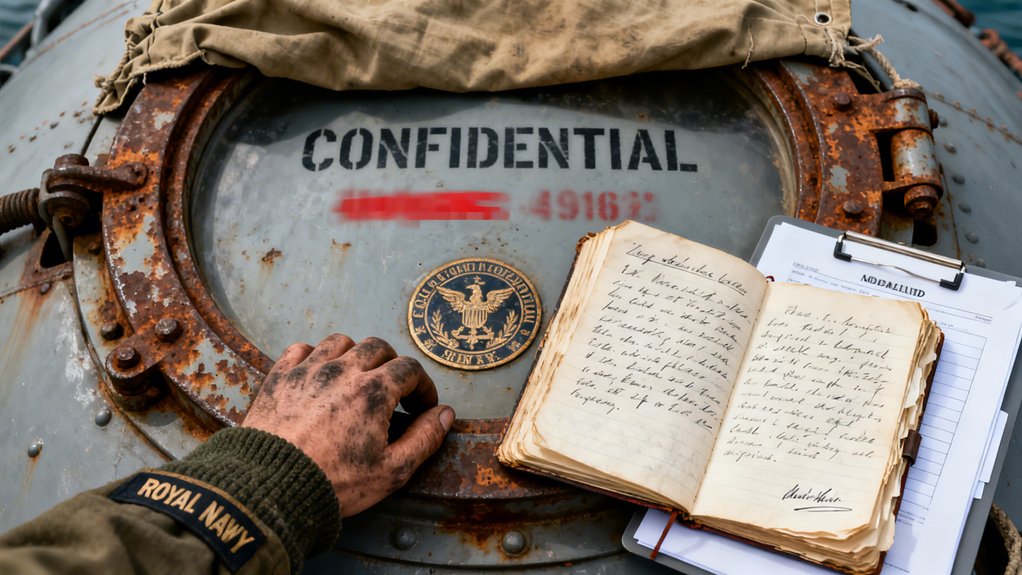
The National Archives’ declassification process systematically filtered critical mission data, with official records still redacting details on the deepest incursions. This sanitized release of information created an incomplete historical record, but uncensored veteran memoirs began to fracture the official narrative, echoing the suppression of evidence seen in other state cover-ups. Their firsthand accounts exposed gaps in the archives, revealing the true extent of operations the state had worked to conceal.
Redacting the Deepest Incursions: How the National Archives Process Filtered Critical Mission Data
Even as delayed declassifications at the National Archives began to fracture the MoD’s information embargo, its archivists actively filtered out the most critical mission data, meticulously redacting the deepest incursions from official records.
This wasn’t passive withholding; it was a deliberate, final-stage sanitization.
Documents finally released to the public arrived with entire paragraphs blacked out, coordinates excised, and vessel names removed.
The process systematically stripped the files of their most explosive revelations, ensuring that even a fractured embargo still concealed the operational crown jewels.
Archivists, following strict departmental guidelines, targeted specific details that could confirm the boldest patrols’ existence or their precise findings.
- Entire operational paragraphs concerning penetration distances were blacked out.
- Grid coordinates and nautical charts showing ingress routes were excised.
- Specific Soviet vessel types identified during close surveillance were removed.
- Dates and locations confirming the most hazardous, shallow-water missions were withheld.
Parliamentary Backlash: The Public Exposure of Systematic Executive Deception Regarding Cold War Aggression
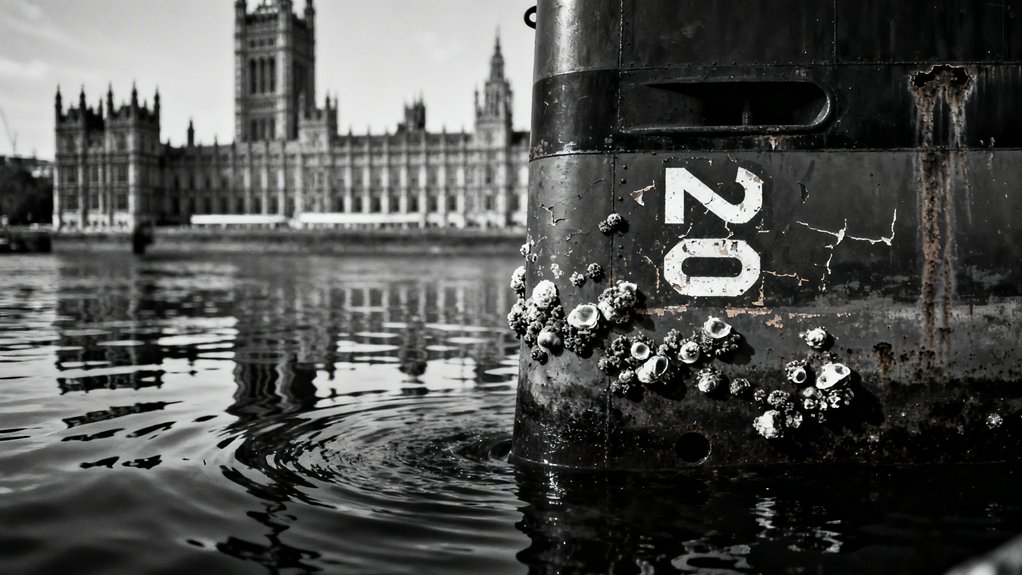
Once decades-delayed declassifications and crew memoirs began leaking the suppressed truth of clandestine Soviet incursions, a profound parliamentary backlash erupted, exposing a systematic and deliberate deception perpetrated by the executive.
Decades of suppressed truths sparked a parliamentary revolt against systemic state deception.
MPs from across the political spectrum confronted senior officials with newly revealed evidence.
They demanded to know why successive governments had concealed these aggressive acts, which had risked catastrophic conflict and crew lives.
Investigative hearings laid bare the MoD’s long-standing policy of withholding operational truths, providing misleadingly bland answers to direct questions for decades.
The scale of the institutional cover-up shocked the public, revealing a secret world where ministerial deniability trumped parliamentary accountability, mirroring the executive denial of accountability seen in post-Church Committee revelations.
This confrontation forced an unprecedented, if incomplete, official acknowledgment of the shadow war fought entirely without democratic consent.
The Morality of the Abyss: Evaluating Democratic Oversight in High-Risk Sovereign Territorial Breaches
Beneath the shadow of official secrecy, Britain’s silent war in Soviet waters forces a confrontation with a profound democratic dilemma: how a state can legitimately authorize missions that, if exposed, it must officially deny.
The core tension pits operational necessity against constitutional accountability.
These incursions weren’t mere trespasses; they were acts of undeclared aggression where detection could’ve triggered war.
The state-sanctioned secrecy created a moral abyss, deliberately separating the elected government’s knowledge from its public responsibility.
This system relied on a calculated, institutional deceit, mirroring the U.S. false-flag proposals documented in the Pentagon’s own plans.
The ethical framework of these missions rested on several precarious justifications:
- The doctrine of “necessary illegality” for supreme national interest.
- The total isolation of operational knowledge within a tiny, unaccountable cell.
- The conscious sacrifice of transparent oversight for intelligence advantage.
- The willing exposure of servicemen to unacknowledged, catastrophic risk.
Ultimately, democracy was circumvented, not served, by this paradigm.
The state judged the ends—gaining a tactical edge—to absolve virtually any means, rendering traditional oversight a casualty of the Cold War.
Frequently Asked Questions
Were Any Senior Political Figures Aware?
Senior political figures were certainly aware, as the missions required high-level authorization. Cabinet ministers, including the Prime Minister, were briefed on these covert operations.
They understood the strategic necessity but also the immense risk. However, this knowledge was tightly compartmentalized within the highest echelons of government.
These officials ultimately sanctioned the activities and later supported the Ministry of Defence’s policy of strict secrecy and public denial to protect national security and international relations.
What Was the Total Number of Successful Incursions?
An exact total remains unknown due to official secrecy. The Ministry of Defence deliberately concealed mission logs and reports.
Investigative research, based on declassified documents and veterans’ accounts, suggests dozens of successful incursions occurred over decades.
These weren’t isolated events but a sustained campaign, with each mission penetrating hundreds of miles inside Soviet territorial waters to acoustically trail enemy fleets at immense risk.
Were There Any Diplomatic Protests From the Soviets?
While the public cover-up was effective, history’s whispers suggest the Soviets did lodge protests. Their military almost certainly detected some intruders, evidenced by the dangerous cat-and-mouse chases submarines endured. Yet, formal diplomatic outrage was curiously absent or muted.
This silence was likely strategic; acknowledging the breaches would expose their own naval vulnerabilities, a truth neither side wished to trumpet in the tense theatre of the Cold War.
Did These Missions Ever Involve Allied Intelligence Agencies?
Yes, these missions were closely coordinated with allied intelligence agencies, particularly the United States. British submarines often collected acoustic data on Soviet vessels for the wider Western intelligence network. This Anglo-American cooperation was vital in pooling the immense technical resources required.
However, the direct operational risk remained with the Royal Navy, whose crews conducted the dangerous, unsanctioned incursions into Soviet territorial waters, sharing their intelligence harvest with allies.
Has Any Crewman Received Compensation for Psychological Trauma?
There’s no record of official compensation for such trauma. This absence reflects the missions’ long-classified status.
For decades, the Ministry of Defence denied the operations’ existence, preventing any formal acknowledgment of the psychological toll inflicted by silent, claustrophobic missions beneath Soviet fleets.
Without official recognition of the hazardous duty, claims for compensation related to these specific, secret experiences couldn’t be processed through standard military or veterans’ channels.
Final Thoughts
The evidence shows the MoD’s denials were a deliberate falsehood. These declassified logs and veteran testimonies confirm the theory that ministers systematically lied to Parliament. They had sanctioned the perilous intrusions, then buried the near-disasters. This cover-up wasn’t just operational secrecy; it was a fundamental betrayal of democratic oversight, sacrificing accountability for the state’s hidden, reckless agenda.