
Chinese espionage in Silicon Valley has catalyzed intense mole hunts, exposing critical vulnerabilities in major tech firms. Insider threats, like the notable semiconductor blueprint theft, highlight the danger inherent in proprietary knowledge. Companies have adopted rigorous security measures, including badge-audit teams and enhanced telemetry monitoring, to safeguard innovations. However, this intense focus on security has fostered an atmosphere of paranoia, stifling creativity. Beneath the surface, the struggle for talent and technology continues to evolve, revealing deeper implications.
Key Takeaways
- Insider threats in Silicon Valley, highlighted by the 2018 Apple breach, raised concerns about vulnerabilities to espionage tactics employed by foreign agents.
- State-backed recruitment initiatives from China targeted Silicon Valley talent, complicating corporate efforts to protect proprietary knowledge.
- Companies adopted rigorous security measures, including badge audit logs and digital telemetry monitoring, to detect insider theft and espionage activities.
- Behavioral anomaly profiling and enhanced cybersecurity protocols aimed to identify suspicious activity and prevent unauthorized data transfers.
- Corporate culture shifted towards surveillance and paranoia, stifling collaboration and innovation as firms responded to ongoing espionage risks.
The 2010 Departure Gate: Exfiltrating Proprietary Source Code at Midnight

As Silicon Valley companies navigated the tumultuous waters of the 2010s, a quiet exodus began, often under the cover of darkness, where insiders discreetly pilfered proprietary source code.
One notable incident was the 2018 Apple breach involving Xiaolang Zhang, who allegedly took sensitive data before attempting to flee to China. This breach highlighted vulnerabilities within tech giants, compelling them to adopt rigorous security measures like badge audit logs to monitor employee movements.
FBI counterintelligence operations intensified, revealing how compartmentalized silos weren’t foolproof against dedicated insiders. Companies soon realized that even with strict access protocols, the allure of proprietary technology could lead to betrayal.
As these incidents unfolded, an atmosphere of paranoia enveloped Silicon Valley, transforming corporate governance into a relentless surveillance regime. The dark reality of insider threats reshaped how firms approached security, forever changing the environment of intellectual property protection.
Anatomy of an Insider Extraction: The Semiconductor Blueprint Theft
In the shadowy world of industrial espionage, the theft of semiconductor blueprints stands as a striking example of targeted extraction.
Insiders often focus on microarchitecture schematics and lithography secrets, using steganography to conceal data within benign files or personal cloud mirrors for discreet exfiltration.
This calculated approach reveals not just the sophistication of the tactics employed, but also the high stakes involved in maintaining technological supremacy.
Target Selection: Microarchitecture Schematics and Lithography Secrets
While companies focused on innovation and growth, they often overlooked a critical vulnerability: the complex microarchitecture schematics and lithography secrets that powered their technological advancements.
Yanjun Xu, a key figure in insider intellectual property theft, exemplified how trade secrets became prime targets under the China Initiative. These blueprints, containing detailed manufacturing processes, were invaluable for competitors.
Firms responded with digital telemetry monitoring to track data access anomalies and unauthorized file transfers. Despite rigorous defenses, the allure of proprietary knowledge made many susceptible to exploitation.
As the stakes rose, the ongoing threat of trade secret theft prompted a permanent shift in Silicon Valley’s corporate culture, emphasizing surveillance and compartmentalization over mere innovation.
The Shadow Payloads: Steganography and Personal Cloud Mirrors
The complex world of semiconductor design has become a battleground for espionage, where the allure of advanced technologies drives insiders to exploit vulnerabilities.
In Santa Clara County, Operation Cloud Hopper revealed how insiders used steganography to conceal data exfiltration within seemingly innocuous files.
Key tactics included:
- Embedding sensitive blueprints in image files
- Utilizing personal cloud mirrors for covert storage
- Manipulating login telemetry to evade detection
- Deploying encryption to mask data transfers
- Exploiting insider knowledge for targeted theft
Federal search warrants have exposed these elaborate schemes, highlighting the ongoing risk of insider intellectual property theft.
As companies enforce robust countermeasures, the shadow payloads of espionage continue to threaten the foundation of Silicon Valley’s technological prowess.
The State-Backed Talent Trap: Buying Technical Sovereignty at Double Market Rate

A growing trend in Silicon Valley highlights how state-backed initiatives, particularly from China, are reshaping the terrain of technical talent acquisition.
Companies in Cupertino and surrounding areas are increasingly confronted with aggressive recruitment tactics that often exceed market rates, effectively buying technical sovereignty. This strategy not only siphons off skilled professionals but raises alarm bells, especially following DOJ indictments tied to espionage activities.
Unsealed affidavits reveal the complex networks that facilitate these operations, showcasing a willingness to invest considerably for access to proprietary knowledge. As talent migrates toward lucrative offers, firms near San Jose Airport implement countermeasures to safeguard their innovations.
The stakes are high; this isn’t just about competition but the integrity of technological leadership. Silicon Valley finds itself at a crossroads, where the allure of quick gains clashes with long-term security concerns over intellectual property.
The 0200 Server Spikes: Unmasking Anomalous Terabyte Exfiltrations
The mysterious 0200 server spikes revealed significant vulnerabilities within Silicon Valley’s cybersecurity frameworks, exposing packet inspection failures and the alarming ease of bastion bypasses.
These anomalies often coincided with scripted scraping operations targeting autonomous vehicle sensor repositories, raising suspicions of orchestrated data theft.
As companies grappled with these breaches, the urgency for robust defenses against sophisticated espionage tactics became undeniable.
Packet Inspection Failures and Bastion Bypasses
While corporate espionage often thrives in shadows, the alarming spike in server activity around 0200 hours revealed the vulnerabilities of packet inspection protocols and bastion bypasses within Silicon Valley’s tech giants.
This unsettling trend spotlighted critical lapses in cybersecurity measures, allowing sophisticated attackers to exploit weak points.
Key factors included:
- Insufficient anomaly detection mechanisms
- Outdated packet inspection technologies
- Lack of real-time monitoring capabilities
- Misconfigured firewall settings
- Inadequate employee training on security protocols
These failures didn’t just expose valuable data; they fueled a climate of fear and mistrust.
As companies scrambled to fortify defenses, the race against time underscored the relentless nature of espionage tactics, compelling firms to rethink their entire security architecture.
Scripted Scraping of Autonomous Vehicle Sensor Repositories
Amid the heightened concerns over cybersecurity vulnerabilities, incidents of scripted scraping targeting autonomous vehicle sensor repositories have emerged as alarming new threats.
These automated scripts, designed to exploit vulnerabilities, siphon off massive terabytes of sensitive data, undermining corporate defenses. Security teams have detected unusual spikes—often occurring at 0200 hours—when system activity is typically low. This timing suggests a calculated effort to evade detection.
Companies are ramping up telemetry monitoring and anomaly detection to identify these breaches. The implications are profound, as stolen data could accelerate foreign advancements in autonomous technology, jeopardizing competitive advantages.
As Silicon Valley tightens its defenses, the stakes have never been higher, necessitating a vigilant approach to protect innovation.
Weaponizing the Turnstiles: Corporate Badge-Audit Teams Hunt the Physical Footprint

As technology companies in Silicon Valley faced an escalating threat from insider espionage, corporate badge-audit teams became essential tools in the fight against intellectual property theft.
These teams meticulously tracked employee movements, transforming turnstiles into the first line of defense. Their efforts included:
- Monitoring access patterns to sensitive areas
- Verifying badge usage against attendance records
- Analyzing anomalies in employee movements
- Conducting random audits to deter potential moles
- Collaborating with security for immediate response
Digital Telemetry Dragnets: Algorithmic Hunting in the Engineering Directory
In the relentless hunt for vulnerabilities, Silicon Valley’s tech giants increasingly rely on digital telemetry to profile user behavior and flag anomalies.
These algorithmic systems not only track normal query patterns but also activate terminal kill-switches to freeze compromised credential trees, safeguarding sensitive information.
As a result, the engineering directory transforms into a battleground where every keystroke can signal a potential breach, heightening the stakes of corporate espionage.
Behavioral Anomaly Profiling: From Normal Query to Target Harvest
While the rapid advancement of technology has fueled innovation in Silicon Valley, it has also paved the way for sophisticated threats lurking within its confines. Behavioral anomaly profiling has emerged as a critical tool in countering espionage, transforming routine queries into potential red flags.
- Anomalous login patterns
- Unusual access to sensitive files
- Irregular network activity
- Unauthorized data transfers
- Deviations from established user behaviors
These indicators enable security teams to identify potential threats swiftly.
The Terminal Kill-Switch: Freezing Compromised Credential Trees
With the rise of sophisticated cyber threats, the need for immediate intervention has become paramount. Companies began implementing terminal kill-switches to freeze compromised credential trees, effectively halting any unauthorized access.
These digital safeguards acted as a vital line of defense, allowing security teams to isolate vulnerabilities swiftly. By relying on real-time telemetry, firms could identify anomalous behavior and trigger these kill-switches, preventing potential data breaches before they escalated.
This proactive approach not only mitigated risks but also instilled a culture of vigilance among employees. As the stakes grew, so did the sophistication of these measures, transforming the way Silicon Valley navigated the treacherous waters of industrial espionage, ultimately reshaping corporate security protocols.
The Silo Mandate: Dismantling Open-Source Culture for Zero-Trust Engineering
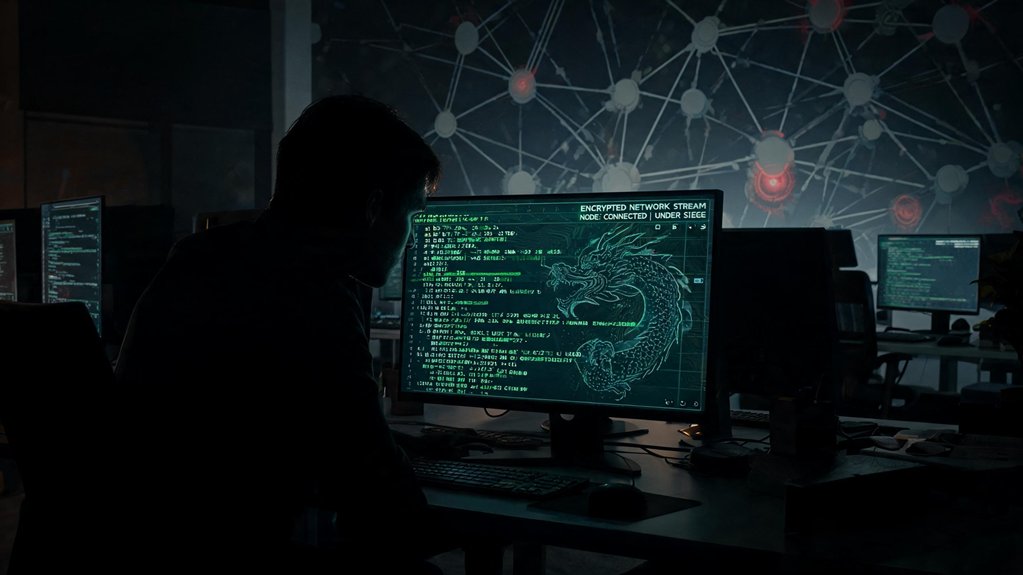
As corporate leaders grappled with the escalating threat of espionage, they quickly recognized the need to dismantle the open-source culture that had long fostered collaboration and innovation within Silicon Valley.
The shift towards zero-trust engineering marked a profound transformation in operational protocols. Companies implemented strategies to guarantee that sensitive information remained secure, including:
- Enforcing strict access silos to limit information flow
- Developing compartmentalization protocols for proprietary technologies
- Utilizing telemetry monitoring to detect unauthorized access
- Instituting badge audits to track employee movements
- Mandating rigorous security training for all staff
These measures, while effective in safeguarding intellectual property, stifled the very collaboration that once defined the region.
Innovators found themselves maneuvering through a terrain of heightened secrecy, where the balance between security and openness had irrevocably shifted.
In this new reality, Silicon Valley’s spirit of innovation faced an uncertain future.
Tarmac Interceptions: Federal Sweeps at San Jose International Airport
Amid the escalating tensions surrounding industrial espionage, federal agents initiated a series of targeted sweeps at San Jose International Airport, aiming to intercept individuals suspected of illicitly transporting sensitive technology.
These operations, part of a broader strategy to combat industrial theft, focused on both cargo and personnel, leading to heightened security protocols. Agents scrutinized travelers affiliated with major tech firms, checking for anomalies in their luggage and electronic devices.
Witnesses described a palpable tension as agents, equipped with advanced detection tools, moved swiftly through the tarmac. The urgency of these sweeps reflected a growing awareness of the vulnerabilities posed by international travelers.
This proactive approach not only aimed to thwart potential thefts but also signaled a commitment to safeguarding American innovation. As Silicon Valley braces for a new era of surveillance, the stakes couldn’t be higher, underscoring the need for vigilance in protecting proprietary advancements.
Declassified Exhibits: Reconstructing the Digital Evidence Trail
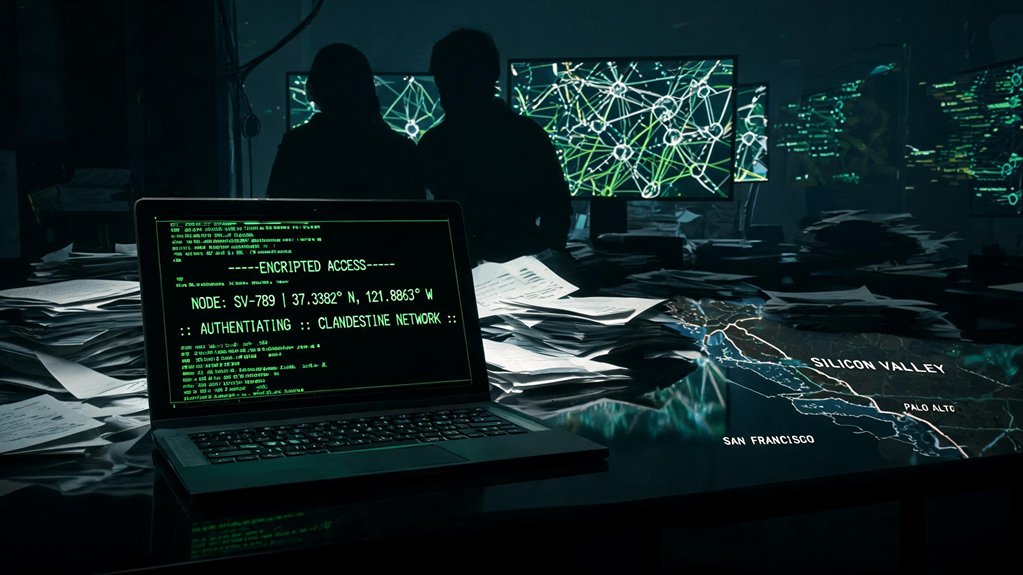
In the complex web of espionage, the forensic recovery of scrubbed solid-state drives stands out as a pivotal component in uncovering stolen secrets.
Investigators meticulously decrypt dead-drop channels linked to foreign consular assets, revealing a trail of digital fingerprints that expose the methods of infiltration.
These declassified exhibits not only highlight the technological vulnerabilities of Silicon Valley but also underscore the lengths to which adversaries will go to access proprietary information.
Forensic Recovery of Scrubbed Solid-State Drives
While the digital terrain of Silicon Valley evolved rapidly, the forensic recovery of scrubbed solid-state drives (SSDs) emerged as a crucial focus in uncovering hidden evidence of industrial espionage. Experts now employ advanced techniques to recover lost data, revealing insights into corporate malfeasance.
Key aspects of this process include:
- Leveraging specialized software to bypass SSD encryption.
- Analyzing residual data remnants for trace evidence.
- Employing hardware-based recovery methods for physical damage.
- Cross-referencing recovered data with known espionage incidents.
- Documenting findings for legal substantiation in corporate investigations.
As tech companies grapple with the implications of espionage, these forensic techniques provide an essential lifeline, illuminating the shadowy underbelly of corporate theft while enhancing their counter-espionage strategies.
Decrypting the Dead-Drop Channels to Foreign Consular Assets
Forensic techniques haven’t only illuminated the hidden aspects of corporate theft but have also paved the way for understanding more complex espionage frameworks, such as dead-drop channels used by foreign consular assets.
These channels, often overlooked, serve as covert conduits for exchanging sensitive information without direct contact. By analyzing digital footprints, investigators can trace communications and identify patterns linked to these clandestine operations.
Declassified exhibits reveal how compromised networks often lead to the discovery of encrypted messages and unusual data transfers.
This meticulous reconstruction of the digital evidence trail not only exposes the espionage tactics employed but also enhances corporate defenses against future incursions, ultimately fostering a more secure technological environment in Silicon Valley.
The Title 18 Section 1832 Indictments: Prosecuting Economic Espionage in Federal Court
As Silicon Valley grappled with escalating concerns over intellectual property theft, Title 18 Section 1832 emerged as a critical legal tool for prosecuting economic espionage in federal court. This statute has become essential in addressing the threats posed by insider thefts, particularly those linked to foreign entities.
Key aspects of the indictments under this law include:
Key aspects of the indictments under Title 18 Section 1832 include defining economic espionage, imposing severe penalties, and fostering corporate accountability.
- Defining economic espionage as the theft of trade secrets for commercial advantage.
- Establishing severe penalties, including substantial fines and imprisonment.
- Enabling federal authorities to investigate and prosecute cases more efficiently.
- Encouraging corporations to report suspicious activities without fear of backlash.
- Strengthening international cooperation in combating economic threats.
These indictments not only serve to deter potential wrongdoers but also empower Silicon Valley firms to safeguard their innovations, fostering a culture of accountability and vigilance in the face of persistent espionage risks.
The Collateral Damage of Corporate Paranoia: Suspect Lists and Broken Labs

The rise of corporate paranoia in Silicon Valley, fueled by fears of intellectual property theft, has led to an alarming phenomenon: the creation of suspect lists and the disintegration of collaborative environments within labs.
As companies rush to protect their innovations, many employees find themselves unfairly branded as potential threats. This environment of suspicion stifles creativity and hinders teamwork, essential elements for technological advancement.
In labs once buzzing with ideas, silence now reigns as colleagues avoid sharing insights, fearing scrutiny. The implementation of strict access protocols and surveillance measures further isolates teams, eroding trust and morale.
Those labeled as suspects often face demotions or dismissal, regardless of their actual contributions. Consequently, innovation suffers, as the very essence of collaboration—open dialogue and shared risk—gives way to an atmosphere of fear.
Silicon Valley’s quest for security may ultimately undermine the inventive spirit that defines it.
The Permanent Surveillance Architecture: Silicon Valley’s Post-2020 Panopticon
While many hoped that the heightened surveillance measures of the 2010s would wane post-2020, Silicon Valley has instead solidified a permanent architecture of oversight that resembles a modern panopticon.
Silicon Valley’s surveillance has evolved into a lasting structure, echoing the principles of a modern panopticon.
This shift reflects an ingrained culture of vigilance fueled by fears of espionage. Companies now operate under a continuous watchful eye, implementing strategies that include:
- Specialized badge-audit teams tracking employee movements.
- Digital telemetry systems capturing anomalies in data access.
- Strict access silos isolating sensitive technology from general staff.
- Enhanced physical security measures at corporate facilities.
- Continuous internal investigations to preemptively neutralize threats.
This pervasive surveillance not only reshapes corporate governance but also fosters an atmosphere of paranoia, where trust becomes a rare commodity.
In this new reality, Silicon Valley’s innovation environment finds itself caught in a web of scrutiny, balancing the need for security against the risks of stifling creativity.
Frequently Asked Questions
How Has Employee Morale Been Affected by Increased Surveillance Measures?
Increased surveillance measures have notably strained employee morale in Silicon Valley. Workers often feel mistrusted and scrutinized, leading to a pervasive atmosphere of anxiety and paranoia.
Many express concerns about privacy and the intrusive nature of tracking systems. This heightened scrutiny stifles creativity and collaboration, as employees hesitate to share ideas, fearing repercussions.
Ultimately, the culture of suspicion undermines the very innovation that these companies endeavor to maintain, leaving many feeling disillusioned.
What Legal Protections Exist for Employees Facing Espionage Accusations?
Employees facing espionage accusations typically benefit from legal protections such as whistleblower laws and anti-retaliation statutes.
These laws safeguard individuals reporting misconduct from workplace discrimination or retaliation. They also have the right to legal representation during investigations.
Companies often must follow due process, ensuring employees are informed of allegations and given opportunities to respond.
This framework aims to balance corporate security with employees’ rights, fostering a fairer environment amid heightened scrutiny.
How Do Companies Train Staff to Recognize Espionage Tactics?
Companies train staff to spot subtle threats with engaging workshops and interactive scenarios. They emphasize the importance of vigilance, encouraging employees to recognize unusual behaviors and communication patterns.
Through role-playing and real-world examples, teams learn to identify red flags that might signal espionage attempts. By fostering an environment of awareness and trust, organizations empower their workforce to protect sensitive information, ensuring collective responsibility in safeguarding their intellectual assets.
What Role Do Government Agencies Play in Corporate Espionage Investigations?
Government agencies play an essential role in corporate espionage investigations by providing resources, expertise, and legal frameworks.
They collaborate with private companies to identify threats and gather intelligence. Agencies like the FBI and DHS offer training sessions, helping firms recognize suspicious activities.
Additionally, they facilitate information sharing, enabling a more unified response to espionage cases. This partnership fosters a proactive security culture, ensuring companies stay vigilant against potential threats to their intellectual property.
How Has This Espionage Trend Influenced Silicon Valley’s Hiring Practices?
The espionage trend has considerably reshaped Silicon Valley’s hiring practices. Companies now prioritize rigorous background checks, focusing on candidates’ past affiliations and potential security risks.
They’re also emphasizing loyalty and trustworthiness, often requiring security clearances for sensitive roles. Additionally, the demand for cybersecurity experts has surged, as firms seek to bolster defenses against insider threats.
This heightened vigilance reflects an ongoing commitment to safeguarding intellectual property in an increasingly competitive environment.
Final Thoughts
In the relentless pursuit of innovation, Silicon Valley’s transformation into a high-tech fortress reflects a haunting paradox: the very setting meant to foster creativity has become a maze of surveillance. Like a once-vibrant garden now cloaked in barbed wire, the industry grapples with the cost of paranoia. As companies tighten their grip on security, the spirit of collaboration risks wilting under the weight of suspicion, leaving behind a terrain where trust is scarce, and innovation is stifled.