On October 8, 1967, Bolivian Rangers and CIA operatives seize Che Guevara’s backpack at Yuro Ravine. His handwritten diaries become an operational map, guiding the hunt. At Langley, analysts dissect 30,000 words, cross-referencing satellite imagery and radio intercepts. They’ve weaponized the text—air-dropping facsimiles, broadcasting entries, shaping a narrative of inevitable defeat. The forensic verdict outlives Guevara, scripting history. Yet the full extent of that manipulation isn’t in the official record—the rest of the story waits.
Key Takeaways
- CIA used Guevara’s captured diaries as an operational map to track and hunt him.
- Handwriting experts authenticated the diaries, confirming Guevara authored the strategic records.
- Analysts cross-referenced diary contents with satellite imagery and radio data for tactical weaknesses.
- The CIA air-dropped facsimile pages and broadcast diary entries as psychological warfare.
- The sanitized diaries shaped a scripted historical narrative of Guevara’s inevitable defeat.
October 8, 1967: The Yuro Ravine Ambush and the Seizure of Target Alpha’s Backpack

The Yuro Ravine erupts in a storm of gunfire on October 8, 1967, as Bolivian Rangers and CIA-trained operatives close in on Che Guevara’s fleeing column.
When the smoke clears, they don’t just secure a wounded revolutionary—they grab his backpack. Its contents are painfully obvious: that frayed canvas bag holds Guevara’s handwritten diaries—raw material destined to redefine cold war intelligence operations permanently.
The che guevara capture timeline pivots on this single moment, because the diaries aren’t just memoirs; they’re an operational map of the doomed campaign.
The capture timeline hinges on those diaries—not memoirs, but an operational map of a doomed campaign.
CIA declassified operational records confirm that analysts on the ground immediately recognized the value. Every name, every date, every failed supply contract morphs into a usable intelligence data point.
The Yuro Ravine capture location, remote and unforgiving, becomes the pivot point of history. They don’t linger; they strip the gear, bag the evidence, and spirit it up the mountain.
Bolivian Ranger Battalion 2 and the CIA’s Tactical Intelligence Net in the Ñancahuazú
While Bolivian Ranger Battalion 2 pushed deep into the Ñancahuazú, the CIA’s tactical intelligence net was already pulling tight—radio intercepts, informant reports, and aerial surveillance all feeding a single, unforgiving picture of Guevara’s shrinking column.
The Bolivian forces’ tactical intelligence fused every whisper into actionable targets, turning the October 1967 military operation into an increasingly relentless hunt. The CIA’s tactical capture mechanics relied on that net, pinpointing the column’s movement with almost brutal precision.
Every transmission, every local’s rumor, became an intelligence asset weaponization—not just for tracking, but for the coming propaganda victory.
When the Rangers finally cornered Guevara at Yuro, the net had already guaranteed his fate. The Che Guevara historical aftermath wasn’t just about the body; it was about what his diaries would reveal.
The intelligence community understood that immediately, shifting from capture to exploitation—though that story belongs to the command post, not the muddy ravine.
The Canvas Notebooks: Cataloging the Captured Intelligence at the Command Post
Handwriting experts at the command post matched every stroke to the Argentine commander’s known script, locking his authorship to the canvas pages.
They’d then decrypt the aliases, ripping off cover names to expose the subversive supply lines beneath.
Those uncovered threads didn’t just fill folders—they turned the notebooks into a live intelligence grid, mapping rebels and routes for the pursuit to exploit.
Authenticating the Handwriting of the Argentine Commander
As soon as the canvas notebooks hit the command post table, CIA officers didn’t waste a minute—they set about authenticating the Argentine commander’s handwriting, tracing every loop, slant, and ink pressure against known samples from his file, because they couldn’t weaponize a single page until they’d proven it was genuinely his.
Felix Rodriguez, the CIA operative who’d helped corner Guevara, watched the process intently. Each verified stroke turned a rebel’s private words into a geopolitical propaganda tool.
They compared dated entries, cross-checked the hurried scrawl of battle fatigue, and confirmed the distinctive quirks that matched Guevara’s personal letters.
Once satisfied, they stamped the notebooks as authentic, readying them for translation and tactical exploitation. The validation wasn’t academic—it was the final gate before the diaries became a weapon.
Decrypting the Aliases and Subversive Supply Lines
The authentication stamp barely dried before the command post crew tore the notebooks open, cataloging every alias and supply route hidden in Guevara’s cramped script.
Each codename peeled back a layer of the guerrilla network—Ramón, Fernando, Martín—masking a commander who’d slipped through Bolivia’s cordons for months.
Analysts traced ink entries to safe houses in La Paz, rural caches near Ñancahuazú, and courier contacts stretching beyond the border.
Not just guns and food; they were lifelines of revolution, mapped in handwriting that never once betrayed urgency.
Decrypting them wasn’t academic.
Every alias identified, every route pinned down, gave the hunt its edge.
The notebooks became a tactical carcass, picked clean.
In the post’s lamplight, they turned Guevara’s records into his hunter’s sharpest weapon.
October 9 at La Higuera: The 1310 Hours Execution and the Sanitization of the Incident Site
At 1310 hours on October 9, 1967, the executioners inside La Higuera’s one-room schoolhouse ended Che Guevara’s life with a burst of rifle fire.
They then pivoted to the grimmer task of sanitizing the site—sweeping up spent shell casings, scrubbing blood from the floorboards, and securing those handwritten diaries that’d become their most potent intelligence trophy.
The soldiers worked fast, erasing physical evidence before any journalist could glimpse the mess. They’d already hidden Guevara’s body for a clandestine burial.
Every footprint mattered. The schoolhouse turned sterile, its story buried beneath quicklime.
Every footprint mattered. The schoolhouse turned sterile, its story buried beneath quicklime.
But those diaries weren’t mere proof of death; they held Che’s operational map, his network, his strategies—raw and unfiltered.
The executioners knew they’d secured something bigger than a corpse: a narrative they could shape.
With the site now cleaned, they handed the final triumph upward, never realizing the real war would be fought later over ink and paper.
Langley’s Forensic Dissection of the 30,000-Word Guerrilla Blueprint
Those ink-stained pages from the schoolhouse floor didn’t stay in Bolivia for long. Within weeks, they reached Langley’s clandestine laboratories, where analysts treated each sheet like a surgical specimen. The 30,000-word guerrilla blueprint became their surgical scalpel.
They cross-referenced dates, names, and grid coordinates against satellite imagery and radio intercepts. They mapped supply chains, decoded camp movements, and reconstructed Guevara’s logistical spine. Every crossed-out line revealed a failed strategy; every annotation exposed a buried relationship.
They didn’t just read the diary—they dissected it. Typewritten translations circulated among six intelligence agencies within forty-eight hours. Analysts flagged weaknesses: the guerrilla column’s dwindling ammunition, the fractures in Cuban-Bolivian command, the desperate search for peasant support.
Langley transformed confession into prediction. Each page became a tactical template, allowing them to anticipate Guevara’s next move before he made it. But that forensic triumph carried a darker purpose, one they’d weaponize with chilling precision.
Weaponizing the Private Record: Dismantling the South American Insurgency Network
They turned Guevara’s captured words into a psychological weapon, broadcasting his tactical confessions to fracture the insurgency’s morale.
Those same pages exposed Havana’s carefully maintained distance, proving Cuba’s hand in the Bolivian campaign while Fidel’s government denied any formal role.
The private record consequently didn’t just document a defeat—it dismantled the network’s narrative and left its surviving cells without cover.
Exploiting the Tactical Confessions for Psychological Warfare
Because the captured diaries exposed Guevara’s guerrilla campaign as a litany of defeats, betrayals, and dwindling hope, the CIA’s psychological warfare specialists didn’t file them away as dry evidence—they converted those tactical confessions into broadcast ammunition, using his own handwriting to convince South America’s remaining insurgents that their revolution was already dead.
- They air-dropped facsimile pages over known guerrilla zones, turning Che’s own words into a surrender sermon.
- They read his diary entries over clandestine radio frequencies, letting his despair echo through the jungle.
- They distributed annotated excerpts to local newspapers, framing his capture as the movement’s final confession.
Each transmission weaponized his intimacy, dismantling morale cell by cell. The insurgency didn’t just lose its leader; it lost its narrative, its morale, its will.
Exposing Havana’s Plausible Deniability in the Bolivian Theater
Although the airwaves broadcast Che’s surrender sermon, CIA analysts extracted a far more corrosive weapon from his private pages—hard evidence of Havana’s hand in the Bolivian theater.
The diaries didn’t just recount maneuvers; they named Cuban intelligence officers, funding routes, supply chains to Havana. That tore apart Castro’s “no involvement” facade.
Analysts cross-referenced dates against intercepted cables, building an unanswerable case. They exposed a Cuban-directed network, not a spontaneous Bolivian uprising.
The record stripped away plausibility, turning private confessions into public indictment. Every page became a juridical link in a chain connecting Havana’s desks to Andean ambushes.
Castro couldn’t dodge the paper trail. The weaponized diary didn’t just end Che’s campaign—it dismantled South America’s insurgency and left Cuba’s deniability bleeding in the Bolivian dirt.
The Information War: La Paz’s Calculated Leak of the Deceased Insurgent’s Daily Logs
With Guevara’s body buried in an unmarked grave, La Paz’s operatives shifted the battlefield to the printing press, calculating that a selective leak of the deceased insurgent’s daily logs could finish a job their bullets had started.
They didn’t merely release the pages; they curated them. Each entry underwent a silent vetting process, transforming raw guerrilla observations into a weaponized narrative that undermined Havana’s denials.
Officials timed the drip perfectly to maximize global impact, ensuring the narrative broke before any counter-narrative could emerge.
Officials timed the drip perfectly to maximize global impact, ensuring the narrative broke before any counter-narrative could emerge.
- The leaked logs exposed operational failures, painting Guevara as isolated and desperate.
- They revealed internal friction with Bolivian communist factions, fracturing revolutionary solidarity.
- La Paz framed the diary as irrefutable proof, bypassing any need for formal trial.
This calculated distribution turned a dead man’s words against his own movement. The printing press became the final ambush, and the world, not the jungle, was the battlefield.
The Antonio Arguedas Defection: Smuggling Classified Photostat Evidence to the Enemy
Antonio Arguedas, Bolivia’s interior minister, pockets the CIA’s classified photostat copies of Che’s diaries and smuggles them into enemy hands.
He’s not just leaking documents; he’s covertly betraying the Agency’s entire information operation from inside La Paz’s power structure.
That betrayal hands Castro the raw material for his preemptive July 1968 global publication strike, turning the weaponized diaries back on their creators.
The Interior Minister’s Covert Betrayal of Central Intelligence
As the CIA locked down Che Guevara’s diaries as the crown jewel of its Bolivian operation, a far more corrosive threat was festering inside the very government it controlled—Interior Minister Antonio Arguedas, the man entrusted with Bolivia’s security apparatus, was quietly preparing to gut that victory from within.
He’d already photographed classified pages, converting state secrets into smuggled currency for Havana. His defection wasn’t impulsive; it was a calculated rupture.
- He copied photostats, bypassing CIA chain-of-custody protocols.
- He handed copies to Cuban intermediaries, delivering the enemy its narrative weapon.
- He fled Bolivia, exposing the agency’s illusion of control.
Arguedas’s betrayal turned a sealed intelligence trophy into a ticking propaganda bomb. The CIA thought it owned the story completely; he proved otherwise with devastating effect.
Castro’s Preemptive July 1968 Global Publication Strike
The smuggled photostats didn’t sit idle in Havana for long. Castro’s intelligence apparatus moved with ruthless speed, verifying the authenticity of Antonio Arguedas’s purloined treasure.
The defection of Bolivia’s interior minister had handed Havana the ultimate counterstrike. They didn’t possess just fragments; they possessed the complete, unused weapon—Che’s raw diaries.
Castro understood the CIA’s game. They’d weaponized the diary to denounce Che’s ideology posthumously. So Havana launched its preemptive strike. In July 1968, the photostats exploded across the globe. Editorial pages emblazoned Che’s final written hours, stripping Langley of its controlled narrative.
Arguedas’s betrayal hadn’t merely smuggled evidence; it hijacked the story’s official release, letting Havana dictate the diary’s first, searing impression.
The CIA’s documented weapon suddenly fired back in Castro’s own hands.
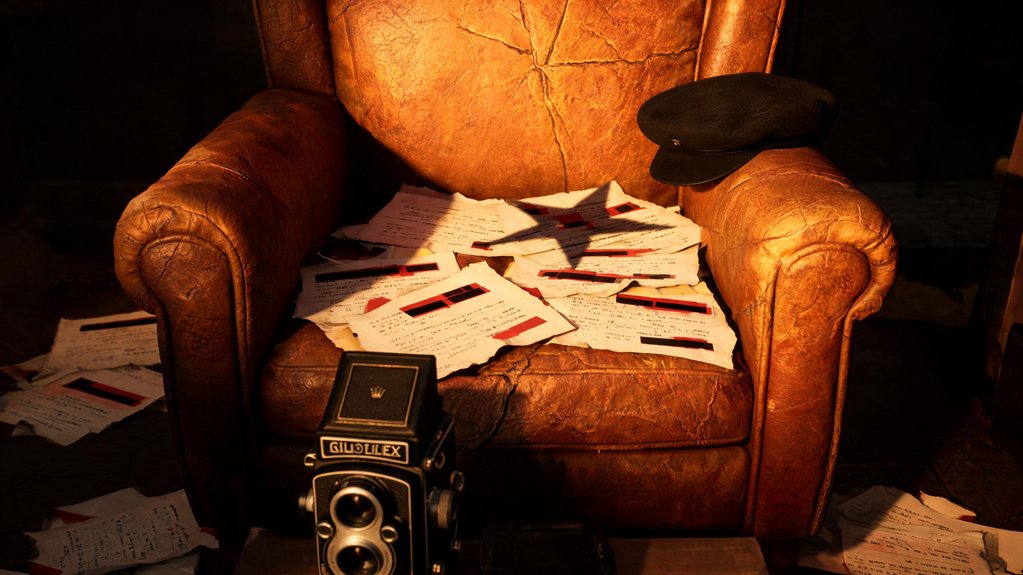
Though the diaries themselves steal the spotlight, the Directorate of Plans memos and situation reports lay bare the operational machinery behind Guevara’s capture.
These declassified cables track troop movements, informant payments, and radio intercepts with cold precision. They map each decision, each failure, each kill. Analysts piece together the hunt hour by hour, naming Bolivian officers, CIA case officers, and their local assets.
- They expose the “Hunt” task force’s daily intelligence cycle, from field reports to Langley’s encrypted feedback.
- They reveal radio intercepts pinpointing Guevara’s column to the Yuro ravine days before the firefight.
- They show the CIA’s direct role in interrogating and documenting the capture, not just observing it.
Each memo reads like a grim operations log. This is the raw, silent proof.
Readers witness the moment CIA officers verify the diary’s authenticity, then seal it for later exploitation. The bureaucracy’s own paper trail becomes the weapon.
Geopolitical Propaganda: The Bureaucratic Struggle for Narrative Supremacy Over the Text
Once Langley’s analysts finished authenticating the diary, the text itself became the battlefield. The CIA and La Paz’s intelligence apparatus squared off, each vying to frame Guevara’s final words. Washington wanted communist defeat; Bolivia sought domestic legitimacy. Neither trusted the other’s annotations. Langley’s translators stressed military failures; La Paz’s propagandists highlighted his foreignness. Mundane field notes turned into contested evidence, each bureaucracy editing and spinning the manuscript through press releases and clandestine briefings. The struggle wasn’t about truth—it was control over the historical lens.
| Actor | Aim | Tactic |
|---|---|---|
| CIA | Anti-communist framing | Selective leaks |
| Bolivia | Regime validation | Publicized excerpts |
| Media | Scandal narrative | Unverified copies |
Bureaucratic infighting delayed the full text’s release. Photostats circulated, but official versions stayed locked in Langley’s vaults. Journalists chased fragments, each leak was a weapon aimed at an adversary’s own credibility. Ultimately, this fight dictated the world’s first perception of the diary—and whose interests it served.
The Forensic Verdict: How Tactical Intelligence Exploitation Dictated the Historical Record
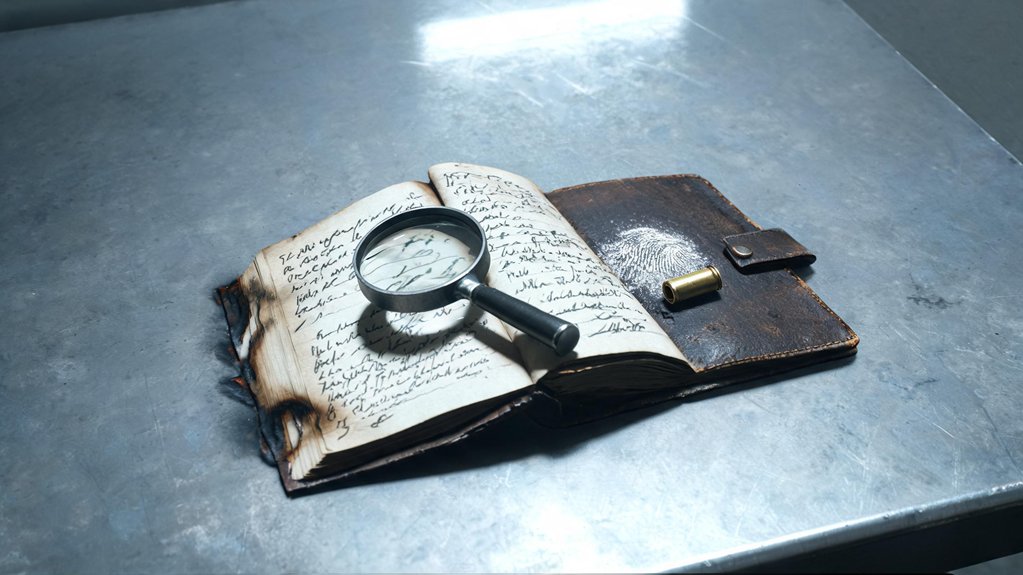
Few artifacts from the Cold War received the relentless forensic treatment that Guevara’s diaries did in late 1967. Analysts didn’t just read them; they dissected every marginal note, cross-referenced each alias against Bolivian army reports, and matched handwriting samples against captured letters.
That exploitation didn’t merely corroborate the kill—it dictated how history would remember the failure.
It didn’t just confirm the kill—it scripted history’s verdict on the failure.
- The diaries revealed supply caches and enemy morale, turning a guerrilla’s confession into a targeting map.
- Ink analysis exposed the chronology of betrayal, pinpointing which informants fed the CIA their breadcrumbs.
- Marginal doodles and codewords forced analysts to rewrite operational timelines, cementing a narrative of inevitable defeat.
That forensic verdict transformed a personal journal into a state-sanctioned record, a document that outlived its author.
It didn’t just tell what happened; it weaponized the telling, so the historical record would echo the CIA’s own conclusions.
It didn’t matter. And the verdict stuck, permanently.
Frequently Asked Questions
Were Che’s Diaries Authenticated Before or After His Execution?
They authenticated Che’s diaries after his execution.
Intelligence agencies seized the handwritten records in October 1967, then systematically verified them post-capture—following his death.
The weaponized documents became a tactical and propaganda asset only after that forensic review.
What Happened to Guevara’s Original Handwritten Diaries After Analysis?
After analysis, the originals didn’t disappear—they became a weapon.
The CIA and Bolivian forces deployed the handwritten diaries as geopolitical propaganda, twisting Che’s words to justify the hunt and its bloody climax. They served as an enduring intelligence asset, anchoring declassified records and public narratives.
The physical pages likely entered official archives, but their power lay in strategic exploitation, not preservation.
Did Bolivian Soldiers Receive Rewards for Capturing the Backpack?
Bolivian soldiers received only roughly $4,200 split amongst them for Che’s capture, but the backpack’s finders got nothing extra.
They handed over the diary-laden pack without a dedicated bounty. Investigators later noted this oversight, yet no supplemental payment ever materialized.
The men’s reward remained the same meager sum, regardless of the backpack’s tactical value.
How Did Arguedas Obtain Copies Without CIA Detection?
He exploited his ministerial access, quietly photocopying the diary before CIA handlers could log it.
Arguedas didn’t steal the original—he copied it during routine processing, then smuggled the duplicates out past unsuspecting guards.
His position granted unchecked trust, and he moved fast, hitting a security gap in their verification chain.
They never suspected him until the copies surfaced publicly.
Which Declassified Memos Remain Heavily Redacted Today?
The CIA’s operational memos from the hunt remain heavily redacted today. Analysts still find entire paragraphs blacked out, especially those detailing source identities, surveillance methods, and the diary’s weaponization.
Even the October 1967 field reports contain significant omissions, leaving the tactical record incomplete. Those redactions don’t hide the outcome—they obscure the mechanics—forcing researchers to piece together what the censors won’t reveal.
Each query surfaces more questions than answers.
Final Thoughts
Those seized diaries didn’t just crack open Guevara’s plans; they became the distorted mirror through which history still peers at his final days. Langley’s analysts dissected every entry, transforming raw ink into the propaganda bullets. Arguedas’s defection tore a hole in the official cloak, but the CIA’s narrative still wore the tailored fit. The systematic exploitation turned personal reflections into documented proof, sealing a brutal geopolitical verdict that decades of declassified files couldn’t ever overturn.