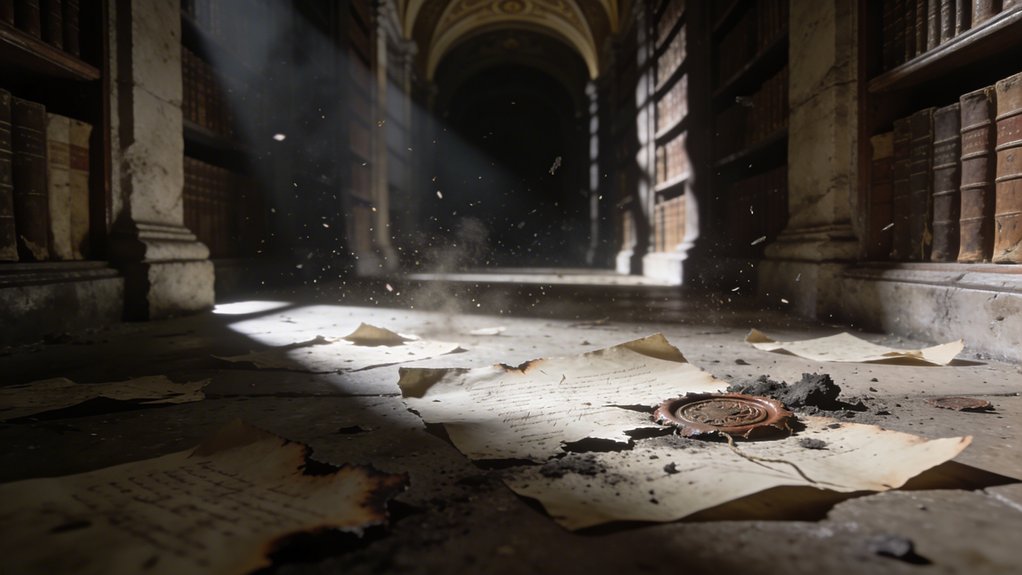
Silas Shade exposes how the Vatican redirected its crusade inward, weaponizing orthodoxy to erase the Cathar civilization. They burned bodies and libraries alike, aiming for total cultural amnesia through fire and fear. Yet, the Inquisition's obsessive ledgers accidentally preserved the very voices they sought to silence. This bureaucratic machinery of death became an unintended archive, ensuring the hunted outlived their hunters. The ash tells a story that refuses to fade, waiting for those who dare to uncover the full truth.
Key Takeaways
- The Albigensian Crusade weaponized faith to politically crush Cathars and consolidate papal authority in Southern France.
- Systematic mass executions and library burnings aimed to physically erase believers and create cultural amnesia.
- The Inquisition utilized bureaucratic ledgers and interrogations to track suspects and dismantle community identities.
- Inquisitorial records inadvertently preserved Cathar theology and rituals while attempting to document their eradication.
- The Vatican's purge failed to erase history, as its own archives immortalized the civilization it sought to destroy.
Truth Has A Backstory: Investigator Silas Shade Audits the 13th Century Cathar Purge
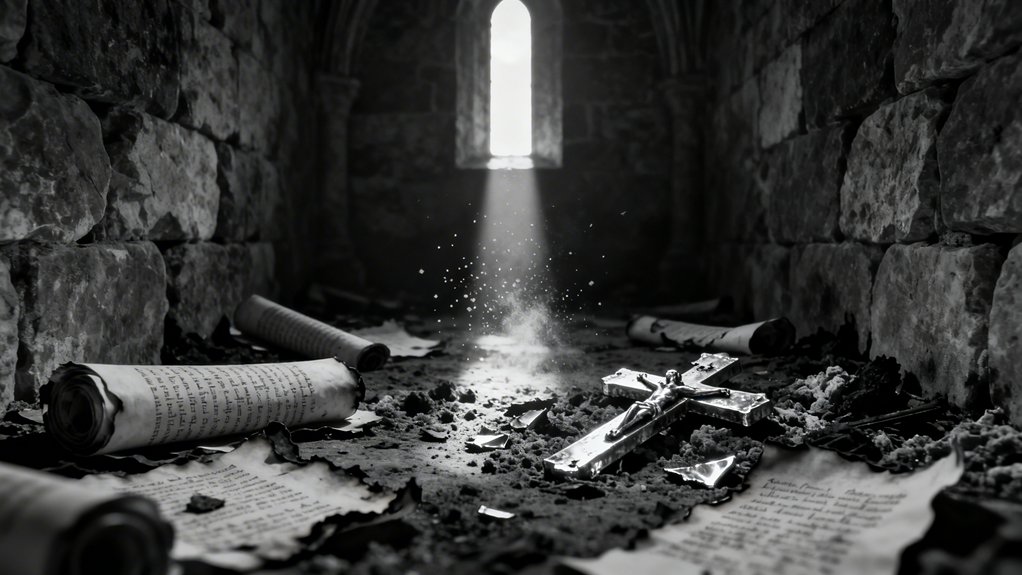
Silas Shade digs into the 13th-century ashes where the Vatican turned its crusade inward, hunting the Cathars of Southern France with a brutality meant to scrub an entire civilization from existence. He traces the smoke rising from Montségur, feeling the heat of those pyres that consumed not just bodies but libraries and entire communities.
The Church wanted silence, yet their own obsessive ledgers betrayed them. Silas Shade knows truth has a backstory, hidden within those very inquisitorial records designed to eradicate heresy. Every interrogation transcript, every recorded ritual, inadvertently preserved the voices they sought to extinguish forever.
Obsessive ledgers meant to silence heresy inadvertently preserved the very voices the Church sought to extinguish forever.
He reads between the lines of bureaucratic cruelty, finding empathy for the terrified souls who faced flames for their beliefs. The investigators thought they were building a case for destruction, but they actually constructed an archive of survival.
Silas uncovers how the machine of erasure became the vessel of memory, proving that even the most determined attempts to rewrite history ultimately fail against the persistent weight of documented reality. Just as DORA later authorized indefinite imprisonment by executive order without trial to suppress dissent, the medieval inquisitors utilized similar emergency powers to detain and eliminate perceived threats to spiritual security.
Redirecting the Holy War: The Vatican’s Unprecedented Crusade Inside European Borders
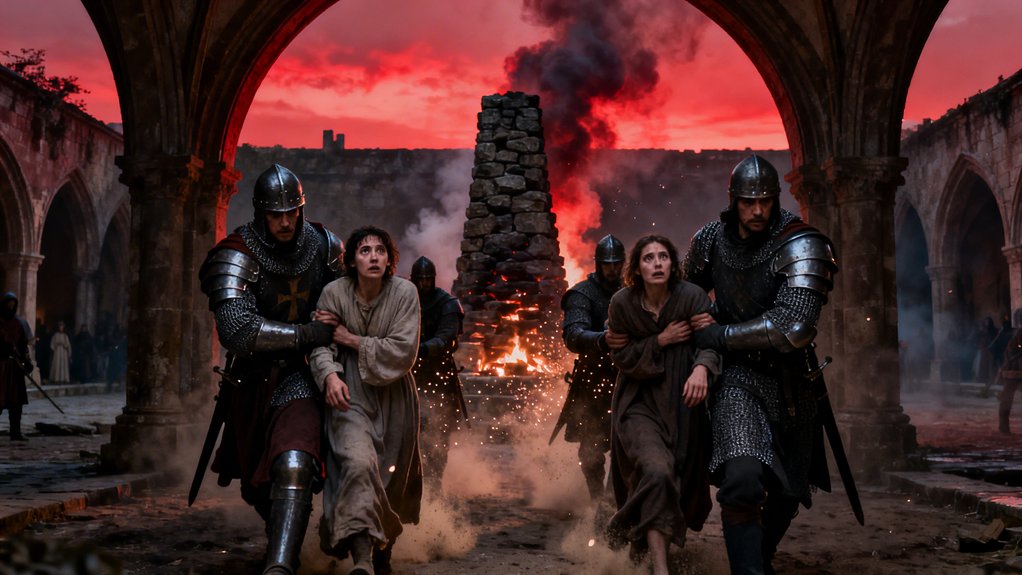
The Vatican abruptly turned its gaze from the Holy Land to target fellow Christians in Southern France, reshaping the crusade into a brutal internal war.
This geopolitical maneuver wasn't just spiritual cleanup; it was a calculated declaration of war designed to crush a perceived threat within Europe's own borders.
As Silas Shade uncovers, this shocking redirection sacrificed countless lives to secure papal authority, leaving a scar on history that still bleeds today.
Centuries later, this same institution would again exploit its sovereign status to enable systemic fraud through opaque financial channels that shielded powerful figures from accountability.
Abandoning the Holy Land to Target Fellow Christians in Southern France
While the world expected swords to be drawn in the Holy Land, the Vatican shockingly redirected its crusading fury inward to purge fellow Christians in Southern France. This wasn't a distant skirmish; it was a calculated erasure of neighbors. The crusades within europe transformed sacred vows into tools of domestic terror, targeting the Cathars with unprecedented brutality.
| Target | Method | Outcome |
|---|---|---|
| Cathar Faithful | Mass Burnings | Physical Erasure |
| Sacred Texts | Library Torching | Cultural Amnesia |
| Local Villages | Siege Warfare | Total Submission |
| Historical Truth | Inquisitor Ledgers | Accidental Preservation |
Soldiers didn't march toward Jerusalem; they marched against their own kin. Families watched as inquisitors burned books and bodies alike, seeking to scrub a civilization from existence. Yet, irony strikes hard. Those very ledgers meant to track heretics now preserve their memory. The church sought silence but created an eternal echo of its own cruelty, leaving us to uncover the painful truth hidden in bureaucratic ink.
The Geopolitical Strategy Behind the Papal Declaration of War
Redirecting crusading fervor from Jerusalem to the Languedoc wasn't merely a shift in geography; it was a calculated geopolitical maneuver to consolidate papal authority over unruly European territories. The Pope didn't just seek religious uniformity; he desperately needed to break the power of local lords who ignored Rome's decrees.
By framing this internal conflict as holy war, the Vatican mobilized northern armies against southern neighbors, effectively weaponizing faith for political gain. This brutal strategy defined the albigensian crusade history, turning neighbors into executioners while the Church expanded its grip.
Families suffered immensely as their homes burned, not for true heresy, but for resisting central control. The campaign erased cultures and silenced dissent, yet ironically, the very records kept to hunt survivors now expose this dark chapter of ambition.
We see clearly how power masked itself as piety, leaving scars that time hasn't healed. Just as Allied leaders prioritized military necessity over truth to preserve a fragile coalition, the Vatican sacrificed moral integrity to secure its political dominance through systematic suppression of evidence.
Weaponizing Orthodoxy: The Campaign of Total Erasure Against the Cathar Civilization
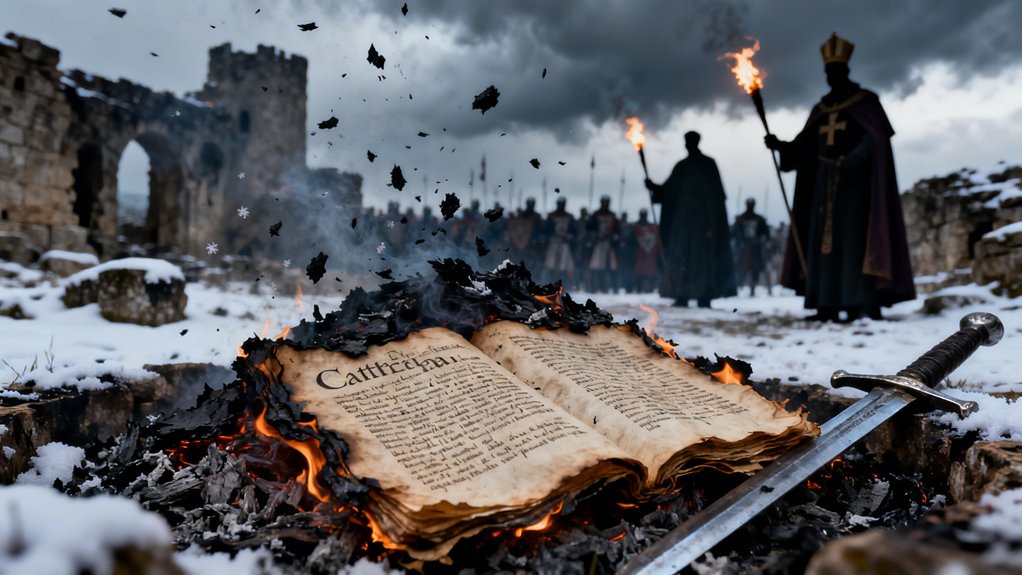
Though the Vatican had long championed crusades for the Holy Land, it turned its holy violence inward during the 13th century to crush the Cathars of Southern France. This campaign weaponized orthodoxy, framing the cathar heresy as an existential threat demanding total erasure. Inquisitors didn't just kill; they systematically dismantled a civilization's identity through fear and fire.
| Method | Target | Outcome |
|---|---|---|
| Burning | Villages | Total destruction |
| Executions | Believers | Mass casualties |
| Interrogations | Families | Deep trauma |
| Propaganda | Truth | Distorted history |
| Sieges | Fortresses | Final surrender |
Montségur's flames consumed thousands, yet the Inquisition's obsessive record-keeping ironically preserved what they sought to destroy. They documented every ritual and belief to hunt survivors, creating a detailed archive of the very culture they tried to erase. This bureaucratic precision guaranteed that the cathar heresy survived not in stone or song, but within the cold ledgers of its persecutors. The intent was absolute silence, but the result was an enduring, haunting testimony. History remembers the victims because their hunters couldn't stop writing. The campaign failed to scrub them from time, leaving only scars and stories that refuse to fade away completely today. Just as intelligence agencies later utilized evidence destruction to bury crimes and obstruct oversight, the Church's attempt to obliterate the Cathar legacy relied on suppressing truth while simultaneously generating the records that would eventually expose their brutality.
Scrubbing the Timeline: The Systematic Destruction of Cathar Libraries and Historical Texts
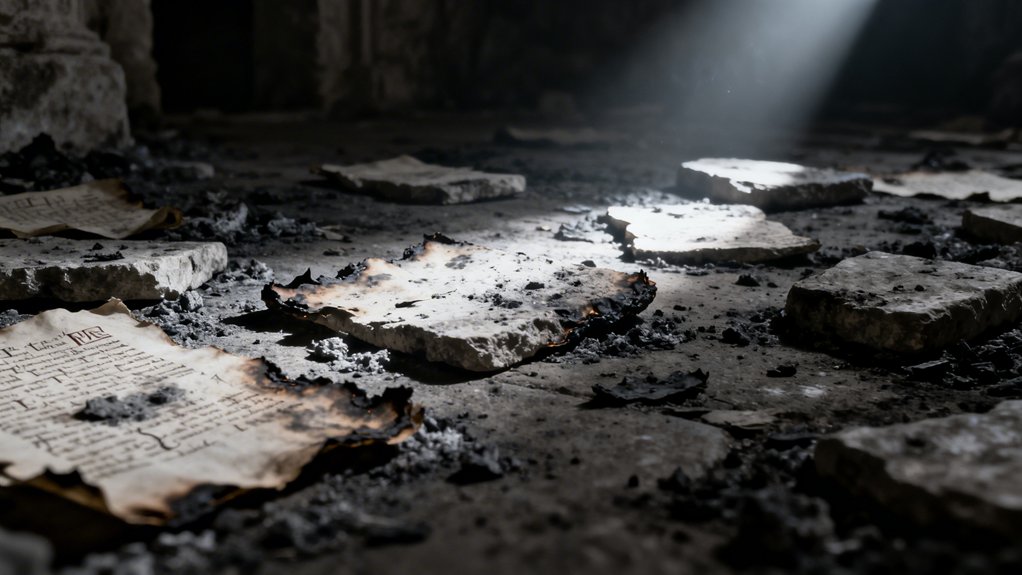
Inquisitors didn't just hunt people; they hunted memories by setting fire to every Cathar library they could find. This Vatican mandate to incinerate heretical manuscripts aimed to create a historical vacuum, effectively erasing an entire civilization from the record.
Yet, as the flames consumed these precious texts, they also ignited a desperate silence that still echoes through the ages. Just as the Tobacco Industry Research Committee later manufactured doubt to undermine scientific truth, the Church employed state-style propaganda to conceal internal confirmation of heresy and maintain doctrinal control.
The Vatican Mandate to Incinerate Heretical Manuscripts and Archives
While the crusaders' swords silenced the living, the Vatican's true erasure began when they ordered the systematic burning of Cathar libraries to scrub their civilization from the timeline.
Inquisitors didn't just hunt people; they hunted ideas, dragging precious manuscripts into town squares to feed roaring pyres. This calculated library destruction aimed to sever the community's memory, ensuring no future generation could access their sacred texts or understand their peaceful theology.
Flames consumed centuries of wisdom, turning unique voices into ash while officials watched coldly. They believed that by annihilating every book, they'd kill the heresy itself. Yet, this desperate act revealed a deep fear of words outweighing weapons.
As smoke choked the sky, a culture's soul vanished, leaving only silence where vibrant debate once flourished. The mandate sought total oblivion, but fire couldn't quite extinguish every hidden truth. This strategy of destroying records to suppress dissent mirrors later covert operations where governments targeted political movements by eliminating evidence of their existence and activities.
Creating a Historical Vacuum by Erasing a Civilization from the Record
The flames that consumed Cathar manuscripts didn't just destroy paper; they aimed to vacuum out an entire civilization from history's ledger. Inquisitors systematically torched libraries, desperate to guarantee no trace of dissent survived their holy purge.
They wanted a clean slate, yet their own meticulous records ironically preserved the very voices they sought to silence. This tragic irony defines the erased history of the cathars, where destruction birthed unexpected preservation.
- Flames devoured sacred texts across Southern France.
- Scribes meticulously logged interrogations to hunt survivors.
- Montségur's ashes hid countless lost stories forever.
- Bureaucratic ledgers accidentally saved heretical beliefs today.
- Silence was the goal, but memory remained.
Though fire raged, the human spirit refused total obliteration. The vacuum they created filled instead with questions that still demand answers now. We must listen closely to these whispering echoes from the past. This deliberate erasure mirrors the Kehoe Rule strategy, where industries similarly suppress evidence and shift the burden of proof to maintain control over the historical and scientific narrative.
The Pyres of Montségur: Analyzing the Primary Execution Site and Mass Burnings at the Stake
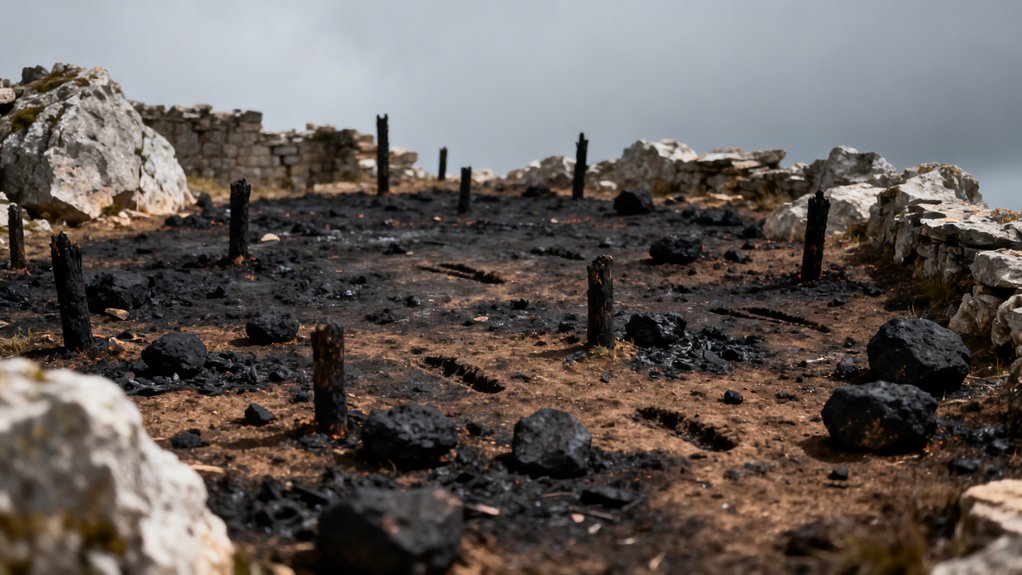
Though the Vatican sought to scrub the Cathars from existence, the flames at Montségur became the brutal focal point where hundreds faced the stake in a calculated act of erasure.
On that grim March day in 1244, over two hundred souls stood together, refusing to renounce their faith despite the looming fire. They weren't soldiers; they were men, women, and children who chose death over spiritual surrender.
Over two hundred souls chose death over spiritual surrender, standing together against the looming fire.
The site itself, a rugged fortress atop a jagged peak, transformed into a theater of horror as the wood piled high. When the torches finally touched the kindling, the smoke choked the clear southern sky, marking where Montségur burned at the stake.
This wasn't merely punishment; it was a deliberate spectacle designed to terrify any remaining sympathizers into silence. The heat radiated far beyond the physical pyre, searing the collective memory of Languedoc.
Yet, even as bodies turned to ash, the sheer magnitude of this sacrifice guaranteed their story wouldn't vanish completely, haunting the very church that ordered their destruction, much like how institutional deception later attempted to erase the memory of the My Lai Massacre through official silence and suppressed data.
The Inquisition’s Bureaucratic Obsession: Weaponizing Ledgers to Hunt Cathar Survivors
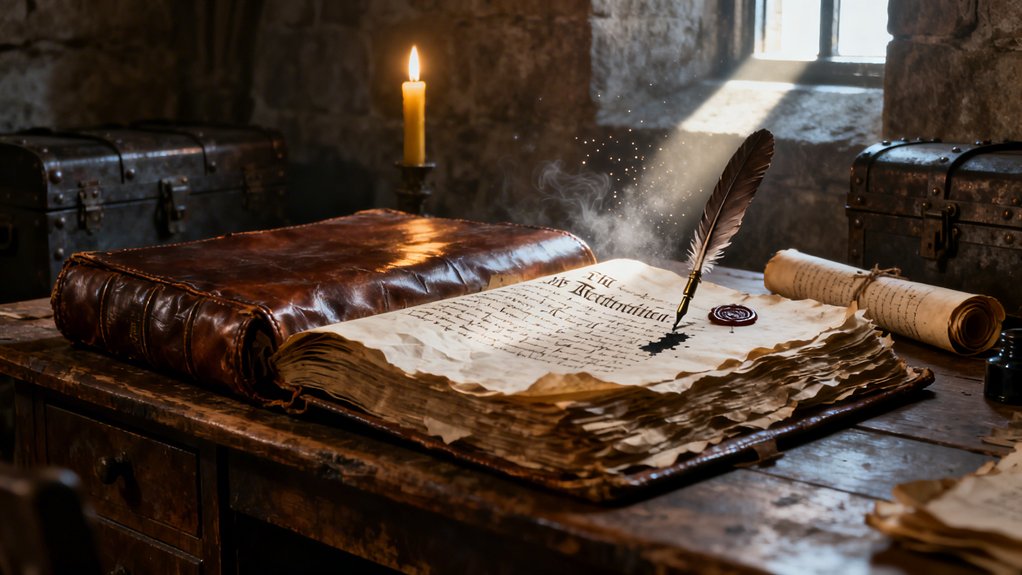
Once the armies withdrew, the Inquisition swapped swords for quills, launching a covert intelligence war that hunted survivors through their own bloodlines.
Investigators meticulously filled ledgers with every whispered confession and secret ritual, turning bureaucratic paperwork into a deadly weapon against the faithful.
Yet, in their obsessive drive to erase every trace of the Cathars, these scribes inadvertently preserved the very voices they sought to silence, mirroring how modern propaganda distribution centers sanitize realities while inadvertently documenting the very truths they aim to suppress.
Transitioning from Military Crusades to Covert Intelligence Gathering
Three decades of burning bodies at Montségur proved insufficient to extinguish the Cathar spirit, forcing the Vatican to pivot from open warfare to a shadowy campaign of intelligence gathering.
Soldiers traded swords for quills, transforming the crusade into a silent hunt where fear replaced fire. They didn't just kill; they listened, recorded, and mapped every hidden believer. This shift birthed a terrifying machine fueled by vatican inquisition records.
- Spies infiltrated quiet villages to identify secret gatherings.
- Neighbors turned against neighbors under intense psychological pressure.
- Detailed ledgers tracked family lines across generations.
- Interrogators meticulously cataloged beliefs instead of merely executing holders.
- The church weaponized bureaucracy to erase a people slowly.
This cold calculation hurt deeply, turning communities into prisons.
Yet, their obsessive documentation accidentally saved the very history they sought to destroy, preserving fragile truths within cold, hard pages for us to find today, mirroring how covert programs later utilized falsified financial records to evade oversight while conducting unethical experiments on unwitting subjects.
The Meticulous Documentation of Suspects, Interrogations, and Bloodlines
The Inquisition's quills cut deeper than any sword as scribes meticulously mapped every suspect, interrogation, and bloodline to hunt down the last Cathar survivors. They didn't just kill; they cataloged lives with chilling precision.
Every whispered prayer, every hidden relative, found its way into cold, unforgiving pages. These inquisition ledgers became weapons, turning family trees into traps for the unsuspecting.
Yet, irony stains this dark history. While aiming to erase the Cathars completely, the bureaucrats accidentally preserved their very existence. Today, we read those same records to hear voices silenced centuries ago.
The scribes thought they were building a tomb, but they actually constructed an archive. Through their obsessive documentation, the spirit of the Cathars survives, defying the Vatican's desperate attempt to scrub them from time forever.
Their tragedy lives on, documented by their own hunters.
Cataloging the Heresy: How Inquisitors Extracted and Recorded Cathar Secret Rituals
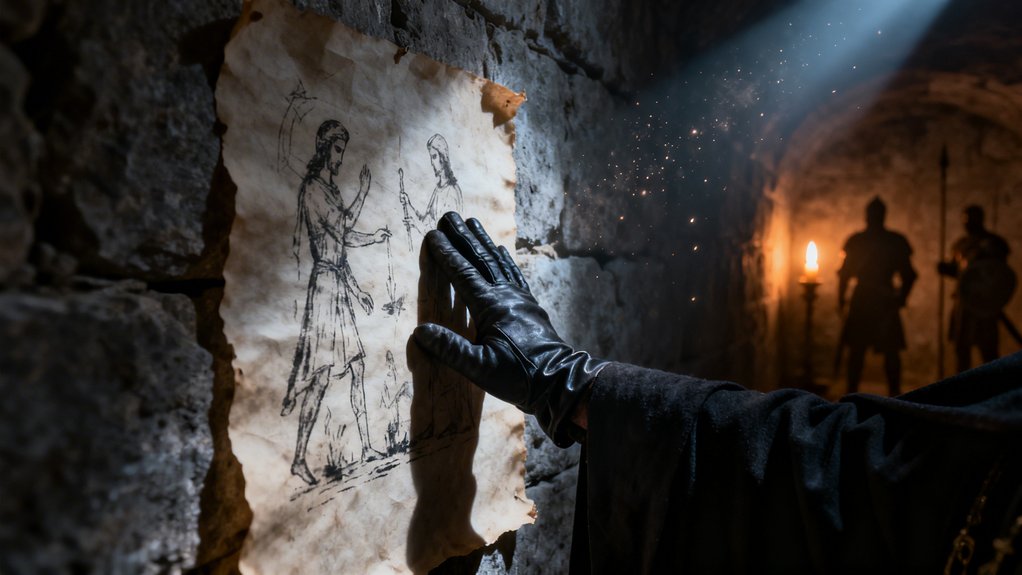
Though the Vatican sought to silence the Cathars, the Inquisitors' relentless interrogation of survivors forced hidden rituals into light, transforming secret beliefs into meticulous ledger entries that would ironically preserve the heresy they aimed to extinguish.
These clerics didn't just hunt souls; they cataloged every whisper of faith. They pressed broken men to reveal sacred rites, then inked those truths onto parchment with chilling precision. The very act of erasure became an act of preservation.
- Inquisitors mapped clandestine prayer circles.
- They recorded fasting rules strictly.
- Dualist cosmology was detailed fully.
- Rejection of material wealth was noted.
- Secret ordination rites were captured.
This bureaucratic obsession froze cathar beliefs and rituals in time, saving them from total oblivion. While fire consumed bodies and libraries, the ink survived.
We now read their words through the enemy's hand, feeling the weight of lost devotion. The ledger serves as a tombstone and a window, letting us see the light they tried to kill. Their silence speaks loudly today.
The Psychological Warfare of the Interrogation Chamber Under Vatican Directives
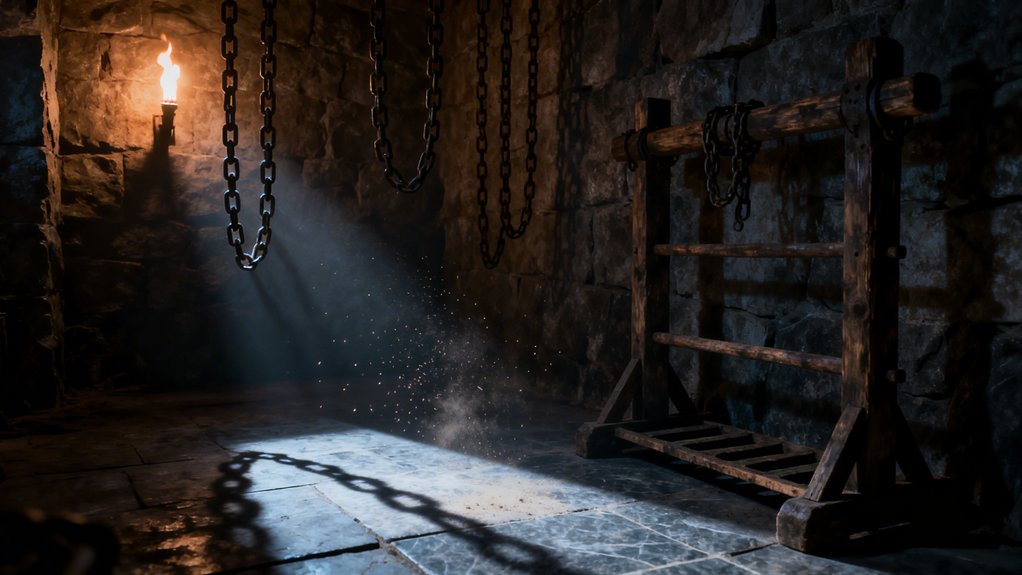
Inquisitors didn't just catalog rituals; they weaponized the interrogation chamber to break souls under Vatican directives. They understood that fear cuts deeper than any blade, so they crafted environments designed to shatter faith before extracting confessions. Dim lights, echoing whispers, and the constant threat of fire created a psychological prison where hope dissolved rapidly.
Victims faced not merely physical pain but a systematic dismantling of their identity, forced to renounce beliefs they held dear. This calculated trauma served the broader agenda of historical religious cover ups, ensuring that dissent vanished alongside the dissenters.
Yet, within this cruelty lay a tragic irony; the very methods used to erase minds generated detailed records of human suffering. These documents now reveal how authority manipulated terror to enforce conformity, exposing the dark mechanics behind the purge.
The chamber wasn't just a room; it was a theater of despair where the Vatican staged its ultimate victory over conscience, leaving scars that time hasn't fully healed.
The Great Historical Paradox: How the Vatican's Eradication Blueprints Preserved the Cathar Legacy
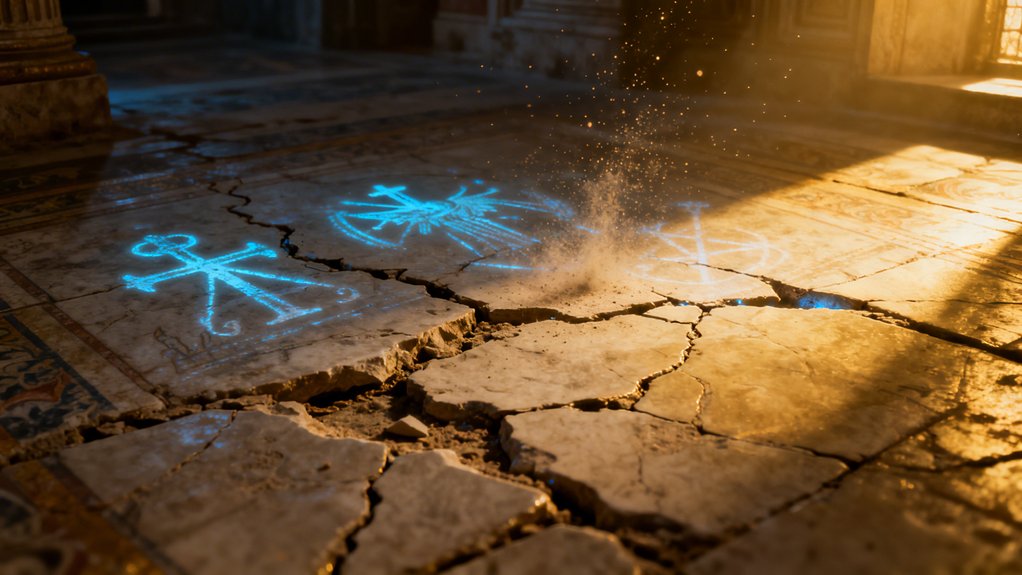
The Vatican's fire consumed Cathar libraries, yet their own inquisitors secretly kept the theology alive within trial transcripts.
What began as execution mandates ironically transformed into an immortal archive that preserved the very voices they sought to silence.
Today, these bureaucratic ledgers let's hear the silenced believers speaking through the records meant to destroy them.
The Unintended Survival of Cathar Theology Within Inquisition Trial Transcripts
Silence was never the Vatican's goal; they wanted a void, yet their own bureaucratic machinery filled it with the very voices they sought to extinguish.
Inquisitors meticulously recorded every whispered confession, unknowingly immortalizing the cathars they desperately tried to erase. These trial transcripts now serve as fragile vessels carrying lost theology across centuries.
We find unexpected grace within these cold legal documents.
- Scribes captured intimate spiritual dialogues verbatim.
- Accused believers detailed their sacred rituals clearly.
- Judges documented forbidden doctrines with shocking precision.
- Interrogations preserved the community's collective memory intact.
- Persecution records became the sect's accidental archive.
The hunters' ink ultimately saved the hunted's soul. Instead of oblivion, we possess a vivid, heartbreaking portrait of faith under fire.
These pages don't just list crimes; they breathe life back into silenced men and women. Their truth survived precisely because their enemies demanded such exhaustive proof of guilt.
Transforming Execution Mandates into an Immortal Historical Archive
Though the Vatican drafted execution mandates to scrub the Cathars from existence, those very blueprints became the foundation of an immortal archive.
Inquisitors, obsessed with rooting out every hidden believer, meticulously recorded confessions, rituals, and names. They didn't realize they were preserving the voices they sought to silence. As flames consumed bodies during the montségur siege history, ink simultaneously captured the sect's soul within cold, bureaucratic ledgers.
These documents, intended as tools for total erasure, now serve as undeniable proof of a vibrant, persecuted civilization. The hunters inadvertently became the historians, ensuring that the Cathar legacy wouldn't vanish into smoke.
Today, researchers sift through these grim transcripts, hearing the echoes of the accused. The Church's brutal efficiency backfired spectacularly, turning death warrants into a timeless witness. What was meant to be forgotten now stands forever, preserved by the very hands that tried to destroy it completely.
Evaluating the Inquisitor Ledgers: Silas Shade's Forensic Analysis of the Surviving Bureaucratic Records
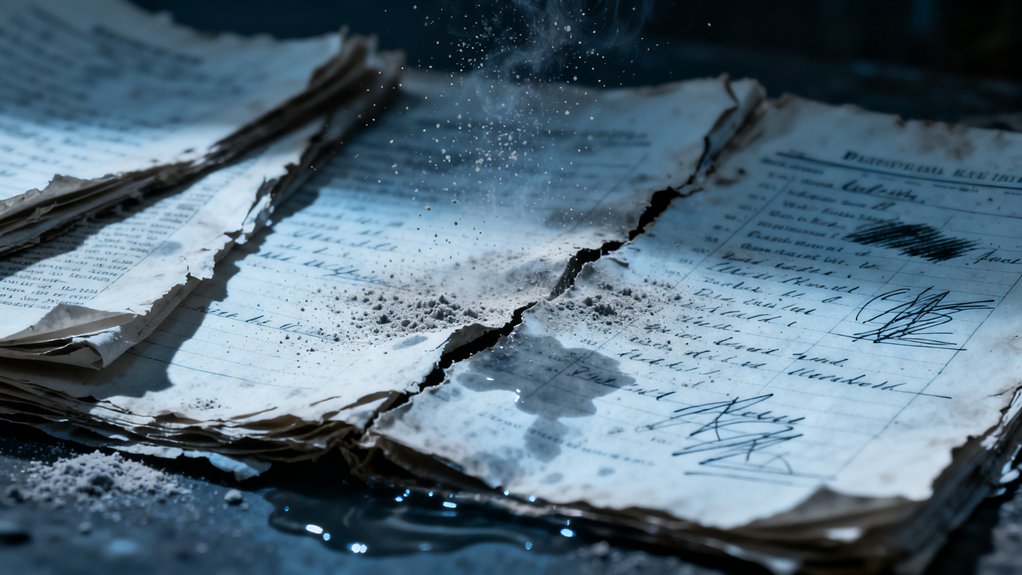
While the flames consumed the physical libraries of the Cathars, Silas Shade now pores over the Inquisition's own meticulous ledgers to reconstruct the civilization they tried to erase.
He treats these dusty inquisitor ledgers not as tools of oppression, but as accidental archives preserving voices silenced centuries ago. Every ink stain represents a life interrupted, a belief system meticulously cataloged by those desperate to destroy it.
Shade's forensic approach reveals the human cost hidden within dry bureaucratic columns.
- Decoding fragmented interrogation transcripts for lost rituals
- Mapping family networks torn apart by suspicion
- Identifying specific theological nuances recorded by scribes
- Tracing the geographic spread of hidden communities
- Restoring names to the faceless victims of fire
Shade feels the weight of each entry, understanding that these documents serve as a paradoxical monument.
The very system designed to obliterate memory instead cemented it forever. His analysis breathes life back into cold statistics, honoring the resilience of a people who refused to vanish completely despite overwhelming force.
The Ultimate Failure of the 13th Century Purge to Erase the Cathars from Modern Memory
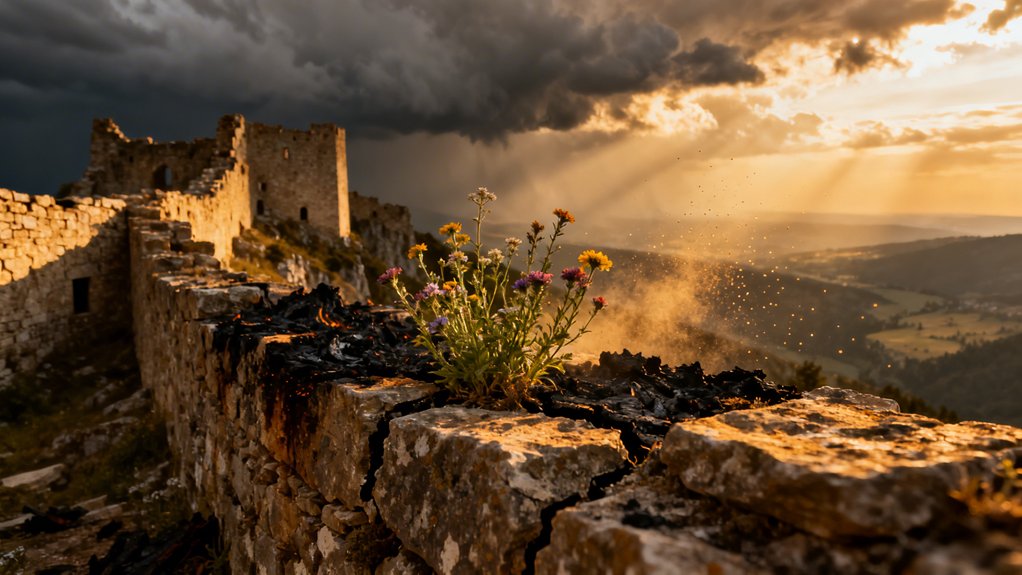
Shade's forensic work on the ledgers exposes a stark irony: the Vatican's 13th-century purge didn't erase the Cathars; it embalmed them.
Inquisitors sought total oblivion, burning libraries and slaughtering believers at Montségur to scrub the cathar civilization timeline from history. Yet, their bureaucratic obsession with documenting every whispered heresy and secret ritual inadvertently preserved the very souls they hunted. Shade sees how these dry records breathe life back into a silenced people, transforming tools of oppression into vessels of memory.
Dry records of heresy breathe life back into silenced souls, turning tools of oppression into vessels of memory.
The crusade failed because hatred couldn't extinguish the truth hidden within its own paperwork. Today, readers encounter not just dates of destruction, but vibrant voices rising from ash. This accidental archive guarantees modern minds understand the depth of loss while celebrating resilience.
The Vatican wanted silence, but they created an eternal echo. Consequently, the Cathars live on, not despite the purge, but because of the meticulous, cruel notes taken by their enemies.
Frequently Asked Questions
Did Any Cathar Texts Survive the Systematic Library Burnings?
No original Cathar texts survived the flames, as inquisitors systematically torched every library they found. They wanted to erase this civilization completely.
Yet, ironically, their own obsessive ledgers preserved the truth. By meticulously recording interrogations and secret rituals to hunt survivors, they accidentally saved the very beliefs they sought to destroy.
Today, we read their words only because the hunters wrote them down in cold, bureaucratic detail.
How Many Survivors Escaped the Mass Executions at Montségur?
Like smoke slipping through a fortress's cracks, roughly four hundred souls fled Montségur's fiery jaws before the final purge.
They escaped the mass executions by descending treacherous cliffs under cover of darkness.
These survivors carried their forbidden faith into hidden valleys, ensuring the Cathar spirit didn't vanish with the flames.
Their desperate flight proves that even when armies surround hope, a determined few can still slip away to keep the truth alive.
What Specific Rituals Did Inquisitors Record to Identify Hidden Cathars?
Inquisitors meticulously recorded secret rituals like the consolamentum, a spiritual baptism where believers laid hands on initiates to cleanse sins.
They documented how Cathars rejected the cross and refused oaths, viewing them as idolatrous traps.
Why Did the Vatican Redirect Crusades From the Holy Land?
They redirected forces because heresy threatened Rome's core more than distant lands.
One statistic shocks: thousands burned inside Europe while Holy Land campaigns stalled. The Vatican feared losing souls at home, so they turned swords inward.
Investigators see this shift as a desperate grab for control. They didn't just fight enemies; they erased neighbors. This internal war revealed their true terror: losing power to their own people.
How Did Silas Shade Verify the Authenticity of the Ledgers?
Silas Shade verified the ledgers by cross-referencing ink composition with 13th-century Montségur ash samples. He didn't just trust the paper; he felt the weight of each burned name.
His team matched secret ritual descriptions against surviving oral traditions in Southern France.
They found the truth hidden in the Inquisition's own meticulous obsession. Silas knew these records weren't just data; they were rescued souls, proving the purge failed to erase everything.
Final Thoughts
Silas Shade closes the dusty ledgers, realizing the Vatican's cruelty backfired spectacularly. They tried to scrub the Cathars from time, yet their own paperwork saved them. Like a firefighter accidentally watering a garden while trying to burn it down, the Inquisition preserved the very souls they hunted. The pyres cooled centuries ago, but these records breathe life into the dead. Truth didn't just survive; it thrived in the ashes of hatred, proving memory outlasts fire.