
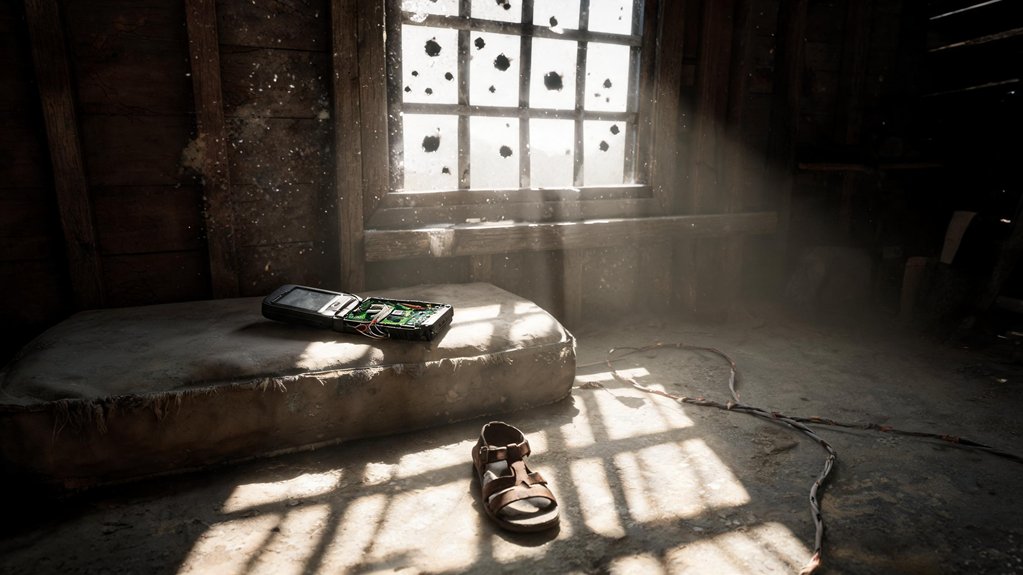


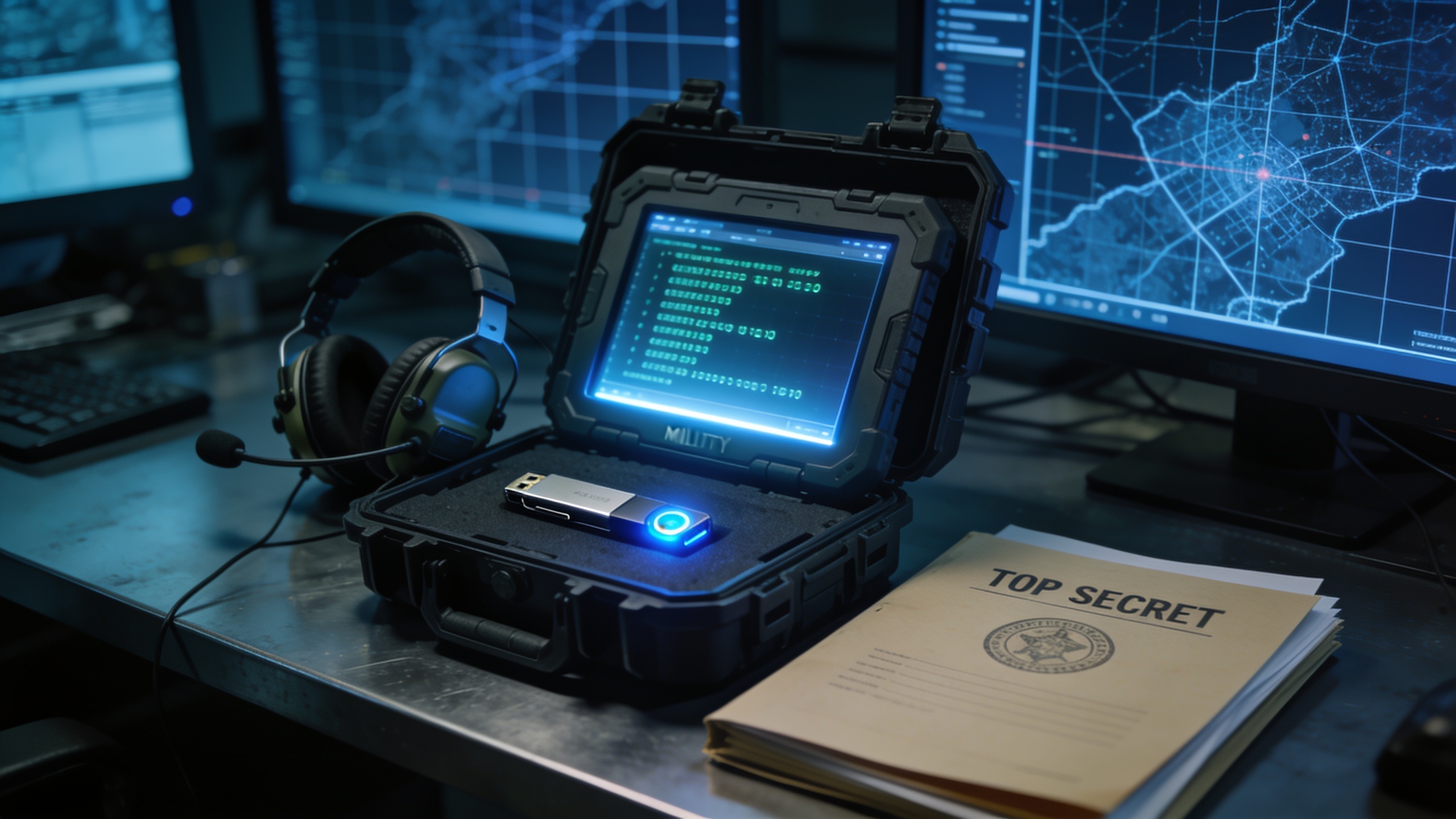


Bin Laden’s total radio silence in Abbottabad didn’t hide him—it screamed. His zero-RF doctrine carved a dead zone in a connected garrison suburb, an absence analysts mapped as a deliberate void. He banned landlines, pings, and utility ties, mistaking invisibility for security. That engineered vacuum became a targeting wire. His fortress’s silhouette sealed the case, leaving a trail that demanded pursuit. The hunt’s mechanics reveal a deeper irony.
Key Takeaways
- Zero-RF footprint created a forensic void in a digitally saturated garrison suburb.
- No landlines, cellular pings, or Wi-Fi made the compound a GPS-coherent dead zone.
- Absolute air-gap doctrine turned engineered silence into a glaring anomaly for analysts.
- Zero utility draw—no grid power, water meters—flagged 17 residents consuming off-record resources.
- Radio silence mapped absence; intelligence triangulated the vacuum directly to Bin Laden’s hideout.
The Kakul Garrison Gamble: Bin Laden’s Counter-Intuitive Sanctuary Doctrine
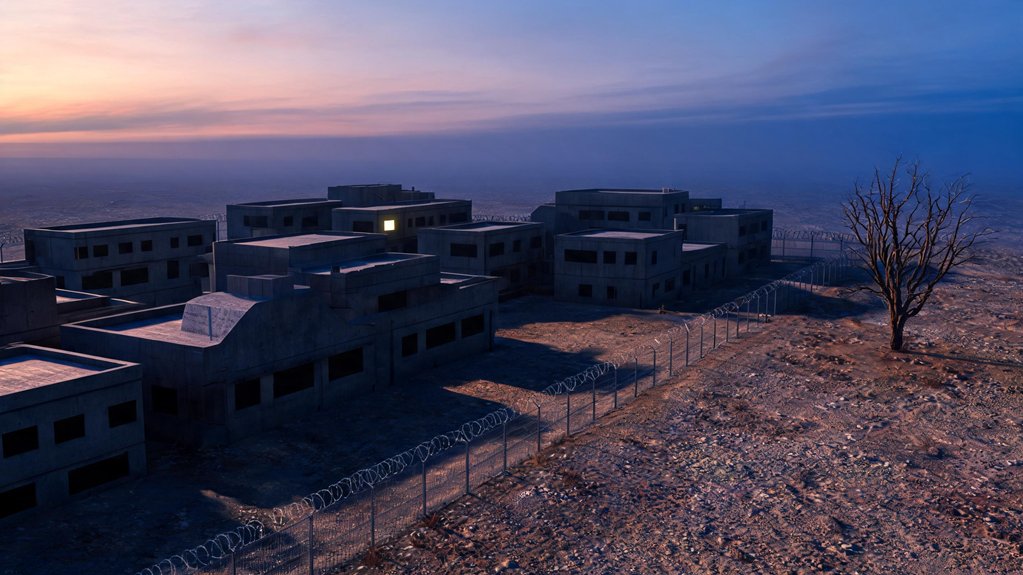
Bin Laden’s selection of Bilal Town wasn’t chance; he banked on the garrison’s proximity to Kakul as an ultimate disguise, betting that Western eyes would fixate on tribal voids rather than military-adjacent suburbia.
That calculation rested on a flawed premise—that geospatial targeting biases would skip over a fortified anomaly inside a regulated zone.
Instead, the compound’s fortress defiance in such terrain sharpened the very scrutiny he sought to evade, turning his counter-intuitive shelter into a glaring beacon.
Selecting Bilal Town: The Strategic Logic of Hiding in Military Terrain
The choice of Bilal Town wasn’t camouflage; it was a calculated act of defiance against the intelligence community’s own predictive algorithms. Osama bin Laden gambled that proximity to the abbottabad garrison would shield him, assuming analysts wouldn’t probe military terrain. He orchestrated the 2004 land purchase through intermediaries, finalizing his 2005 relocation into a fortress designed for paradox.
- He rejected tribal areas as predictable, betting on garrison oversight to deter drones.
- He engineered walls to block aerial view, not ground patrols.
- He isolated himself from all electronic pulses, creating a dead zone.
- He trusted a single courier, compressing his network into one vulnerability.
- He burned refuse, eliminating forensic traces but signaling secrecy.
This hide-in-plain-sight doctrine backfired spectacularly, turning his sanctuary into a signature of deliberate anomaly.
The Flawed Assessment of Western Geospatial Targeting Bias
Because he placed his final sanctuary less than a kilometer from the Pakistan Military Academy at Kakul, Bin Laden bet everything on the West’s geospatial discomfort—calculating that drone operators and satellite analysts would refuse to sweep a zone bristling with garrison security, radar installations, and formal military protocols. He was wrong.
The zero-rf doctrine, enforced through abu ahmed al-kuwaiti’s courier runs, didn’t erase his presence; it sculpted a negative-space footprint screaming anomaly. Analysts tracked the digital sneakernet’s 2010 transit cycles, mapping the courier’s car back to that fortress.
Bin Laden assumed military zones deterred scrutiny. Instead, they highlighted deviation—a walled compound burning trash, silent to the grid, in a regimented town. His counter-intuitive gamble ignored that geospatial analysts prize contrast, not comfort. The Kakul vicinity wasn’t a shield; it was a spotlight.
Architectural Over-Engineering: How Protective Tradecraft Created a Visible Monolith
In 2004, Bin Laden’s directive—issued through courier Ibrahim Saeed Ahmed—demanded a fortress of blind angles and impenetrable walls, engineered to block every external sightline.
But this structural geometry didn’t blend into Abbottabad’s suburban grid; it screamed against it, transforming a supposed hideout into a glaring anomaly that neighbors couldn’t ignore.
Far from concealing its purpose, the meticulous over-engineering of privacy screened a monolith that practically invited the very scrutiny it sought to repel.
The 2004 Arshad Khan Commission: Mandating Impenetrable Perimeters
By late 2004, Osama bin Laden’s paranoia had calcified into a rigid architectural brief—one that would seal his fate long before any SEAL team breached his walls. The al-qaeda shura approved the Arshad Khan Commission, a mandate for absolute fortification in khyber pakhtunkhwa. That decision over-engineered the compound into a glaring anomaly.
- SOCOM declassified files reveal the initial architectural perimeter blueprints specified 18-foot walls, but Khan added barbed wire and reinforced concrete—overkill for any suburban plot.
- ODNI harmony records show Khan’s obsessive secrecy: no exterior windows, no ground-level entrances, only a single heavily guarded gate.
- He mandated internal security gates and separate living wings, isolating Bin Laden from even his courier’s family.
- The commission required burning all refuse—no municipal pickup—creating an unmistakable scent of concealment.
- His own family’s movements were timed and restricted, turning daily life into a visible fortress.
This impenetrable brief screamed vulnerability, crafting a signature no analyst could ignore.
Privacy Screens and Blind Angles: Structural Geometry That Defied Suburban Norms
Peering over the compound’s 12-foot concrete walls, a casual observer in Bilal Town would’ve seen only a fortress—but that’s precisely what sold it out. The third-floor terrace’s seven-foot privacy screen defied logic; neighbors’ rooftops offered clear sightlines, yet Bin Laden demanded total blockage. That architectural overkill—barbed wire atop walls, no windows facing outward, and a sealed internal courtyard—screamed high-value target, not bourgeois retreat.
Every blind angle engineered to hide him instead framed his location for analysts. The compound’s geometry wasn’t suburban camouflage; it was a monolith of paranoia. Protective tradecraft, intended to erase visibility, created a structural signature so stark that CIA geospatial teams flagged it within months. Bin Laden’s walls didn’t shield him—they announced him.
The Zero-RF Fallacy: Bin Laden’s Miscalculated Immunity Through Total Signal Denial
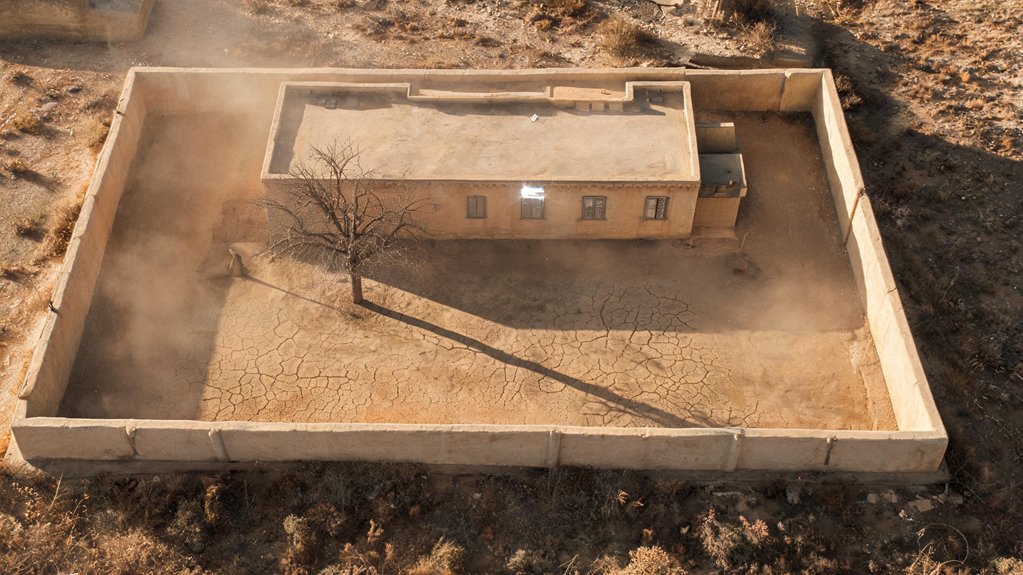
Osama bin Laden’s zero-electronic-signature doctrine didn’t render him invisible; it etched an unmistakable silhouette of nothingness across Abbottabad’s rooftops. By banning all RF-emitting devices past his gates, he assumed total silence equaled total opacity. Instead, his sanctuary screamed through omission.
- No landlines, cellular pings, or Wi-Fi—zero ambient interference in a neighborhood saturated with digital noise.
- Analysts flagged the compound’s dead zone against local telecom baselines, a GPS-coherent void.
- Refuse burning replaced curbside trash pickup, eliminating municipal records yet creating a routine combustion signature.
- Courier trips to distant internet cafes generated travel cadence, tethered physically to the compound.
- Hidden wiring? None—so no utility consumption spikes, but also no mundane billing footprint.
His miscalculation: intelligence doesn’t hunt signals alone. It maps absences. The vacuum he engineered wasn’t a shield—it was a beacon, calibration for SEALs’ final approach.
The Single Point of Failure: Al-Qaeda Central’s Lethal Dependency on Ibrahim Saeed Ahmed
Bin Laden’s ironclad insulation strategy collapsed into a single biological bottleneck: every command, every directive, and every strategic missive for al-Qaeda Central had to pass through Abu Ahmed al-Kuwaiti’s hands, making the entire network’s survival hinge on one man’s travel patterns and unbreakable loyalty.
The courier’s family logistics—his brother Abrar residing in the compound, the wives ferrying supplies, and the extended clan’s movements—created an inescapable web of observable relationships that analysts could trace backward to the Abbottabad terminus.
Furthermore, al-Kuwaiti’s vehicle identity, a Suzuki Vitara registered under a known alias, became a forensic tether that linked his periodic transit cycles directly to the fortress, exposing the very operational cord Bin Laden believed was invisible.
The Biological Bottleneck: Funneling an Organization Through Abu Ahmed al-Kuwaiti
Because the entirety of al-Qaeda Central’s command-and-control apparatus had been surgically reduced to the biological functions of one man, the organization’s survival became tethered to the mechanical rhythms of Ibrahim Saeed Ahmed’s heartbeat, his driving habits, and his family’s shopping trips.
This wasn’t strategy; it was a biological bottleneck. Analysts didn’t need to crack encryption—they just needed to map a single man’s life. They watched the courier become the entire network’s nervous system, a living hard drive.
- Every directive flowed through his hands, creating a consistent, measurable travel cadence.
- His vehicle’s movements became a surrogate signal, replacing any electronic pulse.
- Unusual trash—burned, not bagged—marked the compound as a zone of zero-normalcy.
- His family’s rigid isolation mirrored the hierarchy, revealing a hidden principal.
- His loyalty turned him into the most dangerous man alive: the one who knew everything.
He wasn’t a messenger; he was the system’s sole artery, and they traced his pulse straight to Abbottabad.
The Unseverable Cord: Courier Family Logistics and Vehicle Identity Vulnerabilities
The courier’s family wasn’t a loophole—it was a leash, and Ibrahim Saeed Ahmed wore it tight enough to choke an empire. His brother Abrar’s presence wasn’t redundancy; it doubled the vulnerability. They drove the same white Suzuki every trip, a rolling ID card that analysts could fingerprint. Their wives shopped locally, their kids attended school—anchoring the brothers to Abbottabad’s grid while Bin Laden’s zero-signature bubble stayed invisible.
That vehicle’s plates, traced from Peshawar’s internet cafes back to the compound’s gate, sewed the tether. The courier couldn’t vanish without dragging his kin; he couldn’t switch cars without breaking routine. Bin Laden’s trust in one bloodline made his sanctuary’s walls porous—not from wires, but from wheels and kinship.
The Digital Sneakernet: Tactical Mechanics of the Off-Site Courier Relay

The courier’s relay wasn’t a simple handoff; it was a meticulously choreographed dance of air-gapped keyboards and micro-SD cards, where Bin Laden’s operatives transferred directives from sterile machines to physical media before venturing out to scattered internet cafes.
Those distant transmission bursts, designed to sever any electronic link to Abbottabad, instead created a visible transit tether—a periodic, traceable loop of travel and data injection that analysts could map back to the compound’s gate.
Air-Gapped Keyboards and Micro-SD Data Transit Protocols
Inside Bin Laden’s Abbottabad safehouse, the commander of global jihad operated a digital relay system that mirrored Cold War espionage more than twenty-first-century warfare, with every keystroke physically severed from the outside world. He typed directives on a keyboard whose motherboard lacked any wireless or network interface, forcing all data onto encrypted micro-SD cards—a deliberate denial of electromagnetic bleed. The system’s genius proved its ruin.
- Air-gapped terminals emitted zero RF traces, yet their periodic file transfers created a rhythmic data pulse.
- Unformatted cards were reused, but forensic wear patterns revealed file allocation tables.
- Courier handoffs occurred at dead drops, standardizing transit times that analysts mapped.
- No encryption keys left the compound, securing content—but not the act of transfer itself.
- Manual sanitation of storage devices failed to erase residual metadata.
This protocol isolated content, not movement—betraying the chain through its own clockwork precision.
The Transit Tether: How Distant Internet Cafe Bursts Traced Inward
While the courier relay’s physical separations—dead drops, air-gapped terminals, unformatted cards—shielded content, its actual vulnerability emerged in the mundane mechanics of transmission. Each internet cafe burst wasn’t a random event; it was a predictable pulse along a geographic tether. Analysts mapped Abu Ahmed’s vehicle registrations and travel cycles, noticing his absences correlated precisely with upload spikes in Peshawar’s cybercafés. That timing created an inward vector, not outward anonymity.
| Tether Element | Analytic Trace |
|---|---|
| Periodic travel gaps | Flagged as transmission windows |
| Cafe IP geolocation | Narrowed origin radius |
| Return routes | Converged on Abbottabad |
Bin Laden’s design assumed distance broke attribution; instead, it manufactured a rhythmic heartbeat. Every drive to transmit—and every silent return—tightened the loop back to those twelve-foot walls. The courier wasn’t a shield; he was a compass needle, swinging inexorably toward the hideout.
The Negative-Space Signature: Engineering Invisibility That Manufactured a Forensic Void
Because Bin Laden engineered his Abbottabad sanctuary to emit nothing, it ended up radiating everything. His absolute air-gap doctrine—no landlines, no cellular pings, no municipal waste connections—didn’t render him invisible; it carved a forensic void in a bustling garrison suburb. Analysts didn’t see a quiet home; they saw an engineered absence screaming for explanation.
His air-gap doctrine didn’t hide him; it forged a silence loud enough to be a signal.
- Zero utility draw: No grid power fluctuations or water meter anomalies from a compound housing seventeen residents.
- No trash output: Municipal collection skipped his walls, yet daily smoke rose from internal incinerators—a rural habit in an urban military zone.
- Silent telecom profile: Every neighboring villa registered phone or internet usage; his compound produced zero metadata events.
- Architectural defiance: Twelve-foot walls and shuttered terraces contradicted the open, low-fence aesthetic of Kakul’s officer housing.
- Segregated living patterns: Internal gates and walled-off family quarters suggested a hidden principal, not a simple courier’s residence.
His design for invisibility became an empirical confession. Extreme omission, compared against pervasive normalcy, manufactured the very forensic trace he sought to erase.
The Incineration Directive: Burning Domestic Refuse as an Operational Compromise

Although Bin Laden’s zero-electronic-signature doctrine severed the compound from the grid, his daily incineration ritual—burning all domestic refuse within the perimeter—became the tell that unraveled his concealment. In Abbottabad’s affluent garrison suburb, municipal trash collection ran like clockwork; bins lined curbs weekly. His compound, however, produced no garbage output, no recycling, no waste-service handoffs. Instead, thick smoke plumes and a charred-pit stench rose from behind twelve-foot walls, a deliberate anomaly screaming operational denial. Analysts logged this as a high-confidence indicator of a guarded enclave, not a normal family home. This fiery compromise was a calculated act that backfired, converting routine domesticity into forensic proof.
| Refuse Behavior | Civilian Norm | Bin Laden’s Deviation |
|---|---|---|
| Disposal method | Municipal pickup | In-house burning |
| Frequency | Weekly cycle | Daily, irregular |
| Visible trace | Curbside bags | Smoke, ash residue |
| Intelligence read | Standard life | Concealment urgency |
This ritual didn’t hide him; it illuminated his need to erase, tipping off watchers to a deeper secret.
Internal Handler Segregation: The Compartmentalization Barrier That Betrayed the Core Inhabitant
The compound’s internal blueprint betrayed its master—the Kuwaiti handler’s family occupied a separate wing, physically severed from the upper floors, creating a spatial hierarchy that screamed of a concealed high-value resident.
Analysts spotted the telltale internal checkpoints and segregated living quarters, features utterly alien to a standard suburban home yet perfectly logical for a man guarding a ghost.
That deliberate compartmentalization, meant to protect Bin Laden, instead handed investigators the architectural proof of his presence.
Sub-Dividing the Compound: The Spatial Isolation of the Kuwaiti Family
- The compartment was rigidly segregated from Bin Laden’s living quarters, with controlled chokepoints.
- No casual socialization crossed that threshold; visitors never mingled.
- The Kuwaitis burned their trash separately, a ritual anomaly in a familial household.
- Their movement patterns—routed through gates, never gardens—mirrored prison logistics.
- Domestic chores occurred only in designated zones, betraying a choreographed hierarchy.
Analysts didn’t need eyes inside; the domestic architecture itself confessed.
This internal wall wasn’t security—it was a confession etched in concrete.
Every barrier meant to protect him instead mapped his exact location.
The High-Value Footprint: Internal Checkpoints Within a Domestic Residence
Every single internal checkpoint within that compound—each wall, each locked door, each segregated stairwell—operated as a silent confession of value. Analysts didn’t need a human asset inside; the architecture screamed it. Bin Laden’s sub-handler isolation doctrine forced the Kuwaiti family into a ground-floor wing, physically severed from the third-floor sanctum. That wasn’t family planning; it was prisoner logistics.
Those internal gates and bolted thresholds weren’t for privacy—they were a containment system. They revealed a hierarchy where one inhabitant dictated the movement of others, a pattern no ordinary homeowner builds. The segregation itself became the tell: a domestic fortress whose internal barriers marked the precise location of its most guarded secret. The compartmentalization meant to shield him instead drew a map straight to his door.
The Identity Shield: Fabricating Arshad and Tareq Khan as Suburban Cover

Behind the twelve-foot walls of that Bilal Town compound, bin Laden’s calculated anonymity hinged entirely on two fabricated suburban identities: Arshad Khan and his brother Tareq. These weren’t merely aliases—they were engineered personas, complete with rent payments, local school enrollments, and a plausible narrative of Pashtun merchants. Yet the veneer cracked under scrutiny.
- Their documented employment as transporters never matched observed routines.
- No utility connections existed in their names, yet the compound consumed power and water.
- The brothers claimed no extended family visits, defying regional kinship norms.
- Arshad’s vehicle, a white Suzuki, was registered to a Peshawar address long abandoned.
- Their children attended school, but neighbors never saw them play outside.
Each fabrication aimed to normalize the compound, but instead created a tautological trap: the more they performed suburbia, the more their omissions screamed anomaly. Analysts didn’t need a confession—they needed only the dissonance between what the Khans claimed and what the walls hid.
The Terminal Blind Spot: Bin Laden’s Static Posture Against Modern Interlocking Tradecraft
No single decision sealed bin Laden’s fate more than his refusal to adapt his operational doctrine to the interlocking tradecraft that had evolved around him by 2010. He still trusted one courier’s physical movements as his only beacon, but analysts had shifted to pattern-of-life mapping across transportation, finance, and familial ties. His courier’s periodic drives to internet cafés became a targeting wire, not a shield.
His static posture—unchanging walls, ritualized burning, rigid segregation—clashed with the dynamic surveillance mesh that fused satellite imagery, vehicle registration databases, and human reporting. He calculated that silence erased his footprint, but silence is only effective against deaf listeners. By 2010, the interlocking system didn’t need his voice; it needed his courier’s predictable deviations. His refusal to rotate handlers, alter routines, or introduce decoy traffic left an isolated node begging for triangulation. Ultimately, his absolute rigidity made him the easiest target in the region.
The Adversary’s Fatal Paradox: When Absolute Operational Security Becomes Self-Targeting
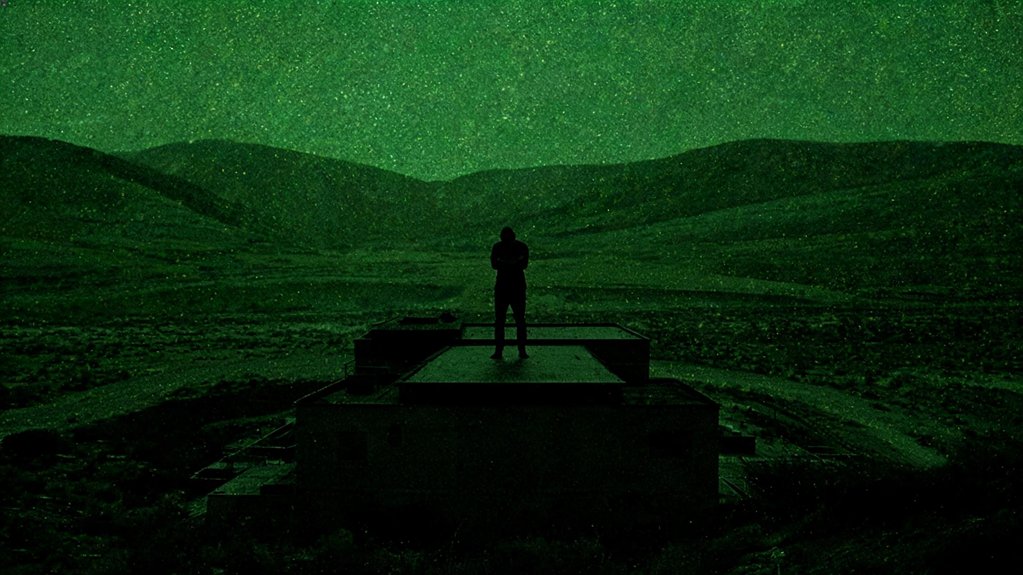
Bin Laden’s airtight doctrine—total technical silence, a single courier, and fortress isolation—didn’t just protect him; it turned his Abbottabad compound into a self-targeting anomaly that screamed for analytic attention. His calculation inverted: absolute zero-noise isn’t invisible, it’s conspicuous. It’s the enemy’s paradox, where perfection breeds exposure.
- No utility footprint—zero grid power, water, or waste pickup in a wired suburb flagged immediate infrastructural oddity.
- Single courier’s car—the same vehicle’s regular, circular trips to distant internet cafes created a rhythmic tether analysts could trace.
- Burned trash—domestic incineration inside walls contradicted local norms, whispering “hidden activity.”
- Fortress architecture—barbed wire, twelve-foot walls, and no windows facing outward defied suburban camouflage logic.
- Segregated wings—guarded internal barriers hinted at a caged high-value asset, not a family home.
Analysts didn’t find him despite his OPSEC; they found him *because* of it. His tradecraft removed all ambient noise, leaving only the silence—and silence, investigated, always has a source.
Frequently Asked Questions
Why Was Burning Trash Inside the Compound Suspicious?
Burning trash inside the compound raised suspicion because it broke the neighborhood’s mundane rhythm. Residents didn’t incinerate waste; they used municipal services or dumped it. This singular act created a glaring negative space—a deliberate absence of normal behavior. Investigators saw the smoke and ashes as a signature of concealment.
It wasn’t the fire itself, but the calculated effort to erase every trace of life that screamed of something hidden. That’s why the practice became a forensic red flag.
Did Neighbors Ever Report the Compound’s Odd Silence?
Neighbors did, in fact, note the compound’s eerie quiet—no children’s voices, no laughter, just a vacuum where life should hum. One local likened it to a mausoleum with a heartbeat.
That silence, amplified by burned trash and shuttered windows, wasn’t overlooked; it was logged, discussed, and passed along.
Ironically, the absence of noise screamed louder than any radio signal ever could, painting a target where Bin Laden thought he’d painted nothing.
How Did Courier Family Segregation Reveal the Hidden Occupant?
The segregation turned the courier’s family into unwitting informants. Their restricted access to upper floors, enforced through internal gates and strict routines, contradicted the property’s claimed single-family use.
That architectural anomaly—a divided household inside one fortress—screamed high-value concealment. Analysts saw the layout, recognized the pattern, and realized the compound’s true purpose wasn’t privacy but protection of someone the courier couldn’t freely mix with.
What Made Abbottabad’s Military Zone Comparison so Glaring?
Abbottabad’s military zone comparison proved glaring because a fortress shouldn’t sprout in a regulated garden. Its 12-foot walls and barbed wire stood out like a scar on suburbia’s face, where retired officers lived openly. That defensive anomaly screamed for attention, not camouflage.
The compound’s sheer defiance of local norms—silent, sealed, burning its own waste—made it a negative-space beacon, demanding the very scrutiny it sought to avoid.
Could Electronic Silence Ever Be Truly Invisible to Analysts?
Electronic silence can’t achieve true invisibility; it merely shifts the signature from emissions to omission. Analysts don’t need noise to find a target—they need contrast. Bin Laden’s air-gapped compound screamed through its absence: no utility connections, no waste pickup, no human chatter. That vacuum created a sharper profile than any intercepted call.
Silence isn’t a blank slate; it’s a glaring negative space, begging for scrutiny.
Final Thoughts
The fortress wasn’t a sanctuary; it was a signal. Every silent phone line, every ash-less furnace, every courier’s paused heartbeat—these weren’t voids but glaring beacons. He didn’t hide; he highlighted himself for anyone patient enough to read the absence. That’s the final irony: the ultimate ghost, haunting his own creation, couldn’t see the shadow he cast. The man who erased all noise didn’t realize silence screams the loudest.