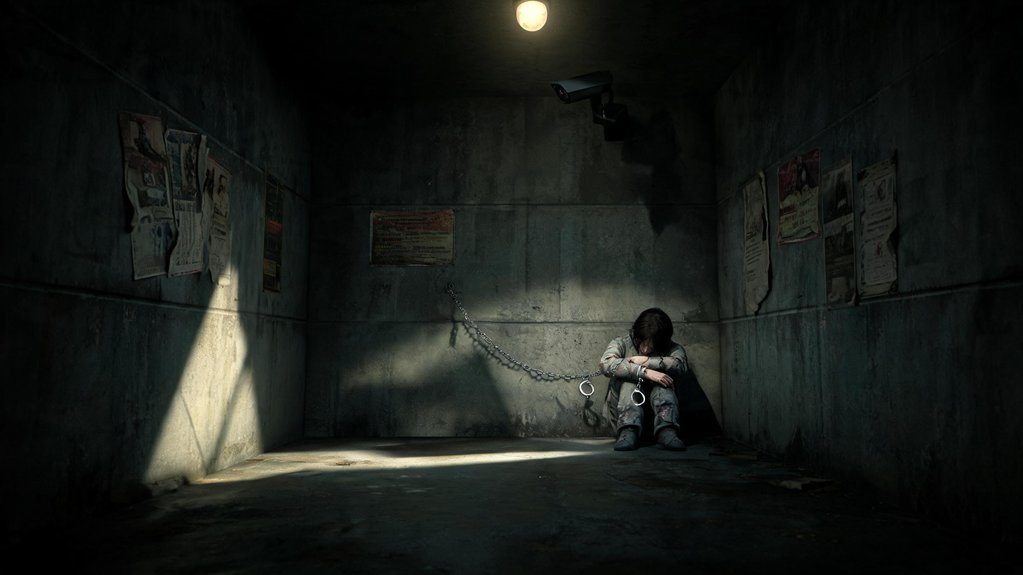
Declassified intelligence files from Abu Ghraib reveal a disturbing picture of ethical erosion and systemic abuse. Under immense pressure for actionable intelligence, military personnel, often acting as intelligence proxies, misapplied interrogation protocols. This led to the normalization of coercive tactics, threatening the dignity of detainees. High-ranking officials exploited ambiguities in memos, facilitating abusive practices. The tragic consequences of urgent intelligence demands reshaped the legal framework of military engagement, and the revelations beg deeper exploration into accountability and oversight.
Key Takeaways
- Declassified intelligence files revealed systemic failures and operational shortcuts that compromised established interrogation protocols at Abu Ghraib.
- Investigations, including the Taguba Report, exposed the normalization of abusive interrogation tactics and ethical erosion within military practices.
- The introduction of aggressive interrogation methods, including sleep deprivation, was driven by urgent intelligence demands and blurred legal boundaries.
- Redacted military and contractor reports obscured accountability and allowed abuses to persist without oversight or consequences.
- The discovery of abuse evidence by Specialist Joseph Darby prompted investigations that uncovered widespread mistreatment and manipulation of interrogation practices.
October 2003: The Bloodshed in the Sunni Triangle and the Scramble for CJTF-7 Target Data
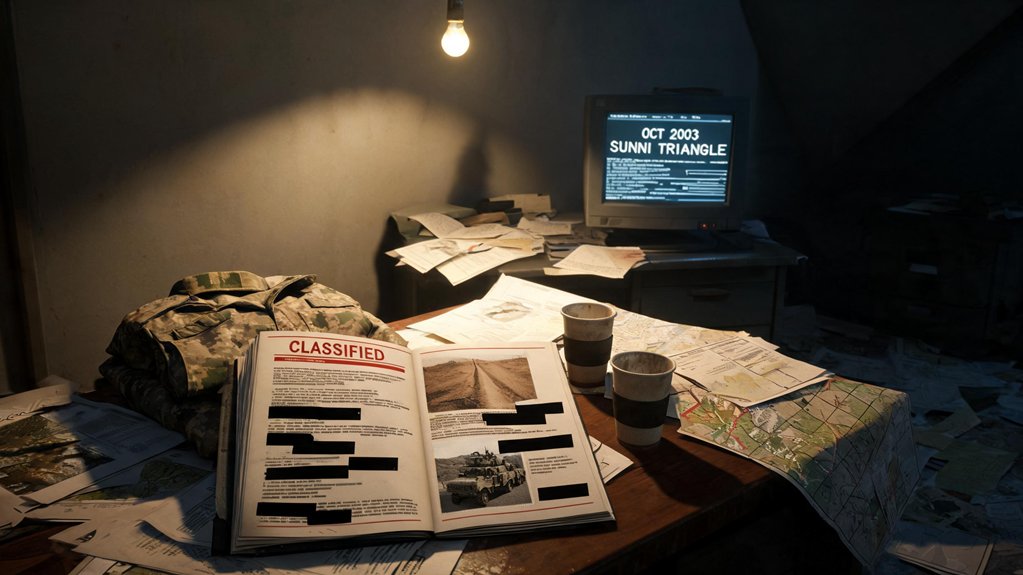
As violence surged in October 2003, the Sunni Triangle became a focal point for U.S. forces scrambling to gather actionable intelligence on insurgent activities.
Janis Karpinski, then in command of the Abu Ghraib facility, faced immense pressure to meet escalating operational demands linked to the Fallujah insurgency. Troops needed swift insights into IED networks, prompting a dangerous operational build-up that compromised established interrogation protocols.
Personnel, driven by urgency, often bypassed critical safeguards, believing that speed would yield crucial intelligence. This frantic atmosphere distorted policy applications, leading to severe misinterpretations of acceptable practices in detention.
Personnel, under immense pressure, compromised critical safeguards, distorting policies and misinterpreting acceptable detention practices in their desperate quest for intelligence.
As pressure mounted, the lines between compliance and expedience blurred, fostering an environment ripe for abuse. The consequences echoed far beyond the walls of Abu Ghraib, illustrating the devastating impact of systemic failures in military intelligence, where the quest for data overshadowed the imperative of ethical conduct.
Hard Site Tier 1: Where Military Police Became Intelligence Proxies
At Hard Site Tier 1, Military Police found themselves caught in a web of urgent intelligence demands, driven by the Miller Doctrine’s unsettling transfer from Guantánamo to Baghdad.
Under the 205th MI Brigade’s command, conventional rules of engagement began to erode, leading to a troubling blend of policing and interrogation practices.
This shift not only blurred ethical lines but also placed immense pressure on personnel tasked with extracting crucial information in increasingly chaotic conditions.
Setting the Conditions: The Miller Doctrine’s Migration from Guantánamo to Baghdad
While the change of the Miller Doctrine from Guantánamo to Baghdad marked a significant shift in military interrogation practices, it also blurred the lines between military policing and intelligence gathering.
Under the command of officials like Thomas Pappas and Ricardo Sanchez, the adoption of isolation protocols became routine, as pressure mounted to extract information rapidly.
The Taguba Report highlighted these systemic failures, revealing how the Fay-Jones findings detailed the misuse of tactics that strayed far from established norms.
What began as a framework for interrogation morphed into a troubling precedent, where military police acted as intelligence proxies, leading to egregious abuses.
This shift not only compromised ethical standards but also endangered the integrity of the intelligence-gathering process.
Bypassing Interrogation Rules of Engagement Under 205th MI Brigade Command
Under the 205th Military Intelligence Brigade command, the lines between military policing and intelligence operations blurred alarmingly, leading to significant deviations from established interrogation rules of engagement.
Inside Abu Ghraib prison, pressure to produce actionable intelligence about insurgent networks prompted personnel to adopt operational shortcuts that disregarded critical interrogation protocols.
Declassified files reveal a culture where urgent demands to combat IED threats outweighed adherence to lawful standards. This shift allowed military police to act as intelligence proxies, often employing methods inconsistent with established practices.
The resulting chaos not only undermined the integrity of military intelligence but also inflicted lasting harm on detainees, showcasing a systemic failure rather than isolated misconduct.
The consequences were dire, echoing far beyond the prison walls.
The Fallujah Factor: November 2003 Operation Ivy Cyclone and the Influx of Ghost Detainees
As the chaos of the Iraq conflict escalated, the November 2003 Operation Ivy Cyclone marked a pivotal moment that intensified the military’s reliance on aggressive interrogation tactics. This operation, executed in the Al Anbar province, aimed to counter the burgeoning Fallujah insurgency, which had become a focal point during the 2003 Iraq invasion.
In the midst of the urgency of Operation Iron Hammer, military personnel faced immense pressure to extract actionable intelligence. Declassified CID files reveal a troubling trend: the influx of ghost detainees, individuals held without proper documentation.
This practice stemmed from a desperate need for source exploitation, leading to the erosion of established interrogation protocols. The combination of tactical urgency and flawed oversight not only compromised ethical standards but also deepened the cycle of abuse within detention facilities, highlighting the alarming consequences of systemic intelligence failures during this tumultuous period.
Weaponizing the Interrogation Memos: Sanchez’s September 14 Authorization Loophole
In the wake of escalating violence and chaos in Iraq, the authorization memo issued by General Ricardo Sanchez on September 14, 2003, emerged as a critical turning point, effectively creating loopholes that permitted the military to adopt aggressive interrogation techniques.
This memo, crafted under immense pressure to gather intelligence, blurred the lines of lawful conduct. As the urgency for actionable information intensified, personnel began exploiting this ambiguity, pushing the boundaries of acceptable interrogation practices.
The fallout from these decisions became glaringly evident in the 2004 CBS broadcast, revealing harrowing images of detainee abuse at Abu Ghraib.
These abuses weren’t isolated incidents; they reflected a systemic failure rooted in the very policies meant to guide military operations. The Sanchez memo’s implications resonated throughout the ranks, enabling a culture where aggressive tactics overshadowed ethical considerations, leaving a lasting scar on the integrity of military intelligence.
Dismantling Field Manual 34-52: The Bureaucratic Erasure of Lawful Resistance
In the shadows of bureaucratic oversight, the erosion of Field Manual 34-52 revealed a troubling normalization of coercive tactics.
Sleep deprivation and dietary manipulation became tools rather than violations, while the strategic use of canines exploited deep-seated fears under the guise of tactical necessity.
This unsettling transformation highlights how urgent demands for intelligence led to the dismantling of lawful resistance, leaving ethical boundaries blurred and vulnerable.
Sleep Management and Dietary Manipulation as Standardized Coercion
While many might view the tactics employed at Abu Ghraib as isolated incidents, the reality reveals a troubling pattern of systemic coercion rooted in the manipulation of basic human needs.
Detainees faced intentional sleep deprivation and dietary manipulation designed to weaken their resolve. By restricting food and disrupting sleep, interrogators aimed to extract compliance and confessions, undermining the very essence of humane treatment.
This strategy, considered a standardized form of coercion within the facility, stripped individuals of their dignity and autonomy. The dehumanizing effects of such tactics not only provoke moral outrage but also highlight a broader failure of oversight and accountability in military practices, reflecting a dangerous prioritization of intelligence over ethical standards.
The Canine Authorization: Exploiting Phobias Under Tactical Intelligence Waivers
Amid the chaos of the Abu Ghraib facility, the authorization of canine units to intimidate detainees marked a disturbing escalation in interrogation tactics.
This decision exploited deep-seated phobias surrounding dogs, leveraging fear to extract information under the guise of tactical intelligence. Military personnel, driven by urgent demands for actionable data, misapplied Field Manual 34-52, which outlines lawful interrogation practices.
The use of dogs in this situation blurred ethical lines, transforming fear into a method of coercion. Detainees, already vulnerable, faced an additional layer of psychological torment.
As bureaucratic pressures mounted, the line between lawful resistance and abusive tactics eroded, revealing a systemic failure that prioritized immediate intelligence over humane treatment. The repercussions of these choices continue to resonate.
Erasing the Paper Trail: Red Cross Redactions and Unregistered Night Shifts
As pressure mounted within the military to extract intelligence rapidly, the Red Cross found itself grappling with a troubling reality at Abu Ghraib: critical reports detailing human rights abuses were systematically redacted or buried.
Staff members at the facility noted irregularities, particularly concerning unregistered night shifts where questionable interrogation methods occurred without oversight. These undocumented shifts created a shadowy environment, allowing abuses to flourish unchecked.
Irregularities in unregistered night shifts fostered a shadowy environment, enabling unchecked abuses during questionable interrogations.
The Red Cross, committed to documenting violations, faced significant hurdles as military officials manipulated reports to obscure the truth. As the military’s urgency overshadowed ethical considerations, the Red Cross became an unwilling participant in a narrative that prioritized operational efficiency over human dignity.
Through this erasure of accountability, a chilling silence enveloped the detainees at Abu Ghraib. The very framework meant to protect their rights became a tool for obfuscation, leaving both the organization and the detainees trapped in a cycle of neglect.
The “Rogue MP” Smokescreen: Manufacturing the 372nd Military Police Fall Guy Narrative
The narrative surrounding the abuses at Abu Ghraib often pinned the blame on a few “rogue” military police officers from the 372nd Military Police Company, painting them as isolated actors in a scandal that distorted the reality of systemic failures. This portrayal served as a convenient distraction from the broader issues within military intelligence operations.
| Key Factors | Impact |
|---|---|
| High-pressure intelligence demands | Led to shortcuts and policy distortions |
| Misinterpretation of interrogation protocols | Resulted in severe abuses at Abu Ghraib |
| Command breakdowns | Created an environment where accountability was lost |
The focus on individual misconduct overshadowed the systemic failures that fueled these actions. By emphasizing the “rogue” narrative, authorities deflected scrutiny from the institutional pressures that drove the misconduct, perpetuating a cycle of misunderstanding about the conditions that contributed to the abuses.
January 13, 2004: Specialist Darby’s CD-ROM and the Collapsing Wall of Silence
On January 13, 2004, Specialist Joseph Darby stumbled upon a CD-ROM that would shatter the facade of silence surrounding the abuses at Abu Ghraib. The contents revealed harrowing images of detainee mistreatment, exposing a reality starkly different from the official narratives.
Darby, grappling with his conscience, recognized the weight of his discovery. This wasn’t just a breach of protocol; it was a profound violation of human rights.
Feeling the urgency to act, he reported the findings to his superiors, igniting a chain reaction that would ultimately lead to an investigation. The CD-ROM began to dismantle the wall of silence that had shielded the abuses for too long.
Darby’s decisive action shattered the silence, sparking an investigation that unveiled the deep-rooted abuses concealed within military operations.
It highlighted the urgent need for accountability within the ranks, illustrating how the pressures of intelligence collection had warped ethical boundaries. Darby’s courage became a pivotal moment, forcing the military to confront the grim truths hidden within its operations.
The Taguba Inquiry: Unmasking Criminal Depravity Disguised as Collection Matrixes

The Taguba Inquiry revealed unsettling truths about the practices within Abu Ghraib, exposing how “softening up” tactics became institutionalized under the guise of intelligence collection.
Conflicts between General Karpinski and Colonel Pappas highlighted the disarray in command and accountability, further complicating the narrative of responsibility.
As the inquiry unfolded, the layers of systemic failure and moral depravity emerged, demanding urgent attention and reflection.
AR 15-6 Findings: Institutionalized “Softening Up” for Joint Interrogation Debriefing Teams
While urgent intelligence demands loomed, the findings from the AR 15-6 investigation revealed a troubling trend within the military’s interrogation practices at Abu Ghraib.
The reports indicated an alarming normalization of “softening up” techniques, where detainees faced escalating psychological and physical pressures designed to extract information. This approach, sanctioned by command, blurred the lines of lawful interrogation.
The emphasis on rapid intelligence collection led to a chilling disregard for established protocols, transforming moral boundaries into gray areas. Soldiers, caught in a system driven by urgency, felt compelled to comply, often crossing ethical lines.
These findings underscored a profound failure in leadership and oversight, exposing a culture that prioritized intelligence over humanity.
General Karpinski vs. Colonel Pappas: The Civil War Over Facility Command
As the fallout from the AR 15-6 findings unfolded, a bitter power struggle emerged between General Janis Karpinski and Colonel Thomas Pappas, highlighting deep fractures in leadership at Abu Ghraib.
Karpinski, in charge of the facility, faced mounting pressure from Pappas, who oversaw military intelligence operations. Their conflict revealed contrasting philosophies regarding interrogation practices and operational oversight.
Karpinski advocated for adherence to established protocols, while Pappas pushed for aggressive tactics to meet urgent intelligence demands.
This clash not only fueled internal discord but also contributed to the systemic failures that facilitated the infamous abuses.
Ultimately, the struggle for control mirrored the broader chaos of the Iraq War, where ethical boundaries blurred during relentless pursuit of actionable intelligence.
The Fay-Jones Investigation: Forensic Proof of Military Intelligence Complicity
In the midst of the turmoil of the Iraq conflict, the Fay-Jones investigation uncovered critical forensic evidence revealing systemic complicity within Military Intelligence regarding the abuses at Abu Ghraib.
This investigation highlighted key findings that painted a troubling picture of accountability:
- Documented Orders: Evidence showed directives from higher-ups that prioritized intelligence collection over humane treatment.
- Miscommunication: Misinterpretations of interrogation protocols led to severe deviations from established guidelines.
- Pressure Influence: The urgency to obtain actionable intelligence resulted in the normalization of abusive practices.
- Chain of Command: Forensic analysis revealed that command structures failed to enforce oversight, allowing misconduct to flourish.
These findings point to a broader, troubling culture within Military Intelligence, where the drive for information overshadowed ethical boundaries, leaving a legacy of pain and mistrust that still resonates today.
Courts-Martial at Fort Hood: Punishing the Guards While Immunizing the Architects
The courts-martial at Fort Hood revealed a troubling dynamic: the guards at Abu Ghraib faced severe consequences for their actions, while those who orchestrated the policies enabling such abuses largely escaped accountability.
As the guards received harsh sentences, many felt the weight of a broken system pressing down on them. They were young, often overwhelmed, and caught in a web of conflicting orders and high-pressure demands from superiors.
The architects of the interrogation policies, however, remained largely untouched, their roles obscured by layers of bureaucracy.
This disparity illustrated a profound injustice—those who implemented the flawed strategies that led to the abuses were shielded from the fallout. The narrative of accountability seemed distorted, leaving victims and their families seeking closure in a system that prioritized punishment over understanding the systemic failures that fueled the crisis.
This imbalance only deepened the wounds of an already devastated community.
Private Contractors in the Shadows: CACI, Titan, and Jurisdictional Immunity
In the shadows of Abu Ghraib, private contractors like CACI and Titan operated with a troubling degree of autonomy, effectively sidestepping the Uniform Code of Military Justice.
Their contracts, often redacted and inaccessible, obscured the extent of corporate involvement and accountability in the interrogation process.
This lack of transparency not only shielded these companies from scrutiny but also left detainees vulnerable to abuses without the protections typically afforded under military law.
The Civilian Interrogator Void: Operating Outside the Uniform Code of Military Justice
While military personnel operated under strict regulations established by the Uniform Code of Military Justice, private contractors like CACI and Titan navigated a murky environment of accountability. Their involvement at Abu Ghraib highlighted significant gaps in oversight, raising critical questions about ethical boundaries.
Key concerns included:
- Lack of Accountability: Contractors weren’t held to the same standards as military personnel.
- Ambiguous Jurisdiction: Legal protections often shielded them from prosecution.
- Operational Pressure: Intelligence demands led to shortcuts that compromised ethical conduct.
- Systemic Failures: Oversight mechanisms failed to regulate contractor actions effectively.
This void allowed for practices that not only undermined justice but also dehumanized detainees, complicating the moral framework of military operations in Iraq.
Denied Access and Redacted Contracts: Shielding Corporate Intelligence Assets
Amid the chaos of the Abu Ghraib scandal, private contractors like CACI and Titan slipped into the shadows, operating with a level of immunity that raised serious ethical and legal questions. Their contracts, often redacted and inaccessible, obscured the extent of their involvement and accountability.
As military pressure mounted, these firms exploited jurisdictional loopholes, allowing them to sidestep traditional oversight. This lack of transparency left detainees vulnerable and undermined legal protections.
Survivors of the abuses faced a formidable challenge in seeking justice, as the very entities responsible for their treatment remained shielded from scrutiny. The implications of this corporate involvement in intelligence operations continue to resonate, highlighting a troubling intersection of profit, power, and human rights.
The Structural Verdict: How Collection Panics Dismantled the Laws of Armed Conflict
As pressures mounted for rapid intelligence collection during the Iraq conflict, the laws of armed conflict began to erode under the weight of urgency. The drive for immediate results led to a series of critical failures that compromised ethical standards and operational integrity.
- High-Priority Mandates: Military Intelligence prioritized speed over compliance, creating a culture of shortcuts.
- Bypassing Protocols: Urgent demands incentivized personnel to neglect established interrogation guidelines.
- Misapplied Policies: Command pressures distorted official policies, blurring the lines of acceptable practices.
- Institutional Breakdown: Tactical abuses stemmed from systemic failures rather than isolated incidents, reflecting a broader organizational crisis.
These factors combined, dismantling the frameworks meant to protect both detainees and military personnel, leaving a haunting legacy of lost humanity during the chaos of war.
Understanding these dynamics reveals a troubling truth about the consequences of prioritizing expediency over ethical adherence.
Frequently Asked Questions
What Were the Main Motivations Behind the Abu Ghraib Abuses?
The main motivations behind the Abu Ghraib abuses stemmed from intense pressure on military personnel to gather actionable intelligence rapidly.
Urgent demands to combat rising threats from insurgent networks, particularly IEDs, pushed individuals to prioritize results over ethical standards.
This high-stakes environment distorted interrogation protocols, leading to severe misinterpretations of acceptable practices.
The combination of systemic command pressures and a desperate need for information ultimately compromised the integrity of treatment toward detainees.
How Did Intelligence Pressures Influence Interrogation Practices?
In a high-stakes game of poker, the pressure to win can lead players to bluff recklessly.
Similarly, intelligence pressures during the Iraq conflict pushed military personnel to abandon established interrogation protocols. Faced with urgent demands for actionable data on insurgent networks, they resorted to shortcuts and misinterpretations of policy.
This relentless pursuit of information distorted ethical boundaries, resulting in practices that prioritized outcomes over humanity, ultimately fueling the abuses witnessed at Abu Ghraib.
What Role Did Command Structure Play in the Abuses?
The command structure notably contributed to the abuses, enforcing unrealistic intelligence collection demands.
Pressure from higher-ups led personnel to prioritize urgent results over ethical practices. Misguided directives blurred the lines of acceptable conduct, fostering an environment where shortcuts became commonplace.
Many involved felt compelled to comply, believing they were fulfilling their duties. This systemic failure ultimately undermined established protocols, resulting in a tragic erosion of moral boundaries within the detention facility.
Were There Specific Policies That Were Violated During Interrogations?
During interrogations, personnel violated policies by employing coercive tactics that disregarded established guidelines.
For instance, one soldier, under immense pressure to produce results, resorted to sleep deprivation and physical stress positions, believing it would yield actionable intelligence.
This breach not only undermined ethical standards but also highlighted the broader systemic failures that prioritized immediate results over humane treatment.
Such actions reflect a tragic outcome of escalating demands on military intelligence during an intense conflict.
How Did the Scandal Impact Military Policy Moving Forward?
The scandal profoundly reshaped military policy, prompting a reevaluation of interrogation practices and oversight.
Following the revelations, the military instituted stricter guidelines to guarantee compliance with established protocols and human rights standards.
Command structures transformed, emphasizing accountability and transparency.
Military leaders recognized the necessity of balancing tactical urgency with ethical obligations, fostering a culture that prioritizes lawful conduct during operations.
This shift aimed to prevent future breaches and restore trust in military integrity.
Final Thoughts
The Abu Ghraib scandal stands as a haunting reminder to the fragility of ethical standards in wartime. Like a dam breached under relentless pressure, the institution collapsed, allowing abuses to flow unchecked. With declassified intelligence files illuminating the systemic failures, it’s clear that the rush for intelligence came at an unconscionable cost. As the echoes of this dark chapter linger, the need for accountability and reflection remains urgent, reminding us of the moral obligations that must never be forsaken.