
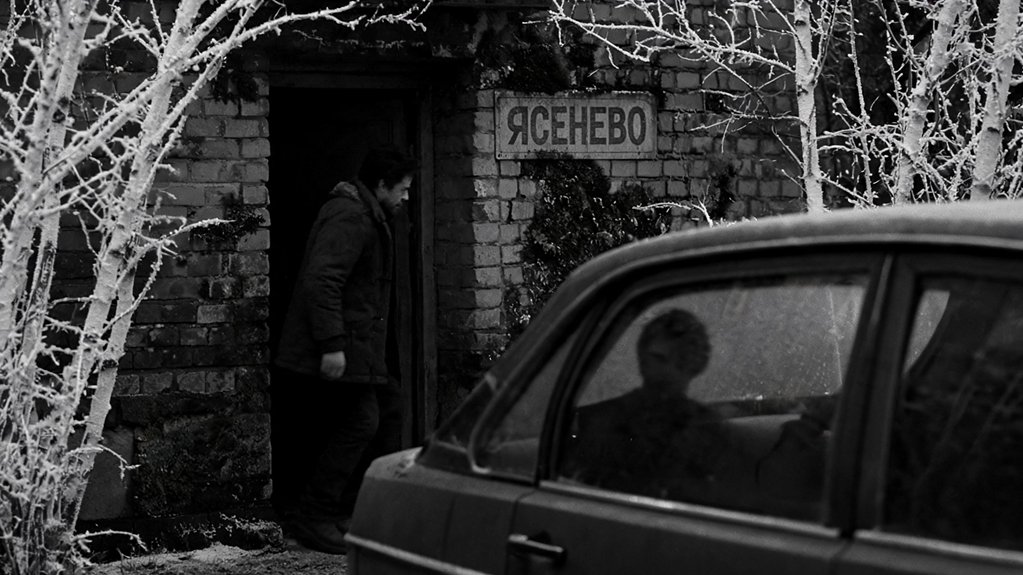
The KGB’s “Kolokol” cryptonym buried Aldrich Ames so deeply that his file vanished from Yasenevo’s central registry. Directorate K sealed the paper-only records in Kryuchkov’s private safe, accessible to a select three. Sanitizers then scrubbed Langley’s fingerprints, rewriting every dispatch as fake European intercepts. Arrests mimicked technical detection, not treason. This fortress survived the Soviet collapse, leaving the agency’s counterfeit narrative undisturbed. The full deception’s mechanics demand closer inspection.
Key Takeaways
- KGB cryptonym Kolokol identified Ames’s intelligence as genuine after rigorous cross-checks.
- Kolokol file was isolated in Kryuchkov’s safe, hidden from standard KGB queries.
- Sanitized Ames’s reports, forging European sub-source narratives to erase CIA fingerprints.
- Deception framed arrests as signal intercepts, steering CIA toward technical, not human, leaks.
- Total archival lockdown preserved mole secrecy through Cold War’s end and SVR transition.
The April 1985 Walk-In Shock at 1125 16th Street NW
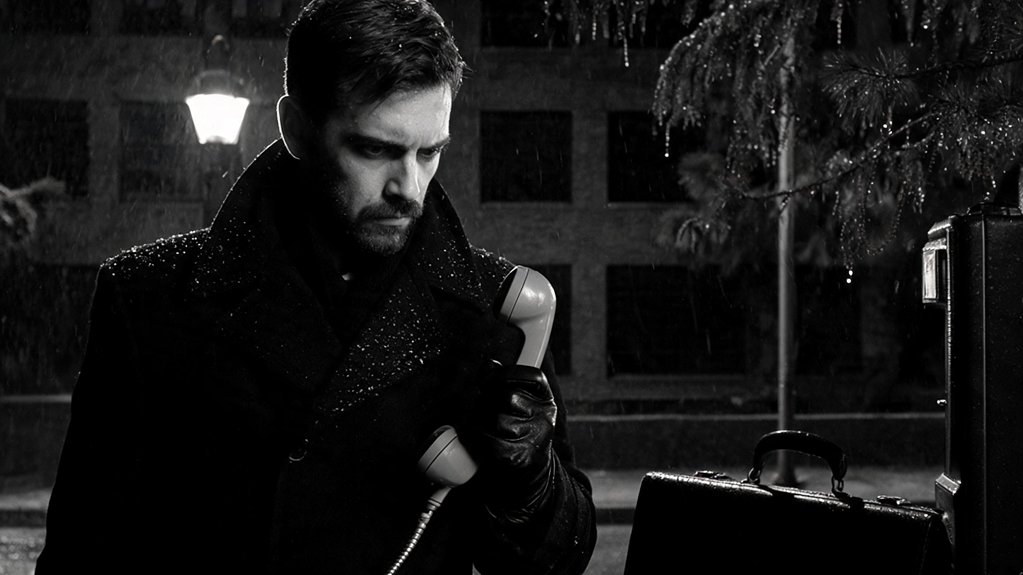
Victor Cherkashin’s initial response to the April 1985 walk-in wasn’t gratitude—it was suspicion, as he weighed the terrifying possibility of a Langley provocation against the raw treason laid out on his desk.
He couldn’t trust the man’s identity or his motives, so he quarantined the entire unsolicited dossier, isolating it from standard rezidentura channels before a single word reached Moscow.
This first firewall, built on paranoia and protocol, would determine whether the KGB embraced a golden asset or disposed of a poisoned gift.
The Dangle Dilemma: Weighing Langley Provocation Against Genuine Treason
The KGB’s first instinct, when that April 1985 package landed at 1125 16th Street NW, wasn’t gratitude—it was suspicion. Viktor Cherkashin, the Rezidentura’s counterintelligence chief, refused to trust the walk-in blindly. He cross-checked Ames’ disclosures against Directorate K logs, hunting for telltale signs of a Langley provocation—a planted asset feeding sanitized intelligence dispatches designed to burn Soviet networks.
| Test | Genuine Treason | Langley Dangle |
|---|---|---|
| Source specificity | Naming active, untargeted assets | Recycling already-known names |
| Damage potential | Immediate, verifiable arrests | Staged, theatrical losses |
Yet the granular detail—names, codenames, operational gaps—matched nothing the CIA would sacrifice cheaply. Vladimir Kryuchkov personally weighed the risk, ruling that the precision outstripped any deception play. The dangle dilemma resolved itself: this was real.
Cherkashin’s First Firewall: Quarantining the Unsolicited Washington Dossier
Cherkashin didn’t unseal Ames’ first envelope with triumph—he opened it like a bomb tech prying at a timer, expecting the click of a trap.
The April 1985 walk-in at the Soviet embassy Washington stunned him; a C.I.A. counterintelligence officer spilling names strained belief.
He quarantined the dossier, bypassing routine channels, and shot it to yasenevo headquarters for cross-checking.
Directorate K validated the disclosures against internal files—the authenticity held.
From there, Moscow sealed the case into a private safe, accessible only to a select cadre.
They layered defenses: sergey chuvakhin, an unbriefed embassy officer, served as an initial cut-out buffer for handling, while sanitized reports flowed out.
That firewall postponed the first 1986 roll-ups, buying Kolokol precious time to burrow deeper.
Directorate K’s Forensic Triage: Cross-Checking Asset Rosters in Moscow
In Moscow, Directorate K’s analysts pulled the CIA asset roster from Ames’ first package and slammed it against their own tightly guarded counterintelligence logs, looking for a single mismatch that might reveal a provocation. They found none—the names aligned with losses they’d already suspected but couldn’t explain, turning skepticism into a cold, hard verification.
That final authentication at Yasenevo didn’t just clear Ames; it convinced the FCD’s top brass they were clutching a genuine penetration, not a Langley trap.
Validating the Compromises: Cross-Referencing Internal Counterintelligence Logs
Directorate K’s forensic triage in Moscow wasn’t a casual stroll through an asset ledger—it was a surgical confrontation with the deadliest possibility in counterintelligence. Cross-referencing Ames’ initial disclosures against internal logs, they found his named CIA assets matched active, closely-guarded investigations, instantly ruling out a dangle. They pulled his file from the FCD central registry, sealing it far from bureaucratic eyes.
To protect him, they’d later extend operations to a rome operational site, using a dead drop bridge and chalk mark signaling stateside—never direct contact. Even through the 1991 SVR shift, this compartmentalization held, insulating Kolokol’s true value from every doubting analyst.
Eliminating the Provocation Hypothesis: The Final Yasenevo Authentication
The KGB’s cross-referencing didn’t just match names on a ledger—it forced Moscow Center to confront the terrifying possibility that a CIA provocation could be burning their best secrets. Directorate K’s forensic triage in Moscow pitted Ames’s disclosures against tightly held internal rosters, hunting for disconnects that would scream “dangle.” They found none.
- 1. Asset alignment: Every name Ames provided matched an existing, file-coded KGB investigation.
- 2. Source parity: His data’s specificity mirrored only true, compartmentalized penetrations.
- 3. No double-agent signature: No fabricated operational trail or suspicious timing anomalies surfaced.
- 4. Behavioral consistency: His motive—money—aligned with prior genuine walk-ins.
That brutal validation eliminated the provocation hypothesis, sealing Ames’s fate as Kolokol.
The “Kolokol” Protocol: Purging Ames from the Yasenevo Central Registry
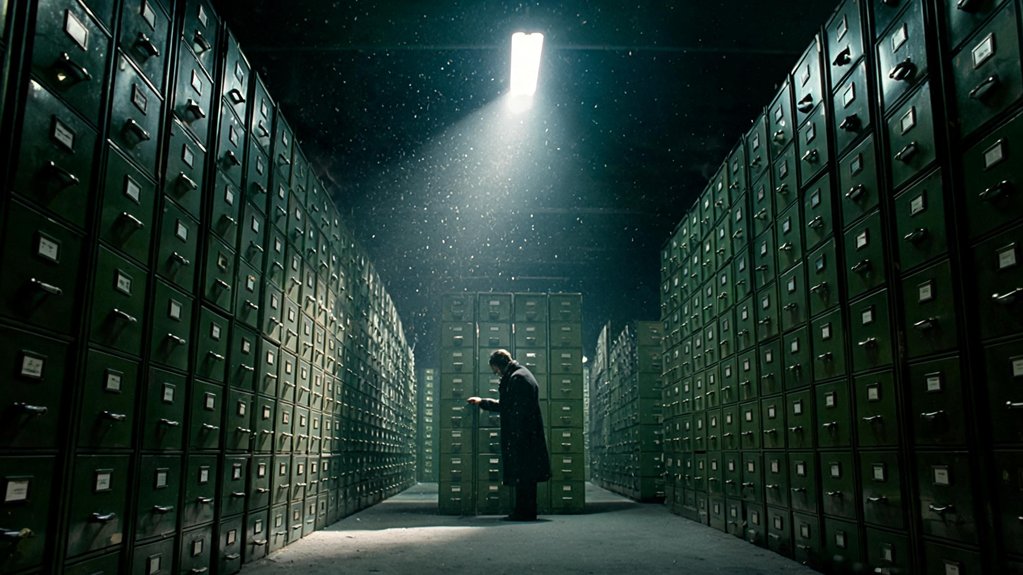
No fewer than three separate locks stood between Aldrich Ames’ file and the eyes of the KGB’s rank-and-file bureaucracy—and that was precisely the point.
Directorate K purged the “Kolokol” dossier from Yasenevo’s central registry, an act of administrative surgery that rendered the mole invisible to standard archival queries.
They didn’t merely classify it; they physically relocated the entire operational record into the private safe of the division’s chief, accessible only to FCD head Kryuchkov, the director, and one designated case officer.
This wasn’t paranoia—it was institutional architecture. Any clerk searching for a phantom CIA penetration would find nothing, because no trace existed in the system.
The protocol guaranteed that even the KGB’s own counterintelligence analysts couldn’t stumble upon the file accidentally.
Stripping the CIA Dispatch Header: Moscow Center’s Document Sanitization
Moscow Center’s sanitizers stripped every CIA dispatch header from Ames’s product, then laundered the raw intelligence through fake European sub-source narratives that left no fingerprint pointing back to Langley.
These rewritten reports carried fictional provenance—technical intercepts, diplomatic chatter, or invented assets in Vienna and Rome—so no analyst could trace the true origin.
Meanwhile, the genuine documents never left Kryuchkov’s office, their access locked to a handful of minds that already knew the secret they guarded.
Fabricated Provenance: Attributing Raw Intelligence to European Sub-Sources
Every scrap of paper Ames produced carried the unmistakable genetic fingerprint of Langley—dispatch headers, distribution codes, the telltale bureaucratic rhythms of CIA tradecraft. Moscow Center couldn’t risk that scent reaching U.S. analysts, so they surgically stripped each document and rebuilt its pedigree from scratch.
- Rewrote content in KGB case-officer style, eliminating CIA terminology.
- Paraphrased intelligence to fit Soviet analytical frameworks.
- Forged new source attributions, pinning data to fabricated European assets.
- Inserted false metadata, like fictional intercept logs, to deepen the cover.
This wasn’t mere cleaning—it was counterintelligence theater. By attributing Langley’s secrets to phantom sub-sources in Vienna or Rome, Yasenevo created a self-sealing narrative.
Any leak investigation would chase ghost networks, not suspect a mole inside CIA headquarters. The provenance lie became Ames’ invisible armor.
Denying the Consumer Bureaucracy: Restricting Access Beyond Kryuchkov’s Office
The fabrication of provenance was only half the battle. Moscow Center knew that raw CIA dispatch headers—those telltale routing stamps—could betray their source instantly. So, handlers stripped every document Ames provided, excising Langley’s formatting, cable numbers, and internal distribution codes. They retyped content onto blank Soviet templates, then attached false attributions: a technical intercept here, a diplomatic earwig there.
This scrubbed narrative entered a parallel pipeline, bypassing normal analytical channels entirely. Only Kryuchkov’s inner circle touched unredacted originals; everyone else—even senior FCD analysts—saw sanitized ghosts. That bureaucratic denial created a hermetic loop, insulating Kolokol from cross-checking. If a stray phrase leaked, it pointed to a fictional sub-source, never to a mole who still worked inside CIA headquarters.
Staged Roll-Ups and Engineered Delays: Camouflaging the Langley Penetration
Moscow Center didn’t simply round up the CIA’s assets—they staged the arrests to look like routine border intercepts, manufacturing paper trails that led nowhere.
Each takedown’s timing was carefully spaced, breaking up the temporal pattern that might’ve screamed “headquarters breach” to Langley analysts.
Faking the Paper Trail: Masking Arrests as Routine Border Interceptions
Some KGB operations against Washington’s spy networks never happened at the time, place, or manner fate would have dictated. Moscow Center orchestrated elaborate theatrical masks, converting imminent arrests into mundane border incidents, thereby shielding Ames from suspicion while preserving operational tempo.
- They stamped false dates on arrest warrants, backdating them to align with routine travel patterns.
- KGB officers fabricated surveillance logs, portraying captures as the result of chance border checks rather than targeted penetrations.
- They injected bureaucratic delays into investigation files, simulating slow-moving security audits that obscured coordinated roll-ups.
- Official cable traffic was rewritten, swapping operational jargon for innocuous customs terminology, so Langley analysts saw nothing anomalous.
Each forged document erased another trace, ensuring the trail led nowhere near Yasenevo’s mole.
Pacing the Takedowns: Mitigating Temporal Patterns Pointing to Headquarter Breaches
Backdating paperwork alone couldn’t conceal a more damning clue—the rhythm of the arrests themselves. Analysts at Langley could graph a sudden, simultaneous collapse of sources, but Moscow knew that pattern screamed mole. So Directorate K manipulated the timeline. They staged roll-ups, staggering detentions over months, inserting false arrests of low-level assets to simulate routine police work.
They engineered delays, letting some networks run dark for years, feeding the CIA’s hunger for alternative theories. They even manufactured a fictional technical intercept to explain a high-profile loss. Each arrest needed its own cover story—a border fence breach, a communications leak—not just to fool the CIA, but to blur the temporal signature that would’ve pointed straight at a headquarters penetration. Chaos, carefully choreographed, became their shield.
The Chuvakhin Buffer: Weaponizing an Unwitting Diplomatic Cut-Out
By 1986, the KGB’s operational calculus had pivoted to one brutal, non-negotiable truth: direct contact with Kolokol inside Washington was a death sentence, so Viktor Cherkashin weaponized a man who never knew he was a weapon.
By 1986, direct contact was death—so Cherkashin turned an unwitting diplomat into his perfect, disposable shield.
Sergei Chuvakhin, a mid-tier Soviet diplomat, became the perfect buffer—an unwitting mule whose diplomatic immunity masked lethal tradecraft.
Cherkashin’s design exploited Chuvakhin’s ignorance ruthlessly:
- Blind Picking: Chuvakhin collected packages from Ames under fabricated “cultural exchange” pretexts, never knowing the contents.
- No Script, No Trace: He received no KGB training, leaving zero behavioral fingerprints for FBI countersurveillance.
- Institutional Cover: His embassy position gave him legal access to restricted zones, normalizing his movements.
- Sacrificial Disposal: If burned, Chuvakhin’s ignorance would eviscerate any interrogation value, shielding Kolokol’s identity.
The buffer worked—Ames never met Cherkashin face-to-face after 1985, and Chuvakhin’s unwitting role kept the trail cold, preserving Moscow’s crown jewel.
Contactless Operational Defense: The “Bridge,” “Water,” and “Ground” Topography
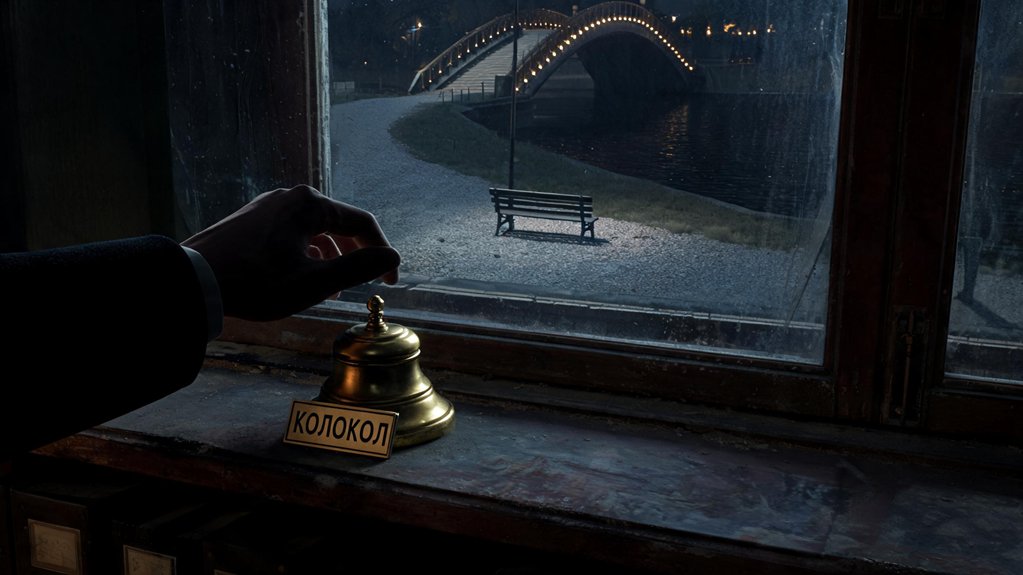
Cherkashin’s unwitting buffer bought the KGB time, but time alone couldn’t outrun FBI surveillance—so Moscow Center tore the human element out of the equation entirely.
They replaced face-to-face tradecraft with a sterile geography of signals and drops scattered through northern Virginia’s leafy sprawl. Codenamed “Bridge,” “Water,” and “Ground,” these sites became the backbone of Ames’ contactless routine; a chalk mark on a fence post told him to retrieve a stash, while a pebble near a culvert signaled danger.
Each location was pre-surveyed for sightlines and foot traffic, chosen so a parked sedan or a lone jogger wouldn’t trigger suspicion. Moscow Center’s case officers never shook Ames’ hand—they simply left his payment and taskings sealed in plant pots or beneath railway ties.
Third-Country Extraction: Directorate K’s Offshore Rendezvous Network
By 1989, KGB handlers had all but vanished from Washington’s streets, steering Kolokol’s debriefings onto neutral ground in Rome and Vienna, where FBI surveillance couldn’t follow.
Directorate K’s mobile teams flew in as transient operatives, bypassing the residentura’s bureaucratic machinery and leaving no local paper trail for counterintelligence to trace.
Each rendezvous unfolded under sterile counter-surveillance, turning European capitals into a hidden stage for the decade’s most damaging intelligence harvest.
The Rome and Vienna Corridors: High-Stakes Handling Beyond FBI Reach
As the FBI’s domestic surveillance tightened around Soviet diplomats in Washington, the KGB recognized that even the most meticulous dead-drop routine couldn’t sustain high-stakes debriefings indefinitely. So they built a lifeline beyond American jurisdiction.
- Rome became the prime corridor—a chaotic, tourist-choked arena where KGB travel officers could flush tails using mirror-glass vans and split-second Metro swaps.
- Vienna offered a permissive escape valve, exploiting Austria’s neutral diplomatic elasticity to stage “accidental” street collisions that passed off encrypted taskings as pocket litter.
- Each rendezvous followed a rigid script: pre-arranged signal, sterile hotel lobby, and a two-driver relay with no direct visual contact until the final ten seconds.
- Ames received no physical documents—only verbal recall and coded memory triggers, ensuring nothing tied him to Soviet handlers.
It was handling by designed detachment—ruthless, efficient, and invisible.
Directorate K Mobile Teams: Bypassing Local Rezidentura Machinery
Every Directorate K mobile team operated as a sovereign unit, answerable only to Moscow Center and utterly divorced from the local rezidentura’s administrative weight. They landed in Rome or Vienna with forged identities, sterile comms, and a single mission: debrief Kolokol without triggering embassy chatter. No local officer knew the timetable, the safehouse coordinates, or even the target’s existence.
| Element | Protocol |
|---|---|
| Travel | Commercial flights, rotated aliases |
| Signal | Pre-set chalk marks, no radio traffic |
| Meeting | 72-hour surveillance counter-loop |
| Exit | Split routes, separate border crossings |
The teams exploited diplomatic blind spots, scheduling briefs during national holidays to stretch FBI resources thin. They never filed cables through host stations, instead burning memory-only reports upon return. That insulation kept Ames’s identity locked inside a Kremlin vault—untouched by rezidentura leaks, desk gossip, or Langley’s tracing.
Active Disinformation Maneuvers: Nurturing the CIA’s Technical Bug Theory
Directorate K didn’t just sit back and hope the CIA would chase dead ends—they built the labyrinth. They weaponized ambiguity, feeding Washington’s obsession with hardware over humanity. Every leak, every corpse, felt like a radio signal, not a betrayal.
The deception demanded precision:
- Fabricated attribution: Reports from Kolokol were rewritten as “intercepts,” nudging analysts toward signals intelligence.
- Staged discoveries: Some arrests mimicked accidental finds, complete with planted evidence of bugs.
- Mock vulnerability: They leaked false chatter about comm gear weaknesses, reinforcing CIA’s paranoia.
- Timed roll-ups: Arrests were spaced to suggest a surveillance sweep, not a mole hunt.
The 1991 Archival Lockdown: SVR Continuity and the Shielding of Primakov’s Asset
The KGB’s deception campaign didn’t survive the Soviet Union’s collapse by accident—it was deliberately engineered to outlive its creator. As the USSR dissolved in 1991, Yevgeny Primakov’s SVR inherited a fortress built around Ames. They slammed the archive doors shut.
His cryptonym file, sequestered from Yasenevo’s central registry, never migrated to the chaotic new archival networks. That’s the key move—operational continuity demanded total archival isolation. Primakov’s people understood that a single misfiled dispatch could unravel a decade of tradecraft.
They shielded Kolokol by keeping his material paper-only, locked in a leadership safe, away from reformist eyes and Western liaison officers sniffing for defectors. They didn’t just preserve the asset; they preserved the myth that no mole existed. The lockdown guaranteed Ames’s next meeting in Bogota felt routine, not revolutionary.
For the SVR, the Cold War’s end was merely a paperwork problem—and they solved it by refusing to file anything.
Frequently Asked Questions
How Did the KGB First Verify Ames Wasn’t a CIA Plant?
The KGB didn’t take Ames’ word. They cross-referenced his initial disclosures—naming active CIA assets—against their own tightly-held investigation files. Directorate K’s validation hinged on this internal match, proving he possessed genuine, non-public intelligence.
Viktor Cherkashin isolated the material, and Moscow reasoned a plant wouldn’t have access to such exact, damaging specifics. That corroboration, not trust, confirmed he was a real penetration, not a provocation.
Why Was Ames’s File Kept From the Main Yasenevo Registry?
They kept Ames’s file out of the main Yasenevo registry to sever any bureaucratic trail. That archive’s cross-referencing could expose his cryptonym to analysts who’d connect his disclosures to a mole hunt.
By locking it in Directorate K’s private safe, they guaranteed only Kryuchkov and one handler ever saw it, shrinking the leak risk to zero.
It’s a ruthless firewall protecting Moscow’s most valuable asset.
What False Sourcing Was Used to Disguise His Raw Intelligence Documents?
Why risk exposing a mole’s raw paperwork to analysts who might connect the dots?
The KGB didn’t—they stripped all CIA dispatch headings, paraphrased every report, and falsely attributed the intelligence to technical intercepts, diplomatic eavesdropping, or fictional European sub-sources.
This sanitization guaranteed Langley saw nothing familiar, forcing them to chase ghosts while Kolokol’s true origin stayed buried deep in Yasenevo’s shadows.
How Did Staged Arrests Mimic Technical Surveillance Rather Than Human Betrayal?
They staged arrests to sell a story. The KGB delayed some roll-ups and then framed others as hits from technical surveillance—planted bugs, intercepted signals, or compromised gear—rather than a mole’s betrayal.
This manufactured timeline forced the CIA to chase phantom penetrations, burying Ames deeper while Moscow bought years of clean access. It’s deception with a purpose.
Did Unwitting Diplomat Chuvakhin Ever Discover His True Cut-Out Role?
No, Chuvakhin never cracked the code. The KGB’s strict compartmentalization kept him a true cut-out, an unwitting messenger. He handled routine exchanges, thinking he was a standard diplomatic courier, never knowing the source was Ames.
Could he have suspected more? Possibly, but his unbriefed status meant he lacked the context to piece it together. Moscow’s design worked flawlessly, ensuring the operation’s secrecy remained intact.
Final Thoughts
For nearly a decade, Ames slipped through Langley’s fingers like smoke, a ghost hidden in plain sight. The KGB’s obsessive sanitization at Yasenevo turned every tracing effort into a dead end, their staged chaos a perfect magician’s misdirection. He wasn’t just protected—he was erased. By 1991, the archive lock sealed his legend, leaving the CIA to chase wind while Moscow’s bell tolled on.