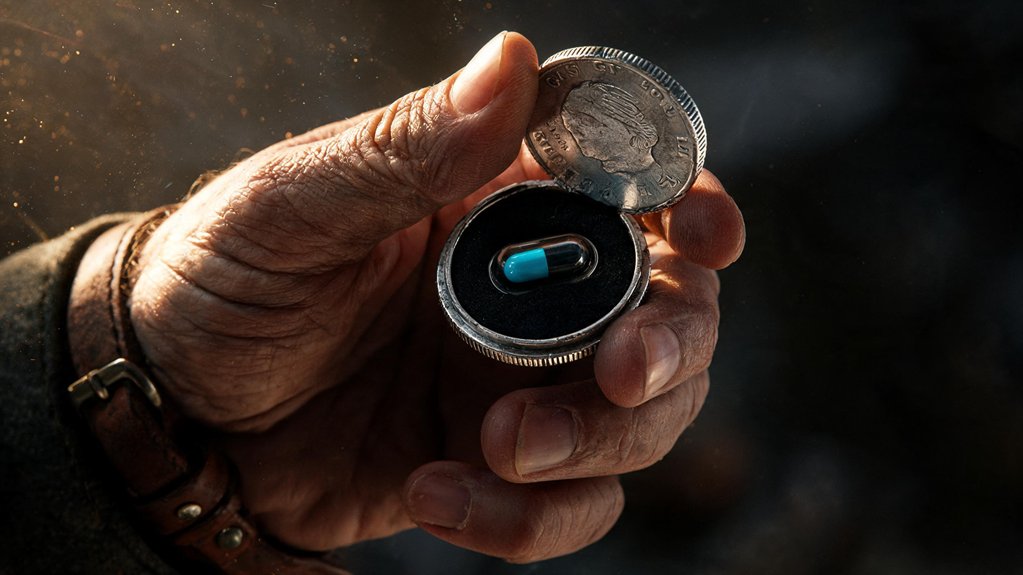
Francis Gary Powers’ U-2 fell to an SA-2 over Sverdlovsk on May 1, 1960, yet he lived. He carried a CIA suicide pill inside a silver dollar but didn’t use it—shattering the Agency’s expendability doctrine. Soviet interrogators exploited that choice, exposing the fabricated weather balloon cover story. Khrushchev sprang his trap, derailing the Paris Summit and forcing Washington to scrap lethal contingency protocols. Powers’ defiance rewrote CIA training, but secrets of that mission surface later.
Key Takeaways
- The CIA designed a lethal L-pill concealed inside a hollowed silver dollar.
- Powers carried the suicide device but chose not to use it upon capture.
- His refusal exposed flaws in the CIA’s expendability doctrine.
- The L-pill was engineered to survive altitude shock, and Powers’s kit survived intact.
- Powers’s survival prompted the CIA to eliminate the L-pill from standard U-2 kits.
Operation GRAND SLAM: The May 1 Incursion and Washington’s Fatal Miscalculation
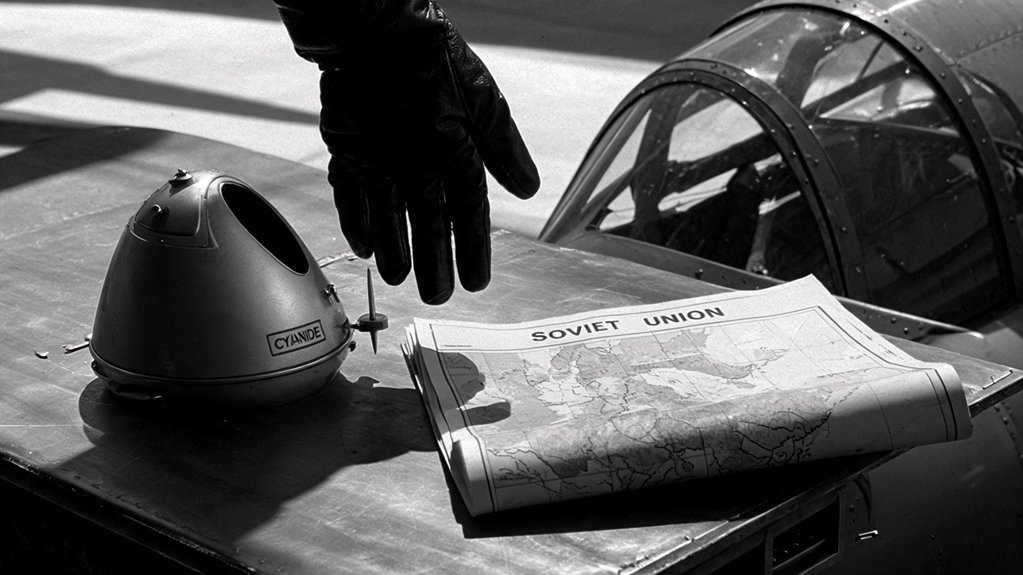
Washington’s fatal miscalculation on May 1, 1960, began with a deadly assumption: that Francis Gary Powers would never live to talk.
The 1960 U-2 incident timeline reveals a deeper complacency. CIA planners trusted the l-pill protocol as their ultimate failsafe, believing a captured pilot wouldn’t hesitate to self-terminate. They never factored in Powers’s defiance.
That refusal shattered their operational logic, handing Moscow a living trophy. Soviet propagandists swiftly weaponized his survival, launching a Soviet propaganda campaign that dissected American intentions.
His defiance handed Moscow a trophy, exposing altitude as arrogance and turning survival into catastrophe.
They probed the psychology of treason, painting Powers as a mercenary abandoned by his handlers. This narrative exposed American operational arrogance—Washington’s hubris that altitude and technology rendered them untouchable.
Instead, they empowered their adversary, ultimately transforming a pilot’s personal choice into a geopolitical catastrophe.
Severing the Stratosphere: The SA-2 Missile Strike at 70,000 Feet Over Sverdlovsk
Though Soviet air defenses had repeatedly failed to reach the U-2’s cruising altitude, the SA-2 site near Sverdlovsk finally cracked that sky on May 1, 1960. The blast sheared the wings, sending the U-2 spy plane wreckage into Soviet farmland.
Powers survived, ejecting before impact and landing alive, a fact that shifted the mission’s calculus. KGB interrogation records revealed his shock, but also his disciplined evasion, a demonstration of cold war espionage tactics.
Investigators recovered the fragmented aircraft, confirming the SA-2’s proximity-fused warhead. This wreckage became key evidence for the Francis Gary Powers trial, where Moscow showcased American technological intrusion.
Yet the most explosive secret didn’t surface in the courtroom: the CIA lethal contingencies, including the silver dollar pin, remained undiscussed, awaiting later revelation.
The Poison Pin Protocol: Rejecting the CIA Lethal Contingency at the Edge of Space

Langley’s engineers concealed the lethal L-pill inside a hollowed silver dollar, a coin designed to look innocuous yet deliver instant death with a single pinch.
Powers carried that device into the stratosphere, but when his U-2 came apart over Sverdlovsk, he didn’t reach for it—he chose survival over the agency’s expendability doctrine.
That refusal, a quiet act of defiance, exposed the psychological breach at the heart of the CIA’s contingency planning.
Engineering the Silver Dollar Suicide Device
When the CIA engineered the silver dollar suicide device for its U-2 pilots, it crafted a lethal contingency as discreet as it was unforgiving—a hollowed-out coin fitted with a spring-loaded pin and a tiny capsule of the L-pill’s fast-acting poison, meant to be crushed between the teeth for near-instant death at the edge of space.
Declassified reconnaissance files show Project Aquatone intelligence designed the spring to survive altitude shock, and it didn’t fail. At the Sverdlovsk crash site, Powers’ kit survived—minus the coin, sealing his pilot suicide pill refusal.
The Eisenhower administration cover-up wasn’t complete; it hid the device’s fatal flaw: accidental trigger on impact. Engineering ambiguity made it deadly to pilot and mission alike. That perfection never mattered; he refused it.
The Psychological Breach of Langley’s Expendability Doctrine
Because Powers refused the silver dollar’s lethal bite, the CIA’s expendability doctrine—which treated a downed U-2 pilot as a self-erasing asset—suffered a psychological breach that no internal review could mend.
The Poison Pin Protocol assumed a pilot would accept death to protect the mission. Powers’s choice revealed that the Agency’s cold calculus ignored a fundamental variable: the will to live.
Suddenly, every agent understood that their handlers viewed them as interchangeable, disposable tools. That realization corroded trust from within.
Langley couldn’t court-martial a man for choosing survival, nor could it reissue a directive that demanded suicide with confidence.
The breach wasn’t operational; it was existential. The doctrine’s architects had built a machine that forgot the pilot was human.
The damage was permanent.
Fabricating Flight 4154: The Eisenhower Administration’s Disastrous Weather Balloon Alibi
The Eisenhower administration’s cover story—the fabricated “Flight 4154” weather balloon mission—couldn’t survive its first public test, and the unraveling alibi handed the Soviets a propaganda weapon far more damaging than the U-2 itself.
NASA’s initial press release described a missing balloon tracking weather patterns, but the Soviets’ careful recovery of Powers’ wreckage told a different tale. They identified the camera, the autopilot, the high-altitude suit.
The balloon claim contradicted physical evidence. Agency officials tried to patch the story, insisting the U-2’s mission involved atmospheric sampling, yet each correction deepened the contradiction.
The world’s press compared the administration to a bumbling magician revealing his trick. Eisenhower’s credibility suffered irreparable damage, convincing Khrushchev’s team that Washington couldn’t manage a simple deception before the entire world stage.
Springing the Trap: Khrushchev’s May 5 Orchestration of the Cover-Up Collapse

Khrushchev’s May 5 gambit withholds the pilot entirely, letting Washington’s weather balloon alibi harden into a public lie.
He springs the trap on May 7 by producing Powers alive, shredding Eisenhower’s fabricated press briefings with a single photographic and physical witness.
That’s the moment the cover-up collapses, turning the suicide pill secret into proof of American operational arrogance.
Withholding the Pilot: A Masterclass in Geopolitical Sabotage
By withholding the single most explosive fact—that Francis Gary Powers had survived the U-2’s downing—Nikita Khrushchev calmly laid the groundwork for a geopolitical ambush, and on May 5 he sprang it with devastating precision.
He strategically let Washington believe the pilot was dead. That false comfort forced President Eisenhower into clumsy denials and fabricated cover stories. The Soviets simply watched, cataloging every lie.
Khrushchev’s silence created a trap no one could escape. Here’s what made the tactic so devastating:
- He weaponized the smoke screen, using America’s own falsehoods against them.
- He framed the incident as a Soviet triumph, never revealing his ace until the perfect moment.
- He exposed U.S. intelligence as arrogant, having bet on a dead pilot to bury the truth.
The May 7 Reveal: Weaponizing Washington’s Fabricated Press Briefings
Once Washington had spent four frantic days forcing a fabricated “weather research aircraft” story into every broadcast and press briefing, Khrushchev sprang his trap on May 7.
He revealed the intact U-2 wreckage, the pilot’s survival gear, and Powers himself—alive, confessing.
Every lie Washington broadcast now boomeranged. The Soviets weaponized those transcripts, showing the world America’s arrogance.
Powers’ refusal to take the CIA’s L-pill handed Khrushchev the ultimate propaganda coup of the Cold War: proof that even America’s own spies wouldn’t trust their government’s suicide solution.
Washington’s cover-up collapsed, its credibility shredded. The press briefings, once tools of control, became evidence of betrayal.
Khrushchev didn’t just expose a spy flight; he exposed the machinery of deception, turning Washington’s own words into a global indictment.
Lubyanka’s Prize: The KGB Interrogation and the Anatomy of an Operational Compromise
Because the U-2’s wreckage and its living pilot both fell into Soviet hands intact, the KGB’s interrogation of Francis Gary Powers at Lubyanka became an anatomy lesson in operational compromise—a chance to dissect not just one failed mission, but the entire CIA apparatus that had sent him into Soviet airspace.
- The crash site yielded the camera, the maps, and the silver dollar concealing the lethal L-pill—proof of assassination technology designed for capture.
- Powers’ own survival instinct, his refusal to bite down, gave interrogators a psychological lever: he’d already betrayed his mission’s final order.
- Each evasion and half-truth from the pilot mapped the CIA’s training gaps, revealing exactly where operational discipline failed under real pressure.
It exposed every flaw. And the Soviets savored each one.
The Psychology of Treason: Exploiting the Survival Instinct as Capitalist Cowardice

Though he’d survived the crash, Powers’ refusal to bite down on the L-pill handed Soviet propagandists a sharper weapon than any recovered camera—proof, in their telling, that capitalism’s promise of individual self-preservation trumped every ideological imperative to die for one’s country.
Psychologists in Moscow framed his choice as a clinical confession: the Western agent valued his own skin over the mission’s sanctity. They dissected his debriefings, extracting every hesitation, every private fear, and recast them as evidence of a rotting system.
Survival, they argued, wasn’t instinct—it was treason dressed as pragmatism. By choosing life, Powers validated their Marxist lens, exposing the CIA’s hired hand as a coward whose loyalty ended where his pulse began.
The Kremlin’s narrative didn’t need his confession; his breathing body convicted American resolve.
The August 1960 Show Trial: Theater and Subversion in the Hall of Columns
Prosecutors dragged the mangled U-2 wreckage into the Hall of Columns, turning its twisted metal into state evidence against Washington.
Roman Rudenko’s indictment didn’t merely accuse Powers—it weaponized the debris to expose capitalist cowardice.
The show trial’s staging made every rivet and wire broadcast American arrogance.
Broadcasting the Wreckage: The U-2 Artifacts as State Evidence
As the August 1960 show trial opened in the Hall of Columns, Soviet officials didn’t just enter the U-2 wreckage into evidence—they transformed every twisted component into a broadcast artifact, arranging the debris so the world’s press could photograph America’s technological arrogance in ruins; and with Powers alive in the defendant’s cage, his refusal to swallow the CIA-issued L-pill turned the pilot himself into the most damning exhibit of all.
Exhibit tables groaned under scorched instruments and ripped camera mounts, each piece choreographed for narrative impact. Experts narrated every fragment’s journey from altitude to exhibit.
- The altimeter’s shattered face read 68,000 feet—proof of deliberate intrusion.
- Unrecovered film canisters, allegedly jettisoned, testified to espionage’s deception.
- The intact ejection seat framed Powers’ cowardice against his survival.
Prosecutorial Theater: Roman Rudenko’s Indictment of American Arrogance
Inside the Hall of Columns, Roman Rudenko transformed the docket into a stage, and Francis Gary Powers’ refusal to swallow the CIA-issued L-pill became the lead exhibit in a sweeping indictment of American arrogance.
Rudenko didn’t just prosecute; he performed. He painted Powers as a tool of a reckless empire, its spy flights betraying nuclear brinkmanship. The L-pill, he argued, proved Washington meant to erase its failures with poison.
Each exhibit comprised a calculated act in a courtroom drama aimed not at justice but at global opinion. Powers’ calm testimony threatened the script, undercutting the caricature. But Rudenko pressed on, hammering the point that America’s arrogance assumed it could violate Soviet skies without any consequence.
The verdict was predetermined, yet the theater mattered more.
Scorching the Paris Summit: How a Single Captive Fractured Global Diplomacy

While the wreckage of Francis Gary Powers’ U-2 smoldered deep in Soviet territory, his choice to swallow his pride rather than the CIA’s lethal L-pill didn’t merely keep him alive—it handed Nikita Khrushchev a propaganda trophy powerful enough to scorch the Paris Summit before a single handshake.
- First, Khrushchev demanded a public apology from Eisenhower, using Powers’ survival to prove U.S. espionage wasn’t an accident but, rather, deliberate state policy.
- Next, Eisenhower refused to grovel, so Khrushchev stormed out of the summit, canceling all talks on nuclear disarmament and Berlin.
- Finally, the captive’s existence transformed a diplomatic spat into a Cold War rupture, leaving both superpowers utterly weaponless in dialogue.
Détente’s fragile architecture crumbled overnight; one pilot’s choice undid the years of careful diplomacy.
Dissecting the Article 360 Wreckage: The Unprecedented Soviet Intelligence Haul
Khrushchev’s diplomatic walkout hardly satisfied the Soviet technicians who spent months picking through the shattered frame of Article 360, Powers’ U-2, and they unearthed a trove that redefined Cold War espionage.
The debris wasn’t just twisted metal. Technicians recovered the high-resolution camera, its film intact, revealing Soviet missile sites with startling clarity.
From twisted debris, a recovered camera revealed Soviet missile sites in startling clarity.
They extracted the advanced electronics—the jammer, radio altimeter, and guidance package. Most critically, they found the poisoned needle hidden in the silver dollar, definitive proof of the CIA’s lethal contingency plan.
Every component demonstrated American technological superiority and operational arrogance. The Soviets cataloged and reverse-engineered each piece, carefully crafting countermeasures.
Powers’ survival turned that crash site into a true strategic goldmine, handing Moscow a complete picture of America’s most secret reconnaissance program.
The Expendability Paradox: How the Powers Paradigm Rewrote CIA Lethal Contingency Protocols

Because Powers’ refusal to swallow the L-pill transformed him from a neat, silenced statistic into a living Soviet trophy, the CIA’s lethal contingency doctrine didn’t survive contact with its own expendability paradox: a capsule meant to render an agent disposable instead turned his capture into a propaganda superweapon.
So Langley scrapped the suicide-first model and rewrote protocols for a pilot who wouldn’t die. The agency reshaped everything. Lethal autarky gave way to pragmatic triage.
- Standard U-2 kits dropped the L-pill entirely, adding counterfeit currency and forged transit papers instead.
- Survival training now instructed pilots to endure interrogation, trading silence for time and confusing Soviet narratives.
- Langley’s bureaucracy finally conceded that a dead agent forfeits all leverage, while a living one retains significant negotiating value.
Frequently Asked Questions
Was the L-Pill Ever Tested on Human Subjects?
The L-pill didn’t undergo human trials. Investigators confirm the CIA tested its shellfish-derived toxin exclusively on animals, gauging lethality.
No declassified document shows sanctioned human testing. Agents received the pill with assurances of near-instant death, yet its effectiveness on humans remained purely theoretical.
Powers’s survival forced the agency to confront this grim gap. The pill’s secret stayed untested on human subjects, a frightening unknown for those assigned to carry it.
Did Powers Know the U-2 Could Be Shot Down?
Yes, Powers knew the U-2 was vulnerable, though the CIA assured him its 70,000-foot ceiling made interception impossible. That assurance proved tragically wrong.
Soviet SA-2 missiles had secretly extended their reach, and Powers understood the moment his aircraft shuddered that the unthinkable had become reality.
He’d trained for evasion, but survival meant confronting the mission’s fundamental lie. For him, the theoretical risk had always been there; yet he flew anyway.
How Did the CIA Brief Powers on Capture Protocol?
CIA briefers told Powers that capture likely meant no rescue. They issued the L-pill, a cyanide capsule, as a final safeguard for U-2 secrets.
Briefers called it a personal choice but implied patriotic duty. They didn’t order him directly; the protocol’s logic demanded death over disclosure.
Agents demonstrated its use, warning of Soviet interrogation’s brutality. They left him with the unspoken expectation that he’d swallow it if ever captured alive.
What Happened to Powers’ Family During His Trial?
His family endured intense government surveillance and public suspicion. FBI agents repeatedly interrogated his wife, Barbara, while neighbors shunned his parents.
They received no official support, struggling financially as the CIA distanced itself. The trial’s propaganda amplified their isolation, turning them into collateral damage.
They couldn’t defend him publicly, trapped by secrecy and the unresolved question of his survival.
Did the U-2 Mission Have a Designated Escape Route?
The U-2 mission lacks a true escape route. It relies on altitude and secrecy, not contingency extraction.
The flight path enters Soviet airspace from Peshawar, crossing toward Norway, but pilots receive survival gear only. Powers’ wreckage proves the plan’s flaw—a direct hit leaves no corridor.
The CIA expects a clean overflight, not an opportunity to flee, so no designated exit really exists. It’s a one-way ticket disguised as a reconnaissance.
Final Thoughts
Powers’ dangerous pick, preferring life over lethal loyalty, poignantly punctured Washington’s pristine posture. His refusal, not wreckage, reshaped the rivalry’s rhetoric, redefining reconnaissance’s real risks. The Kremlin’s cunning case caught the CIA’s cold calculus, forcing frantic fixes to fatal fail-safes. Ultimately, his humanity humbled a superpower’s hubris, proving propaganda’s power outweighs any pilot’s payload. That haunting hostage narrative still echoes, a stark, sobering souvenir of espionage’s starkest sacrifice.