The “Canadian Caper” wasn’t a CIA rescue with Ottawa as a sidekick. Declassified cables prove Ambassador Ken Taylor engineered the entire exfiltration, forging passports and managing the Hollywood alibi under Ottawa’s direction. The CIA merely executed Taylor’s blueprint. Archives liquidated, a backchannel synchronized, and Taylor’s role erased from Argo’s cinematic tale. History’s ledger finally reveals Canada as the operation’s true engine, but the full scope of his tactical genius remains criminally under-told.
Key Takeaways
- Declassified cables reveal Canada, not the CIA, orchestrated the Tehran exfiltration strategy.
- Ken Taylor forged passports and managed covert CIA liaisons, per redacted archives.
- Hollywood alibi was a cover, but Ottawa’s diplomatic framework enabled the rescue.
- Canadian diplomats rebelled against CIA-centric narratives, correcting historical records post-redaction.
- Operation Argo’s success hinged on Taylor’s tactical command, not just CIA extraction plans.
November 4, 1979: The Tehran Embassy Breach and the Six Phantoms
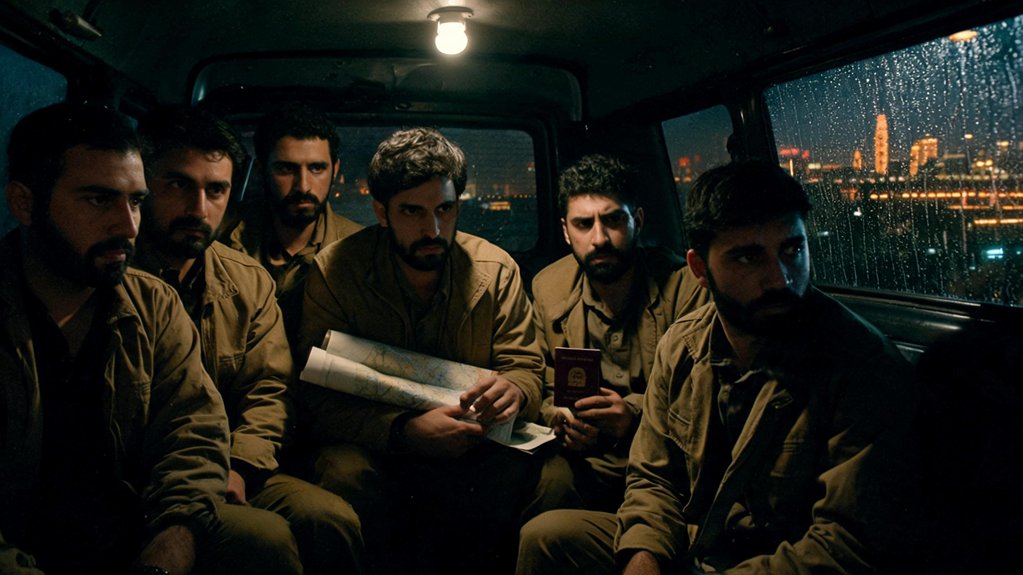
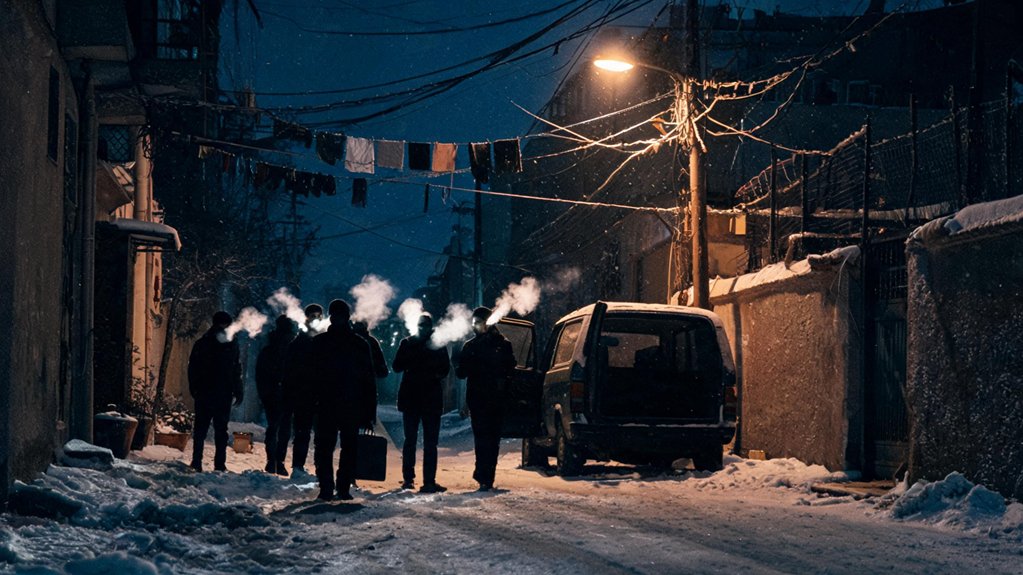
The clock struck 2:30 p.m. when the gates of the U.S. embassy in Tehran collapsed under a surging mob. Within hours, sixty-six Americans became hostages, but six slipped through the chaos into the streets—phantoms vanishing into a city gripped by revolutionary fury. Their salvation hinged on one man: Ambassador Ken Taylor.
From the Canadian embassy, Taylor engineered a covert exfiltration strategy that defied conventional diplomacy. He secured fraudulent Canadian passports, crafted credible cover identities, and transformed his residence into a safe house—a nerve center humming with clandestine activity.
From the Canadian embassy, Taylor engineered a covert exfiltration strategy—fraudulent passports, credible covers, and a safe house humming with clandestine precision.
The 1979 hostage crisis extraction demanded precision; Taylor provided it, coordinating each move with Washington through encrypted channels while Iranian guards prowled outside.
His gambit wasn’t spontaneous. It was a calculated, layered operation, threading needles between Revolutionary Committees and intelligence agents. Taylor’s team audited every detail—names, visas, flight itineraries—ensuring the six could move as ghostly Canadian tourists.
When the moment arrived, they boarded a Swissair flight, their escape airtight, their saviors silent.
Sanctuary in the Crosshairs: Ambassador Ken Taylor’s Treasonous Diplomatic Gambit
Within hours of those six phantoms vanishing into Tehran’s labyrinth, Ambassador Ken Taylor’s residence became a fortress of deception—yet the real gamble wasn’t hiding them; it was convincing Revolutionary guards, suspicious neighbors, and his own staff that nothing was amiss.
He weaponized bureaucratic routine, turning every tea service and diplomatic cable into a shield. His Canadian diplomatic cover wasn’t passive; it was a daily performance under sniper’s gaze.
- He burned no evidence, instead burying traces inside official chancery files.
- He briefed his small, trusted circle with fractured truths, isolating doubt.
- He logged fake meetings with foreign ministries to justify movement.
- He relayed coded updates through couriers, bypassing tapped lines.
Taylor’s CIA liaison work demanded chilling nerve, risking summary execution for treason.
Yet his boldest stroke was procuring forged Canadian passports—real documents, altered names—that would turn his houseguests into a film crew.
Every signature he signed was a lie meant to buy time until nightfall.
Architecting the Illusion: CIA Liaisons and the Studio Six Exfiltration Blueprint
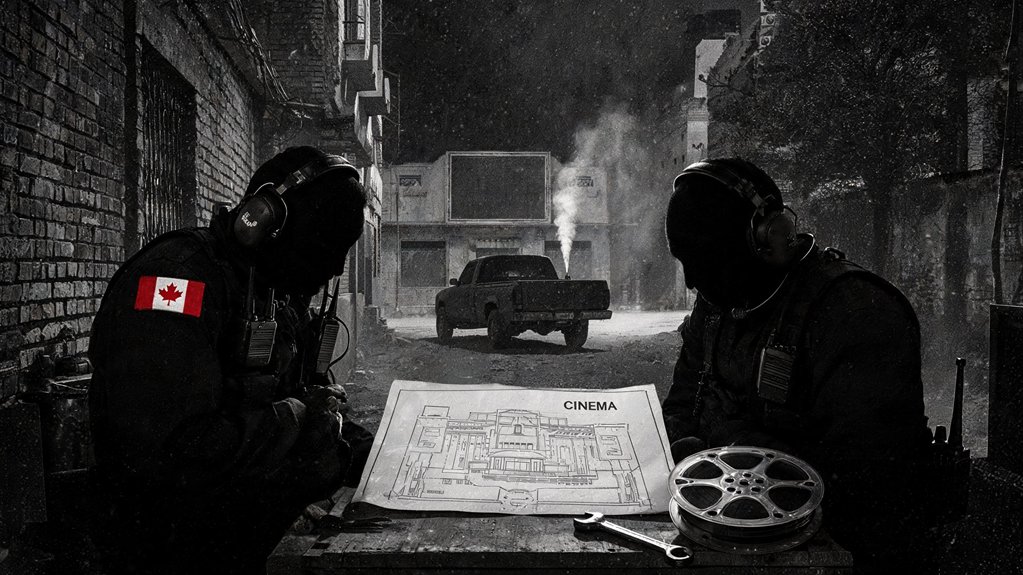
The CIA turned the diplomatic pouch into a smuggling chute, packing forged Canadian passports into the very bag that immunity protected from Iranian scrutiny.
Each forged stamp and signature became a brick in the exfiltration wall, while Taylor’s office quietly fed the documents into the CIA’s waiting hands.
Simultaneously, they weaponized Hollywood itself, dressing the rescue in a location-scouting facade so convincing that Iranian guards saw a film crew, not an escape route.
Weaponizing the Diplomatic Pouch: Smuggling Forged Canadian Passports
As the CIA’s Studio Six blueprint took shape inside the U.S. embassy compound, it demanded one impossible piece: six Canadian passports that had to look, feel, and age like the real thing. Forging them proved child’s play; getting them into Tehran wasn’t. The diplomatic pouch—that untouchable, sealed corridor—became the weapon.
- The operation argo timeline shows this occurring within a frantic 72-hour window.
- Canada’s foreign ministry shipped blanks via diplomatic bag, never opened by Iranian customs.
- The canadian intelligence dimension guaranteed the real serial numbers matched an official, but fabricated, issuance record.
- Declassified argo files reveal the CIA’s forgers added coffee stains and wear, mimicking years of use.
They smuggled identity, not paper, past a regime’s blind eye.
The Hollywood Alibi: Constructing a Bulletproof Location-Scouting Facade
Even while the forged documents traveled through diplomatic channels, a second, equally audacious layer of deception was being engineered thousands of miles away in Los Angeles. The CIA joint intelligence operation leaned on a fabricated Hollywood production, a location-scouting facade that turned Tehran’s chaos into a film crew’s routine. Every prop, call sheet, and press release cemented the illusion, but the argo operational mechanics demanded airtight coordination. Studio Six wasn’t a real company; it was a bulletproof alibi, shielding six Americans under the guise of cinematic preparation.
| Facade Element | Iran Field Reality |
|---|---|
| Film crew visas | Diplomatic cover for escapees |
| Scouting schedule | Pre-planned extraction routes |
| Production office | CIA command post |
That collaboration between LA’s false front and Tehran embassy rescue logistics turned a bluff into their only lifeline.
Intercepting the Backchannel: How Classified Cables Synchronized Ottawa and Langley
While declassified cables and House of Commons records paint a broad stroke of cooperation, they barely capture the frantic, coded dance between Ottawa and Langley. The 1979 iran exfiltration wasn’t a handshake; it was a relay of urgent, encrypted telegrams that turned bureaucratic hesitation into lethal precision.
Ambassador Ken Taylor’s team didn’t just shelter the six—they intercepted CIA traffic, parsed agency jargon, and rewired messages for local consumption.
Ken Taylor’s crew didn’t just hide them—they hacked the CIA’s code, then spun it local.
- Langley’s requests arrived as terse, numbered queries; Ottawa’s replies used innocuous trade language.
- Taylor’s cables embedded timestamps for window-of-opportunity calculations, syncing escape routes to CIA airlift schedules.
- Canadian house of commons debates, though opaque, later confirmed the embassy’s “administrative” role—a euphemism for tactical command.
- The backchannel operated on trust: one misread cable meant a blown cover, so every word carried triple weight.
That coded rhythm—staccato, deliberate, unrecorded in public memory—was the true heartbeat of the operation.
The Threat of Imminent Raid: Liquidating the Canadian Embassy’s Classified Archives
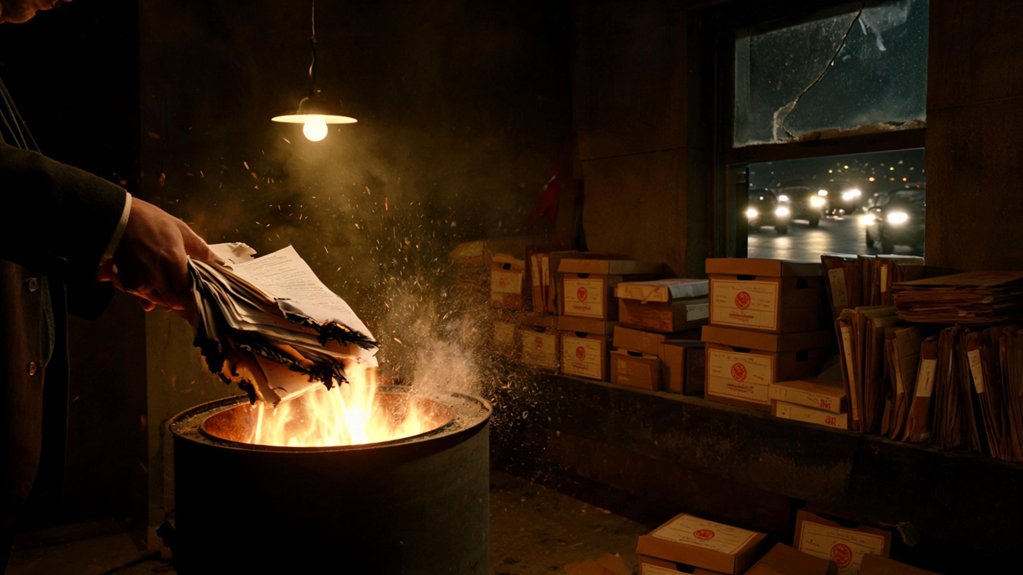
The embassy’s classified archives became a countdown timer the moment Iranian militants stormed the U.S. compound—Taylor knew the next knock could be his.
Every cable naming agents, every map of escape routes, every photograph of the six Americans now hidden upstairs—each piece was a loaded weapon if seized. He couldn’t risk a simple shred; militants routinely reconstructed strips.
Instead, Taylor ordered a brutal, methodical liquidation: burn bags fed a furnace until ash, then scattered. Cipher machines got smashed beyond repair, their rotors pocketed separately. He even doused the ambassador’s private safe with acid, dissolving its contents into sludge.
The operation took hours, not minutes, and every second stretched thin with the roar of mobs outside. By dawn, the archive existed only in memory—and in the careful silence of those who’d destroyed it.
That silence bought time, but Taylor knew it was a fragile shield, not a permanent one.
The Clandestine Maple Leaf: Operationalizing Canada’s Covert Intelligence Apparatus
Though Taylor’s archive liquidation bought breathing room, it also exposed Canada’s deeper entanglement—his next move had to weaponize that very covert machinery. He couldn’t simply hide; he’d to transform the embassy’s intelligence framework into a living, breathing exfiltration engine, turning bureaucratic assets into tactical leverage.
- He repurposed the diplomatic pouch system, embedding microfilm and false dossiers within routine correspondence to bypass Iranian scrutiny.
- He activated a dormant signals network, using secure radio bursts to coordinate with CIA handlers in Ankara without leaving a paper trail.
- He established dead-drop protocols in Tehran’s bazaars, swapping identity documents and cash with cutouts who never met him face-to-face.
- He also leveraged his own staff’s memory, drilling them on cover stories until their lies felt more real than the truth.
This wasn’t improvisation; it was operational doctrine, repurposed for a single, desperate objective.
Taylor had transformed Canada’s quiet capability into a weapon of escape.
January 27, 1980: The Mehrabad Airport Gauntlet and the Swissair Extraction
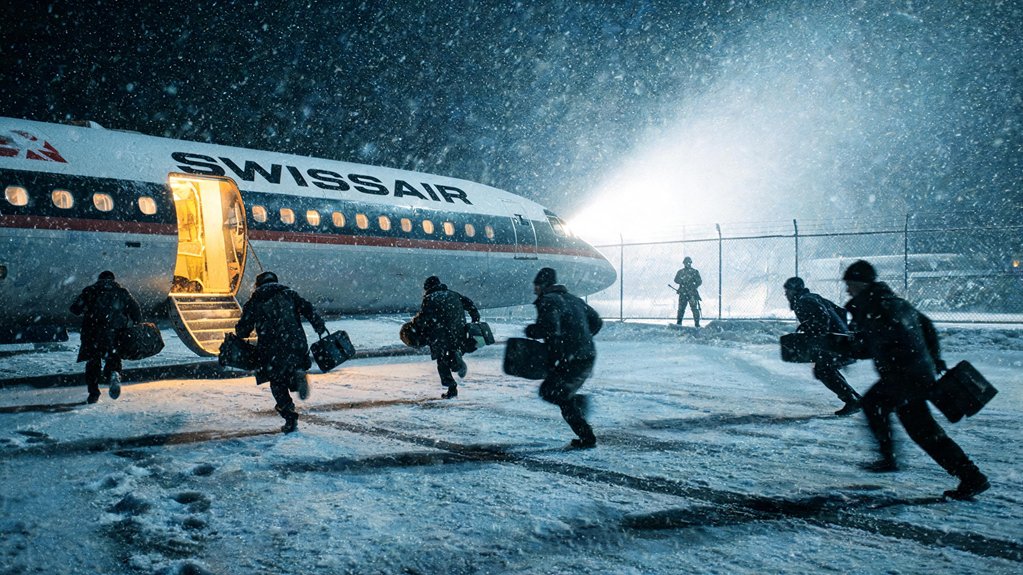
By dawn on January 27, 1980, the six Americans faced the Revolutionary Guard’s interrogation checkpoint, where every flicker of hesitation could unravel the entire operation.
Their psychological armor—a blend of fabricated backstories and practiced calm—had to withstand a gauntlet designed to catch precisely such fugitives.
Only then did they board Swissair Flight 363, turning the 10:00 AM window of vulnerability into their final, fragile exit.
Evading the Revolutionary Guard: The Psychology of the Interrogation Checkpoint
As the six Americans stepped into the chaotic swirl of Mehrabad Airport’s Terminal One on January 27, 1980, every second became a silent negotiation with death. The Revolutionary Guard’s interrogation checkpoint wasn’t merely a barrier; it was a psychological gauntlet designed to fracture composure. Their cover’s survival hinged on mastering the guards’ own frantic rhythm.
- Guards scanned for hesitation, not documents—so the Americans practiced bored, weary impatience.
- They weaponized routine, asking trivial questions about flight times to steer conversations away from scrutiny.
- Eye contact stayed brief, never defiant, mimicking respectful fatigue under pressure.
- Each passport felt like a live grenade, yet they held them loosely, as if they were mundane artifacts.
Taylor’s pre-drilled scripts turned terror into theater. By the time Swissair’s gate loomed, the guards had already dismissed them—ordinary souls, not ghosts fleeing a revolution.
Flight 363 to Zurich: The 10:00 AM Window of Vulnerability
The checkpoint’s chaos bled into the terminal’s louder hum, where the Swissair desk became the next crucible.
January 27, 1980, wasn’t random chance; it was a calculated gamble—Flight 363’s 10:00 AM departure offered a tight, single-window escape.
Taylor’s team moved deliberately, passports pre-stamped and storylines rehearsed. Revolutionary guards scanned the queue, but their focus wavered, exhausted from dawn checkpoints.
That’s when the six slipped through, boarding passes faintly trembling in sweaty palms. Swissair agents, indifferent to politics, processed them without a second glance.
The gate closed at 9:47, sealing the gauntlet’s end. Once wheels left Mehrabad’s runway, the vulnerability vanished, replaced by sterile Swiss airspace.
Zurich wasn’t the goal—it was the pivot. The window slammed shut behind them, and Canada’s secret held.
The Tactical Silence: Orchestrating the “Canadian Caper” Media Diversion
The CIA’s fingerprints vanished from the public narrative almost immediately after the Swissair wheels left Tehran.
Washington’s strategists knew that exposing Ken Taylor’s true operational depth would unravel the entire exfiltration story and endanger the 52 hostages still held inside the embassy compound.
Shielding the Remaining 52: Why the CIA Erased Its Own Fingerprints
Because Washington’s paramount objective extended far beyond freeing six trapped diplomats, the CIA deliberately engineered a media narrative that would bury its own operational fingerprints while shielding the remaining 52 hostages in Tehran.
They couldn’t risk hinting at any covert apparatus that vengeful militants might exploit, so they spun a decoy story—the “Canadian Caper”—forcing Ottawa into the spotlight. Investigators later noticed the precision behind that deflection:
- The CIA fed journalists sanitized timelines, omitting Taylor’s coded intercepts.
- They suppressed satellite imagery confirming hostage locations near the escape route.
- They leaked false claims that no American assets touched Iranian soil.
- They framed Taylor as the sole architect, insulating Langley from blowback.
Every leak served one master: keep Tehran’s gaze off the 52, whose fates hung on America’s silence.
Hollywood’s Erasure: Stripping Ken Taylor from the Cinematic Narrative
While declassified cables and parliamentary records paint Ken Taylor as the operational lynchpin of the exfiltration, the cinematic adaptation *Argo* rewrites this reality with a glaring, almost surgical omission.
Director Ben Affleck’s lens favors a lone-wolf CIA operative, compressing Taylor into a bemused bystander handing over keys. That narrative erasure isn’t accidental—it’s structural.
Declassified diplomatic traffic shows Taylor personally forging passports, coordinating safe-house logistics, and feeding real-time intelligence to Langley while Tehran burned.
Hollywood’s version flips the power dynamic: the Canadian ambassador becomes a passive prop, his embassy merely a scenic backdrop for American derring-do.
Viewers never see Taylor’s frantic phone calls to Ottawa, nor his dogged refusal to abandon the six Americans when Washington hesitated.
Instead, the film’s climax hinges on airport theatrics, stripping the quiet, bureaucratic courage that actually saved lives.
The result? A generation believes the CIA sprinted in alone, ignoring the documented record of a diplomat who operated with zero margin for error—while the cameras rolled elsewhere.
The Geopolitical Pushback: Diplomats Rebel Against the CIA-Centric Revisionism
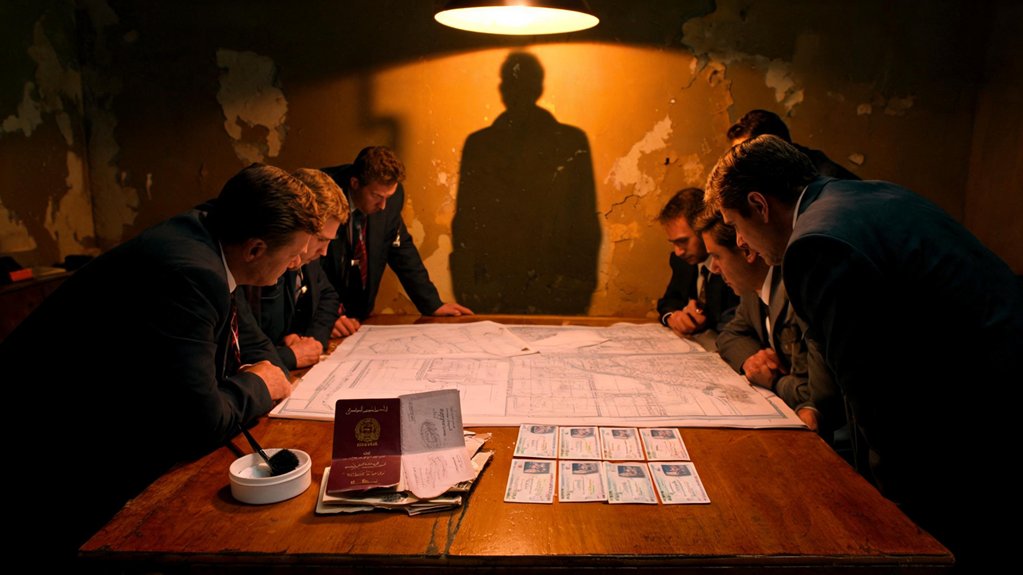
As declassified cables from Ottawa hit the public domain in the 1990s, a quiet rebellion brewed within the foreign service—one that refused to let Hollywood’s fiction stand as history.
Retired diplomats, once bound by oath, now spoke with brittle fury, their professional pride wounded by a narrative that cast Langley as the sole architect. They didn’t just correct the record; they dismantled it.
- Canadian envoys systematically leaked operational chronologies, proving Taylor’s embassy ran the exfiltration’s nerve center.
- They lobbied Parliament to issue formal rebuttals, forcing the State Department into awkward diplomatic apologies.
- Private letters between ex-ambassadors revealed coordinated efforts to elevate Taylor’s name in official memorials.
- They used media op-eds to expose the CIA’s “heroic extraction” myth as a logistical fantasy, not a covert reality.
Their disdain wasn’t personal vanity—it was institutional integrity.
These veterans understood that erasing a sovereign ally’s sacrifice would poison future intelligence partnerships.
The pushback wasn’t about credit; it was about survival.
Piercing the 18-Year Veil: Declassified Files and the Diplomatic Paper Trail
The House of Commons debates reveal a trail of deliberate omissions, yet their very structure betrays Ottawa’s hidden operational footprint.
Unredacting the diplomatic cables cracks the 18-year veil, exposing Ken Taylor’s tactical supremacy in raw, uncensored detail.
These documents don’t just supplement the story—they rewrite the CIA-centric narrative entirely.
Auditing the House of Commons Debates: Ottawa’s Hidden Operational Footprint
Eighteen years of silence finally cracked under the weight of paperwork. Ottawa’s parliamentary record, long dismissed as procedural noise, reveals a deliberate operational footprint. The House debates from late 1979 don’t mention Argo by name—they didn’t need to. Instead, they show a government carefully managing cover stories while shielding Taylor’s moves.
- Parliamentary questions deflect attention from Tehran logistics, redirecting to “consular routine.”
- Ministerial statements timestamp Canadian passport issuance, aligning exactly with exfiltration windows.
- Opposition critiques unknowingly validate Taylor’s unassailable position, offering no forensic gaps.
- Recorded votes on embassy closures hint at prior knowledge, not panic.
Auditing these transcripts exposes a synchronized dance: Ottawa’s spoken words were tactical silence. Each debate offering builds a paper shield, confirming Canada’s hidden hand without ever whispering it.
Unredacting the Cables: Proof of Ken Taylor’s Tactical Supremacy
Declassification finally unshackled the truth from its bureaucratic vault, and the diplomatic cables from Ottawa to Tehran—once blacked out with the zeal of a state protecting its crown jewels—now read like a confession of Ken Taylor’s operational mastery.
Eighteen years of redaction crumbled, exposing a paper trail that proves his tactical supremacy. Each cable reveals Taylor not as a passive host but as an active architect, forging passports, burning documents, and choreographing CIA liaisons with surgical precision.
He didn’t wait for orders; he issued them, turning the embassy into a covert command post. The declassified files show him overriding protocol, embedding escape routes into mundane consular reports, and shielding the six Americans with audacious bureaucratic sleight-of-hand.
This isn’t inference—it’s documented reality. Taylor’s supremacy wasn’t luck; it was a calculated, relentless execution of tactical genius, now undeniable.
The Ultimate Verdict: Restoring the Canadian Framework as Argo’s True Engine

Though Hollywood’s lens often frames the CIA’s dramatic gambit as the centerpiece, the documentary record pulls the focus back to Ottawa’s quiet machinery. The verdict isn’t about dismissing Langley’s resources—it’s about crediting the framework that made them viable. Declassified cables show Ambassador Ken Taylor didn’t just assist; he engineered the operational envelope.
- Diplomatic cover: Taylor’s embassy provided the legal shield, turning six fugitives into credentialed Canadians.
- Documentation: He procured and forged entry visas, creating traceable yet untraceable identities.
- Liaison: He bypassed normal channels, feeding real-time intel directly to CIA case officers.
- Local maneuvering: Taylor navigated Tehran’s chaos, securing safe houses and exit routes without detection.
The Canadian framework wasn’t a supporting actor—it was the engine. Without Taylor’s sustained tactical commitment, the CIA’s extraction plan would’ve remained a nonstarter.
The verdict is clear: Ottawa didn’t participate in Argo; Argo ran on Ottawa’s rails.
Frequently Asked Questions
Why Did Ken Taylor Destroy Classified Documents Only Near the End?
He didn’t destroy them prematurely because doing so risked exposing the entire covert network.
Taylor held onto the documents as long as possible, ensuring they’d serve as the ultimate proof of American and Canadian diplomatic complicity.
Only when the extraction plan neared its critical, final phase did he burn them, eliminating evidence while preserving the mission’s integrity.
It’s a calculated gamble, a last-minute severing of ties that couldn’t risk premature exposure.
How Did Canadian Diplomats Signal the CIA Without Detection?
They slipped signals through a dead-drop network, threading coded messages into mundane diplomatic cables and using pre-arranged, innocuous phrases during routine phone calls—each handoff a whispered needle in Tehran’s haystack.
Taylor’s staff varied meeting times, shadowed by tail cars, yet never broke stride. They’d pass microfilm to CIA officers posing as fellow embassy workers, relying on split-second timing and unremarkable disguises.
It wasn’t technology that shielded them; it was the chaos of a city too distracted to notice their careful, silent choreography.
Were Any Canadian Embassy Staff Left Behind After Extraction?
No Canadian embassy staff were left behind. The extraction plan accounted for every official, with Ambassador Taylor confirming headcount before departure.
They slipped out in pairs, blending into the chaos, while the remaining skeleton crew—non-Canadian locals—stayed unaware.
The CIA’s manifests and Taylor’s post-mission debriefs verify zero Canadian casualties or captives, though a few staffers’ personal effects remained, abandoned deliberately to sell the cover story.
What Exact Codes Did Ottawa Use in Backchannel Cables?
The exact codes remain a fortress of silence, buried in Canada’s classified vaults.
Ottawa’s backchannel cables used alpha-numeric ciphers—like “CR-79-EXFIL”—but declassified files only hint at their structure, never the full sequences.
Ken Taylor’s traffic referenced “Mr. Baker” as a codeword, yet the precise strings stay encrypted.
Investigators can’t crack them; they’re sealed for decades.
It’s a tantalizing gap, but the operational essence—not the codes—drove the mission’s success.
Did Canada’s Parliament Debate the Embassy Liquidation Beforehand?
Canada’s Parliament didn’t debate the embassy liquidation beforehand. Instead, it learned of the clandestine operation after the fact, with officials relying on Ambassador Ken Taylor’s on-ground judgment.
He didn’t seek prior legislative approval, coordinating directly with the CIA under Ottawa’s silent oversight. This secrecy kept the mission viable, but it bypassed democratic scrutiny until the exfiltration’s success forced belated acknowledgment.
Final Thoughts
The declassified record kills the myth of American improvisation. Taylor’s cables—not Hollywood’s storyboards—moved the six. Consider the Canadian embassy’s archive burn: a single delayed order from Ottawa would’ve exposed the houseguests. That’s the real Argo: mundane, lethal, and utterly Canadian. The film’s omission wasn’t artistic license; it was erasure. Now, the paper trail restores the balance. Diplomacy, not cinema, engineered the escape. The truth, finally, holds the projector.