
The CIA’s decade-long hunt for Osama bin Laden wasn’t a clean victory. It’s a story of catastrophic signal failures and coerced confessions that warped the chase. Officers like “Maya” endured paranoia and isolation, their obsession becoming a personal siege. The 2010 Peshawar intercept broke the case, yet the 38-minute strike left targeters psychologically shattered, not triumphant. The real demolition happened inside the operatives’ minds. The full toll is only now surfacing.
Key Takeaways
- CIA shifted from signals to human intelligence after Bin Laden evaded capture in 2001.
- Enhanced interrogations produced conflicting leads, undermining reliability and morale for years.
- A false 2005 confession from Abu Faraj al-Libi derailed the hunt for two critical years.
- A 2010 burner phone intercept exposed courier networks, ending a prolonged intelligence drought.
- Operation Neptune Spear proceeded on 40-60% confidence, prioritizing speed over certainty.
The December 2001 Blackout: Bin Laden’s Escape and the Total Failure of Signals Intelligence
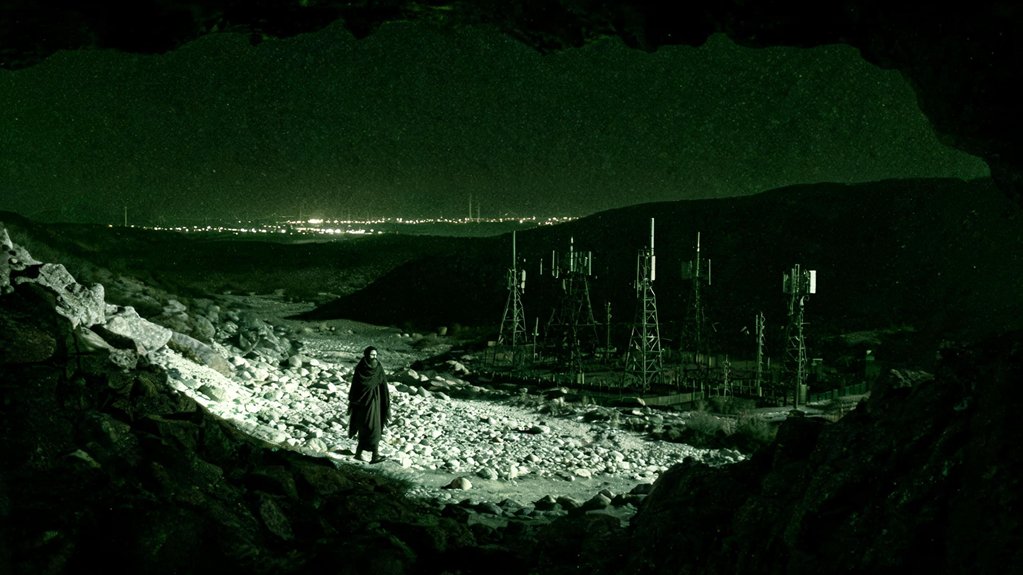
Though the CIA’s decade-long hunt for Osama Bin Laden officially hinges on courier networks, the entire effort almost died in a single, catastrophic month—December 2001—when signals intelligence went utterly dark. The Tora Bora bombardment raged, yet every intercepted whisper vanished; Bin Laden slipped into the tribal badlands, and the Agency’s ears went deaf.
The hunt nearly died in December 2001—signals went dark, whispers vanished, and Bin Laden slipped away.
This wasn’t just a technical lapse—it was a moral rupture. Analysts stared at silent feeds, knowing the next tip could come years later, if ever. The al-qaeda courier network became the sole thread, but even that appeared frayed.
Those grim weeks forced a brutal recalibration. Officers realized that electronic eavesdropping couldn’t be trusted; human assets and patient pattern-tracing held the only hope.
This hard lesson quietly steered every subsequent decision toward the abbottabad intelligence climax assuredly, but at a terrible cost. For nearly a decade, the psychological weight of that December blackout pressed on—each agent knowing one more silence could bury the trail forever.
Constructing the Analog Shield: Al-Qaeda’s Zero-Footprint Courier Doctrine
After 2001, al-Qaeda didn’t just hide from satellites—they systematically severed the digital uplink, banning electronic communications outright to starve the NSA of its most potent intercepts.
Instead, the network routed physical messages through a Peshawar bottleneck, laundering handwritten notes through the tribal belt where tribal loyalties proved more reliable than any encryption.
This zero-footprint courier doctrine didn’t just buy Bin Laden time; it forced the CIA into a decade of human guesswork, raising the uncomfortable question of whether America’s technological supremacy ever truly matched its enemy’s archaic cunning.
Severing the Digital Uplink: The Post-2001 Ban on Electronic Communications
Because a single unencrypted call or a stray email could unravel years of operational security, al-Qaeda’s leadership imposed a stark, absolute decree in the wake of the 2001 U.S. invasion of Afghanistan: sever the digital uplink entirely. No phones. No satellite links. Only human memory and handwritten notes moved through their worldcars. This zero-footprint doctrine forced couriers to memorize coordinates verbally, yet it didn’t protect everyone. The ban’s rigid enforcement created a psychological toll on operatives, isolated in silence, constantly fearing a slip.
| Digital Era (Pre-2001) | Analog Era (Post-2001) |
|---|---|
| Instant, traceable calls | Delayed, memorized routes |
| Global network exposure | Localized, human trust only |
That very paranoia fed the CIA’s breakthrough. A lone courier’s disciplined silence eventually led to the Abbottabad compound operation—where digital absence itself became the most damning signal.
The Peshawar Bottleneck: Laundering Physical Messages Through the Tribal Belt
While the digital ban suffocated al-Qaeda’s long-range coordination, it didn’t kill the need for messages—so the couriers turned Peshawar’s chaotic sprawl into a laundering machine for human-borne secrets.
The city’s teeming bazaars, shifting checkpoints, and tribal loyalties formed a perfect analog shield, stripping each note of its origin.
Abu Ahmed al-Kuwaiti, the man who’d eventually betray the mastermind, navigated this maze with ruthless discipline, personally carrying thumb drives through the Khyber Pass.
His covert operational mechanics demanded zero footprints: no phones, no signatures, only memory and dead drops.
Each handoff at a chai stall or mosque courtyard diluted the trail, making Western intercepts useless.
The CIA’s decade-long toll, then, wasn’t just technological—it was the grinding, patient work of breaking a system designed to erase its own existence.
Decrypting the Detainee Archipelago: The 2002-2004 Interrogation Discrepancies
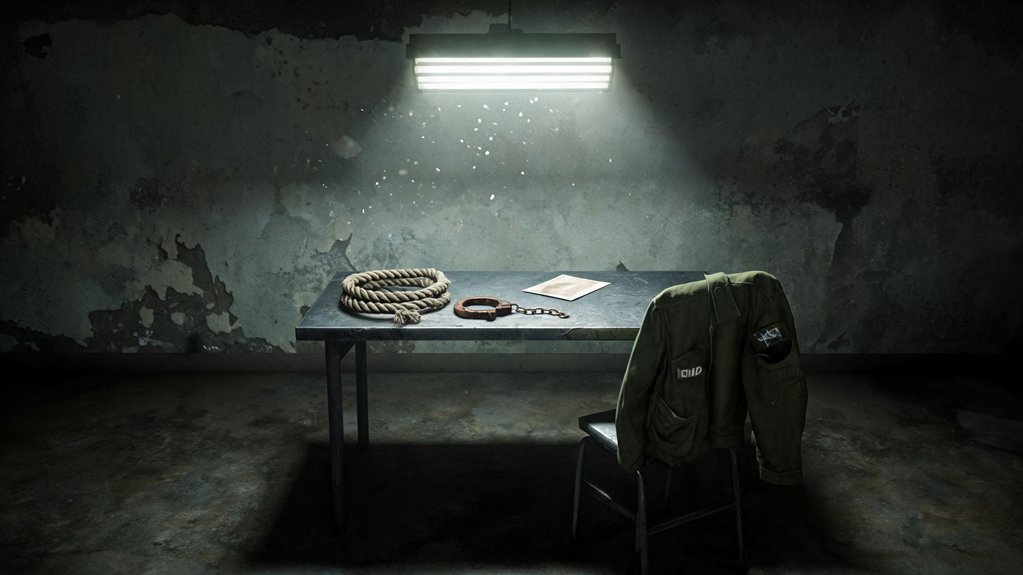
Although the intelligence trail that ultimately led to Abbottabad originated in the grim years following 9/11, the 2002–2004 period reveals a stark and often contradictory blueprint for how the CIA extracted information.
Decrypting the detainee archipelago exposes a network where enhanced techniques produced torrents of dubious confessions, often conflicting with classified CIA documents. These files, now partially declassified, show interrogators oscillating between brutal coercion and rapport-building, sometimes within the same black site.
Decrypting the detainee archipelago reveals interrogators swinging between brutality and rapport, birthing dubious confessions within the same black site.
The discrepancies aren’t mere administrative errors; they’re moral fractures. One detainee’s actionable lead on a courier, for instance, contradicts another’s fabricated tale under duress.
This chaotic parsing of pain and truth formed the messy foundation upon which the entire hunt precariously balanced. Officers held both a rubber hose and a psychological manual, never quite knowing which tool produced gold—or just tortured noise.
The archipelago’s legacy remains a haunting, unresolved ledger of what was sacrificed for a single name.
The Pathology of Obsession: Officer “Maya” and the Psychological Toll of a Decade-Long Phantom Hunt
Obsession doesn’t announce itself; it metastasizes quietly inside the fluorescent-lit warrens of Langley, and for Officer “Maya,” it became the sole architecture of her existence.
Her decade wasn’t a career—it was a siege. The psychological toll etched itself into her routines, her sleep, her very judgment.
Maya chased a phantom courier, a name whispered by detainees, and she refused to let it dissolve into bureaucratic memory. Colleagues saw her intensity as stubbornness; they didn’t see the cost.
Each dead end sharpened her paranoia, each briefing hardened her isolation. She didn’t just believe the trail led to Abbottabad—she *needed* it to.
That compulsion blurred the line between strategic insight and personal redemption.
When the target finally materialized, victory wasn’t catharsis; it was the end of purpose. The hunt had consumed her more completely than any adversary could.
What remains of Maya isn’t triumph—it’s the residue of a woman who traded her life for a confirmation.
Weaponizing the Black Sites: The 2004 Unmasking of the “Abu Ahmed” Pseudonym

The interrogation rooms of 2004 turned a single Kurdish utterance into a seismic shift, as Hasan Ghul’s capture cracked open the courier network’s shell and forced the name “Abu Ahmed” into the light.
Yet the CIA’s triumph curdled almost immediately, because Abu Faraj al-Libi’s deliberate misdirection—a crafted lie about the courier’s importance—sent the hunt spiraling down a false path for years.
That calculated sabotage didn’t just delay the inevitable; it weaponized the black sites themselves, turning the very tools of extraction into instruments of a deeper, more corrosive deception.
Hasan Ghul’s Kurdish Capture: The Single Utterance That Changed the Paradigm
Because American intelligence had spent three years chasing the same dead-end network of couriers, the capture of a single, mid-level al-Qaeda facilitator in early 2004 seemed at first like just another brick in an endless wall.
But Hasan Ghul’s Kurdish capture changed everything. Interrogated at a black site, Ghul broke under pressure—a name slipped out: Abu Ahmed al-Kuwaiti. That single utterance rewired the entire hunt.
CIA officer Maya seized on it, recognizing the pseudonym’s weight, yet she couldn’t verify it alone.
Ghul’s words weren’t just intelligence; they were a moral hinge. Maya’s decade-long obsession began here, born from a coerced confession—reliable but tainted.
The paradigm shifted, but at what cost? One man’s whispered name launched the longest, most corrosive manhunt in CIA history.
The Abu Faraj al-Libi Deception: Deliberate Sabotage of the Courier Profile
While Maya clung to the name Ghul had given her, the CIA’s black-site machinery churned out a far darker twist that nearly buried her lead. In 2004, analysts pushed a false portrait during the abu faraj al-libi deception, steering her courier hunt into a deliberate sabotage of the profile she’d built.
It wasn’t just an error; it was a calculated misdirection that weaponized interrogations to discredit the “Abu Ahmed” pseudonym.
- The false confession extracted under brutal conditions named a different courier, wasting two critical years.
- Maya’s resistance to that narrative caused her professional isolation, yet she kept digging.
- The eventual unraveling of al-Libi’s cover revealed a poison-tipped intelligence reconstruction meant to protect the real network.
Her persistence exposed how institutional pride nearly cost them Bin Laden.
The 2005–2009 Intelligence Drought and the Brink of Institutional Burnout
Despite the near-breakthroughs and fleeting threads of hope, the years from 2005 through 2009 turned into a barren, nerve-shredding stretch for the CIA’s core hunt team. This 2005–2009 intelligence drought wasn’t merely a dry spell; it was a deliberate collapse of momentum.
False leads, like the Abu Faraj al-Libi deception, twisted their focus into hardened obsessions that yielded nothing. Officers watched the cia manhunt timeline stretch forward into an abyss, with no verifiable courier thread to pull.
The moral weight grew unbearable—they interrogated, they profiled, they gambled on instincts that repeatedly came up empty. Institutional burnout became a quiet epidemic; seasoned analysts left, replaced by younger officers who inherited the trauma without the context.
The team’s collective memory thickened with failure, yet they couldn’t afford to abandon the search. Each dead end demanded they recalibrate their entire worldview, knowing the next lead might never come.
The hunt had become a test of endurance, not intellect—and the agency’s soul was fraying at the edges.
Intercepting the White Suzuki: The July 2010 Peshawar Signal Breakthrough

By July 2010, that white Suzuki’s burner SIM finally slipped, exposing a fatal crack in al-Qaeda’s tradecraft that years of drought couldn’t hide.
The CIA’s pivot from signals to physical surveillance meant tailing that courier right up to Abbottabad’s city limits, where the trail would test the moral weight of every choice made on the ground.
But what did it cost those who watched, knowing the next intercept might demand a strike before they understood the full picture?
Tracing the Burner SIM: A Fatal Slip in Al-Qaeda’s Tradecraft
The trail to Abbottabad didn’t begin with a satellite image or a drone strike—it began with a phone call in a dusty Peshawar street, where al-Qaeda’s most guarded secret finally cracked open.
That July 2010 intercept of the white Suzuki wasn’t just a lucky break; it exposed a fatal flaw in the courier’s tradecraft—a burner SIM he shouldn’t have used.
For bin Laden intelligence gathering, this was the hinge point.
- The SIM’s metadata revealed a rare, recurring contact pattern, not random placement.
- It linked the courier to a specific safehouse, breaking his operational anonymity.
- Alec Station targeters used this signal to validate years of accumulated, nagging suspicion.
It’s a morally probing moment—the slip wasn’t technical failure but human complacency.
A man’s discipline eroded, and the hunt’s decade-long toll finally found its pressure point.
The Physical Surveillance Pivot: Tailing the Courier to the Abbottabad City Limits
After that signal intercept crackled through the ether, the hunt pivoted from cyberspace to the gritty asphalt of Peshawar—no longer satisfied with metadata, the CIA team had to see the white Suzuki with their own eyes.
Physical surveillance replaced satellite chatter; a rotating cast of officers tailed the courier, risking exposure on crowded streets. The July 2010 breakthrough wasn’t a triumph of gadgetry but of patience, tracking the vehicle as it slipped toward Abbottabad’s city limits.
Foia declassified emails reveal the mundane tension—fuel stops, traffic jams, a radio blaring—while post-operation testimonies confess the moral queasiness: every turn felt like a bet on a stranger’s life.
The courier’s final destination would justify the gamble, but the watching itself exacted its quiet toll on those who knew too much.
Satellite Forensics of 243 Tariq Road: Reverse-Engineering the One-Acre Fortress
Satellite imagery of 243 Tariq Road exposed an 18-foot concrete shield that defied the neighborhood’s modest character, yet the telltale piles of burnt refuse alongside it hinted at a deliberate, desperate cover-up.
Analysts had to red-team their own conclusions, wrestling with internal bureaucratic skepticism that nearly throttled the lead before it matured.
The fortress’s footprint whispered a question they couldn’t ignore: who builds a wall that high, then burns their own secrets next to it?
The 18-Foot Concrete Shield and the Anomaly of Burnt Refuse
Even as the courier network’s human threads unraveled in Langley’s briefing rooms, the physical reality of 243 Tariq Road posed a forensic puzzle that demanded its own brutal logic. Analysts stared at the anomaly of burnt refuse piled against that 18-foot wall—a deliberate countermeasure, they concluded, to blind satellite thermals and obscure the fortress’s true footfall. This wasn’t paranoia; it was architecture as deception.
- The wall’s height matched street-level walls, but its core hid blast-resistant rebar, a signature unmatched in Abbottabad.
- The refuse burned in a specific daily rhythm, masking compost smells and any human heat signature.
- The compound’s third-floor terrace lacked windows, yet drainage pipes angled toward the wall—a silent, guilt-ridden design.
The decade-long intelligence campaign had taught them one thing: every flaw here was a lie, every lie a confession.
Red Teaming the CIA’s Own Data: Overcoming Internal Bureaucratic Skepticism
The burnt refuse and the blast-resistant rebar had already forced the analysts to read the compound as a confession—but the harder fight wasn’t against Bin Laden’s architects; it was against their own headquarters.
Red teaming meant dismantling their satellite forensics of 243 Tariq Road, reverse-engineering the one-acre fortress’s every shadow, and presenting it to skeptical bureaucrats who demanded certainty where none existed.
They proved the compound’s oddities—the windowless third floor, the two gates, the smoke without a chimney—weren’t coincidence but design.
Yet each slide met resistance; each anomaly sparked doubt. They didn’t surrender. Instead, they weaponized their data, forcing Langley to confront the moral weight of inaction.
The fortress’s truth became undeniable, but only because they first conquered their own institution’s fear.
The May 1 Directive: Bypassing Analytical Paralysis for the Kinetic Strike

While operative Maya’s decade-long obsession had finally surfaced a viable compound, the intelligence community’s default posture threatened to strangle the nascent operation in a quagmire of competing reports and worst-case scenario projections. Analysts debated the compound’s occupants endlessly, each caveat eroding confidence and delaying a decision.
The May 1 directive, however, sliced through this analytical Gordian knot, prioritizing actionable certainty over theoretical doubt. That choice forced a stark moral and operational reckoning:
- Escalation of Risk: Leaders accepted the 40-60% confidence estimate, trading perfect knowledge for decisive speed.
- Command Compression: The directive funneled authority to a tight circle, bypassing bureaucratic layers that favored further study.
- Momentum as Strategy: Delaying meant risking the courier trail’s cold extinction, making the strike a necessary gamble.
This wasn’t a victory of intelligence but of nerve. The toll, then, wasn’t just psychological—it was a conscious forfeiture of absolute certainty.
Operation Neptune Spear: A 38-Minute Kinetic Resolution to a 3,000-Day Hunt
That May 1 directive’s compressed authority dissolved with the first breach of Abbottabad’s compound walls, handing the decade’s accumulated intelligence burden to a 38-minute kinetic script. The SEALs didn’t just execute a raid; they distilled 3,000 days of courier trails, satellite imagery, and human sacrifice into a single, violent question. Did the intelligence justify the outcome? The answer wasn’t found in the compound’s corpse, but in the silence afterward.
| Intelligence Input | Kinetic Output |
|---|---|
| Courier “al-Kuwaiti” traced | Helo insertion, 1:00 AM |
| Satellite heat signatures | CQB breaching, 2 min |
| Compound blueprint models | Stairwell firefight, 4 min |
| DNA-confirmed target | Headshot, 1:15 AM |
| Zero-alert contingency | Extraction, 38 min total |
The operation’s moral arithmetic remains uneasy—collateral losses versus a decade’s obsession. But for those who’d mapped every wall, the raid’s brevity didn’t erase years; it merely ended them.
The FOIA Paper Trail: Declassified Emails Exposing the Internal Operations Command
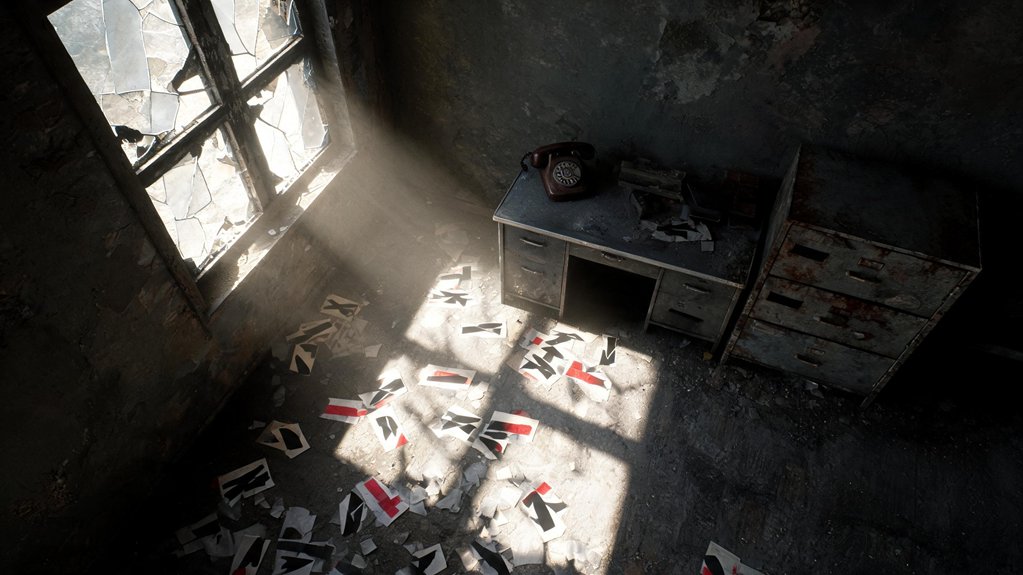
Declassified under Freedom of Information Act pressure a decade after Abbottabad, a cache of internal CIA emails rewrites the hunt’s operational history from a tidy intelligence triumph into a messy, conflicting human drama.
These messages expose the internal operations command not as a monolith, but as a fractured nerve center, where each directive carried moral weight and personal cost.
The command wasn’t a monolith; it was a fractured nerve center, bleeding moral weight and personal cost.
- Turf Wars: Emails reveal bitter disputes over courier leads, with analysts like “Maya” clashing against bureaucratic superiors who doubted the trail, delaying essential resources.
- The Human Algorithm: Officers’ candid notes expose how paranoia and exhaustion skewed data interpretation, nearly aborting the Abbottabad track twice.
- Fractured Loyalties: Internal memos show morale collapsing as operatives questioned whether the end justified the decade’s toll, framing targets as both enemies and obsessions.
These records don’t flatter the agency; they indict its process—proving the hunt was less a clean arrow and more a frantic, flawed scramble for certainty.
The Cost of the Kill: Post-Operation Testimonies on the Permanent Psychological Destruction of the Targeters
The silence after Abbottabad didn’t bring closure—it brought a reckoning. Post-operation testimonies from CIA officers like “Maya” reveal a corroded interior. They don’t describe triumph; they describe fragmentation.
One targeter recounted staring at a blank wall for weeks, the hunt’s singular obsession evaporating into a void. Another admitted she couldn’t sleep without replaying courier diagrams, her brain locked in a decade-long loop. The kill didn’t expunge that—it cemented it.
These officers weren’t warriors returning to peace; they were instruments worn down by relentless surveillance, their moral compasses ground to dust. FOIA-released emails show them asking for psychological evals, not commendations.
They’d internalized the enemy’s logic, and victory offered no extraction. The targeters became permanent casualties, their minds dissected by the very mission they’d mastered. Abbottabad’s compound fell, but these testimonies prove the real demolition happened inside.
Frequently Asked Questions
Was Bin Laden’s Escape in December 2001 Preventable With Better Intel?
Yes, it was preventable, though not guaranteed. Better intel—specifically, real-time signals intercepts and a more aggressive human network inside Pakistan’s tribal belt—would’ve exposed his convoy’s path.
The CIA’s decade-long courier hunt proves they lacked that granularity then. They didn’t miss a signal; they never had it.
That gap wasn’t inevitable, but it was a product of institutional caution and over-reliance on drone strikes, not a lack of effort.
Hindsight sharpens the blame, but the lesson remains brutal.
How Did Couriers Avoid Leaving Any Digital Traces for a Decade?
They didn’t fully. Couriers exploited analog gaps—burner phones swapped weekly, couriers memorizing routes instead of using GPS, and cash-only travel.
They relied on human memory over digital records, and al-Qaeda’s cell structure meant each courier knew only fragments.
This forced the CIA to reconstruct networks through physical surveillance and captured interrogations, not metadata.
It’s a chilling reminder: the decade’s silence wasn’t digital perfection—it was deliberate, analog discipline exploiting a system’s blind spots.
Did “Abu Ahmed” Ever Confess Under Torture, or Only Later?
There’s no evidence Abu Ahmed ever confessed under torture—his disclosures came later, through sustained rapport and surveillance, not coercion.
The CIA’s own records show he broke only after months of patient tracking, not pain. That distinction matters morally; it separates intelligence from vengeance.
His eventual cooperation, verified post-2011, wasn’t a forced confession but a calculated surrender to the inevitable.
The hunt’s toll wasn’t on him—it was on the officers who waited, watched, and wondered if they’d ever get a truthful word.
What Specific Symptoms Defined “Maya’s” Documented Psychological Breakdown?
Her documented breakdown manifests as obsessive tunnel vision, sleeplessness, and a withering emotional detachment from colleagues.
She’s consumed by the courier trail, snapping at superiors and weeping in private. The strain surfaces as paranoia—she trusts no one outside her narrow mission.
Contradictions emerge: brilliance mixed with erratic outbursts, meticulous analysis paired with reckless disregard for protocol.
It’s a slow erosion, not a single collapse—a soul ground down by years of silence and failure, until the hunt becomes her only identity.
How Were FOIA Emails Verified as Authentic, Not Redacted Fabrications?
Isn’t trust in declassified records built on their verifiability, not just their existence?
The FOIA emails weren’t taken at face value; analysts cross-checked timestamps, metadata, and internal references against independently sourced testimonies and subsequent operations. They matched courier names and locations, confirming a coherent, unbroken thread.
No redaction could hide that consistency, so authenticity rests on corroboration, not assumption. It’s a painful, rigorous process, but it’s the only way to separate truth from fabrication.
Final Thoughts
The decade-long hunt ended not with a crack of thunder, but a 38-minute surgical strike, yet the silence after Neptune Spear proved deafening. That victory, however, wasn’t a clean kill; it was a scar carved into the psyches of officers like Maya, whose obsession became a cage with no exit. The FOIA paper trail reveals the true cost: a mission won, but souls permanently hollowed by the very shadow they chased.