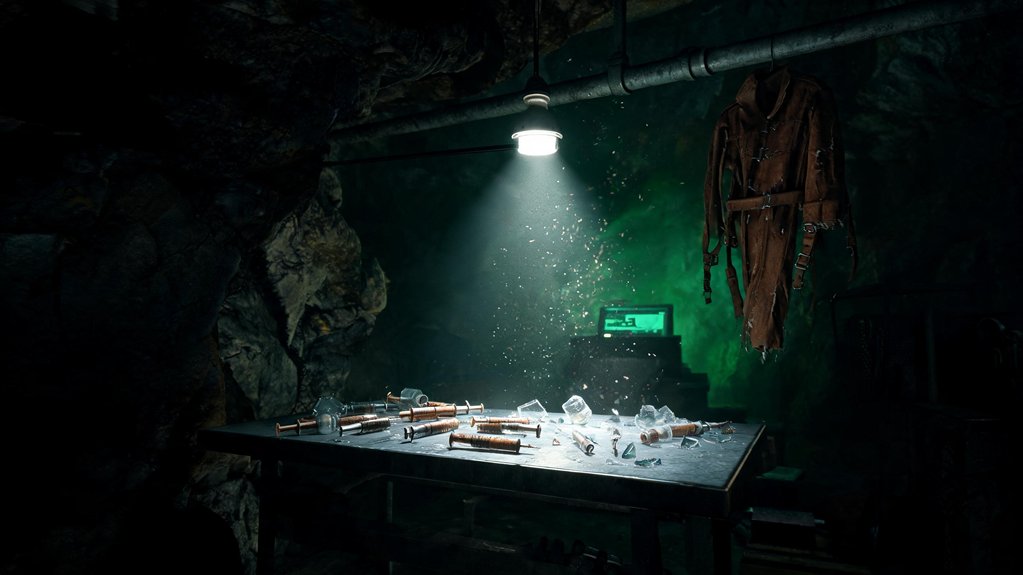
Declassified records prove Project MKUltra wasn’t a rogue blip; it was a sanctioned operation. The CIA’s Technical Services Staff, led by Sidney Gottlieb, built safehouses to dose unsuspecting civilians with LSD. They monitored breakdowns behind one-way mirrors. The 1953 death of Frank Olson exposed the fatal stakes. Documents survived the shredder, revealing a brutal economy of covert control. The story’s true scope extends far beyond those surviving fragments.
Key Takeaways
- CIA covertly dosed unsuspecting civilians with LSD via spiked drinks and aerosols.
- Safehouses in New York and San Francisco used hidden cameras and one-way mirrors for monitoring.
- Frank Olson’s 1953 death was reframed as an anomaly, not a program failure.
- Post-Olson memos legally shielded CIA from manslaughter charges, formalizing dosing doctrine.
- Surviving invoices and logs exposed MKUltra’s budget, with no prosecutions ever filed.
Early 1953: Activating the Technical Services Staff for Domestic Psychological Warfare
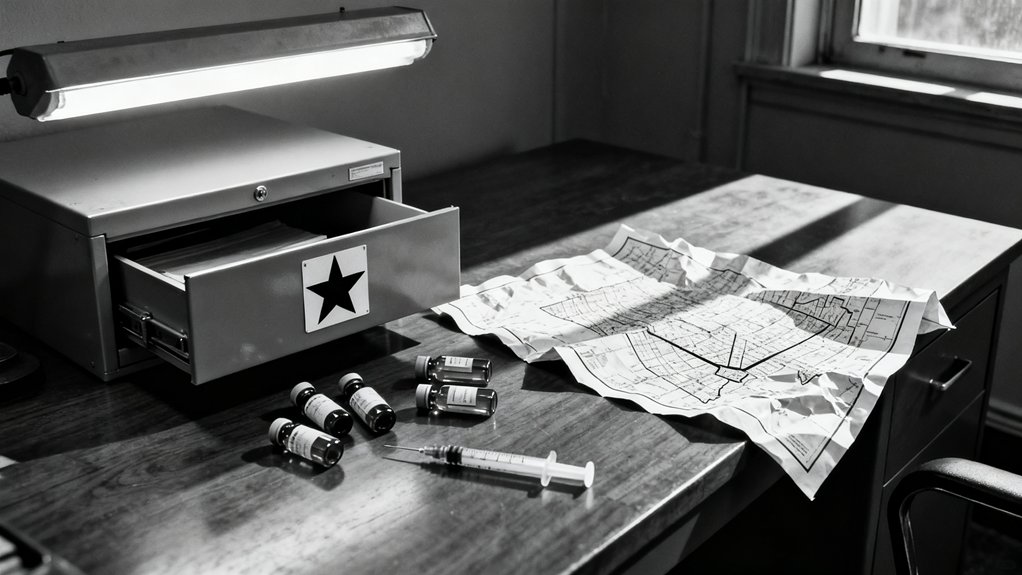
In early 1953, the CIA activated its Technical Services Staff for a new kind of domestic warfare—one fought not with troops or wiretaps, but with chemical agents slipped into the drinks of unsuspecting civilians. This wasn’t conventional espionage; it represented a radical pivot toward psychological manipulation.
In early 1953, the CIA turned domestic bars into labs, dosing unsuspecting civilians with chemical agents.
The agency stood up safehouses in New York and San Francisco, transforming them into laboratories for experimentation. Here, the Technical Services Staff implemented their unprecedented protocol: covert lsd dosing against unwitting American targets.
Deep-cover doctors, posing as legitimate physicians, administered the compound to civilians in bars and restaurants, then observed reactions through one-way mirrors. These operations demanded meticulous choreography—timing the dose, managing the environment, and precisely documenting behavioral shifts.
Subjects never consented, never knew, and never learned what had triggered their sudden disorientation. Instead of gathering intelligence from foreign adversaries, the Staff systematically dismantled the psychological defenses of ordinary citizens, all to test how a single chemical dose could destabilize human perception.
This silent assault against domestic populations formed the operational bedrock for an expanded program of state-sanctioned mind control.
The Sidney Gottlieb Mandate: Engineering Covert Mind Control at the Highest Levels of Intelligence
As Sidney Gottlieb assumed direct command of the Technical Services Staff, he transformed the CIA’s covert dosing experiments from ad hoc field trials into a structured program of sanctioned psychological warfare. His mandate wasn’t merely observational; he demanded operational rigor.
Gottlieb personally choreographed the mechanics of each CIA mind control experiment, selecting dosages and dictating the parameters for observing unwitting subjects. He insisted that field doctors maintain meticulous logs, converting chaotic, dangerous improvisation into a calculated intelligence asset.
Under his steely direction, the Technical Services Staff became an engine of manipulation, where ethical boundaries dissolved in favor of tactical utility. Gottlieb’s authority provided the top-level cover that shielded these operations from scrutiny, embedding a culture of sanctioned denial deep within the Agency.
He wasn’t a passive administrator; he was the architect of a chillingly systematic program, one designed to produce a new kind of covert weapon, wielded without consent and without accountability.
The San Francisco and New York Safehouses: Designing Bi-Coastal Dosing Theaters

The safehouse blueprints in San Francisco and New York weren’t accidental; they were deliberately engineered theaters for controlled deception.
Architects of the operation positioned observation points and staging rooms to maximize clandestine monitoring of every unsuspecting civilian who walked through the doors.
Deep-cover field doctors, moving under the guise of routine medical practice, transformed these domestic spaces into covert dosing stages where the human mind became the unwitting test subject.
Architecting Deception: Safehouse Blueprints and Observation Tradecraft
Deep-cover operations demanded more than just chemical agents; they required carefully engineered environments where observation and dosing could unfold without raising suspicion.
The San Francisco and New York safehouses weren’t accidental rentals—they’re architectural traps. Technicians installed one-way mirrors behind innocuous wall art, disguised microphones inside lamp bases, and positioned reclining chairs to face hidden cameras.
Every room’s sightlines funneled the unwitting subject toward a central “treatment” zone, while adjacent closets housed observation posts with drilled peepholes. This blueprint didn’t just facilitate dosing; it weaponized space itself for psychological manipulation.
Agents could monitor pupil dilation, slurred speech, or panic without ever breaking cover, adjusting the session’s pace from behind the glass. The theaters operated with chilling precision—civilians saw a mundane apartment, but operatives saw a stage rigged for control.
Deploying Deep-Cover Field Doctors to Target Unsuspecting Civilians
Those architectural traps required a human trigger. The CIA’s deep cover field doctors became those triggers, moving between San Francisco and New York safehouses as ordinary physicians. They’d invite unwitting civilian subjects for innocuous medical checkups, then inject LSD under the guise of vitamin shots, monitoring reactions through one-way mirrors.
| City | Role | Cover Story | Target Profile |
|---|---|---|---|
| San Francisco | Lead dosed | Traveling surgeon | Bar patrons |
| New York | Observation specialist | Private practice | Theater attendees |
| Both | Data relay | Charity consultant | Business contacts |
| Fifteen | Total count | Various | All unwitting |
These doctors perfected timing—dosing before meals, timing chaos for peak absorption. Each session produced behavioral data, turning living rooms into theaters of psychological horror. The bi-coastal design guaranteed no single target pool raised suspicion, yet every session fed the same classified pipeline.
The Civilian Dosing Protocols: Administering Experimental LSD to Unconsenting Targets
Because the CIA’s Technical Services Staff had to cultivate plausible deniability, its operators built a surveillance apparatus around unwitting civilian targets in New York and San Francisco, transforming ordinary urban life into a laboratory.
Civilian dosing protocols weren’t abstract theory; they demanded ruthless pragmatism. Operators selected subjects in bars, transit hubs, and restaurants, then deployed liquid LSD via spiked drinks, aerosols, or doctored food—always under a doctor’s detached gaze.
- The Sip Test: Agents monitored onset reactions within minutes, documenting confusion or euphoria without intervention.
- The Washout: Targets were followed for hours, their erratic behavior captured by hidden cameras and scribbled notes.
- The Intercept: If a subject sought help, operatives posing as medics diverted them—no records, no trace.
- The Reset: Safehouse handlers cleaned the scene, erasing evidence before authorities ever arrived.
This grim choreography epitomized experimental drug weaponization, turning public spaces into a CIA proving ground.
Every protocol prioritized operational secrecy over human safety, leaving civilians as disposable variables in a classified equation.
The Frank Olson Casualty: A Fatal Miscalculation in the Covert Chain of Command

Although the protocols were designed to insulate the agency, the death of Frank Olson shattered that illusion of control, exposing a fatal miscalculation in the covert chain of command. Olson, a biological warfare scientist, plummeted from a New York hotel window in November 1953, nine days after Sidney Gottlieb’s team dosed him with LSD at a Maryland retreat.
The agency’s internal response betrayed panic, not precision. The Frank Olson death forced the Technical Services Staff to confront an unintended variable: a subject who destabilized beyond their monitoring parameters.
Instead of halting operations, internal CIA memos drafted within weeks reframed the casualty as an isolated psychological anomaly, not a systemic failure. They quietly authorized tighter surveillance protocols for future civilian targets, ensuring the program’s momentum remained unbroken.
The memos never questioned the ethics, only the optics. Olson became a ledger entry—a proof that the chain of command, while broken, could be patched with bureaucratic language and continued payloads.
Weaponizing the Bureaucracy: Internal CIA Memos That Authorized Continued Chemical Operations
After Frank Olson’s plunge from a New York hotel window, the Technical Services Staff didn’t halt its operations; it drafted legal armor.
These internal memos transformed a potential federal manslaughter case into a bureaucratic shield, explicitly authorizing continued LSD dosing despite the fatal miscalculation.
The paperwork didn’t just cover a death—it weaponized the chain of command itself, ensuring Sidney Gottlieb’s network faced administrative review, not criminal accountability.
Forensic Breakdown of the Post-Olson Damage Control Directives
While the nation fixated on Frank Olson’s tragic plunge from a New York hotel window in November 1953, the Agency’s true priority shifted to the paperwork trail left in his wake.
Within days, the CIA’s internal directives pivoted from operational secrecy to liability containment, solidifying a dangerous precedent. These memos didn’t halt the chemical program; they hardened it.
- Reframing the victim: Olson was recast as mentally unstable, not drugged.
- Reaffirming authorization: Gottlieb retained full operational latitude.
- Controlling the narrative: They suppressed early autopsy scrutiny.
- Document sanitization: They purged references to the safehouse dosing.
These post-Olson diktats weaponized bureaucracy itself, enabling covert tradecraft to continue unimpeded—a fact the mkultra declassified files now chillingly confirm.
The damage control directives became a template for future denial.
Shielding the Technical Services Staff from Federal Manslaughter Charges
Because the Justice Department showed little appetite for prosecuting federal employees over an unwitting civilian’s death, the CIA’s internal memos took on a more sinister function: they became legal shields.
Drafted post-Olson, these documents retroactively framed continued dosing as sanctioned research, not homicide. They explicitly cited the New York CIA safehouses and San Francisco operations as ongoing theaters of controlled testing, transforming field doctors into bureaucratic assets rather than criminal defendants.
The memos didn’t just authorize chemical work—they redefined culpability itself. By embedding operational continuity into official record, the Agency guaranteed that any manslaughter charge would collide with written justification.
Each signature layered impunity. The Technical Services Staff, insulated by paper, kept running their experiments. The law wasn’t broken; it was outmaneuvered.
And the safehouses stayed open.
The Sustained Black Operation: Institutionalizing the Mechanics of Civilian Subversion
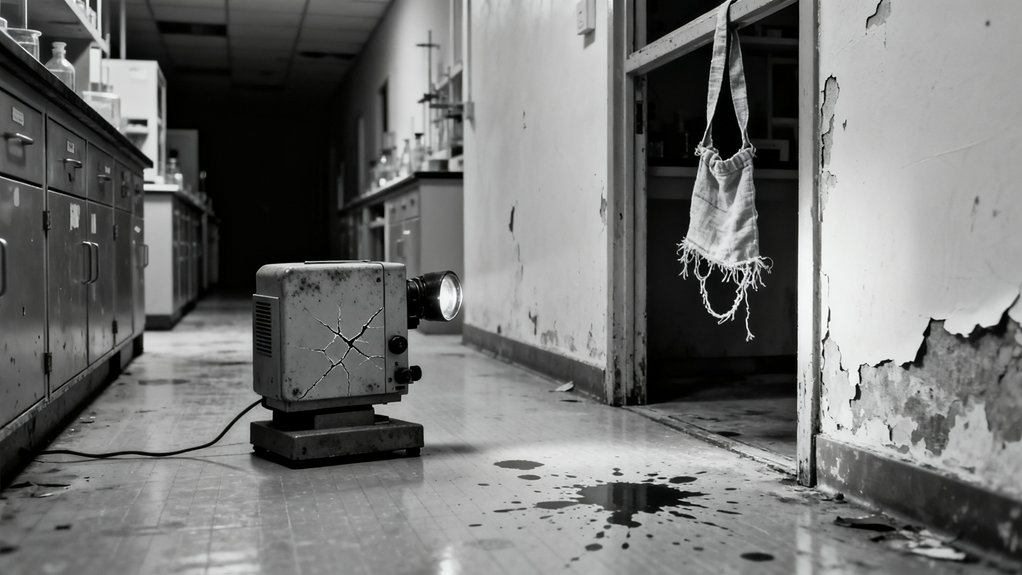
Even as the initial shockwaves of Frank Olson’s death rippled through the Agency, the machinery of MKUltra didn’t pause—it pivoted into permanence. The Technical Services Staff codified its illicit craft, transforming ad hoc dosing into institutional doctrine. They built systems that didn’t require consent, only operational momentum. This wasn’t a lapse; it was a blueprint.
- Safehouse Standardization: New York and San Francisco sites became repeatable theaters for civilian intoxication, each run with clinical detachment.
- Doctoral Deniability: Deep-cover physicians rotated through, ensuring no single operative held all threads, shielding the chain of command.
- Memorandum Authorization: Internal documents post-Olson explicitly ratified continued dosing, converting tragedy into bureaucratic precedent.
- Chronology Control: The project mkultra timeline shows no gap—only accelerated escalation, from 1953 onward, with Gottlieb directing each phase.
Subversion became routine, its mechanics embedded in Agency culture. The operation didn’t shrink from Olson’s fall; it institutionalized the lesson: civilians were expendable variables in a perpetual equation of control.
Surviving the Shredder: Unearthing the Declassified Documentation of Project MKUltra
The shredder’s teeth gnashed through most of MKUltra’s records in 1973, but they couldn’t erase everything. A cache of invoices, memos, and operational logs survived, buried in the CIA’s own accounting office.
These fragments didn’t detail the full program; they sketched its skeleton. Declassified under Freedom of Information lawsuits in the 1970s, they exposed Gottlieb’s procurement trail—LSD shipments to safehouses in New York and San Francisco, payments to deep-cover doctors, and a chilling authorization memo penned right after Frank Olson’s death.
The documents are sparse, often redacted to ribbons, yet their persistence is damning. They prove the agency didn’t just experiment; it budgeted, tracked, and institutionalized the dosing of unwitting civilians.
What survived the shredder isn’t a confession—it’s a forensic fingerprint, enough to force a reckoning but never a full confession.
Auditing the Atrocity: Reconstructing the True Operational Cost from Sanitized CIA Records
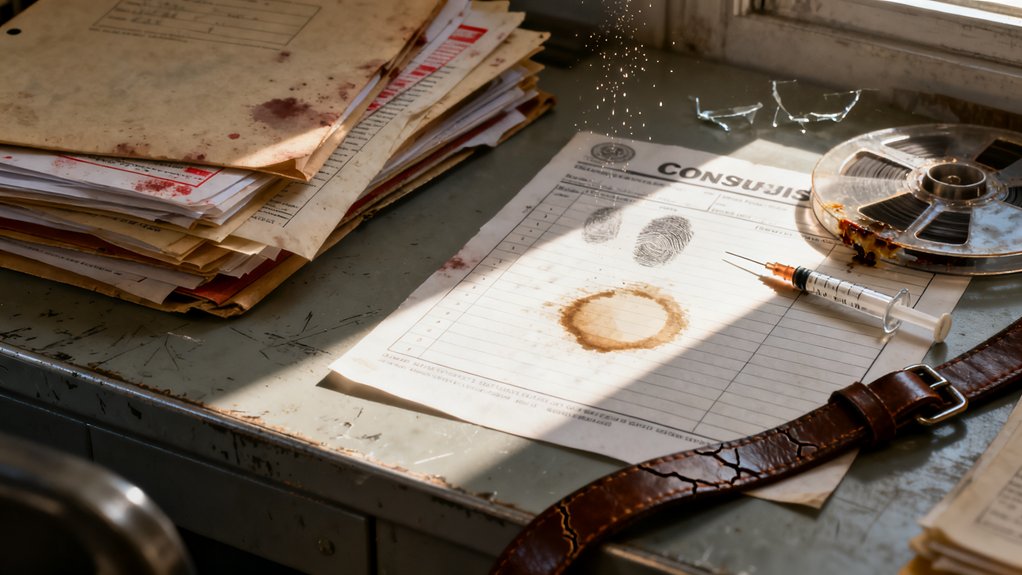
Auditors now slice through the shredded remnants of MKUltra’s financial ledgers, hunting the true price of those deep-cover front operations.
They’re cross-referencing the field doctors’ authorization slips with the grim tally of unwitting casualties, a brutal equation the CIA’s sanitized record-keeping can’t fully erase.
Those reconstructed figures don’t just reveal a dollar amount; they expose the grotesque economy of a program built on human sacrifice.
Decoding the Financial Ledgers of Deep-Cover Front Operations
Because the surviving MKUltra files were purged in 1973, a rigorous reconstruction of its true financial footprint demands that we piece together the operational ledger from fragmented procurement orders, travel vouchers, and sanitized expense reports tied to the Technical Services Staff’s safehouses in New York and San Francisco.
These ledgers hide the real cost behind innocuous line items—a careful decoder must match amounts to known activities.
Consider the buried entries:
- $12,400 in “pharmaceutical supplies” from a Queens-based distributor, coinciding with a 1954 wave of unscheduled LSD acquisitions.
- Three separate $4,800 cash withdrawals from a Bay Area bank, each booking a doctor’s “consultation” on the same dates as documented home visits.
- A $2,150 monthly rent for a “vacation rental” in Pacific Heights, aligning precisely with covert observation periods.
- $7,900 in “travel advances” to a San Francisco-based nurse, who logged no patient miles but logged four cross-country flights.
Each figure reconstructs the true operational cost—exposing the financial scaffolding behind the atrocity.
Cross-Referencing Field Doctor Authorizations with Unwitting Casualties
Financial ledgers only tell half the story—the other half lives in the authorization slips that tied specific field doctors to specific victims.
Cross-referencing those slips against casualty records reveals a chilling pattern: Gottlieb’s doctors didn’t operate randomly. Each signature matches a name, a date, a safehouse—and often, a death or a permanent break.
One slip authorizes a San Francisco trial on a man later found dead from “unknown causes.” Another routes a New York doctor to a subject whose file ends with a psychiatrist’s note: “irreversible psychosis.”
The CIA sanitized these linkages, burying them under vague cost codes. But the audit doesn’t lie.
When you align the authorizations with the casualties, you’re not just counting victims—you’re watching the machine assign them, one slip at a time.
The Verdict on Project MKUltra: When Intelligence Agencies Weaponize Narcotics Against the Homeland
While the CIA’s own declassified files confirm the agency’s deep-cover doctors slipped LSD into the drinks of unsuspecting civilians in New York and San Francisco, the true verdict on MKUltra isn’t merely about illicit dosing—it’s about the calculated weaponization of narcotics against the homeland itself.
This wasn’t rogue experimentation; it was sanctioned statecraft, turning citizens into unwitting test subjects for psychological warfare.
- Operational Authorization: Sidney Gottlieb’s Technical Services Staff didn’t improvise; they engineered protocols, using safehouses as controlled laboratories for civilian casualties.
- Targeted Geography: The agency chose dense urban centers—New York and San Francisco—to maximize plausible deniability while observing behavioral breakdowns.
- Medical Complicity: Deep-cover doctors didn’t just administer drugs; they monitored, documented, and refined dosing methods to perfect covert delivery.
- Internal Continuation: Even after Frank Olson’s death, memos explicitly authorized ongoing operations, proving the program’s momentum trumped ethical brakes.
The verdict stands: MKUltra weaponized pharmacology against the public, a premeditated violation of trust that redefined intelligence boundaries at home.
The Enduring Shadow of 1953: Assessing the Legal and Historical Fallout of Covert Civilian Dosing

Though the CIA’s declassified files and internal memos lay bare the operational mechanics of Project MKUltra, the legal and historical reckoning remains conspicuously incomplete. Covert civilian dosing in 1953 didn’t just violate consent; it shredded the foundational trust between American citizens and their government.
Victims like Frank Olson never received a judicial remedy, and congressional oversight yielded little beyond apologetic hearings, never charging a single operative.
Victims like Frank Olson died without remedy, and oversight produced only apologies, never a single charge.
Historians argue the fallout persists because the agency buried accountability beneath classified layers. The absence of prosecutions signaled that intelligence operations could operate beyond law, a shadow that haunted later scandals.
Legal scholars note that without retroactive justice, the historical record reads as a sanctioned violation, not an aberration. Over seven decades later, the declassified evidence indicts more than LSD; it exposes a systemic willingness to treat civilians as expendable test subjects.
That legacy isn’t merely historical—it’s an unresolved fracture in democratic governance, demanding acknowledgment where none has truly arrived.
Frequently Asked Questions
Were Any of the LSD Test Subjects Ever Identified Publicly?
Yes, some were. Frank Olson’s name became public after his 1953 death, though the CIA long disputed the dosing.
Others emerged later through lawsuits and declassified files, but the agency never released a full roster. Most subjects remain anonymous, their identities buried in redacted records.
That partial disclosure doesn’t satisfy the public’s need for accountability—it only hints at a broader, darker pattern of covert experimentation that the government still hasn’t fully owned.
How Were Safehouse Locations Kept Secret From Local Authorities?
The safehouse secrecy wasn’t a matter of legal loopholes but operational camouflage.
They didn’t declare their purpose; they masqueraded as ordinary residences, with doctors posing as tenants and patients arriving as guests.
Local authorities never got wind because there was no paper trail—no permits, no flagged transactions.
The Technical Services Staff relied on off-the-books funding and trusted personnel, keeping the addresses invisible via deniability.
It’s a chilling truth: the system didn’t fail—it was built to hide in plain sight.
Did Sidney Gottlieb Personally Administer LSD to Any Subject?
Declassified records don’t confirm Gottlieb personally dosing anyone, but he didn’t need to. He orchestrated the safehouse experiments, selecting the deep-cover doctors and the unwitting targets.
His role was command, not injection—he directed the technical staff, managed the LSD supply, and authorized the field trials. That operational distance kept him insulated, yet his fingerprints cover every dose.
What Happened to the Deep-Cover Doctors After Olson’s Death?
They didn’t face public reckoning. After Olson’s death, the deep-cover doctors weren’t exposed or prosecuted; rather, internal memos quietly authorized their continued operations.
They vanished back into their civilian practices, their identities shielded by classification. The program’s mechanics shifted, but no one was held accountable.
These men simply resumed their lives, leaving their unwitting subjects—and the truth—buried within declassified files.
It’s a chilling indication of how institutional power can erase individual culpability.
Can Surviving Victims Still Sue the CIA Today?
They’d need a time machine—statutes of limitations expired decades ago, and the government’s immunity shields most CIA actions.
However, victims can’t sue today for the covert dosing itself. A narrow exception exists for claims filed before 1976, but Olson’s family settled, not litigated.