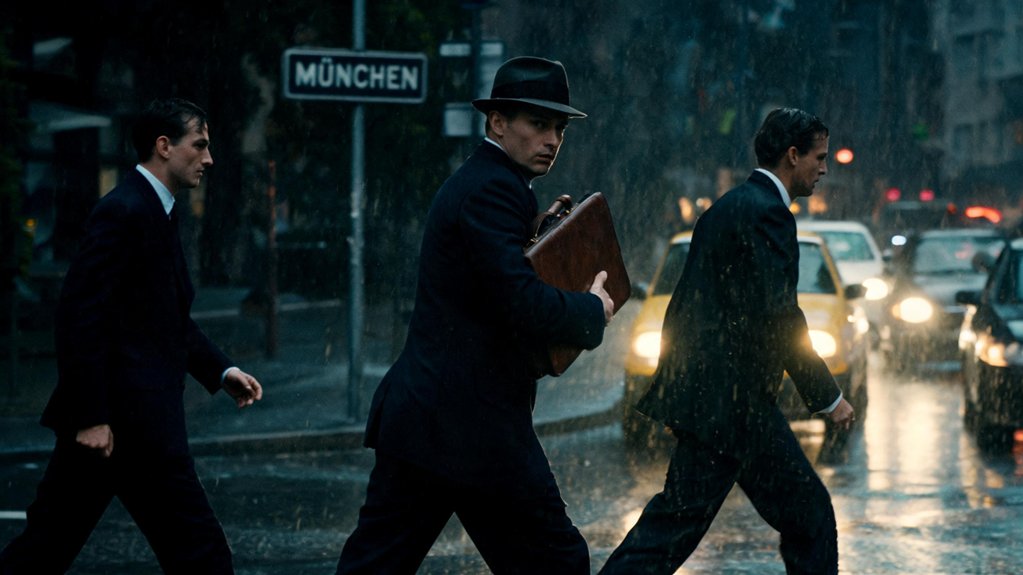
Operation Wrath of God wasn’t myth—it was Mossad’s state-sanctioned vengeance for Munich’s eleven slain athletes. Committee X authorized extrajudicial kills, and Mike Harari’s Caesarea teams struck fast, leaving Wael Zwaiter with eleven bullets. But the hunt for Ali Hassan Salameh spiraled into the Lillehammer catastrophe, where a mistaken waiter died in Norway. The Oslo trials exposed the killers, yet the body count stayed murky—sixteen confirmed kills, a forensic shadow war that redefined espionage. The full declassified story cuts deeper.
Key Takeaways
- Committee X authorized extrajudicial killings without judicial oversight, reshaping Israeli intelligence doctrine.
- Mossad’s Kidon strike teams used compartmentalized roles, safe houses, and forged documents across Europe.
- Wael Zwaiter’s 1972 killing exemplified indiscriminate retribution despite disputed evidence of his role.
- Lillehammer’s 1973 misidentification of Ahmed Bouchikhi caused a public scandal and compromised operations.
- Forensics cataloged distinct ballistics, while ambiguity in methods weaponized uncertainty across intelligence communities.
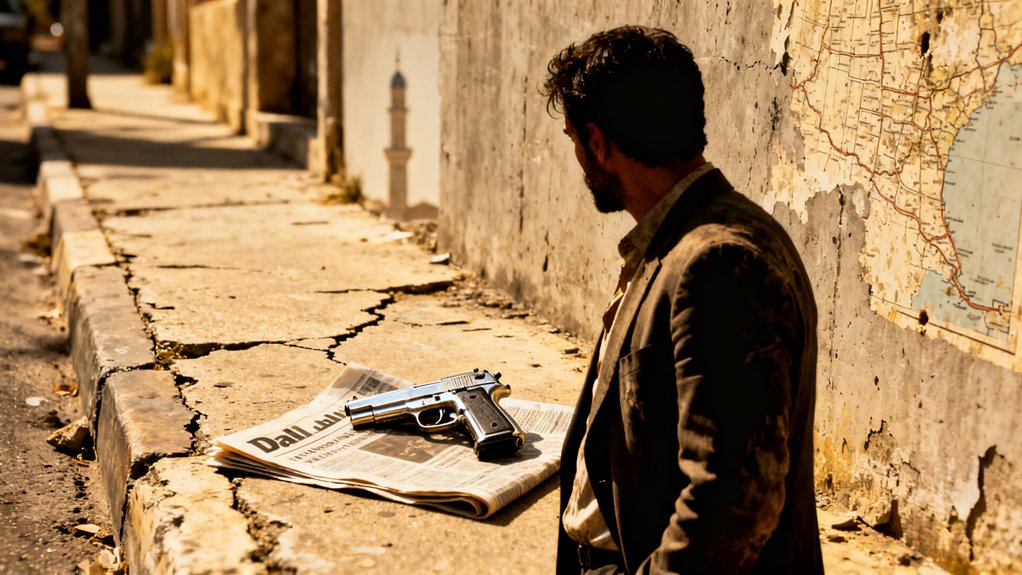
As dawn broke over the Olympic compound on September 5, 1972, the world’s gaze turned to Munich, but it wasn’t for the Games—it was for the bloodbath that would leave eleven Israeli athletes dead, their bodies unavenged on that tarmac.
The images of a masked terrorist on the balcony and the failed rescue at Fürstenfeldbruck didn’t just sear grief into the national psyche; they demanded a brutal, immediate answer.
The balcony’s masked ghost and Fürstenfeldbruck’s failure seared a wound that demanded a brutal, immediate answer.
But the immediate aftermath delivered none. The world offered words, condemnations, and little else. That vacuum of justice set the stage for a radical departure from conventional statecraft.
The Munich massacre retaliation wasn’t a military strike or a legal appeal; it was a calculated, secret verdict. It forced Israel to pivot entirely to Mossad operational mechanics, a grim machinery of targeted elimination that would redefine intelligence work for decades.
The unavenged weren’t forgotten; they became the template for a merciless pursuit.
Committee X and the Secret Mandate for Extrajudicial Retaliation
While the world watched the coffins return to Lod Airport, a far more consequential meeting had already taken shape in the shadows of Tel Aviv.
There, Committee X—a tight circle of senior ministers and Mossad chiefs—granted itself a secret mandate, bypassing judicial oversight to authorize extrajudicial retaliation. They didn’t debate morality; they calibrated reach.
The mandate empowered specialized teams to pursue covert target identification, feeding names into a lethal pipeline that demanded absolute precision. This wasn’t rage; it was statecraft stripped bare.
Committee X’s true innovation lay in tactical execution logistics—building a machinery that could track, verify, and eliminate across sovereign borders without a footprint.
They set rules of engagement that required incontrovertible proof before a bullet flew, yet allowed zero margin for legal pause.
In that room, they reshaped Israel’s intelligence doctrine, transforming grief into a calculated, merciless engine.
The mandate’s secrecy guaranteed accountability stayed internal, forever.
Mike Harari and the Architecture of the Caesarea Strike Teams
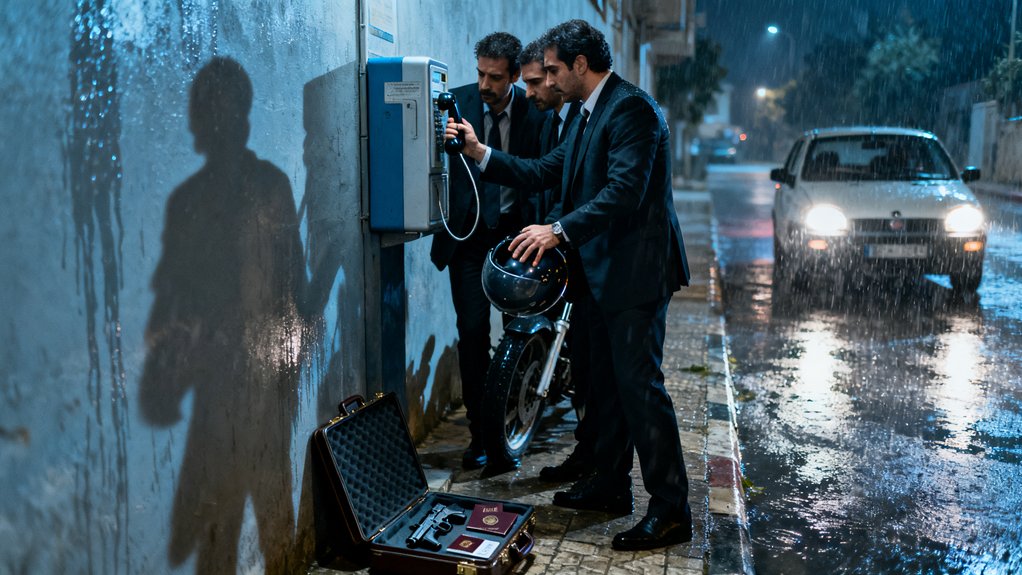
Harari’s architecture didn’t rely on improvisation; he enforced the Kidon formula, splitting surveillance, logistics, and execution into airtight compartments that never touched.
He weaponized the European grid, seeding safe houses and forged documents across France, Italy, and Denmark to feed a relentless operational tempo.
The strike teams weren’t ghosts—they were precision instruments, each piece blind to the whole until the moment of the kill.
The Kidon Formula: Segregating Surveillance, Logistics, and Execution Assets
Because the failure of a single link in a covert chain could collapse an entire operation, Mike Harari engineered the Caesarea strike teams around a rigid doctrine of asset segregation—a formula the agency would later codify as the Kidon method. He deliberately isolated watchers, drivers, and shooters; no cell ever possessed the full picture. This compartmentalization anchored the operation wrath of god timeline, ensuring that capture of one operative never revealed the next target or the team’s escape route. Field-level logistics remained a separate, siloed function, managed by support agents who knew only delivery points, never identities. The strike cell descended solely to execute, while surveillance teams dissolved into crowds days earlier. Harari’s design wasn’t about trust; it was about structural immunity, turning human error into an acceptable, contained variable.
| Asset Type | Operational Role |
|---|---|
| Surveillance | Track and confirm target patterns |
| Logistics | Supply vehicles, documents, and cash |
| Execution | Deliver lethal action and vanish |
Weaponizing the European Grid: Safe Houses and Forgeries Across France, Italy, and Denmark
Although the strike cells delivered the final blow, the true architecture of Operation Wrath of God rested on a mundane, sprawling infrastructure—a network of safe houses and forged documents stretched across France, Italy, and Denmark that turned Europe into a weaponized grid.
Harari’s mossad caesarea unit didn’t improvise; they engineered. Paris apartments held doctored passports, Copenhagen basements stored untraceable vehicles, and Italian surveillance networks fed real-time intel into safe-house kitchens.
Each safe house wasn’t a refuge but a reload point—weapons, cash, and new identities cycled through with brutal efficiency. Forgeries weren’t cosmetic; they matched local fonts, stamps, and micro-erasures.
Harari guaranteed logistics never touched combat agents, keeping the grid invisible. In Denmark, a quiet flat became a sniper’s nest; in France, a print shop produced flawless police credentials.
Europe’s mundane geography became their silent accomplice, and the grid held—until the final reckoning arrived.
The October 1972 Piazza Annibaliano Hit: 11 Bullets for Wael Zwaiter
The Piazza Annibaliano hit wasn’t a gunfight—it was an execution, a surgical strike that would set the brutal template for Operation Wrath of God. Wael Zwaiter, a Palestinian translator, walked home on October 16, 1972, when two mike harari operatives closed the distance. They fired eleven bullets into his torso, then vanished into Rome’s evening shadows. Zwaiter’s crime? Mossad tagged him as Black September’s Italian logistics chief, though verified public records later confirmed he held no operational role—a chilling revelation of intelligence missteps.
| Element | Detail |
|---|---|
| Date | October 16, 1972 |
| Location | Piazza Annibaliano, Rome |
| Target | Wael Zwaiter |
| Execution | 11 shots from two shooters |
| Aftermath | Mossad claimed justification; records dispute it |
Harari’s team moved with cold efficiency, using false passports and pre-staged escapes. They didn’t linger. They didn’t need to—the message was already written in blood. This hit signaled that Israel’s retribution wouldn’t discriminate between leaders and operatives, blurring every line in the process.
Sabotaging the Black September Network in Paris and Nicosia

The Mossad’s spring offensive in Paris shattered Black September’s command spine, beginning with the Hamshari telephone bomb—a precise explosive decapitation that turned a handset into a death sentence.
Forensic analysis of that device reveals a calculated signature of controlled detonation, leaving no room for collateral error.
Then, within weeks, operatives cornered Basil al-Kubaisi on a Paris street and executed him at point-blank range, severing yet another node of the network’s financial lifeline in Nicosia and beyond.
The Hamshari Telephone Bomb: Forensics of an Explosive Decapitation
Explosive decapitation arrived inside a Bakelite handset in Paris. Mahmoud Hamshari’s phone wasn’t a communication device; it was a precision-delivered kill mechanism.
Mossad’s field operatives, leveraging extensive western Europe surveillance, had mapped his apartment, habits, and that specific telephone’s position. They planted a micro-charge beneath the baseplate, rigged to trigger via a remote signal when the handset lifted.
The forensics tell a brutal story: the blast, concentrated upward, fractured his skull and severed his carotid. The shockwave, not shrapnel, did the work. His daughter survived; he didn’t.
That surgical technique, refined through 1973 Danish operations and other European strikes, demonstrated a chilling evolution—moving from gunfire to engineered, remote-controlled assassination. It wasn’t a bomb. It was a sentence.
Spring 1973: The Point-Blank Execution of Basil al-Kubaisi
Paris streets in spring 1973 held a different kind of chill for Black September’s logistics officers. Basil al-Kubaisi, a key financial conduit, walked into a Mossad ambush near his apartment—two gunmen, two shots to the head, execution at point-blank range. Declassified intelligence files reveal his role in funneling weaponry from Nicosia to Paris, making him a prime casualty of post-munich assassination priorities. The hit wasn’t random; it was surgical sabotage, cutting the network’s cash lifeline.
| Detail | Fact | Impact |
|---|---|---|
| Date | April 6, 1973 | Synchronized with European ops |
| Location | Rue Marbeuf, Paris | High-profile, public strike |
| Target Role | Weapons procurement | Crippled Black September logistics |
| Method | 2 operatives, silenced pistols | Minimal collateral, maximum message |
| Aftermath | Network shifted to Nicosia | Mossad followed within weeks |
The body lay crumpled; the message was clear. No one safe.
Operation Spring of Youth: The April 1973 Amphibious Infiltration of Beirut
April 1973’s Operation Spring of Youth stands as the single most audacious amphibious raid Mossad ever pulled off, with commandos slipping ashore at Beirut’s rocky coastline under cover of darkness.
They weren’t tourists; they hit three PLO leaders’ apartments simultaneously, killing top brass in their beds. The infiltration worked because of meticulous planning, plus French territory intelligence from prior European operations—that network gave them the operational rhythms and safe-house protocols they needed to mimic.
These weren’t mere spies; they were soldiers in swimsuits, hauling heavy weaponry through surf, relying on split-second timing and pre-arranged car pickups. The raid’s success wasn’t luck. It came from brutal rehearsal and an unflinching willingness to engage at point-blank range.
In under thirty minutes, they’d gutted the command structure, extracted cleanly, and vanished back into the Mediterranean, leaving Beirut’s defenses shattered and its leadership reeling.
The Obsessive Hunt for the Red Prince and Creeping Operational Fatigue
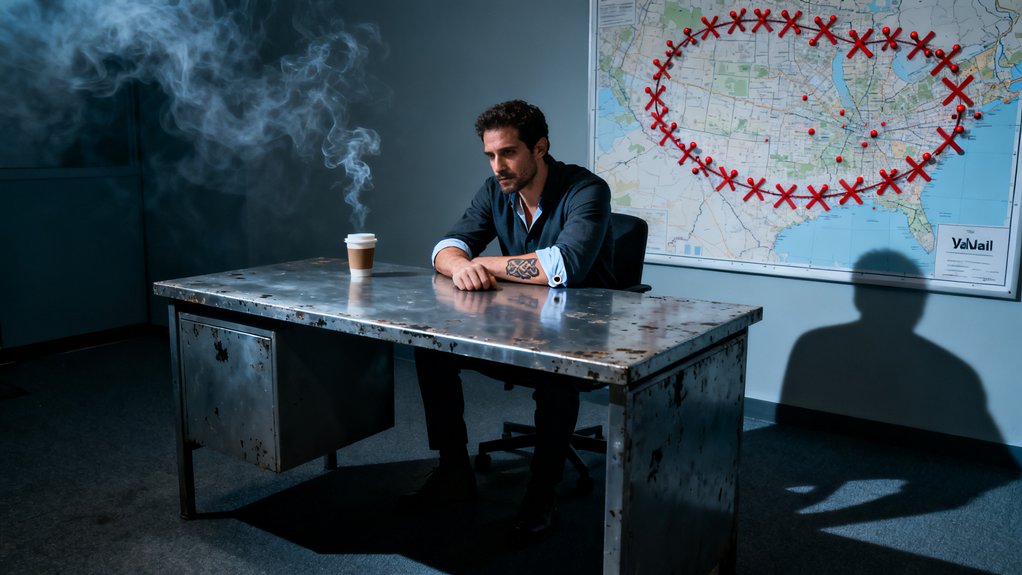
While Mossad’s commandos were still scrubbing Beirut saltwater off their gear, the hunt for Ali Hassan Salameh—the Red Prince—was already consuming the agency’s operational bandwidth, warping its priorities into a monomaniacal grind.
Every asset, every intercepted cable, every crouched surveillance team in Paris or Rome now bent toward one silhouette: a charming, polygamous operator who slipped through nets with frustrating ease. The obsession wasn’t rational; it was visceral.
Harari’s Caesarea unit ran rotation after rotation, but fatigue crept into their bones, dulling the razor’s edge that had made Spring of Youth a triumph. Agents double-booked identities, crossed borders on stale passports, and chased phantom sightings that burned fuel and trust.
Logistical discipline eroded as the Red Prince’s name became a reflex, not a target. The machine wasn’t failing yet, but its rhythm had turned compulsive, and that compulsion was quietly mortgaging the operation’s future against a single, elusive score.
The July 1973 Lillehammer Catastrophe: Anatomy of a Fatal Intelligence Failure
The July 1973 catastrophe pivots on a fatal misidentification: a Moroccan waiter, Ahmed Bouchikhi, walks straight into Mossad’s crosshairs, mistaken for a far deadlier target.
That error unravels when Dan Ert breaks under interrogation, handing over a compromised license plate that exposes the hit team’s trail.
One wrong name, one broken operative, and the operation’s cover collapses into a public scandal.
The Moroccan Waiter: How Ahmed Bouchikhi Walked Into Mossad’s Crosshairs
Because Mossad’s Caesarea unit had spent months tracking legitimate Black September operatives across Europe, they saw nothing unusual when their surveillance net snagged a Moroccan waiter named Ahmed Bouchikhi in Lillehammer, Norway, in July 1973.
Bouchikhi bore a passing resemblance to Ali Hassan Salameh, the suspected architect of Munich. That’s all it took.
The team’s confirmation bias snapped shut, ignoring the telltale signs: a local job, no security footprint, zero operational tradecraft.
They saw a ghost of Salameh, not a man who simply served coffee.
The fatal misread wasn’t a lack of intelligence; it was cherry-picking details to fit a lethal mold.
Bouchikhi’s fate sealed itself that night—not because he was a target, but because he fit one.
Breaking Protocol: The Dan Ert Interrogation and the Compromised License Plate
Even as Mossad’s Caesarea unit closed in on Ahmed Bouchikhi, the operation’s fatal unraveling began not with the shooting, but with a routine traffic stop that exposed their entire cover.
Dan Ert, a Norwegian police officer, pulled over a car with false plates; the driver’s nervousness didn’t match the minor violation.
Ert’s interrogation broke protocol—he probed beyond traffic law, noting contradictions in the agent’s story and tracing the plates to a rental.
That trace linked directly to a Lillehammer safe house, compromising the unit’s logistics.
Within hours, Norwegian intelligence connected the dots to Mossad.
The careless detail—a misregistered tag—transformed a surgical kill into a public catastrophe, leaving agents exposed and Bouchikhi’s killers identified before they could vanish.
The license plate didn’t just fail; it betrayed everything.
The Norwegian Dragnet Closes on the Kidon Operatives
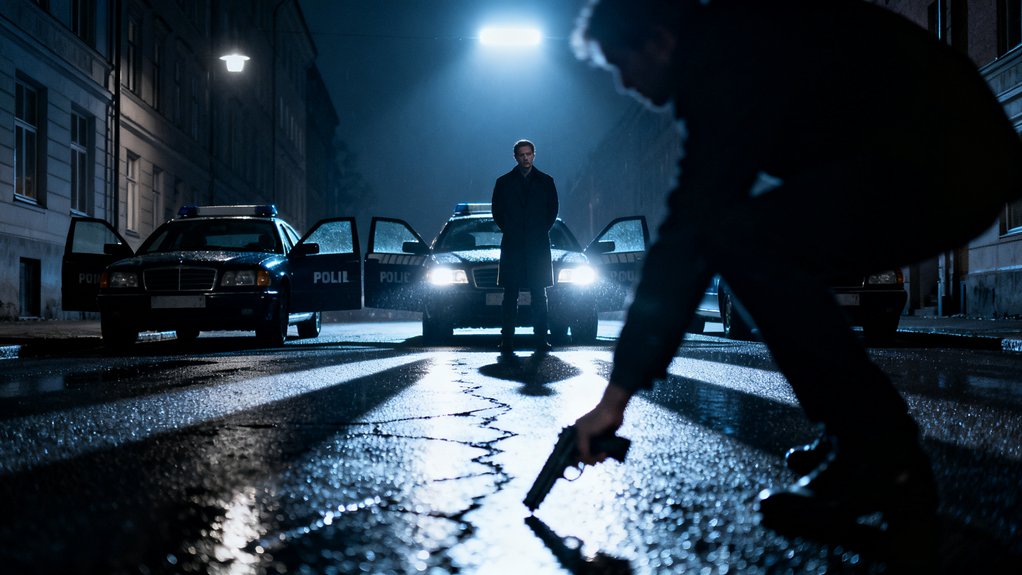
As the European dragnet tightened in the spring of 1973, Norwegian police would inadvertently deliver the operation’s first major fracture. Focused on a botched hit in Lillehammer, their investigation didn’t just chase scattered suspects; it systematically dismantled the Kidon unit’s protective web.
They traced rented cars and safe houses with ruthless thoroughness, pulling threads that led straight back to the operatives’ unassailable cover identities.
Arrests came fast and unyielding. The police didn’t buy the agents’ fabricated stories, pressing on expired passports and hotel registries. Each interrogation peeled away another layer of falsehood, exposing the tight-knit cell’s internal structure.
Arrests came fast and unyielding, pressing expired passports until each interrogation exposed the cell’s internal structure.
What emerged was a picture of professional killers caught flat-footed, their legendary discipline cracking under Norwegian scrutiny. The dragnet didn’t just close; it snapped shut on their logistics, revealing to investigators—and later, to the world—the fingerprints of a state-run assassination program.
The silence of the Kidon, once their greatest weapon, had become their definitive liability.
The January 1974 Oslo Trials and the Unmasking of State-Sponsored Assassination
The Oslo courtroom becomes the stage where the prosecution dissects ballistics and surveillance threads, pinning Sylvia Rafael to a bullet’s trajectory and a shadow’s trace.
Yet as the evidence tightens around her, Mike Harari vanishes from the scene, his extraction to Tel Aviv executed with seamless precision.
The trial unmasks a brutal truth: the state’s hand extends to kill, then retreats, leaving operatives to face the weight of its secrets alone.
Dissecting the Prosecution’s Ballistics and Surveillance Evidence Against Sylvia Rafael
Pinpointing exactly what the prosecution laid before the Oslo court in January 1974 requires peeling back layers of surveillance logs and ballistic reports that most historians gloss over.
They presented a .22 caliber pistol matched to Rafael’s prints, linking her directly to the kill zone.
Surveillance photos, snapped from a parked van, show her casing the target’s residence for three consecutive days. Those weren’t coincidental sightings; the timestamps align with the hit’s final approach.
The court heard how she altered her appearance between frames, yet her gait in the grainy footage matched the shooter’s escape route.
It’s damning, physical proof—not speculation. That evidence pinned her as the observer, not just a decoy, dismantling any claim of passive involvement.
The Ghost of Harari: Analyzing the Commander’s Seamless Extraction to Tel Aviv
While forensic analysts in Oslo sifted through shell casings and surveillance stills, the man who orchestrated the entire operation was already sipping coffee in Tel Aviv, untouchable. Mike Harari’s extraction wasn’t luck—it was doctrine. The January 1974 Oslo trials exposed the gap: field operatives rotted in cells while the architect walked through Ben Gurion’s arrivals gate.
| Layer | Oslo’s Evidence | Harari’s Counter |
|---|---|---|
| Paper trail | Phone logs linking to safehouses | Diplomatic pouch, zero signatures |
| Witnesses | Rafael’s testimony under duress | Dead-end aliases, no physical ID |
| Timeline | Surveillance gaps in Lillehammer | Alibi pre-approved by Mossad |
Harari understood the chessboard: sacrifice pawns, protect the king. His seamless fade to Tel Aviv wasn’t escape—it was the operation’s final, silent move. The trials unmasked state-sponsored violence, but the command structure stayed impervious, a ghost in the Mossad machine.
The Final Body Count and the Forensic Legacy of Operation Wrath of God

Because no single, authoritative tally ever emerged from Mossad’s own files, assembling the final body count for Operation Wrath of God demands cross-referencing verified assassinations with probable collateral strikes. Even then, the number shifts by at least a dozen depending on who’s counting. Analysts settle on roughly sixteen confirmed kills, but they’re not the story.
The forensic legacy isn’t about who died—it’s about how the kills redefined post-conflict investigation. Mossad’s operatives used car bombs, silenced pistols, and point-blank executions, leaving distinct ballistic signatures that Western European forensics teams still catalog. They deliberately varied methods, forcing investigators to chase false patterns.
That’s the unflinching truth: the campaign didn’t just eliminate targets; it weaponized ambiguity. Every crime scene became a lesson in counter-forensics, teaching future intelligence agencies that surgical violence leaves a confusing paper trail. For those seeking understanding, the body count matters less than the enduring forensic chaos it triggered on the entire intelligence community.
Frequently Asked Questions
Was Then-Mossad Chief Zvi Zamir Ever Personally Armed on Missions?
Zvi Zamir wasn’t personally armed on operative missions. He directed the offensive from a strategic perch, not the field. His role demanded oversight, not gunfire.
Declassified files show him coordinating logistics and target selection, leaving tactical execution to Caesarea’s operatives. A chief’s weapon is command, not a sidearm. He never pulled a trigger.
Did Any Kidon Operative Receive a Field Commendation for Disobedience?
No declassified record confirms a Kidon operative receiving a field commendation for disobedience during Wrath of God.
Mossad’s ethos demands flawless execution; insubordination, even successful, stays buried in operational shadows. Commanders like Mike Harari tolerated deviation only when it delivered, but official commendations remain conspicuously absent from uncovered files.
That silence speaks volumes—knowing the agency’s culture, they’d never reward defiance publicly. It’s a gap that hints at erased stories, not nonexistent ones.
How Were Families of Deceased Targets Compensated by Israel, if Ever?
A ledger’s blank line. Israel’s compensation for Operation Wrath of God’s fallen targets isn’t public record—no declassified files show a single shekel paid to Palestinian families.
That’s the cold reality. Instead, the state’s focus stayed inward, funding security for its own agents, never extending a hand to the other side’s grief.
The only documented “payment” remains the cycle of retaliation itself, a debt repaid in blood, not currency.
Were Any European Intelligence Services Tipped off Before Operations?
They weren’t routinely tipped off. Mossad’s Caesarea unit operated on a strict need-to-know basis, fearing leaks would compromise the entire campaign.
Field operatives relied on covert surveillance, not foreign cooperation. However, declassified files show occasional, discreet contacts with local security services—usually to clean up a mess or avoid a diplomatic scandal, not to announce an operation beforehand.
It was a calculated risk, not a partnership.
Did Mossad Ever Use Female Operatives as Bait in European Hits?
You don’t catch a fox without a lure.
Declassified files show female operatives did work European hits, though rarely as classic “bait.” They ran surveillance, posed as romantic interests to draw targets into vulnerable positions, and gathered intel inside hotels.
It’s a tactical reality—the Mossad weaponized charm, but it wasn’t central. Most kills relied on male teams and explosives.
The women’s role existed, but it’s often overstated in folklore. It’s messy, effective, and human.