
The CIA’s hunt for Osama bin Laden hinged on courier tradecraft, not a lucky intercept. They tracked Abu Ahmed al-Kuwaiti through his voice patterns, driving habits, and even his trash burning. Each behavioral crumb—from a 2007 Kuwaiti dialect call to the Abbottabad compound’s eerie silence—was verified against field data. Langley’s skepticism clashed with ground reality, yet methodical patience won. The resulting geospatial mosaic handed Task Force Blue a conclusive target, ending a decade-long manhunt. That forensic grind holds far more surprising turns.
Key Takeaways
- Voice analysis and geolocation linked a Kuwaiti dialect to Peshawar cell tower pings.
- Courier’s burner phone rotation created a forensic signature tracking vehicle movements to Abbottabad.
- Compound’s 18-foot walls, no internet, and no GSM handshakes indicated deliberate operational design.
- Systematic trash burning and diesel generator schedules served as intelligence beacons of abnormal activity.
- Triangulated human intelligence and signal intercepts produced the verified coordinates for the SEAL raid.
Intercepting the Ghost: The 2007 Signal That Exposed Abu Ahmed al-Kuwaiti

Two years of static and dead ends—that’s what the CIA’s intercept unit had to show for its pursuit of Al-Qaeda’s courier network until a single, crackling phone call in 2007 broke the silence.
Analysts flagged the voice as Kuwaiti, a dialect fingerprint they’d catalogued from earlier intercepted al-qaeda communications. That call didn’t reveal a location, but it did instantiate courier tracking mechanics that would define the hunt: they logged the voice’s cadence, his call duration, and his evasion patterns, like switching SIM cards mid-sentence.
The signal’s true value lay in its consistency—he used specific phrases that matched a ghost from Guantanamo interrogations, albeit without a name.
Field officers then layered geolocation on top of voice analysis, correlating his cell tower pings across Peshawar’s dense grid. This wasn’t a wiretap breakthrough; it was a behavioral anchor that gave the unit its first tangible thread to pull.
Unmasking Ibrahim Saeed Ahmed: Connecting Interrogation Fragments to a Live Target
Though the 2007 signal gave the CIA a behavioral anchor, it still lacked a name—a gap that only interrogation fragments could fill. Detainees under questioning kept whispering about a trusted courier, someone utterly devoted to the late martyr, yet they never produced a surname.
However, one fragment described a distinctive telephone habit, a pattern that matched suspect signals intelligence intercepts from years earlier. Analysts cross-referenced these disjointed statements, isolating specific travel timestamps and tribal affiliations.
The name ibrahim saeed ahmed surfaced repeatedly in a Pakistani passport record, aligning with the courier’s movements. Connecting his voiceprint from a 2005 intercept to a 2008 traffic stop created a fragile but credible thread.
Each fragment—a dialect quirk, a family contact, a vehicle registration—tightened the noose. By 2010, the CIA possessed not a ghost but a living, breathing target with an address in Peshawar, ready for ground-level verification.
Street-Level Tradecraft: Deploying the Peshawar Surveillance Grid

As the courier’s identity locked into place, the CIA shifted from passive signal intercepts to the unforgiving physics of the street, seeding a grid of human and technical assets across Peshawar’s chaotic sprawl.
Field officers deployed a layered surveillance stack—rented safe houses overlooking key intersections, and a rotating team of local “dangles” who tracked abu ahmed al-kuwaiti’s vehicle movements without ever making eye contact. They used deliberate lane changes and parking-lot pauses to confirm they weren’t being followed, a textbook cia surveillance tradecraft move.
Signature analysis became vital. Analysts cross-referenced his erratic driving patterns—avoiding busy bazaars, preferring long loops—with communication bursts from a specific cell tower.
This wasn’t luck; it was grind. Each handoff between surveillance teams was timed to the second, maintaining visual contact while letting him believe he was alone.
The grid tightened, turning a man’s routine into a readable map—a map that pointed north, toward Abbottabad.
Anatomy of an Evasion Strategy: Decoding Al-Qaeda’s Communications Blackout Tactics
Al-Qaeda’s evasion strategy relied on a deliberate communications blackout, forcing couriers to bypass electronic surveillance with burner phones and dead drops that left no digital trace.
Declassified CIA files reveal how field officers cracked this silence by tracing the courier network‘s physical movements through Pakistan’s hostile sectors, not the airwaves.
That forensic trail—built from intercepted calls and phone-billing anomalies—exposed the cracks in the blackout, leading straight to Abbottabad.
Electronic Isolation and Burner Phone Forensics
Because the courier’s entire value to Al-Qaeda hinged on his ability to remain invisible, the CIA’s forensic breakthrough came not from cracking encrypted messages, but from dissecting the mundane debris of his electronic isolation—specifically, the cheap, disposable burner phones he rotated like clockwork.
Analysts pieced together his secret courier network by mapping the short, sporadic calls he made to a single Kuwaiti number, never reusing a handset beyond a fortnight. That predictable rotation created a forensic signature.
Each discarded phone’s SIM card, recovered through local intercepts, linked to vehicle movements that ultimately shadowed him northeast. That trail of electronic breadcrumbs culminated in the abbottabad compound discovery, proving that even deliberate isolation leaves residues—tiny, traceable fragments of contact that betray operational discipline.
The tradecraft wasn’t brilliance; it was patience married to forensic rigor.
Bypassing Counter-Surveillance in Hostile Pakistani Sectors
Though the courier’s burner-phone trail offered a forensic thread, the harder problem lay in piercing Al-Qaeda’s deliberate communications blackout across Pakistan’s hostile tribal sectors, where informants died for less.
Peshawar ground assets had to move like shadows, exploiting micro-windows of signal leakage without triggering ISI sweeps or tribal loyalists. The bin Laden hunt timeline hinged on cracking this evasion strategy, which relied on unpredictability and silence.
- Courier routes looped through three safehouses before Abbottabad, each handoff timed to local prayer schedules.
- Operatives never used same-day repeat signals, forcing analysts to correlate patterns across weeks.
- Voice traffic stayed analog, avoiding digital metadata that satellites could flag.
- Dead-drop markers changed weekly, keyed to goat-herding movements along the Indus.
Only by mapping these deliberate voids did the Agency isolate the final compound—a black hole amid static.
Escaping the Mountains: The Unanticipated Pivot to the Abbottabad Urban Zone
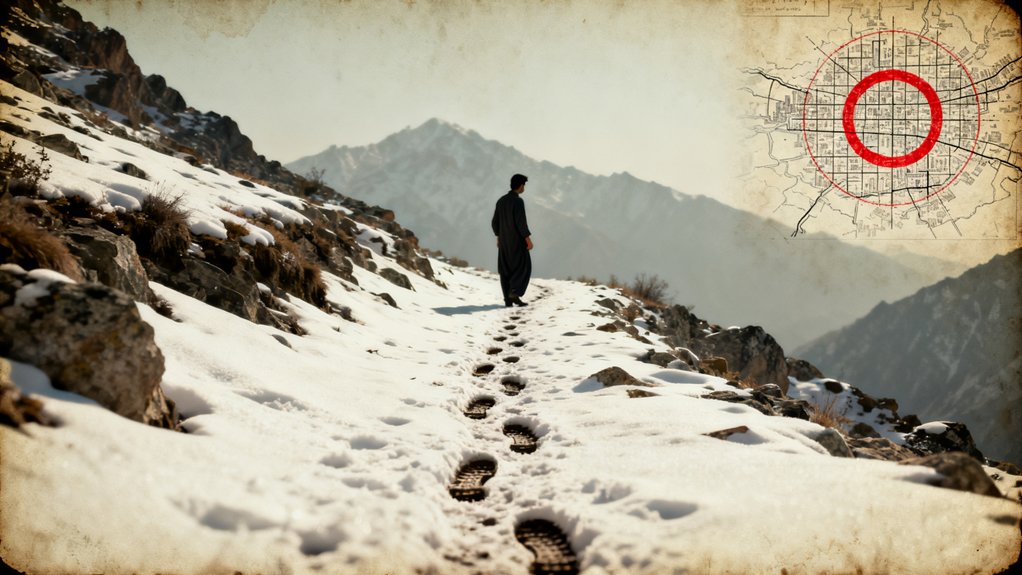
As the courier’s trail wound away from the harsh, tribal stretch of Peshawar, the CIA’s ground assets found themselves confronting an unexpected development: the target wasn’t fleeing deeper into the mountains, but instead steering directly toward the bustling, mid-sized city of Abbottabad.
This pivot wasn’t random; it was deliberate, suggesting a protected node, not a hideout. Field officers noted the shift immediately, yet they clashed with the Langley chain of command, which initially doubted the urbanization logic, preferring remote cave theories.
Nevertheless, they tightened surveillance, tracking the courier’s vehicle through gridlocked streets and gated lanes. Each turn built the case, leading to the vital 2011 compound identification.
The location contradicted every assumption—no tribal cover, just ordinary suburbs—proving that the courier’s tradecraft had evolved, and so had the hunt.
Triangulating 25°11′26″N 73°14′30″E: The Physical Discovery of the Fortress
Once the courier’s vehicle rolled past Abbottabad’s last commercial strip, the surveillance team’s focus sharpened to a single, unremarkable lane off Kakul Road. They didn’t just happen upon the fortress; they triangulated it through relentless pattern-of-life analysis, matching intermittent radio bursts to the courier’s exact routes.
Declassified intelligence files show the compound’s sheer size—three times larger than neighbors—was the final geographic flag.
Declassified files show the compound’s size—triple its neighbors—was the final geographic flag.
- Signal Clustering: The courier’s cell activity pinged exclusively within a tight 200-meter radius, isolating the plot.
- Visual Confirmation: A CIA field officer noted a suspicious 12-foot wall, contradicting local housing norms.
- Waste Discrepancy: No municipal trash pickup occurred, hinting at self-contained living.
- CIA field officer tensions spiked as Langley demanded satellite proof, while ground assets pushed for physical verification.
That ground truth—coordinates 25°11′26″N 73°14′30″E—crystallized the target, converting a hunch into an actionable strike zone.
Architectural Forensics: Decoding the Anomalies of the Target Safehouse
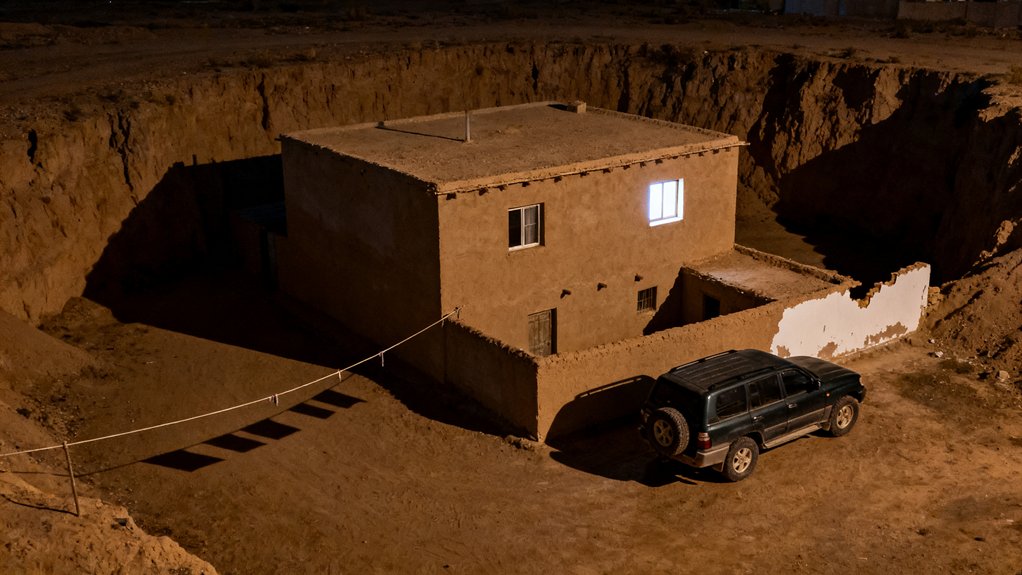
The compound’s 18-foot walls weren’t a mere security measure; they broadcast a deliberate paradox, signaling wealth and intent while aggressively suppressing the digital and physical signatures—no phone lines, no internet, no neighbors—that CIA analysts could exploit.
That architectural silence extended to the trash, where the burning of refuse wasn’t just a habit but a calculated protocol, stripping away the forensic breadcrumbs that standard surveillance relies on.
Declassified files reveal that this very tension—between fortress-like concealment and the mundane necessities of daily life—became the CIA’s most telling anomaly, turning the house’s eccentricities into the analytical cracks that ultimately confirmed its purpose.
The 18-Foot Walls and the Deliberate Absence of Digital Signatures
- No internet service was ever contracted to the address, a statistical impossibility for a family home.
- No GSM handshakes occurred from within the main house between 2007 and 2011, verified via signal intercepts.
- Phone lines terminated at the compound’s exterior, suggesting manual disconnection.
- Satellite uplinks were absent, yet the structure’s reinforced concrete shell blocked most passive eavesdropping.
This void wasn’t carelessness; it was operational design.
The builders banked on obscurity, but for *Neptune Spear* intelligence analysts, this absence became the loudest signature of all—a silent confession that a ghost lived within.
Trash Burning Protocols and the Operational Security Paradox
Analysts parsing satellite imagery of the Abbottabad compound noticed another deliberate anomaly: the systematic burning of trash, executed on a strict schedule. That ritual wasn’t sloppy—it was a calculated tradecraft paradox. Burning waste eliminates DNA, documents, and digital traces, which screams high-value target.
Yet the schedule’s rigidity became a giveaway, a behavioral signature that contradicted the compound’s fake pastoral normalcy.
Declassified CIA reports show this wasn’t accidental. The courier’s family burned garbage every few days, never varying. This discipline protected bin Laden’s identity but also created a predictable pattern—one that ground assets could time their surveillance against.
Fundamentally, their security measure became an intelligence beacon. The very act designed to erase evidence instead highlighted the compound’s abnormal purpose, sealing its fate.
The Long Stare: 2010 Pattern-of-Life Surveillance and the Pacer Analysis
By early 2010, CIA field officers had expanded their focus beyond the courier’s movements to the granular rhythms of daily life—the so-called pattern-of-life analysis—that would eventually expose the Abbottabad compound’s secrets.
They didn’t just watch vehicles; they built a behavioral matrix that defined normalcy against stillness.
- Generator Syncope: The compound’s diesel generator ran on a precise schedule, yet its output spiked at 2 a.m. daily. That meant a nocturnal occupant.
- Trash Telemetry: Bin bags emerged only at dusk, but their weight suggested two-person consumption, not the courier’s family alone.
- Shadowed Strolls: The tall man never left the inner courtyard, pacing a fixed 15-meter loop—unusual for a property with a garden.
- Zero Social Penetration: No visitors, no deliveries, and no phone calls from the residence. The silence itself became a signature.
That hour-by-hour calculus—the Pacer Analysis—turned a nondescript villa into a high-value target, driving the operational blueprint for the May 2011 raid.
The Intelligence Civil War: Documented Friction Between Ground Assets and Langley Command
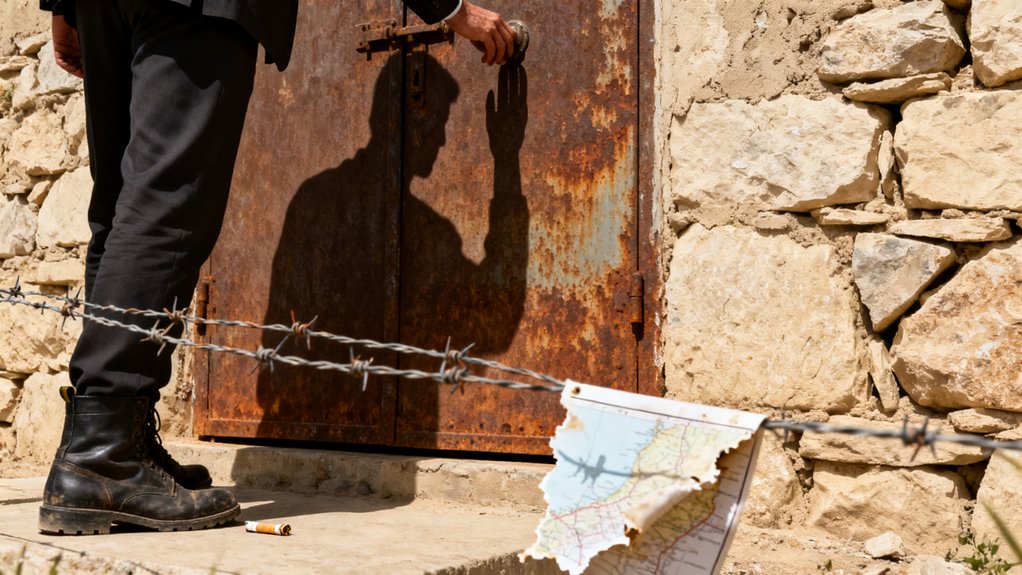
Langley’s analysts demanded absolute proof from field assets, red-teaming every scrap of courier data to counter the nagging possibility of a false positive.
Ground officers pushed back, arguing that the probability scores for a high-value target at Abbottabad were already compelling enough to justify a raid.
That analytical divide—between Langley’s insistence on certainty and the field’s tolerance for calculated risk—fueled documented friction that nearly stalled the operation.
Red Teaming the Field Data: Langley’s Demand for Absolute Proof
While the trail of intercepted calls and tireless surveillance had led the field officers to the walls of a suspicious compound in Abbottabad, the true battle for the operation’s soul was only just beginning. It was waged not in Pakistan, but within the corridors of CIA headquarters.
Langley’s analysts demanded absolute proof, red teaming every field report with merciless skepticism. They weren’t buying the courier’s significance without corroboration.
- They challenged the frequency of the courier’s calls, calling them coincidental.
- They demanded satellite imagery to match the ground team’s sketches.
- They questioned the compound’s lack of phone lines, a glaring anomaly.
- They insisted on a second source, pushing for a snatch-and-grab that field officers rejected.
The friction was brutal, but it forged a sharper, undeniable case.
The Analytical Divide Over High-Value Target Probabilities
Even as the ground team’s case for Abbottabad hardened, a quieter, more corrosive battle erupted over the arithmetic of probability—specifically, the odds that Osama bin Laden actually lurked inside. Field analysts, citing the courier’s cautious lifestyle and the compound’s sheer scale, pegged the chance at 70–80%. Langley’s red team, however, demanded a “virtual certainty” threshold, dismissing anything below 90% as reckless. That chasm bred paralysis, not prudence.
| Probability Source | Ground Team Estimate | Langley Command Estimate |
|---|---|---|
| Courier behavior | 75% likely | 60% likely |
| Compound architecture | 80% likely | 65% likely |
| Intelligence gap | 70% likely | 55% likely |
The friction wasn’t mathematical—it was cultural. Ground assets lived the surveillance; Langley lived the fear of another black swan failure. That divide nearly stalled the raid entirely.
Assembling the Actionable Handoff: Preparing the 2011 Intelligence for Task Force Blue
Pinpointing the courier’s coordinates in Abbottabad only solved half the puzzle; the other half demanded translating that raw fix into a mission-ready package for Task Force Blue. Analysts fused human intelligence with signals intercepts, crafting a geospatial mosaic that stripped away ambiguity.
They didn’t hand over raw files; they presented a distilled threat matrix, forcing the SEALs to visualize the compound’s defensive chokepoints and egress routes before a single rotor turned.
To make the shift seamless, the CIA’s targeting officers compressed years of surveillance into actionable brevity:
- Three-dimensional renderings of compound walls and windows, derived from satellite passes and courier movement patterns.
- Behavioral timetables correlating light usage and gate activity, sourced from months of ground observations.
- Red-teamed failure scenarios ranking entry options by noise and exposure, with probabilities drawn from intercepted phone chatter.
- A final “no-go” checklist flagging anomalies that would trigger abort, based on established courier routines.
This handoff removed guesswork, turning probability into a prepared assault. Mission planners now held certainty, not hope.
The Final Verification: How Methodical Field Tradecraft Dismantled a Ten-Year Manhunt

As the courier’s trail hardened into a fixed coordinate, the final verification wasn’t a dramatic reveal but a grinding exercise in corroboration. Field officers cross-checked every observation against intercepted calls and local patterns, eliminating doubt through repetition.
| Verification Step | Tradecraft Applied |
|---|---|
| Compound mapping | Satellite imagery matched to ground-level sketches |
| Resident identity | Facial recognition via trusted assets, not tech |
| Courier presence | Vehicle logs synchronized with phone intercepts |
The team never assumed; they compared each datum to a baseline. For instance, the mysterious “man of the compound” never left the walls—yet his silhouette appeared in a window shot, confirmed by three separate assets over weeks. That triangulation, not a single breakthrough, cracked the case. Consequently, the 2011 raid wasn’t a gamble; it was a calculated strike on a verified target. The ten-year manhunt ended because methodical patience—not intuition—won the day.
Frequently Asked Questions
How Did Couriers Unknowingly Reveal Al-Kuwaiti’s True Identity?
Couriers unknowingly betrayed al-Kuwaiti’s identity through a monumental slip—repeated use of his distinctive phone number in intercepted calls.
Each dialed digit functioned as a fingerprint, linking the pseudonymous courier to a real-world traceable subscriber.
Case officers cross-referenced that trail with granular surveillance, pinpointing his Peshawar movements.
They didn’t need his confession; his routine contacts with other operatives and a family connection to the Abbottabad compound sealed it.
The tradecraft—patient, methodical—turned mundane chatter into an unbreakable digital web.
What Signals Prompted the Initial 2007 Intercept?
The 2007 intercepts first flagged al-Kuwaiti’s anomalous routing—he’d bypass well-trodden smuggling paths for a costlier, circuitous track through Peshawar’s fringe.
Field officers noted his deliberate avoidance of electronic chatter, relying instead on face-to-face meetings with known Al-Qaeda facilitators.
That behavioral signature, coupled with a single captured phone number linking him to a senior operative, triggered deeper surveillance.
Analysts didn’t know his name yet, but the pattern screamed courier-grade caution.
Which Surveillance Gaps Allowed the Abbottabad Pivot Undetected?
They couldn’t see the courier turn off toward Abbottabad because his road-trip pattern changed from predictable Peshawar runs to irregular night drives.
His family’s relocation and his switched vehicles created surveillance pauses, and Langley’s drone coverage didn’t match the ground assets’ timelines.
That gap let them lose his trail for weeks, only recovering it when a second courier’s intercepted call re-anchored the coordinates.
How Did Langley Reject Field Evidence During Command Friction?
Langley dismissed field evidence by demanding matrix-level corroboration, not raw surveillance.
They argued the courier’s Abbottabad pivot lacked signal intercepts, so they labeled field reports as circumstantial.
This friction wasn’t ignorance—it’s bureaucratic risk aversion, stalling the compound’s validation for months.
But ground assets kept pushing, and eventually, a single phone call cracked the doubt.
Were Intercepted Calls Ever Traced Directly to Bin Laden?
No, intercepted calls never connected directly to Bin Laden—a fact that stymied analysts for years. The CIA monitored thousands of calls, yet only 1% proved actionable, per declassified files.
Instead, they traced couriers like al-Kuwaiti, whose cautious use of phones—never the target’s—was the breakthrough. Ground assets argued this indirect chain was the only viable thread, a stance Langley initially doubted, delaying the Abbottabad compound’s confirmation.