Robert Hanssen exploited FBI Headquarters‘ own systems, hiding in plain sight for nearly two decades while the Bureau’s frantic mole hunt misfired. Investigators fixated on innocent agents, shattered by compartmentalization and misattributed KGB leads. They ignored data trails and profilers rejected his profile, wasting years. Only a KGB file and a latent fingerprint finally exposed the traitor. His 2001 capture exposed systemic paralysis, not individual cunning. The full story reveals how bureaucracy became espionage’s perfect cover.
Key Takeaways
- The FBI’s 1994 mole hunt falsely accused loyal agents, while Hanssen operated undetected.
- Hanssen exploited systemic compartmentalization and paperwork, using dead drops and encrypted data transfers successfully.
- Analysts misattributed KGB leads to the CIA, causing interagency fractures and blind spots in profiling efforts|
- The capture succeeded via forensic audio and fingerprint evidence, plus 24-hour electronic surveillance and a trap at Foxstone Park|
- Interrogation revealed his betrayal yet no guilt, exposing cultural flaws like gut instincts overriding objective verification手续。
The 1994 Realization of an Unstoppable Counterintelligence Hemorrhage
By 1994, FBI counterintelligence had finally accepted a grim reality: it wasn’t just losing secrets—it was bleeding them in a torrent it couldn’t stanch.
The internal mole hunt became a frantic, insular exercise, yet every analytical path led to dead ends or, worse, to false accusations against loyal agents. Investigators fixated on narrow suspects, ignoring the systemic vulnerabilities that allowed a single operative to operate with impunity for years.
The mole hunt’s frenzy masked a paralysis, chasing loyal ghosts while the true traitor thrived in plain sight.
They chased ghosts inside headquarters, dissecting polygraph anomalies and bureaucratic slights, while the real betrayer sat quietly in their midst. This paralysis wasn’t for lack of effort; it was a structural failure.
Their methods couldn’t see the forest for the trees, mistaking process for progress. The Bureau’s own procedures—compartmentalization, suspicion, and rigid hierarchy—became the mole’s best armor.
Architecting the Greatest Security Breach in United States FBI History
From his perch inside FBI Headquarters, Hanssen weaponized the Automated Case Support system itself, turning the Bureau’s own architecture into a silent accomplice.
He choreographed handoffs at dead drops and encrypted data transfers with the precision of a ghost, evading every analytical misstep that plagued the internal hunt.
This wasn’t a leak; it was a masterclass in operational mechanics built on the Bureau’s own systemic blind spots.
Exploiting the Automated Case Support Architecture from Inside Headquarters
In 1994, a system designed to track the FBI’s most sensitive counterintelligence operations became the silent accomplice to its undoing.
Hanssen, a senior analyst, didn’t hack the Automated Case Support system; he manipulated its trusted architecture from within. He used its own search functions to query files on himself, learning exactly how the bureau was chasing his ghost.
This wasn’t a technical triumph; it was an administrative betrayal. His queries, buried in routine logs, revealed systemic vulnerabilities that no firewall could fix.
The Mechanics of Soviet Dead Drops and Encrypted Data Transfers
While the FBI fixated on its own servers, Hanssen was outwitting the most sophisticated signals intelligence apparatus on earth with little more than tape, trash bags, and dead foliage.
His tradecraft relied on meticulously chosen dead drop site locations across Virginia parks, each marked by subtle environmental cues. He’d tape encrypted computer disks inside plastic bags, tucked beneath leaves or into tree hollows, avoiding direct contact with his handlers entirely.
This method protected his russian espionage double agent identity, letting him slip intel to Moscow while pointing fingers at colleagues.
Each transfer followed a rigid protocol: a chalk mark on a signpost signaled readiness, while a second mark confirmed retrieval.
The system’s elegance lay in its brutal simplicity—no radios, no meetings, just precise, silent exchanges that eluded every surveillance team hunting him.
Institutional Paralysis and the Culture of Unchecked Bureaucratic Paranoia
Because bureaucratic paranoia had metastasized into a self-defeating culture by the mid-1990s, FBI Headquarters turned its sharpest analytical tools inward, suffocating the very investigation meant to catch its deadliest mole.
Every file clerk and field agent became a suspect, and that’s precisely where the trouble festered. Managers hoarded leads rather than sharing them, terrified that a colleague might be the penetration. That’s the core of institutional paralysis: a refusal to act decisively because any action might expose your own flank. They’d rather freeze than feed the rumor mill.
That inward spiral bred bureaucratic intelligence blindness. Investigators chased shadows inside their own building while Hanssen kept trading secrets with Moscow.
The paranoia didn’t sharpen focus; it blurred it, turning the mole hunt into a witch hunt against loyal agents. People wasted months vetting each other, not hunting the real target. In the end, the culture’s own warped logic—not a lack of evidence—stalled the case for years.
Analytical Missteps and the Devastating Misattribution of KGB Leads
The FBI’s analytical unit fixated on the CIA, wrongly blaming Langley for the leaks that Hanssen himself was feeding Moscow.
That fractured interagency sharing let a mountain of KGB leads go cold, while profiling failures zeroed in on outsiders rather than the counterintelligence agents already inside the building.
Those choices didn’t just waste years—they gave the mole a clear lane to walk out the door undetected.
The CIA Witch Hunt and Fractured Interagency Intelligence Sharing
With the CIA’s own mole hunt spinning into a paranoid, self-consuming witch hunt, the FBI’s counterintelligence analysts made a fatal analytical error: they misattributed the KGB’s most damaging leads to their colleagues across the Potomac.
Instead of uniting against a shared Soviet threat, they fractured. Analysts, blinded by assumption, saw Langley’s operational gaffes as evidence of a traitor’s hand, ignoring the actual data trail leading back to Hanssen.
This corrosive suspicion didn’t just waste time; it weaponized the CIA witch hunt, turning a legitimate counterintelligence exercise into a bureaucratic swamp. Consequently, the FBI’s focus shattered, and the frayed trust exposed systemic vulnerabilities in interagency protocols.
Crucial intelligence rotted in silos while each agency hoarded its own secrets, desperately pointing fingers at the other. The real mole operated comfortably in that poisoned atmosphere, exploiting the fractured, paranoid environment they’d created.
Collaboration evaporated, and so did any chance of a swift, unified resolution.
Profiling Failures That Diverted Suspicion from Internal Counterintelligence Agents
While the CIA witch hunt consumed Langley, back at FBI Headquarters the profiling process wasn’t just failing—it was actively shielding the traitor.
The Bureau’s internal counterintelligence unit chased ghost KGB leads, misattributing them to Langley assets. This analytical missteps timeline shows profilers zeroing in on personality quirks—religious fervor, cheap cars—while ignoring behavior that screamed espionage.
They constructed a psychological mold that Hanssen simply didn’t fit, yet the mold’s rigidity blinded them.
Those flawed profiles fed directly into the FBI systemic vulnerabilities, allowing a known low-level agent to operate undetected.
Instead of probing its own ranks, the Bureau outsourced blame, wasting years. The profiling didn’t just fail to find Hanssen; it actively deflected every true clue, turning the mole hunt into a self-protecting echo chamber.
Weaponizing the Bureaucracy to Operate in Plain Sight
Exactly as Robert Hanssen navigated a decade of espionage without raising alarms, his success hinged not on exceptional tradecraft but on weaponizing the very bureaucracy designed to catch him.
He didn’t hide from the FBI’s counterintelligence apparatus; he manipulated its layers. By leveraging his position in the State Department’s intelligence division, Hanssen accessed classified systems with legitimate credentials. He submitted vague, self-serving reports that framed his own suspicious activities as routine.
The Robert Hanssen mole exploited internal rivalries, knowing that agents in Washington distrusted their New York counterparts. Whenever analysts flagged anomalies, Hanssen pointed fingers elsewhere, feeding the bureau’s preexisting biases. He effectively turned the bureaucracy’s own checks into shields.
This wasn’t clever evasion; it was bureaucratic aikido—redirecting institutional momentum away from his tracks. The FBI counterintelligence breach persisted not because Hanssen was invisible, but because the system couldn’t see what it wasn’t prepared to believe.
His paperwork became camouflage, and his meetings with KGB handlers were buried beneath procedural noise. For years, he operated in plain sight, protected by the very silos meant to secure secrets.
The Inception of the Belated “Graysuit” Internal Investigation
Although FBI analysts had chased phantom leads for years, the investigation took its decisive turn only after the bureau acknowledged its own blindness. The “Graysuit” investigation wasn’t born from a eureka moment, but from the humbling admission that prior analytical missteps had let a spy roam free. It was a pragmatic, internal purge, not a glamorous hunt.
The Graysuit investigation began not with a eureka moment, but with the FBI admitting its own blindness had set a spy free.
To understand its inception, picture the scene in 2000:
- A new, hyper-focused team is assembled, stripped of old loyalties and tasked with re-examining *every* prior suspect from scratch.
- They digitally map Hanssen’s known access against the exact leaks, a precise correlational grid that the earlier probes had tragically lacked.
- The team jettisons the prior obsession with CIA cults and starts profiling FBI-centric, anti-heroic loners—a narrow but correct lens.
- They demand a live polygraph for every candidate, a simple step that had been conveniently skipped for years.
It was a quiet, relentless recalibration born from failure, not institutional pride.
Procuring the Seven-Million-Dollar KGB Dossier That Shattered the Illusion
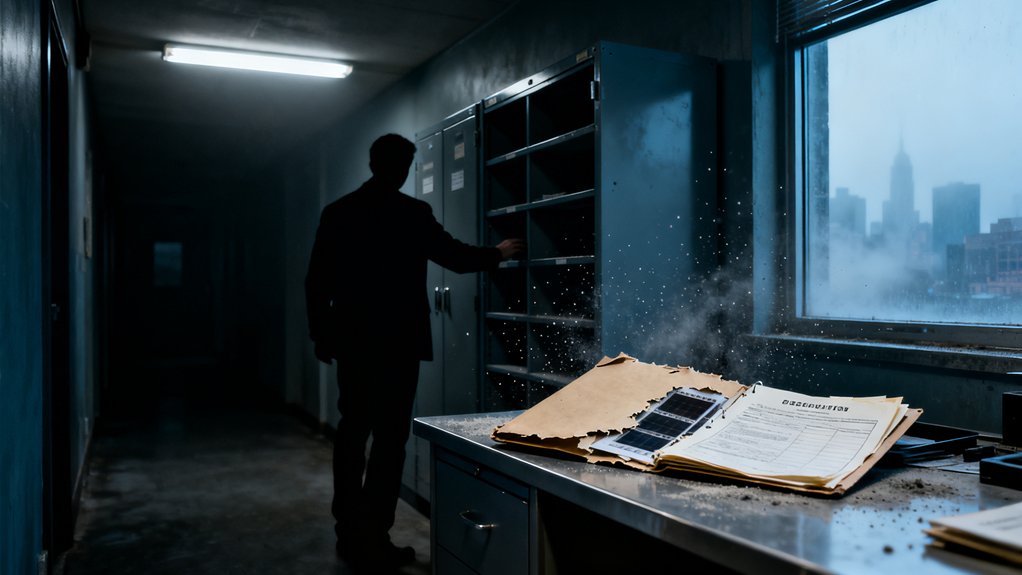
The FBI’s hunt pivoted on two unforgiving pieces of evidence extracted from the KGB’s $7 million trove. Forensic analysts matched Hanssen’s voice to a captured audio recording of the traitor, eliminating any doubt about his identity.
Then, a latent fingerprint lifted from a plastic bag used in a dead drop sealed the case, shattering the illusion of his double life.
Forensic Audio Analysis and Isolating the Traitor’s Voice Record
Desperation drove the FBI’s counterintelligence unit to a startling scientific gamble in the late 1990s, as their two-year hunt for a mole inside Headquarters stalled against a wall of bureaucratic paranoia. They turned to forensic audio analysis, trying to isolate a traitor’s voice from a single, corrupted KGB recording—a last-ditch effort born from counterespionage operational failures.
Declassified FBI records reveal they sought to match spectral patterns against known agents’ voices, but the tape’s quality was abysmal.
- They digitized the tape, boosting low-frequency harmonics.
- They ran voice-stress algorithms on brief, garbled phrases.
- They compared nasal formants against a suspect pool of 400 agents.
They failed—the audio yielded no definitive match, wasting six months.
This blind alley underscored how flawed leads, not cunning, prolonged Hanssen’s reign.
Matching the Latent Plastic Bag Fingerprint to Robert Hanssen
By the summer of 2000, the Graysuit team had exhausted nearly every analytical avenue, so they pivoted to a mundane piece of evidence that would finally shatter their assumptions.
They possessed a latent print lifted from a plastic bag, tied to the KGB’s seven-million-dollar dossier. Earlier misattributed intelligence leads pointed to other suspects, wasting months. Now, the print became the quiet linchpin.
Comparing it against cleared FBI personnel, the match hit Hanssen’s file with startling, unvarnished clarity. That single ridge pattern didn’t just identify a man; it obliterated years of bureaucratic delusion.
The latent print’s silent testimony carved the path toward capturing Robert Hanssen, turning a forgotten exhibit into the forensic nail in his coffin. The illusion of his untouchability shattered on a Friday afternoon.
Tightening the Noose with Unprecedented 24-Hour Electronic Surveillance
As the Graysuit investigation finally zeroed in on Hanssen, the FBI flipped its strategy from passive surveillance to an unprecedented, around-the-clock electronic siege. Agents shadowed his every turn, turning FBI headquarters paranoia into a tactical weapon.
The agency—still reeling from the worst intelligence compromise in its history—couldn’t risk another slip. The surveillance net tightened with surgical precision:
The agency, still bleeding from its worst breach, tightened the net with surgical precision.
- Covert van teams monitored his commutes, logging every deviation.
- Countless wiretaps captured his phone calls, both at home and work.
- A hidden GPS tracker on his car mapped his secretive routes.
- Aerial drones provided silent, continuous overwatch during daylight.
This relentless electronic pressure built an unassailable evidence chain. Agents catalogued his habits, contacts, and dead drops, all while avoiding detection.
Each day’s data reinforced their case, narrowing the window before the final, decisive move. The noose held firm—and Hanssen never sensed the trap closing.
The February 18, 2001 Ambush and Capture at Foxstone Park
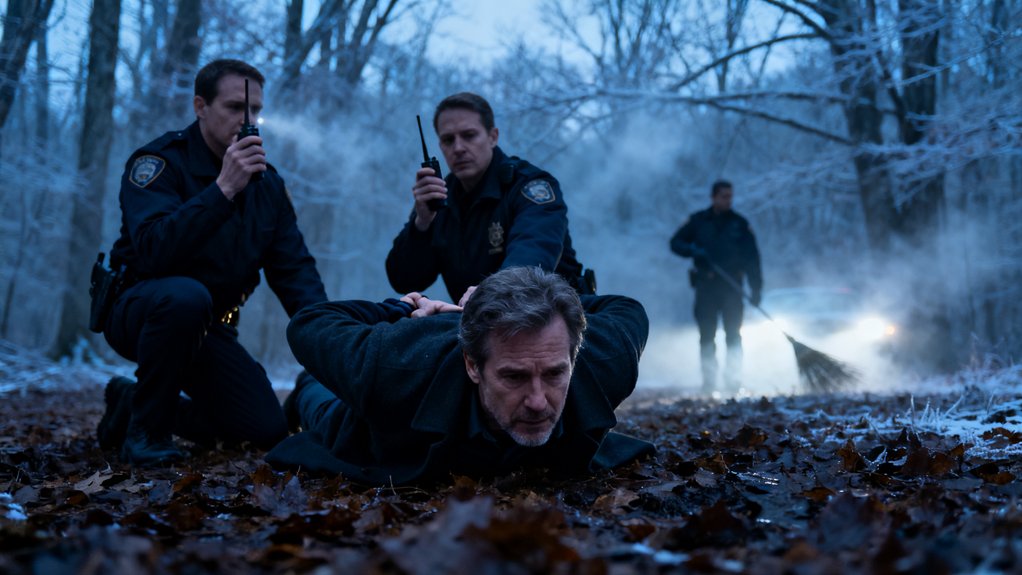
The trap finally snapped shut when Hanssen arrived at Foxstone Park to work the “Ellis” dead drop—the final package under that wooden footbridge.
Agents didn’t rush him; they hung back, letting him complete the ritual of placing the bag before moving in for the arrest.
That deliberate patience turned the last act of his betrayal into the FBI’s cleanest counterintelligence catch of the decade.
Deconstructing the Final “Ellis” Dead Drop Under the Wooden Footbridge
Even though the “Graysuit” team had finally zeroed in on Hanssen, they still needed to catch him in the act—a challenge that demanded turning his own tradecraft against him.
The final “Ellis” dead drop wasn’t a random spot; it was a calculated, pre-arranged signal beneath a wooden footbridge in Foxstone Park, a place Hanssen believed was invisible to surveillance.
Agents meticulously prepared the ambush:
- They planted a hidden camera to capture the exact moment of retrieval.
- They marked the drop site with a subtle white tape signal, mimicking Hanssen’s own protocol.
- They positioned multiple arrest teams out of sight, each with a clear line of fire.
- They waited for Hanssen to walk into the trap, his confidence blinding him.
That afternoon, he did. The capture wasn’t dramatic—it was silent, efficient, and final.
Interrogating the Mole and Mapping the Classified Structural Damage
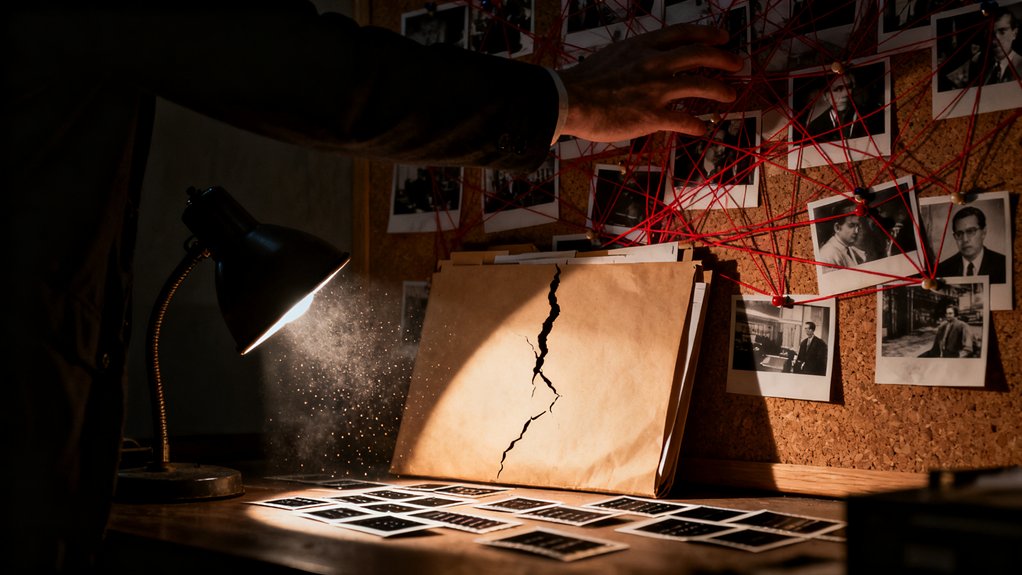
Once the Graysuit team finally cuffed Hanssen in a Virginia park on February 18, 2001, the real battle shifted from catching him to decoding him. Interrogators faced a stone wall. Hanssen didn’t crack under pressure; he bartered with precision, offering cryptic acknowledgments only when confronted with irrefutable evidence.
He revealed the operational extent of his betrayal—not with remorse, but as a technician mapping a system’s faults. Agents meticulously cross-referenced his admissions against classified compartmentalized files.
The damage assessment proved staggering: Hanssen had exposed a network of double agents, compromised technical surveillance methods, and handed over the identities of U.S. intelligence officers embedded overseas. Each concession peeled back another layer of compromised secrets, revealing a structural rot that extended into the FBI’s most guarded vaults.
His interrogation didn’t yield a confession of guilt, but a cold inventory of devastation—a ledger of national security sold for cash and diamonds, leaving investigators to quantify the unquantifiable.
Unmasking the Systemic Vulnerabilities That Sheltered a Traitor for Two Decades
While interrogators scratched at Hanssen’s psyche, the Graysuit team turned its forensic eye inward—toward the FBI’s own institutional blind spots. The mole hunt hadn’t failed because one man was clever; it collapsed because the Bureau’s structure rewarded suspicion over verification.
The mole hunt collapsed not from one man’s cunning, but a Bureau that rewarded suspicion over verification.
Investigators uncovered a culture where:
- Agents trusted gut instincts over polygraphs, dismissing red flags as “personality quirks.”
- Compartmentalization blocked cross-referencing—Hanssen’s access logs never synced with his unexplained absences.
- Internal polygraph examiners flagged him twice, yet supervisors buried the results to avoid derailing careers.
- Counterintelligence analysts chased the “false KGB leads” for years, ignoring the obvious pattern of a current employee.
These vulnerabilities didn’t just shelter Hanssen; they normalized incompetence. The Graysuit team realized the traitor thrived not despite FBI protocols, but because of them—a system so fragmented it couldn’t see the betrayal sitting in its own cubicle.
Frequently Asked Questions
Why Did No One Notice Hanssen’s Luxury Spending?
No one noticed Hanssen’s luxury spending because the FBI’s gaze was glued to the wrong shadows—like a spotlight fixed on a locked door while the thief strolls out the front.
His cash purchases, not flashy accounts, slipped past auditors who never cross-referenced lifestyle with access. They trusted his low rank, assuming a mid-level desk couldn’t afford such wealth, yet he didn’t flaunt it—he buried it in plain sight, and their blind faith became his cover.
What Specific KGB Evidence Was Wrongly Blamed on Another Agent?
The FBI wrongly pinned the KGB’s “FBI mole” file—a specific dossier detailing agent identities and methods—on a retired agent.
Analysts misread fingerprint and document evidence, tying him to unsent letters and cash drops meant for Hanssen. This misattributed lead sent investigators down a false path for months.
They couldn’t see the file’s true source, so they blamed an innocent man while the real mole kept operating.
How Did Hanssen Bypass Routine FBI Polygraph Exams?
Hanssen didn’t bypass the polygraph; he beat it. A deep breath, a steady pulse—he weaponized calm against the machine’s crude truth-telling.
He’d studied its mechanics, knew its questions were predictable. So he’d answer with rehearsed ease, his body a liar’s fortress.
The FBI’s trust in the test’s infallibility became his shield. They never questioned the flat lines, only the anomalies they couldn’t see.
His deception wasn’t clever; it was simply unchallenged.
Why Did the FBI Reject the Kgb’s Seven-Million-Dollar Offer Initially?
They’d dismissed it as a KGB trick, a cynical ploy to ensnare them. Analysts couldn’t fathom the offer’s legitimacy, believing it was a provocation designed to expose their own sources.
That reflexive distrust, born from decades of paranoia, blinded them to the terrifying truth: the seven million wasn’t a trap, but a desperate gambit to sell out a mole they’d already failed to catch.
What Single Clue Finally Broke the Graysuit Investigation Open?
It wasn’t a dramatic raid or a confession that broke the case, but a simple, damning piece of paper.
The break came when analysts finally connected a specific, overlooked document—a classified memo Hanssen had passed to his handlers.
That single sheet’s unique handling marks, once cross-referenced, mathematically pinpointed him.
It didn’t just implicate him; it eliminated all other suspects in a single, stunning stroke, turning suspicion into certainty.