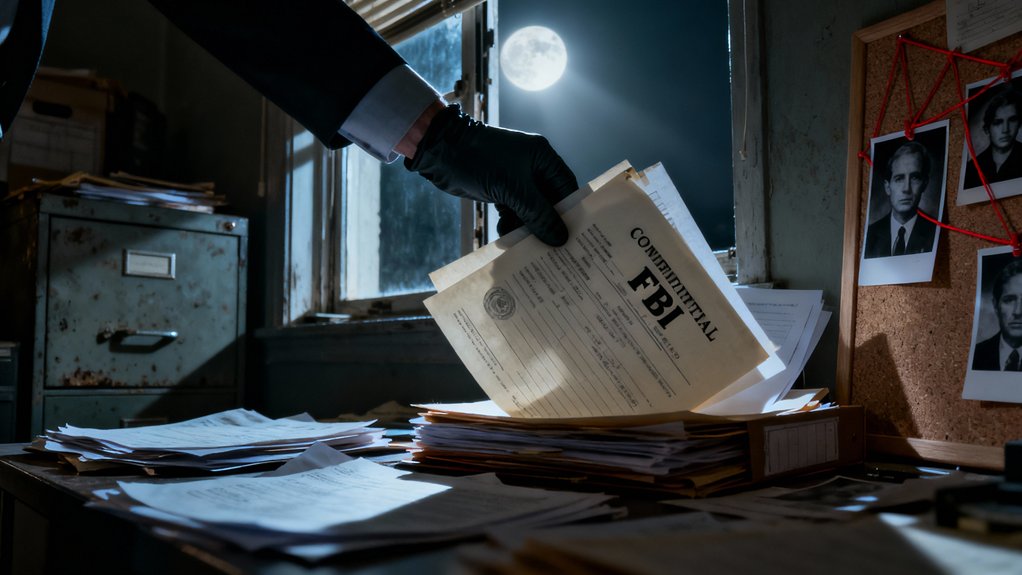
On a cold March night in 1971, eight ordinary citizens broke into an FBI field office in Media, Pennsylvania, armed with little more than crowbars and conviction. What they discovered inside would shatter the bureau’s carefully constructed image and reveal a sprawling domestic surveillance operation targeting American citizens exercising their constitutional rights. The stolen documents, stamped with a mysterious codename—COINTELPRO—would expose a government program whose tactics bordered on the criminal.
Key Takeaways
- On March 8, 1971, eight activists burgled the FBI office in Media, Pennsylvania, stealing over 1,000 classified documents.
- The Citizens’ Commission to Investigate the FBI executed the break-in during the Ali-Frazier boxing match to minimize detection.
- Stolen documents exposed COINTELPRO’s illegal surveillance, infiltration, and disruption of political organizations and civil rights groups.
- The Washington Post published the files on March 24, 1971, revealing FBI resources targeted dissent over organized crime.
- Public exposure forced J. Edgar Hoover to terminate COINTELPRO and led to permanent intelligence oversight reforms.
What COINTELPRO Was and Why the FBI Operated It in Secret
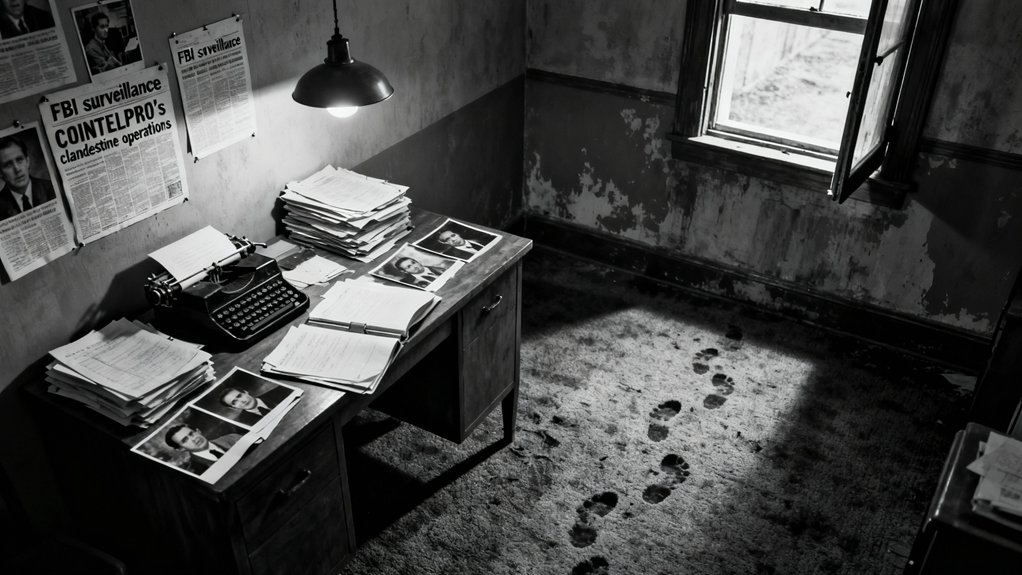
Between 1956 and 1971, the Federal Bureau of Investigation conducted a sprawling campaign of domestic espionage that would later be recognized as one of the most systematic violations of civil liberties in American history. COINTELPRO—shorthand for Counter Intelligence Program—represented political repression disguised as national security. The FBI surveilled, infiltrated, and actively dismantled organizations deemed subversive, deploying over 50,000 informants and executing approximately 2,300 covert operations without warrants or oversight.
J. Edgar Hoover’s apparatus operated in absolute secrecy, conducting nearly one million intelligence investigations on Americans while Congress and the Justice Department remained oblivious. The program’s illegal tactics—warrantless break-ins, forged correspondence, systematic misinformation—required shadows. COINTELPRO aimed to prevent coalitions, discredit leaders, and neutralize movements challenging established power, functioning as a sophisticated vigilante operation that trampled First Amendment protections. The Church Committee would later determine that many COINTELPRO tactics would be intolerable even if targets engaged in violence.
Who COINTELPRO Targeted: Black Panthers, MLK, and Anti-War Groups
The machinery of COINTELPRO turned most viciously against those demanding racial justice and an end to the Vietnam War. In 1968, the FBI labeled the Black Panthers the greatest threat to internal security, deploying infiltrators like William O’Neal and orchestrating deadly raids that killed Fred Hampton. Martin Luther King Jr. faced surveillance aimed at preventing any “messiah” from unifying Black liberation movements. The Bureau forged letters inciting violence between Panthers and rival organizations, framed leaders like Geronimo Pratt for decades of imprisonment, and disrupted anti-war groups through systematic counterintelligence. Hampton’s success in forging an unprecedented alliance between Black Panthers, Puerto Rican Young Lords, and poor Appalachian whites of the Young Patriots made him a particularly urgent target for federal disruption. This political repression employed sabotage, misinformation, and lethal force—a coordinated assault on movements challenging America’s racial and imperial order.
Illegal Tactics the FBI Used to Disrupt Political Movements
FBI counterintelligence operations relied on tactics that violated constitutional rights and federal law with methodical precision. Agents infiltrated activist organizations, planting informants who spread discord and provoked illegal actions from within. Covert manipulation extended to warrantless break-ins, wiretapping, and physical surveillance of dissident homes. The Bureau forged correspondence between leaders, fabricated evidence of betrayal, and published bogus leaflets to destroy reputations. Disinformation tactics included anonymous letters to employers and landlords, false media stories, and bad-jacketing—falsely labeling activists as informants, sometimes with lethal consequences. Agents created phantom organizations to sow confusion, manipulated parents against their children, and coordinated with local police for harassment campaigns. Operations required authorization through FBI headquarters in Washington, D.C., centralizing control over these systematic abuses. These operations systematically dismantled coalitions, transforming peaceful movements into fractured, paranoid networks incapable of unified resistance.
The 1971 Burglary That Exposed COINTELPRO’s Existence
On March 8, 1971, while millions of Americans fixed their attention on Muhammad Ali and Joe Frazier battling through fifteen brutal rounds in the Fight of the Century, eight ordinary citizens executed an extraordinary crime. The Citizens’ Commission to Investigate the FBI—led by physicist William Davidon and comprising professors, a cab driver, and a day care provider—broke into the FBI office in Media, Pennsylvania. They stole over 1,000 classified documents revealing systematic FBI infiltration and activist surveillance operations.
What they discovered:
- Documents labeled “COINTELPRO—New Left” exposed coordinated government programs targeting dissent
- FBI systematically infiltrated anti-war movements and left-leaning organizations
- Political files were strategically selected; bank robbery cases ignored
- Anonymous distribution to newspapers guaranteed public exposure
- Their identities remained hidden for forty-three years
- One document from 1955 detailed the FBI’s effort to collect derogatory information about Martin Luther King Jr. during the Montgomery bus boycott
What the Stolen FBI Files Revealed About Surveillance Abuses
Among the thousand stolen documents spread across newsroom desks in March 1971, a disturbing pattern emerged that would shatter America’s trust in its premier law enforcement agency. The Media, Pennsylvania files revealed that domestic espionage consumed 40% of that office’s resources, with over 200 investigations targeting left-leaning and liberal organizations. Meanwhile, organized crime received barely 1% attention, mostly gambling cases.
The documents exposed political infiltration designed not merely to monitor but to destroy. Agents fabricated documents to incite hostility, planted listening devices in homes and meeting rooms, and executed warrantless searches. The Bureau’s tactics aimed to break marriages, provoke deadly rivalries, and ostracize activists from their professions. These weren’t intelligence operations—they were systematic campaigns to discredit and demoralize citizens exercising constitutional rights.
The files revealed operations spanning 41 FBI field offices, coordinating nationwide surveillance and disruption activities against domestic political organizations under the COINTELPRO-Black Nationalist-Hate Groups program.
Public Outrage and Media Coverage That Ended COINTELPRO
When The Washington Post published the stolen FBI files on its front page on March 24, 1971, the American public confronted an institution it barely recognized. Documents exposed fifteen years of illegal surveillance targeting civil rights activists, antiwar protesters, and feminists. Public sentiment shifted dramatically as investigative journalism revealed psychological warfare campaigns, including anonymous threats to Martin Luther King Jr. and fabricated stories that contributed to Jean Seberg’s suicide. Media outlets, once uncritical of the FBI, pursued revelations through Freedom of Information Act lawsuits. NBC’s Carl Stern discovered the reference to COINTELPRO in the stolen files and filed a lawsuit that yielded 50,000 pages of files by 1974.
The stolen FBI files transformed America’s perception of federal power through revelations of coordinated campaigns against citizens exercising constitutional rights.
The convergence of exposure and outrage dismantled COINTELPRO:
- Hoover terminated operations within one year of the Media burglary
- FBI issued formal apology in November 1974
- Civil suits proliferated through organizations like the National Taskforce for COINTELPRO Litigation
- Sustained media coverage prevented further covert abuses
- Government autonomy faced permanent erosion, establishing oversight precedents
The Church Committee’s Investigation Into FBI Abuses
In January 1975, Senator Frank Church convened a select committee to investigate decades of intelligence abuses spanning six presidential administrations—a probe that would examine 110,000 documents and interrogate 800 witnesses over sixteen months. The committee’s findings revealed the full scope of FBI operations like COINTELPRO, exposing systematic campaigns of infiltration, harassment, and surveillance against civil rights leaders, antiwar activists, and even Supreme Court justices. The bipartisan committee included Senator John Tower as vice chair, who chaired some hearings at Church’s request. When the final report emerged in April 1976—six volumes spanning 2,702 pages—it documented intelligence excesses fundamentally at odds with constitutional principles and triggered sweeping legislative reforms to prevent future domestic spying programs.
Formation and Investigative Scope
The Senate Select Committee to Study Governmental Operations with Respect to Intelligence Activities emerged in early 1975 as the institutional response to a cascade of revelations that had shattered America’s faith in its intelligence apparatus. Chaired by Senator Frank Church, the committee deployed 150 staff members who examined 110,000 documents and interviewed 800 witnesses across 126 meetings. Their mandate: expose the architecture of domestic repression hiding behind national security. President Gerald Ford pledged cooperation after meeting with Church and Vice Chairman John Tower, though staff access to classified documents was not always provided in timely fashion.
The investigation’s scope revealed systematic abuses:
- NSA’s SHAMROCK and MINARET projects intercepted Americans’ communications without warrants
- CIA assassination plots targeted foreign leaders including Castro and Lumumba
- Project Mockingbird transformed journalists into intelligence assets
- COINTELPRO operations weaponized government power against citizens from the 1950s through 1971
- Intelligence oversight mechanisms were virtually nonexistent, enabling unchecked covert operations
Key Findings and Reforms
Armed with 110,000 documents and testimony from 800 witnesses, the Church Committee laid bare a sprawling apparatus of domestic repression that operated for decades without meaningful oversight. The investigation exposed systematic covert censorship targeting civil rights leaders, antiwar activists, and journalists through infiltration, blackmail, and economic sabotage. Political espionage had become routine—Supreme Court justices, reporters, and government officials monitored based solely on beliefs, not crimes. FBI agents employed “no holds barred” techniques against Americans exercising constitutional rights.
The Committee’s 96 recommendations demanded accountability. Most notably, Congress passed the Foreign Intelligence Surveillance Act in 1978, establishing judicial oversight for domestic surveillance. The 2,702-page report defied presidential pressure for silence, creating precedents that transformed how intelligence agencies balance security with liberty. Senator Church remarked that Congress had failed its oversight role, stating the watchdog committee “never really watched the dog.”
How COINTELPRO Violated Constitutional Rights and Free Speech
Between 1956 and 1971, the FBI conducted nearly one million intelligence investigations on American citizens, transforming constitutional protections into administrative obstacles to be circumvented rather than honored. This systematic campaign of political repression deployed 1,300 informants, executed 204 warrantless burglaries, and documented 20,000 illegal wiretap days. The Church Committee condemned these tactics as “intolerable in a democratic society,” recognizing COINTELPRO as a sophisticated vigilante operation designed to suppress ideas rather than criminal activity. The FBI carried out 2,300 admitted covert disruptive acts that undermined lawful political movements across the ideological spectrum.
Constitutional violations included:
- Surveillance apparatus photographing protesters to chill political expression and democratic participation
- Forged correspondence and anonymous mailings spreading misinformation to destroy reputations
- Infiltration operations targeting civil rights leaders, anti-war activists, and labor organizers
- Intimidation tactics using grand jury summons to silence dissent
- First Amendment violations preventing free speech and association under national security pretexts
Activists Who Won Lawsuits and Exonerations Against the FBI
When NBC correspondent Carl Stern filed his Freedom of Information Act lawsuit in 1973, he initiated the first successful legal assault against the FBI’s wall of secrecy surrounding COINTELPRO. His victory forced the release of vital documents that December, establishing precedent for FBI accountability. The Socialist Workers Party followed with their landmark 1973 lawsuit, securing monetary damages and injunctions that restricted future bureau operations. Muhammad Kenyatta’s ACLU-backed case survived two Justice Department appeals, exposing the FBI’s use of forged letters and infiltration tactics. These civil rights victories created legal frameworks that activists would invoke for decades. By 2016, organizations like the Center for Constitutional Rights deployed FOIA lawsuits against surveillance of Black Lives Matter protesters, demonstrating how earlier legal triumphs provided tools for contemporary resistance.
Reforms That Limited FBI Surveillance After COINTELPRO
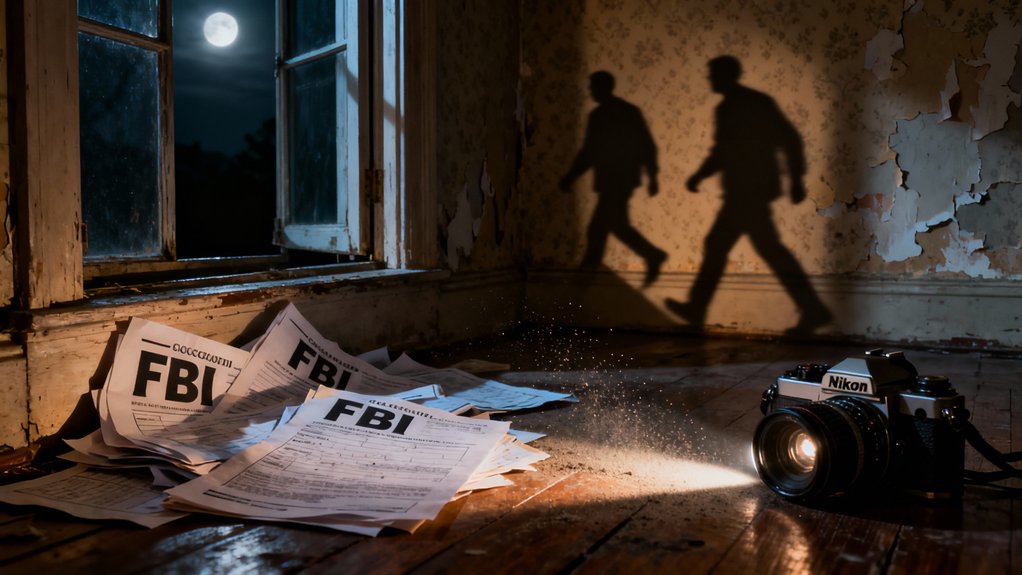
The exposure of COINTELPRO’s abuses triggered an unprecedented wave of institutional constraints on the FBI’s investigative powers. Attorney General guidelines imposed strict limits on surveillance operations, while Congress established permanent intelligence oversight committees to monitor agency activities. The Freedom of Information Act was strengthened to force disclosure of previously secret files, transforming the bureau’s shadowy operations into matters of public record.
Attorney General Guidelines Implemented
Following revelations of COINTELPRO’s illegal surveillance and disruption campaigns, Attorney General Edward Levi established groundbreaking restrictions on FBI domestic intelligence operations in 1976. These FBI reforms required criminal predicates before investigations could commence, fundamentally reshaping how federal agencies monitored citizens. The surveillance limits imposed strict time constraints and prohibited the harassment tactics that had terrorized activists for decades.
Key Protections Established:
- Criminal evidence requirement replaced political targeting criteria
- Time-limited investigations prevented indefinite monitoring of citizens
- Explicit prohibition against disrupting lawful organizations and harassing individuals
- Mandatory oversight by senior Justice Department officials
- Civil penalties up to $5,000 for intentional violations by agents
However, successive administrations gradually eroded these safeguards. The 2002 Ashcroftamendments expanded preliminary inquiry authority while dramatically reducing evidentiary thresholds—a troubling regression toward pre-reform surveillance powers.
Congressional Oversight Mechanisms Established
COINTELPRO’s exposure triggered Congress’s most intensive examination of intelligence agencies in American history. The bipartisan Church Committee conducted 126 meetings, interviewed 800 witnesses, and produced 14 reports documenting systematic abuses—including the FBI’s illegal surveillance of Dr. Martin Luther King Jr. This unprecedented investigation revealed how executive power operated without democratic constraints.
The reforms established permanent intelligence oversight committees in both chambers, creating institutional mechanisms for covert accountability. Congress enacted the Foreign Intelligence Surveillance Act in 1978, requiring warrants from a special court before surveillance could proceed. Intelligence agencies now faced mandatory reporting requirements for covert actions. These structural changes represented a fundamental shift: secret police operations would no longer escape congressional scrutiny. The reforms aimed to prevent future COINTELPRO-style programs through sustained democratic supervision.
FOIA Transparency Requirements Expanded
Beyond legislative reforms, transparency mechanisms became critical tools for exposing surveillance overreach. FOIA modernization emerged as essential weaponry against state secrecy, forcing disclosure of documents revealing decades-long FBI tracking of journalists like David Halberstam and systematic monitoring of movements from Occupy Wall Street to Black Lives Matter. Yet transparency enforcement remained perpetually contested terrain—the FBI admitted destroying over thirty sets of responsive records, erasing evidence on at least eighteen occasions. Despite FOIA’s aspirations, agencies continue withholding millions of pages documenting surveillance operations. The 2021 COINTELPRO Full Disclosure Act attempted mandating complete record release within six months, establishing review boards for contested materials, demonstrating that genuine accountability requires constant pressure against institutional resistance to exposure.
Critical revelations through FOIA requests:
- David Halberstam tracked for two decades
- Occupy movement monitored from inception (August 2011)
- Black Lives Matter surveillance documented (2014-2017)
- FBI database sharing with private entities exposed
- Over thirty record sets systematically destroyed
How COINTELPRO Tactics Reemerged After 9/11

The attacks of September 11, 2001 shattered the fragile restraints that had governed FBI domestic surveillance for three decades. The Patriot Act dismantled privacy protections, while amendments to investigative guidelines resurrected domestic espionage tactics once deemed unconstitutional. Muslim Americans became immediate targets through systematic racial profiling masked as counterterrorism. By 2017, the FBI’s “Black Identity Extremists” designation exposed the revival of COINTELPRO methods against Black Lives Matter activists. Surveillance, infiltration, and disruption campaigns mirrored operations from the 1960s—tracking protesters through social media, deploying informants, and imprisoning organizers. The NYPD adopted covert tactics reminiscent of psychological warfare programs. What the Media burglary had exposed in 1971 quietly returned, rebranded under national security imperatives, targeting new generations fighting for liberation.
Why COINTELPRO Still Matters for Civil Liberties Today
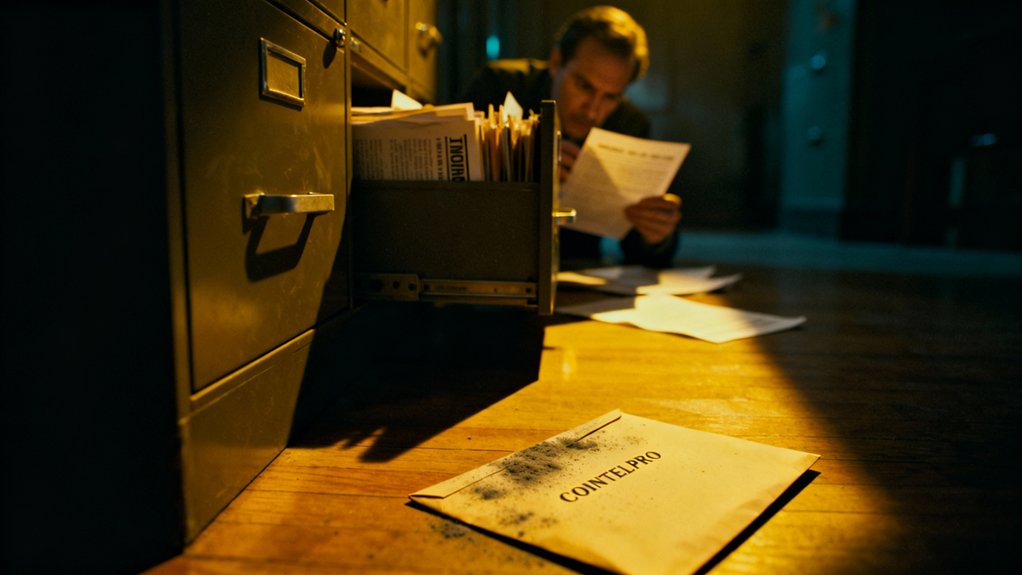
Buried within the files stolen from Media, Pennsylvania lay a blueprint for suppressing dissent that extends far beyond historical curiosity. Today’s surveillance apparatus targets the same communities COINTELPRO once hunted—racial justice organizers, environmental defenders, economic justice advocates—now amplified through digital infrastructure. Recent executive directives echo harassment tactics against nonprofits and donors who challenge power. Without grassroots accountability, constitutional protections erode incrementally, normalized through “counterterrorism” justifications that mirror Cold War pretexts.
Why these revelations demand continued vigilance:
- First and Fourth Amendment violations continue through warrantless digital surveillance of protected speech
- Peaceful movements face disproportionate monitoring while violent right-wing groups receive minimal scrutiny
- Information sharing between law enforcement and corporations creates unregulated surveillance networks
- Congressional oversight mechanisms remain insufficient to prevent recurrence
- Digital resistance requires understanding historical patterns of state suppression
Frequently Asked Questions
Did Any FBI Agents Face Criminal Prosecution for COINTELPRO Activities?
Legal accountability proved elusive. Only two FBI personnel faced criminal charges for COINTELPRO activities, convicted in 1980 before President Reagan pardoned them both. Richard Helms received merely a $2,000 fine. Despite widespread violations of constitutional rights—illegal wiretaps, infiltration, harassment of civil rights activists—no meaningful prosecutions materialized. The architects and foot soldiers of systematic oppression walked free, while their victims endured surveillance, imprisonment, and violence. Justice remained theoretical, not realized.
How Did the Burglars Plan and Execute the Media Office Break-In?
The burglars orchestrated their break-in strategy through meticulous surveillance, positioning an insider to map the office’s vulnerabilities while monitoring police patrols. On March 8, 1971, they exploited the Ali-Frazier fight’s distraction to slip inside undetected. Their document retrieval was deliberate—removing over 1,000 files, destroying criminal case materials to preserve legitimate investigations, then copying 200 pages exposing COINTELPRO’s surveillance apparatus before anonymously mailing evidence to newspapers.
What Happened to the Citizens’ Commission Members After the Burglary?
The burglars vanished into decades of silence, evading FBI pursuit while public backlash against COINTELPRO mounted. Though investigators interviewed suspects who refused cooperation, legal immunity never materialized—prosecution remained theoretically possible until 2014. Seven members emerged from shadows only after Bill Davidon’s 2013 death, finally claiming their role in dismantling domestic surveillance. Their calculated risk had triggered congressional investigations, ending FBI’s unchecked power while they lived anonymous lives, protected solely by silence and government embarrassment.
Are There Still Classified COINTELPRO Documents That Remain Unreleased Today?
Yes, millions of pages remain unreleased despite decades passing since COINTELPRO’s exposure. Government transparency efforts have stalled while document redaction continues to shield vital details. The 2026 Full Disclosure Act seeks to break this pattern, but agencies still invoke national security exemptions to withhold files. Heavy censorship obscures the program’s full scope, leaving communities targeted by state surveillance without complete accounting of injustices committed against them.
Did J. Edgar Hoover Personally Authorize Specific COINTELPRO Operations?
J. Edgar Hoover personally authorized COINTELPRO’s launch in 1956 and approved virtually all major operations targeting civil rights leaders, anti-war activists, and political dissidents. Operating without meaningful FBI oversight or director accountability from Congress or the Justice Department for decades, Hoover wielded unchecked power to surveil, disrupt, and neutralize movements challenging state authority. His signature appears on directives authorizing surveillance, harassment campaigns, and counterintelligence actions that violated constitutional rights of nearly one million Americans.
Final Thoughts
The Media burglary’s ripples never fully settled. Of the 1,000+ stolen documents, only one page mentioned COINTELPRO by name—yet that single reference unraveled the FBI’s entire covert apparatus. Today, as surveillance technology advances beyond Hoover’s imagination, the question persists: how many operations remain hidden behind classification stamps? The citizens who broke into that office proved democracy’s most essential safeguard isn’t institutional oversight—it’s the courage of ordinary people demanding the truth, whatever the cost.
References
- https://en.wikipedia.org/wiki/COINTELPRO
- https://www.eff.org/deeplinks/2014/02/history-surveillance-and-black-community
- https://www.britannica.com/topic/COINTELPRO
- https://www.ojp.gov/ncjrs/virtual-library/abstracts/spying-america-fbis-domestic-counter-intelligence-program
- https://firstamendment.mtsu.edu/article/federal-bureau-of-investigation/
- https://www.aclu.org/documents/more-about-fbi-spying
- https://www.lib.berkeley.edu/about/news/fbi
- https://kinginstitute.stanford.edu/federal-bureau-investigation-fbi
- https://artsemerson.org/2023/03/08/what-is-cointelpro-the-history-behind-mondo-bizarros-cointelshow/
- https://www.lexisnexis.com/documents/academic/upa_cis/101095_FBIBlackExtrOrgsPt1COINTELPRO.pdf