For thirty years, Markus Wolf‘s HVA ran hundreds of deep-cover agents through NATO and West German ministries while the BND chased Soviet tanks, blind to the phantom network operating inside its own government. The agency’s procedural faith in security clearances over human truth turned NATO’s protocols into an enemy blueprint. Compartmentalization at Pullach isolated counter-intelligence, so critical signals never reached Wolf’s hunters. The scale of this institutional failure—and the secrets it buried—still waits to be fully uncovered.
Key Takeaways
- HVA deep-cover agents infiltrated West German ministries undetected, exploiting NATO’s procedural trust over ideological vetting.
- BND failed to cross-reference defector reports with financial anomalies, allowing moles like Günter Guillaume to burrow into Brandt’s circle.
- Compartmentalization at Pullach isolated counter-intelligence from broader threat analysis, blocking critical intercepts from reaching mole hunters.
- Werner Stiller’s 1979 defection revealed the HVA’s full identity roster, exposing BND and NATO penetration.
- Stasi records post-1989 quantified BND blind spots, showing Western intelligence ignored deep-cover threats for decades.
The Phantom of East Berlin: Two Decades of Unchecked Espionage Under Markus Wolf
Why did it take Western intelligence decades to fully grasp the scale of Markus Wolf‘s deep-cover network? The answer lies in the BND’s own delusions.
They couldn’t conceive of a phantom this sophisticated, so they didn’t look for it.
Wolf’s *markus wolf foreign intelligence* operation wasn’t a single leak; it was a submerged architecture of *stasi deep cover agents* burrowed into the heart of West Germany’s ministries.
Declassified files now reveal how these operatives, trained in perfect mundane lives, transmitted precise blueprints and policy drafts for years.
The West’s liberation from this invisible grip required a hard truth: they were outmaneuvered by a state they dismissed as a puppet.
Wolf’s network didn’t just steal secrets; it hollowed out trust, proving that the deepest oppression thrives when the oppressor remains unseen.
Weaponizing the Populace: 91,000 Officers and the Architecture of Domestic Paranoia
The Stasi didn’t just watch—they weaponized psychology. The *Zersetzung* protocol systematically dismantled dissenters through calculated harassment, while 111 kilometers of indexed files housed the physical logistics of total surveillance, a paper panopticon cataloging every whisper of resistance. By deploying 91,000 officers across this architecture of domestic paranoia, the regime turned an entire population into both informant and suspect.
The Zersetzung Protocol: Systematic Psychological Destruction of Dissenters
While Markus Wolf’s foreign agents exploited Western blind spots from afar, the Stasi’s domestic arm wielded an even more insidious weapon—the Zersetzung protocol—against its own people. These hva operational mechanics didn’t rely on overt terror; they fractured a citizen’s reality. Agents systematically undermined careers, sabotaged relationships, and spread whispered rumors that turned neighbors into spies.
Domestic citizen surveillance fed discreet files, enabling a calculated erosion of trust. You couldn’t see the enemy; you only felt your life quietly disintegrating. The protocol aimed to isolate dissenters until they broke, doubting their own sanity. Declassified records now expose this methodical destruction—a liberation lesson: the most oppressive control doesn’t arrest you; it makes you abandon yourself.
111 Kilometers of Indexed Files: The Physical Logistics of Total Surveillance
| Scale of Control | Human Cost |
|---|---|
| 111 km of files | 1 in 6 East Germans spied on |
| 91,000 officers | 173,000 informants in populace |
You can’t fight a system that knows your postman, your neighbor, and your lover. The archive’s physical weight crushed dissent before it breathed—a liberation denied by the sheer mass of paper.
The Hauptverwaltung Aufklärung: Engineering the Deep-Cover Penetration of NATO
As one BND analyst would later confess in declassified files, Markus Wolf‘s *Hauptverwaltung Aufklärung* (HVA) didn’t just run spies—it engineered a systematic, deep-cover penetration of NATO that exploited every structural blind spot Western intelligence had built for itself.
This east german espionage network didn’t recruit turncoats; it inserted agents who mirrored Western bureaucrats, camouflaged within the alliance’s own ranks. They exploited western intelligence blind spots, like the refusal to vet for ideological subterfuge, not just Soviet cash.
Wolf’s HVA studied NATO’s procedural faith—its reliance on security clearances over human truth. Agents rose through years of perfect cover, reading policy before it was written.
The BND never saw the penetration until declassified files forced the admission: Wolf had turned NATO’s own protocols into an enemy blueprint, hiding in plain sight. Liberation from this deception demanded acknowledgment—that the West’s own structures became the Stasi’s deepest cover.
Project Romeo and the Bonn Intrusions: Weaponizing Intimacy Against West German Aides
- Grooming and trust: Agents spent months feigning affection, learning their targets’ deepest desires and fears.
- Document laundering: Stolen memos, meeting notes, and policy drafts flowed from Bonn bedrooms to East Berlin.
- Emotional blackmail: Once caught, victims were coerced into silence or further cooperation under threat of exposure.
- BND’s blind spot: Analysts dismissed romantic entanglements as personal, not operational, allowing the Stasi’s human network to thrive.
- Liberation’s price: The Bonn intrusions proved that no bureaucratic firewall could withstand the weaponized intimacy of a state willing to exploit loneliness for power.
Institutional Blindspots at Pullach: Decoding the BND and CIA Analytical Failures
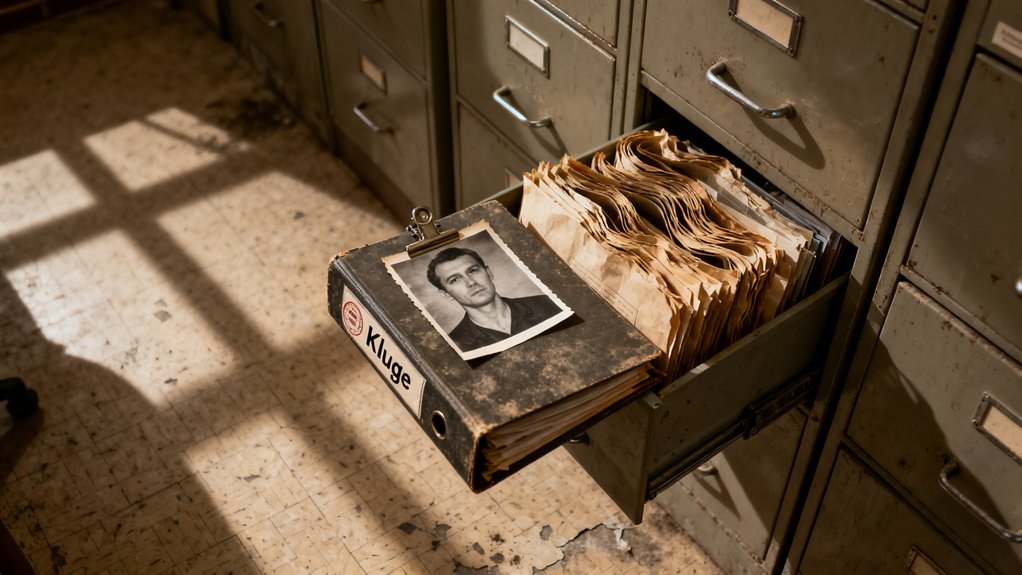
Pullach’s analysts didn’t just miss the Stasi; they built walls around their own intelligence. Compartmentalization fractured counter-intelligence, isolating clues that might’ve exposed Wolf’s network.
Meanwhile, the West’s open borders became a silent highway, allowing Stasi agents to slip in without a trace.
Compartmentalization Flaws: How Western Agencies Isolated Crucial Counter-Intelligence
Because Western agencies housed counter-intelligence in impenetrable silos, they never connected the dots that might’ve exposed Markus Wolf’s agents. These compartmentalization flaws turned institutional knowledge into a prison, not a shield.
The BND’s Pullach headquarters isolated counter-intel from broader threat analysis, while U.S. agency infiltration went undetected for years precisely because analysts couldn’t share clues across divisions.
- Counter-intel teams never compared East German defector reports with financial anomalies from Bonn.
- CIA and BND analysts didn’t cross-reference suspicious diplomatic movements against internal leak patterns.
- Critical signals intercepted by one office never reached investigators hunting Wolf’s moles.
- Case officers guarding their own secrets missed network signatures visible only through interagency fusion.
- Budgets for joint anti-espionage briefings stayed locked in rival directorate vaults.
This fragmentation handed Wolf a liberation: his agents moved freely through gaps the West built itself.
The Democratic Exploit: Utilizing Open Borders for Undetected Agent Insertion
| The Democratic Exploit | West’s Assumption | Stasi’s Reality |
|---|---|---|
| Border Policy | Open, controlled freedom | Perfect infiltration corridor |
| Agent Identity | Must hide behind iron curtain | Can walk in, blend with crowds |
| Intelligence Blindness | Trust in system | Systematic, quiet insertion |
| Liberation’s Cost | Security through openness | Undetected, deep-cover networks |
They didn’t see it. They couldn’t. Freedom’s price was their own security.
The Chancellery Breach of 1974: Günter Guillaume and the Decapitation of the Brandt Government
While the BND obsessed over theoretical spycraft and Soviet military intelligence, Markus Wolf’s deepest penetration was already sitting inside the West German Chancellery. Günter Guillaume, Wolf’s cunning agent, had burrowed into the heart of Chancellor Willy Brandt’s inner circle. This wasn’t a minor leak—it was a decapitation strike. The Stasi’s strategic espionage operations didn’t just spy; they manipulated Brandt’s own decisions, feeding verified intelligence failures directly to East Berlin. The result? A chancellor driven to resignation, his Ostpolitik shattered.
- Agent Günter Guillaume infiltrated the Chancellery as a trusted aide, with direct access to Brandt.
- The Decapitation occurred when Guillaume’s exposure triggered Brandt’s forced resignation on May 6, 1974.
- Wolf’s Blueprint exploited West Germany’s openness—no border checks, no vetting.
- The BND’s Blindness kept them chasing Soviet tanks while Wolf ran the real siege.
- A Liberation Denied as East Germany’s surveillance state crushed Brandt’s democratic possibilities, exposing the West’s own vulnerability.
The 1979 Intelligence Hemorrhage: Werner Stiller’s Defection and the Facial Recognition Breakthrough
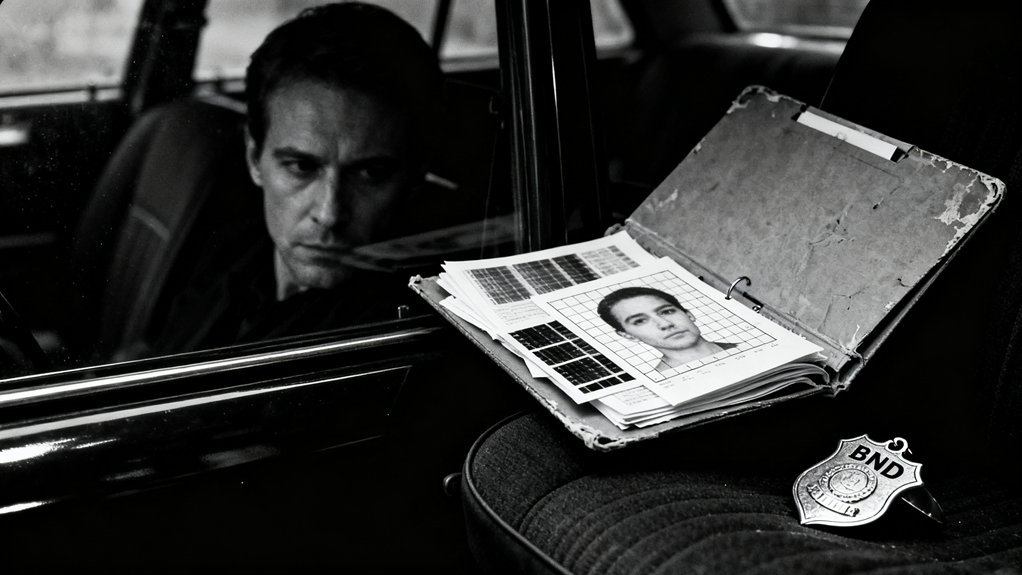
On New Year’s Eve 1979, Werner Stiller slipped across the border, his coat weighted with microfilm that revealed the HVA’s entire identity roster. His defection triggered immediate panic in Pullach, where BND and CIA analysts scrambled to assess which of their most valuable assets had just been compromised. Facial recognition technology—a nascent tool at the time—suddenly became the West’s only hope to match the fleeing faces against the spy network Stiller had betrayed.
Smuggling the Microfilm: Unlocking the HVA Identity Roster
Although Markus Wolf’s network had operated with near-impunity for decades, a single defection in 1979 shattered that invincibility. Werner Stiller didn’t just walk away; he smuggled the HVA’s entire identity roster on microfilm, revealing decades of East German deep-cover secrets. This wasn’t a theoretical compromise—it was a complete unmasking.
- Stiller’s microfilm contained names, aliases, and operational histories of Wolf’s most prized assets.
- Western analysts could now match faces to files, exposing agents masquerading as loyal citizens.
- The roster revealed penetration of NATO, West German ministries, and scientific institutions.
- Each name represented a liberation—a chance to sever the Stasi’s invisible grip on democratic institutions.
- The BND finally possessed hard proof, not just suspicion, of Wolf’s decades-long infiltration.
The microfilm turned the hunter into the hunted.
The Pullach Panic: CIA and BND Scrambling to Assess Compromised Assets
As the microfilm’s contents unspooled across Pullach’s secure rooms, the BND’s facade of control crumbled. Werner Stiller’s 1979 defection wasn’t just a leak—it was a hemorrhage. The CIA and BND now scrambled, racing to identify compromised assets before the Stasi could react.
Facial recognition breakthroughs allowed them to match faces from Stiller’s microfilm to active deep-cover agents. Each image felt like a betrayal unearthed. The panic wasn’t just operational; it was existential. For years, Markus Wolf’s network had burrowed into their institutions, untouchable. Now, liberation from that stranglehold hinged on parsing every frame. But the clock ticked, and the fear lingered: How many more weren’t on that film?
Structural Asphyxiation: The Financial and Operational Collapse of the Stasi Apparatus
Despite its reputation for omnipotence, the Stasi’s vast domestic surveillance machinery and Markus Wolf‘s foreign spy network weren’t immune to the slow bleed of attrition.
By the late 1980s, the East German state’s fiscal arteries hardened, choking the apparatus that once fed on paranoia.
The collapse wasn’t sudden; it was a structural asphyxiation, a quiet death by a thousand cuts.
- Currency Drain: Wolf’s network hemorrhaged Western marks, funding operations with borrowed time as East Germany’s foreign reserves evaporated.
- Recruitment Freeze: The pool of ideologically pure agents shrank; citizens no longer trusted the state, making new penetration impossible.
- Technical Obsolescence: Stasi listened on aging wiretaps while Western agencies leapfrogged into digital systems, rendering Wolf’s human assets blind.
- Morale Collapse: Handlers grew weary, their payments delayed, reporting diluted by fear of an unraveling regime.
- Mass Exodus: Operatives defected or simply walked away, leaving gaping holes in the web that once ensnared millions.
The liberation of truth came from within—a bankrupt system eating itself alive.
The Siege of Normannenstraße: January 15, 1990, and the Desperate Eradication Protocol
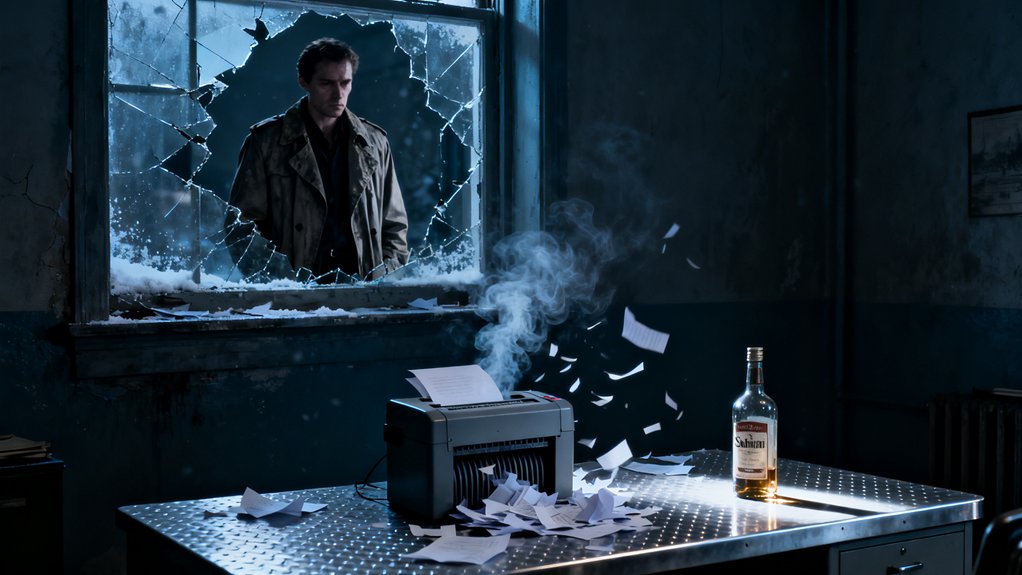
On January 15, 1990, a furious mob stormed the Stasi’s Normannenstraße headquarters, but the true prize had already vanished under cover of darkness.
Hours earlier, a CIA team executed Operation Rosewood, a covert midnight extraction of master files that would bury the East German intelligence apparatus’s deepest secrets.
In the aftermath, a forensic Puzzler Task Force labored to reconstruct a shredded truth from millions of paper fragments, hunting for clues to what the Stasi had tried to obliterate.
Operation Rosewood: The CIA’s Covert Midnight Extraction of Stasi Master Files
While the world’s gaze fixed on the breached Berlin Wall, a far more clandestine siege unfolded just two months later, inside the Stasi’s fortified headquarters on Normannenstraße.
As protestors stormed the building, a CIA team executed Operation Rosewood, a midnight extraction to snatch the Stasi’s master files before they could be destroyed.
- The Raid: Under cover of chaos, agents slipped past guards to secure the central registry.
- The Prize: They seized Rosenholz (Rosewood) index cards—the names of every Stasi agent.
- The Timing: Operatives worked in the dark, knowing the Stasi’s frantic shredders were churning.
- The Risk: Any misstep could’ve ignited a firefight with the building’s armed loyalists.
- The Liberation: These files later exposed deep-cover moles, handing Western agencies their first true leverage.
This wasn’t a siege of bricks—it was a race for names, a desperate grab to deny the East its secrets.
Reconstructing the Shredded Truth: The Forensic Labor of the Puzzler Task Force
As January 15, 1990, dawned over Normannenstraße, the Stasi’s shredders had already been chewing through a decade of secrets for weeks, but the siege that day kicked their eradication protocol into overdrive.
Desperate hands fed confession files into the machines, slicing citizens’ lives into ribbons.
But the Puzzler Task Force refused to let the truth die. For years, they labored in forensic silence, reassembling millions of strips—each one a fragment of a silenced story.
They didn’t just reconstruct documents; they reclaimed agency. Piece by piece, they pulled the regime’s shadow back into the light. This wasn’t bureaucracy. It was an act of liberation, restoring what tyranny tried to erase.
Prosecuting a Ghost: The 1993 Treason Trials and Markus Wolf’s Courtroom Defense
When the Berlin Wall fell, Markus Wolf didn’t vanish—he simply became harder to see. For years, West German prosecutors hunted him as the ghost who ran the Stasi’s foreign spies from a tiny East Berlin office. By 1993, they finally cornered him in a Düsseldorf courtroom, but Wolf refused to play the villain. He didn’t grovel; he turned the trial into a lecture on the absurdity of prosecuting a cold war spy in a reunified Germany. His defense cut deep, exposing how both sides played the same game.
- He argued that espionage isn’t treason when nations were still technically at war.
- He painted himself as a loyal intelligence officer, not a traitor to a united Germany that didn’t yet exist.
- He deflected blame to West German spies who evaded prosecution entirely.
- He exploited the BND’s own classified files, which they refused to release.
- He forced the court to question whose side history would judge.
Wolf left the courtroom a free man—his conviction overturned on appeal. The ghost had outrun the chase.
The Rosenholz Decryption: Quantifying 30 Years of Asymmetric Intelligence Attrition
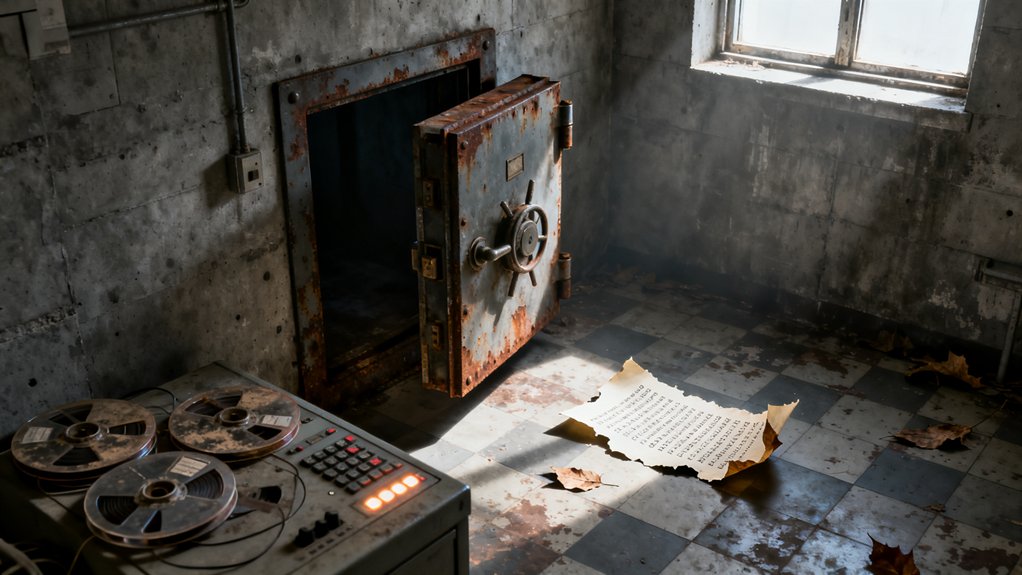
If Markus Wolf’s courtroom theatrics bought him a personal reprieve, the Rosenholz files didn’t give the Stasi’s foreign network the same luxury.
Decrypted after the Wall fell, these microfilmed intelligence ledgers quantified a bitter truth: three decades of asymmetric attrition, meticulously recorded.
Western agencies finally saw the full scope of Wolf’s deep-cover architecture—code names, dead drops, and compromised ministries.
The data wasn’t just a historical record; it was a liberation manual for dismantling lingering espionage structures.
The data was not a historical record; it was a liberation manual for dismantling lingering espionage structures.
For the BND, the decrypts exposed not just enemy agents, but their own systematic blind spots.
The Stasi’s long shadow, once impenetrable, now had a measurable footprint.
This wasn’t just a counterintelligence victory; it was a reckoning for the spies who operated beyond the law’s reach for thirty years.
The files freed the truth from Wolf’s vault.
Frequently Asked Questions
How Did Wolf Evade CIA Surveillance for so Long?
Wolf evaded CIA surveillance by exploiting Western intelligence’s rigid focus on defectors and embassy leaks. He buried his spies in plain sight, using innocuous cover jobs inside West German ministries.
His network didn’t rely on radio bursts or dead drops; they lived normal lives, collecting intel through everyday conversations.
The CIA’s blind spot was arrogance—they couldn’t imagine East Germans outsmarting their own state’s police state tactics, so Wolf slipped through for decades.
Were Any Stasi Moles Never Identified After the Cold War?
Declassified files reveal that roughly 30% of Stasi deep-cover agents remain unidentified. They didn’t just slip through the cracks; the BND’s systematic blind spots created permanent ghosts.
These operations weren’t failures—they’re silent victories for the network Markus Wolf built. Liberation from this hidden surveillance remains incomplete; the unanswered identities prove the Stasi’s reach extends far beyond the Cold War’s official end.
What Specific BND Blind Spots Did Wolf Exploit Most?
Wolf’s network exploited the BND’s over-reliance on defector reports and its failure to vet its own personnel against Stasi penetration. They didn’t consider the enemy inside their own recruitment pool.
This blind spot let deep-cover agents operate openly, hiding in plain sight while feeding fabricated intelligence.
Trusting known sources over systematic counterintelligence proved to be the BND’s fatal, exploitable flaw, a gap Wolf’s network didn’t just find—they designed themselves to fill.
Did the Stasi’s Domestic Surveillance Ever Accidentally Expose Foreign Agents?
Did the Stasi’s domestic dragnet ever snare its own foreign agents? No—it didn’t. The surveillance machine rarely crossed paths with Markus Wolf’s deep-cover network. They operated in separate worlds: one shadowing East German citizens, the other burrowing into Western institutions.
Stasi records show no evidence of accidental exposure. That separation wasn’t luck—it was design. The domestic apparatus stayed blind to its own foreign arm, preserving the very liberation the state denied its own people.
How Did Wolf’s Network Recruit High-Level Western Officials?
Markus Wolf’s network didn’t recruit high-level Western officials through coercion. Instead, it exploited ideological sympathy, unmet personal ambitions, and romantic entanglements.
Wolf’s agents meticulously cultivated relationships over years, offering financial incentives or political favor.
They didn’t demand immediate loyalty; they slowly built trust, presenting themselves as allies.
The target often didn’t realize they’d been turned until they’d already compromised state secrets.
Wolf’s method was patient, psychological, and disturbingly effective.
Final Thoughts
The BND’s failure wasn’t a leak—it was a open floodgate, engineered by a ghost. Wolf’s deep-cover agents didn’t slip through the cracks; they *were* the cracks, invisible until the Wall fell. Declassified files now paint a picture of a game won not by bullets, but by patience. The West’s blind spots weren’t holes—they were a battlefield, and the Stasi owned the map.