In May 1985, a KGB summons recalled Oleg Gordievsky to Moscow—a trap set by Aldrich Ames’s betrayal. MI6, blind to the CIA’s leaked roster, launched a frantic internal mole hunt. Cable forensics exposed a deliberate bleed, not a traitor in their ranks. Paralyzed by delayed disclosures, handlers orchestrated a risky exfiltration through a Soviet-Finnish checkpoint. The extraction’s success only revealed deeper institutional rot. More details on that corrosive fallout follow.
Key Takeaways
- Aldrich Ames, a CIA officer, betrayed Gordievsky’s identity to the KGB in 1985.
- The CIA delayed and dribbled intelligence disclosures, crippling MI6’s response.
- MI6’s internal mole-hunt and cable forensics revealed a deliberate KGB bleed.
- Operation Pimlico exfiltrated Gordievsky via a false-bottomed diplomatic car boot.
- The betrayal paralyzed Western intelligence, weaponizing paranoia across agencies.
The May 1985 Summons: Oleg Gordievsky’s Abrupt Recall to KGB Center
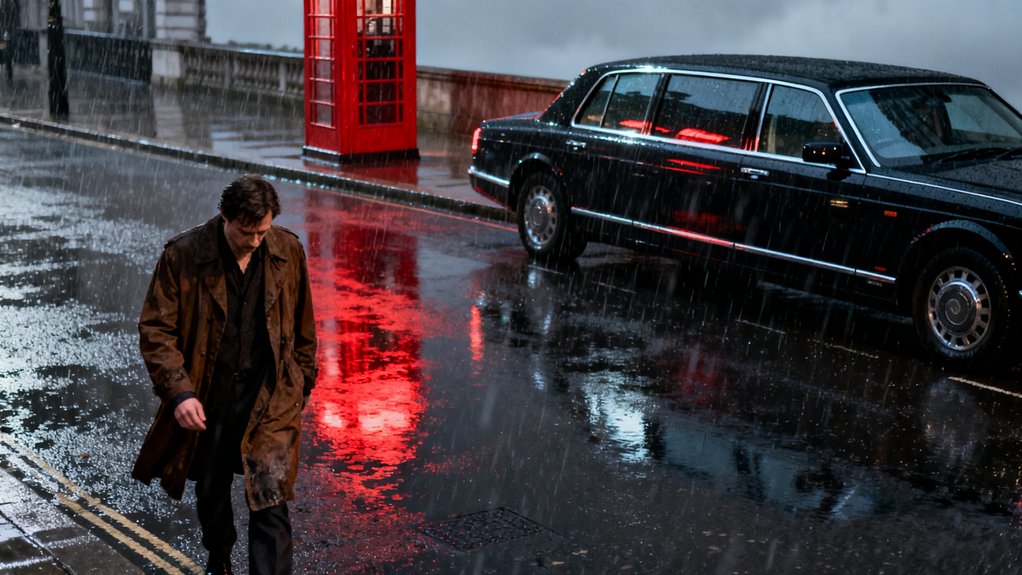
As Gordievsky awaited routine instructions from KGB Center in May 1985, an uncharacteristic summons shattered his cover’s calm. The coded message mandated his immediate return to Moscow, a directive that felt like a noose tightening.
This wasn’t bureaucratic caprice; it was the chilling signature of betrayal. The *1985 mi6 mole hunt* had already begun, fueled by paranoia and fragmented CIA warnings, but now it pinpointed a specific target. The *gordievsky moscow recall* wasn’t a coincidence—it was a KGB trap, set by a source deep within Langley.
MI6’s frantic cable tracing became a desperate race against time. Each decoded transmission exposed a network hemorrhaging secrets, forcing London’s hand. Gordievsky’s life hung on a thread, and only a daring exfiltration could cut him free before the KGB’s interrogation chambers stole his liberation. The summons had fired the starting pistol for Operation Pimlico.
The Aldrich Ames Hemorrhage: Blind-Sided by Langley’s Fatal Intelligence Leak
Langley’s delayed intelligence disclosures kept MI6 blind to the full scope of Aldrich Ames’ betrayal for critical months.
The 1985 compromise didn’t just expose individual sources; it hemorrhaged an entire network of assets, with Gordievsky as a prime target.
This catastrophic leak forced British intelligence to reconstruct the damage without the CIA’s complete picture, a puzzle assembled in the dark.
Withholding the Threat: Evaluating Langley’s Delayed Intelligence Disclosures
While MI6 frantically chased ghosts inside its own ranks, the true source of the hemorrhage sat undetected at CIA headquarters. Langley’s fatal cia intelligence sharing delay**** didn’t just irk the British—it paralyzed them. For months, incomplete disclosures trickled across the Atlantic, deliberately starved of context to protect the CIA’s own investigation.
This inter-agency bureaucratic friction transformed a manageable leak into a five-alarm fire. MI6 wasted precious time vetting loyal officers while the real mole, Aldrich Ames, continued his betrayal. The delay guaranteed Gordievsky‘s jeopardy escalated, forcing a brutal, last-minute extraction. Liberation from Ames’s poison required trust Langley couldn’t afford to give.
Mapping the 1985 Compromise: The Catastrophic Breadth of Ames’ Betrayal
- The Vault of Names: Ames handed over the entire roster of CIA-recruited Soviets, collapsing years of human intelligence.
- Operational Cannibalism: The leak forced MI6 to suspect its own officers, corroding trust from within.
- Weaponized Paranoia: Ames’ data poisoned the well, making every new asset a potential trap.
- The Lost Decade: The betrayal crippled Western intelligence for years, leaving a void the KGB exploited ruthlessly.
Contagion at Century House: MI6’s Frantic Internal Mole-Hunt
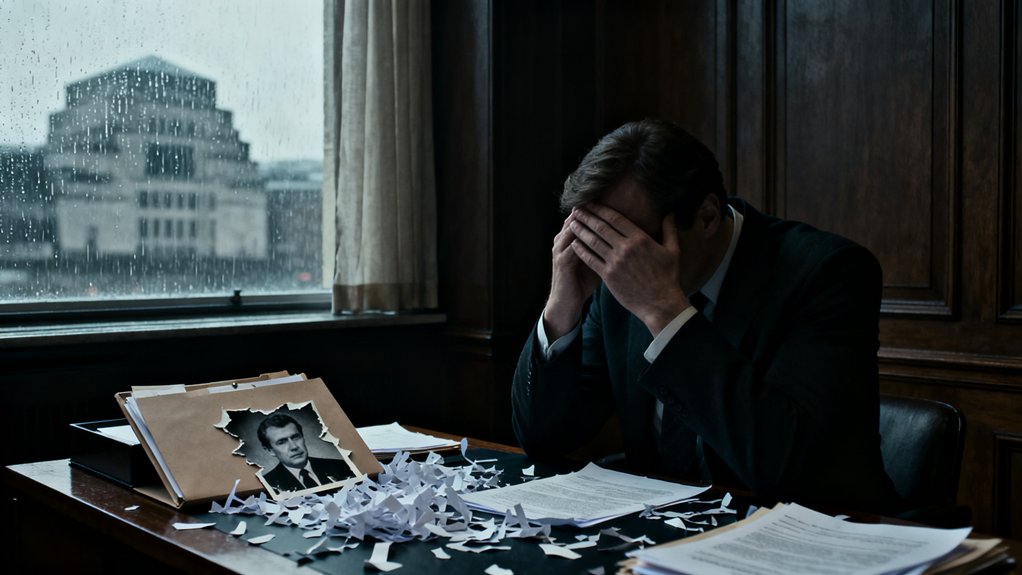
As the full extent of Aldrich Ames’s betrayal finally emerged from across the Atlantic, Century House became a breeding ground for suspicion. Every officer now scrutinized their colleagues, wondering who’d turned. British intelligence paranoia reached a fever pitch, poisoning daily operations.
The frantic mole-hunt fixated on a single, terrifying possibility: a traitor within their own ranks had been feeding Moscow details from MI6 operational cables. Desks were rifled, meeting minutes locked away, and trusted handlers found themselves under silent observation. The urgency was tangible; they knew Ames’s leak had already doomed agents. The entire edifice of trust cracked, paralyzing decision-making. Liberating a double agent like Gordievsky now required maneuvering through this internal contagion of fear first. Every cable, every whisper, felt like a potential trap.
The Cable Autopsy: A Forensic Cross-Check of Compromised Transatlantic Communications
With the mole-hunt consuming Century House, MI6‘s attention turned to the paper trail that had betrayed them.
Analyzing every transatlantic cable, they conducted a forensic cross-check of signals that linked the CIA leak directly to their compromised espionage network.
The meticulous tracing revealed the specific moments their operations had been exposed, forcing them to confront a chilling reality.
- Cable 47A, July 1985: A routine status update on a Soviet source—intercepted, read, and shared with Moscow.
- Cable 89C, August 1985: A request for surveillance funding on Gordievsky’s handler—leaked before it reached Langley.
- Cable 112B, September 1985: A proposed contingency plan—its analysis revealed the KGB had been tipped off about the operation pimlico execution.
- Cable 156D, October 1985: A garbled intelligence report on Ames’s betrayal—parsed for patterns, it confirmed the hemorrhage.
They found no coincidence, only conspiracy.
The leakage wasn’t a stray whisper; it was a deliberate bleed, accelerating Gordievsky’s danger.
Liberation demanded they act—fast and silent.
Bureaucratic Asphyxiation: Surviving the MI6-CIA Intelligence Blackout
Though MI6 had finally pinpointed the source of the leak, the CIA’s piecemeal intelligence disclosures choked their response. Each cable arrived late, stripped of context, forcing London to maneuver blind. This wasn’t incompetence—it was bureaucratic asphyxiation, a deliberate cold war intelligence cover up designed to protect Langley’s own assets. The frantic cross-checking slowed every decision, risking the entire kgb double agent extraction.
Without full visibility, MI6’s handlers couldn’t verify Gordievsky’s precise danger level. They relied on fragments: a hint here, a contradictory report there. The mole-hunt became a cruel guessing game. Every hour of delay tightened the noose around their man in Moscow. Survival meant working with half-truths, trusting no encrypted line fully. The transatlantic blackout forced MI6 to move on instinct, isolating their operation from the very agency that had unwittingly betrayed them. Liberation from this paralysis came only when they stopped waiting for the CIA’s full picture and acted on what they had.
Drugged and Detained: Surviving Psychological Warfare at a KGB Dacha
- Pharmacological Submission: Sedatives induced disorientation, stripping his agency to resist.
- Temporal Isolation: Erratic sleep schedules fractured his perception of reality.
- Social Deprivation: Solitary confinement eliminated allies, amplifying existential dread.
- Feigned Compliance: He masqueraded as broken, a tactic that preserved his core identity.
This psychological siege aimed to fracture his will, but it sharpened his focus on the *soviet defector escape route*—a lifeline he clung to while the KGB’s drugs dulled his senses.
Survival demanded deception within his own mind.
The Safeway Harrods Signal: Activating a Dormant Exfiltration Protocol in Plain Sight

As the CIA’s Ames leak crippled MI6’s confidence, a dormant exfiltration protocol—the Safeway Harrods signal—became Gordievsky‘s only thread to survival. This wasn’t a frantic radio burst or a dead drop in the dark. It was a choreographed act of mundane commerce. Instructed years prior, Gordievsky walked into the Safeway supermarket on Moscow’s Kalinin Prospekt.
He didn’t buy milk. He stood at a specific phone, dialed a number, and let it ring twice. Then, he walked to Harrods’ food hall counter, buying a specific item—a small, wrapped cake. This single, bizarre transaction, conducted in plain sight, triggered a dormant alert. It confirmed to London’s watchers that he wasn’t under direct KGB surveillance. The signal triggered the next phase of the operation pimlico timeline, shifting the extraction from theoretical hope to a ticking clock. For a man trapped in plain sight, that cake was liberation.
Architecting Operation Pimlico: MI6’s High-Stakes Blueprint for Soviet Extraction
MI6 designed Operation Pimlico around two critical phases: “dry-cleaning” the surveillance to shake the KGB’s elite watchers, then exploiting a diplomatic transit strategy for the Vyborg border run.
This blueprint demanded meticulous choreography, leveraging Gordievsky’s unique knowledge of Moscow’s streets and the blind spots in Soviet counter-surveillance.
Each step carried immense risk, as any deviation would trigger immediate arrest and execution.
Dry-Cleaning the Surveillance: Tactics to Evade the KGB’s Elite Watchers
Dry-cleaning the surveillance required more than just luck; it demanded a meticulous sequence of counter-surveillance maneuvers designed to shake the KGB’s elite watchers before the final handoff. Gordievsky’s handlers knew a single tail could doom them, so they designed a ruthless protocol for operational purity.
- Route Roulette: Varying travel patterns daily—switching buses, metros, and footpaths—made his movements unpredictable, forcing watchers to scramble.
- Dead Drop Decoys: He planted false signals at secondary sites, drawing KGB attention away from the real exchange zone.
- Timing Windows: He’d vanish into crowded markets for exactly 90 seconds—too short for a full team to reposition, but enough for a handoff.
- Signal Check: A pre-arranged chalk mark on a lamppost confirmed the route was clean; its absence meant abort.
Each move bought precious time for liberation.
The Diplomatic Transit Strategy: Engineering the Vyborg Border Run
With the KGB’s watchers temporarily misdirected by the dry-cleaning phase, the true test of Operation Pimlico now hinged on the diplomatic transit strategy—a meticulously engineered border run at Vyborg.
MI6’s architects didn’t just plot a route; they weaponized diplomatic protocol.
They stuffed Gordievsky into a false-bottomed boot of a waiting British Embassy vehicle, a silent passenger in a steel coffin.
The car’s diplomatic plates granted it immunity from search at the checkpoint, but not from suspicion.
Every second, the driver maintained a flawless, bored demeanor—no nervous glances, no erratic speed.
At the gate, a KGB officer circled once, twice.
He didn’t knock.
He waved them through.
The border snapped shut behind them, and Gordievsky crossed from captivity into liberation.
July 1985: The Razor-Edge Rendezvous on the Forest Road to Finland

How did a single, razor-edge rendezvous on a forest road to Finland become the final lifeline for a double agent?
July 1985 found MI6‘s most valuable asset, Oleg Gordievsky, hurtling toward a defection that hinged on seconds. The KGB already suspected him; his recall to Moscow felt like a death warrant. British intelligence, paralyzed by Ames’s leak, couldn’t risk a formal embassy extraction. Instead, they chose a raw, unmarked stretch of forest road—a place where a missed turn meant certain capture. The operation’s success depended on four critical, nerve-shredding factors:
- Timing as a Weapon: The rendezvous had a three-minute window. Any delay signaled KGB surveillance, aborting the mission.
- Silent Communication: No radio or lights. Gordievsky’s signal was a single, pre-arranged hand gesture through a car window.
- Vehicle as a Trojan Horse: A nondescript Ford Sierra swallowed him into its trunk, erasing his existence from the road.
- Terrain as Ally: Thick pine canopy blocked aerial surveillance, buying precious seconds for the handoff.
Every element demanded perfect execution or nothing.
The Trunk of a Ford Sierra: Breaching the Heavily Fortified Soviet-Finnish Checkpoint
The Ford Sierra’s trunk held a secret weapon: pungent decoys designed to confuse the Soviet sniffer dogs. As the car crawled toward the fortified checkpoint, the handlers’ canines bristled, their sensitive noses overwhelmed by the chemical stench.
The final, agonizing wait for the passport stamp stretched into three minutes of absolute exposure, every second a potential trigger for discovery.
The Sniffer Dog Crisis: Weaponizing Pungent Decoys Against Soviet Canines
An actual sniffer dog crisis erupted at the Soviet-Finnish border as MI6 planners weaponized pungent decoys—liberally splashing seal meat juice and imported Thai fish sauce across the trunk of a Ford Sierra—to overwhelm the olfactory capabilities of patrolling Soviet canines. This wasn’t a crude trick; it was a calculated sensory assault.
The dogs, trained to detect human scent, couldn’t process the chemical overload. They’d approach the car, then recoil, disoriented and useless. The guards, frustrated, waved the vehicle through.
- Scent Overload: The decoys didn’t mask Gordievsky’s scent; they created a competing olfactory storm, forcing the canines into a neurological shutdown.
- Psychological Warfare: The KGB’s prized assets became liabilities, exposing their handlers’ vulnerability to a simple, low-tech countermeasure.
- Tactical Deception: The fish sauce’s fermented odor mimicked spoiled food, a natural deterrent that wouldn’t trigger suspicion.
- Liberation Leverage: The decoys bought three critical minutes—the exact window needed to clear the checkpoint without raising alarms.
The Final Passport Stamp: Three Agonizing Minutes of Absolute Exposure
Even as the Ford Sierra rolled to a halt at the heavily fortified checkpoint, three agonizing minutes of absolute exposure began—time stretched into a taut wire as Soviet guards circled the vehicle, their flashlights lingering on the trunk’s seams. Gordievsky lay curled in the false floor, breath held, heart pounding a drumbeat against the metal. Every creak of the suspension sounded like a betrayal.
| Guard Action | Gordievsky’s Response |
|---|---|
| Shines flashlight on trunk | Holds breath, freezes body |
| Taps rear bumper | Counts seconds, suppresses tremor |
| Checks wheel well | Silences the urge to cough |
| Grunts, waves colleague over | Prepares for the worst |
| Final glance, waves through | Exhales in silent prayer |
The stamp of the passport—that single, final mark—meant the door to the West clicked open. Liberation came not in a grand gesture, but in three unbearable, silent minutes.
Touching Free Soil: The Nordic Handover and the Covert Flight to British Airspace
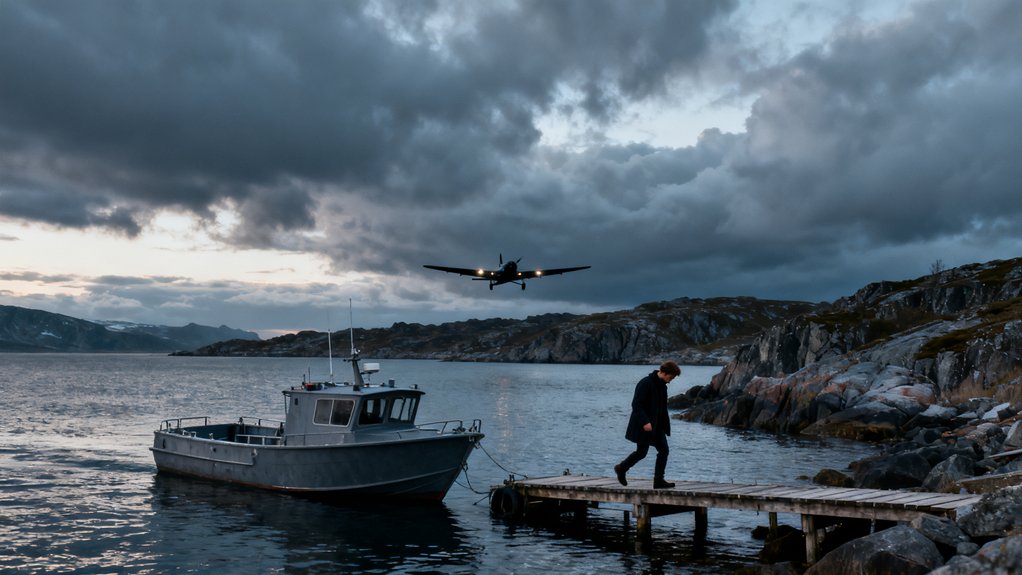
Although MI6’s mole-hunt had thrown the service into chaos, Gordievsky’s escape still hinged on one final, fragile leg of the journey: reaching British airspace. The Nordic handover wasn’t a ceremony—it was a nerve-shredding relay. A Finnish contact smuggled him across the border into Norway, where a waiting MI6 team stripped him of his Soviet identity, dressing him in civilian clothes for the covert flight. That plane, a diplomatic aircraft masquerading as a routine flight, became his only sanctuary. Every second of taxi and takeoff carried the weight of a bullet.
- The border cross: A silent, timed handover in a remote forest, with no room for error—one wrong car, one delayed signal, and the KGB closes the net.
- Identity erasure: His papers burned in a Norwegian safe house; a new passport with a forged name became his only shield.
- The decoy route: The flight path deliberately looped over neutral airspace to mask its true destination.
- Radio silence: No transmissions until the wheels lifted—just breath, heartbeat, and the hum of engines.
The Geopolitical Shockwave: Assessing the Institutional Carnage of the 1985 Spy War
While Gordievsky’s escape ended in the safety of a British airbase, the intelligence war it ignited left a crater in both London and Washington.
The 1985 spy war wasn’t a quiet reshuffle; it was a systemic purge. MI6, rattled by the Aldrich Ames leak, didn’t just hunt a mole—they paralyzed themselves. Cables were cross-checked under a microscope, operations stalled, and trust between agencies evaporated.
The CIA’s delayed disclosures, dribbling out incomplete intel, bred a corrosive paranoia. Every British officer wondered if their next asset was a KGB plant. This institutional carnage wasn’t collateral; it was engineered.
Gordievsky’s extraction exposed a deeper rot: the West’s intelligence apparatus, built on liberation ideals, had become its own cage. The shockwave wasn’t geopolitical grandstanding—it was the price of a compromised truth.
For those seeking freedom from such fragility, the lesson is stark: a spy war doesn’t just kill agents; it suffocates the systems meant to protect us.
Frequently Asked Questions
What Happened to Gordievsky’s Wife and Children?
Gordievsky’s wife, Leila, and their two daughters remained in Moscow after his 1985 escape. The KGB subjected them to relentless interrogation and surveillance, stripping their lives of freedom.
Leila faced harsh restrictions; she couldn’t travel or speak openly, and the children grew up under the shadow of betrayal.
Ultimately, Leila divorced him, severing all ties. The family never reunited, their liberation sacrificed to the state’s wrath.
How Did Aldrich Ames Avoid Immediate Suspicion in 1985?
As a master of shadows, Ames evaded immediate suspicion by cloaking his betrayal in the mundane. Investigators’ gaze fixated elsewhere, missing his flagrant spending and overlooked security lapses.
He wasn’t a traitor; he was a colleague trusted, a ghost in their midst. The bureaucracy churned slowly, protecting him while he fed secrets, their delayed disclosures a shield for his lies.
Liberty demanded vigilance, but they saw only routine.
Did MI6 Ever Catch the Supposed Mole in Their Ranks?
No, MI6 never caught a mole. The internal hunt for a traitor turned up nothing because the real leak wasn’t within their ranks—it was CIA officer Aldrich Ames.
Paranoia and bureaucratic friction paralyzed the service, forcing them to scrutinize their own while the true source operated elsewhere.
They’d been chasing a ghost, a suspicion fueled by incomplete intelligence, not a traitor in their midst. The hunt itself exposed deep cracks in trust, but the enemy was always outside.
What Was the Exact Code Phrase Used in the Safeway Signal?
The exact code phrase for the Safeway signal wasn’t a single, fixed set of words but a specific, pre-arranged visual cue. MI6 designed it as a chalk mark on a designated pillar, not a spoken code.
This physical marker told Gordievsky his escape plan was active. The CIA leak, however, turned this meticulous signal into a desperate gamble. Without that simple chalk mark, the entire operation would’ve collapsed, leaving their asset stranded in KGB hands.
Did the CIA Ever Formally Apologize to MI6 for the Delay?
No, the CIA never issued a formal apology to MI6 for the delay. Instead, it’s buried beneath layers of bureaucratic silence.
The Agency’s incomplete disclosures fuel a simmering resentment, a toxin that paralyzes trust.
This isn’t an oversight; it’s a calculated evasion.
For an audience seeking liberation from such opaque power games, this lack of accountability reveals a systemic flaw—an inability to admit error, leaving allies stranded in dangerous uncertainty.
Final Thoughts
The exfiltration succeeded, but the damage was done. In the wake of Gordievsky’s escape, MI6 spent 1986 purging over 100 active operations, assuming each was infected by the Ames leak. The mole hunt didn’t unearth a traitor at Century House—it simply gutted the agency’s field network. For British intelligence, safety came only after burning its own house to the ground.