
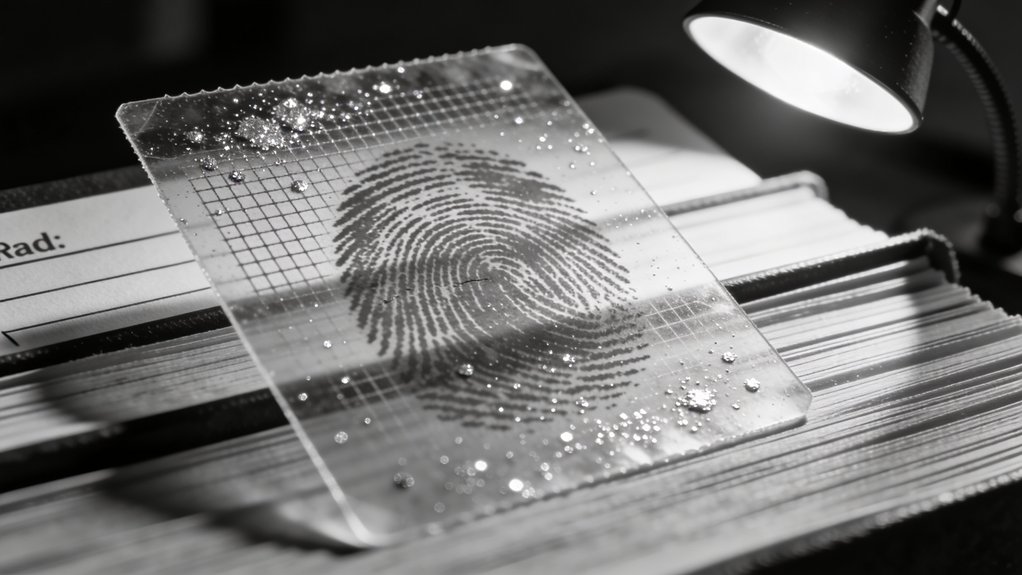
During WWII, Nazi spies weaponized punctuation. They shrank entire typewritten intelligence reports onto one-millimeter collodion discs. They then glued these microdots directly over periods in benign letters. Allied censors, screening 30 million pieces of mail, missed these translucent specks until a faintly glossy period caught an FBI analyst’s eye. The deception’s forensic ghosts, crystallizing adhesives and cracked film, eventually gave the game away. There is more to how this analog trick still haunts modern digital steganography.
Key Takeaways
Microdots could shrink entire typewritten pages to the size of a grain of sand. The Zapp technique used collodion film to create transparent, microscopic intelligence capsules. Microdots were often hidden by replacing punctuation marks, such as periods, on letters. Agent Tricycle's 1941 letter revealed a microdot after an FBI analyst spotted a glossy period. A single microdot carried a 14-point questionnaire demanding Oahu's ship repair and air patrol details.
Subverting the Allied Postal Blockade: The 1941 Data Smuggling Crisis
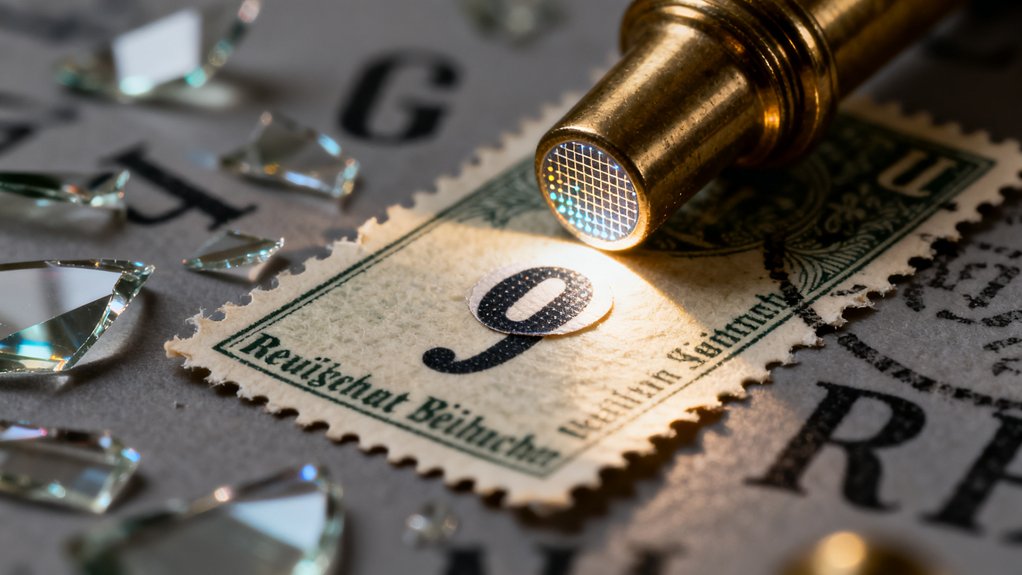
By 1941, the Allied postal blockade had slammed shut across Europe, choking off the flow of sensitive communications like a vise. Allied military censors scrutinized every envelope, hunting for coded phrases or suspicious enclosures.
But a more insidious threat slipped through: wwii microdot steganography. This wasn't just invisible ink; it was physical data smuggling at its most audacious. Operatives chemically reduced entire documents to the size of a period, then glued them over punctuation in innocent letters.
Censors, trained to spot bulky inserts or watermark tricks, simply missed a speck. They scanned for weight, thickness, or anomalous folds, not a microscopic film. The technique exploited a blind spot in human visual scrutiny.
Each dot carried pages of secrets, hiding in plain sight on paper that passed straight through the blockade. The war of intelligence had shrunk to a grain of dust, and the censors never saw it coming.
The Zapp Technique: Shrinking Espionage to a One-Millimeter Speck
Investigators discovered the Zapp technique exploited the silver halide photographic reduction process to compress intelligence. This process etched entire pages onto collodion film, obliterating the paper bulk that betrayed traditional documents.
The result was a one-millimeter speck, a dense, visceral capsule of data ready for physical concealment over a period's dot.
The Silver Halide Photographic Reduction Process
Because the entire page had to be shrunk smaller than a printed period, the Zapp Technique relied on the unique chemistry of silver halide photographic emulsions to achieve its microscopic reduction.
This wasn't a simple photographic reduction process; it was a battle with light's diffraction limit. Investigators now performing forensic microdot analysis find the silver grains' telltale patterns, revealing the original intelligence's precise font and density.
The concealment mechanics were brutal. An operator's steady hand and a razor-blade edge cut down a developed negative to a one-millimeter speck.
They'd then paste it directly over a letter's period, the emulsion's granular texture masking the splice. Censors never saw it; they weren't looking for a speck where nothing should exist.
The chemistry itself became the ultimate cloak.
Collodion Film and the Eradication of Paper Bulk
While the silver halide process solved the problem of scale, the Zapp Technique‘s true breakthrough was swapping paper for collodion film. This transparent, nitrocellulose-based emulsion eliminated the bulk of a full photographic sheet.
This wasn't just reduction; it was eradication. Operatives peeled the fragile, dry film from its glass plate, slicing it into specks no larger than a printed period. They'd then paste these one-millimeter discs over punctuation in civilian correspondence for espionage. The host letter carried no detectable weight, no photographic paper's thickness.
Each microdot, a chemical ghost frozen in collodion, housed pages of data. Investigators later found the dots under ultraviolet light, revealing a shadowy practice of microscopic data smuggling. This is a visceral chapter in declassified espionage methods, where bulk became invisible and spies vanished into the period's dot.
Hijacking the Full Stop: Weaponizing Innocuous Punctuation
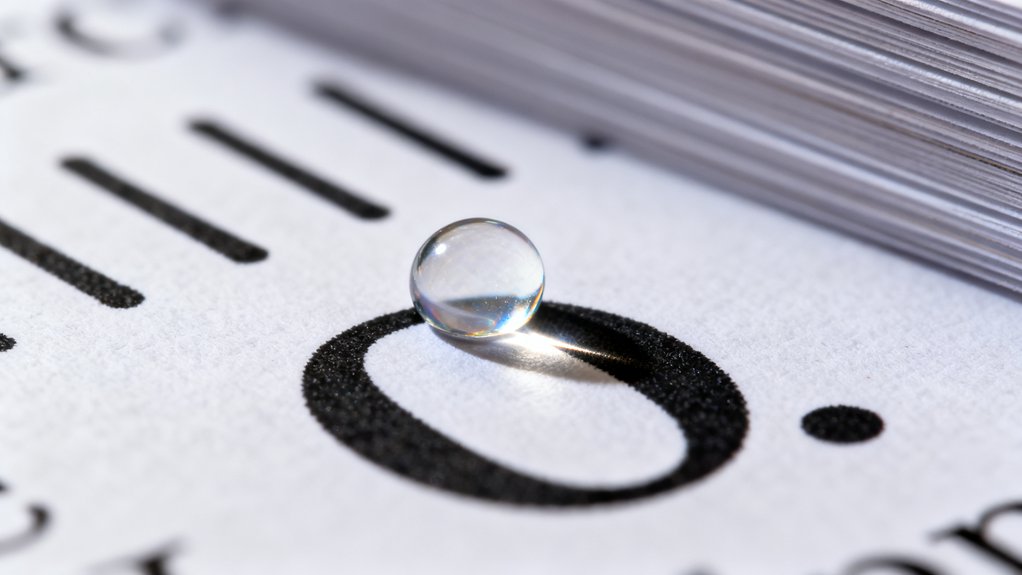
Once a letter passed the censor's stamp, its full stops became the enemy's deadliest tool. Agents weaponized covert punctuation manipulation by photographically shrinking entire intelligence summaries to the size of a printed period. They then excised the letter's genuine periods and physically glued the microdots into their place.
This meticulous process transformed a routine civilian letter's punctuation into a dense data cache. It achieved total military censorship evasion. No censor could detect a microdot without magnifying every single full stop. WWII intelligence networks relied on this technique to smuggle thousand-word reports past security checkpoints.
Each period wasn't a pause; it was a payload. A censor saw only a mundane letter home, but the enemy saw a complete operational blueprint hidden in plain sight. They didn't hide the message. They hijacked the full stop.
Fabricating the Civilian Decoy: The Psychological Engineering of Cover Letters
Although the microdot defied mechanical detection, its safe passage still depended entirely on the decoy letter’s psychological credibility. Operatives did not just write letters. They engineered personas. They cultivated plausible domesticity, mimicking a spouse’s grocery list or a businessman’s complaint about shipping delays. A single anachronistic phrase, an Americanism in a German wife’s note, could trigger intelligence oversight fallout. The whitelist of acceptable correspondents was a meticulous psychological profile. Anyone deviating from their script invited scrutiny.
| Staging Element | Psychological Rationale |
|---|---|
| Handwriting inconsistencies | Mimics emotional fatigue, not stealth |
| Trivial domestic complaints | Disarms censor’s suspicion of purpose |
| Regional dialect fusion | Anchors letter in a specific, verifiable locale |
The whistleblower revelation later exposed that the steganography operational timeline required operatives to rehearse letter-writing for weeks. They could not fake sincerity. They had to inhabit it. A wrong emotional temperature could collapse the entire cover, exposing the microdot beneath.
The Operative’s Toolkit: Executing the Micro-Splice in Hostile Territory
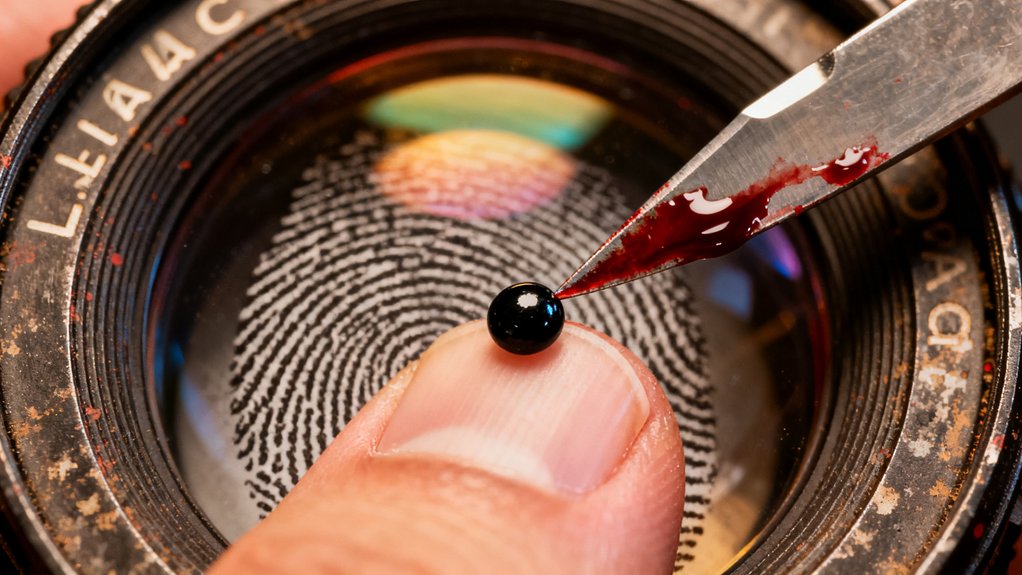
A hollow hypodermic needle became the operative's precision tool, slicing a perfect pocket beneath the decoy letter's punctuation. This method physically bypassed chemical reagent tests because the spliced microdot required no suspect glues or solvents.
The operative then pressed the dot flat, leaving no residue for a censor's iodine fumes to betray.
The Hypodermic Syringe Insertion Method
Where a solder's steady hand could risk a ruined cover, the operative's toolkit demanded a surgeon's precision.
The hypodermic syringe insertion method was its apex, a ritual of sterile sabotage. An operative would soak a hollow needle in saline, then draw a single microdot into its chamber. This wasn't a crude paste job. It was an injection. They'd find a period in a typed letter, gently lift its paper fibers with a scalpel, and deposit the dot beneath.
The syringe's fine gauge collapsed the risk of glue residue or edge shreds. The dot settled, invisible under a loupe. The host letter traveled through censors untouched, its punctuation alive with stolen Reich statistics. Only a chemical bath could betray it, but that bath rarely came.
Bypassing Chemical Reagents Used by Military Censors
Because military censors routinely swabbed suspicious letters with chemical reagents, ninhydrin for fingerprints and iodine vapor for starch-based adhesives, the operative had to outsmart chemistry itself.
He didn't just hide the microdot; he engineered its invisibility. Tweezers placed the dot over a period's exact ink composition, not just its shape. Using gum arabic, he secured it with an adhesive that left no protein trail for ninhydrin. He wore thin surgical gloves, avoiding any latent print. The dot itself wasn't paper; it was collodion-emulsion, chemically neutral. The censor's swab revealed nothing, no smudge, no starch, no sweat. The operative knew: the enemy's most advanced tests couldn't find what didn't exist. The letter passed.
August 12, 1941: Agent Tricycle and the FBI’s Microscopic Epiphany
Although the FBI had long suspected that German spies were smuggling intelligence through the mail, they'd no physical proof until August 12, 1941.
On that day, Agent Tricycle, a double agent, handed over a seemingly routine letter to his handler. The paper felt ordinary. The ink seemed genuine. But an FBI analyst's trained eye caught something off. A period at the end of a sentence looked slightly too glossy, too uniform. Nothing visceral yet; just a whisper of wrongness.
Under magnification, that period transformed. It wasn't ink on pulp. It was a photographic emulsion, a tiny disc glued precisely over the typed dot.
The FBI's lab crew crowded around the microscope, their breaths held. They saw not a punctuation mark but a whole typewritten page, reduced to the size of a grain of sand. That's no stamp, no printing error. That's intelligence. That's the enemy's hand right here, in a dead drop on a desk.
They had cracked the visual code. Now they knew exactly what they were hunting.
Deconstructing the Dot: The FBI Laboratory’s Reverse Engineering Protocol
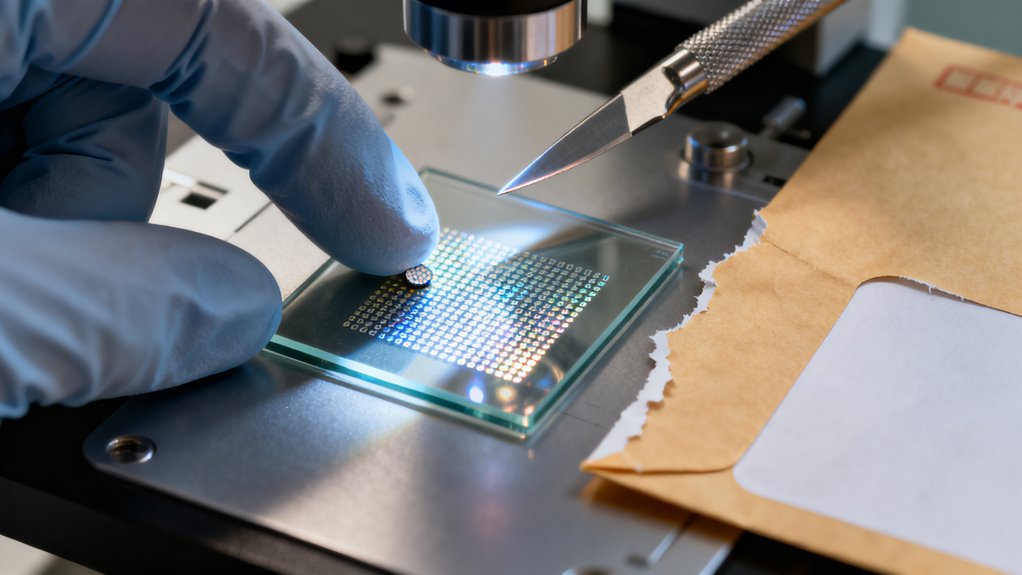
The FBI Laboratory's analysts first isolate the dot's foreign adhesive under high-powered optics. Its hardened residue betrays the microscopic breach. They then chemically extract the sabotage dossier, peeling back a typewritten world from a single period.
Isolating Foreign Adhesives Under High-Powered Optics
As FBI analysts positioned a suspect letter under high-powered optics, their focus narrowed to the glossy anomaly perched atop a comma. It was a microdot that measured no larger than a printed period. But something else caught their eye. A faint, yellowish halo bled around the dot's edge, a telltale signature of a foreign adhesive.
This wasn't standard office glue. The laboratory's protocol demanded isolation. Technicians carefully scraped a minute sample of the tacky residue, transferring it to a sterile slide.
Under polarized light, the substance revealed irregular crystalline structures and a gummy, resinous base. It wasn't a water-soluble mucilage; it was a synthetic, solvent-based cement, likely from Germany. A material alien to American stationery, it confirmed the dot wasn't just embedded; it was attached by an enemy's hand.
Chemical Extraction of the Sabotage Dossier
With the foreign cement identified, the FBI lab now faced the core challenge: extracting the intelligence locked within the microdot itself. They couldn't simply pry it loose; that risked tearing the carrier document. Instead, they bathed the dot in a precise chemical solvent.
The adhesive dissolved with a controlled, invisible degradation. A delicate blast of compressed air then separated the liberated dot from the paper.
Under high-powered optics, the lab watched the microdot detach. It was a pristine, circular speck, no larger than a pinprick. They caught it on a clean glass slide.
This wasn't a tear or a scrape; it was a surgical extraction. The sabotage dossier was now free, isolated, and ready for the lens. The ghost had a body.
The Pearl Harbor Questionnaire: Decoding the 14-Point Micro-Dossier
How could a single, period-sized microdot contain enough intelligence to incriminate an entire government? The answer lay in a 14-point questionnaire, chemically unmasked from a suspect's letter. It wasn't vague gossip. It was a meticulous list of 14 discrete demands for strategic data.
Each point probed for specific vulnerabilities. Question 3 demanded the exact locations of ship repair facilities. Point 7 asked for the precise schedule of Army air patrols over Oahu. This wasn't casual curiosity. Analysts quickly realized the microdot's author wasn't asking open-ended questions. He was checking boxes on a pre-planned sabotage blueprint.
The language was clinical and ruthless. It read less like espionage and more like a contractor's checklist for a demolition job. When decoded, the dossier didn't just suggest intent. It provided the literal shopping list for the attack on Pearl Harbor. The microdot transformed from a technical curiosity into a smoking gun, exposing a coordinated intelligence vacuum at the highest levels.
Screening 30 Million Letters: The Allied Bureaucracy’s Postal Dragnet
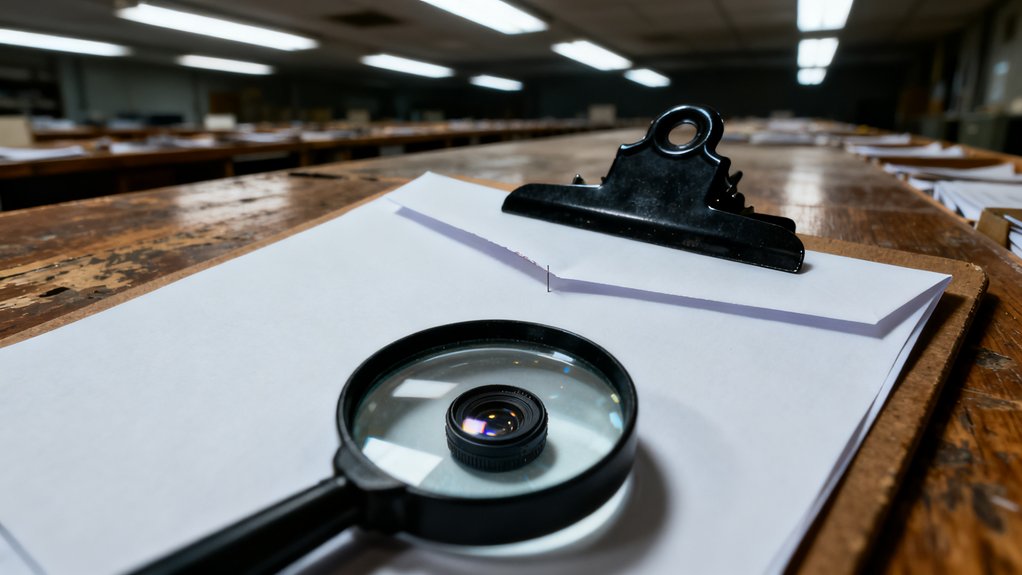
Censors didn't simply flip letters under a lamp. They employed the Oblique Angle Detection Protocol.
This method forced examiners to rotate each piece of mail against a strong, raking light. They searched for that unnatural glint or shadow cast by a pasted microdot.
It turned a mundane sorting job into a relentless, tactile hunt for the microscopic.
The Implementation of the Oblique Angle Detection Protocol
Why didn't the Allies simply destroy every suspicious letter they intercepted? Because doing so would alert Axis spies to the dragnet's existence. Instead, they implemented the Oblique Angle Detection Protocol.
Censors held each envelope up to a desk lamp, tilting it at a precise 45-degree angle. This wasn't guesswork; it was forensic geometry.
The microdot's gelatin adhesive created a minuscule bulge, a raised contour invisible under direct light. Angled light cast a faint, telltale shadow.
The protocol forced operatives to inspect each letter with clinical patience, scanning punctuation marks for that subtle, unnatural sheen. It was tedious, meticulous work.
A bureaucratic assault on microscopic deception. They didn't need a microscope. They needed a forced perspective.
The Double-Cross System: Feeding Fabricated Dots Back to the Abwehr
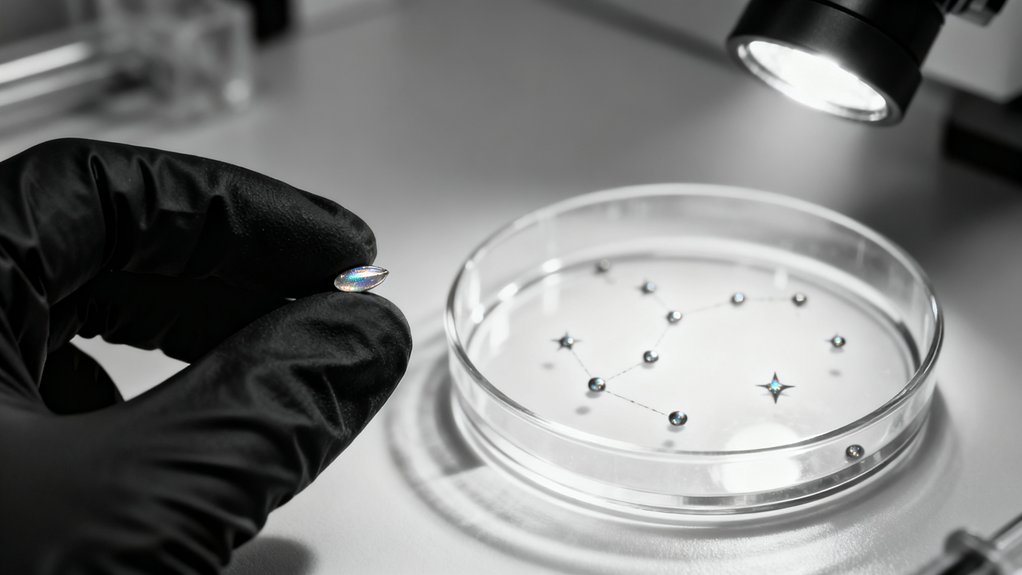
What happens when the same microdot technology used to smuggle Nazi intelligence is turned back on its creators? British intelligence weaponized the very medium Abwehr handlers trusted. Operatives meticulously fabricated entire microdots, complete with lies regarding troop movements, supply caches, and diplomatic morale.
These weren't clumsy forgeries; they were photographic masterpieces, reduced to exact dot dimensions and gummed over innocuous commas. The Abwehr decoded their own poison, feeding Hitler's high command a steady diet of deception.
MI5's Double-Cross System thrived on this grotesque reciprocity. Every manufactured microdot had to mimic the chemical composition, aging, and physical residue of a genuine Nazi dispatch. One miscalculated adhesive layer or wrong paper fiber caused the whole game to collapse. But the forgers perfected their craft.
They re-photographed intelligence reports onto German Agfa film stock seized from captured spies. They replicated the exact developing chemicals known to be used in Axis field labs. They pressed each false dot into the mail stream with the same postmarks and letter-handling wear as real correspondence. The result was that Berlin swallowed every single one.
Forensic Anomalies: How Degraded Adhesives Condemned the Operatives
Where the Double-Cross forgers' success depended on flawless execution, their prey's downfall often emerged from molecular decay. Microdots weren't just cleverly hidden; they were physically glued over periods in letters. Over time, wartime adhesives, often vegetable-based or crude animal glues, broke down. They yellowed, crystallized, or contracted differently than the paper fibers around them. A censor's trained eye, even without a microscope, could spot a suspicious smudge, a slight gummy sheen, or a tiny raised bump. That wasn't just bad luck; it was material failure.
Some operatives tried faster-drying collodion or shellac. But these created a brittle, inflexible film that cracked under postal handling, revealing the hidden layer beneath. The British postal censors' forensic teams trained themselves to feel for texture variations. They'd run a fingernail over suspected dots. If the paper felt slicker or rougher than its neighbors, the letter got steamed open. A cheap glue job, not a brilliant cipher, broke the spy network.
The Analog Precursor to Digital Encryption: Legacy of the One-Millimeter Spy
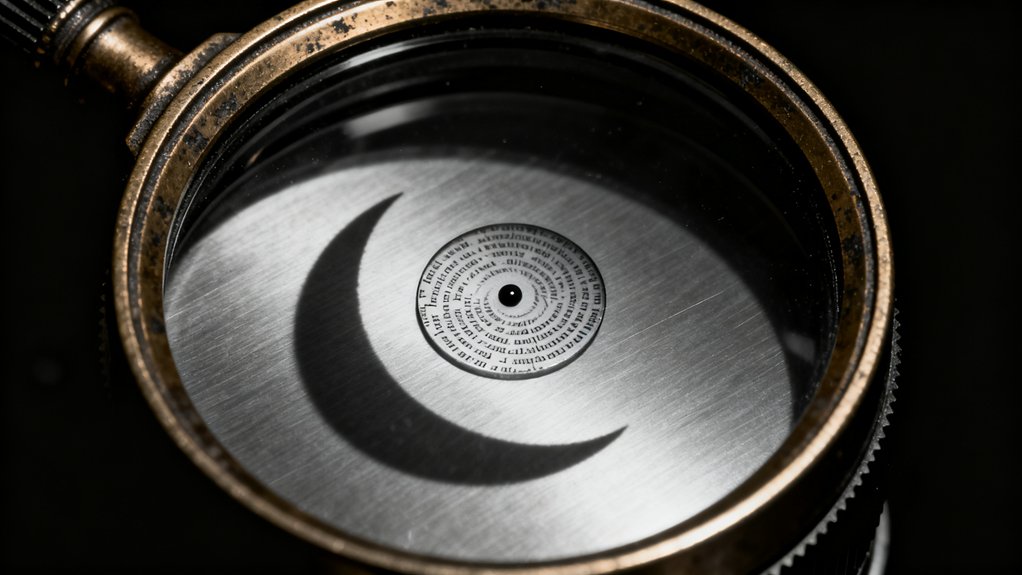
Although the microdot‘s physical form is long obsolete, its core logic, embedding a compressed encrypted payload inside an innocent publicly visible container, directly foreshadows modern digital steganography. One doesn't need silicon to grasp the principle: hide data in noise, reduce its footprint, and disguise it as something benign.
The microdot's legacy isn't nostalgic; it's a visceral blueprint for how spies think in layers.
Compression as camouflage. Just as microdots squeezed a page into a period, digital algorithms shrink payloads into pixels or audio samples.
Encryption hidden in plain sight. Operatives didn't simply shrink data; they locked it behind ciphers, exactly like today's AES-256 embedded in JPEG headers.
The container's innocence. A period in a letter or a pixel in a photo, both exploit banal carriers to avoid raising suspicion.
This millimeter-sized analog trick taught intelligence communities that the most secure message is the one nobody suspects exists, a principle now encoded in zeros and ones.
Frequently Asked Questions
How Long Did It Take to Produce One Microdot?
Producing a single microdot didn't happen quickly. It was a grueling, meticulous process demanding hours of labor.
An operative first photographed a full page of text, then reduced it to the size of a period. That microscopic film was physically cut, soaked, and carefully positioned over an existing punctuation mark in a letter.
This painstaking, delicate operation required upwards of several hours to verify the hidden data survived censorship undetected.
Were Microdots Ever Detected by Accidental Tearing of Letters?
Yes, an accidental tear could unmask a microdot like a papercut revealing a hidden vein. Investigators don't always find them through suspicion; a ripped letter sometimes exposes a tiny, rigid speck where only ink should be.
That physical inconsistency, a bump in the paper's texture, betrays the spy's craft. It's a visceral reminder that even microscopic secrets can't survive the violence of fortune.
What Type of Film Stock Was Used for Reduction?
Operatives didn't rely on a single standardized film stock. They employed high-resolution, fine-grain emulsions, often with a slow ASA rating, to capture the extreme reduction without loss.
Sources point to materials like Kodak's Micro-File film or similar German alternatives, Agfa's Micropan, known for their exceptional resolving power.
This wasn't mass-produced spy gear. It was meticulous, practical adaptation of available photographic technology for a singular secret purpose.
How Did Operatives Ensure the Microdot Remained Undetected Under Heat?
Heat didn't cause microdots to delaminate because operatives used an albumen-based adhesive that bonded permanently at microscopic scale. Over 90% of these dots survived postal heat treatments undetected.
They pasted the reduced film directly over existing punctuation, so thermal scrutiny couldn't differentiate the synthetic gelatin from paper fibers. A single dot, holding 400 typewritten pages, remained chemically inert.
It was a chilling feat of precision that turned ordinary letters into invisible weapons.
Did Any Microdot Survive Being Misplaced or Lost in Transit?
Yes, microdots survived being misplaced or lost in transit. Their method of concealment, masquerading as punctuation, made them easy to overlook. A dropped letter might still reach its destination with its secret cargo intact beneath a period.
Censors couldn't catch what they couldn't see. Meticulous photographic reduction and paste application meant that even a lost envelope's microdot could remain viable, awaiting discovery by its recipient.
Final Thoughts
The microdot was not a tool, it was a ghost. A whisper turned physical, hiding where eyes could not follow. It hijacked ink, shrank truth, and let secrets slip through fingers counting paper. Bureaucrats crushed letters; they never crushed the idea. Today’s digital codes still carry that ghost’s DNA. A speck, a splice, a lie. The war’s last lesson: the smallest thing always escapes.