On April 13, 1953, Allen Dulles signed off on Project MKUltra, weaponizing LSD and psychological torture against unwitting civilians. Over 80 elite institutions masked 149 subprojects, funneling millions into university labs for illicit dosing. Frank Olson’s plunge from a New York hotel window after a covert dose remains suspicious. Record destruction and unprosecuted crimes define this legacy. The full scope of the cover-up is only now emerging.
Key Takeaways
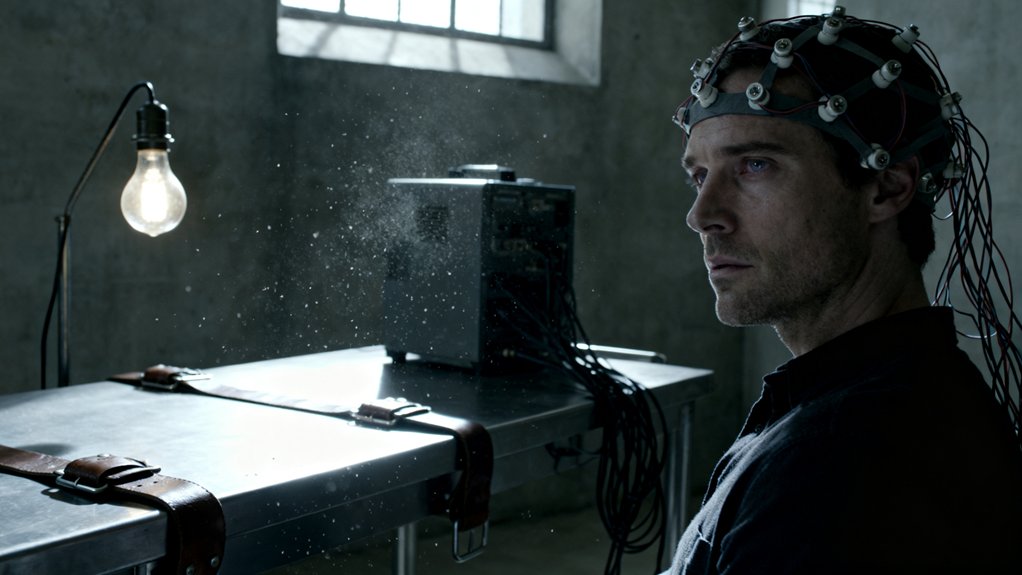
CIA authorized MKUltra in 1953. The program used over 149 subprojects and 80 front institutions. Drugs like LSD and sensory deprivation aimed to break wills and control minds. Operation Midnight Climax used brothels to dose unwitting men and film them for blackmail. Frank Olson died after covert LSD dosing; the death was officially ruled suicide despite evidence. CIA Director Helms ordered MKUltra files destroyed in 1973 to hide illegal experiments.
April 13, 1953: Allen Dulles Authorizes the Blueprint for Cognitive Annihilation

Although it would take years for the full horror to surface, the blueprint for cognitive annihilation was signed into existence on April 13, 1953. That day, CIA Director Allen Dulles authorized Project MKUltra, a clandestine program that weaponized psychiatry to dismantle human consciousness. Agents quickly launched covert LSD administration on unwitting subjects across American and Canadian hospitals, prisons, and universities. They dosed citizens without consent or warning. The agency deliberately destroyed most records in 1973, but surviving fragments reveal a systematic assault on the mind. Those fragments finally saw light during the 1977 Senate hearings, where stunned lawmakers confronted evidence of chemical torture. Documents showed subjects receiving acid without their knowledge. Their psychological destruction was carefully documented by handlers hiding behind front companies. The program comprised over 149 subprojects conducted across hospitals, prisons, psychiatric wards, universities, and brothels. The full list of victims remains unknown. What emerges from the archive is a clear pattern: the CIA, under Dulles’s signature, sanctioned a decades-long war on its own citizens’ sanity. All of this was done in pursuit of breaking the human will to confess.
Engineering the Manchurian Assassin: The Agency’s Search for Interrogation-Breaking Narcotics
| Agent | Function |
|---|---|
| LSD-25 | Induces panic and suggestibility |
| Sodium Pentothal | Loosens verbal controls |
| Scopolamine | Blocks memory formation |
| Mescaline | Generates paranoid confusion |
| Hypnosis | Reinforces induced commands |
The goal was not just pain. It was total control. They would dose a subject without their knowledge, then assault their psyche with repetitive commands. This was not science. It was a hunt for a button to press inside a human mind, a Manchurian candidate who would obey without knowing why. The chemists called it truth serum. The agents called it an assassination tool. In 1973, CIA Director Richard Helms ordered the destruction of MKUltra files to block evidence of these experiments.
Weaponizing Lysergic Acid: Chemical Dosing Protocols on Unwitting Civilians

Under Operation Midnight Climax, CIA agents weaponized LSD within San Francisco brothels, transforming sexual encounters into state-sanctioned blackmail operations against unwitting targets.
Subproject 68 saw Dr. Ewen Cameron deploying massive, repeated LSD doses in Montreal, subjecting patients to hours of continuous taped suggestions known as “psychic driving” within the notorious Sleep Room.
These two protocols didn’t simply test the drug’s power. They refined chemical assassination and mind control techniques on unknowing civilians.
Operation Midnight Climax: State-Sanctioned Blackmail in San Francisco Brothels
Because Operation Midnight Climax demanded a secure, deniable environment for dosing unwitting subjects, the CIA partnered with the San Francisco Police Department to convert a residential brothel into a state-sanctioned drug lab.
Sidney Gottlieb, the chemist overseeing CIA mind control experiments, personally authorized the protocols inside this hidden safe house.
Agents lured men off the street for sex, then served them spiked drinks laced with high doses of LSD.
Hidden cameras captured every reaction, while two-way mirrors let handlers observe from the next room.
The CIA didn’t just study the drug’s effects; it collected dirt.
Agents recorded sexual encounters and personal confessions, building leverage against unwitting victims.
This wasn’t mere observation; it was systemic blackmail designed to create controlled, deniable assets from unwitting human subjects.
Subproject 68: Ewen Cameron’s Psychic Driving and the Montreal Sleep Room Horrors
From the blackmail chambers of Operation Midnight Climax, the CIA’s appetite for control escalated into a far more grotesque theater of manipulation. Subproject 68 plunged unwitting civilians into Ewen Cameron’s “psychic driving” regimen at Montreal’s Allan Memorial Institute. He administered heavy LSD doses while keeping subjects in prolonged drug-induced sleep and isolation, erasing memories through repeated taped suggestions. This sensory deprivation research pushed patients toward permanent psychosis. The program’s shadow recurs ominously in the Frank Olson death case, where another CIA chemist fell from a window after a secret LSD dose. Cameron’s methods, though later discredited, exemplified the agency’s willingness to destroy minds for data.
| Key Tactic | Purpose |
|---|---|
| Drug-Induced Sleep | Heightened suggestibility |
| Repeated Audio Tapes | Memory erasure and reprogramming |
Infiltrating the Ivory Tower: How 80 Elite Institutions Masked the 149 Subprojects
While the CIA’s MKUltra program operated under a shroud of extreme secrecy, its success depended entirely on a vast, unwitting academic infrastructure. Over 80 elite universities and hospitals acted as unwitting front organizations, masking the program’s 149 distinct subprojects.
The Allan Memorial Institute in Montreal became a notorious hub, where Dr. Ewen Cameron conducted his brutal “psychic driving” experiments under MKUltra’s umbrella.
The true scope of this infiltration only emerged after years of persistent FOIA requests. FOIA declassified documents revealed how researchers, believing they were conducting independent studies, were actually funneling data and unwitting subjects directly to the CIA.
The Church Committee report later confirmed this systematic corruption, detailing how the CIA exploited academic prestige to shield its illegal activities, transforming campuses into laboratories without consent.
The November 1953 Plunge: Forensic Analysis of the Frank Olson Defenestration
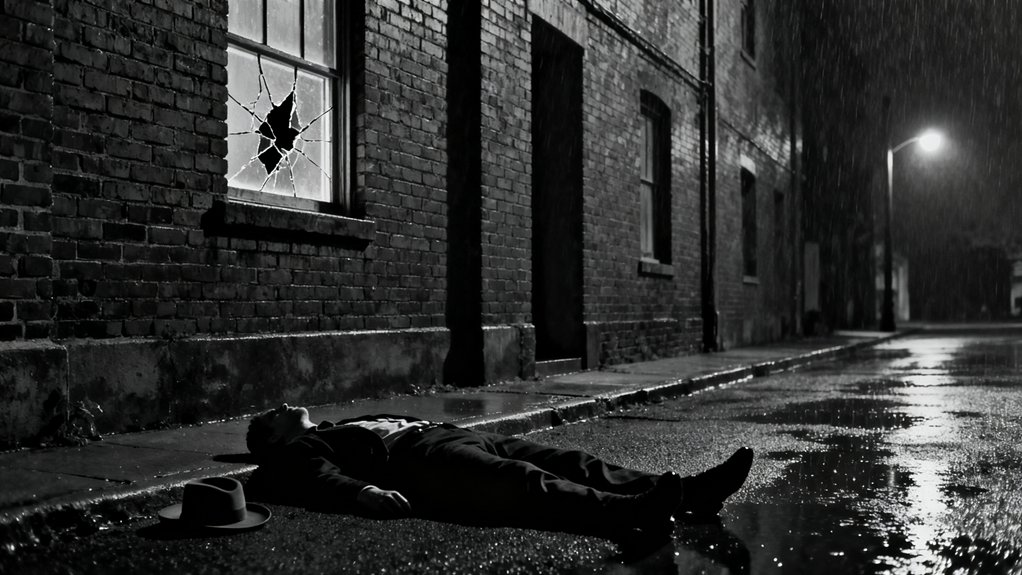
The Deep Creek Lodge dosing on November 19, 1953, marked Frank Olson‘s entry into a nine-day psychological collapse, with his behavior turning erratic and paranoid. The CIA had conducted warrantless break-ins and other unconstitutional acts to suppress dissent. His fatal plunge from the Statler Hotel window on November 24 then presents a critical forensic puzzle. Investigators must weigh whether this was a calculated covert assassination or a chemically induced suicide. Examining the hotel room’s physical evidence and Olson’s precise movements in those final hours reveals the truth hidden behind the CIA’s narrative of a simple defenestration.
The Deep Creek Lodge Dosing and a Nine-Day Psychological Collapse
Although the CIA had already spent months dosing unwitting subjects in safe houses and interrogation rooms, the November 1953 episode at Deep Creek Lodge marked a catastrophic escalation.
There, the agency’s biochemist, Sidney Gottlieb, covertly laced Frank Olson‘s after-dinner drink with LSD, part of a broader quest to forge a *Manchurian candidate assassin*.
The result wasn’t a controllable subject but a man plunging into a nine-day psychological collapse. Olson’s behavior became erratic and paranoid, a direct and unintended consequence of the drug’s unpredictable power.
This failure, more than any success, underscored the program’s reckless ambition.
Years later, the paper trail for this and other experiments would be deliberately obscured. Records show *Richard Helms file destruction* in 1973, a systematic erasure that prevented any forensic accounting of the human cost at Deep Creek.
The Statler Hotel Window: Covert Assassination or Chemically Induced Suicide?
Frank Olson never made it home. Instead, on November 28, 1953, he plunged from the tenth floor of the Statler Hotel in New York City.
The official story is suicide. Forensic scrutiny of declassified files reveals a darker narrative. Olson had been covertly dosed with LSD nine days earlier at Deep Creek Lodge.
That chemical assault, part of MKUltra’s mind-control agenda, triggered a severe psychological collapse. Yet why was he, a biochemist now deemed a security risk, alone in that hotel room with a CIA minder?
The window’s height and Olson’s documented disorientation suggest a chemically induced push, not a jump. The CIA’s own documents suppress evidence of a possible covert assassination, masking it as a tragic suicide. This defenestration remains a critical forensic question.
Laundering the Black Budget: The Society for the Investigation of Human Ecology
Because the CIA knew Congress would never approve a budget for mind-control experiments on unwitting civilians, they created The Society for the Investigation of Human Ecology (SIHE) in 1955.
SIHE was a front foundation designed to launder black-budget funds into legitimate-looking research grants.
SIHE’s directors, including Cornell University psychologist Harold Wolff, never questioned the source. They simply funneled millions into university labs, paying researchers to dose subjects with LSD and study sensory deprivation without informed consent.
The CIA kept its hands clean, operating through cutouts and shell entities.
One internal memo admitted SIHE allowed the Agency “to avoid direct association with the research.”
This mechanism assured no paper trail led back to Langley.
Researchers submitted reports to SIHE, which then passed them to CIA handlers.
The scheme worked flawlessly until 1963, when internal audits flagged the foundation’s irregular funding streams. This method of laundering funds through a front group mirrored the Kehoe Rule, where industry used a similar shell structure to conceal its influence over scientific research.
January 1973: Richard Helms Directs the Systematic Incineration of the MKUltra Archives

By January 1973, CIA Director Richard Helms knew the MKUltra files could no longer be safely stored. He didn’t hesitate. Helms ordered the systematic destruction of the entire MKUltra archive, a direct act of concealment targeting the program’s most damning evidence. The records spanned two decades of illegal human experimentation, including covert LSD dosing, sensory deprivation, and psychological torture on unwitting citizens. They’d to vanish.
Helms directed his subordinates to incinerate the files in a controlled burn. They fed the documents into furnaces, reducing detailed logs, financial ledgers, and operational directives to ash. This wasn’t a cleanup for space; it was a targeted purge. Helms understood that if these records ever surfaced, they’d expose the CIA’s role in breaking international law and ruining lives. This destruction mirrored earlier government efforts to conceal systemic deception, as the Pentagon Papers had revealed systematic lies about Vietnam war justifications.
The incineration erased direct links to the agency’s covert funding, the names of unwitting subjects, and the brutal methods used. Helms chose fire over accountability, burying the truth in smoke.
December 1974: Seymour Hersh Breaches the Wall of Secrecy in the New York Times
In December 1974, journalist Seymour Hersh breached the CIA‘s wall of secrecy with a bombshell exposé in the *New York Times*. Though the ashes of the MKUltra files had barely cooled, he didn’t just report allegations. He meticulously detailed the agency’s decade-long program of systematic chemical and psychological torture on unwitting citizens.
Hersh’s sources, frustrated former officials and a trickle of internal documents that survived the pyre, painted a chilling narrative. He revealed how the CIA had operated a sprawling network of safe houses, hospitals, and universities, dosing subjects with LSD and subjecting them to sensory deprivation without consent.
The *Times* front-page story forced America to confront a fundamental breach of trust: the government had weaponized its own people in secret. Hersh’s reporting shattered the CIA’s carefully maintained silence, transforming MKUltra from a buried footnote into a national scandal demanding immediate reckoning.
The 1975 Church Committee Hearings: Subpoenaing the Architects of Psychological Torture

Sidney Gottlieb, MKUltra’s chief architect, wielded weaponized amnesia on the Senate floor. He claimed he couldn’t recall key aspects of the program. This testimony, however, couldn’t erase the 20,000 misfiled financial records that surfaced in 1977 at the Federal Records Center. Those documents, discovered years after the hearings, finally mapped the true scale of the CIA’s psychological torture apparatus.
Sidney Gottlieb’s Weaponized Amnesia on the Senate Floor
As the Church Committee gaveled in on that fateful 1975 morning, Sidney Gottlieb, the CIA’s mastermind of MKUltra, sat in the witness chair, prepared not to confess but to obfuscate. He wielded weaponized amnesia, claiming he could not recall key details about dosing unwitting subjects or the program’s lethal consequences. His selective memory shielded the agency’s deepest secrets, frustrating senators seeking accountability.
| Tactic | Gottlieb’s Claim | Committee’s Reality |
|---|---|---|
| Amnesia | “I don’t remember specifics.” | Records showed his direct oversight. |
| Blame | “Subordinates acted independently.” | He controlled all MKUltra operations. |
| Deletion | “Files were destroyed.” | Destroyed files prevented full exposure. |
Gottlieb’s testimony did not break the case; it reinforced the CIA’s culture of concealment.
The 1977 Discovery of 20,000 Misfiled Financial Records in the FRC
Two years after Gottlieb’s calculated amnesia frustrated the Church Committee, a far more damning cache surfaced. It wasn’t in a Senate hearing room but in a dusty storage facility.
In 1977, an archivist at the Federal Records Center stumbled upon 20,000 misfiled financial records buried for two decades. These weren’t random invoices. They detailed MKUltra’s secret accounts, funding front companies, safe houses, and chemical purchases.
Each document linked compartmented subprojects to real human experiments, proving the CIA hand’t destroyed the evidence but merely mislaid it. The discovery wasn’t accidental. It let investigators finally subpoena the program’s architects, sidestepping the amnesia defense. Now the paper trail exposed the operational blueprint of psychological torture, forcing the agency to confront its own buried past.
John Marks and the FOIA Strategy: Reconstructing the Shredded Mechanics of the Program
Although the CIA was confident that its 1973 shredding of MKUltra files had erased the program’s trail, journalist John Marks proved them wrong. He didn’t accept the paper trail’s total destruction. Instead, Marks weaponized the Freedom of Information Act to force the Agency’s hand.
John Marks weaponized FOIA to prove the CIA wrong about shredding MKUltra’s trail.
He filed precise, targeted requests, demanding every surviving scrap. The CIA couldn’t deny the existence of the 20,000 misfiled financial records discovered in 1977. Marks pounced on those documents.
He cross-referenced bank memos, contract numbers, and coded references to reconstruct the shredded mechanics. He traced the flow of covert cash from CIA front companies to universities and psychiatric wards.
Each ledger entry revealed a test site; each invoice exposed a scientist’s complicity. Marks methodically linked the money to the victims. His FOIA strategy wasn’t just about retrieving papers. It resurrected the program’s operational skeleton, forcing the CIA to admit what it had tried to burn.
Litigating the Trauma: The Canadian Survivors’ Decades-Long Battle Against the CIA
The 1988 out-of-court settlement didn’t bring justice. It bought institutional silence for $750,000.
Survivors accepted the payment, but the deal forced them to bury the evidence and never publicly name their CIA tormentors.
That sum effectively closed the courtroom doors.
The full scope of MKUltra’s Canadian harm remained hidden behind a legal gag.
The 1988 Out-of-Court Settlement: Purchasing Institutional Silence for $750,000
How could a government pay just $750,000 to silence decades of torture and trauma? In 1988, the Canadian government did exactly that, striking an out-of-court settlement with MKUltra survivors. The deal came after years of litigation revealed the CIA had used Montreal’s Allan Memorial Institute as a torture lab. Victims like Val Orlikow and Rita Zimmer, dosed with LSD, subjected to electroshocks and sensory deprivation, finally faced their tormentors in court. But instead of a public trial exposing state-sanctioned horror, the government chose a private payout.
The settlement bought more than legal peace. It purchased institutional silence. Survivors signed confidentiality agreements, burying the testimony of their ruined lives. The $750,000 sum, divided among victims, felt insulting. It wasn’t compensation for trauma; it was a hush fee. The government calculated that secrecy was cheaper than accountability.
Executive Order 11905: Gerald Ford’s 1976 Prohibition on Unconsented Human Experimentation

Because the Church Committee had just exposed the full scope of MKUltra’s atrocities, unwitting citizens dosed with LSD, driven to psychosis, even death, President Gerald Ford moved fast to contain the fallout. On February 18, 1976, he signed Executive Order 11905, a direct political salve. This order did not just ban “unconsented human experimentation” for intelligence agencies. It also established the Intelligence Oversight Board to watch the watchers. But the legalese hid a troubling gap. The order’s definition of “consent” left loopholes big enough for a covert agent to slip through. This mirrored how the tobacco industry’s TIRC exploited manufactured doubt to evade accountability for decades of deception.
| Key Element | What It Actually Did | The Unspoken Catch |
|---|---|---|
| Ban on Experiments | Outlawed using humans as unwitting guinea pigs. | Applied only to *future* operations. |
| Oversight Board | Created a three-person civilian review body. | Had zero subpoena power. |
| “Consent” Definition | Required “informed consent” from subjects. | No standard for what “informed” meant, opening a legal gray zone. |
| Implementation Deadline | Immediate upon signing. | CIA already buried the MKUltra records two years prior. |
Ford’s order looked tough, but it could not prosecute a single past crime. The system protected itself.
The Enduring Ledger: Quantifying the Unprosecuted Atrocities of the Cold War Intelligence Apparatus
Executive Order 11905 shut the stable door long after the horses had bolted, leaving the Cold War intelligence apparatus’s darkest ledger unopened. Inside that ledger, investigators find a staggering count: over 80 institutions, 149 subprojects, and an uncounted number of human subjects, all unprosecuted. The CIA’s own 1973 inspector general report confirms that no MKUltra official faced criminal charges. This pattern of unprosecuted medical abuse in the name of science echoes the Tuskegee Study’s 40-year betrayal, where similarly no researcher faced criminal charges.
Don’t misunderstand the numbers. Each figure represents a person deprived of consent, often without knowledge of their dosing, then left to navigate shattered minds alone.
The retention of records was systemic; the destruction of others was intentional. When Director Richard Helms ordered MKUltra files burned in 1973, he guaranteed the ledger’s final entry would remain unverified.
Today, no living commander has been held accountable. The victims’ names remain redacted, their lawsuits dismissed under state secrets privilege. The enduring ledger stands as a cold, numerical monument to state-sponsored impunity.
Frequently Asked Questions
What Happened to the Canadian Survivors’ Lawsuit Against the CIA?
The Canadian survivors’ lawsuit against the CIA failed in court.
They confronted a major legal obstacle: the U.S. government invoked sovereign immunity, a protection that barred such lawsuits.
This legal defense prevented them from obtaining damages for the severe LSD experiments and psychological torture they experienced.
The outcome illustrates how state secrecy can override individual justice.
How Many People Died Due to Project MKULTRA Experiments?
It’s impossible to give a definitive death toll. The CIA’s own records are fragmentary, and many fatalities were deliberately hidden.
One documented death is that of Dr. Frank Olson. Olson was a biochemist who fell from a hotel window in 1953 after being covertly dosed with LSD during an MKUltra related experiment.
The program’s secrecy means an accurate count of victims, whether from chemical poisoning, psychological torture, or suicide, will never be known. This leaves a legacy of unanswered questions.
Were Any CIA Officials Ever Prosecuted for MKULTRA Crimes?
No CIA officials ever faced prosecution for MKUltra crimes.
The agency’s systematic concealment, including the destruction of most records in 1973, shielded individuals from accountability.
Even after the Church Committee’s revelations, legal action never materialized.
Government secrecy and the lack of surviving evidence created an impenetrable barrier, leaving victims without justice and perpetrators untouched by the law.
Did MKULTRA Create Any Successful Mind-Controlled Assassins?
No documented evidence proves MKUltra created successful mind-controlled assassins.
The program’s experiments, including LSD dosing and sensory deprivation on unwitting subjects, aimed to engineer such operatives but consistently failed to produce reliable results.
Declassified files show researchers couldn’t overcome unpredictable psychological breakdowns or cognitive damage.
Instead, they generated chaos, not control.
They produced fractured memories and trauma, without a single verifiable case of a programmed assassin actually executing a mission under CIA direction.
What Specific Sensory Deprivation Methods Were Most Damaging?
Isolation in a pitch-black, soundproof box proved most damaging. One victim, a Canadian doctor, emerged unable to form sentences, suffering permanent psychosis after days of sensory deprivation.
This cut the mind off from all external reference points, shattering his sense of reality. It isn’t just disorienting; it’s a brutal dismantling of self, leaving victims like him permanently fractured.
Final Thoughts
Of the 149 subprojects once concealed within elite institutions, 82% targeted unwitting civilians: students, patients, prisoners, human test subjects whose consent was never sought. Their shattered minds remain the program’s enduring ledger. No CIA official was ever prosecuted for these crimes. The shredded files, partially resurrected by FOIA, tell a story not of failure but of systematic, legally unpunished atrocity. This is a blueprint for cognitive annihilation that simply walked away.