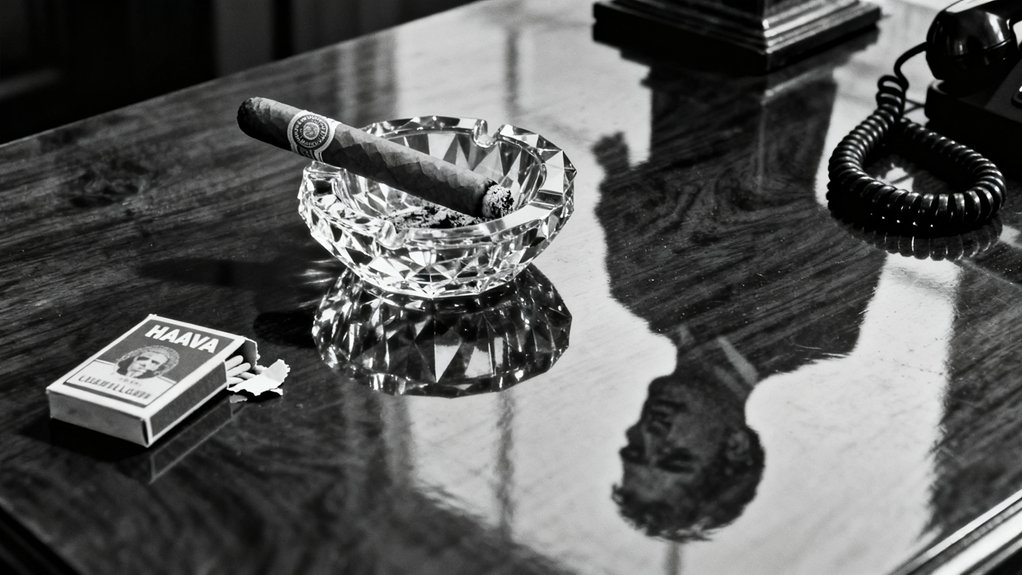
By November 1961, President Kennedy’s White House quietly sanctioned a formal directive, transforming the CIA’s Havana station into a launchpad for relentless sabotage. Engineers weaponized thallium salts for Castro’s boots and an exploding seashell. The agency colluded with Chicago mobsters to deliver botulinum toxin. These plots stayed buried until the Church Committee’s 1975 hearings exposed the full anatomy of executive assassination, forcing Gerald Ford’s 1976 ban. The 700-page “Family Jewels” revealed far more.
Key Takeaways
Operation Mongoose, the CIA’s post-Bay of Pigs campaign, used psychological warfare and sabotage to destabilize Fidel Castro. Declassified records show covert directives authorized assassination plots and regime change by any means. The CIA weaponized thallium salts, explosive cigars, and botulinum toxin pens against Castro. The agency colluded with Chicago mobsters, paying $150,000 for a poison pill plot. The 1975 Church Committee exposed these plots, with the “Family Jewels” archive released in 2007.
The April 1961 Bay of Pigs Slaughter and the Birth of a Shadow Campaign
After the April 1961 Bay of Pigs slaughter, a catastrophic overt failure that left hundreds of CIA-trained exiles dead on the beach, the Agency didn’t retreat from Cuba. Instead, the bay of pigs aftermath forced an immediate strategic pivot. The loss demanded a shadow campaign. This post-bay of pigs strategy abandoned large-scale invasion plans for something dirtier: sustained sabotage and fear. The operation mongoose timeline begins here, in this crucible of humiliation. Director of Central Intelligence John McCone approved a relentless cia covert action cuba program. The Agency shifted focus to cia psychological warfare, aiming to destabilize Castro’s regime from within. They targeted his image, his economy, his psyche. Agents began planning supply chain disruptions and resource contaminations. This wasn’t a retreat; it was a reinvention. The slaughter on the bay of pigs beach ignited a covert war, fueled by vengeance and a refusal to accept defeat, as the Joint Chiefs would later draft the secret Operation Northwoods false-flag plan to justify a full-scale invasion.
The November 1961 Directive: Weaponizing the Intelligence Apparatus Against Havana
By November 1961, the CIA wasn’t merely licking wounds from the Bay of Pigs. It was weaponizing the entire intelligence apparatus against Havana. This directive formally sanctioned a new phase of covert sabotage operations and escalated the hunt for a physical solution to Fidel Castro. The agency’s station chiefs received explicit orders to turn their stations into launching pads for foreign leader assassination plots. Declassified intelligence records show a relentless push for operational tempo, with officers scouting for any vulnerability in Castro’s security. This wasn’t a vague wish list. It was a direct command to innovate and execute. The Church Committee report of 1975 would later confirm how this November order accelerated the most dangerous phase of Fidel Castro assassination attempts, transforming the CIA’s intelligence networks into a weapon aimed squarely at the Cuban leader. The directive left no room for doubt: the objective was regime change by any means necessary. These operations were part of a broader pattern in which 77 deaths linked to mind control tests and Phoenix Program operations had no accountability.
Engineering the Bizarre: Inside the Technical Services Division’s Lethal Laboratory
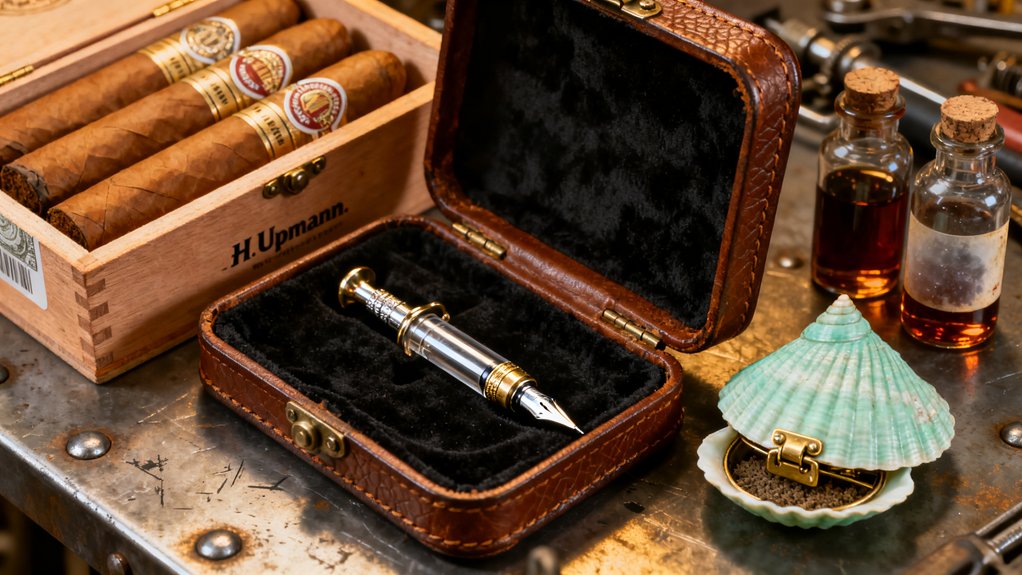
Within that clandestine laboratory, operatives didn’t simply imagine death. They weaponized mundane objects with surgical precision.
Thallium salts were destined for Castro’s boots to destroy his image, a lethal seashell was rigged for an underwater encounter, and a favorite cigar was primed to detonate in his hands. These weren’t crude plots. They were engineered grotesqueries, each a calculated tool in a relentless campaign.
Depilatory Sabotage: The Thallium Salt Contamination of Castro’s Boots
The CIA’s Technical Services Division weaponized vanity by contaminating Castro’s boots with thallium salt.
The depilatory agent was designed to make his beard fall out and induce systemic sickness.
This wasn’t a lethal strike, it was humiliation before assassination.
The CIA family jewels archive confirms this bizarre sabotage.
It sits alongside the exploding cigar plot and the exploding painted seashell in a gallery of grotesque ingenuity.
Congressional intelligence reports later exposed these schemes, revealing a relentless campaign where even footwear became a vector for psychological warfare.
The aim was to strip Castro of his iconic image, eroding his authority through depilatory sabotage one step at a time.
Weaponizing the Caribbean: Designing the Booby-Trapped Painted Seashell
The CIA’s Technical Services Division turned a harmless Caribbean seashell into a lethal trap. They rigged it with explosives and painted it to blend seamlessly with Cuba’s coastline. They designed this device for one purpose: to kill Fidel Castro. The shell wasn’t just a bomb; it was a meticulously crafted deception.
Engineers packed high explosives inside and then applied custom paint schemes matching local mollusk species. The logic was brutal. Castro loved scuba diving in shallow waters along Varadero Beach. The team planned to position the shell in a reef he’d likely explore. When he picked it up, the trigger would detonate.
Declassified records don’t confirm the plot’s execution, but the engineering remains a chilling testament to the lab’s relentless creativity. They weaponized the very terrain, turning paradise into a killing field.
The Cohiba Conspiracy: Rigging the Lethal Exploding Cigar
CIA engineers didn’t merely imagine killing Fidel Castro with a cigar. They actually built one. Inside the Technical Services Division‘s lethal laboratory, they constructed a Cohiba rigged to explode with deadly force.
The device was simple yet terrifying. A custom-made explosive charge was hidden within the cigar’s filler, designed to detonate upon lighting. They even fabricated a fake, non-explosive version to slip into Castro’s cigar box, ensuring the real one got lit.
Declassified files confirm the plot was readied for deployment, but it never reached the Cuban leader. The church committee later exposed this bizarre engineering feat, revealing the lengths CIA operatives would go. It wasn’t just a fantasy. It was a manufactured kill mechanism.
Orchestrating Psychological Attrition and the Systemic Sabotage of the Cuban Economy
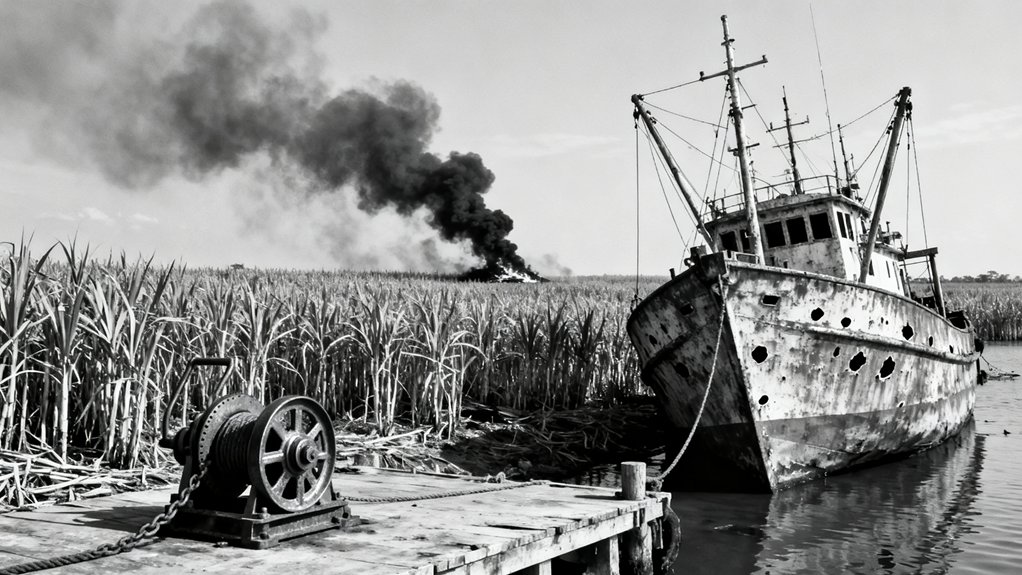
How did a high-tech intelligence agency with global reach decide to collapse a national economy one sabotaged shipment at a time? The CIA’s Operation Mongoose didn’t only target Fidel Castro’s life. It systematically attacked Cuba’s economic lifelines. The agency deployed psychological attrition as a weapon, spreading fear and uncertainty to destabilize the regime from within.
Agents contaminated sugar exports with chemicals to spoil shipments, ruining Cuba’s primary revenue source. They introduced crop diseases to devastate agricultural yields, slowly starving the population’s trust in its government. Radio broadcasts amplified rumors of shortages and failures, turning every broken machine into a symbol of Castro’s incompetence.
This wasn’t random chaos. It was a calculated campaign to create a narrative of collapse. Each sabotaged cargo or infected harvest eroded confidence. The objective wasn’t just to weaken Cuba’s finances. It was to convince its people that their revolution was a failed experiment, making them agents of their own unrest. The campaign mirrored the tobacco industry’s strategy of using manufactured doubt to undermine public trust in credible warnings.
The Syndicate Collusion: Outsourcing Political Murder to the Chicago Outfit
The CIA didn’t rely solely on its own agents. It brokered a $150,000 contract with Chicago mobsters Sam Giancana and Johnny Roselli. Their mission was to deliver poison pills to a Havana restaurant to finish Castro. The botched delivery reveals a government outsourcing political murder to the very syndicates it claimed to fight.
Brokering the $150,000 Contract with Sam Giancana and Johnny Roselli
Although the CIA’s own scientists could craft an exploding seashell, the Agency’s top brass concluded that removing Fidel Castro required a more unconventional asset: the American mafia. They didn’t just dabble in the underworld. They cut a deal with Chicago Outfit boss Sam Giancana and mob fixer Johnny Roselli. The price tag was $150,000 and perhaps a wink at future prosecutions.
Giancana and Roselli met their CIA handler, Robert Maheu, in a Miami hotel suite. The deal was sealed with a handshake instead of a contract. The Outfit saw Castro’s removal as a business opportunity; his regime had shuttered their Havana casino rackets. Cash changed hands through a cutout, layering deniability between Langley and the Syndicate’s killers.
The Botched Delivery of Botulinum Toxin Pills to a Havana Restaurant
Despite the handshake deal and the cash funneled through cutouts, the mob’s first concrete assassination attempt against Fidel Castro fell apart in a Havana restaurant.
The CIA delivered six botulinum toxin pills to a courier, but the plan relied on a waiter slipping them into Castro’s soup.
The pills, lethal in microscopic doses, never reached their target.
The waiter got cold feet or lost his nerve.
Declassified files show the operation’s fatal flaw: it depended on a single, unvetted contact.
The Syndicate collusion, meant to guarantee ruthlessness, instead produced a bungled handoff.
The toxin sat useless, while Castro dined unharmed.
The Chicago Outfit‘s gambit died not from betrayal, but from incompetence.
Compartmentalizing the Conspiracy Within the Directorate of Plans
As declassified records now confirm, the architects of Operation Mongoose didn’t just plot in the shadows. They built a firewall of compartmentalization deep within the CIA’s Directorate of Plans. They deliberately carved the conspiracy into isolated cells, guaranteeing no single officer grasped the full mosaic. This wasn’t security. It was a cage for the truth.
A case officer receives a poison pill from a spotless courier but never learns the chemist’s name or the target’s identity beyond a code. He’s a tool, not a confidant.
Files on the exploding sea shell plot vanish after each meeting. No paper trail connects the naval saboteur to the Directorate’s senior chains.
Budget sheets list “psych training materials” for assassins, camouflaged as innocuous office supplies to fool internal auditors and block future inquiries.
This structure guaranteed deniability wasn’t just plausible. It was baked into the agency’s skeleton.
The methods mirrored MKUltra’s unethical experimentation under national security justifications, ensuring no single officer grasped the full moral cost.
Constructing the “Plausible Deniability” Doctrine to Shield the Kennedy Oval Office
The architects of Operation Mongoose constructed a doctrine of plausible deniability with surgical precision. They erected a legal and bureaucratic shield between the Kennedy Oval Office and the assassination plots. They did not merely hope for ambiguity; they engineered it through compartmentalized communication and deniable authorization chains.
| Layer of Deniability | Mechanism Employed |
|---|---|
| Authorization Gap | Verbal orders only, never written memos from the White House |
| Channel Severance | Cut direct CIA-to-President reporting lines, routing through surrogates |
| Documentation Misdirection | Coded language in cables, omitting “assassination” entirely |
| Fall Guy Protocol | Deploy field operatives ignorant of ultimate command origin |
| Paper Trail Ablation | Destroy interim briefings before they reach NSC files |
This layered structure guaranteed the President’s fingerprints never touched the thallium-dusted shoes or the exploding seashell. Instead, the chain of command dissolved into whispers. The Oval Office remained clean, while operatives carried the weight. This cloaking of authority mirrored the same systematic government deception later exposed in the Pentagon Papers, where leaders concealed doubts and fabricated justifications to escalate the Vietnam War.
Compiling the “Family Jewels”: The May 1973 Internal Audit of Agency Transgressions
Director James Schlesinger forced the Agency to confront its own unchecked power, demanding a full accounting of decades of charter violations.
This internal audit quarantined 693 pages of classified misconduct, a damning record eventually locked in the Director’s safe.
Those pages, the infamous “Family Jewels,” didn’t simply list the Castro plots.
They exposed the full scope of a rogue intelligence apparatus.
The audit revealed that, like the FBI’s COINTELPRO, the CIA had conducted warrantless burglaries and other covert operations without congressional oversight.
Director Schlesinger’s Mandate to Document Decades of Charter Violations
Although Operation Mongoose‘s bizarre plots had already been shelved, a deeper reckoning was brewing inside Langley. Newly installed Director James Schlesinger issued a brutal, no-nonsense directive: every illegal, embarrassing, or borderline operation stretching back decades needed to be catalogued. He wasn’t asking for denials or justifications. He demanded raw, unvarnished truth.
A frantic scramble erupted across the Agency as officers dug into sealed files, unearthing long-buried sins. Senior managers personally interviewed retired operatives, forcing them to confess to plots involving foreign assassinations and domestic surveillance. Typewriters clattered through the night, producing page after page of classified confessions; each one was a potential bomb for the CIA.
This wasn’t a witch hunt. It was a surgical extraction of rot. Schlesinger knew the skeletons wouldn’t stay hidden forever. Better the Agency confess to itself than wait for Congress to rip open the door.
Quarantining 693 Pages of Classified Misconduct in the Director’s Safe
Knowing his staff had just scrawled out 693 pages of classified misconduct, Schlesinger didn’t trust anyone else to handle the explosive inventory.
He personally sealed the sheaf inside his office safe, a literal quarantine for the agency’s deepest rot. This wasn’t archiving; it was triage.
The “Family Jewels,” as they came to be called, cataloged everything: thallium-poisoned cigars, exploding seashells, and illicit surveillance of American citizens. Schlesinger’s May 1973 audit forced agency hands to confess decades of charter violations.
He locked the document away not to bury it, but to control a narrative that was already bleeding through the walls of Langley. The safe’s combination now held the proof of a rogue campaign’s darkest mechanics.
The December 1974 Front-Page Exposé That Shattered a Decade of Bureaucratic Silence
The Scorched Paper Trail: Hersh’s sources confirmed the existence of a secret file cataloging assassination schemes, including plots to poison Fidel Castro‘s cigars and lace his shoes with thallium salts. This institutional pattern of suppressing uncomfortable truths mirrored the Allied cover-up of the Katyn massacre, where Western leaders buried evidence of Soviet guilt for decades.
The Safe’s Betrayal: Colby’s locked vault became a symbol of defiance; the exposé turned it into evidence of a cover-up that could no longer be hidden.
A Nation’s Trust Cracks: The story shattered the myth of infallible intelligence, exposing a rogue agency operating beyond legal bounds.
The 1975 Church Committee Inquests: Dragging Covert Operatives Before the Senate
In the Senate’s marbled hearing room, Church Committee investigators didn’t just recite dry memos. They brandished the actual poison darts and the exploded cigar’s charred remains as undeniable exhibits.
They then forced legendary CIA chiefs Richard Helms and William Colby to sit under the hot lights, swearing their answers faced perjury’s penalty.
Each denial of a “bizarre plot” shattered against the physical evidence laid out before them, dragging the Agency’s darkest fantasies into the public light.
Displaying Poison Darts and Exploding Gadgetry on the Senate Floor
As the Church Committee convened in 1975, senators didn’t just question witnesses. They held up actual pieces of covert weaponry on the Senate floor: poison darts, an exploding seashell, and a dusted pair of shoes designed to kill Fidel Castro. The artifacts turned abstract plots into tangible horror, forcing the public to confront the CIA’s dark creativity.
A cigar rigged to detonate, its inner charge meant for Castro’s mouth, sat dissected on a mahogany table. Ballpoint pens hid hypodermic needles coated with botulinum toxin, lethal yet deniable. A seashell planted on a beach where Castro snorkeled packed enough explosive to vaporize a man.
These objects didn’t just kill; they mocked normalcy. The committee’s display stripped away the bureaucratic veneer, leaving only the cold, elaborate machinery of assassination.
Interrogating Richard Helms and William Colby Under the Threat of Perjury
The Church Committee’s interrogation of CIA directors Richard Helms and William Colby under oath marked a stark departure from standard congressional deference. This was not a friendly chat; it was an inquest. Senators, armed with declassified “Family Jewels,” relentlessly pressed both men on the mechanics of the Castro plots, demanding to know who authorized the exploding seashell and poisoned shoes. Helms, evasive, nearly faced perjury charges for his stonewalling. Colby’s more candid testimony exposed the agency’s lethal creativity.
| Witness | Key Committee Revelation |
|---|---|
| Richard Helms | Denied knowledge of assassination plots, contradicted by internal memos. |
| William Colby | Admitted to planning, described weapon concealment methods. |
| Senator Church | Threatened contempt citations for withheld documents. |
| CIA Counsel | Argued state secrets privilege; committee overruled. |
The threat of perjury hung heavy. No CIA director had been dragged before the Senate like this before.
The November 1975 Senate Report Cataloging the Anatomy of Executive Assassination
The November 1975 Senate report shreds the veil exposing the anatomy of executive assassination. This isn’t a dry document. It’s a relentless autopsy of state-sanctioned murder cataloging every grotesque detail.
The report meticulously dissects the exploding cigar plot. It reveals a precise mechanism designed to detonate upon ignition, turning Castro’s personal luxury into a bomb. It traces the thallium salt-dusted shoes, a poison so insidious it would slowly rot its victim from the soles up, leaving no trace of a sudden coup. It pinpoints the painted seashell, booby-trapped to explode at the touch of a human hand, a trap laid in a place Castro might dive.
These aren’t theories. They’re documented verified facts. The committee’s relentless pursuit drags the CIA’s darkest shadows into the light, proving that the agency’s leadership authorized these nightmares.
Executive Order 11905: Gerald Ford’s February 1976 Ban on Political Murder
The president of the United States responded to a Senate report exposing his own government’s assassination machinery by not denying it and not investigating it. Instead, Gerald Ford signed Executive Order 11905 in February 1976, officially outlawing political assassination. But the order wasn’t a moral reckoning. It was a firewall.
Ford’s order prohibited “political assassination” by U.S. intelligence agencies, yet it carefully avoided defining the term. It didn’t address the CIA’s existing operational ties to foreign death squads. It didn’t dismantle the covert infrastructure the Church Committee had just exposed. The order read like bureaucratic damage control, not a purge. This mirrored the same logic used by USPHS officials who withheld penicillin to protect data from the Tuskegee Study.
He wasn’t shutting down the machinery; he was polishing its label. The ban sounded absolute, but it left a critical loophole: it didn’t apply to operations already in motion. In reality, Ford’s prohibition was a shield, not a sword. It protected the presidency from future complicity, not America from assassination.
The 2007 Declassification Release Exposing the Complete 700-Page Archive to the Public
Though three decades had passed since the Church Committee first pried open the CIA’s black box, the full weight of Operation Mongoose didn’t hit the public until 2007. That year, the agency declassified the complete 700-page “Family Jewels” archive.
This wasn’t a summary or redacted sanitization. It liberated the raw, unfiltered internal memos, operational cables, and director-level confessions detailing the plots against Castro. Journalists and historians dove into a paper trail that leaves no room for denial.
A memo reveals an agent’s frank discussion of using thallium salts on Castro’s shoes, intended to slowly poison him through his skin. The goal was a gradual, fatal hair loss and paralysis. Another file details the engineering of an exploding seashell, rigged to detonate when Castro, an avid diver, picked it up at a favorite reef. A third document recounts the failed attempt to slip an exploding cigar into Castro’s rotation, the mechanics of which the CIA later tested for reliability. The archive changed the public’s understanding from rumor to documented fact, much as the My Lai Massacre exposure forced a national reckoning with a systematic cover-up and institutional failure.
Frequently Asked Questions
Were Any CIA Operatives Punished for the Assassination Attempts?
No CIA operatives faced punishment for the assassination attempts. The 1975 Church Committee exposed the plots, but it didn’t lead to prosecutions. Declassified “Family Jewels” archives confirm this lack of accountability. The agency’s leadership shielded its personnel, arguing that national security justified the operations. This silence left operatives free from legal consequences.
Did Fidel Castro Know About the Exploding Cigar and Seashell Plots?
They aren’t sure, but he almost certainly knew. Castro’s intelligence network was brutally effective. He likely didn’t need a confession from a captured agent to grasp the CIA’s macabre imagination.
The exploding cigar and painted seashell weren’t subtle; they were bizarre. A whisper of a booby-trapped gift or a doctored cigar would have reached his ear.
He survived decades of similar plots, a testament to his vigilance.
How Close Did Any of the Assassination Attempts Actually Get to Succeeding?
None of the assassination plots came anywhere close to succeeding. The thallium-dusted shoes never reached Castro’s feet. The exploding seashell never detonated near him. The exploding cigar never made it into his mouth.
All the elaborate mechanisms failed due to operational breakdowns, not Castro’s exceptional luck. Intelligence records show the plots collapsed from internal errors and poor execution before ever presenting a real threat.
Was President John F. Kennedy Fully Aware of Operation Mongoose’s Details?
He’d not have known every insane detail, not even close. President Kennedy wasn’t micromanaging every toxic seashell or exploding cigar plot. The CIA kept him at arm’s length, feeding him broad strokes instead of gruesome specifics.
Declassified records suggest he gave the green light for regime change but deliberately avoided deeper scrutiny. It’s a fact: the Commander-in-Chief remained dangerously blind to the agency’s most grotesque, ghoulish schemes.
What Happened to the CIA Technical Staff Who Built the Poison Items?
The CIA technical staff who built the poison items weren’t punished; they simply disappeared back into the agency’s shadows.
Declassified files don’t name them or track their fates. They’re ghosts, their work buried in the “Family Jewels” archives. This is a deliberate silence, with no accountability and no records. They built death into trinkets, then vanished, leaving only the strange artifacts for historians to find.
Final Thoughts
Operation Mongoose’s toxic legacy does not end with a signature. It scars history. The Church Committee’s spotlight and the 2007 “Family Jewels” dump expose a government that weaponized seashells, cigars, and shoe powder against one man. This was not a lone rogue. It was a systematic descent. The file’s weight feels like a hundred thousand betrayals. Each page is a nail in the coffin of any myth of clean-handed Cold War espionage. The truth, finally, bleeds through.