On January 19, 2010, flight EK912 from Damascus delivered Mahmoud al-Mabhouh into Dubai’s digital dragnet. Twenty-six operatives with cloned passports, cheap wigs, and tennis rackets shadowed him into Room 230 at the Al Bustan Rotana. They asphyxiated him within twenty minutes, but hotel key-cards, CCTV, and Payoneer receipts reconstructed every micro-movement. Dubai police published the faces and itineraries of the entire squad by February 15. The operation’s digital exhaust shattered the old playbook of analog tradecraft—and the forensic timeline still has more to reveal.
Key Takeaways
- 26 operatives exposed by Dubai’s CCTV, key-card logs, and mobile phone data.
- Cloned British, Irish, German, and Australian passports triggered a major diplomatic crisis.
- Hit team entered Room 230 at 3:23 PM and left within 20 minutes after asphyxiation.
- Thirteen-hour gap between death and staged “wellness check” created a critical timeline fracture.
- VingCard system recorded key-card swipes down to the millisecond, confirming the operation’s precision.
Flight EK912: The January 19 Arrival of Mahmoud al-Mabhouh in Dubai
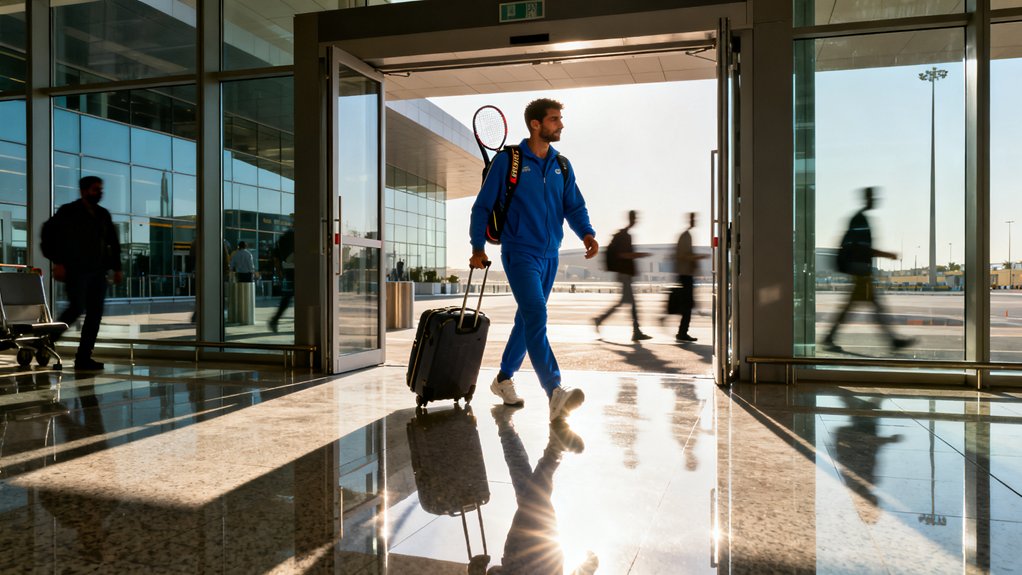
On January 19, 2010, Mahmoud al-Mabhouh boarded Flight EK912 from Damascus, unaware that Dubai’s surveillance grid would soon become his assassin’s most unforgiving witness.
The mahmoud al-mabhouh assassination began its covert logistics long before the target landed. Dubai police cctv tracking captured the squad’s arrival days earlier, their movements synced with hotel key-card logs that placed them in adjacent rooms.
Investigators later compiled physical and digital evidence—from counterfeit passports to mobile tower pings—to reconstruct the operation. The team used cloned identities to book flights, rent cars, and access the Al Bustan Rotana, creating a paper trail that exposed covert assassination logistics.
Each swipe of a card, each entry through a lobby door, became a timestamped brick in the case. Dubai police didn’t rely on eyewitnesses; they let the city’s electronic nervous system tell the story. The tactics mirrored the FBI’s historical use of warrantless wiretaps to surveil domestic targets without judicial oversight. The grid never blinks, and for al-Mabhouh’s killers, it sealed their fate.
Room 230: The 20-Minute Asphyxiation at the Al Bustan Rotana
Room 230 at the Al Bustan Rotana became the kill box. Within twenty minutes, Mahmoud al-Mabhouh was asphyxiated, his death a swift, suffocating end. Dubai police’s forensic timeline reconstruction proved meticulous.
They didn’t just rely on witness accounts; they dissected the hotel’s electronic skeleton. Credit card record tracking provided the first thread, revealing who paid for the room, but it was the cloned passport identities that exposed the full scope. Each swipe and key-card entry at the Al Bustan Rotana matched against arrival logs. This correlation was the key that systematically led to the 26 operatives unmasked.
The forensic timeline reconstruction showed the team’s synchronized movements: operatives shadowing Mabhouh through the lobby, others waiting in the corridor. The killers entered room 230 at 3:23 PM, and by 3:43 PM, they were gone, leaving behind a body and a trail of digital fingerprints that would ultimately destroy their operation.
Weaponizing Sovereign Identities: The Deployment of 26 Cloned Passports
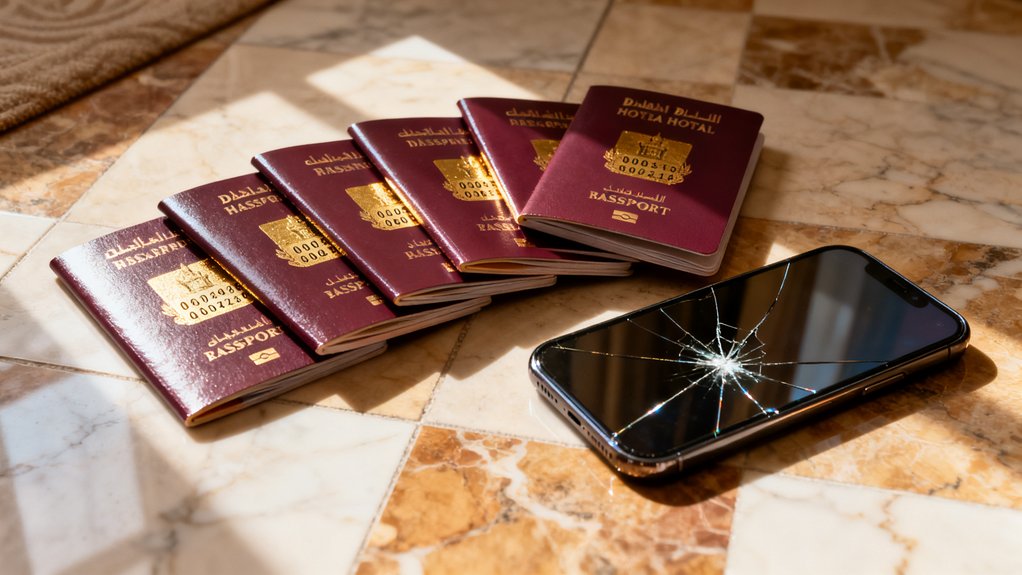
The hit team exploited the European block, wielding forged British, Irish, and German passports to mask their movements across Dubai.
They committed an outright Australian fraud, hijacking the names of innocent expatriates from real stolen identity data.
This weaponization of sovereign credentials turned six nationalities into unwitting shields for a state-sponsored killing.
Exploiting the European Block: Forged British, Irish, and German Credentials
Because intelligence agencies prize operational anonymity above nearly all else, the 2010 Dubai hit team weaponized sovereign identities by deploying 26 cloned passports—forged credentials from Britain, Ireland, and Germany that turned the European block into a launchpad for assassination.
The 2010 dubai hit squad blended into business-class travel, each operative carrying a meticulously faked British, Irish, or German passport. These weren’t crude counterfeits; they were exact copies of real citizens’ documents, stolen identities weaponized for a single kill—the hamas commander targeted in his hotel room.
This deliberate choice created an operational security disaster. Dubai police didn’t need lucky breaks; they exploited the electronic footprint tracking of legitimate passport numbers, border entries, and hotel registrations. Every piece of forged paper left a retroactive surveillance investigation trail, turning Europe’s trust in its own credentials into the squad’s undoing.
The Australian Fraud: Hijacking the Names of Innocent Expatriates
While European identities formed the core of the hit squad’s cover, one operative weaponized an Australian passport, hijacking the name and number of an innocent expatriate living in Israel to slip through Dubai’s border security.
The victim, a Melbourne man, had no idea his identity was stolen until Dubai police called. Investigators traced the cloned passport‘s unique number, discovering the real holder never left Israel.
The operative, using the alias Peter Elzinga, entered Dubai via a Qatar Airways flight, his face matching CCTV footage.
This wasn’t a random forgery—it was a precise, pre-planned theft from a sovereign database. Dubai Police later confirmed the passport’s real owner, proving the operation’s reach extended far beyond Europe, exploiting innocent expatriate records to build a seamless cover.
No one detected the fraud until the dead man’s trail revealed it.
Wigs, Tennis Rackets, and Tail Sub-Teams: The Physical Shadowing Apparatus
Although the 26 operatives relied on cloned passports and encrypted communications, their physical shadowing apparatus betrayed a surprising amateurishness. The squad deployed a rotating network of tail sub-teams, each swapping roles to avoid recognition.
They donned cheap wigs, changed glasses, and carried tennis rackets as props—props that never got used. Footage showed operatives moving in clumsy formation, often bumping into each other in hotel lobbies.
Key-card logs later exposed their miscalculations: men entering and exiting in mismatched groups, breaking their own cover. Investigators watched one team split and re-form within seconds, but not without leaving a ghost trail on camera.
The wigs didn’t hide their similarities—same haircuts underneath, same slow turns. The tailing became a liability; sub-teams shadowed the wrong guest twice. Their physical tradecraft looked rehearsed but not refined.
Dubai police simply followed the bumbling chain of watchers to reconstruct the entire operation, proving that a shadowing apparatus only works when it doesn’t draw attention to itself.
The Austrian Command Hub: Encrypted Comms and Disposable Pre-Paid Networks
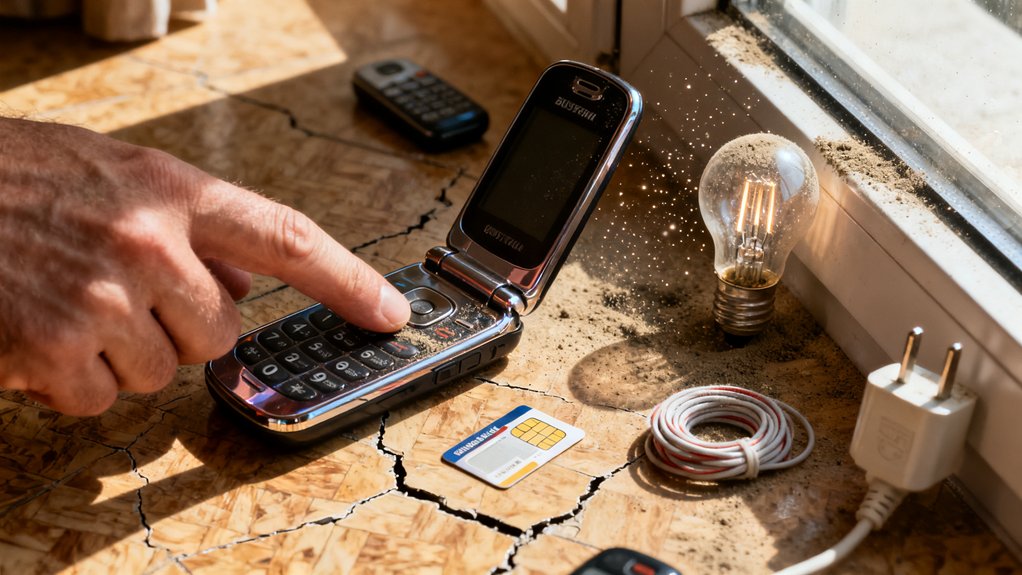
Even as the physical tail teams stumbled through Dubai’s lobbies, a second layer of the operation unfolded from a quiet command hub in Austria—one built on encrypted satellite phones and a web of disposable pre-paid networks. Investigators traced calls originating from a Vienna safe house, where handlers cycled through SIM cards purchased with cash across different Austrian cities.
Each burner phone had a life measured in hours, not days, before it was crushed and discarded. The hub used satellite links to avoid pinging local cell towers, creating a ghost relay that routed intelligence back to unidentified control centers.
Austrian records later revealed a pattern: prepaid purchases clustered near a specific residential address, yet no lease or utility bill matched the names on the phone registrations. This comms layer insulated the command element from the squad’s physical trail—until Dubai police subpoenaed international call data records, exposing the hub’s existence through metadata cross-referencing.
A Staged Natural Death: The 13-Hour Forensic Delay in Discovering the Corpse
The Austrian command hub’s encrypted communications and disposable SIM cards had kept the operation’s handlers out of sight, but the physical squad’s final act—discovering the corpse—unraveled any hope of a clean exit. They didn’t find Mahmoud al-Mabhouh’s body until 13 hours after his death, a delay that screamed orchestration. The squad had staged the scene to mimic a natural death, leaving the hotel room undisturbed: a closed laptop, a half-eaten meal, no signs of struggle.
But forensic investigators later pinpointed the exact moment of death—1:30 PM, based on room service logs and the victim’s last digital heartbeat, a silenced phone. The squad’s return at 2:30 AM the next day, claiming a wellness check, contradicted any genuine discovery. They’d waited, hoping decomposition would erase evidence of smothering. Instead, that 13-hour gap handed Dubai police a critical timeline fracture—a clear operational signature they’d never cover.
Dahi Khalfan’s Retaliation: Mobilizing the Digital Panopticon of the Emirates
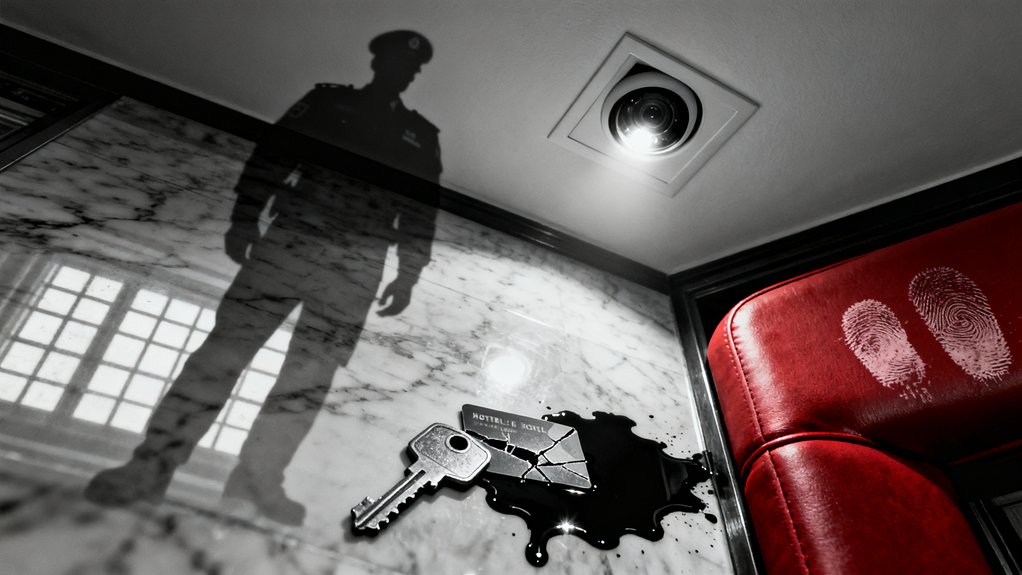
Lieutenant General Dahi Khalfan didn’t just watch the footage; his forensic team stitched 1,700 hours of airport, lobby, and elevator CCTV into a single, damning timeline.
They didn’t stop at visual evidence—the electronic VingCard system offered its own interrogation, pinpointing the millisecond each key card breached a door.
It wasn’t a passive review; it was a mobilized digital panopticon that turned every sensor and logger in the Emirates into a prosecution witness.
Stitching 1,700 Hours of Airport, Lobby, and Elevator CCTV Footage
How did Dubai Police reconstruct the movement of 26 operatives across a sprawling international city? They didn’t rely on eyewitnesses or confessions. Instead, investigators sat down with 1,700 hours of CCTV footage, a crushing volume of silent frames.
They didn’t watch it chronologically. They clipped each operative’s appearance—at airport gates, hotel lobbies, elevator banks—and stitched them into a unified timeline. Seconds mattered. One agent enters a lift; three minutes later, another emerges on a different floor. Reviewers matched these micro-movements across dozens of cameras, building a precise, uninterrupted route for each fugitive. The footage didn’t lie, and it didn’t blink. It trapped the squad in a grid of concrete and glass, leaving no shadow untracked.
The VingCard Electronic Interrogation: Pinpointing the Millisecond of Breach
While CCTV gave them the visual grid, Dubai Police needed a second, invisible layer—the electronic skeleton of the hotel’s security.
They interrogated the VingCard system, extracting every millisecond of electronic lock activity from al-Mabhouh’s room. The system didn’t just log entries; it recorded exact times for every key card swipe.
Investigators pinpointed the breach to 20:24:17 on January 20, 2010—the precise moment the hit team entered. They cross-referenced that timestamp against corridor CCTV, confirming the operatives moved with surgical timing.
Dahi Khalfan’s team didn’t stop there; they traced which specific key cards accessed the room and when. This digital panopticon turned hotel infrastructure into an unshakeable witness, proving the assassination’s exact moment of execution—a millisecond that sealed the operatives’ fates.
The Payoneer Trail: How Prepaid MetaBank Mastercards Burned the Covert Squad
Operatives used Payoneer-linked MetaBank prepaid cards to pay for flights, hotels, and supplies, but they didn’t control how those transactions revealed their digital backbone.
Dubai investigators traced each purchase back through Payoneer’s payment gateways, uncovering intermediary IP addresses that routed the assassination funds.
Those IPs didn’t just point to a bank server—they linked directly to command nodes coordinating the entire hit squad’s logistics.
Linking Intermediary IP Addresses to the Routing of Assassination Funds
As Dubai Police backtracked through the squad’s digital footprint, the Payoneer trail exposed exactly how prepaid MetaBank Mastercards—funded through intermediary IP addresses—led directly to the assassination’s financial backbone.
The detectives didn’t just follow the money; they mapped its path through virtual private networks. Each card’s top-up transaction passed through a chain of relaying servers, obscuring the original source but not erasing it.
By subpoenaing Payoneer’s logs, investigators identified the intermediary IPs—rented servers in Eastern Europe—that funneled bulk cash from an anonymous account manager.
Those addresses, cross-referenced with hotel Wi-Fi logs, tied the funding directly to a handler’s laptop in a Vienna safe house. The squad’s prepaid cards weren’t anonymous; they were breadcrumbs leading back to the operation’s paymaster.
Decompiling the Exfiltration: The 24-Hour International Dispersal Trajectories
Because Dubai police had already reconstructed every minute of the assassination squad‘s presence in the Emirate, the exfiltration phase became a 24-hour international dispersal that unraveled the final strand of the operation’s OPSEC. Investigators traced how the 26 operatives fractured into multiple vanishing vectors, each path shedding forensic evidence that cemented the case.
- Sequenced Exit Flights: Seven operatives boarded separate commercial flights within 90 minutes of the killing, their cloned passports triggering immediate red flags at departure gates.
- Hotel Key-Card Gaps: Analysis of key-card logs showed operatives scavenged rooms in staggered checkout patterns, leaving no overlapping timestamps that would suggest group coordination.
- ATM Transaction Clusters: Four team members withdrew cash from Dubai Mall ATMs just before boarding, generating exact time-stamped receipts linking them to later Europol alerts.
- Overlapping Ferry Bookings: Three agents used the same ferry service to Abu Dhabi, their names appearing consecutively on a manifest that contradicted their claimed solo travel.
Each trajectory formed a chilling cartographic timeline, exposing the operation’s final desperate scramble.
The February 15 Data Dump: Broadcasting the Faces of Covert Operatives to the World

On February 15, Dubai police made a calculated move that shattered any remaining hopes of anonymity for the assassination squad: they released an exhaustive data dump containing the faces, cloned passport scans, and travel itineraries of all 26 operatives to the international media. This wasn’t a subtle leak; it was a deliberate, global broadcast.
By distributing high-resolution passport photos alongside the exact times and dates each operative entered or exited the country, investigators transformed a covert hit into a public spectacle. They matched each face to a specific cloned identity—British, Irish, French, Australian—revealing how the team had fraudulently traversed international borders. The world now saw the men in crisp suits walking through airport terminals, their expressions captured mid-transit.
Dubai police turned the squad’s own logistical paper trail into a weapon, ensuring no operative could ever claim they hadn’t been identified. The data dump erased any shadow of plausible deniability.
The Diplomatic Shockwave: Expelling Intelligence Chiefs from London to Canberra
The fallout from Dubai’s data dump didn’t stop at public exposure—it ignited a diplomatic firestorm that forced governments from London to Canberra into action. Intelligence chiefs faced immediate expulsion as the forged passports—Australian, British, Irish, French, German—linked Mossad directly to the assassination. The shameless breach of sovereignty demanded retribution.
- Britain expelled an Israeli diplomat, citing “fundamental breach” of trust, demanding assurances that forged British passports wouldn’t happen again.
- Australia retaliated by expelling an Israeli intelligence officer, with Prime Minister Kevin Rudd condemning the abuse of Australian citizenship.
- Ireland likewise dismissed a Mossad operative after discovering their passports were cloned, raising questions in the Dáil.
- France and Germany summoned Israeli ambassadors for formal protests, warning that further incidents would escalate consequences.
The coordinated expulsions sent a clear signal: compromising allied passport systems carried severe diplomatic costs.
The End of Analog Espionage: How the Dubai OPSEC Failure Rewrote Covert Doctrine
As Dubai police published CCTV stills and hotel key-card timestamps in real time, the 2010 assassination of Mahmoud al-Mabhouh became the first major operation undone by the digital exhaust of modern life. It didn’t just expose a team; it shattered the old playbook. The Church Committee revealed that the CIA itself had long operated with similar impunity, burying crimes such as domestic surveillance programs that spied on thousands of Americans without legal authority.
Before Dubai, agencies relied on analog tradecraft—dead drops, coded messages, physical tailing. That era’s over. The hit team’s 26 operatives left a forensic trail so dense that investigators reconstructed their every step without a single human source. Credit card swipes, SIM card pings, and elevator logs turned anonymity into liability. Now, no agency can assume plastic and pixels vanish. The doctrine shifted: minimize digital interaction or accept exposure. Mossad, rumored behind the hit, reportedly scrapped entire training modules afterward. They teach OPSEC as a subtraction problem—every transaction, every swipe, every timestamp is a data point you can’t get back. Dubai didn’t just solve a murder; it killed analog espionage.
Frequently Asked Questions
Why Did the Squad Use Easily Traceable Cloned Passports?
The squad’s use of easily traceable cloned passports wasn’t carelessness; it was a calculated but flawed compromise. They prioritized speed and access over perfect cover, needing credible travel documents to move freely through Dubai’s security apparatus.
Failing to anticipate the Dubai police‘s relentless forensic reconstruction, they underestimated how quickly CCTV timestamps, hotel logs, and credit trails would expose each fraudulent identity, turning a supposed asset into their biggest vulnerability.
How Was Al-Mabhouh’s Exact Hotel Room Number Known Beforehand?
Al-Mabhouh’s exact room number wasn’t a coincidence; it was pre-surveilled. The hit team likely obtained it through a compromised hotel employee or by tracking his reservation via hacked booking systems.
They’d watched him check in, using cloned passports to blend in. Dubai’s investigators later pieced this together from timestamps and call logs, proving the squad didn’t rely on luck—they’d planned every step, including knowing his room before arrival.
That foreknowledge sealed their target’s fate while sealing their own exposure.
Did Any of the 26 Operatives Face Prosecution or Extradition?
None of the 26 operatives faced prosecution or extradition. Dubai police publicly identified them, issuing arrest warrants and Interpol Red Notices, but no state formally pursued legal action.
The squad’s forged passports—tied to Israel—and diplomatic protection likely prevented capture. Investigations stalled as countries blocked extradition requests, leaving the hit team free. This absence of accountability underscores the operation’s covert state backing and the challenges of prosecuting cross-border assassinations.
How Did the Hit Team Ensure Al-Mabhouh Was Alone in His Room?
The hit team turned al-Mabhouh’s hotel room door into a locked trap, ensuring his solitude like a spider weaving a web.
Investigators pieced together CCTV and electronic logs that revealed operatives, disguised as tourists, casually monitored the hallway outside room 2309.
They confirmed he was alone by watching him enter, then used card keys to enter after he settled.
This precise surveillance erased any doubt, isolating him completely before the fatal encounter.
What Specific Flaw in Communications Led to the Trail of Digital Evidence?
The hit team’s critical flaw came from using cloned, internationally registered cell phones that left a digital footprint. They’d call each other and book rooms using these same numbers, which Dubai police traced back through telecom records.
This wasn’t just carelessness; it was a systemic failure to compartmentalize communications. Each call, each credit card swipe for a hotel booking, anchored the agents to specific times and locations, handing investigators a complete timeline they didn’t intend to create.
Final Thoughts
The al-Mabhouh team visited planet Earth. They left their receipts, their faces on every airport camera, their thumbprints on hotel stationery. The mission was a neat, clean piece of work; the aftermath, a catastrophic paper trail of a thousand, tiny, overlooked signatures. For the intelligence community, the lesson was painfully simple: the tools of modern life aren’t just conveniences—they’re witnesses that never forget a face.