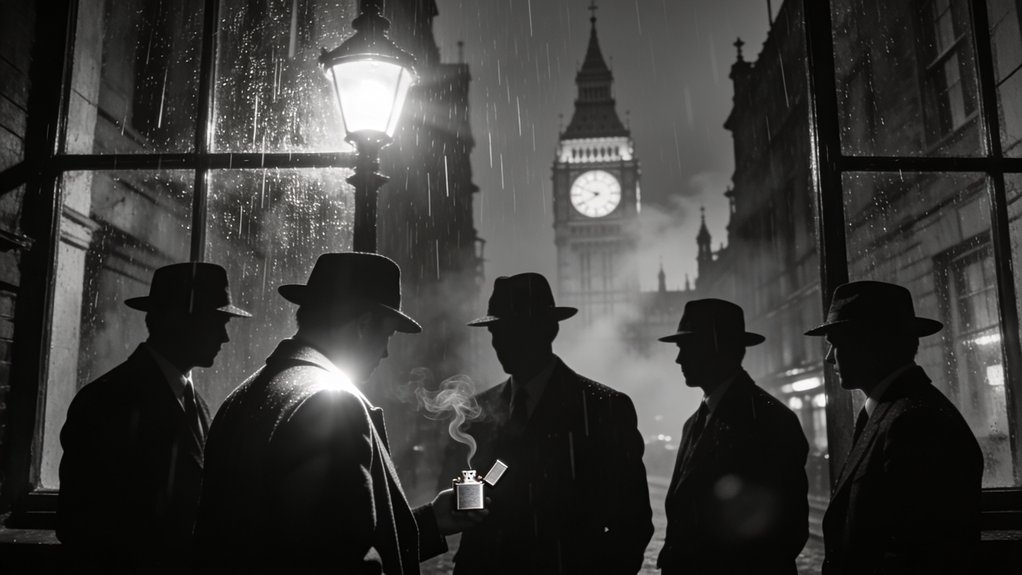
The 1934 Trinity College cell recruited idealists, not mercenaries. Philby, Maclean, Burgess, Blunt, Cairncross—brilliant, disillusioned Marxists—bypassed every financial tripwire. Pure conviction fueled their silent insurgency. Philby rose to head Soviet counter-intelligence, Maclean bled Manhattan Project secrets, Burgess weaponized the Foreign Office. Venona decrypts finally exposed them in 1949. Yet, the KGB extracted Philby from Beirut in 1963, while Blunt bartered immunity in 1964. Trust within MI6 never recovered. The full autopsy of this three-decade blindness still waits in declassified files.
Key Takeaways
- Philby’s MI6 role as Soviet counter-intelligence chief allowed him to purge watchlists and blind the West.
- The Venona Project decrypts in 1949 first identified the spies through Soviet cable intercepts.
- Maclean exploited Washington Embassy access to funnel Manhattan Project atomic secrets to Moscow.
- The “Old Boy” network and Savile Row suits enabled secret microfilm exchanges and dead drops.
- A whitewashed 1950s inquiry exonerated Philby, while secret files long remained classified.
The 1934 Trinity College Sedition: Cultivating the Ultimate Ideological Insiders
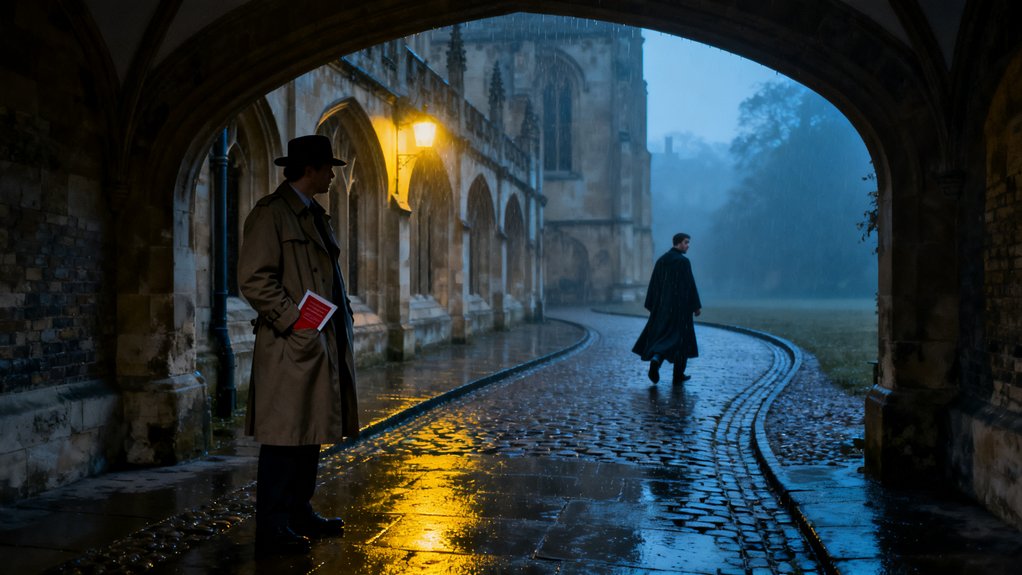
Often overlooked in the broader narrative of the Cambridge Five is the electric, almost clandestine atmosphere of 1934 at Trinity College, Cambridge. There, a tight-knit Trinity College Marxist network thrived, shielded by academic privilege. This wasn’t a casual club; it was a recruitment farm. Young, brilliant minds, disillusioned by poverty and fascism, found a compelling, secretive doctrine. They debated dialectics in dimly lit rooms, where passion replaced caution.
Decades later, Venona Project decrypts would confirm the network’s chilling success. Those initial, un-monitored meetings forged loyalties strong enough to bypass any financial incentive. The seeds sown in Trinity’s hallowed halls grew into the spy ring that gutted Western intelligence. The idealistic fervor, captured by Soviet handlers, became an invisible, lethal weapon—a perfect ideological insurgency.
Zero-Dollar Sabotage: How Communist Fervor Bypassed Standard Counter-Intelligence Tripwires
While standard counter-intelligence relied on tracking financial irregularities and unexplained wealth to catch moles, the Cambridge Five‘s communist fervor rendered every traditional tripwire useless.
While standard counter-intelligence hunted money, the Cambridge Five needed only purpose.
No cash-filled envelopes, no Swiss accounts, no lavish spending—just pure ideological conviction.
This communist ideological subversion crafted a silent, self-sustaining espionage machine, transforming MI6 counterintelligence failure into a systemic blind spot.
The Five didn’t need payment; they needed purpose.
- A man in a pinstripe suit passes a typed memo to a contact in a rain-soaked park—no money changes hands, only a nod of shared belief.
- A briefcase opens to reveal a typed list of Soviet agent names, hidden beneath a false bottom—the reward: a single, approving word from Moscow.
- In a quiet London flat, a spy dismantles a classified cipher machine, memorizing each rotor’s position—no receipt, no trace, only loyalty.
- A Foreign Office official walks home with a rolled-up map of NATO defenses under his arm, never once glancing at a bank balance.
Penetrating the Apex: Seizing the Nervous Systems of MI6, the Foreign Office, and the CIA
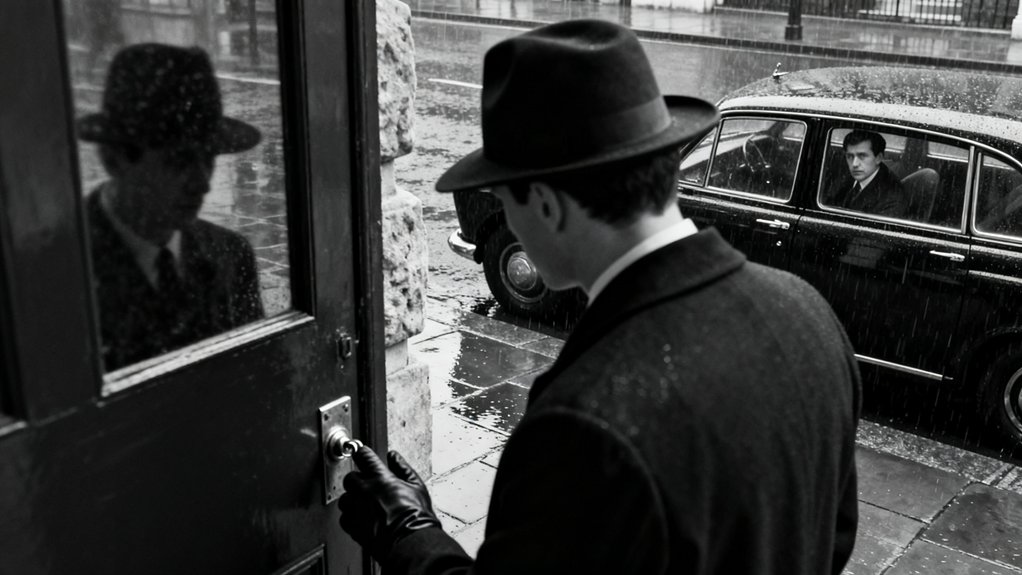
Kim Philby didn’t just join MI6; he seized its most sensitive nerve center, rising to head Soviet counter-intelligence while actively betraying every operation.
Simultaneously, Donald Maclean exploited his Washington Embassy post to funnel atomic secrets straight from the Manhattan Project to Moscow.
Guy Burgess weaponized his diplomatic access, turning the entire Foreign Office into a conduit for Soviet intelligence.
Kim Philby’s Lethal Ascension to Head of Soviet Counter-Intelligence
By the time Kim Philby assumed control of MI6’s Soviet counter-intelligence section, he’d already been a Soviet mole for over a decade, making his appointment not merely a career milestone but a strategic catastrophe.
He now sat at the nerve center, perfectly positioned to blind the West from its own enemy. His ascension wasn’t a promotion; it was a massacre of trust.
- He studied MI6’s watchlist of suspected Soviet agents, systematically purging names that threatened the soviet espionage ring protecting his own.
- He personally interrogated defectors from Moscow, learning their secrets and then feeding the details back to his handlers to guarantee their compromise or death.
- He reviewed every double-agent case, twisting operations to sabotage Allied assets while preserving Soviet ones.
- He controlled all intelligence traffic flowing from the east, filtering out any evidence that pointed toward the kim philby defectionthat would eventually shatter the empire.
Donald Maclean’s Unfettered Atomic Access Inside the Washington Embassy
Donald Maclean wasn’t just a diplomat stationed in Washington—he was a direct pipeline from the Manhattan Project to Moscow. His role in donald maclean espionage granted him unfettered access to atomic secrets, bypassing even the tightest security protocols inside the embassy.
He didn’t wait for permission; he actively extracted raw data on nuclear yields, bomb designs, and reactor blueprints, then passed them directly to yuri modin kgb operations. Modin’s handlers in Washington received these files through dead drops and clandestine meetings, never needing to risk direct contact.
Maclean’s ideological commitment erased any hesitation—he saw it as his duty. His throughput of scientific intelligence accelerated the Soviet bomb program by years, all while British and American counterintelligence remained blind to the hemorrhage of their most guarded atomic knowledge.
Guy Burgess and the Systemic Weaponization of the Diplomatic Corps
How did a shambolic, chain-smoking alcoholic become one of the most effective human weapons the KGB ever deployed inside the British Establishment? Guy Burgess weaponized the very sloppiness that made him seem harmless.
His guy burgess kgb handler exploited this mask, turning a diplomatic posting into a live feed of classified chatter. Burgess didn’t just steal documents; he systematically contaminated the diplomatic corps, turning parties into intelligence-gathering operations.
- He’d charm secretaries for file access while slurring his words, their pity his key.
- Leaning into a fireplace, he’d burn memos, letting ash drift like coded confetti.
- He’d whisper policy shifts to startled aides, then blame the port.
- His messy flat held a wall-safe, its contents a direct line to Moscow Center.
This messy exterior hid a core truth: his british foreign office infiltration remained undetected for years, poisoning Western decision-making at its nervous system.
The Architecture of Betrayal: Forensic Concealment Mechanics and the Bletchley Park Blindspot
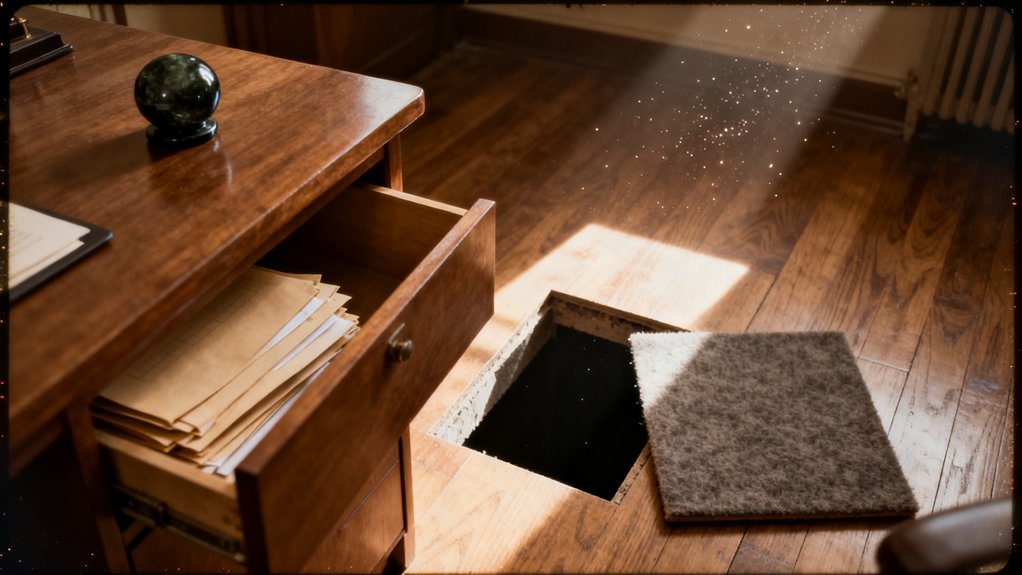
Class privilege didn’t just smooth their paths; it built an impenetrable shield.
The “Old Boy” network granted absolute immunity, rendering any scrutiny unthinkable within the halls of power.
Now, the declassified files reveal the precise dead drop protocols and the macro-level physical evidence that Moscow relied upon, exposing the mechanics of a treachery that even Bletchley Park’s codebreakers failed to see.
Exploiting the ‘Old Boy’ Network: Why Class Privilege Conferred Absolute Immunity
- A tailored Savile Row suit hiding a roll of microfilm in its inner pocket.
- Languid afternoons at the Reform Club, exchanging secrets over claret.
- A murmured “old boy” passing a manila folder beneath a hunting print.
- A St. James’s street handshake that sealed treason with perfect manners.
Deciphering the Dead Drop Protocols and Macro-Level Physical Evidence
Why did a suburban garden shed in Ruislip hold the key to unearthing the Soviet Union’s most prized intelligence pipeline? Inside, investigators discovered a concealed dead drop—a hollowed brick spool holding microfilm. This wasn’t just covert storage; it was a forensic blueprint. The shed’s mechanics exposed the ring’s entire operational architecture.
| Evidence Type | Location | Significance |
|---|---|---|
| Hollow Brick Spool | Ruislip Shed | Contained CIA classified file leaks |
| Trench Marker | Hampstead Heath | Signaled active drop for cold war double agents |
| Magnetic Signal Box | Bletchley Perimeter | Revealed undetected blind spot |
These macro-level physical clues—chalk marks, buried containers, and garden implements—painted a stark picture. They didn’t just prove betrayal; they mapped the exact route Moscow used to pluck Western secrets year after year, circumventing even Bletchley’s vaunted security.
The Venona Intercepts: Decrypting the 1949 Cryptographic Breadcrumbs That Broke the Ring
How exactly did the Cambridge Five, masters of deception who’d operated with impunity for over a decade, begin to unravel? The answer lies in the silent war of cryptanalysis. The Venona Project, a top-secret US-British initiative, had spent years hoovering up encrypted Soviet diplomatic traffic. By 1949, codebreakers finally pierced the veil, revealing the incriminating “breadcrumbs” that would doom the ring. They didn’t find confessions; they found patterns, names cloaked in codenames, and a leak far worse than anyone imagined.
- A Soviet cable from 1944 described a spy codenamed “GOMER” who, decrypts later revealed, was john cairncross intelligence.
- The intercepts mapped a ghost network operating inside the Foreign Office, MI6, and the War Cabinet.
- Analysts cross-referenced agent codenames with known personnel details, isolating suspects through career anomalies.
- The traffic exposed careless Soviet tradecraft, like reusing one-time pads, which left permanent, decipherable echoes.
The May 1951 Friday Night Flight: Orchestrating the Exfiltration of Burgess and Maclean
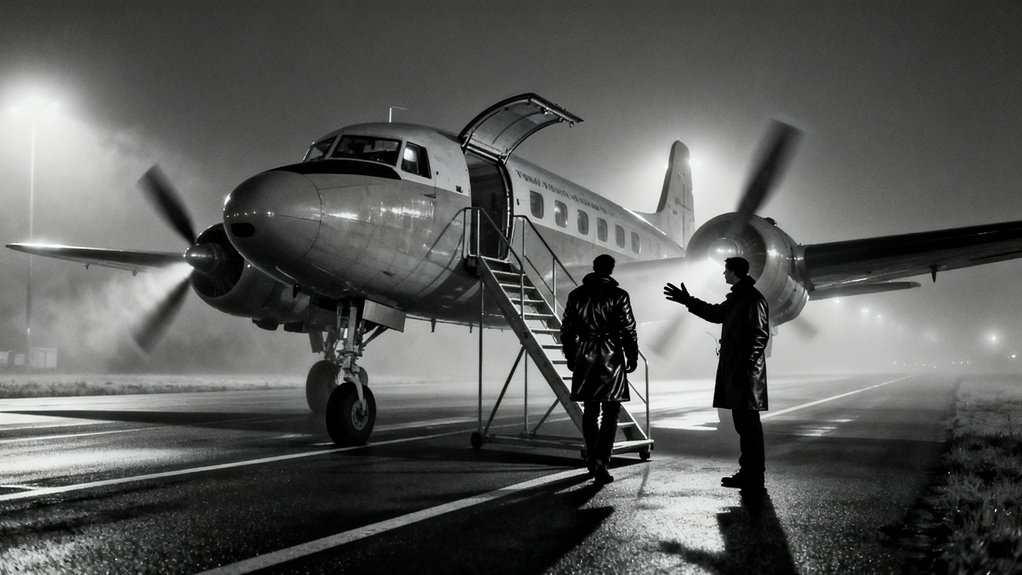
Though they’d dodged suspicion for years, the May 1951 Friday night flight of Donald Maclean and Guy Burgess wasn’t a panicked scramble—it was a meticulously orchestrated exfiltration, triggered by the very Venona breadcrumbs that had finally painted a target on Maclean’s back. MI6’s slow-motion trap snapped shut, but the Soviets moved faster. Burgess, a reckless but wired courier, received a coded warning from his handler. He then commandeered Maclean from his Surrey home, driving him to Southampton for a midnight ferry to Saint-Malo, en route to Moscow.
| Element | Detail | Significance |
|---|---|---|
| Trigger | Venona decryption of Maclean’s cipher traffic | Forced an immediate evacuation |
| Method | Burgess’s rented car to Southampton | Exploited British weekend security laxity |
| Route | Ferry to France, then train to Zurich | Disappeared into Soviet safe houses |
No trace of their luggage or passports remained. Their wives followed later, instructed by pre-arranged signals. London’s intelligence apparatus, outmaneuvered, scrambled to comprehend the hole they’d just blown in their own ranks.
The 1955 Parliamentary Whitewash: Officially Exonerating the ‘Third Man’ in Broad Daylight
The May 1951 exfiltration gutted the Cambridge network, but it also triggered a political counter-strike that Moscow orchestrated from inside the British establishment. Prime Minister Anthony Eden, under immense pressure, greenlit a whitewashed parliamentary inquiry.
The result: full exoneration for Kim Philby, the suspected “Third Man.” MPs accepted his lies, burying the espionage evidence.
- MI6 officers sweat in their suits as Philby smokes calmly before a parliamentary committee, his gaze never flinching.
- Classified cables, damning in their clarity, remain locked in secret files, never touching the public record.
- Harold Macmillan, future PM, shields Philby with bureaucratic obfuscation, calling him a “loyal colleague.”
- A single headline screams “Philby Cleared,” while Moscow’s agents toast the British establishment’s pathetic gullibility.
This sham verdict protected Philby for eight more years, letting him rot inside the intelligence corps he betrayed.
The whitewash wasn’t a mistake—it was a deliberate cover-up, serving Soviet interests from the highest seats of power.
The Beirut Extraction: Kim Philby’s January 1963 Disappearance Beneath the KGB Umbrella

Why did the British establishment let Kim Philby slip away again? By January 1963, MI6 knew their man was a Soviet mole—had known for months, really. Yet they dispatched Nicholas Elliott, Philby’s old friend and fellow spy, to Beirut for a “confession.” Elliott applied gentle pressure; Philby stalled, buying time. The KGB’s extraction plan was already humming through diplomatic channels. The FBI had earlier employed similar covert and illegal tactics to surveil and disrupt domestic activists without warrants or oversight.
On the night of January 23, Philby slipped out of his Beirut apartment, leaving his wife and an unfinished bottle of whiskey behind. He boarded a Soviet freighter, the *Dolmatova*, which whisked him to Odessa. No tail, no roadblock—just a calculated silence from British intelligence. They’d let him walk before, of course. This time, Philby disappeared beneath the KGB’s umbrella not despite MI6’s watchful eye, but because of its weary complicity. The empire chose embarrassment over exposure, hoping the scandal would simply sink beneath the Mediterranean waves.
The 1964 Immunity Deal: Securing Anthony Blunt’s Silent Confession Inside the Royal Household
If Anthony Blunt thought his secret would die with Kim Philby’s escape, he was gravely mistaken. By 1964, MI5’s net tightened around the Surveyor of the King’s Pictures, a man who curated royal art while serving Soviet handlers.
They didn’t want a trial—they wanted silence. Blunt bartered his confession for immunity, trading his spycraft’s full catalogue to avoid public disgrace. The deal’s ink dried in utter secrecy, locking his betrayal inside Buckingham Palace’s gilded frame.
- A gloved hand passes a leather-bound folder across a polished oak table in a Whitehall office.
- Blunt’s voice trembles as he maps out dead drops beneath a rain-streaked London window.
- MI5 officers nod, their pens scratching over a signed immunity clause that suffocates the truth.
- The Queen’s paintings hang undisturbed, their frames holding a poison only known to a shadow state.
- This pattern of secrecy mirrored the CIA’s destruction of MKUltra files to block accountability for covert human experimentation.
Autopsy of a Compromised Alliance: Auditing the Declassified Intelligence Files
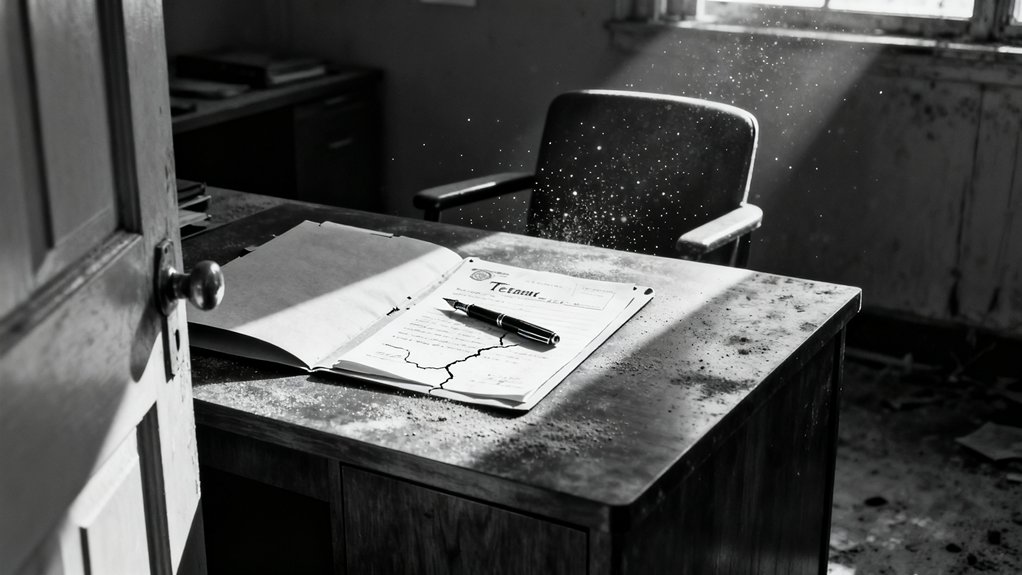
KGB defector Anatoliy Golitsyn’s revelations didn’t just whistle—they screamed, forcing a cold audit of the Five‘s invisible destruction.
The declassified files now clinically quantify that hemorrhage, showing precisely how each operation bled out and which Allied agents paid the price.
What emerges from this autopsy isn’t a story of secrets lost, but of a systematic, calibrated slaughter of trust itself.
Validating Whistleblower Revelations: Anatoliy Golitsyn and the KGB Defector Testimonies
How could a single defector’s testimony unravel decades of silence around the Cambridge Five? Anatoliy Golitsyn’s 1961 defection shattered the illusion of impenetrable Soviet recruiting. His accounts didn’t just name names; they revealed a methodology. He detailed the KGB’s precise operational playbook, forcing Western agencies to audit their own vaults. His credibility sparked a cascading re-examination of intel files, validating whispers that had long been dismissed.
- A flickering interrogation lamp in a safe house shadows Golitsyn’s face as he maps the Five’s recruitment pipeline.
- A vault door swings open, revealing sepia-toned intelligence reports now cross-referenced with his testimony.
- MI6 analysts huddle over rusted filing cabinets, matching defector dates to unexplained operational failures.
- A cemetery grave stone for a suspected mole lies untouched, its silence finally broken by Golitsyn’s timeline.
Quantifying the Classified Hemorrhage: Analyzing the Operational Fatalities of the Network
Why did the West’s most guarded secrets bleed so freely for decades? The declassified files perform an autopsy on that hemorrhage, tallying the operational fatalities.
It wasn’t just stolen cables; it was a slow, systemic killing of trust. Each leak from Kim Philby and his ring didn’t just inform Moscow—it exposed agents, burned assets, and sabotaged Allied operations. The files detail how one conversation could unravel a decade of human intelligence, turning double agents into ghosts and safe houses into traps.
This quantified loss isn’t abstract; it’s a ledger of human lives and strategic defeats. The network’s ideological loyalty didn’t just compromise secrets—it crippled the machinery of an alliance, leaving wounds that would never fully heal.
Shattering the Anglo-American Trust: The Irreversible Geopolitical Fallout of a 30-Year Blindness
Because the Cambridge Five operated undetected for three decades at the core of British intelligence, their betrayal didn’t merely leak secrets—it systematically dismantled the foundational trust between London and Washington. The fallout wasn’t diplomatic strain; it was a cold fracture. CIA directors stopped sharing raw intelligence with MI6, suspecting every file might carry Moscow’s fingerprints. The “special relationship” became a charade, with American handlers vetting British briefs like hostile documents.
Their betrayal didn’t leak secrets—it dismantled trust between London and Washington.
- A dead-drop signal in a London park, unnoticed for years, now unraveled a thousand operations.
- A debriefing room in Langley, where officers once spoke freely, fell silent, sealed by suspicion.
- A Whitehall courier, carrying a sealed envelope, finds it opened by an MI6 mole who’s long gone.
- A Kremlin archive, decades later, still holds the blueprints of a betrayed alliance.
That blindness didn’t just lose secrets. It poisoned the well. Even after the spies fled, the trust never returned—each handshake felt like a cover story.
Frequently Asked Questions
Why Did They Spy for Free, Not for Money?
They didn’t spy for free; they spied for a cause. The Cambridge Five operated on pure ideological conviction, not a paycheck. Communism was their currency, and they paid in loyalty, not for pounds.
Theirs wasn’t a transaction—it was a transformation. They believed the West’s system was corrupt and that Moscow offered a moral alternative. So they gave their secrets to the Soviets without hesitation. Money couldn’t buy what they offered: a belief so absolute it turned them into ghosts within their own government.
How Were They All Recruited at Cambridge University?
They weren’t so much recruited as ideologically ensnared—picture a Soviet talent scout browsing a Cambridge common room like a discount rack.
Soviet handlers, posing as academics, identified idealistic students aching for a grand purpose.
These operatives didn’t knock; they groomed through intellectual seduction, exploiting campus leftist circles.
The recruitment wasn’t a job interview; it was a revolutionary courtship, and the Five fell for the pitch, hook, line, and red star.
Who Was the First Member of the Ring to Defect?
Kim Philby wasn’t the first to defect, but he’s the one who cracked the ring wide open.
It’s Donald Maclean who fled in 1951, just hours before MI5 could interrogate him. Guy Burgess vanished right alongside him. Their escape sent shockwaves through a blind intelligence establishment, proving betrayal ran deeper than any single spy.
Philby’s own flight would come later, leaving a bloody trail of shattered trust.
Did the Soviet Union Ever Pay Them Any Salary?
No, the Soviet Union didn’t pay them a single ruble in salary—they’d sooner have sliced off their own ears. These spies served ideology, not cash.
Every secret they funneled to Moscow came from a place of pure, burning conviction. Their motivation wasn’t monetary reward; it was a fanatical belief in communism.
Declassified records confirm they operated on unwavering faith, not a paycheck, making their betrayal all the more chilling for its complete ideological devotion.
Was One of the Five Never Publicly Exposed?
Yes, one member of the ring never faced public exposure. While the others’ treachery surfaced through confessions and declassified files, this spy slipped through history’s grip.
He wasn’t caught in a dramatic unmasking, wasn’t named in whistleblower accounts. His identity remains a ghost, buried in sealed archives.
The Kremlin kept his service silent, ensuring his cover never broke—a secret so tight, it still holds today.
Final Thoughts
For thirty years, a ring of ideological saboteurs dismantled Western intelligence from within—no cash, just conviction. The Venona intercepts cracked the code, but the damage was irreversible. Consider Philby’s Beirut escape: a handshake, a speedboat, and a lifetime of betrayal vanished into the KGB’s embrace. That single moment *proved* how an enemy inside can blind the most powerful alliance.