
The CIA’s strategy in Afghanistan failed because it prioritized killing over building. Its 2001 mandate spent twelve pages on lethal action but only half a page on post-war stabilization. They swapped governance for drones and warlords, buying temporary loyalty with cash. This light-footprint approach created a brittle, hollow state that collapsed when the money and focus shifted to Iraq. The full story reveals how tactical victory guaranteed long-term defeat.
Key Takeaways
- The strategy substituted immediate tactical proxy militias and drone strikes for long-term political construction and legitimate governance.
- It relied on cash payments to warlords who became predatory rulers, creating fragmented fiefdoms without incentive for a stable state.
- Success metrics prioritized tactical kill counts and operational efficiency over building durable Afghan institutions and political stability.
- Essential resources and strategic focus were diverted to Iraq, leaving Afghanistan’s nascent administration unsupported and insecure.
- The model created a hollow, technical form of control dependent on U.S. presence, which collapsed once support was withdrawn.
The September 17, 2001 Presidential Finding: Dedicating Twelve Pages to Lethal Action and Half a Page to Stabilization

The September 17th Presidential Finding’s lopsided structure reflected its operational priority. CIA Director George Tenet bypassed the interagency process to secure direct White House authorization for lethal action. This move concentrated authority for execution orders, ensuring speed but institutionalizing the neglect of post-war planning, mirroring the unchecked executive authority granted by the Gulf of Tonkin Resolution.
George Tenet Bypassing the Interagency Process to Secure Direct White House Execution Orders
After a 14-page Presidential Finding was signed on September 17, 2001, its stark imbalance revealed the CIA’s immediate focus: twelve pages meticulously detailed lethal authorities for covert action, while a scant half-page addressed post-war stabilization.
To execute this lethal blueprint, George Tenet’s Afghanistan strategy involved bypassing the standard interagency review. He secured direct approval from the White House for armed Predator drone strikes, effectively creating a streamlined “kill chain” outside slower military and diplomatic channels. This accelerated tactical victories but centralized decision-making in Langley. It’s a core reason why did the US fail in Afghanistan****; the institutional focus remained fixed on short-term elimination, not long-term political construction, as Tenet’s channel guaranteed action but ignored consequence.
The Low-Footprint CIA Tactical Model: Substituting Post-War Governance Plans with Predator Drones and Proxy Warlords
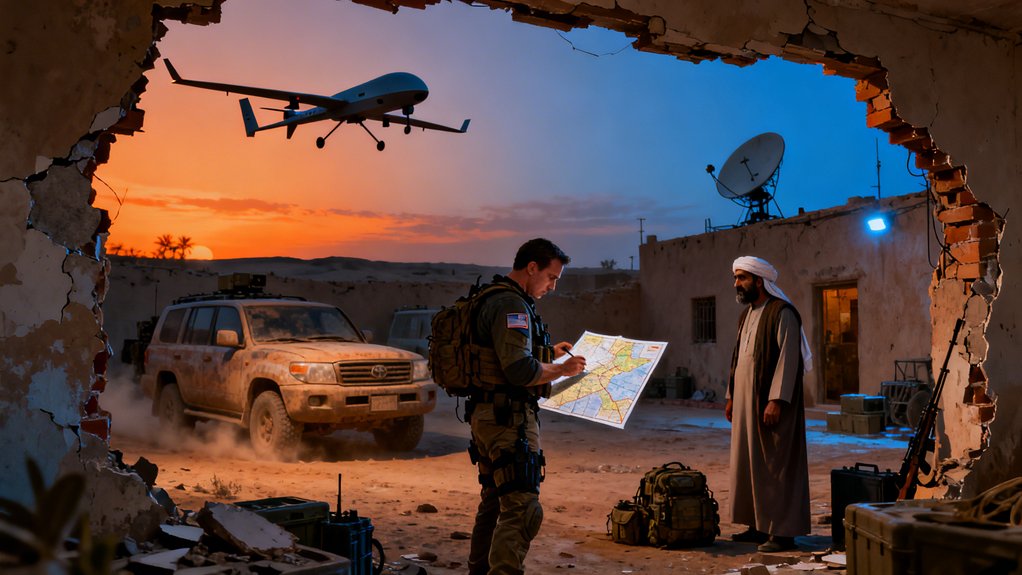
While the CIA’s tactical invasion stunned the world with its speed, its architects had consciously traded a governance blueprint for a low-footprint model of Predator drones and proxy warlords. This became the operational core of the ciacovertoperationsinafghanistan, substituting complex statecraft with targeted killings and cash.
The ciapredatordroneprogramhistory reveals a reliance on remote lethality, where pilots in Nevada conducted strikes based on signals intelligence and tribal informants, not political engagement.
On the ground, Agency officers empowered local commanders with millions in cash, reconstituting old militias as temporary proxies. This model delivered a rapid, cheap military victory but created a fatal vacuum. It ignored the essential work of governance, leaving a fragmented scene of armed, paid factions with no incentive to build a lasting, legitimate state. The immediate objective was achieved, but the future was mortgaged.
October 7, 2001 CIA Infiltration: Henry Crumpton’s Operational Tribal Maps and Seven Officers with $3 Million in Cardboard Boxes
The operation began with seven CIA officers crossing the border, their mission fueled by cash-filled cardboard boxes.
They carried $3 million to purchase immediate tactical cooperation from Northern Alliance warlords like Gulbuddin Hekmatyar and Abdul Rashid Dostum.
These transactions secured critical ground support but established a brittle, transactional foundation for the entire war.
Purchasing Northern Alliance Ground Support: Immediate Tactical Cooperation from Gulbuddin Hekmatyar and Abdul Rashid Dostum
How exactly did a handful of CIA officers and a few million dollars dismantle an entrenched regime? They bought an army. Within hours of crossing the border, CIA teams used Henry Crumpton’s maps to locate the most ruthless northern alliance warlords. Officers opened their cardboard boxes, initiating direct cia warlord payouts. For Gulbuddin Hekmatyar and Abdul Rashid Dostum, the American cash purchased immediate tactical cooperation, transforming their militias into a proxy ground force.
This transaction secured critical frontlines against the Taliban but established a fatal precedent. The warlords’ loyalty was purely financial, tied to battlefield success, not national governance. The CIA secured its short-term military objective by renting Afghanistan’s most volatile power brokers, directly investing in the country’s destabilization.
December 13, 2001: The 61-Day Collapse of Mullah Omar’s Regime at an Operational Cost of Under $50 Million and 8 Combat Deaths
- Operational Cost: The entire campaign cost under $50 million, dwarfed by later annual expenditures.
- American Casualties: Only 8 U.S. combat deaths occurred during this initial phase.
- Primary Weapon: Cash payments to proxy militaries, not conventional troops, became the main instrument of power.
- Target Focus: The objective was purely regime removal, with no planning for what would follow.
- Speed of Victory: The 61-day timeline created a false sense of permanent success, diverting attention from stabilization.
Robert Black’s Bureaucratic Maneuvers: Requisitioning Paramilitary Officers and Replacing Risk-Averse Station Chiefs Within 72 Hours
While Langley’s official bureaucracy moved with deliberate caution, Robert Black executed a rapid internal takeover, using his position to requisition dozens of paramilitary officers and replace hesitant station chiefs within seventy-two hours.
This internal coup was a prerequisite for the cia afghanistan invasion 2001, clearing the operational decks of institutional inertia. Black didn’t request officers; he commandeered them, pulling from the Agency’s most aggressive units. Station chiefs who questioned the pace or legality of the plan found themselves immediately reassigned.
Working closely with henry crumpton cia planners, Black guaranteed the field was stocked with personnel wired for action, not analysis. His maneuvers created a kinetic, risk-tolerant culture from the top down, perfectly aligning the CIA’s human machinery with the coming campaign’s unforgiving tempo.
The 2002 Predator Drone Target Set Expansion: Shifting Lethal Focus from Al-Qaeda Leadership to Mid-Level Logistics Coordinators
As the tactical victory in Kabul hardened into a messy occupation, CIA planners, facing a dispersed and elusive enemy, authorized a critical shift: the Predator drone’s lethal focus expanded beyond al-Qaeda’s top leadership to target mid-level logistics coordinators and facilitators. This pivotal moment in the CIA predator drone program history moved the campaign from decapitation to attrition, a strategic gamble to paralyze the enemy’s support networks.
The logic was clinical: eliminate the individuals moving money, weapons, and fighters. This new target set, operating under Title 50 drone strikes authorities, signified a profound escalation in scope and frequency.
The program’s clinical logic: paralyze the enemy by eliminating its logistical facilitators.
- The “High Value Target” list was quietly redefined to include figures like couriers and safe-house managers.
- Strikes now relied more on “signatures”—patterns of behavior—than confirmed identities.
- This expansion exponentially increased the pool of potential targets across the Afghan-Pakistan border.
- Each successful strike created new vacancies, demanding more intelligence and more strikes in an accelerating cycle.
- The program’s measure of success subtly shifted from strategic elimination to tactical body counts.
Title 50 Covert Action Statutes: Establishing a Border-Agnostic Legal Architecture for Unchecked Armed Drone Strikes
The Title 50 covert action statutes crafted a global legal twilight. This architecture birthed the disposition matrix, which silently tracked thousands across forty nations without judicial review. It ultimately enabled signature strikes like the one in Yemen that killed Qaed Salim Sinan al-Harethi and an American citizen. The CIA’s use of executive authority and secrecy laws shielded these operations from meaningful oversight, echoing post-Church Committee evasion tactics.
The Global Disposition Matrix: Tracking 5,000 Lethal Targets Across 40 Sovereign Countries Without Judicial Review
How could a single list authorize lethal strikes against thousands of individuals across forty nations?
The CIA disposition matrix transformed from a targeted tool into a global mechanism of unchecked power.
Born from the urgent legal needs of the 2001 Afghanistan war timeline, it later systematized targeting on an industrial scale.
This database didn’t just track enemies; it governed a borderless battlefield, placing names in a queue for lethal action without traditional legal oversight.
- It evolved from hunting al-Qaeda leaders to cataloging thousands of “associated” individuals.
- Its criteria for inclusion were often based on intelligence patterns, not confirmed identities.
- It operated across sovereign nations, bypassing their domestic legal systems.
- Authorization flowed from executive orders and classified findings, not judicial review.
- It created a permanent, rolling target list detached from any specific congressional war declaration.
Executing Signature Strikes: The Yemen Precedent and the Death of Qaed Salim Sinan al-Harethi Alongside an American Citizen
| The Targeted Pattern | The Human Reality |
|---|---|
| Military-aged males gathering | A community mourning neighbors |
| A vehicle moving at night | A car carrying a U.S. citizen |
| A “signature” of hostility | An unexamined assumption |
| A lawful covert action | A precedent for unchecked power |
The Proxy Warlord Power Vacuum: Consolidating Personal Fiefdoms and Ignoring Governance After the Disappearance of CIA Cash Payouts
Once CIA payments dwindled, warlords like Gulbuddin Hekmatyar and Abdul Rashid Dostum pivoted from tactical allies to predatory local rulers, exploiting the void to seize territory, hoard resources, and impose personal control rather than providing public services or building a functioning state.
The shift from tactical payments to predatory rule created the conditions for the Taliban’s eventual return.
- Northern Alliance warlords reverted to their pre-invasion habits, turning districts into personal revenue streams through extortion and smuggling.
- Militias fought each other for control of highways and border crossings, fragmenting the country into competing fiefdoms.
- Local populations faced arbitrary justice and forced conscription, with no central authority to provide security or basic administration.
- The predatory environment fostered deep public resentment against the Kabul government, which lacked the power to control its own nominal allies.
- This systemic failure of governance is a primary answer to how did the Taliban return to power, as they later exploited the popular disillusionment and chaos.
Defense Secretary Donald Rumsfeld’s Peacekeeping Blockade: Prioritizing Kill Counts and Square Miles Secured Over Post-Victory Stabilization
Why did the post-Taliban government in Kabul remain so dangerously weak? A central cause was Defense Secretary Donald Rumsfeld‘s adamant blockade of large-scale peacekeeping deployments. He rejected proposals for robust stabilization forces, viewing them as counter to his light-footprint doctrine.
His strategy in Afghanistan prioritized quantifiable metrics: enemy kill counts and geographic territory secured. This fixation on tactical victories ignored the foundational work of governance.
The nascent administration in Kabul, lacking a secure environment and adequate international security support, couldn’t consolidate power. Rumsfeld’s aversion to what he deemed “us nation-building failure afghanistan” became a self-fulfilling prophecy. By preventing the deployment of sufficient troops to guarantee order after the initial combat phase, he guaranteed the political vacuum persisted, setting the stage for the long-term instability that followed.
The 2003 Strategic Pivot to Iraq: Henry Crumpton’s Reassignment and the Total Deterioration of Afghan State-Building Initiatives
The reassignment of Henry Crumpton, the architect of the tribal mapping and proxy-payment system, stripped the country of its primary strategic manager. This move was part of the fixed policy for war with Iraq, which prioritized that invasion over all other strategic objectives. Funding and elite personnel were abruptly diverted to prepare for the invasion of Saddam Hussein’s regime. Remaining officers, now undermanned, defaulted to the easier metrics of drone strikes over the hard work of governance. President Hamid Karzai’s fledgling administration lost its critical CIA liaisons and guidance, becoming isolated. This created a vacuum where warlords, initially paid by the CIA, expanded their power unchecked by any coherent central authority.
Two Decades of Strategic Failure: How Relying on Precision Warfare and Operational Efficiency Guaranteed the Restoration of the Taliban

Although the CIA’s campaign achieved a swift tactical victory, its two-decade reliance on precision warfare and operational efficiency ultimately guaranteed the Taliban’s restoration by treating governance as an afterthought.
Success became measured in metrics like kill counts and miles secured, not in legitimate institutions built for ordinary Afghans.
The agency’s precision tools—Predator drones hunting from a disposition matrix and cash payments to opportunistic warlords—created a hollow shell of control.
This approach substituted technical lethality for political strategy, ignoring that drones couldn’t win local allegiance and that paid proxies often fueled the corruption that crippled Kabul.
The vacuum left by this efficiency-first model allowed Taliban ideology and networks to regenerate in the shadows, patiently waiting as the campaign’s fundamental neglect of statecraft became its fatal flaw.
August 15, 2021: The Taliban Reclaims Kabul Exactly Twenty Years After the Initial CIA Infiltration and Tactical Victory
How did twenty years of CIA strategy vanish in a single afternoon? On August 15, 2021, Taliban fighters entered Kabul’s presidential palace, reclaiming power exactly two decades after their initial ouster.
The meticulously planned 2001 infiltration had collapsed into a frantic evacuation from the same airport the CIA first used. The swift, unopposed takeover exposed the hollow core of the U.S.-backed government and the ultimate failure of a war fought by drone strikes and proxy payments, a legacy of prioritizing covert action over durable institutions that echoed the agency’s history of unethical human experimentation in pursuit of operational ends.
From a meticulously planned infiltration to a frantic evacuation at the same airfield.
- Taliban units encountered no resistance from the demoralized, U.S.-trained Afghan National Security Forces.
- Panicked civilians swarmed the airport, with some falling from departing American military aircraft.
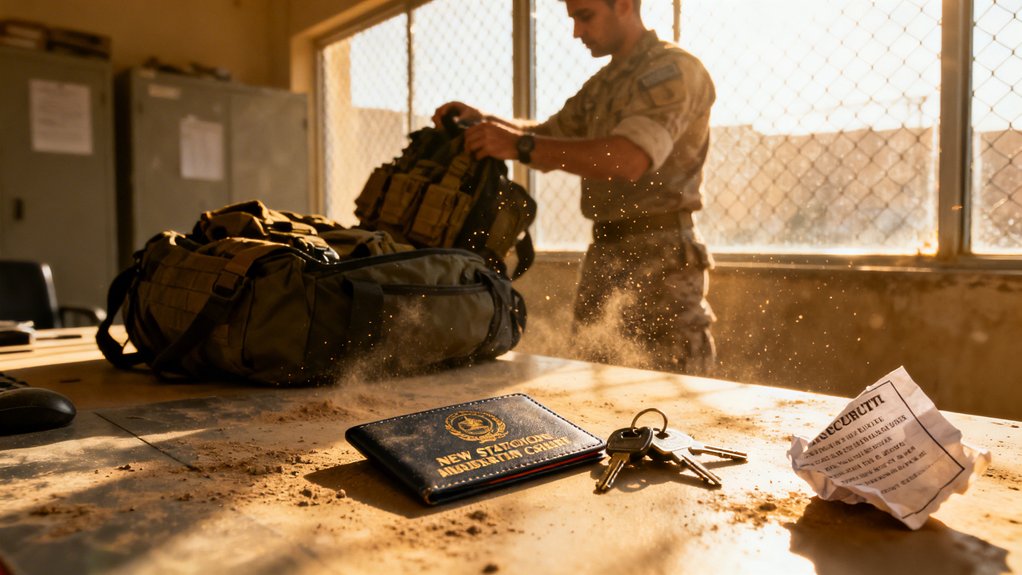
- Agency officers shredded documents and abandoned the embassy, a stark reversal of their 2001 arrival.
- The Afghan president, Ashraf Ghani, fled the country, admitting the “Taliban had won.”
- The collapse finalized a strategic cycle that began with cardboard boxes of cash and ended with a whimper.
Frequently Asked Questions
What Was the Cia’s Long-Term Goal in Afghanistan?
The CIA’s long-term goal was never defined beyond toppling the Taliban and disrupting al-Qaeda.
Its strategy fixated on a low-cost, proxy-driven military victory, while it systematically ignored post-war governance.
The agency’s sole vision involved tribal maps and payment schedules, not state-building.
This absence of a political endgame created a two-decade vacuum, ensuring its tactical success in 2001 would inevitably reverse in 2021.
Why Were No Afghan Leaders Included in Planning?
No Afghan leaders were included because planning was a rushed, secretive CIA operation. It began with only seven officers and $3 million in cash on October 7, 2001.
Their entire strategy relied on paying proxy warlords for tactical victories, not on building a collaborative government. This exclusive focus on immediate military gains, managed through covert deals with figures like Dostum, deliberately excluded any long-term political partnership with legitimate Afghan leadership.
Did the CIA Consider the Taliban’s Eventual Return?
It didn’t prioritize this consideration. The strategy focused on rapid, tactical victory through proxies and drones, viewing governance as a secondary concern.
The agency’s operational success created a power vacuum it failed to fill. Long-term political planning, including the Taliban’s potential resurgence, was eclipsed by immediate objectives and a shifting focus to Iraq, leaving a destabilized state that the Taliban ultimately reclaimed.
How Did Drone Strikes Affect Local Afghan Support?
Drone strikes fueled local resentment by causing significant civilian casualties. Each errant strike eroded Afghan support, transforming the U.S. and its allies from liberators into occupiers.
The program’s expansion to mid-level targets created constant fear in rural communities. This collateral damage actively recruited for the Taliban, who leveraged public anger.
The strikes became a tactical counterweight, undermining any goodwill the initial invasion had generated.
What Alternatives to Warlords Were Considered?
Alternatives were barely considered. Policy makers could’ve empowered tribal elders, the former royal family, or even mid-level Taliban commanders willing to defect. These options were tabled.
Rumsfeld’s team actively blocked deploying a stabilization force, and the CIA’s directive prioritized speed, leading them back to known, brutal warlords with cash. This choice sacrificed legitimacy for immediate tactical gains, embedding corruption and alienating the population from the start.
Final Thoughts
So the CIA’s model succeeded brilliantly at the only objective it truly had: destroying a regime. But that lethal, efficient focus sowed the seeds for a twenty-year failure. The agency won every battle, yet lost the war because it never planned to win the peace. Their triumph was a masterpiece of tactics—and a tombstone for strategy.