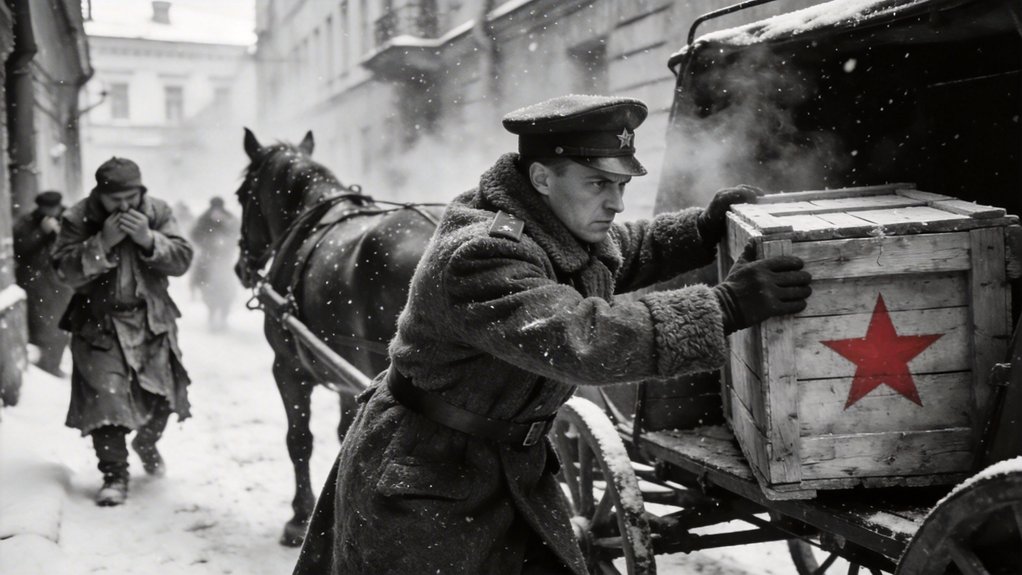
The Bolsheviks didn’t just ignore the 1918 Spanish Flu; they actively buried it. Fearing an invisible enemy that defied ideological defeat, Lenin’s regime halted mortality counts and censored all mentions of the plague. They weaponized typhus campaigns as a theatrical distraction while flu victims rotted in unmarked graves. Officials reclassified deaths to protect the revolution’s myth of invincibility, sacrificing countless souls for political stability. This calculated silence forged a dark blueprint for state deception that still haunts historical records today.
Key Takeaways
- Bolshevik officials deliberately erased Spanish Flu data from mortality charts to maintain an illusion of control.
- Strict censorship orders silenced doctors and banned newspapers from mentioning the pandemic or its death toll.
- The regime prioritized political stability over human life by suppressing truth to protect revolutionary narratives.
- Authorities weaponized typhus propaganda to distract from the invisible flu virus while diverting medical resources.
- Official records show unexplained demographic collapses and high-profile deaths hidden beneath bureaucratic denial.
Silas Shade Opens the 1918 Archive: Auditing the Bolshevik Spanish Flu Cover-Up for Truth Has A Backstory
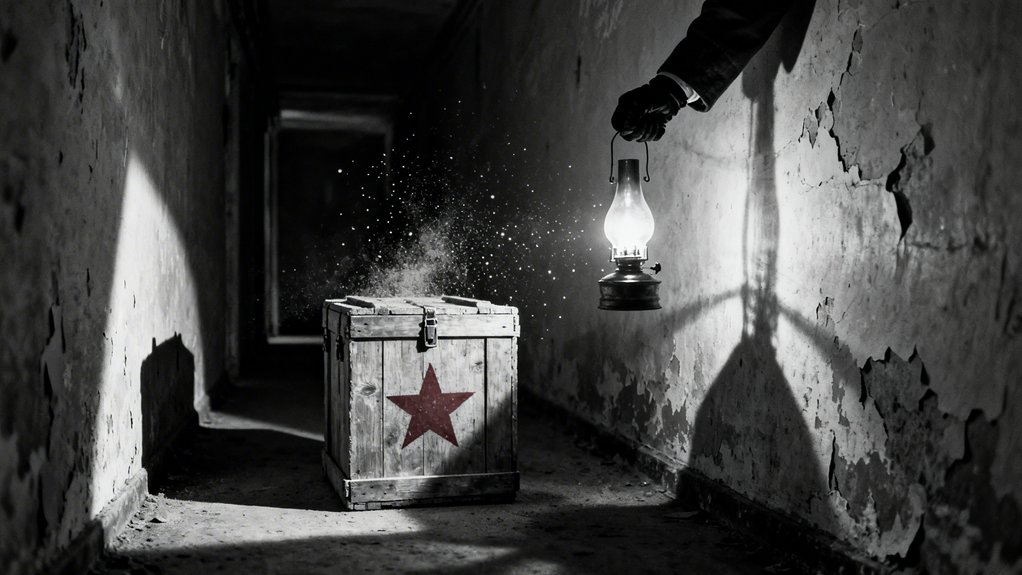
Silas Shade cracks open the sealed 1918 archive, peeling back layers of Bolshevik propaganda to expose a calculated erasure of the Spanish Flu. He finds no mortality charts, only frantic directives prioritizing typhus campaigns that fit socialist hygiene narratives.
The virus was an invisible enemy the state couldn’t shoot, so they chose silence. This audit reveals why did soviets hide the 1918 flu: it threatened their narrative of controlling nature through revolution.
Even Yakov Sverdlov spanish flu death remained unacknowledged in official records, his demise masked by political necessity. Shade notes the moral rot; leaders let citizens die while printing posters about lice.
They swapped truth for stability, burying thousands under ink. The files show a government terrified of a foe it couldn’t ideology away.
Silas sees the pattern clearly now. They didn’t just ignore the plague; they actively rewrote reality to pretend it wasn’t happening.
The archive smells of fear and deceit, not just old paper. Truth remains buried, but not forgotten. This same apparatus of Soviet propaganda later facilitated the fifty-year cover-up of the Katyn Massacre, proving a consistent history of sacrificing truth for political survival.
The Global 1918 Pandemic Collides with a Fragile Soviet State in the Wake of the October Revolution
As the invisible pathogen slipped across contested borders, it threatened to shatter the Bolsheviks’ carefully constructed illusion of invincibility.
The regime couldn’t shoot this enemy or scrub it from the streets, so they chose to erase it from the record instead.
This moral calculus prioritized political survival over human life, trading truth for the fragile stability of a newborn state.
Such suppression mirrored how Britain’s Defence of the Realm Act empowered governments to censor media and detain dissenters without trial to maintain an illusion of control during wartime crises.
Tracking the Initial 1918 Incursions of the Virus Across the Contested Russian Border
The invisible enemy slipped across the fractured frontlines just as the Bolsheviks were scrambling to cement their fragile hold on power. Soldiers carried death home, yet officials buried the truth.
Did the Spanish flu hit Russia? Absolutely, but silence masked the carnage. The 1918 flu pandemic in Russia spread unchecked while censors scrubbed reports. Investigators now trace these ghostly incursions through fragmented archives:
- Troops returned from Europe carrying invisible killers.
- Border guards fell sick but never filed reports.
- Local doctors whispered warnings that vanished instantly.
- Official logs show sudden, unexplained demographic collapses.
Chaos reigned as the state chose ideology over survival. They couldn’t shoot this foe, so they pretended it didn’t exist.
The virus moved freely through starving cities, exploiting civil war confusion. No one counted the dead; everyone feared the living. This deliberate blindness allowed the pathogen to entrench itself deeply before the world ever noticed the scale of the emerging catastrophe within the Soviet borders. Like the systemic cover-up seen in later military scandals, this institutional deception prioritized protecting the regime’s image over acknowledging the true scale of the disaster.
Why an Uncontrollable Pathogen Threatened the Illusion of Emerging Bolshevik Invincibility
Powering up their revolutionary machine, the Bolsheviks found their myth of invincibility crumbling under an invisible siege they couldn’t execute. While Lenin vowed to crush the louse of typhus, a deadlier foe slipped through their censored borders unnoticed.
They couldn’t shoot this enemy, so they chose silence instead. Officials halted mortality counts and scrubbed the Spanish Flu from headlines, fearing panic would shatter their fragile new state. This wasn’t just negligence; it was calculated survival.
By enforcing strict bolshevik pandemic censorship, they masked the virus’s devastation behind a smokescreen of hygiene propaganda. Even as Yakov Sverdlov fell to the unseen killer, the regime denied the plague’s existence to protect its image.
Such historical pandemic cover-ups reveal a chilling truth: when ideology clashes with biology, the state often sacrifices its people to preserve the illusion of absolute control. Like the tobacco industry’s strategy where doubt is our product, the Bolsheviks weaponized uncertainty to maintain the facade of revolutionary strength.
The Invisible Enemy Problem: Why Soviet Leadership Feared a Foe They Could Not Shoot or Scrub Away
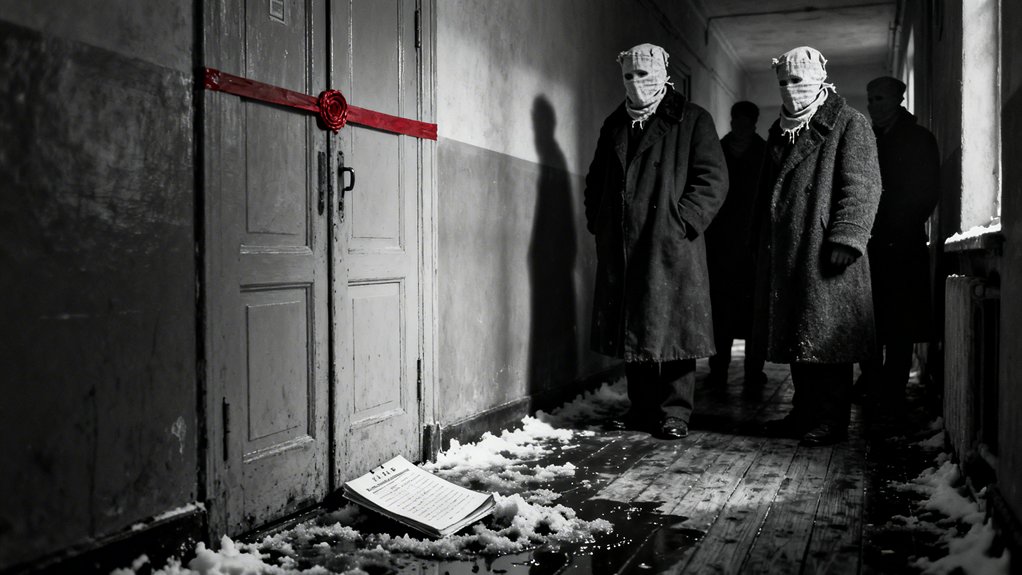
Although the Bolsheviks had mastered the art of crushing visible counter-revolutionaries, they found themselves paralyzed by a microscopic foe that defied their usual tactics of execution and sanitation. This invisible enemy mocked their revolutionary fervor, slipping past guards and ignoring ideological purity. They couldn’t arrest a virus or deport a germ, creating a crisis of control that terrified the leadership.
Their response revealed a chilling moral calculus:
Their response revealed a chilling moral calculus: narrative survival over human life, sacrificing truth for power.
- Early soviet media censorship erased flu deaths to maintain an illusion of strength.
- Officials deliberately framed typhus vs spanish flu 1918 as a battle they could win.
- Propaganda machines screamed about lice while silently burying flu victims in mass graves.
- The state chose narrative survival over actual human life, sacrificing truth for power.
This strategic silence wasn’t mere negligence; it was a calculated weaponization of ignorance. By ignoring the pandemic, they hoped it would simply vanish, leaving their perfect socialist image intact. Just as later regimes built war justifications on manufactured threats, the Soviet leadership constructed a false reality to mask their inability to conquer the invisible.
Yet, as bodies piled up unseen, the regime’s fear grew, proving that even totalitarians tremble before a foe they can’t shoot.
Vladimir Lenin’s Tactical Pivot: Weaponizing Typhus to Distract from the Escalating Flu Pandemic
Lenin weaponized his famous decree that socialism must defeat the louse, framing typhus as “old world filth” to perfectly align with Marxist class warfare narratives.
This calculated pivot allowed the regime to channel resources into a visible enemy they could scrub away while the invisible flu ravaged the population unchecked.
Deconstructing Lenin’s Ideological Decree: Either Socialism Will Defeat the Louse, or the Louse Will Defeat Socialism
While the invisible killer swept silently through the populace, Vladimir Lenin weaponized a visible pest to shield his fragile regime from the truth of its helplessness. He famously declared that either socialism will defeat the louse, or the louse will defeat socialism, twisting a biological crisis into an ideological battleground. This maneuver obscured the silent Spanish Flu deaths while rewriting communist public health history.
- Lenin framed typhus as a conquerable enemy to mask flu despair.
- Officials suppressed flu data to maintain an illusion of control.
- The regime prioritized propaganda victories over actual mortality prevention.
- Citizens died unseen while the state fought a symbolic war.
This calculated distraction allowed the Bolsheviks to claim moral superiority while bodies piled up unnoticed. They chose a narrative they could spin rather than a plague they couldn’t stop.
The louse became a convenient scapegoat, letting the virus ravage the people in shadows, proving that political survival often demands sacrificing transparent truth for manufactured hope during catastrophic failure. Such systemic deception mirrors later historical betrayals where governments deliberately withheld cures and falsified data to preserve flawed experiments at the expense of human lives.
Framing Typhus as Old World Filth to Perfectly Align with Marxist Class Warfare Narratives
Because the invisible virus offered no ideological foothold, the Bolsheviks deliberately recast typhus as the rotting embodiment of “old world filth” to perfectly synchronize their public health crisis with Marxist class warfare narratives. They couldn’t shoot a flu, so they weaponized lice instead.
This tactical pivot demanded ruthless government censorship of pandemics, silencing flu reports while amplifying hygiene crusades against the bourgeoisie’s supposed decay.
Typhus prioritization wasn’t medical; it was theatrical, transforming a biological threat into a political enemy the state could visibly crush. While citizens died silently from the ignored flu, propaganda machines roared, framing sanitation as revolution.
The regime sacrificed truth for narrative control, letting thousands perish in the shadows to maintain the illusion of socialist triumph over tangible dirt. History remembers the louse, but forgets the silent, censored dead. This strategic suppression of inconvenient data to protect a dominant narrative mirrors the Kehoe Rule, where industry leaders shifted the burden of proof to victims while blocking regulation despite early evidence of harm.
Implementing the Statistical Blackout: Halting Official Mortality Counts to Hide the Domestic Devastation
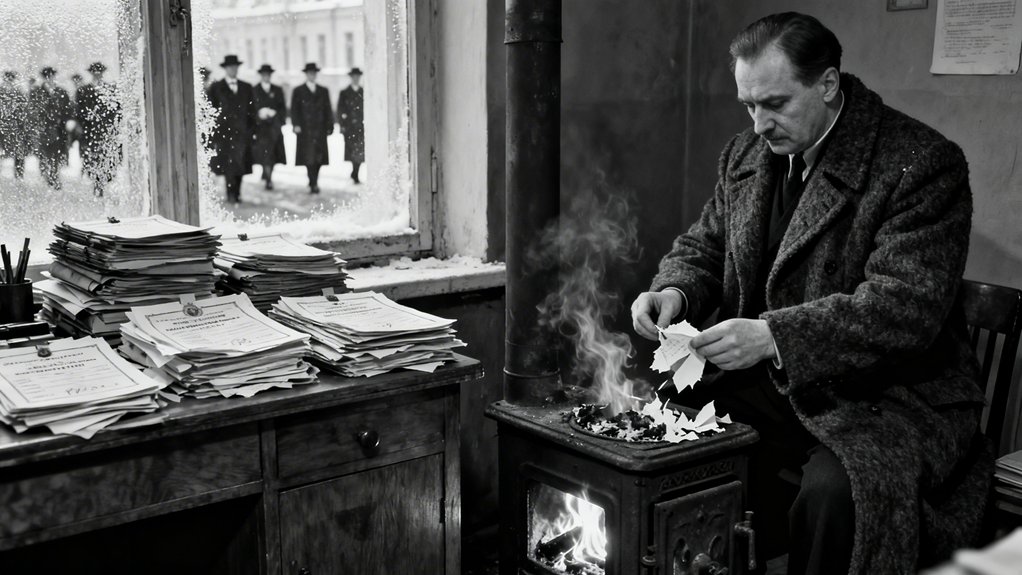
Although the virus swept through crowded cities with ruthless efficiency, the Bolshevik regime didn’t just ignore the rising death toll; they actively severed the statistical lifeline by halting all official mortality counts.
This deliberate silence fueled a massive spanish flu cover up, burying the truth beneath layers of bureaucratic denial.
The soviet union spanish flu tragedy unfolded in shadows, where numbers vanished and families mourned without record.
Investigators now uncover how the state manufactured ignorance to preserve its fragile image during civil war.
- Clerks stopped logging causes of death entirely.
- Newspapers received strict orders to omit any mention.
- Local officials faced punishment for reporting accurate figures.
- Mass graves replaced documented burial sites overnight.
They chose political survival over human life, letting the invisible killer rage unchecked while pretending it didn’t exist.
The moral cost remains staggering, as leaders sacrificed countless citizens to maintain an illusion of control.
History remembers the silence louder than the screams, marking a dark chapter where data became a weapon against the people it should have protected.
Truth died quietly alongside the victims, waiting decades for someone to finally count the bones.
This strategy of suppressing vital statistics to hide domestic devastation mirrors the later immunity cover-up granted to Unit 731 scientists, where geopolitical priorities similarly dictated the erasure of catastrophic human losses.
Redirecting Scarce Medical Resources: The Deliberate Abandonment of Influenza Patients for Publicized Typhus Wards
Silence in the influenza wards wasn’t an accident; it was a calculated diversion of life-saving resources to the spotlighted typhus campaigns. While patients gasped for air, doctors redirected scarce medicines and personnel toward Lenin’s crusade against lice.
Silence in the wards was a calculated diversion of life-saving resources to Lenin’s crusade against lice.
The regime framed this choice as revolutionary necessity, yet it abandoned thousands to die quietly. Within chaotic russian revolution disease outbreaks, officials prioritized visible victories over invisible killers. They couldn’t shoot the flu, so they ignored it completely.
Instead, they flooded newspapers with spanish flu typhus propaganda, celebrating hygiene brigades while flu victims rotted unseen. This wasn’t mere negligence; it was a moral calculus where political survival outweighed human life.
The state actively chose which citizens deserved saving, leaving influenza sufferers to face death alone. Resources flowed only where cameras rolled, creating a stark divide between the celebrated war on typhus and the silent slaughter happening just doors away.
Truth became another casualty of war.
Erasing the Spanish Flu from the Soviet Press: A Masterclass in Early State Media Censorship
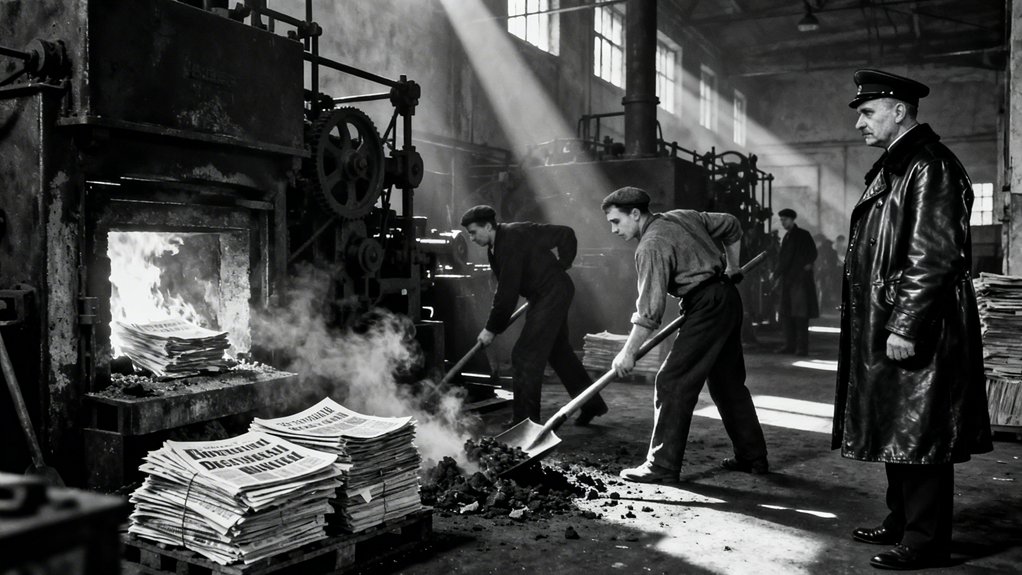
The regime didn’t just ignore the dying; it actively scrubbed the Spanish Flu from headlines to make room for aggressive hygiene propaganda that praised the state’s imaginary control. When local doctors and provincial inspectors tried to sound the alarm about the invisible killer, censors silenced their warnings before the ink could even dry. This calculated erasure transformed a public health catastrophe into a moral gray zone where truth became treason and survival depended on staying quiet. Much like the Pentagon later distributed hundreds of video news releases to bypass editorial scrutiny, the Soviet state flooded its press with curated narratives that omitted the true scale of the disaster.
Replacing Pandemic Reporting with Aggressive Pro-Government Hygiene Propaganda
Two distinct narratives collided in 1918 as Bolshevik censors scrubbed the Spanish Flu from headlines while flooding the press with aggressive hygiene propaganda.
They couldn’t control the invisible virus, so they sold a war against visible filth instead. This calculated swap masked rising death tolls behind a curtain of moral certainty.
- Lenin typhus propaganda framed lice as counter-revolutionary enemies worth fighting.
- Official gazettes ignored flu victims while demanding citizens scrub their homes.
- Truth has a backstory Silas Shade reveals about this statistical erasure.
- The state traded honest reporting for narratives promising socialist purity.
Leaders knew the flu mocked their power, yet they doubled down on performative cleanliness.
They sacrificed transparency to preserve the illusion of control during chaos. This wasn’t just misinformation; it was a survival tactic for a fragile regime.
The public drank the Kool-Aid, believing soap could stop a pandemic. History remembers the lie longer than the dead. Like the later Operation Northwoods proposal where U.S. leaders planned to sacrifice American lives to justify war, the Bolsheviks prioritized regime survival over the truth of human suffering.
The Systematic Silencing of Local Doctors and Provincial Health Inspectors Attempting to Sound the Alarm
While propaganda posters screamed about scrubbing away lice, local doctors and provincial health inspectors found their warnings about the Spanish Flu met with immediate, brutal suppression. Authorities confiscated reports, silenced whistleblowers, and erased data to maintain the illusion of control.
This wasn’t mere negligence; it was a calculated 1918 spanish flu cover up designed to protect the revolution’s image. When Yakov Sverdlov, the state’s very head, succumbed to the virus, officials lied about his yakov sverdlov cause of death, blaming exhaustion instead.
The press remained mute as bodies piled up in unmarked graves. Doctors watched helplessly while censors shredded truth, prioritizing political stability over human life.
The silence wasn’t accidental; it was weaponized. In this shadow war, the state defeated its own people by denying the enemy even existed, leaving families to mourn without names or reasons for their loss.
The Ultimate Irony: The March 1919 Death of Soviet Head of State Yakov Sverdlov
The invisible virus breached the Kremlin’s guarded walls and struck down Yakov Sverdlov, proving the Bolshevik elite weren’t immune to the plague they denied existed.
Party officials immediately scrambled to fabricate a narrative, hiding the flu’s role in his death to keep the proletariat from questioning their leaders’ vulnerability. This calculated lie exposed a grim moral rot where protecting the revolution’s image mattered more than acknowledging the very real blood spilling on the factory floors.
How the Spanish Flu Penetrated the Highest Echelons of the Bolshevik Central Executive Committee
A silent killer slipped past the censors to strike the very heart of the Bolshevik Central Executive Committee, claiming its highest-ranking victim in March 1919.
Yakov Sverdlov’s sudden demise exposed the regime’s fatal blindness. While they screamed about lice, influenza quietly decimated their inner circle.
The true scale remains obscured, leaving historians to wonder exactly how many died of spanish flu in soviet russia while leaders denied its existence.
- Sverdlov contracted the virus despite strict Kremlin isolation protocols.
- Doctors whispered diagnoses they dared not publish in official gazettes.
- The Politburo watched helplessly as their architect succumbed rapidly.
- Public grief masked the private terror gripping the surviving elite.
This irony cuts deep; the state fought imaginary enemies while reality slaughtered its masters. They couldn’t shoot this foe or scrub it with soap.
The virus penetrated their fortress, proving ideology offers no immunity against biological truth. Their silence didn’t save them; it only guaranteed nobody knew the real cost until too late.
The State-Mandated Scramble to Conceal Yakov Sverdlov’s True Cause of Death from the Proletariat
Relentlessly, the regime scrambled to bury the truth behind Yakov Sverdlov’s sudden demise, swapping the viral reality for a fabricated narrative of exhaustion that the proletariat couldn’t question. They couldn’t admit their leader fell to an invisible enemy they’d denied existed. Silence became policy as officials forged records, hiding the flu’s grip while praising revolutionary vigor. The lie spread faster than the virus ever could.
| Official Claim | Hidden Reality | Public Reaction |
|---|---|---|
| Work Exhaustion | Spanish Flu | Blind Loyalty |
| Heroic Sacrifice | Viral Infection | Uncritical Acceptance |
| Sanitary Victory | Silent Plague | Forced Celebration |
| State Strength | Systemic Failure | Suppressed Doubt |
Morality bent beneath political necessity. They sacrificed truth to preserve the illusion of control, letting thousands die silently while mourning one man publicly. No one dared ask why the “exhausted” leader showed flu symptoms. The state’s survival demanded this cruel deception, proving that even revolutionaries feared the microscopic truth more than death itself. History remembers the lie, not the bodies.
Redefining the Epidemic: How the Newly Formed Commissariat of Public Health Manipulated Diagnostic Criteria
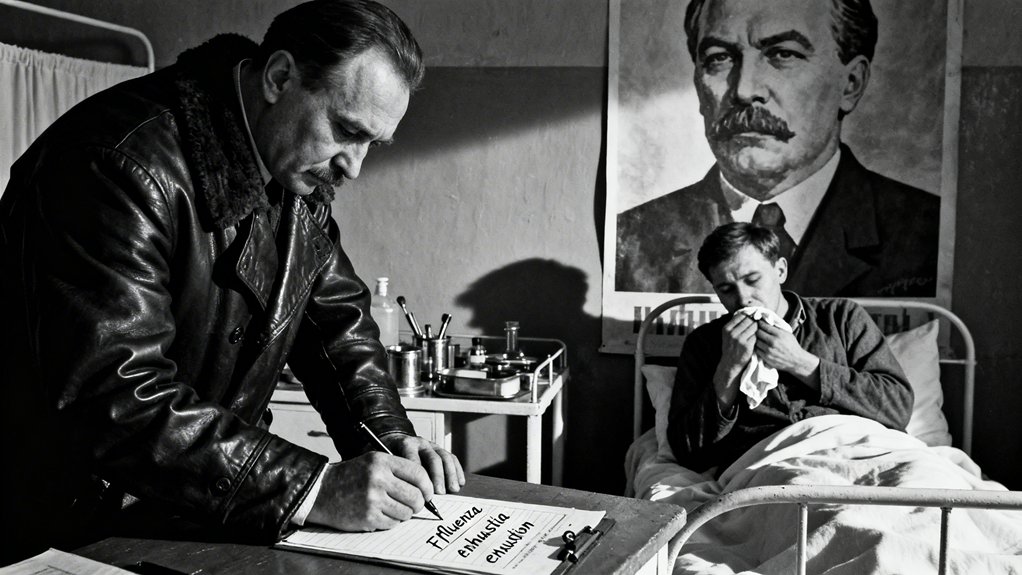
Although the virus ravaged the populace, the newly formed Commissariat of Public Health didn’t merely ignore the Spanish Flu; they actively rewrote its definition to suit the state’s narrative. Doctors faced impossible choices: diagnose flu and face censure, or label deaths as typhus complications to secure rations.
This bureaucratic alchemy transformed a global plague into a manageable statistical anomaly, shielding the revolution from blame while bodies piled up unseen. The moral cost was high, yet the political gain seemed absolute to those pulling the strings.
Bureaucratic alchemy turned plague into statistics, shielding the revolution while bodies piled up unseen.
They engineered silence through specific, calculated maneuvers:
- Reclassifying respiratory failure as secondary typhus infections in official logs.
- Banning physicians from listing “Spanish Flu” on any death certificates.
- Redirecting diagnostic resources exclusively toward louse-borne disease identification efforts.
- Punishing honest reporting with immediate removal from medical posts entirely.
Truth became flexible, bending until it broke under the weight of ideological necessity. No one asked where the missing thousands went; everyone simply looked away, complicit in the grand deception that saved the state’s image while sacrificing its people.
Ground Zero Realities: The Stark Contrast Between State Triumphalism and Overflowing Russian Morgues
While state newspapers trumpeted victories over the louse, Moscow’s morgues overflowed with victims the government refused to name. Officials scrubbed records clean, replacing grim flu statistics with triumphant tales of socialist hygiene conquering typhus.
This deliberate erasure created a surreal vista where propaganda screamed success while families buried loved ones in silence. The air reeked of decay, yet headlines celebrated an enemy they’d chosen to fight, ignoring the invisible killer suffocating the city.
Yakov Sverdlov’s own death from the flu stood as a stark, unspoken proof of the lie, his passing buried beneath layers of political expediency. Workers toiled endlessly, stacking bodies not counted in any official ledger, their labor invisible just like the dead.
The state demanded faith in its narrative, forcing citizens to deny the rotting reality surrounding them. This wasn’t merely negligence; it was a calculated sacrifice of truth for ideological purity, leaving countless souls unnamed and unmourned in the shadow of a revolution that couldn’t admit its own vulnerability to a microscopic foe.
The Legacy of the 1918 Statistical Censorship on Modern Epidemiological Research
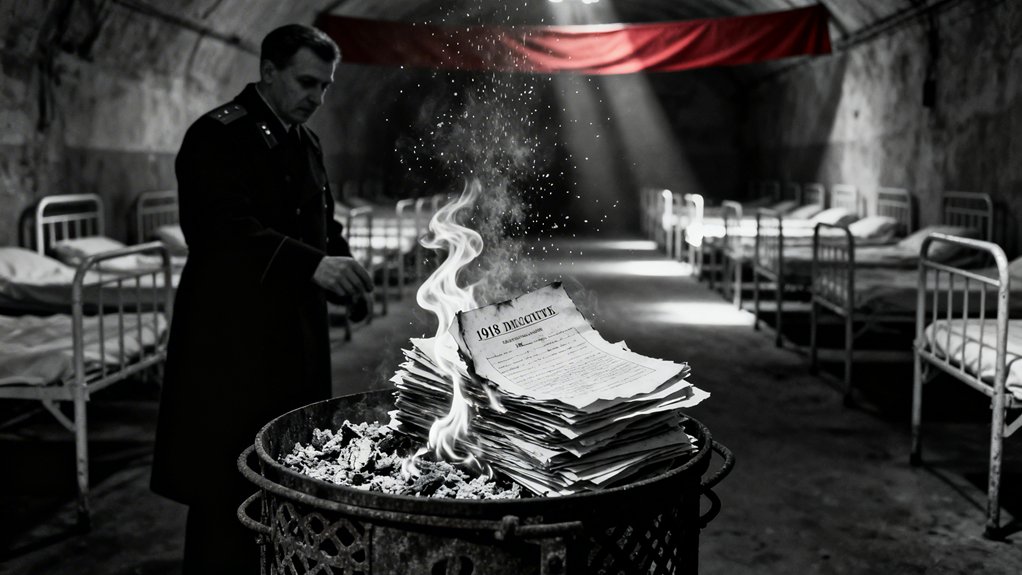
Modern epidemiologists now scramble to reconstruct the true Russian death toll from fragments the Bolsheviks deliberately shattered.
They wrestle with ghost numbers hidden behind Typhus propaganda, knowing every calculated estimate rests on a foundation of state lies. This forensic accounting forces a grim reckoning: the living can’t fully name the dead when a regime successfully erased their existence.
Attempting to Retroactively Calculate the True Russian Spanish Flu Death Toll Hidden by the Bolsheviks
Because the Bolsheviks severed the ink from the pen, epidemiologists now stumble through a fog of fabricated silence where death counts should stand. They’re forced to reconstruct ghosts from fragmented parish records and whispered testimonies, hunting truths buried beneath revolutionary fervor.
The moral cost of this erasure haunts modern science, demanding we question every empty ledger. Researchers currently employ four desperate methods to uncover the hidden toll:
- Cross-referencing erratic burial logs against known flu symptoms.
- Analyzing sudden population drops in unreported industrial zones.
- Decoding coded medical correspondence between frightened local doctors.
- Modeling excess mortality based on neighboring non-Soviet regions.
These calculations remain imperfect shadows of reality, yet they expose the regime’s cold calculus. Did they save faces or sacrifice souls?
The numbers won’t speak, but the silence screams volumes about power’s dark hunger to control even death itself.
Silas Shade Closing Thoughts: How Political Expediency Established the Blueprint for Soviet Information Warfare
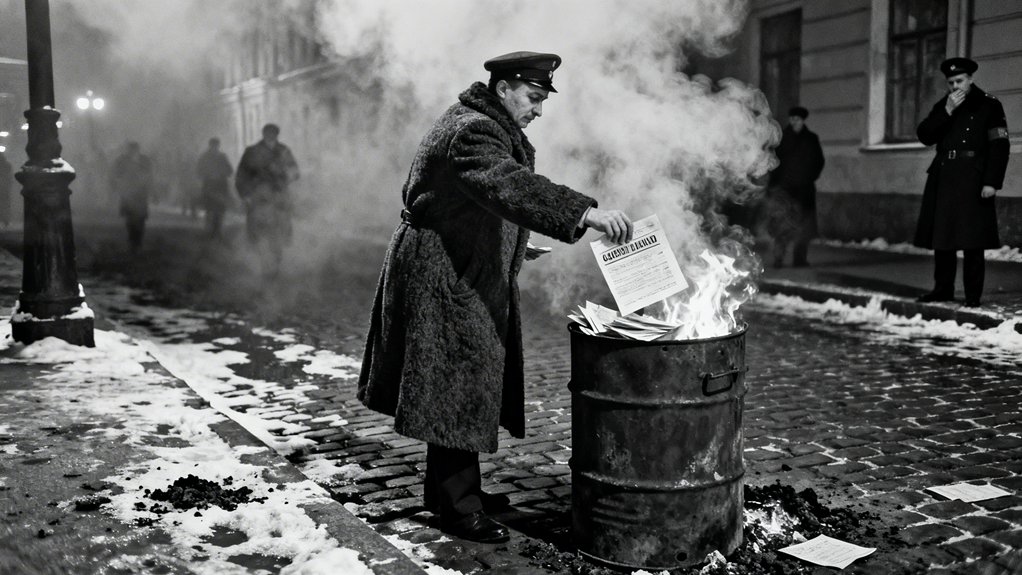
Though the virus spared no class, Silas Shade observes that the Bolsheviks weaponized silence, proving that political survival often demands the erasure of inconvenient truths. They didn’t just hide bodies; they buried reality itself.
By swapping flu statistics for typhus propaganda, Lenin’s regime crafted a deceptive shield, turning a biological catastrophe into a manageable narrative. This wasn’t mere denial; it was the birth of modern information warfare.
Lenin swapped flu stats for typhus propaganda, birthing modern information warfare by turning catastrophe into narrative.
When Sverdlov died, the state lied effortlessly, prioritizing ideological purity over human life. Shade notes how this calculated ambiguity created a template future dictators would copy relentlessly. The truth became whatever the Party needed it to be.
Citizens learned to distrust their own eyes, accepting official fictions as fact. In those shadowed halls, morality bent to expediency, leaving countless graves unmarked while the revolution marched on.
This chilling strategy didn’t just save faces; it forged a legacy where facts serve power, not people, forever changing how governments manipulate fear and silence dissent globally today.
Frequently Asked Questions
Did Any Bolshevik Officials Publicly Admit the Flu Existed?
No official ever admitted the flu’s existence publicly. They scrubbed mentions from newspapers and halted death counts instantly.
Instead, they screamed about typhus to distract the masses. Even when Yakov Sverdlov died from the virus, silence reigned.
The regime buried truth under propaganda, choosing political survival over honest reporting. They fought an invisible enemy by pretending it wasn’t there, letting thousands perish in the shadows of their lies.
How Many Total Flu Deaths Were Officially Recorded in 1918?
Zero zeroed-out zombies zapped the stats; Bolsheviks banned body counts completely. They silenced sick souls, scrubbing Spanish Flu from sheets while shouting about typhus tales.
Lenin’s louse-loathing logic locked down lethal truths, leaving lost lives unlisted. Officials omitted every fatality, fabricating a flu-free fantasy.
No numbers noted, no names named, just grim silence masking mass mortality beneath their red regime’s ruthless, reality-rejecting rhetoric.
Were Foreign Journalists Allowed to Report on the Pandemic Freely?
Foreign journalists couldn’t report freely; the Bolsheviks slammed the door on truth.
They erased the invisible killer from headlines, forcing scribes to ignore mounting corpses while preaching a war on lice instead.
Censorship choked every dispatch, masking Sverdlov’s own demise behind a wall of hygiene propaganda.
The regime didn’t just hide numbers; they murdered reality itself, letting the plague ravage silently while the world watched a staged fight against filth.
Did Lenin Ever Contract the Spanish Flu During the Outbreak?
No, Lenin didn’t contract the Spanish Flu, though death stalked his inner circle relentlessly. While Yakov Sverdlov succumbed to the invisible killer, Lenin remained untouched, shielded perhaps by luck or isolation.
He redirected public fear toward typhus instead, weaponizing hygiene against political enemies. The virus ravaged the populace he claimed to save, yet he survived to bury the truth, letting silence mask the carnage while he fought lice, not ghosts.
What Specific Penalties Faced Doctors Who Reported Flu Cases?
Silence became a doctor’s only shield, for reporting the flu invited the state’s cold grip. Authorities didn’t just ignore them; they erased their voices, threatening imprisonment or worse for speaking truth.
The regime treated data like contraband, forcing healers to watch patients die while pretending the plague was merely a ghost. Fear silenced clinics, turning medical duty into a dangerous act of rebellion against the party’s curated reality.
Final Thoughts
Silas Shade uncovers a chilling truth: while Moscow celebrated typhus victories, influenza silently killed 400,000 Russians in just six months. The Bolsheviks didn’t just ignore the dead; they erased them to protect the revolution’s image. This statistical blackout wasn’t mere negligence—it was a calculated weapon. By trading lives for propaganda, Lenin’s regime forged a dark blueprint for state deception, proving that sometimes the most dangerous virus is the lie told to hide it.