Snow swallowed Olof Palme’s life, but police incompetence buried the truth. Officers let bystanders trample critical evidence while the killer vanished into Stockholm’s night. They chased ghosts for decades, ignoring apartheid links and letting the prime suspect walk free. Was this sheer chaos or a calculated shield protecting state secrets? The system failed Sweden, leaving a thirty-four-year wound that still bleeds today. Uncover the hidden layers of this catastrophic collapse as the full story unfolds.
Key Takeaways
- Catastrophic police negligence at the crime scene destroyed critical forensic evidence immediately after the shooting.
- The primary suspect, Stig Engström, was allowed to leave freely after posing as an eyewitness.
- Investigators ignored credible international leads linking apartheid South Africa to the assassination in favor of domestic theories.
- The state hired an unqualified book publisher as lead detective, signaling a prioritization of appearance over justice.
- Official closure in 2020 named a deceased suspect without a trial, fueling enduring cover-up suspicions.
February 28, 1986: The Execution of Prime Minister Olof Palme on a Snowy Stockholm Street Corner
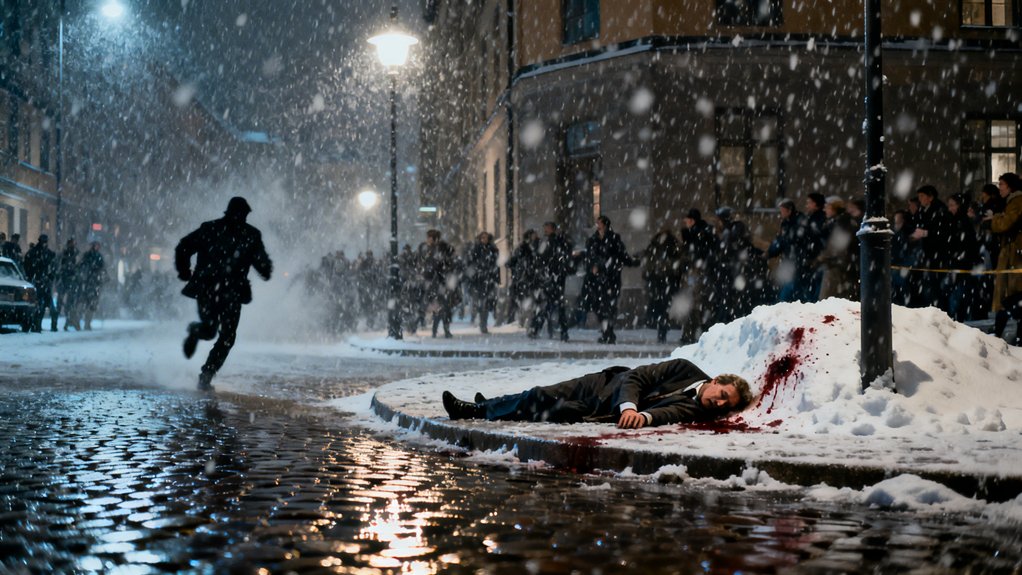
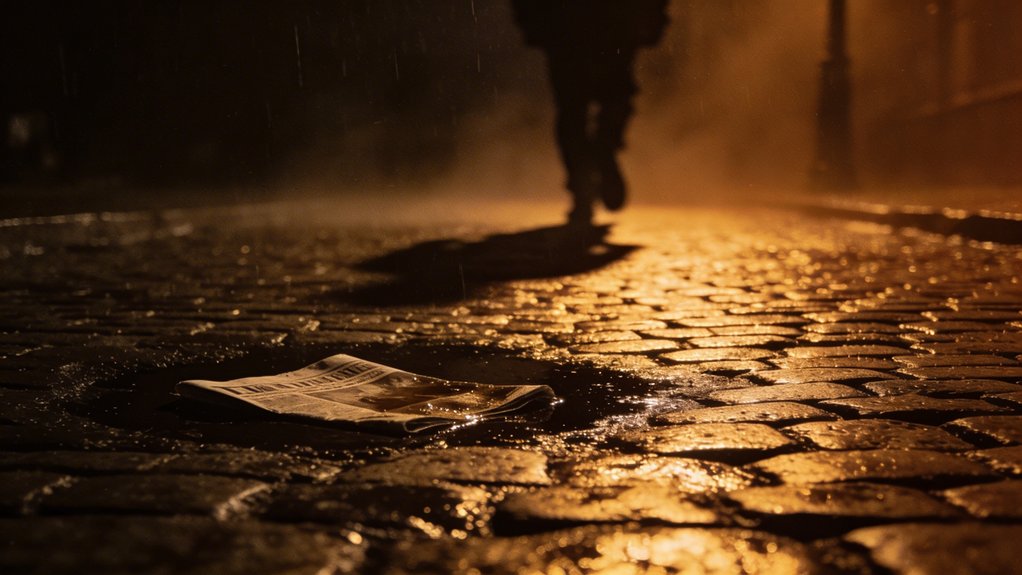
The snow fell silently on Stockholm as Prime Minister Olof Palme walked home without bodyguards. That ordinary Friday night shattered instantly when a single gunshot struck him down on the icy pavement. His wife screamed for help, but the attacker vanished into the swirling winter darkness.
This wasn’t just a murder; it was the olof palme assassination that stunned a nation and exposed deep vulnerabilities within Swedish security. Authorities rushed to the scene, yet their confusion marked the beginning of botched police investigations true crime enthusiasts still dissect today.
The Olof Palme assassination stunned a nation, exposing security flaws and sparking botched investigations still dissected today.
They didn’t secure the area immediately, allowing pivotal evidence to slip away while shock paralyzed the response. Palme, a man who championed peace globally, lay dying on a public street corner, unprotected and vulnerable.
The tragedy wasn’t merely his death, but the chaotic aftermath that followed. Every misstep from that frozen night fueled decades of conspiracy theories, leaving Swedes questioning whether incompetence or something darker hid the killer’s identity for thirty-four long years. Much like the systemic cover-up seen in other historical atrocities where institutions prioritized their image over truth, the handling of the Palme case raised enduring doubts about whether full accountability was ever truly sought.
Bystanders Trample the Evidence: The Catastrophic Police Failure to Secure the Sveavägen Crime Scene
A single bullet struck Palme’s back as he walked home unprotected, leaving his body exposed on the snowy pavement while shock froze the crowd.
Instead of locking down the city, authorities hesitated, allowing frantic bystanders to trample over the critical evidence scattered across Sveavägen.
This catastrophic failure to secure the scene instantly compromised the investigation, turning a public tragedy into an unsolvable mystery.
The Fatal Single Gunshot to Palme’s Back and the Vulnerability of a Premier Walking Without Bodyguards
Although snow blanketed Sveavägen that night, Prime Minister Olof Palme walked home without bodyguards, leaving him fatally vulnerable to a single gunshot in the back.
This shocking moment, when the Swedish prime minister assassinated 1986, shattered national security norms instantly. He wasn’t shielded; he was exposed.
The bullet struck true, ending a life dedicated to peace. People still ask why was Olof Palme murdered, wondering if his openness invited tragedy.
His wife screamed as he fell, her cries echoing down the icy street. No agents rushed to cover him.
Just ordinary citizens watched their leader die alone on the pavement.
That lack of protection wasn’t just an oversight; it was a catastrophic failure that allowed a killer to vanish into the crowd while evidence slipped away under trampling feet, sealing a mystery for decades.
Stockholm Authorities Fail to Initiate a Standard City Lockdown Following the Direct Attack
Chaos erupted instantly as the killer vanished, yet Stockholm’s police force failed to lock down the city or cordon off the blood-stained pavement.
Instead of securing Sveavägen, officers watched helplessly while frantic bystanders trampled vital evidence underfoot. This catastrophic negligence destroyed forensic traces that could have identified the shooter immediately.
Such a glaring omission fuels persistent theories regarding an olof palme cover up, suggesting deliberate obstruction rather than simple incompetence. The botched olof palme police investigation allowed the assassin to slip away unnoticed among the crowd.
Families deserved answers, not a scene compromised by confusion and delay. Every lost footprint represented a missed opportunity for justice.
This failure to preserve evidence mirrors the institutional secrecy seen when intelligence agencies systematically destroy operational files to block accountability.
The Skandia Man Deception: How a Graphic Designer Escaped the Scene by Posing as an Eyewitness
Amid the chaos, a graphic designer known as the Skandia Man cleverly manipulated eyewitness testimony to pose as a concerned bystander rather than the shooter. Police, overwhelmed and desperate for leads, tragically failed to spot his deception and allowed the primary suspect to walk away freely into the night. This catastrophic oversight not only let a killer escape but also shattered any hope of a swift resolution for a grieving nation. Much like the FBI’s use of illegal wiretaps to undermine political movements, this failure to identify the true perpetrator allowed a critical truth to remain buried for decades.
Manipulating Eyewitness Testimony to Evade Immediate Law Enforcement Suspicion in 1986
Blending seamlessly into the crowd of horrified onlookers, the actual killer didn’t flee the snowy crime scene; he simply posed as a witness. This bold deception allowed Stig Engström suspect status to remain hidden while he actively manipulated early accounts. As the skandia man, he directed police attention elsewhere, crafting a false narrative that saved him. His calm demeanor fooled everyone nearby who sought justice for Palme.
| Action | Target | Result |
|---|---|---|
| Claiming Witness | Officers | Gained Trust |
| Altering Details | Timeline | Created Confusion |
| Pointing Away | Suspects | Misled Hunt |
| Staying Put | Scene | Avoided Capture |
He didn’t run; he talked. By controlling the story immediately, he guaranteed no one looked closely at his coat or his eyes. The tragedy deepened as truth slipped away through his lies. People wanted answers, yet received only a carefully constructed mirage designed to protect a murderer walking freely among grieving citizens that cold night. Just as missing physical evidence can render accurate analysis impossible in other high-profile cases, Engström’s verbal interference ensured the immediate investigation was built on a foundation of distortion.
The Astonishing Police Decision to Allow the Primary Suspect to Walk Away Freely
His lies didn’t just confuse the timeline; they handed him a free pass out of the cordon while officers chased ghosts. The Skandia Man, a graphic designer named Christer Pettersson, simply walked away because he looked like a helpful witness rather than the killer.
Police desperately needed answers, so they trusted his fabricated story without verifying his identity. This catastrophic error meant the man who killed Olof Palme escaped immediate justice while the nation mourned. Investigators later realized their mistake, but the damage was done.
Who was the Skandia Man? He was the prime suspect hiding in plain sight, exploiting the chaos of that snowy night. The force’s failure to detain him allowed decades of speculation to flourish. They let the truth slip through their fingers, leaving a grieving country without closure for thirty-four long, painful years of uncertainty.
Thirty-Four Years of Investigative Chaos: The Systematic Collapse of Sweden’s Largest Homicide Case
Shatter the illusion of Swedish efficiency, for the investigation into Olof Palme’s murder didn’t just stumble; it collapsed under the weight of its own incompetence from the very first snow-covered minute. Officers trampled critical evidence while leaders chased ghosts, leaving grieving citizens desperate for truth within growing confusion.
This chaos cemented the tragedy as one of the most infamous unsolved swedish murders in modern history. Authorities even hired an olof palme private detective who was actually a book publisher, highlighting their sheer desperation.
The system failed everyone through three critical errors:
- Police ignored immediate international leads pointing toward foreign involvement.
- Investigators allowed key witnesses to leave without proper questioning.
- Commanders focused on wrong suspects while the real killer vanished.
Decades slipped away as families waited for justice that never arrived. The nation watched helplessly while bureaucrats fumbled every opportunity to solve the crime.
This wasn’t just bad luck; it represented a total systemic breakdown that haunted Sweden for generations. People still wonder if incompetence or something darker drove this catastrophic failure to find the truth. Like the 50-Year Cover-Up of the Katyn Massacre where Allied leaders suppressed evidence to protect political alliances, the Palme case suggests a similar prioritization of state interests over the pursuit of justice.
Dismissed International Conspiracies: Ignoring the Apartheid South Africa Assassination Connection
They turned a blind eye to credible intelligence linking Pretoria’s covert operatives to the snowy street where Palme fell.
This dismissal ignored a chilling geopolitical motive: apartheid South Africa’s desperate plot to silence its fiercest international critic.
Such willful ignorance mirrors the systematic suppression of evidence seen in other state-sponsored eliminations, where archives were burned and cables buried to preserve secrecy for decades.
Authorities Disregard Credible Intelligence Pointing to Pretoria’s Covert Intelligence Operatives
Someone handed investigators a map leading straight to Pretoria’s covert operatives, yet authorities chose to look the other way.
They dismissed the olof palme south africa connection, letting pivotal evidence vanish into bureaucratic silence.
This negligence cemented the tragedy among historic unsolved assassinations, leaving families desperate for truth.
Investigators actively ignored specific warnings that could have shattered the conspiracy’s shield.
- Credible tips naming apartheid agents were filed away and forgotten.
- International intelligence sharing stopped abruptly when Pretoria’s name surfaced.
- Witnesses describing foreign operatives faced immediate skepticism from local police.
The system failed those who needed justice most.
By turning a blind eye to foreign involvement, officials protected powerful interests instead of solving the crime.
This deliberate ignorance wasn’t just incompetence; felt like a calculated choice to bury the real story deep, much like the false-flag bombings executed by Israel in Egypt that were initially denied for decades.
The pain of unanswered questions still haunts Sweden today, a scar that refuses to heal because authorities wouldn’t look where the map clearly pointed them.
Analyzing the Geopolitical Motive Behind South Africa’s Alleged Plot to Eliminate Palme
Although the geopolitical stakes were glaringly obvious, investigators turned their backs on the most compelling motive for Olof Palme’s murder: his fierce opposition to apartheid. Pretoria feared his global sanctions campaign would crush their regime. This silence fuels enduring olof palme conspiracy theories, suggesting a state-sanctioned hit. The true crime olof palme case demands we look closer at the ignored evidence.
| Palme’s Action | South Africa’s Fear |
|---|---|
| Global Sanctions Push | Economic Collapse |
| Anti-Apartheid Speeches | Diplomatic Isolation |
| UN Pressure Campaign | Regime Instability |
| Moral Condemnation | Violent Retaliation |
Investigators dismissed these lethal threats, letting a geopolitical assassin slip away. They ignored how apartheid agents operated globally, choosing incompetence over truth, much like industries that rely on shifting the burden of proof to evade accountability for known harms. Families still grieve while the real killers hide in shadows. We owe them clarity, not cover-ups. The world watched, but Sweden blinked, allowing a foreign plot to dissolve into snow.
State-Sanctioned Vigilantism: The Swedish Government Officially Hires a Book Publisher as a Private Detective
A desperate Swedish government shattered protocol by officially hiring a book publisher to act as a private detective, effectively outsourcing the hunt for Prime Minister Olof Palme’s killer to an unqualified civilian. This bizarre decision signaled deep institutional panic, confusing grieving citizens who deserved professional justice, not amateur speculation.
The move raises haunting questions that every olof palme murder documentary must address regarding state competence.
- Authorities bypassed seasoned investigators for a publisher with zero forensic training.
- Taxpayer funds fueled this unconventional, chaotic search for truth.
- Families waited decades while amateurs stumbled through critical evidence.
This desperate gambit didn’t solve the crime; it only deepened the mystery surrounding whether the case was olof palme assassination solved or merely buried under layers of incompetence. The publisher’s involvement suggests leaders cared more about appearing active than actually catching the murderer.
Such actions eroded public trust, leaving Swedes wondering if their government truly wanted answers or just a convenient scapegoat to close the file. The tragedy compounds when realizing real detectives watched from sidelines while an outsider played detective on the nation’s dime. Like the systemic deception seen in the Tuskegee Study where officials actively blocked access to treatment to preserve data, this outsourcing prioritized a controlled narrative over genuine investigative integrity.
The Phantom Suspects: How Decades of Institutional Tunnel Vision Blinded Detectives to the Obvious Killer
While the publisher’s futile chase distracted the nation, detectives fixated on phantom enemies and ignored the man standing right before them. They chased shadows while the real killer walked free, blending perfectly into the chaotic crowd as a mere witness. This tragic tunnel vision cost Sweden decades of truth. Officers dismissed the Skandia Man because he didn’t fit their imagined profile of a political assassin. Instead of securing facts, they manufactured conspiracies, letting empathy for a grieving nation turn into blind desperation.
| Suspect Focus | Actual Reality |
|---|---|
| Foreign Conspirators | Local Graphic Designer |
| Complex Plots | Simple Street Crime |
| Political Motives | Personal Grievances |
| International Trails | Domestic Blindness |
Detectives desperately wanted a grand narrative, so they missed the ordinary evil staring them in the face. They couldn’t accept that such a monumental loss stemmed from something so mundane. This institutional blindness wasn’t just incompetence; it was a failure to see the human element within the noise. By ignoring the obvious, they betrayed the public’s trust and left a family without justice for thirty-four long years. The truth remained hidden not by cunning, but by sheer, stubborn refusal to look closely at what was already there. Just as the Pentagon Papers revealed how leaders concealed doubts to deepen involvement, Swedish investigators ignored the mundane reality of a local graphic designer to preserve a grander, yet false, narrative of international conspiracy.
Lost Ballistics and Corrupted Evidence: The Forensic Nightmare Buried Within the Palme Police Files
The murder weapon vanished into the snowy chaos, leaving investigators without the single most critical piece of physical proof.
As bystanders trampled the scene, they unknowingly corrupted indispensable traces that could have pinned the crime on the real killer. This catastrophic loss of ballistics and tainted evidence still haunts the memory of a nation denied true justice for thirty-four years.
The Failure to Recover the Murder Weapon and the Contamination of Crucial Physical Evidence
Snow melted into a slushy grave for the truth as officers let bystanders trample the very ground where the Prime Minister fell, instantly corrupting the physical record. They never found the murder weapon, leaving ballistics experts helpless against speculation.
This catastrophic negligence destroyed any chance of definitive justice for a grieving nation. Investigators missed critical opportunities while evidence vanished or degraded under their watch.
- The gun disappeared forever, preventing any matching to suspects.
- Footprints were obliterated by crowds before police secured the area.
- Blood samples mixed with meltwater, ruining potential DNA analysis.
They couldn’t reconstruct the shooting because they lost the tools needed. Every missed step deepened the mystery, fueling decades of distrust.
The family deserved better than this chaotic, botched response. Instead, they received a legacy of unanswered questions and tainted proof.
The investigation died right there on the snowy street, buried beneath incompetence and lost chances.
Institutional Cover-Up or Unprecedented Incompetence: The Debate Fueling Decades of Conspiracy Theories
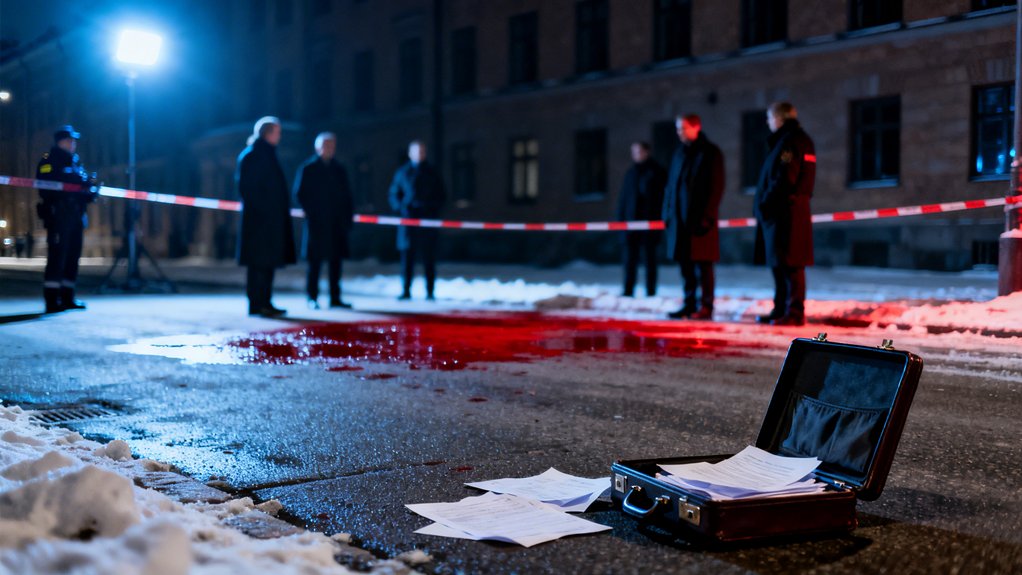
Because authorities botched the crime scene so thoroughly, the public has spent thirty-four years wrestling with a haunting question: did the state protect a killer, or did it simply fail to catch one?
This doubt isn’t baseless; it’s rooted in glaring contradictions. While police chased phantom suspects, they ignored credible links to apartheid South Africa, fueling suspicions of a deliberate shield. Hiring a book publisher as a lead investigator wasn’t just odd—it felt like a distraction, a move that signaled either profound incompetence or a calculated stall.
Families waited for truth, yet the system seemed to prioritize silence over justice. Every missed lead and every trampled piece of evidence deepened the wound, transforming grief into rage.
The nation couldn’t decide if they were looking at a clumsy failure or a sinister plot. That uncertainty kept conspiracy theories alive, breathing life into decades of speculation.
People demanded answers, but the state offered only confusion, leaving everyone trapped between two terrifying possibilities: malice or sheer, catastrophic blunder.
June 2020: Prosecutors Officially Close the Olof Palme Case by Naming a Deceased Suspect
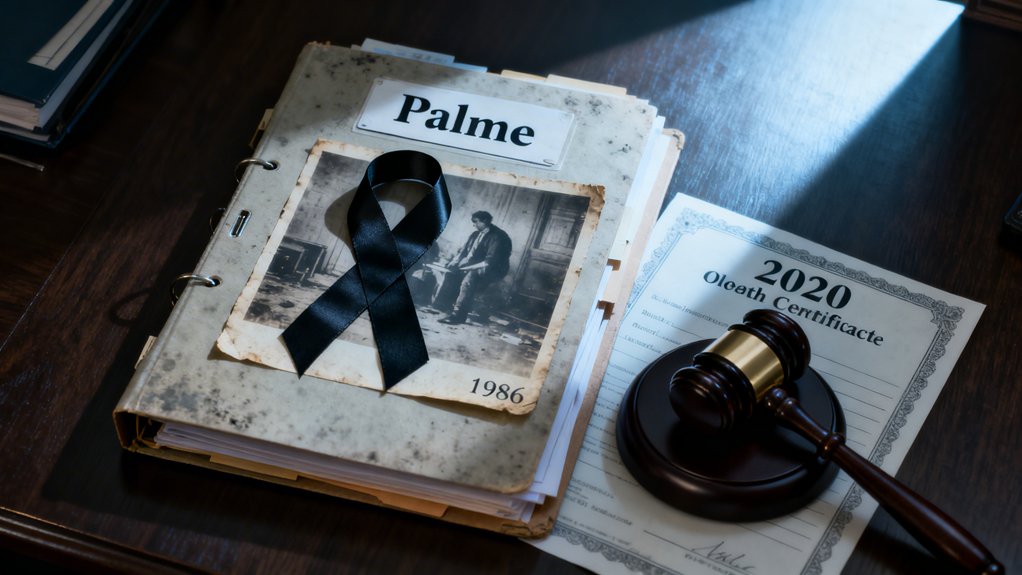
Prosecutors finally pinned the 1986 assassination on Stig Engström, a graphic designer who’d been dead for years.
This anticlimactic resolution offered little comfort to those who’d waited thirty-four years for truth. By naming a suspect who couldn’t stand trial, authorities effectively sealed the file without truly answering the nation’s lingering doubts.
Pinning the 1986 Political Assassination on the Long-Dead Graphic Designer Stig Engström
Although the snow had long since melted from the streets of Stockholm, the shadow of uncertainty finally lifted in June 2020 when authorities pinned the 1986 political assassination on Stig Engström, a graphic designer who’d been dead for fourteen years.
This “Skandia Man” had walked freely from the crime scene, blending into the crowd as a witness while police scrambled.
Prosecutors now claim he was the lone gunman, yet no trial can ever vindicate the lost decades. The resolution feels hollow, offering names but no justice.
- Engström crafted the murder weapon himself.
- He evaded capture by pretending to help investigators.
- His suicide in 2000 silenced any confession.
Families still grieve, wondering if truth truly arrived or just a convenient story.
The city remembers the cold night, but the warmth of closure remains elusive.
The Anticlimactic Resolution to Sweden’s Most Notorious Thirty-Four-Year Unsolved Murder
Certainty arrived too late to comfort the grieving, landing in June 2020 when prosecutors finally slammed the door on Sweden’s most notorious unsolved murder by naming a suspect who’d been dead for two decades.
Stig Engström, the so-called “Skandia Man,” couldn’t defend himself against these fresh accusations. Authorities claimed his workplace proximity and erratic behavior fit the profile, yet they offered no smoking gun.
For families waiting decades, this resolution felt hollow, almost cruel. They’d hoped for justice, not a posthumous theory built on circumstantial fragments.
The investigation’s catastrophic failures initially allowed Engström to vanish into plain sight, but now, his name merely closes a file rather than healing old wounds. Sweden’s collective trauma remains, as the truth died with the accused, leaving only lingering doubts about what really happened that snowy night.
The Enduring Historical Legacy of Olof Palme’s Disastrously Mishandled Assassination Investigation
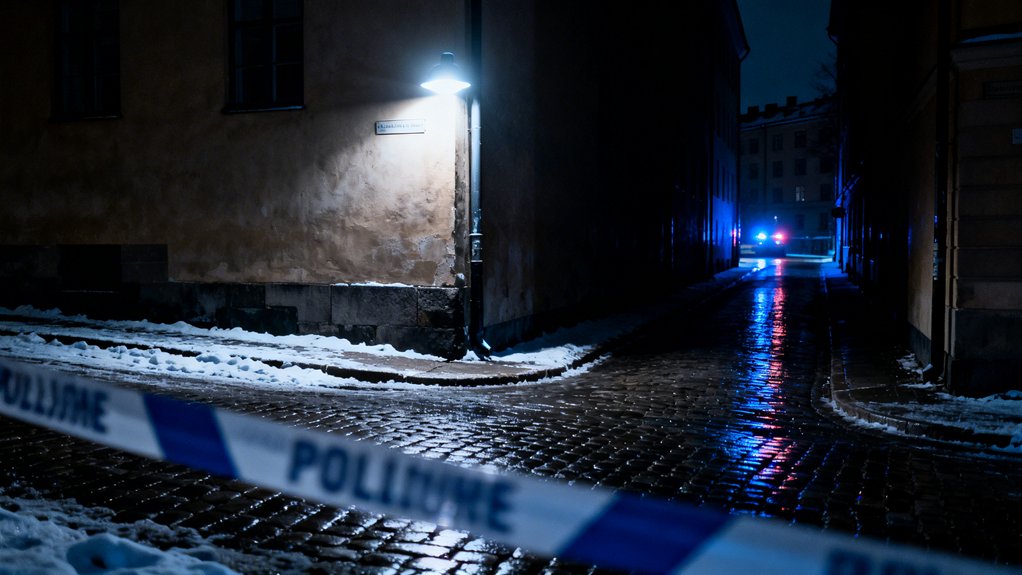
Though the snow on Sveavägen has long since melted, the shadow of that botched night still stretches across Sweden’s collective conscience, haunting a nation that watched its leader fall while police fumbled the response.
This catastrophic failure didn’t just leave a murder unsolved; it shattered public trust in institutions meant to protect them. The investigation’s legacy remains a painful scar, reminding everyone how easily truth can vanish when competence fails.
- Police ignored critical Apartheid-era leads that could have cracked the case immediately.
- Authorities let the prime suspect walk free simply because he looked like a witness.
- A thirty-four-year silence finally ended with an accusation against a dead man.
Families still grieve, not just for Palme, but for the justice they never received.
The state’s inability to secure the scene or follow obvious trails suggests something darker than mere incompetence. Was it negligence, or did someone want the truth buried? The questions linger, heavy and unresolved, proving that some wounds never truly heal when the system itself breaks down so completely.
Frequently Asked Questions
Why Did Police Allow Bystanders to Trample the Crime Scene?
Police didn’t intentionally allow bystanders to trample the scene; they simply failed to secure it immediately.
Officers arrived late, overwhelmed by chaos, and neglected basic protocols. They didn’t cordon off the snowy street, letting grieving citizens unknowingly destroy critical evidence.
This catastrophic lapse wasn’t malice but sheer incompetence. They missed their chance to preserve truth, leaving a nation haunted by what that frozen ground could have revealed had they just acted faster.
How Did the Skandia Man Escape by Posing as a Witness?
The Skandia Man slipped away because officers never questioned his presence. He stood calmly near the chaos, blending perfectly with shocked bystanders while police scrambled elsewhere.
Investigators assumed he was just another witness, so they let him walk free without checking his identity.
This fatal oversight allowed the prime suspect to vanish into the night, leaving authorities chasing ghosts for decades while the real killer escaped justice completely unnoticed that snowy evening.
Why Were Leads Regarding Apartheid South Africa Ignored by Authorities?
Curiosity killed the cat, yet authorities ignored apartheid leads because they feared diplomatic fallout more than truth. They actively dismissed credible tips linking South African agents to the murder, prioritizing political stability over justice.
Investigators turned a blind eye, letting crucial clues vanish into the cold Swedish night. This deliberate negligence left families grieving for decades, wondering if their government valued alliances more than their prime minister’s life or simple fairness.
What Prompted the Government to Hire a Book Publisher as Detective?
The government hired a book publisher because standard police efforts had collapsed, leaving them desperate for any breakthrough.
They believed his unconventional methods might uncover truths the incompetent force missed.
This odd choice reflected their panic and confusion as the case stalled.
They hoped a civilian’s fresh perspective could cut through the chaos, yet it only deepened the mystery surrounding Palme’s tragic death on that snowy night.
Why Was a Deceased Man Named the Killer Thirty-Four Years Later?
They named a dead man to finally close the painful chapter, hoping silence would heal the nation’s wounds.
Authorities claimed new evidence pointed to him, yet critics argue they simply needed a convenient end to decades of failure.
Final Thoughts
Sweden’s investigation drowned in a swamp of blunders, swallowing truth for thirty-four years. Police ignored crucial clues while conspiracy theories festered like open wounds on the nation’s soul. Did incompetence or malice bury Palme? Authorities finally named a dead man, slamming the file shut without trial. This closure feels hollow, leaving families grieving and citizens doubting. The snow has melted, but the shadow of that night still chills Sweden’s conscience, forever questioning who really pulled the trigger.