Hollywood’s wartime output was a pressure cooker of propaganda, with the OWI turning every studio into a covert front. Silas Shade uncovers how secret directives forced filmmakers to embed optimistic, pro‑Soviet themes, patriotic symbols, and a rigid “Assist the War” test, while any dissent risked blacklisting and later treason charges. Audits, forced rewrites, and self‑censorship created a climate of fear that survived the war, morphing into the Red Scare’s legal traps. The paradox of compliance becoming incriminating begs the question: how deep did the state’s narrative control really run?
Key Takeaways
- OWI mandated “optimistic” wartime content, requiring patriotic symbols and pro‑Soviet dialogue, with daily audits and blacklisting for non‑compliance.
- Films like *Mission to Moscow* were forced to glorify Soviet leadership, undergoing on‑set script rewrites and removal of any gritty American imagery.
- Filmmakers faced anxiety and self‑censorship, fearing being labeled “unpatriotic” or traitorous, which shifted industry culture to secrecy and fear.
- Post‑war, the same officials used wartime compliance as evidence in treason trials, turning obedience into criminal liability and fueling the Red Scare.
- The OWI’s coercive propaganda model parallels later COINTELPRO, MK‑Ultra, and corporate “manufacturing doubt” tactics, underscoring the need for transparency and artistic freedom.
Silas Shade’s Historical Audit: Unearthing the Government’s Covert Manipulation of Golden Age Hollywood
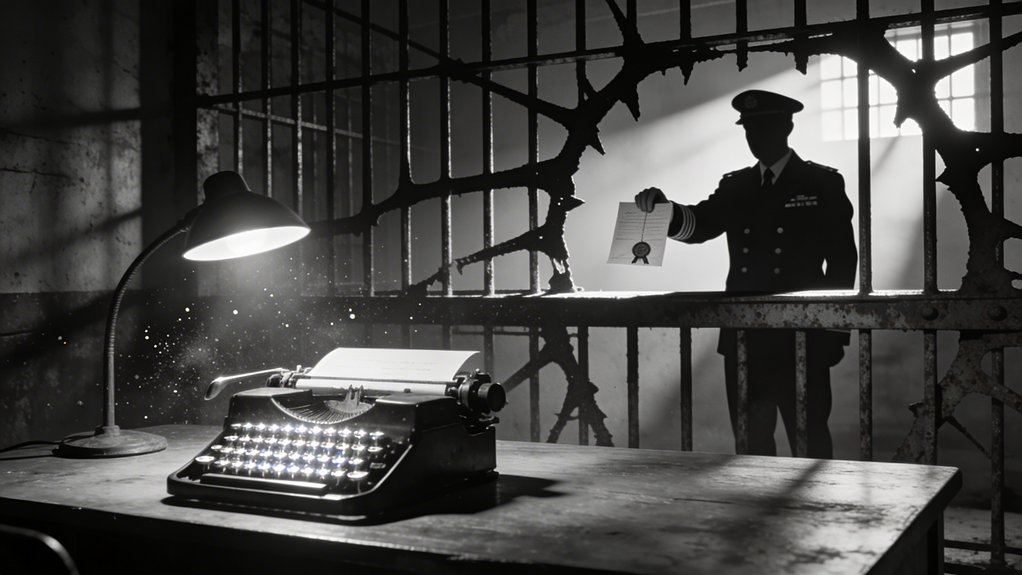
Some archivists have long wondered why Hollywood’s wartime output seemed so eerily uniform, and Silas Shade’s audit finally sheds light on that mystery. Shade, a meticulous researcher, sifted through studio memos, censorship directives, and courtroom transcripts, exposing a hidden chain of orders that forced studios to rewrite scripts, erase dissent, and glorify allies. He traced how the Office of War Information mandated every scene aid the war effort, then compiled a dossier that linked those edits to the later hollywood treason trials. By cross‑referencing production logs with trial evidence, Shade revealed a deliberate, reversible manipulation: filmmakers were coerced into propaganda, then branded traitors when the political tide shifted. His narrative unravels the paradox of creative freedom weaponized by the state, urging readers to reclaim agency and demand transparency. This structural manipulation echoes the unchecked government autonomy later exposed by the activists who uncovered COINTELPRO operations during their 1971 break-in of an FBI office in Pennsylvania. The audit not only clarifies history but also galvanizes a movement for artistic emancipation.
1942 Cinematic Seizure: The Office of War Information (OWI) and the Federal Takeover of Studio Productions
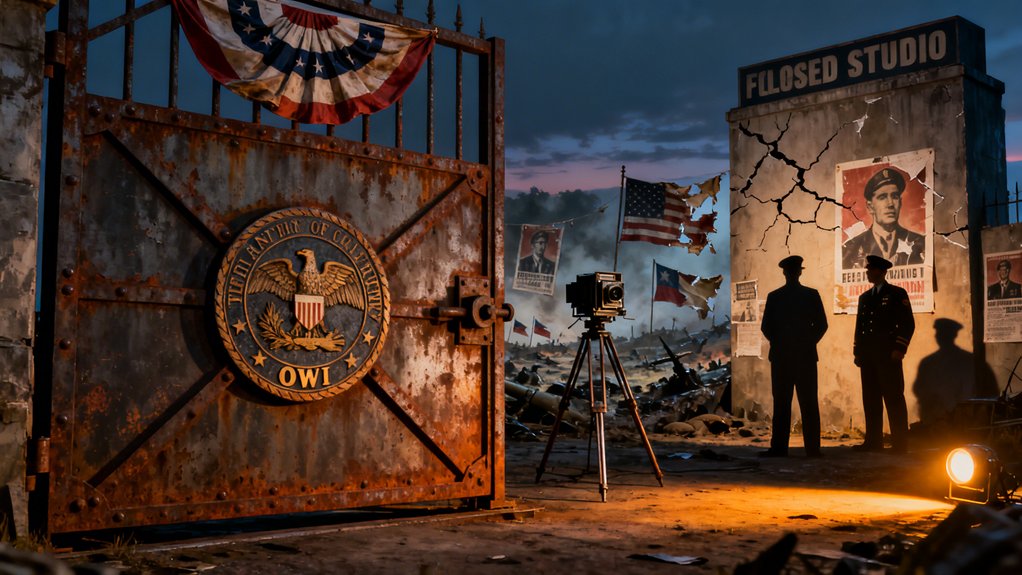
The Office of War Information issued production directives that rewrote studio scripts overnight, demanding every scene boost the war effort or face removal. Studios complied under threat, embedding pro‑Soviet messages that matched the government’s wartime alliance strategy. When the conflict ended, the same officials turned on the filmmakers, charging them with treason for the very propaganda they’d been forced to create. This pattern of institutional betrayal and covert manipulation foreshadowed the extreme abuses of Project MKUltra, a CIA program launched in 1953 to weaponize consciousness.
OWI Production Directives
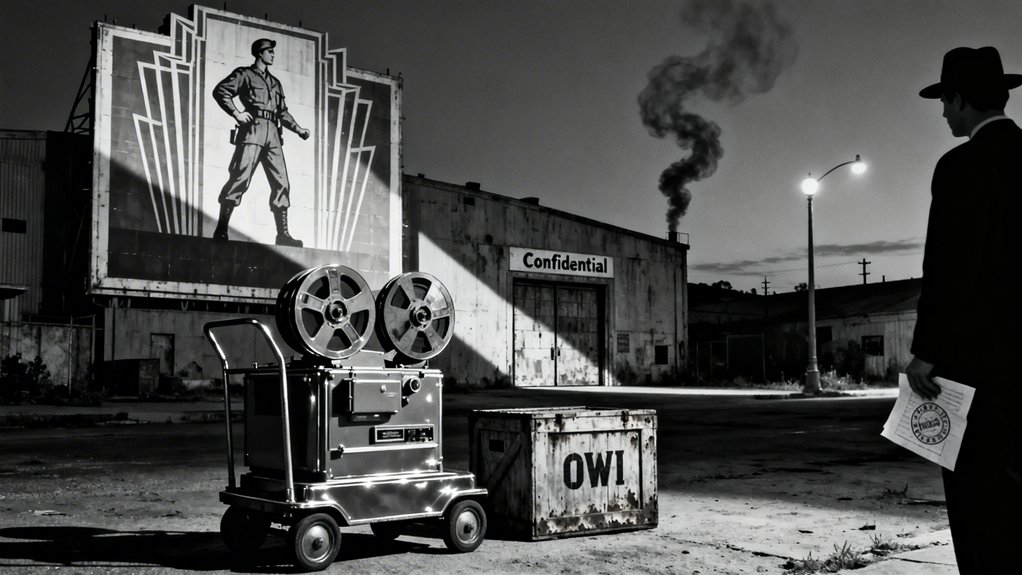
By 1942 the Office of War Information had already seized control of Hollywood studios, dictating every script, set, and cut with a single, uncompromising directive: any scene that didn’t overtly aid the war effort had to disappear. The OWI directives forced producers to embed patriotic symbols, rewrite dialogue, and scrub any dissenting image, turning studios into government factories. Filmmakers whispered about the invisible hand that rewrote their art, while the Office of War Information issued memos that resembled injunctions. Their investigative lens reveals how each caption, costume, and camera angle became a battlefield for truth versus propaganda, urging readers to reclaim the freedom once smothered by state‑mandated cinema.
| Directive | Example | Impact |
|---|---|---|
| Patriotic Symbolism | Eagle flag on set | Instantly signals loyalty |
| Dialogue Revision | “We fight together” added | Silences criticism |
| Scene Removal | Poverty montage cut | Erases social reality |
Forced Propaganda Compliance
When the Office of War Information seized control of Hollywood studios, it turned every production into a battlefield of mandated messaging, compelling filmmakers to embed patriotic symbols, rewrite dialogue, and excise any footage that didn’t overtly support the war effort. Investigators later uncovered the OWI operations manual, a terse checklist that demanded “forced propaganda compliance” from every studio head. Editors faced daily audits; scenes showing domestic hardship vanished, while Soviet allies received glossy heroism. The manual’s language left no room for dissent, turning creative teams into obedient cogs. This coercive regime silenced dissenting voices, yet the same footage resurfaced after the war, exposing the betrayal. Audiences now demand truth, seeking to reclaim the narrative from a past that weaponized art.
The OWI Operations Manual: Draconian Censorship Directives and the Strict “Assist the War” Litmus Test
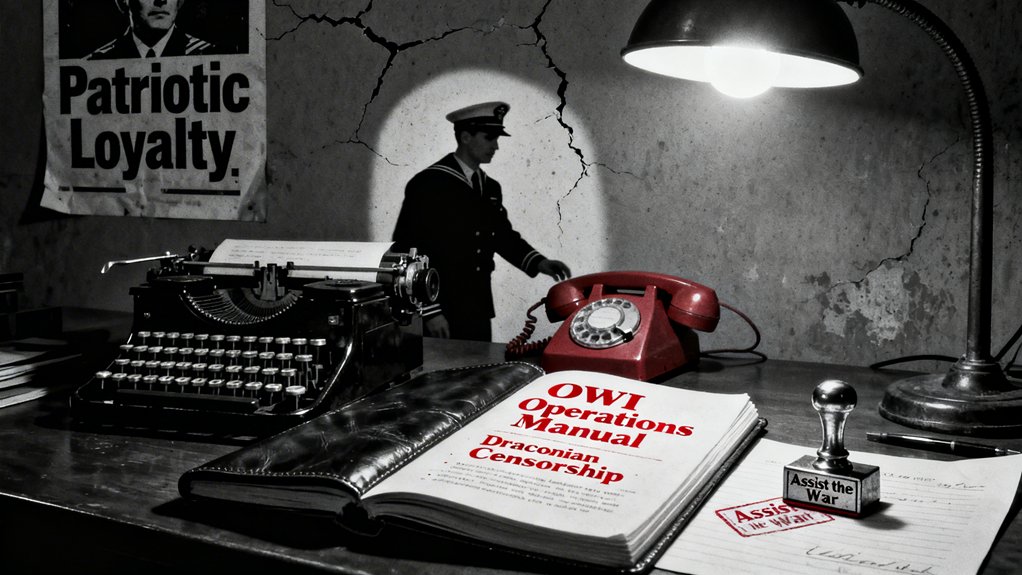
Though the Office of War Information’s manual read like a legal straitjacket, it forced every studio to treat any scene that didn’t overtly boost the war effort as a liability, demanding cuts of even the most subtle depictions of American hardship. The OWI operations manual turned creative ambition into a compliance checklist, and its wartime censorship directives imposed a binary “Assist the War” litmus test. Filmmakers learned to self‑censor, replacing nuance with overt patriotism, fearing that any deviation would trigger a mandatory edit or a studio‑wide ban. Just as corporate interests later relied on manufacturing doubt to delay toxic chemical regulations, government censors engineered narratives to secure total compliance.
| Directive | Required Action | Consequence |
|---|---|---|
| Boost morale | Insert heroic battle scenes | No release without approval |
| Eliminate poverty | Remove any hardship imagery | Immediate cut order |
| Promote allies | Add pro‑Soviet dialogue | Mandatory screen time |
| Suppress dissent | Delete critical commentary | Blacklist risk |
Investigators now expose how this draconian framework shackled artistic freedom, urging a reclaiming of truth.
Sanitizing the Domestic Image: The Mandated Eradication of American Poverty from the Silver Screen
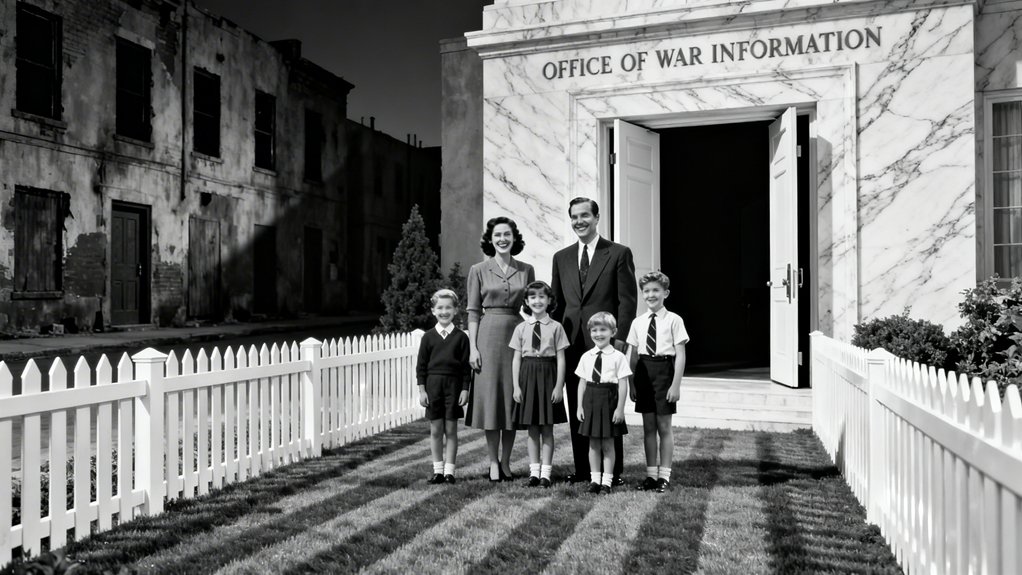
Silas Shade points out that the OWI forced studios to strip every set of visible slums, insisting that any sign of urban decay be edited out before release. He notes that scripts featuring struggling families were rewritten or scrapped, erasing poverty narratives that might have challenged the war‑time optimism. This systematic censorship, he argues, reshaped the American image on screen, presenting a polished, unrealistic portrait of domestic life. While Hollywood was busy projecting this idealized fiction, government agencies like the USPHS were simultaneously exploiting the very real poverty of poor Black sharecroppers in places like Macon County for a deadly 40-year medical experiment.
Erasing Slums From Sets
By 1943 the OWI had issued a blanket directive: any set depicting rundown neighborhoods or dilapidated housing must be scrubbed, replaced, or hidden entirely, because showing American poverty would “undermine morale” and “distract from the war effort.” Studios were forced to rebuild back‑drops, rewrite scripts, and even edit completed footage to erase slums, replacing them with tidy suburbs or stylized, sanitized interiors.
Investigators now trace how state‑mandated censorship turned every city street into a glossy façade. Production notes reveal frantic set‑replacements, while memos label “American poverty erasure” as essential to morale. Directors hid authentic neighborhoods behind painted facades, and editors cut gritty scenes in post‑production. The pattern shows a coordinated effort to rewrite reality, denying audiences the truth of hardship and reinforcing a mythic, sanitized America. This covert manipulation fuels a growing demand for truth and liberation from imposed illusion.
Censoring Poverty Narratives
When the OWI ordered studios to strip every trace of rundown neighborhoods from their sets, filmmakers scrambled to replace gritty backdrops with glossy suburbs, erasing the visual reality of American hardship. Investigators later uncovered a systematic campaign of censoring poverty narratives, a hidden tier of World War II censorship that rewrote the nation’s self‑image. Directors reported secret memos demanding “optimistic” scenes, while editors excised any shot of cracked sidewalks or empty lunchlines. The Office of War Information framed these edits as morale‑boosting, yet the true motive was to mask systemic deprivation. By sanitizing the domestic image, the government weaponized cinema, forcing audiences into a polished myth and denying the working class a voice on the silver screen.
The Pro-Soviet Mandate: Coercing Hollywood to Manufacture Communist-Sympathetic Wartime Propaganda
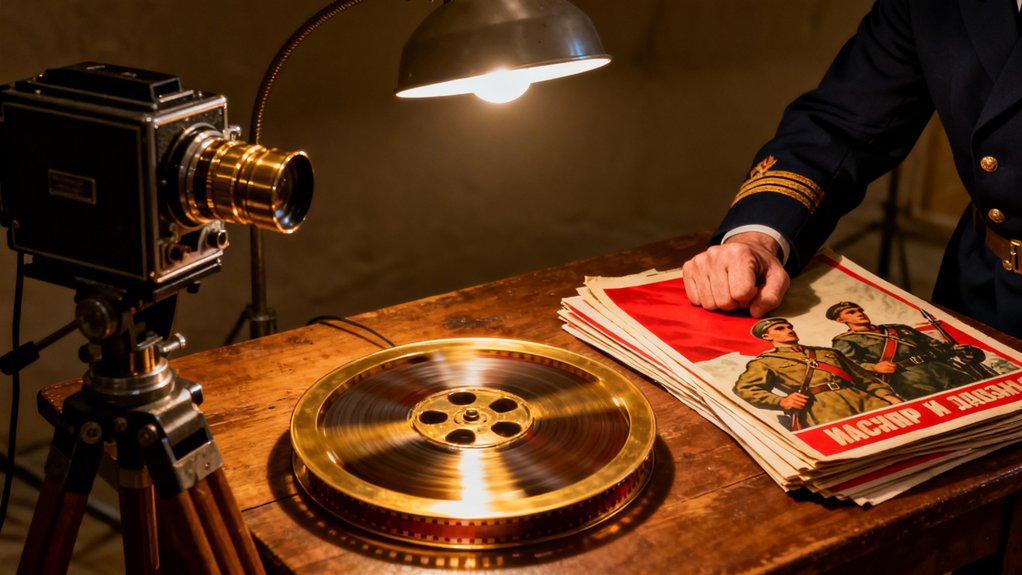
The OWI’s Pro‑Soviet Mandate slapped studios with explicit directives that demanded heroic Soviet characters and sympathetic narratives, leaving little room for dissent. Filmmakers found themselves forced to rewrite scripts, alter casting, and insert propaganda cues under threat of losing contracts or facing blacklisting. This coercive pressure turned Hollywood into a state‑run propaganda machine, setting the stage for the post‑war treason prosecutions that followed. Decades later, a similar pattern of state-sponsored deception would be exposed when the publication of the Pentagon Papers revealed how intelligence was distorted to create consensus and manufacture threats during the Vietnam War.
Coercive Studio Directives
Although Hollywood had long prided itself on artistic independence, the Office of War Information abruptly forced studios to embed pro‑Soviet narratives into every script, insisting that any scene not directly bolstering the Allied effort be excised. The coercive studio directives demanded daily script revisions, mandated on‑set political consultants, and threatened license revocation for non‑compliance. Filmmakers, once proud of creative freedom, now whispered about sabotage while drafting pro‑soviet propaganda under duress. Investigative files reveal memos that labeled dissent as “unpatriotic,” while budget cuts punished studios that resisted. The table below summarizes the enforcement tactics and their impact.
| Tactic | Effect |
|---|---|
| Script vetting | Immediate cuts of non‑Allied scenes |
| On‑set monitors | Constant ideological oversight |
| License threats | Financial coercion for studios |
| Blacklist warnings | Career‑ending intimidation |
Mission to Moscow: A Glaring Case Study in State-Commissioned Propaganda Disguised as Entertainment
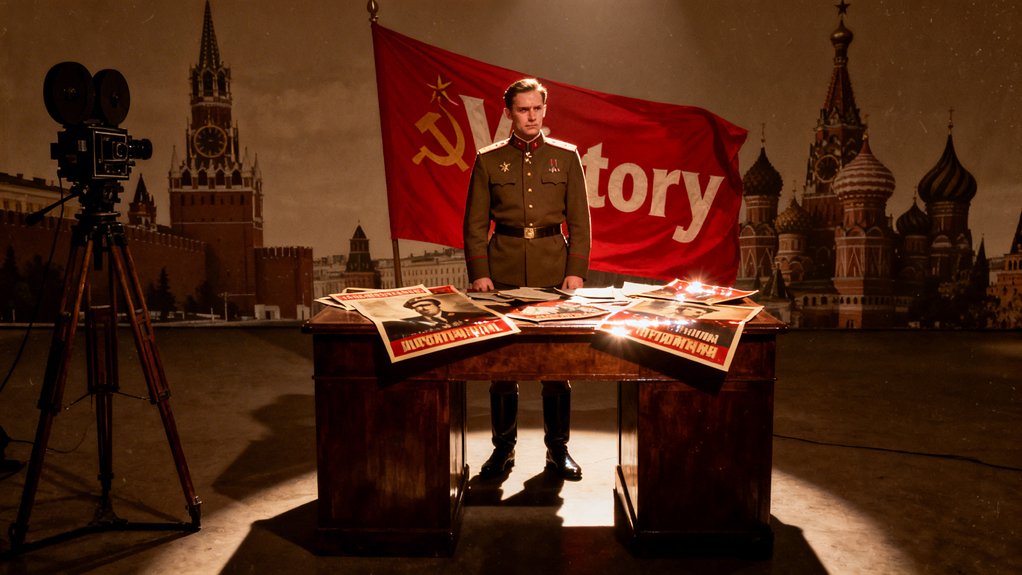
Silas Shade points out that the “Mission to Moscow” brief demanded a glorified portrayal of Soviet leadership, a script that echoed OWI’s wartime agenda while masquerading as a thrilling adventure. He notes how the directives forced writers to embed pro‑Soviet messaging in every scene, from heroic battle sequences to intimate dialogues. The investigation then asks how this calculated entertainment helped shape public opinion and later became the very evidence used against its creators. Shade draws a parallel between this tactic and the later pre-primed press narratives proposed in Operation Northwoods, which similarly sought to manipulate public perception to justify conflict during the Cold War.
Mission Brief Objectives
Because the Office of War Information demanded a film that glorified the Soviet Union, a top‑tier studio assembled a crew of writers, directors, and actors to produce “Mission to Moscow,” a glossy adventure that doubled as a diplomatic overture. The mission brief listed three stark objectives: embed a pro‑Soviet narrative, mask political messaging behind swashbuckling intrigue, and guarantee every scene served the war effort. Investigators later uncovered how the mission to Moscow film became a conduit for U.S. government entrapment, coercing talent into state‑approved propaganda while promising career security. The brief’s language, though framed as patriotic duty, concealed a trap that would later brand those same creators as traitors, exposing the cynical choreography of wartime illusion.
Behind Studio Gates: The Psychological and Professional Toll of Coerced Compliance on Filmmakers
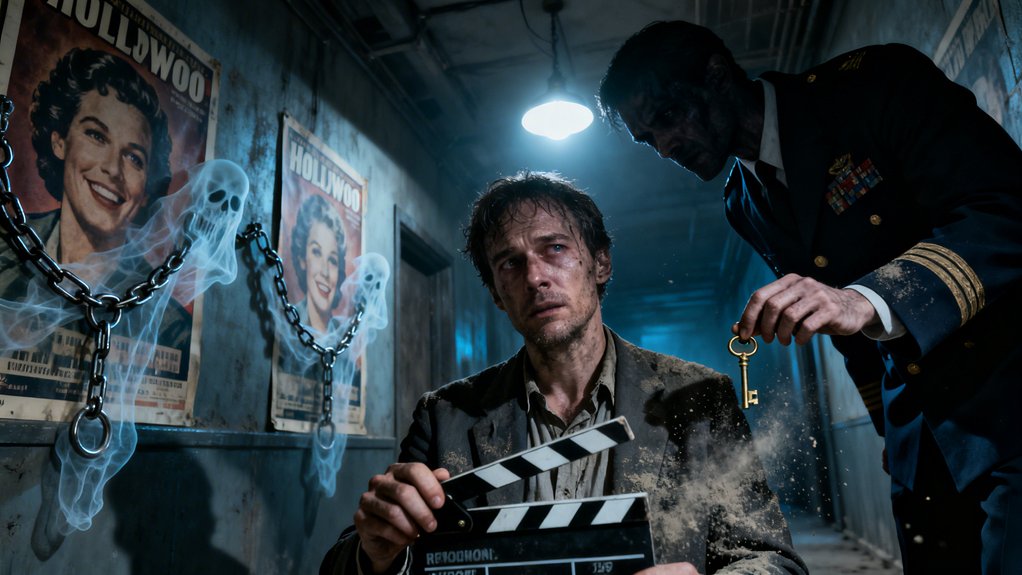
He watches the script morph under OWI mandates, feeling a knot of anxiety each time a line is erased for political convenience. The constant threat of being labeled a traitor forces him to second‑guess every creative impulse, turning enthusiasm into a guarded, mechanical routine. Colleagues whisper about the toll, noting that the once‑vibrant studio culture now feels like a pressure cooker of fear and self‑censorship. This environment of coerced narrative control foreshadowed future eras where military contractors would hire former journalists to produce covert propaganda using professional scriptwriting to craft “grey” and “black ops” content.
Creative Anxiety Behind Scripts
Why did the once‑vibrant creative spark in Hollywood dim into a nervous tremor? Writers felt a cold pressure as OWI mandates seeped into every draft, turning imagination into a battlefield. Creative anxiety grew when script censorship arrived, and each line risked review by unseen officials. Investigators now trace how directors hid dissent in subtext, while producers signed off on sanitized versions to avoid indictment. The studio corridors echo with whispered strategies: embed truth beneath patriotic veneer, or watch careers crumble under treason charges. This narrative uncovers the psychological toll of coerced compliance, revealing how fear of state retribution forced artists into self‑censorship, stifling authentic storytelling and demanding a collective fight for artistic freedom.
The 1945 Geopolitical Pivot: The End of WWII and the Sudden Redefinition of International Alliances
When the guns fell silent in 1945, the United States swiftly reshaped its foreign agenda, turning former allies into rivals and redefining the global balance of power. The abrupt pivot forced a frantic scramble among policymakers, who now eyed the Soviet Union not as a wartime partner but as a looming adversary. In this climate, postwar prosecutions surged, targeting anyone who’d once championed cooperation. Treason prosecutions, too, became a tool to silence dissent, branding former collaborators as enemies of the state. Investigators uncovered memos revealing how the same agencies that once scripted pro‑Soviet films now drafted legal briefs to indict their creators. This top-down engineering of reality vividly foreshadows modern government deception, much like how the leaked Downing Street Memo later exposed that intelligence and facts were being deliberately fixed around the policy to justify a premeditated war in Iraq. The narrative shifted from collective victory to a stark, paranoid vigilance, urging citizens to question the sudden redefinition of alliances. By exposing these machinations, the piece fuels a yearning for truth, urging readers to reclaim agency amid engineered fear.
The Post-War Betrayal: How the State Weaponized Wartime Compliance to Fuel the Looming Red Scare
Silas Shade uncovers how the government repurposed wartime loyalty into a weapon, turning the same propaganda films that once rallied the nation into evidence of treason. By branding compliant studios as conduits of Soviet influence, officials sparked a post‑war hysteria that fed the Red Scare. This betrayal, he argues, reshaped public fear and cemented a culture of suspicion that lingered for decades. This legacy of state-sponsored deception paved the way for future abuses of power, such as the falsified intelligence used to pass the Gulf of Tonkin Resolution.
Red Sc Terrorization Post‑War
In the wake of World II, the same agencies that had pressed Hollywood into producing pro‑Soviet wartime reels suddenly turned on those filmmakers, branding the very scripts they were forced to write as treasonous. They launched a post‑terrorization campaign that weaponized the very wartime propagandists they’d hired, turning compliance into a crime. By smearing former collaborators, the state stoked fear, feeding a Red Sc terrorization that silenced dissent and reshaped public discourse.
| Target | Tactics |
|---|---|
| Former directors | Public hearings, blacklists |
| Screenwriters | Treason charges, asset seizures |
| Studios | Forced audits, contract voids |
| Audiences | Propaganda films, censorship alerts |
The investigation reveals a calculated betrayal, a chilling reminder that liberty can be dismantled through the very tools once used to protect it.
Dragged Into Court: The Hypocritical Treason Prosecutions of Creators for Following Government Orders
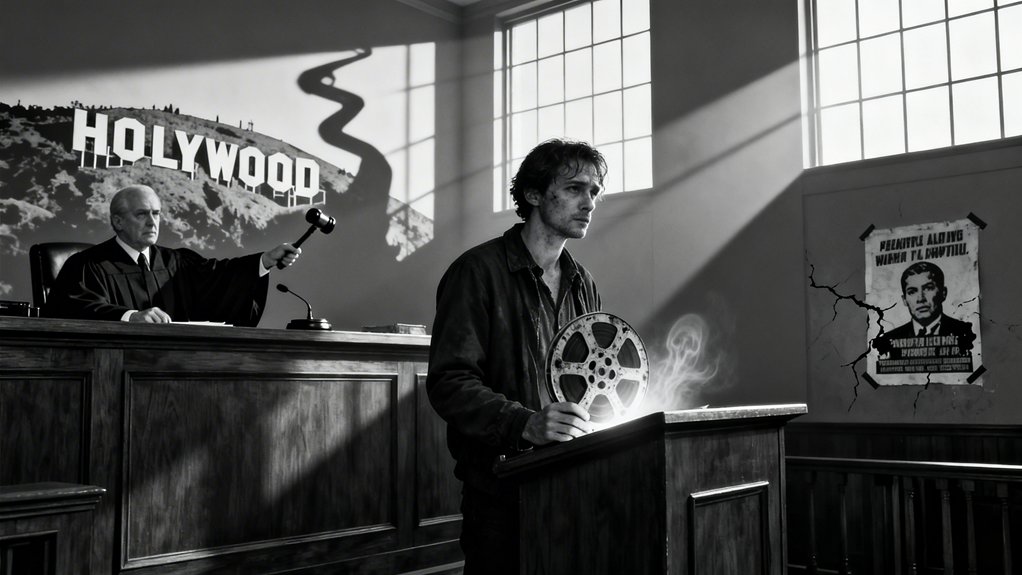
Although the Office of War Information had demanded that studios embed pro‑Soviet messages into wartime releases, the very same filmmakers found themselves hauled into federal court once the conflict ended, accused of treason for the very propaganda they’d been ordered to produce. The post‑war prosecutions unfolded like a staged betrayal: investigators combed through scripts, noted every mandated line, and presented them as evidence of disloyalty. Treason charges were filed despite the fact that the creators had obeyed explicit government directives, a paradox that shocked the industry’s conscience. In courtroom hearings, prosecutors painted patriotic duty as criminal collusion, while defense attorneys argued that obedience to the OWI had been compulsory, not conspiratorial. The narrative revealed a calculated double‑standard, exposing a legal trap designed to silence dissent and intimidate future creators. This hypocrisy mirrors later government cover-ups, such as when top intelligence officials evaded accountability by withholding raw evidence and instead submitting a sanitized Family Jewels summary to congressional investigators. This investigative account underscores the urgent need for transparency, accountability, and the restoration of artistic freedom.
Anatomy of Systemic Entrapment: Orchestrating a Premeditated Legal Catch-22 for American Creatives
When the war ended, the government flipped its script, turning the very directives that had forced filmmakers to embed pro‑Soviet messages into courtroom evidence of treason. The investigation uncovers a calculated systemic entrapment: officials drafted a legal catch‑22 that demanded compliance with contradictory mandates. First, the Office of War Information ordered studios to produce overtly pro‑Soviet scenes, promising protection under wartime loyalty statutes. Then, as peace settled, the same statutes were re‑interpreted to label those scenes treasonous, leaving creators with no lawful exit. The paperwork reveals that the trap was pre‑wired—contracts, memos, and censorship guidelines were all archived to be weaponized later. By binding artistic expression to a shifting definition of patriotism, the state forced a paradox where obedience meant guilt. This deliberate design stripped creators of agency, exposing how law can be twisted into a tool of oppression, urging a collective demand for freedom and accountability.
Silas Shade’s Final Verdict: The Enduring, Dark Legacy of State-Sponsored Narrative Control and Hypocrisy
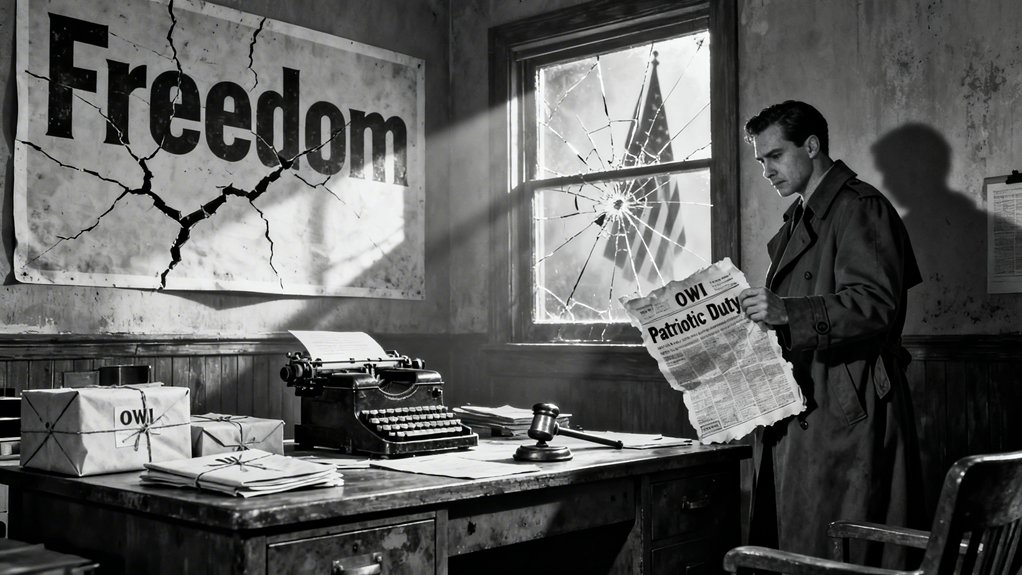
Silas Shade wraps his audit with a stark warning: the state’s wartime censorship sowed a legacy of narrative control that still haunts Hollywood. He points out how the same officials who demanded pro‑Soviet scripts later branded those very films treasonous, exposing a double standard that weaponizes truth. Shade argues that this hypocrisy fuels today’s covert propaganda, urging a reassessment of who truly writes America’s stories.
State‑Sponsored Narrative Hypocrisy
Because the wartime OWI directives demanded pro‑Soviet messaging, the same filmmakers who dutifully crafted those scenes later faced treason charges the moment the conflict ended, exposing a stark double standard that still haunts American media. Silas Shade uncovers state‑sponsored narrative hypocrisy, reminding readers that truth has a backstory and that the government rewrote it when convenient. He traces the pattern: wartime propaganda, post‑war persecution, and the lingering fear that any dissenting voice will be silenced.
| Era | Policy | Outcome |
|---|---|---|
| 1942‑45 | Pro‑Soviet script mandates | Films glorify allies |
| 1945‑46 | Treason trials for same creators | Careers shattered |
| Today | Censorship under “national security” | Narrative control persists |
The investigation shows how the same mechanisms still shape headlines, urging a liberation mindset that refuses to accept manufactured consent.
Frequently Asked Questions
Why Were Poverty Scenes Deemed “Unpatriotic” by the OWI?
Poverty scenes were deemed “unpatriotic” because the OWI believed they would undermine morale and weaken home‑front support for the war effort. By erasing depictions of hardship, the agency aimed to project an image of national strength and unity, convincing Americans that the United States was thriving despite wartime sacrifices. This narrative helped sustain enlistment, productivity, and confidence in government policies, which the OWI deemed essential for victory.
Did Any Filmmakers Secretly Resist the Pro‑Soviet Mandate?
Silently subversive directors slipped subtle sabotage into sanctioned scripts, weaving wry wit and whispered dissent. They concealed anti‑Soviet symbols in set décor, altered dialogue to mock the official line, and staged clandestine meetings to share uncensored footage. Though the OWI’s watchful eyes missed many tricks, a few brave filmmakers risked careers, daring to defy the propaganda machine while preserving artistic integrity and a flicker of freedom.
How Did the Treason Trials Affect Hollywood’s Post‑War Contracts?
The treason trials crippled Hollywood’s post‑war contracts, as studios scrambled to replace tainted talent and insurers raised premiums on any project linked to former OWI collaborators. Executives demanded airtight clauses guaranteeing political loyalty, while agents renegotiated fees to offset looming litigation costs. Consequently, many writers and directors were blacklisted, forcing them into pseudonyms or foreign markets, and the industry’s financial terrain shifted toward risk‑averse, government‑friendly productions.
Were Similar Censorship Policies Applied to Radio and Theater?
Yes, the OWI’s censorship stretched beyond film, shackling radio and theater with the same wartime scripts. Radio stations faced strict script approvals, and any dissenting commentary was cut or rewritten. Theaters were required to submit play texts for clearance, and pro‑Soviet or anti‑war lines vanished under mandatory edits. These parallel controls kept the whole entertainment sphere in lockstep, ensuring every medium echoed the government’s war narrative.
What Evidence Supports Silas Shade’s Historic Audit Claims?
Silas Shade’s audit rests on declassified OWI memos, filmmakers’ correspondence, and courtroom transcripts that reveal a sudden policy flip. The memos detail mandatory pro‑Soviet scenes and forced cuts of American poverty, while letters from directors describe coercion and fear. Post‑war trial records show prosecutors charging the same creators with treason, exposing the trap. Together, these documents form a paper trail that proves the government’s orchestrated entrapment.
Final Thoughts
Silas Shade’s audit reveals a system that coerced, censored, and criminalized, for a single purpose: to turn Hollywood into a propaganda machine. It shows how the OWI forced optimism, erased poverty, imposed pro‑Soviet narratives, and then weaponized that compliance into treason charges. The legacy endures, a reminder that state‑driven narrative control can masquerade as patriotism while silencing dissent, and that vigilance remains essential to protect artistic freedom.